
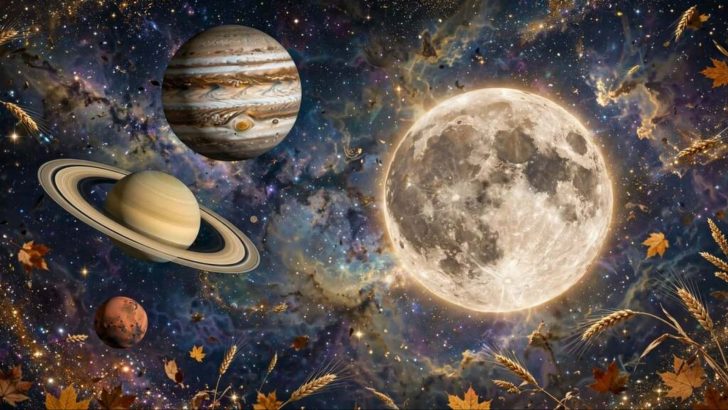
September 2026 brings us much more than just a change of season!
So many interesting things are due to happen in the sky, and the good news is, many of them can be observed with the naked eye!
Only one or two might require the telescope.
Anyway, here are 9 reasons to pay attention to the skies this month!
1. September 6th: Moon Meets Mars
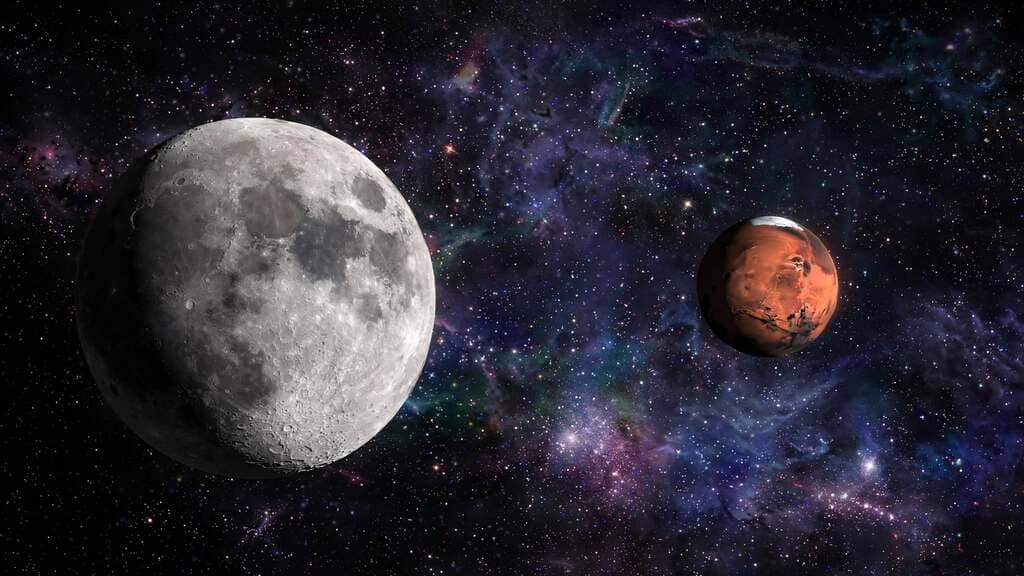
On the 6th, right before the sunrise, the waning crescent moon will sit just beside Mars.
For a few hours, these two celestial bodies will share the same place in the sky. It’s not as flashy as some of the other events that await us, but it’s still beautiful.
Due to the moon phase, the crescent will be extremely thin. It will create a 对比 with the Red Planet, making it much easier to spot 比平时多。
This is one of those incredible celestial moments that most people miss because it happens well before dawn.
If you’re willing to be an early riser for this occasion, go outside at 3 AM and pay attention!
2. September 8th: Close Encounter Between the Moon and Jupiter
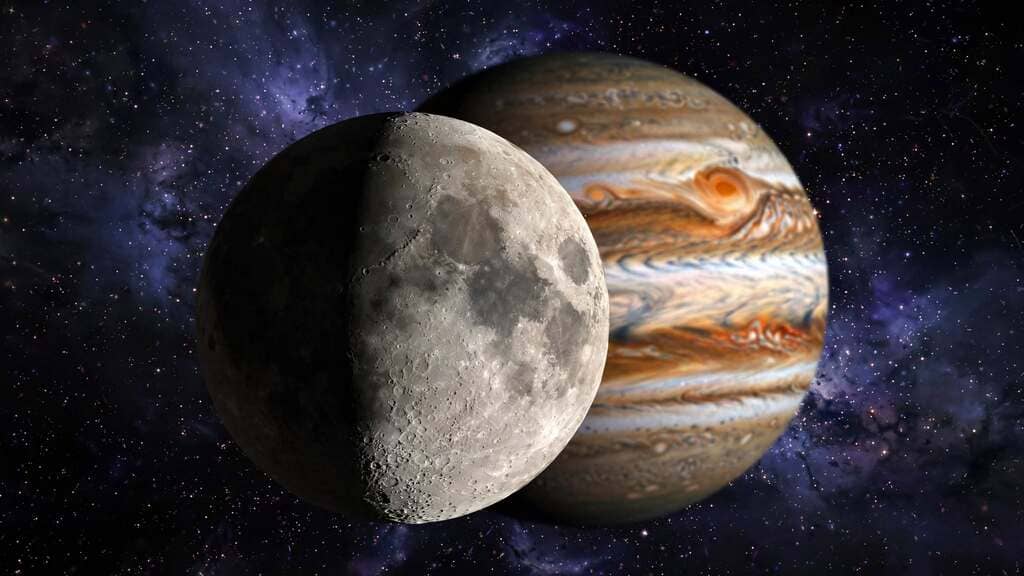
Just two days later, on the 9th, the crescent moon creeps within less than one degree of Jupiter!
That’s extremely close by cosmic standards, and it makes for a striking sight, even without any equipment.
For those lucky enough to be in parts of Canada, Greenland, or Russia at the time, the moon will actually move right in front of Jupiter!
This is called a lunar occultation, meaning that the planet won’t be visible at all for a little while!
This occasion also calls for getting up very early, since the best time to view the event is right before dawn or during the early morning hours.
3. September 9th and 10th: Meteor Shower
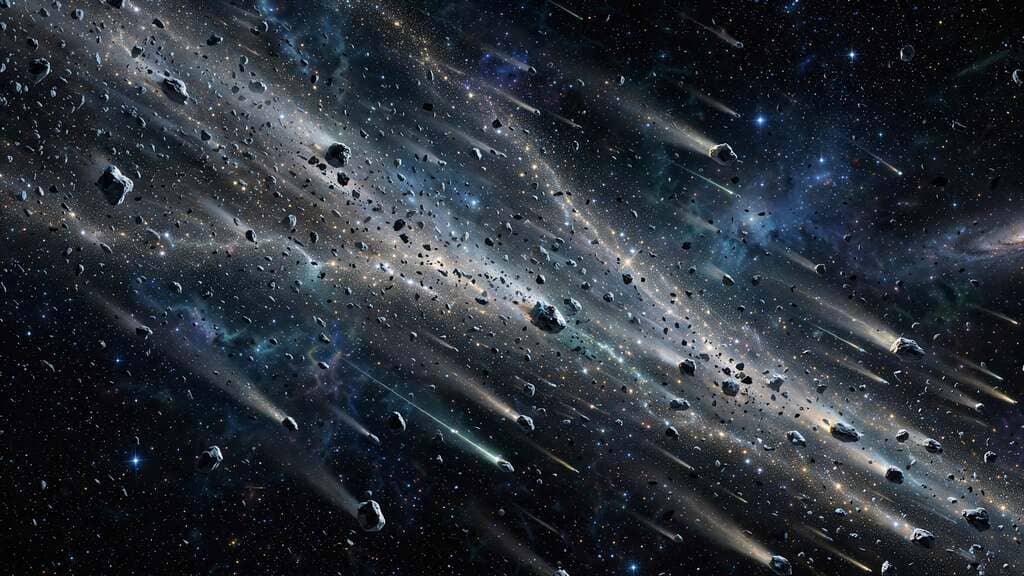
Meteor showers are always a cause for excitement, though the Epsilon Perseids are typically easy to miss.
However, September 2026 is a unique timing, since on the 9th and 10th, the moon will be dark. Without its light, the meteors will be much more visible!
The Epsilon Perseids don’t produce many meteors per hour, but they’re definitely worth seeing.
Make sure to find a spot away from city lights, and also try not to look at any screens. You want your eyes to get used to complete darkness.
After that, all it takes is a little patience. Prepare some snacks and bring good company.
The best viewing window is between midnight and dawn, so anywhere between 1 and 4 AM.
4. September 14th: Moon and Venus Conjunction
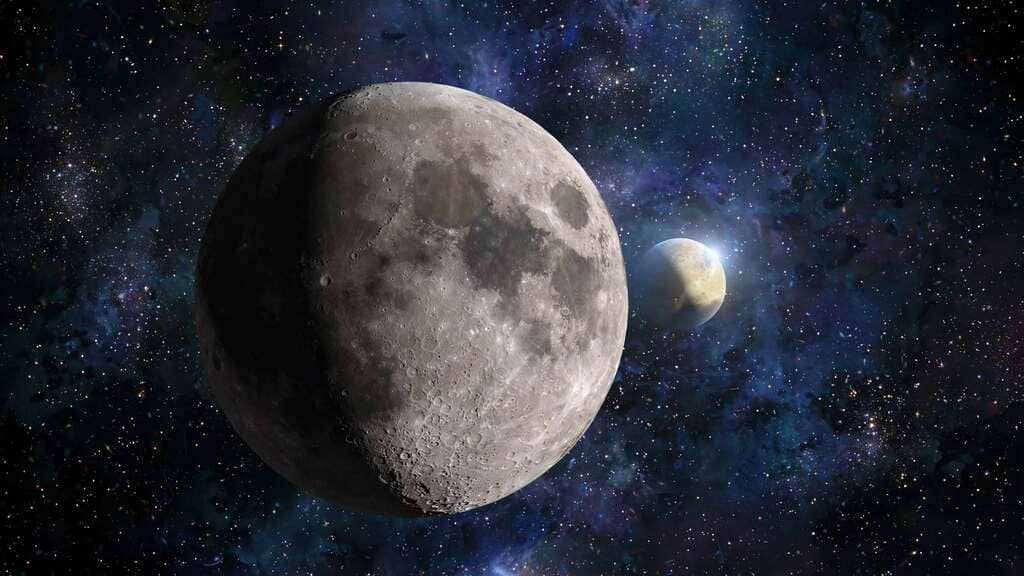
If you’ve only got time to catch one celestial event this month, make sure it’s this one!
On the 14th, a crescent moon sits very close to Venus just after sunset. Both of these celestial objects are incredibly bright, so they’re bound to create a scene that’s worth seeing!
Viewers from parts of Europe, Africa, and the Middle East will be able to see a lunar occultation.
However, the conjunction itself is visible from almost anywhere in the world and requires no special tools to view.
It’s also convenient that we don’t have to get out of bed in the middle of the night, for once. Just look west, right after the sunset.
5. September 22nd: The Brightest Venus
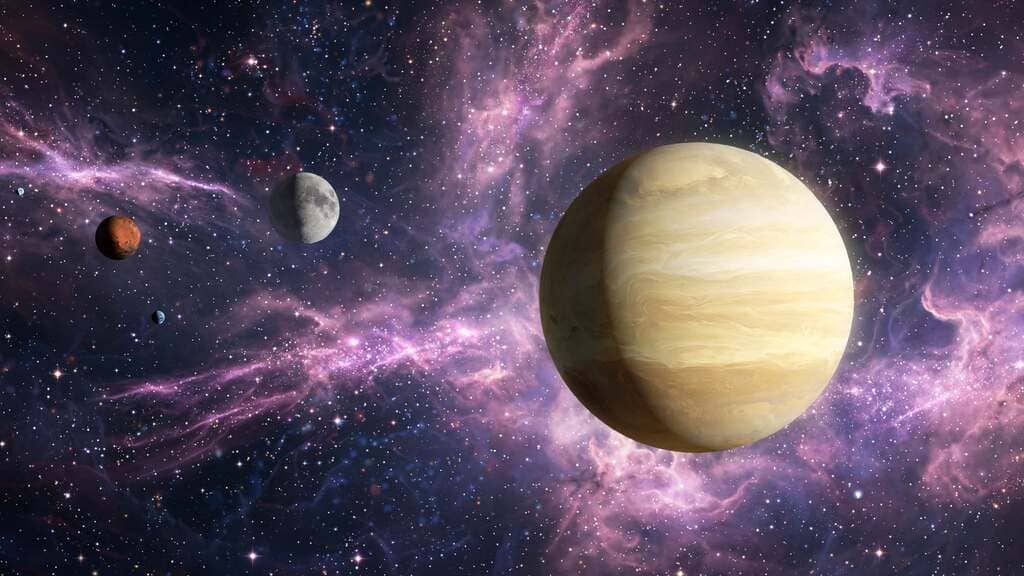
Just a week after its conjunction with the moon, Venus reaches magnitude -4.8, which means peak brightness!
The lower the magnitude, the brighter the planet and whenever Venus reached this low a magnitude in the past, it was frequently mistaken for UFOs!
It dominates the evening sky as the first star that appears after sunset and also the one that’s visible the longest.
You don’t even need to go anywhere to see it, since even the light pollution can’t dim Venus!
Simply step outside in the evening and look west.
It’s impossible to miss!
6. September 23rd: The Equinox
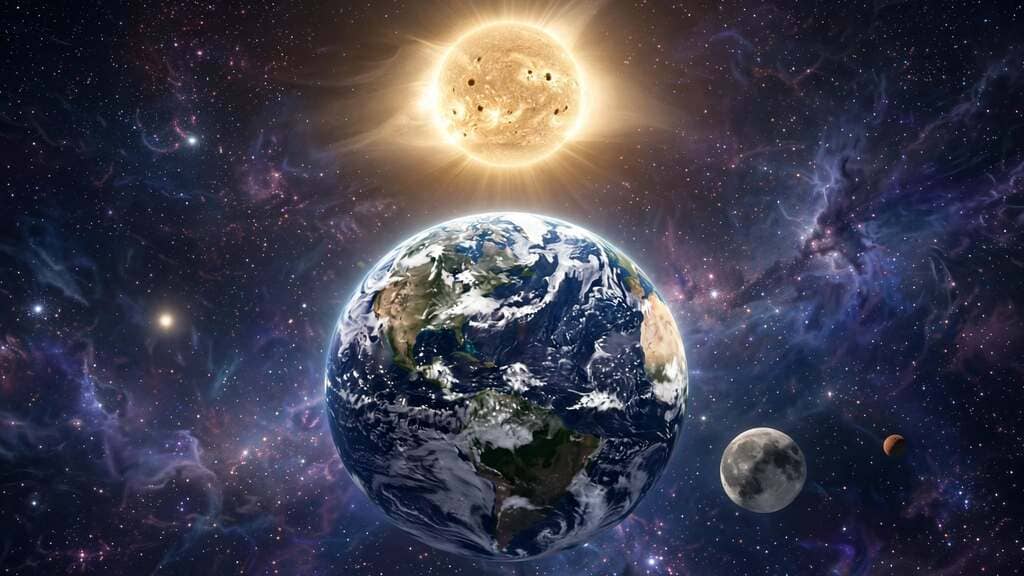
Just minutes after midnight on the 23rd, the Earth reaches a special moment in its orbit!
The September Equinox happens when the sun crosses directly over the equator, meaning that every part of the world gets equal time of daylight and darkness!
For the Northern Hemisphere, this marks the beginning of fall, while for the Southern Hemisphere, it’s the beginning of spring.
However, this season also brings out northern lights more than usual, so if you’ve wanted to see them, this is the ideal time.
7. September 25th and 26th: Neptune at Opposition
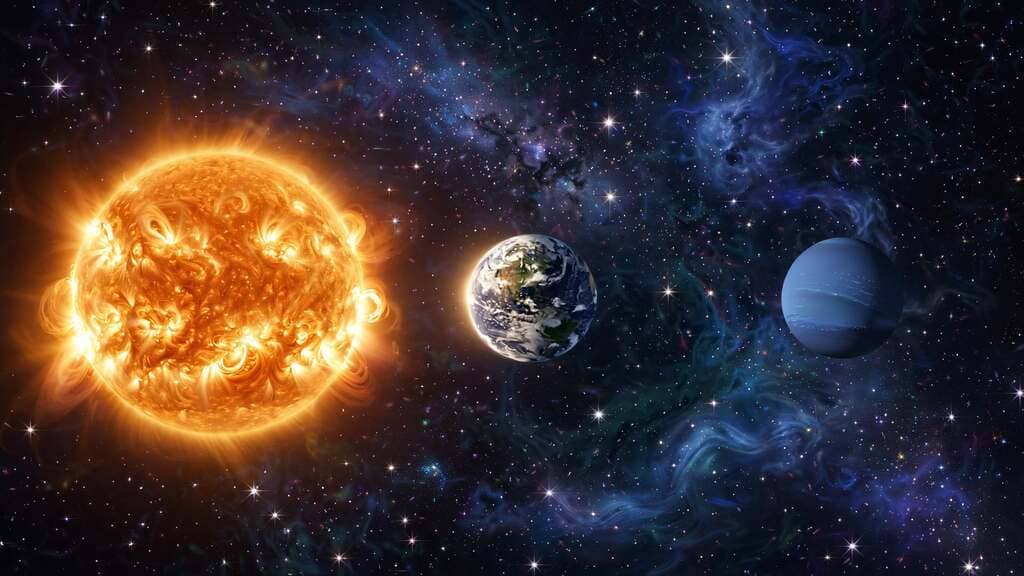
Neptune is over four billion kilometers away from us, so it rarely gets attention. It appears in the sky as a tiny blue dot, which many people miss.
But on the 25th and 26th of the month, it reaches opposition, which means that the Earth sits directly between it and the sun.
In these cases, Neptune is the closest and brightest now out of the entire year.
These are the ideal days to try and spot it, though you won’t be able to notice any details without binoculars, at least.
A telescope is highly recommended if you wish to see more than a tiny dot of light. Also, Neptune easily blends in with the other stars, so do some research so you know exactly what to look for.
This celestial event is high maintenance compared to the others, but it’s definitely worth it!
8. September 26th: Harvest Moon
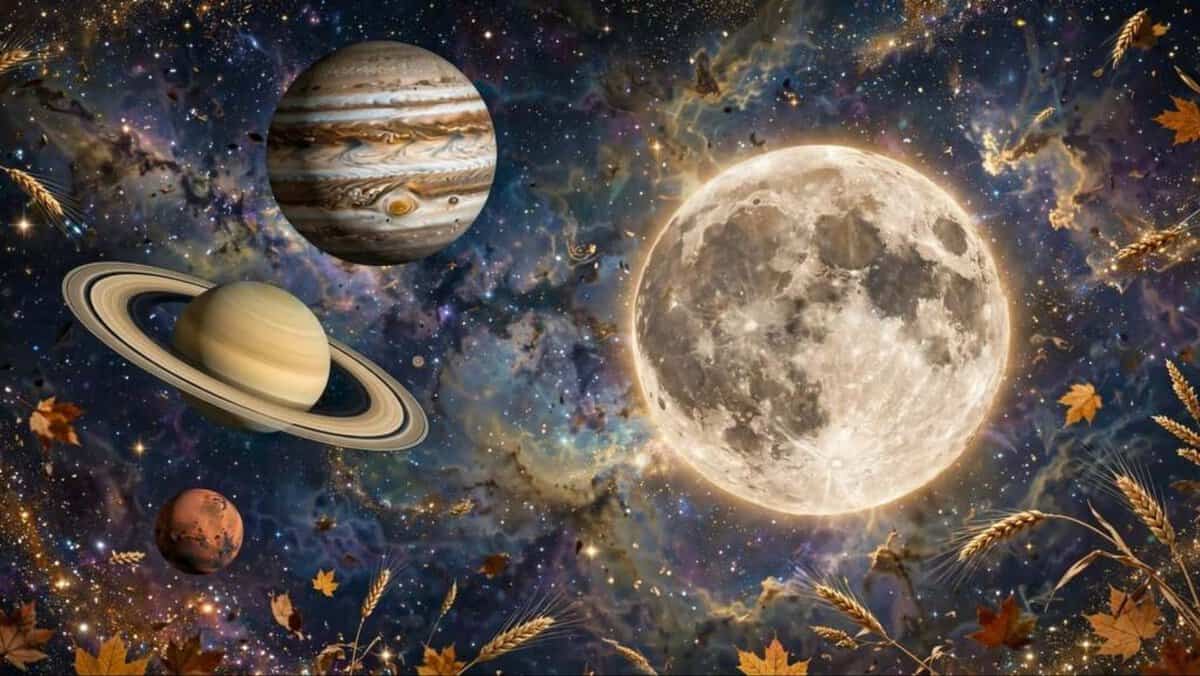
On September 26th, the Harvest Moon rises, reaching full phase at exactly 16:49.
This full moon has such a special place in folklore, since its bright light used to give farmers more light so they could complete the harvest before the weather changed.
It’s beautiful at any hour, but watching it just as it begins to rise allows you to catch it while it glows golden.
This happens when moonlight travels through more of Earth’s atmosphere near the horizon.
Find an open eastern view and enjoy!
9. September 26th and 27th: Moon Meets Saturn
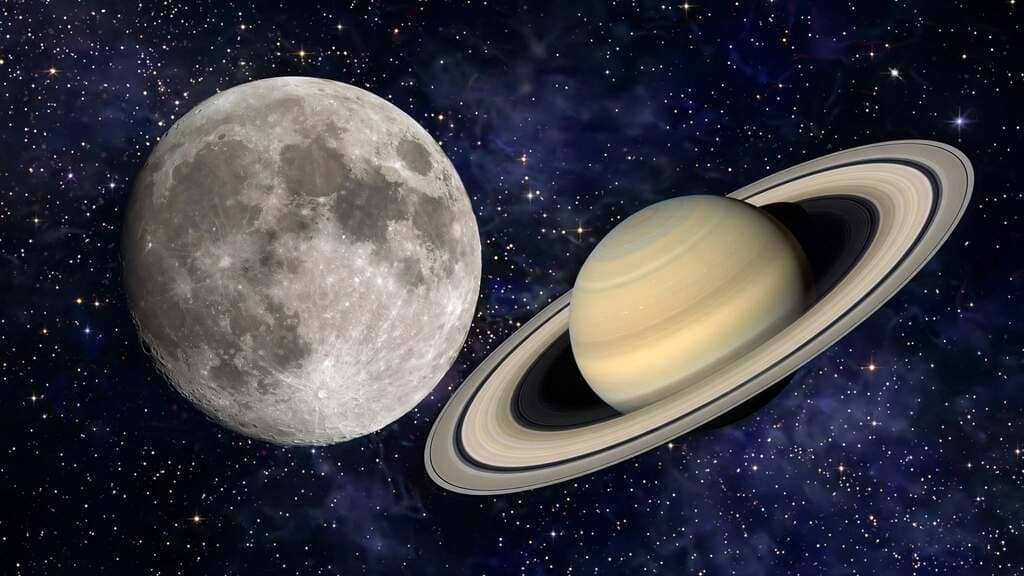
On the very same night when the Harvest Moon reaches fullness, it appears close to Saturn in the sky.
The timing couldn’t be better, since Saturn is very bright during this time, due to reach its peak brightness on October 4th!
If you can get your hands on a telescope, you’ll be able to clearly see Saturn’s rings.
Without any tools, you’ll still be able to see the bright moon with an equally as bright planet sitting right beside it.

A little Aquarius, devoted to writing and embroidery. Through my writing, I hope to empower readers to align with their true selves and navigate life’s mysteries with confidence.