
In Christian tradition, angels are organized into nine ranks, each one with its own job and reason for being.
This hierarchy comes from a 5th century script, written by Pseudo-Dionysius the Areopagite, who tried to understand the divine.
Many take these nine levels he had created symbolically or as a mythology, but there are also those who take it literally.
Either way, it’s fascinating!
1. Seraphim
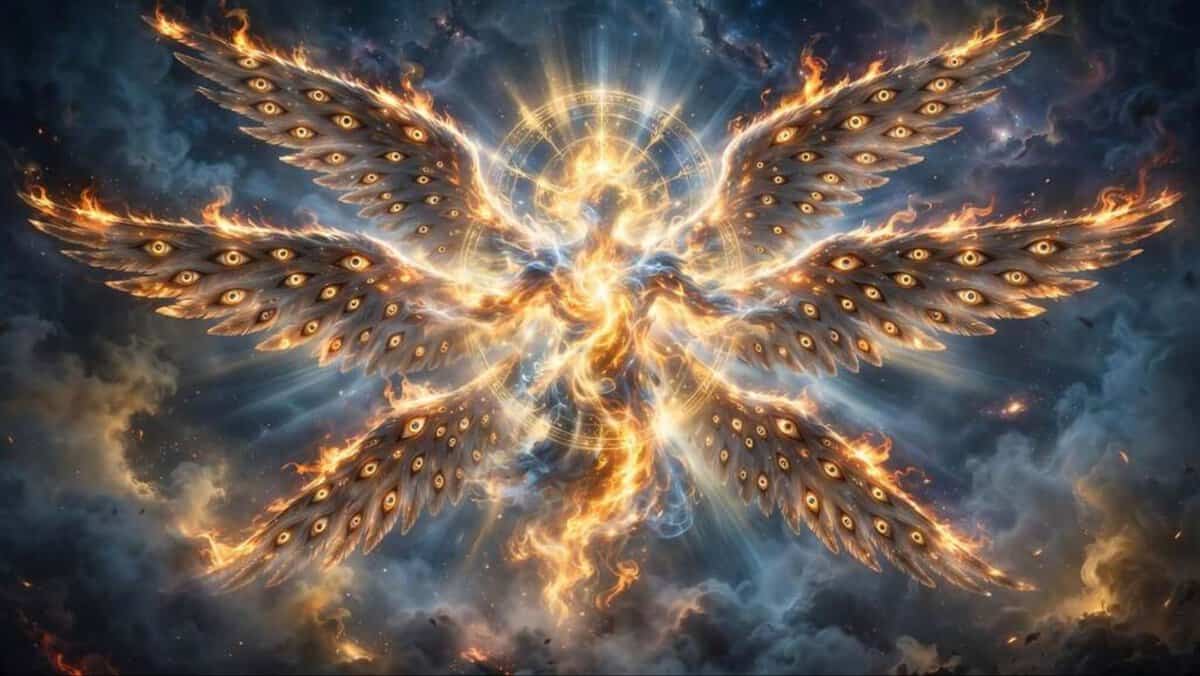
Seraphim stand at the highest level of the hierarchy, the closest to God’s throne.
In the Book of Isaiah, they’re described as fiery beings with six wings who circle the divine throne, chanting holy, holy, holy in endless praise.
The name Seraphim literally means “the burning ones,” and they’re imagined as pure fire rather than a concrete form.
Their only job is constant worship. Some traditions place them so close to God that even the other angels can’t look at them directly!
The angelic hierarchy is often compared to a symphony, and if that’s so, then the Seraphim are the opening note.
Their praise echoes through all the other levels, as they’re constantly consumed by their love for the divine.
Also, their placement at the top is very symbolic since it reminds us of the importance of 奉献. It’s placed well above power and control.
2. Cherubim
Renaissance paintings created the modern idea of the Cherubim. We typically imagine them as chubby baby angels who play harps, but this imagery is pretty European and pagan.
The Book of Ezekiel actually describes them as far stranger and scarier.
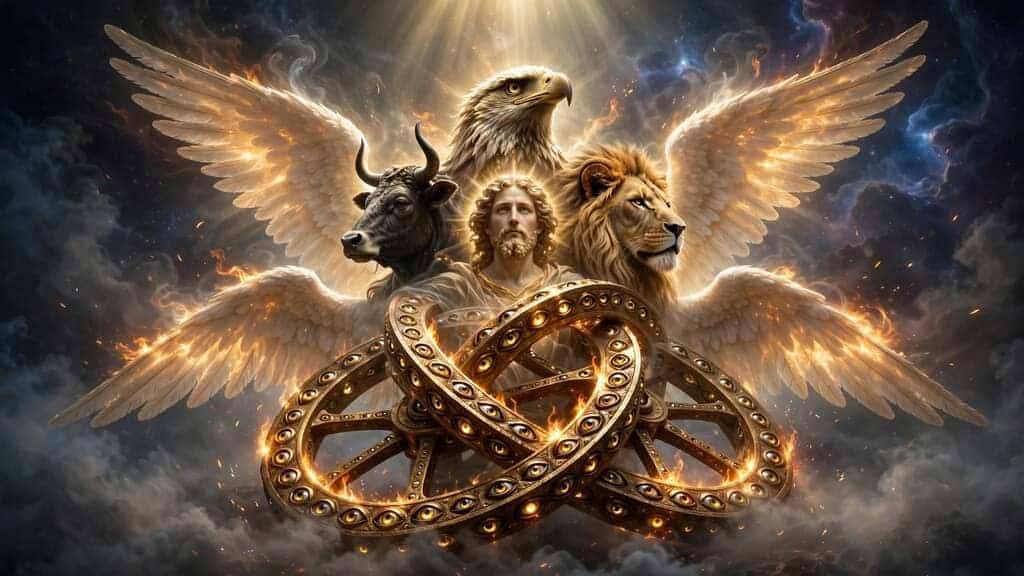
The Cherubim stand at the second level of the hierarchy, and they’re beings with four faces, those of a human, a lion, an ox, and an eagle.
Their form is composed of wheels that keep turning, and those wheels are covered in many eyes.
They’re the guardians of God’s glory and the keepers of divine knowledge.
In fact, a Cherub stood at the gates of Eden after Adam and Eve’s expulsion, blocking the way back to paradise.
While the Seraphim are all love, the Cherubim are all 智慧. They’re record-keepers of heaven.
3. Thrones
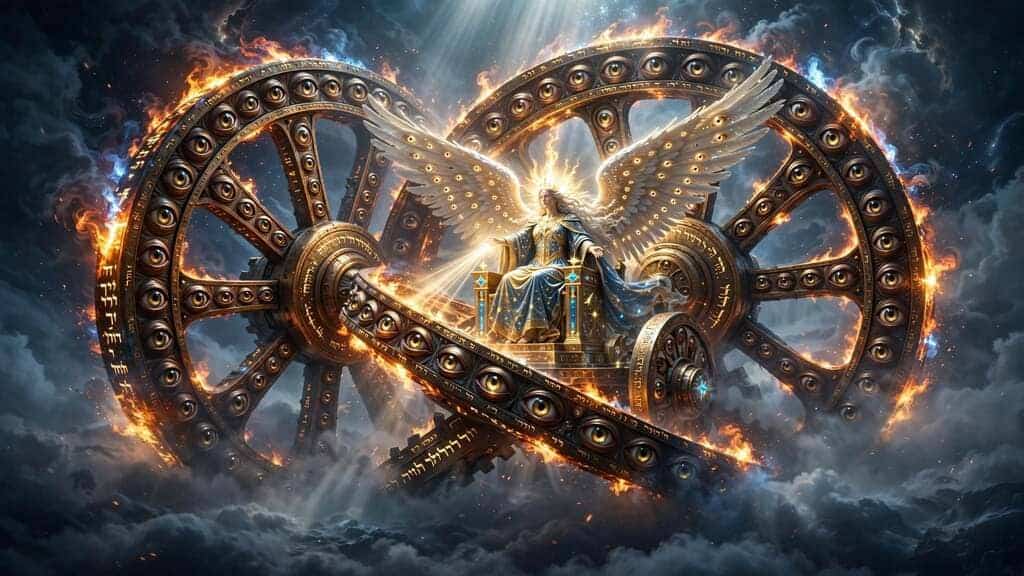
The Thrones are the third level in the hierarchy, and they’re sometimes also called the Ophanim.
They’re presented as great wheels of fire, spinning in perfect harmony with God’s will.
These angels are mentioned in Ezekiel’s visions and in Paul’s letter to the Colossians as part of the celestial order.
In essence, they represent divine justice and authority.
When believers say they fear God’s judgment, it’s actually the Thrones they’re thinking of. They’re completely impartial as they carry out God’s will.
Some traditions even say the Thrones are chariots or seats for the divine presence.
The universe might be chaotic, but the Thrones are a reminder that the ultimate justice still exists.
4. Dominions
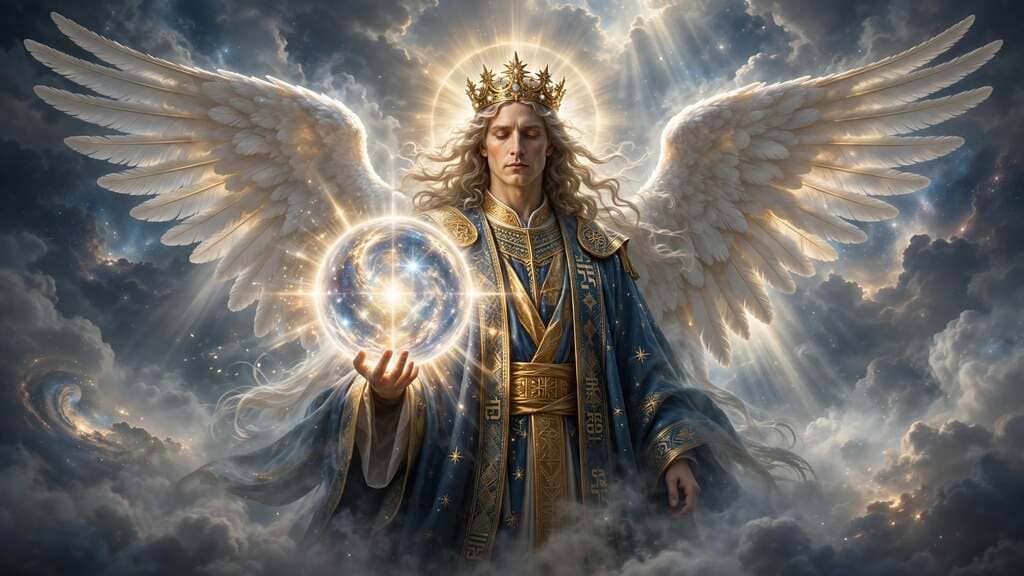
Dominions are also called Lordships, and they belong to the fourth level of the angelic hierarchy.
This level marks the point where we stop talking about pure worship, focusing instead on management of the heavens.
The Dominions oversee the lower angelic ranks, making sure that everything is done according to God’s will.
They’re typically shown holding orbs of light, which symbolize authority.
They help us understand that even in heaven, structure matters, and they’re the ones who keep it intact.
5. Virtues
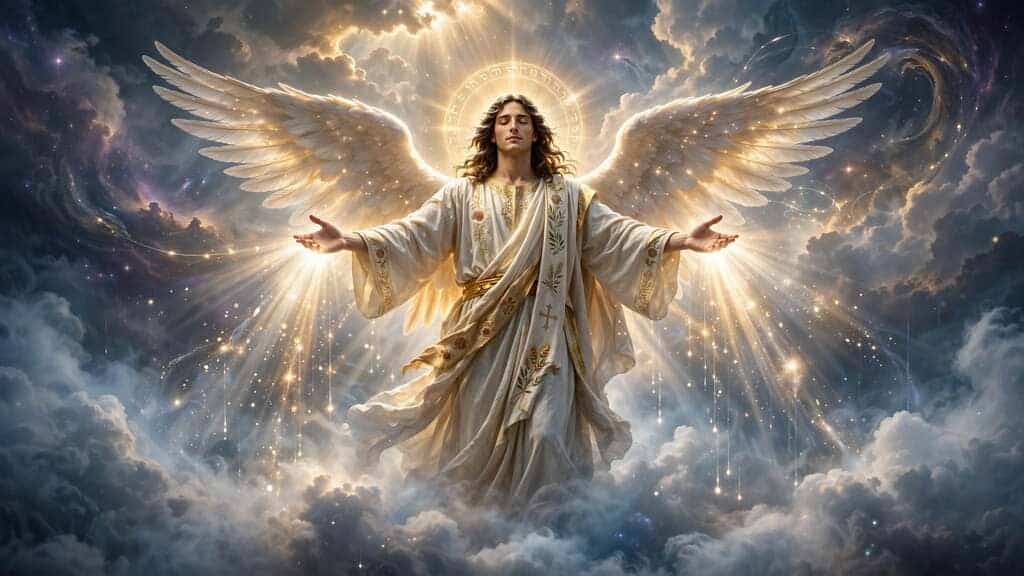
The Virtues are traditionally linked to miracles and grace that enter the physical world. It’s said that the angels of this level reflect God’s power across the universe.
They’re often depicted with their arms open, light emanating from them.
This imagery supports the idea that the 神力 flows through them and takes visible shape.
Some traditions also hold that the Virtues bring courage to the weak, inspiring acts of faith among humans.
Whenever we hear of an angel being connected to a 圣迹 on earth, it’s thought that the Virtues are behind it.
Their job is to take God’s grace beyond the abstract and make it into reality.
6. Powers
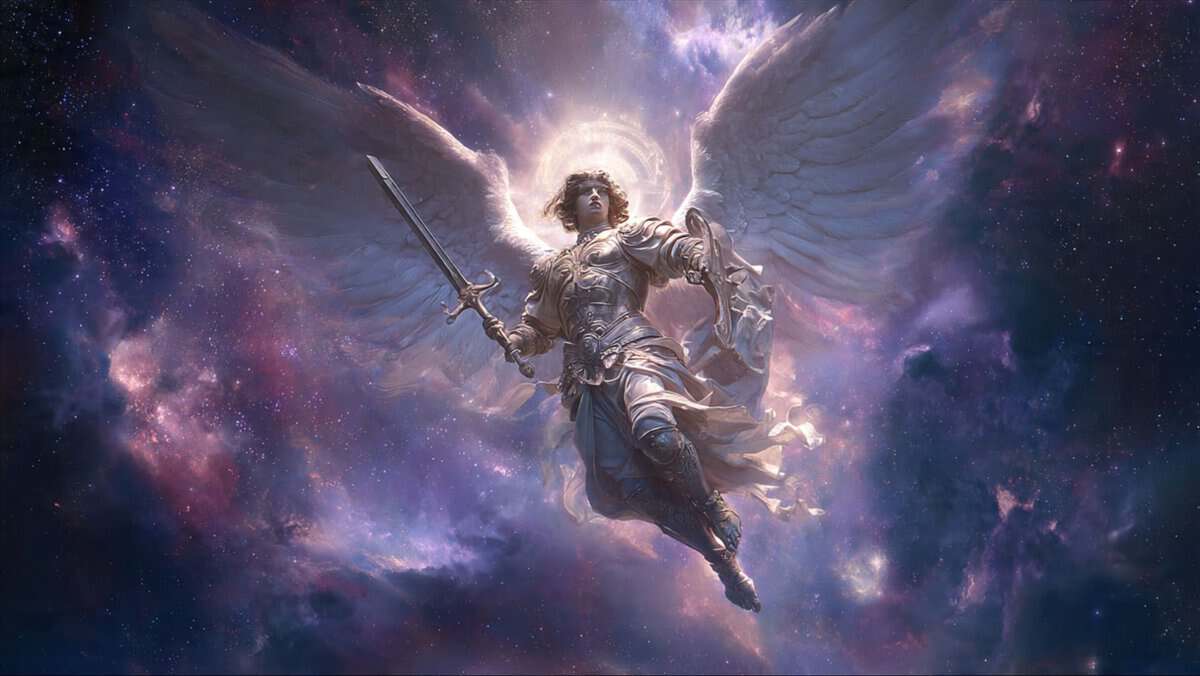
The Powers are warrior angels. On this level in the hierarchy, the main concern of the angels is defending the order against darkness.
Many traditions describe the Powers as the very angels who fight demons directly, doing all they can to stop the corruption from spreading.
They’re sometimes also called Authorities, which lets us know that they also have the power to decide whether something is a threat to the order or not.
They’re protectors of peace, and the first angels in the hierarchy we’re able to relate to.
7. Principalities
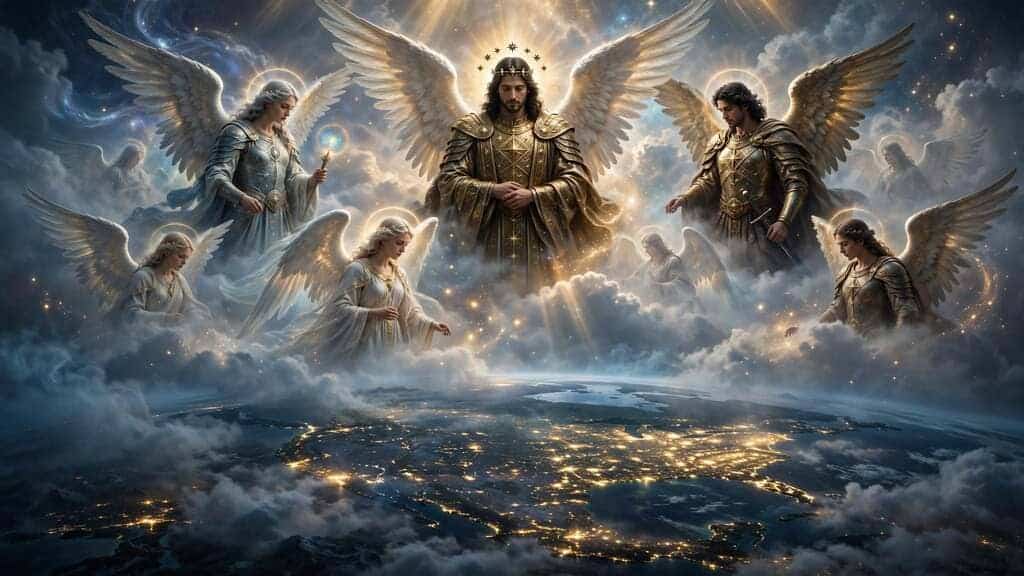
At the seventh level of the hierarchy, we find the Principalities, who are believed to watch over nations and communities.
They guide the collective destiny of peoples. They inspire leadership and justice in societies.
Some traditions connect them to the rise and fall of nations, suggesting it’s all in their hands, and their ultimate decision depends on the level of corruption they encounter among people.
The Principalities have a massive responsibility since they’re basically responsible for every soul that exists!
It’s also thought that they’re the inspiration behind righteous rulers and revolutionaries.
God created them to mind the greater good of humanity!
8. Archangels

At this level, we encounter the angels that most believers know by name.
Like Michael, Raphael, Gabriel, Jophiel and others belong to this rank. Unlike the more abstract heavenly beings, these angels take an active role in scripture.
Gabriel delivers divine news, Michael leads the charge against darkness, and Raphael heals the sick.
Archangels are trusted with the greatest news and missions connected to humanity. They’re often depicted as fully armed warriors because their missions often demand courage.
Numerous traditions view them as the generals of the angels, but also as the bridge between us and the heavens.
9. Angels
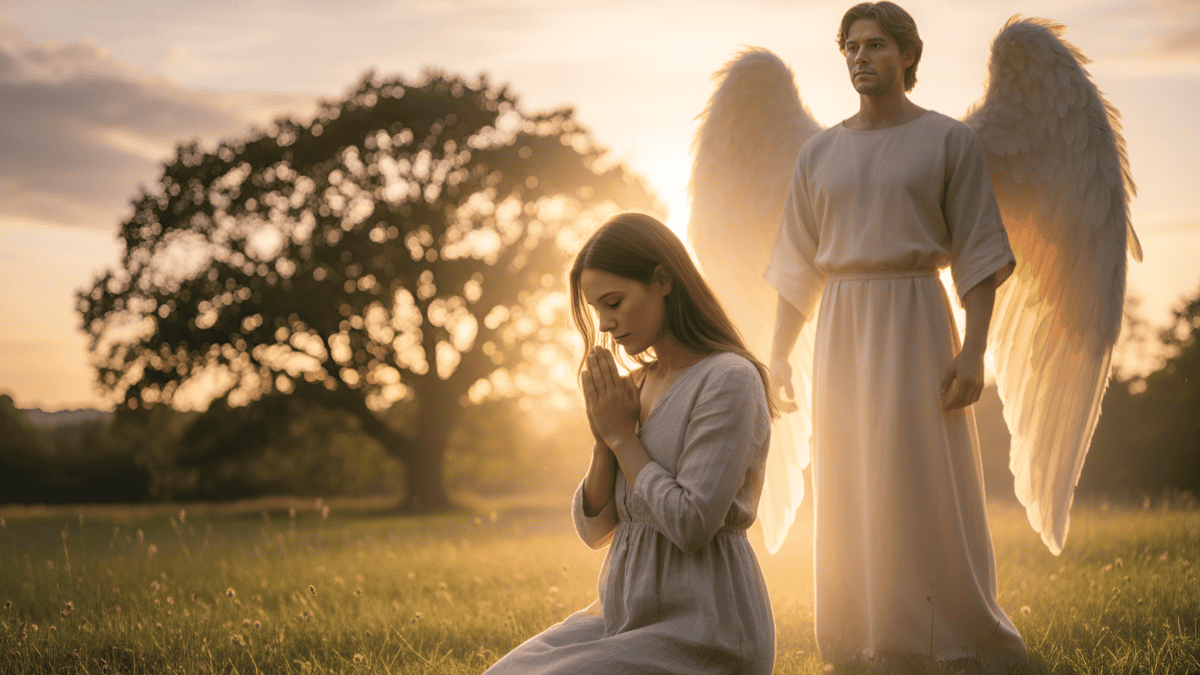
The angels, God’s messengers, belong to the level closest to us.
They’re the most beloved because it’s believed that they walk alongside us every day, watching and protecting us against evil.
They also bring comfort and guidance to each individual human, and they’re essentially the 守护天使 we often talk about.
The angels are tasked with a more intimate and small-scale task, but they’re living proof that God cares for each one of us daily.

A little Aquarius, devoted to writing and embroidery. Through my writing, I hope to empower readers to align with their true selves and navigate life’s mysteries with confidence.