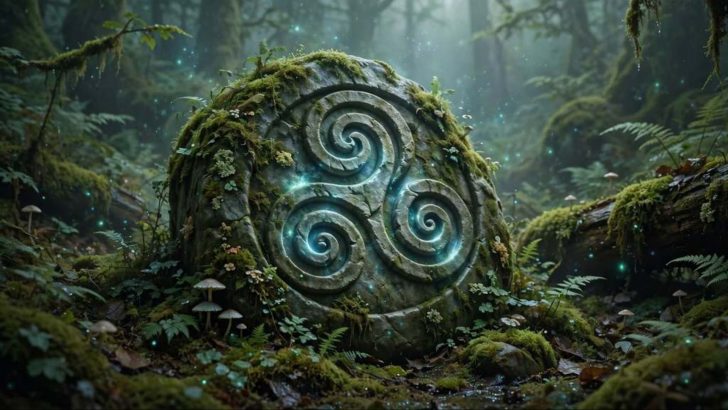
Sacred symbols have been used in rituals since history remembers. Though we often wear them as jewelry or tattoos, few people know their deeper meaning.
They have guided ancient people toward balance and enlightenment, and they can do the same for us, if we bother to understand them.
Here are 11 major holy symbols you should know!
1. Triskele
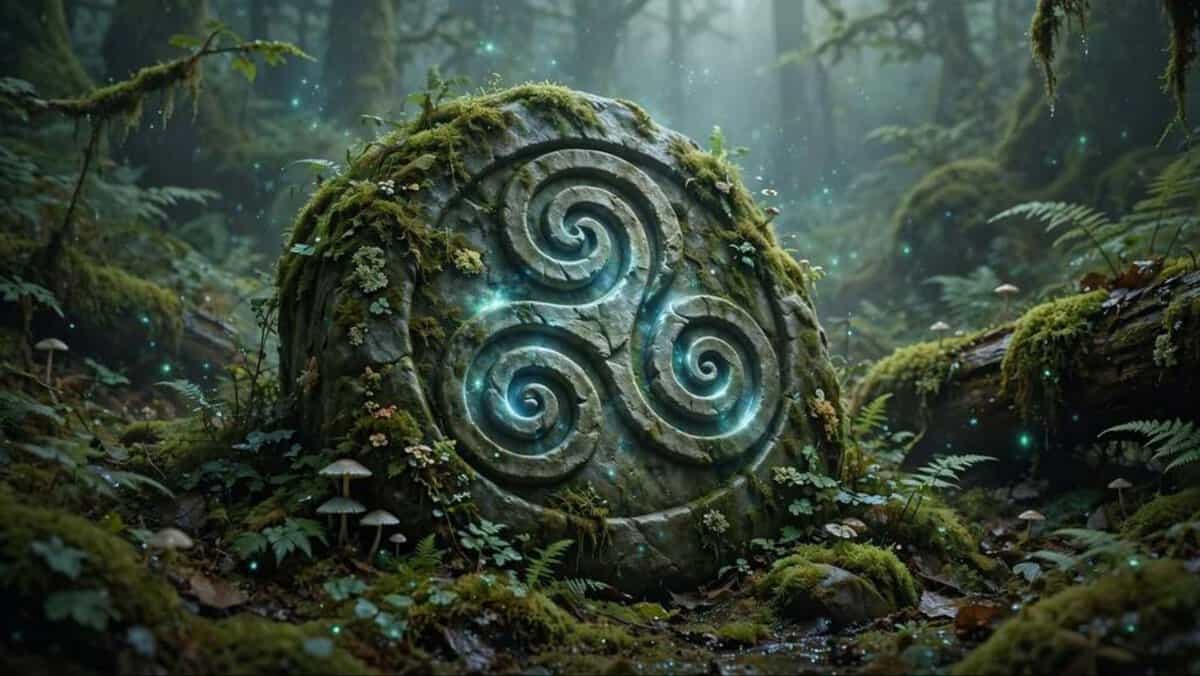
The triskele comes in the shape of three interlocking spirals. The symbol shows up at the entrance stone of the Newgrange, a site that’s 5,000 years old!
Though we know it’s associated with Celtic spirituality, the meaning of the triskele has evolved over centuries.
The core idea, which stayed consistent, is that it honors the things that come in threes: mind, body, spirit; past, present, future; birth, death, rebirth; the seasons…
It’s a symbol of motion and growth, meant to remind us that nothing in this life is static or linear. It all moves in endless circles.
When it comes to your personal spirituality, the triskele reminds you to 拥抱变化. Understand that it’s not chaos, but rhythm!
2. Flower of Life
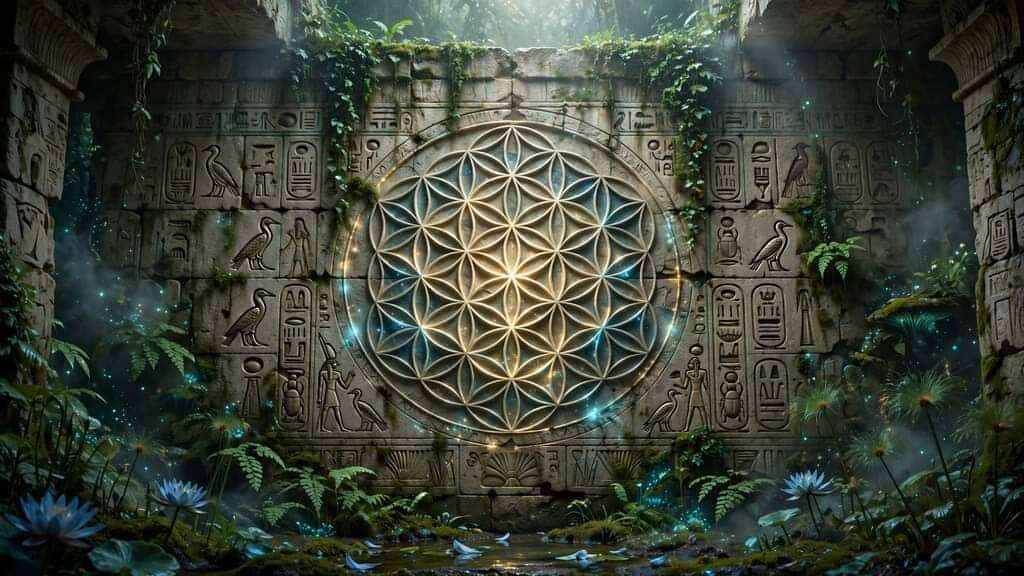
The Flower of Life represents sacred geometry. This symbol of overlapping circles has been found carved into the Temple of Osiris in Egypt.
By most estimates, it’s thousands of years old.
Similar shapes appear in Chinese and Islamic art, suggesting this shape was embraced by various civilizations.
Spiritually, the Flower of Life represents the 互联性 of everything. The idea is that all living things come from the same source.
Some traditions also believe that it reflects the perfect geometric shapes found in nature, such as snowflakes 或 cell division.
Staring at it feels hypnotic, and that’s the point. It’s a visual reminder that you’re part of something greater, even when you feel alone.
3. Mandala
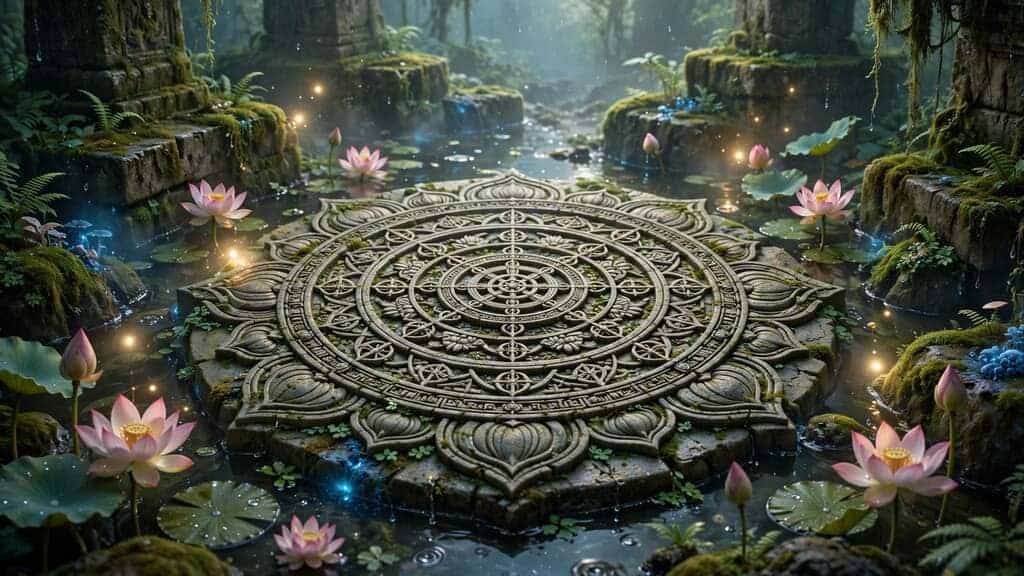
The word mandala comes from Sanskrit, and it means circle.
However, don’t let the simple etymology fool you. In Hindu and Buddhist traditions, mandalas are intricate designs that represent the entire universe!
Tibetan Buddhist monks spend days creating complex mandalas from colored sand, grain by grain, only to ritually sweep them away when they’re done.
This creation and 毁灭 symbolism is crucial.
It also fits the Buddhist idea that holding onto things too tightly creates suffering.
In spirituality, mandalas are used as focal points for 冥想. By watching this symbol, you focus inward, prioritizing enlightenment.
4. Vajra
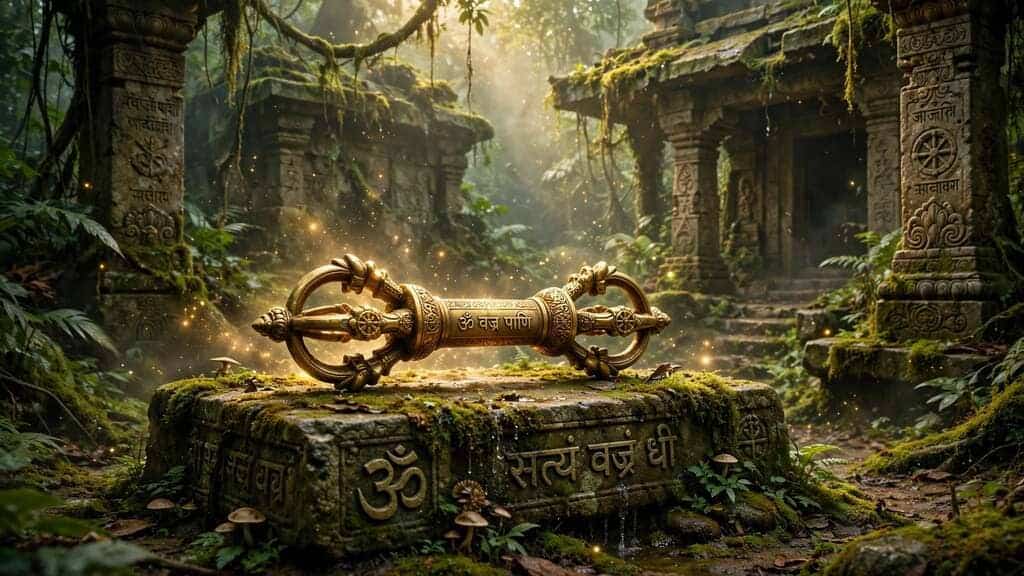
The Vajra is translated either as a diamond 或一个 thunderbolt in Sanskrit.
This symbol represents the indestructible nature of wisdom and reality.
Much like a diamond can cut anything but can’t be cut itself, the vajra represents a mind so clear that confusion stands no chance against it.
The thunderbolt connection is also linked to 清晰度 和 突破.
Practitioners use the varja during meditation and ritual to remember their spiritual strength.
If you’re struggling to achieve inner clarity, the varja is the symbol you might be missing.
5. Aum
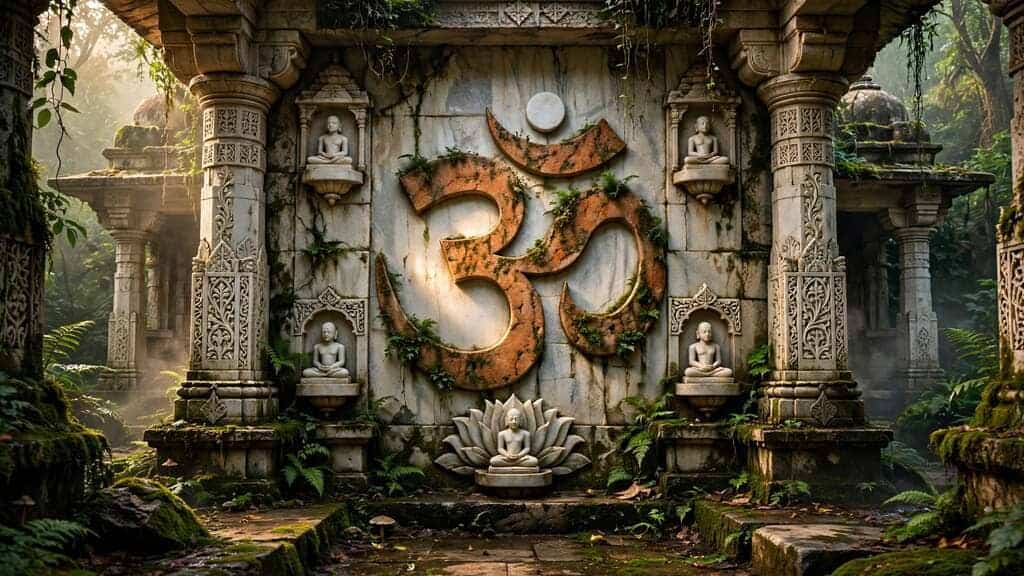
Aum is one of the most recognizable spiritual symbols, and for a good reason.
In Hindu, Buddhist, and Jain traditions, it’s considered the primordial sound of the universe. It’s the vibration that existed before creation.
It consists of three curves and a dot, which also suggests important trinities: creation, preservation, destruction; waking, dreaming, deeper consciousness.
You can often see people chant “om” while meditating, and the vibration it creates is meant to affect your body and mind. It helps you 焦点 on what matters, rather than external experiences.
This vibration is older than language; it’s simply a sound that’s surprisingly grounding.
6. Lotus Flower
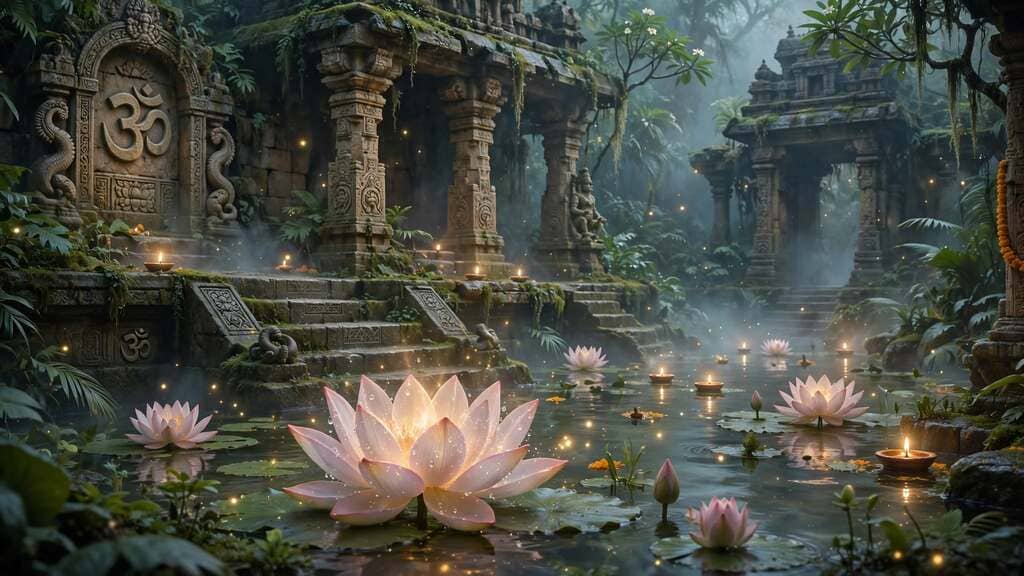
The lotus flower is a poetic symbol of something pure and beautiful emerging from muddy water.
This contrast made it popular across Hinduism and Buddhism, where it represents purity and enlightenment.
It also stands for the 精神智慧 that comes through 艰难困苦, meaning that the lotus isn’t beautiful despite its environment, but because of it!
In Hindu tradition, Lakshmi and Vishnu are often depicted sitting on lotus blossoms. And in Buddhism, the flower is connected to the Buddha himself.
The lotus is relatable to so many of us because we know that true growth doesn’t come from comfort.
It’s also not the mud that defines the flower; likewise, we shouldn’t allow our hardship to define us, only what we earn through it.
7. Dharma Wheel
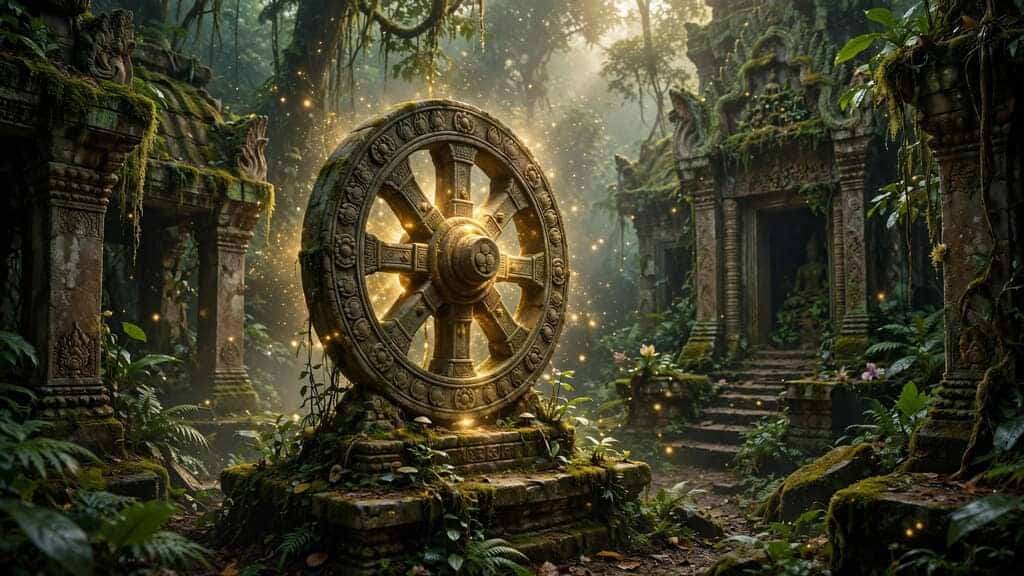
The Dharma Wheel is one of Buddhism’s oldest symbols, and it summarizes the entire spiritual path.
It’s shaped like a wheel and represents the Noble Eightfold Path.
It dates back to when the Buddha delivered his first sermon in Sarnath, and this event is even described as “setting the wheel of dharma in motion.”
Motion is at the core of this symbol. A wheel wasn’t built to stand still, but to constantly move. It represents the active journey of growth.
The Dharma Wheel is present in ancient temples and even national flags, which tells you just how important it is.
In your spiritual journey, it should remind you that the work is never done. You don’t reach clarity once and stop there; it requires constant intention.
8. Enso
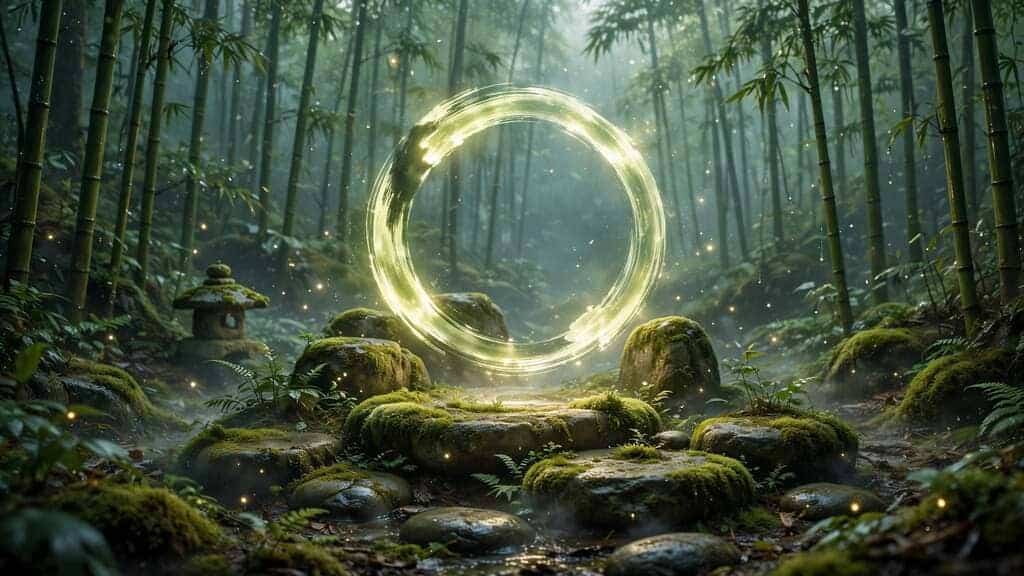
The enso is a simple circle drawn in one or two brushstrokes. It’s present in Zen Buddhist art and practice.
However, its simplicity doesn’t make it shallow. It actually takes a lot of practice to be able to draw it in a single stroke, with no overthinking.
Sometimes, the circle is complete, and other times, there’s a gap where the two lines should meet. Both versions are important.
This symbol stands out as one of the most refreshing ideas of Zen philosophy: perfection isn’t the point; capturing an authentic moment 是。
In your personal journey, enso reminds you to stop demanding flawlessness from yourself and from others.
Being present, just as you are, is enough.
9. Endless Knot
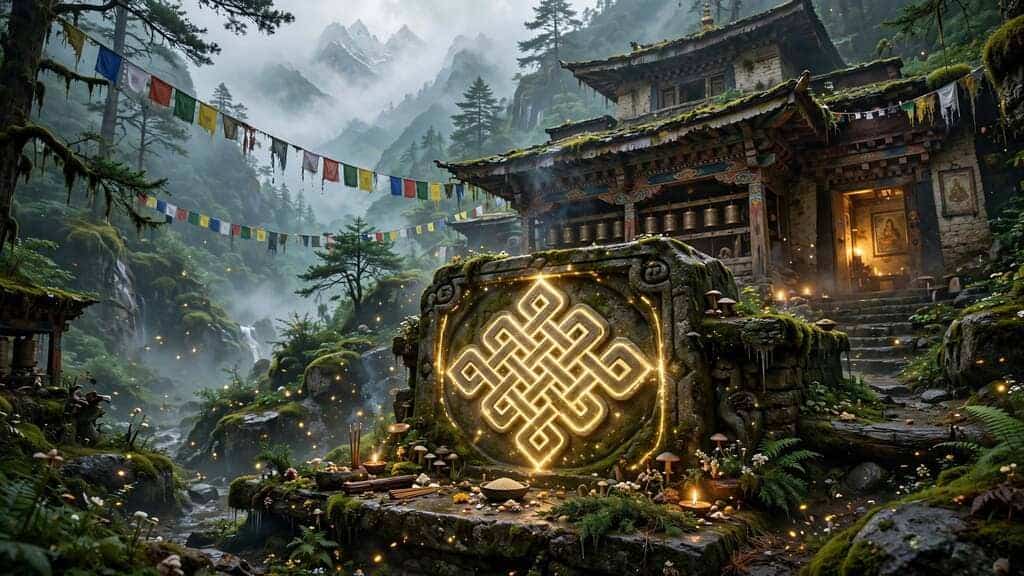
The endless knot is an intricate pattern with no beginning or end. It’s one of the Eight Auspicious Symbols in Tibetan Buddhism.
It represents the interconnected nature of all existence. Every action and choice we make is part of an endless web of cause and effect.
It’s also closely connected to the infinite wisdom and compassion of the Buddha.
Some traditions also link it to the concept of samsara, the endless cycle of birth, death, and rebirth.
The endless knot also captures something we feel to be true, but can’t always articulate: our lives aren’t isolated from the people around us.
We’re all together in this, and nothing exists purely on its own.
10. Yin & Yang
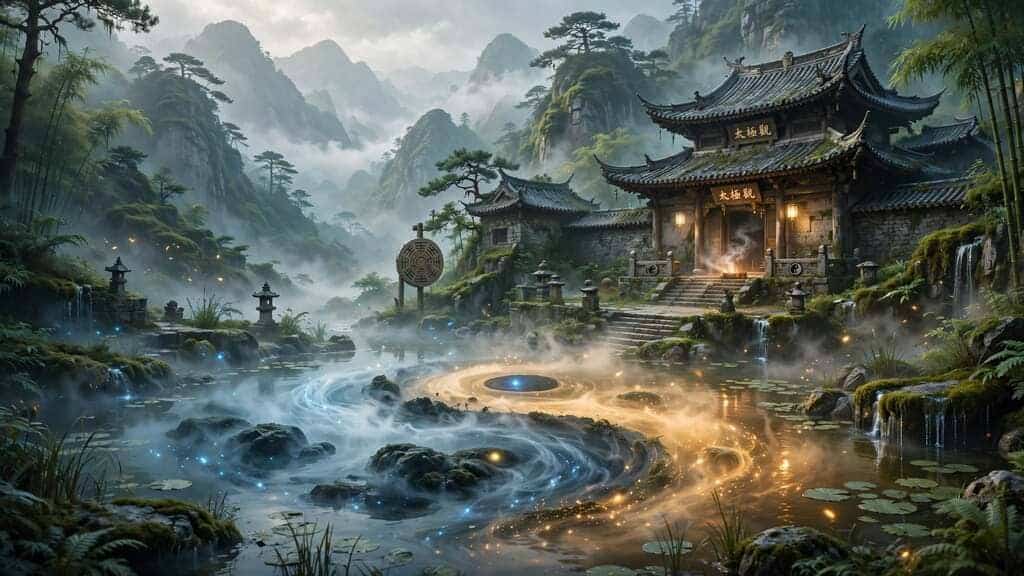
Few symbols are as famous as yin and yang.
It’s rooted in Chinese Taoist philosophy and represents 对等性. Though in modern interpretations, you’ll often hear it defined as a balance of good and evil, but that’s not exactly it.
Yin and Yang are opposite forces that can’t exist without one another. Darkness needs light, and stillness needs motion, or neither of them means anything.
The small contrastic dots inside the two halves send a message that nothing is purely one thing.
Taoist philosophy uses this concept to explain everything from the seasons to human behaviors.
If you’re struggling to accept a difficult season in life, yin and yang can offer a comforting perspective.
11. Hamsa
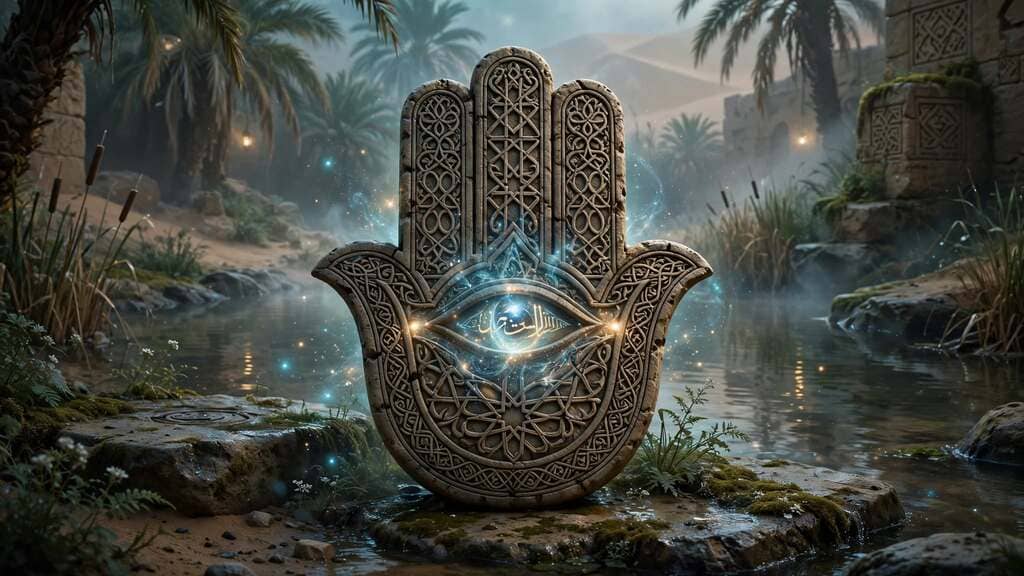
The hamsa is a palm-shaped amulet that people have been turning to for protection for centuries.
It’s one of the rare symbols that crosses the line between religions seamlessly.
In Jewish tradition, it’s called the Hand of Miriam, while in Islamic tradition, it’s known as the Hand of Fatima. It’s also present in North African and Middle Eastern spirituality, too.
Regardless of the name, the hamsa stands for blessing and protection, especially against the evil eye.
It’s also presented with an eye in the center of the palm, and it symbolizes awareness of the negative energy.
If you’re seeking protection during a difficult time, there are a bunch of ways to include the hamsa into your life.
It can be worn as jewelry, painted on objects or clothes, and even tattooed!

A little Aquarius, devoted to writing and embroidery. Through my writing, I hope to empower readers to align with their true selves and navigate life’s mysteries with confidence.