
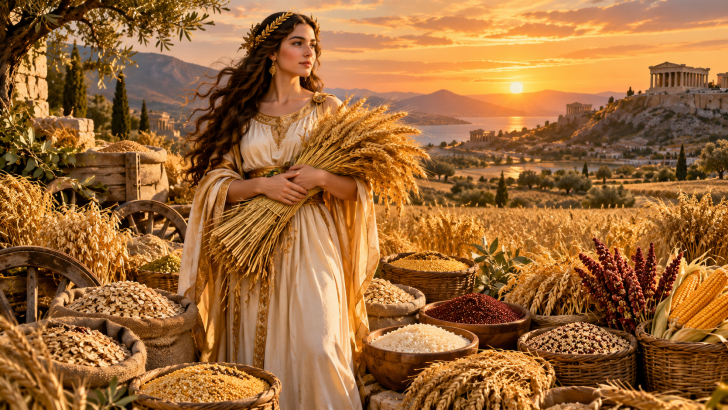
Grains may look ordinary today. We turn them into bread, porridge, noodles, and countless other foods without thinking much about them.
But ancient people often saw grain very differently. A successful harvest could mean survival. A failed one could bring hunger.
So it makes sense that grain became connected with gods, offerings, fertility, death, rebirth, and the changing seasons.
Some grains were given directly to deities. Others became part of religious festivals or myths about the gods themselves.
Still, they all helped feed civilizations. Here are ten sacred grains that fed both humans and gods.
1. Barley – The Grain of Demeter
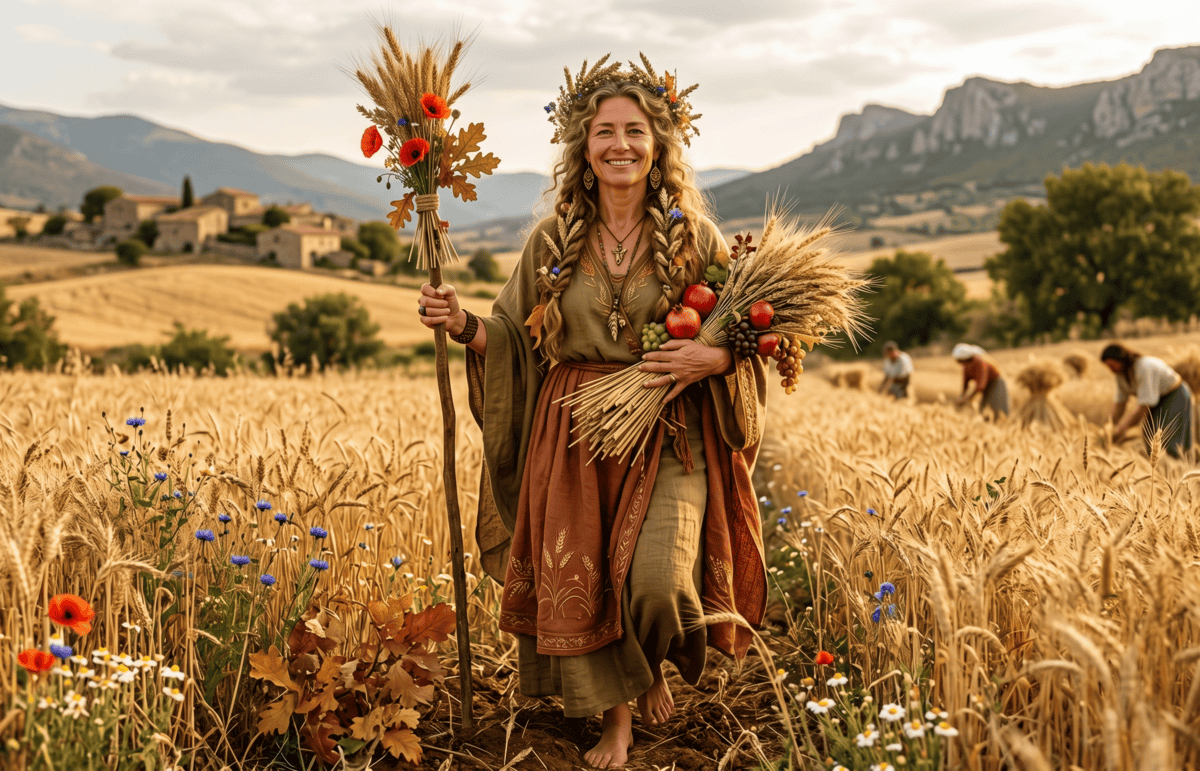
Barley was one of the most important grains of the ancient Mediterranean world. It also had a strong place in Greek religion.
Demeter, the goddess of agriculture and grain, was closely connected with the crops that kept people alive.
Barley played a role in the Eleusinian Mysteries, the famous religious rites connected with Demeter and Persephone.
Participants drank a beverage called kykeon, which ancient sources describe as containing barley.
That gives this simple grain an unusual history. It fed ordinary families.
But it also entered one of the most mysterious religious ceremonies of ancient Greece.
For the Greeks, grain was never only food. Every new harvest could remind people that life disappears into the earth and rises again.
2. Emmer Wheat – The Grain of Ancient Egypt
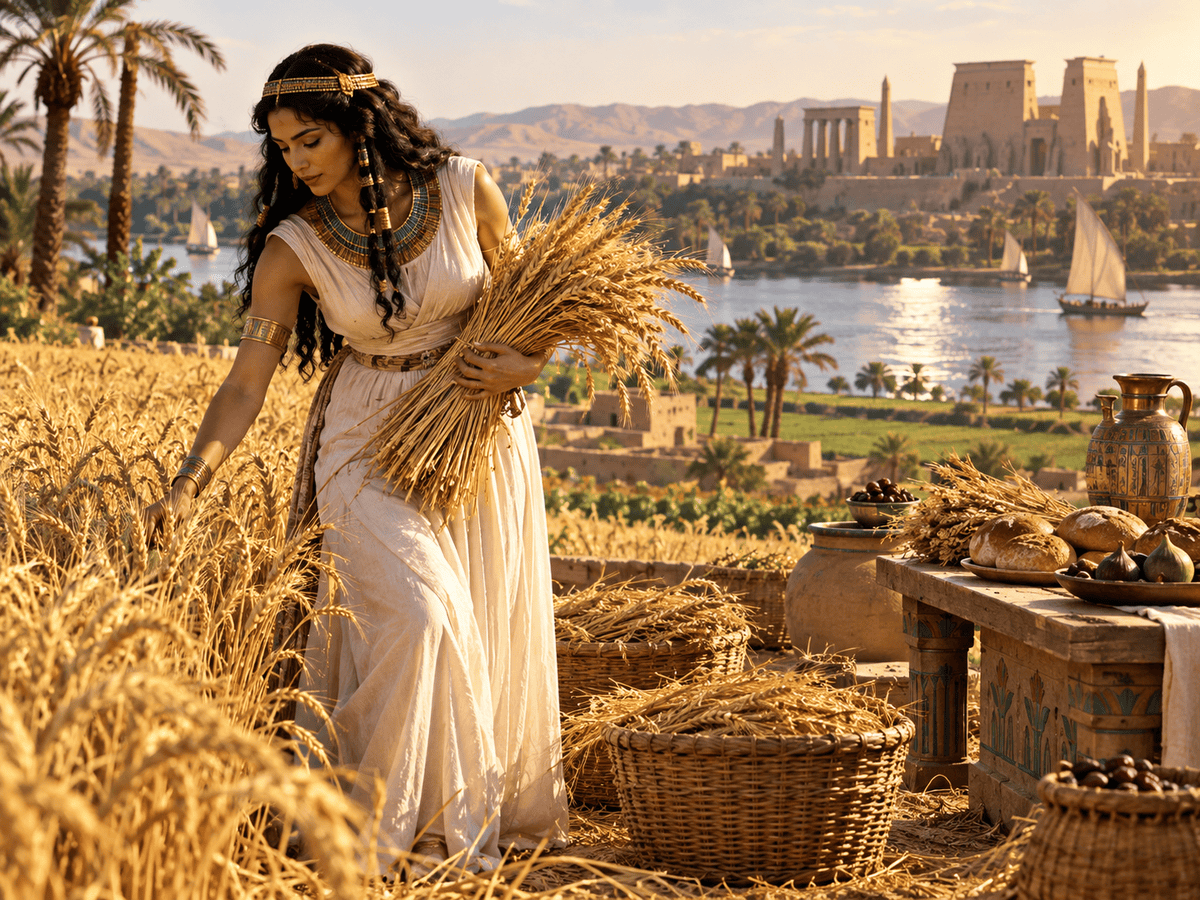
Bread was at the center of ancient Egyptian life. And one of the grains behind that bread was emmer wheat.
Emmer was widely grown in ancient Egypt and used to make bread and other foods. Grain also had religious importance.
Bread and other foods were regularly presented as offerings to deities and placed in tombs for the dead.
The god Osiris became especially connected with vegetation, fertility, death, and renewal.
Ancient Egyptian imagery could even connect sprouting grain with his return to life.
That made wheat a powerful symbol. A dry seed looks almost lifeless. Place it in the right soil, and something green appears.
For people surrounded by the yearly rhythms of agriculture and the Nile, that transformation could feel almost miraculous.
3. Spelt – The Grain of Ancient Rome
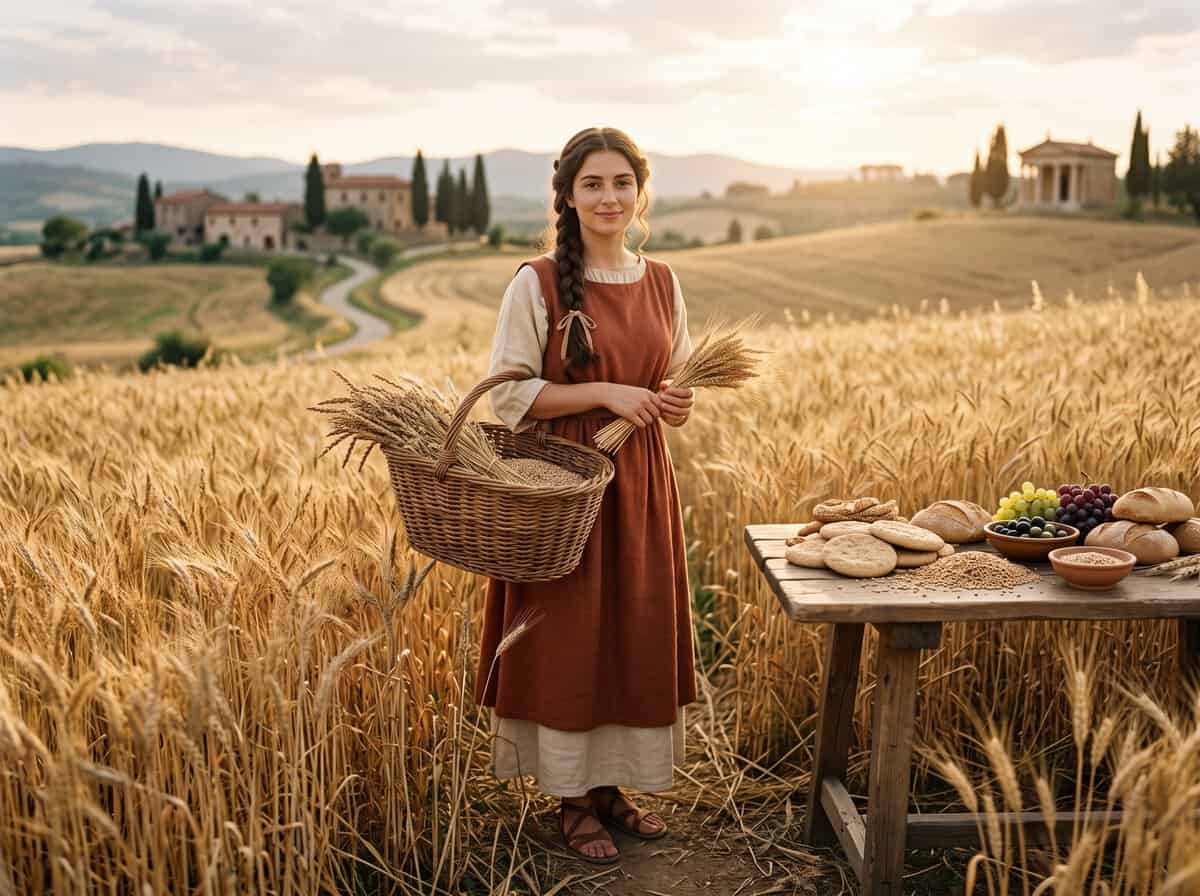
Spelt and other wheat varieties were important in the ancient Roman world. But grain also entered Roman religion in a direct way.
The Romans offered grain, cakes, and other foods during religious ceremonies.
Ceres was their major goddess of agriculture, grain, and fertility. Her name even helped give us the modern word “cereal.”
Grain represented more than a good meal. It represented an orderly society.
Fields needed to be planted. Harvests had to be gathered. Food had to reach cities.
Without agriculture, even the greatest empire would quickly become hungry.
That makes grain a fitting offering to Ceres. The Romans could build roads, temples, and armies.
But underneath all of it was something much simpler. Someone still had to grow the food.
4. Rice – A Sacred Gift Across Asia
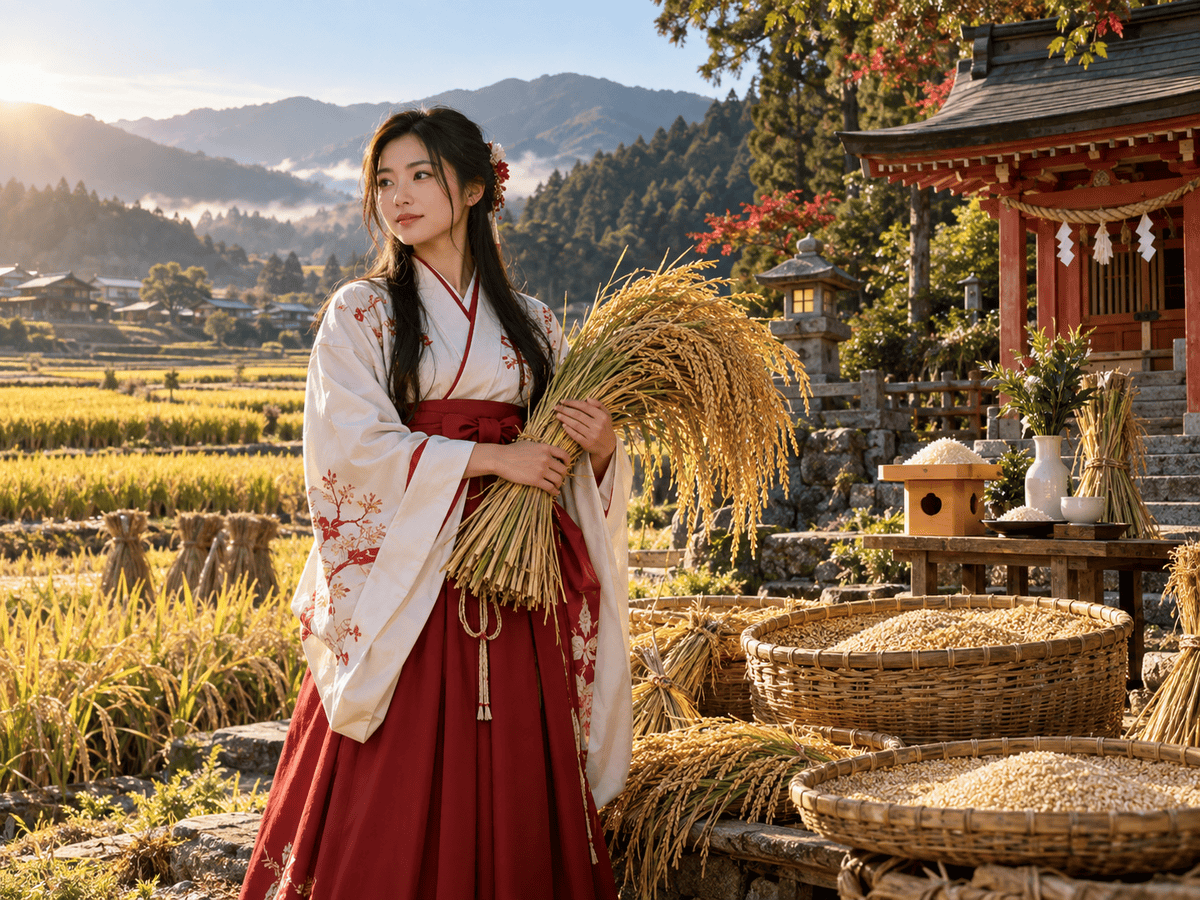
Few foods have shaped human life as deeply as rice. Across Asia, rice became much more than a meal.
It could represent life, prosperity, fertility, and divine blessing.
Different cultures developed their own sacred stories around it.
In Japanese tradition, rice has especially important connections with Inari.
Inari is associated with rice, agriculture, prosperity, and other areas of life.
Rice and rice products also became important offerings in Shinto practice.
Similar respect for rice appears in other Asian religious and folk traditions, although the beliefs are not all the same.
That difference matters. There is no single “rice mythology.” But one idea appears again and again.
When one crop feeds generations of people, it becomes very difficult to see it as ordinary.
5. Corn – The Grain That Became Humanity
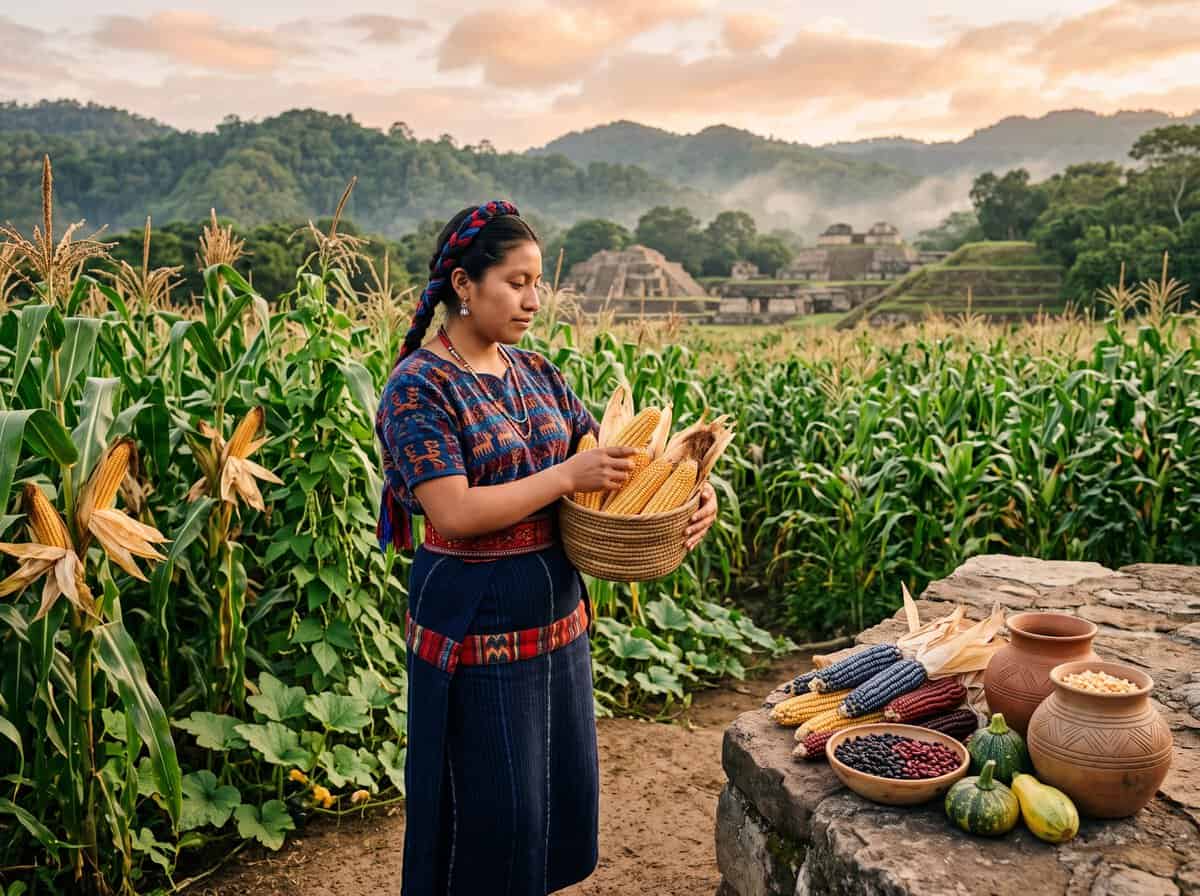
For several Indigenous cultures of the Americas, maize was more than an important crop.
It could be part of the story of humanity itself. One of the most famous examples appears in the Popol Vuh, a K’iche’ Maya text.
In its creation story, earlier attempts to make humans fail. Eventually, successful humans are formed from maize.
That gives corn an extraordinary role. People do not simply eat the sacred crop. They are symbolically made from it.
Maize also became deeply connected with deities, agriculture, ritual life, and calendars across Mesoamerica.
Different cultures had different maize gods and traditions. The basic importance is easy to understand.
Corn fed cities. It supported families. It helped civilizations grow.
A crop that gives people life can easily become part of the story explaining where life came from.
6. Millet – The Grain of Ancient China
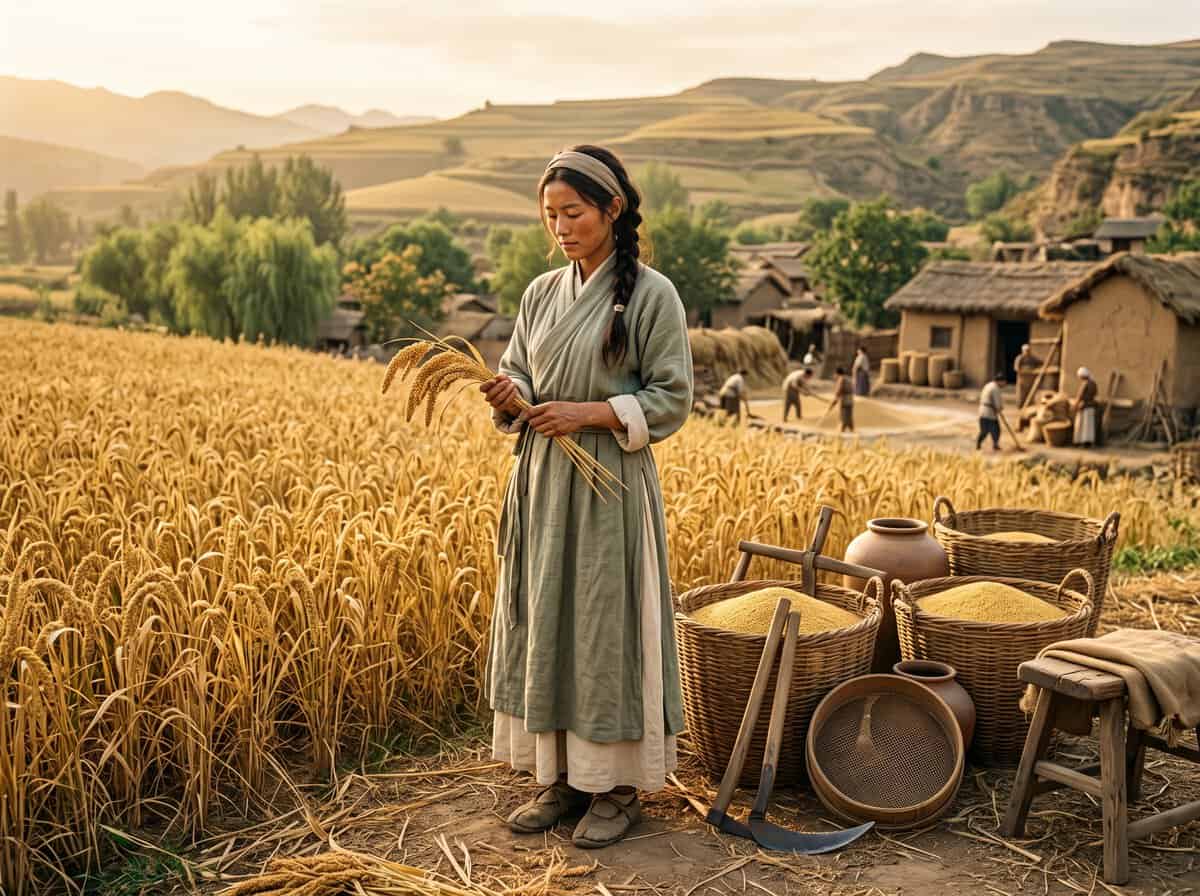
Before rice became the food most outsiders immediately associate with Chinese cuisine, millet supported communities in northern China for thousands of years.
It also entered stories about agriculture and civilization.
Hou Ji is an important figure in Chinese tradition whose name is often translated as “Lord Millet.”
He became associated with agriculture and the teaching of farming. That connection shows just how important grain could become.
Learning to grow food was not a small achievement. It changed human life.
People could remain in larger communities. They could store food. They could plan for future seasons.
Millet may be tiny. But its cultural importance was enormous. Sometimes the smallest seed can support an entire world.
7. Amaranth – The Sacred Seed of the Aztecs
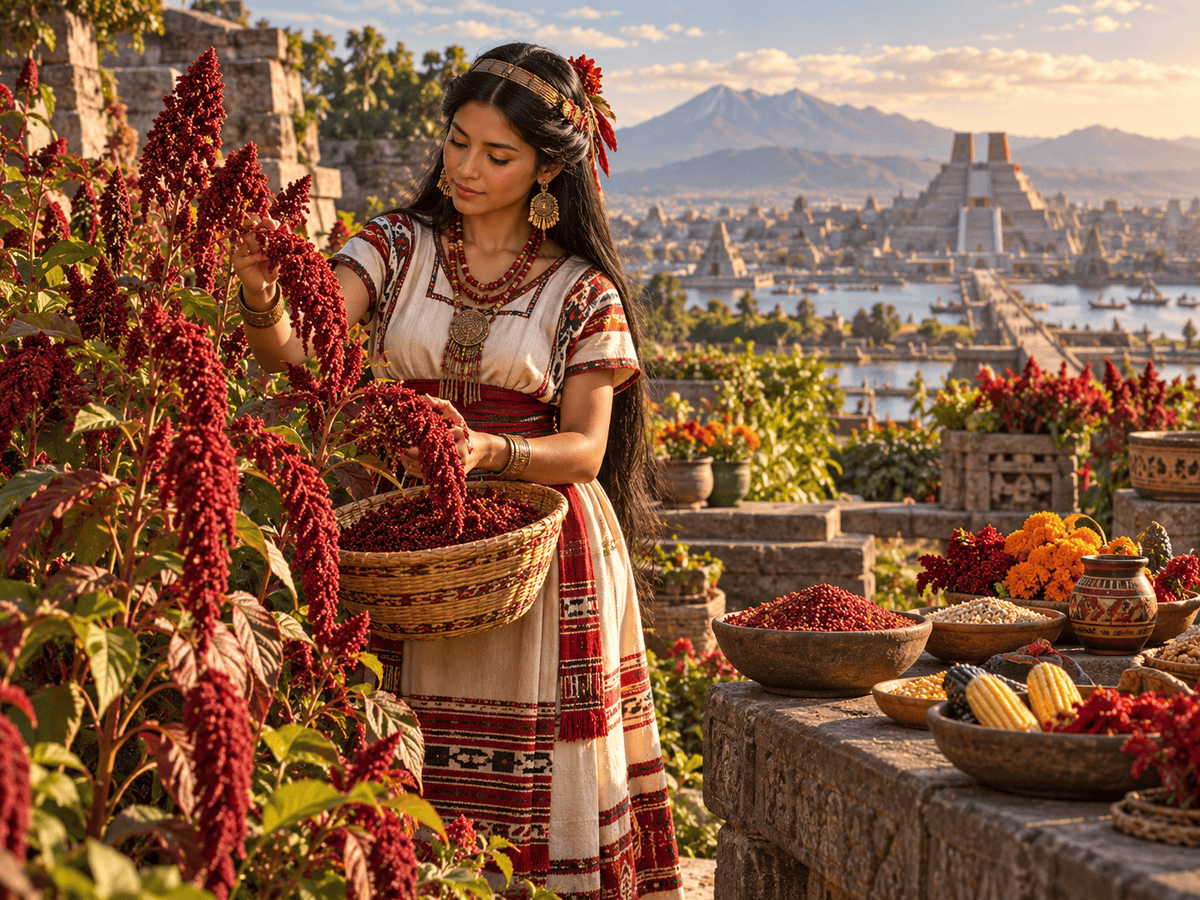
Amaranth is technically a pseudocereal rather than a true cereal grain. But it was an important food in Mesoamerica.
It also had religious uses among the Mexica, commonly known as the Aztecs.
Amaranth seeds could be mixed with other ingredients and shaped into ritual figures connected with deities.
These figures could then become part of religious ceremonies.
That makes amaranth one of the clearest examples of food entering the sacred world.
The same plant could nourish the body and become part of a ceremony.
After the Spanish conquest, some Indigenous religious uses of amaranth were suppressed.
But the plant survived. Today, amaranth is still eaten in Mexico and elsewhere.
A tiny seed managed to outlive enormous changes in religion, government, and culture.
8. Rye – The Grain of Northern and Eastern Europe
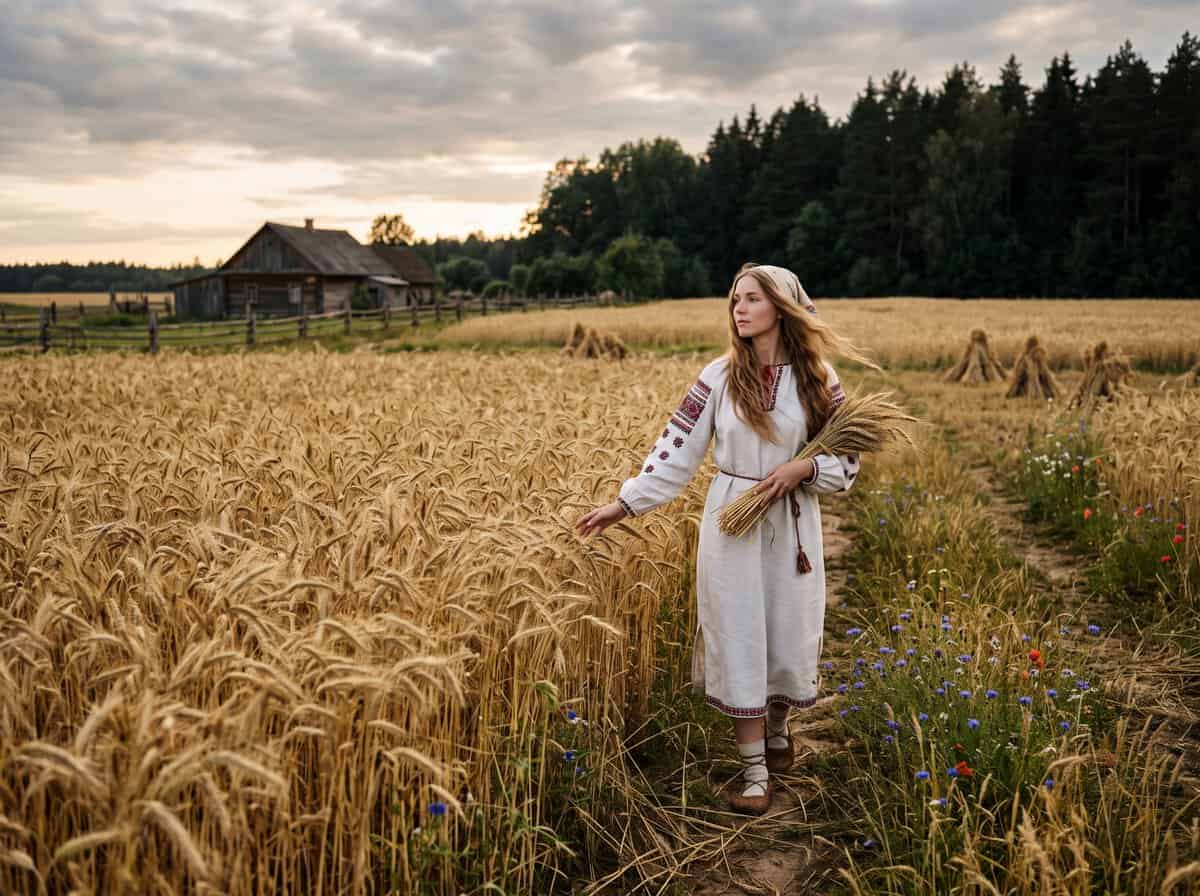
Rye became especially important in places where other grains could struggle.
It tolerates colder conditions and poorer soils better than some forms of wheat.
That made it valuable across parts of northern, central, and eastern Europe.
Over time, rye fields also gathered folklore. Slavic traditions contain stories about supernatural beings connected with fields and grain.
The exact beliefs varied greatly between regions. Some spirits protected fields.
Others warned people away from dangerous places or certain times of day.
Rye therefore became part of a landscape filled with more than crops. A field could feed your family.
But in folklore, it might also contain something you did not want to meet alone.
That mixture of everyday work and supernatural imagination is common in agricultural traditions.
People spent their lives in the fields. Naturally, some of their strangest stories grew there too.
9. Oats – The Grain of the Northern Table
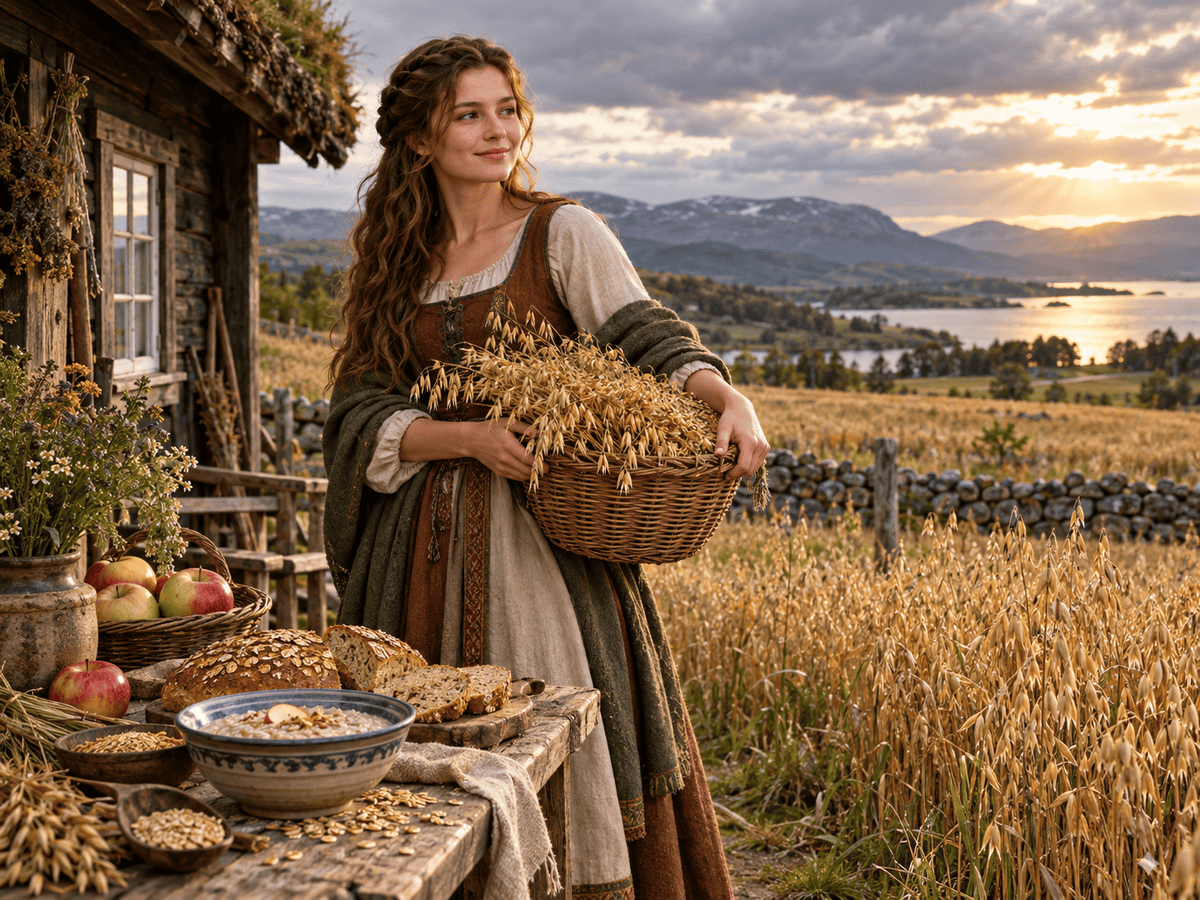
Oats became an important food in cooler parts of Europe. They could survive conditions that were difficult for other crops.
For many communities, that made them extremely useful. Oats do not have one famous ancient grain goddess attached to them.
Their sacred connections are less direct. But oats still became part of seasonal customs, harvest traditions, and European folklore.
They fed both people and animals. They could be turned into porridge, breads, and other simple foods.
That ordinary usefulness is important. Not every sacred food needed an enormous myth.
Sometimes a crop became meaningful because people depended on it year after year.
The grain that survived a difficult season could feel more valuable than something rare or luxurious.
10. Quinoa – The Sacred Crop of the Andes
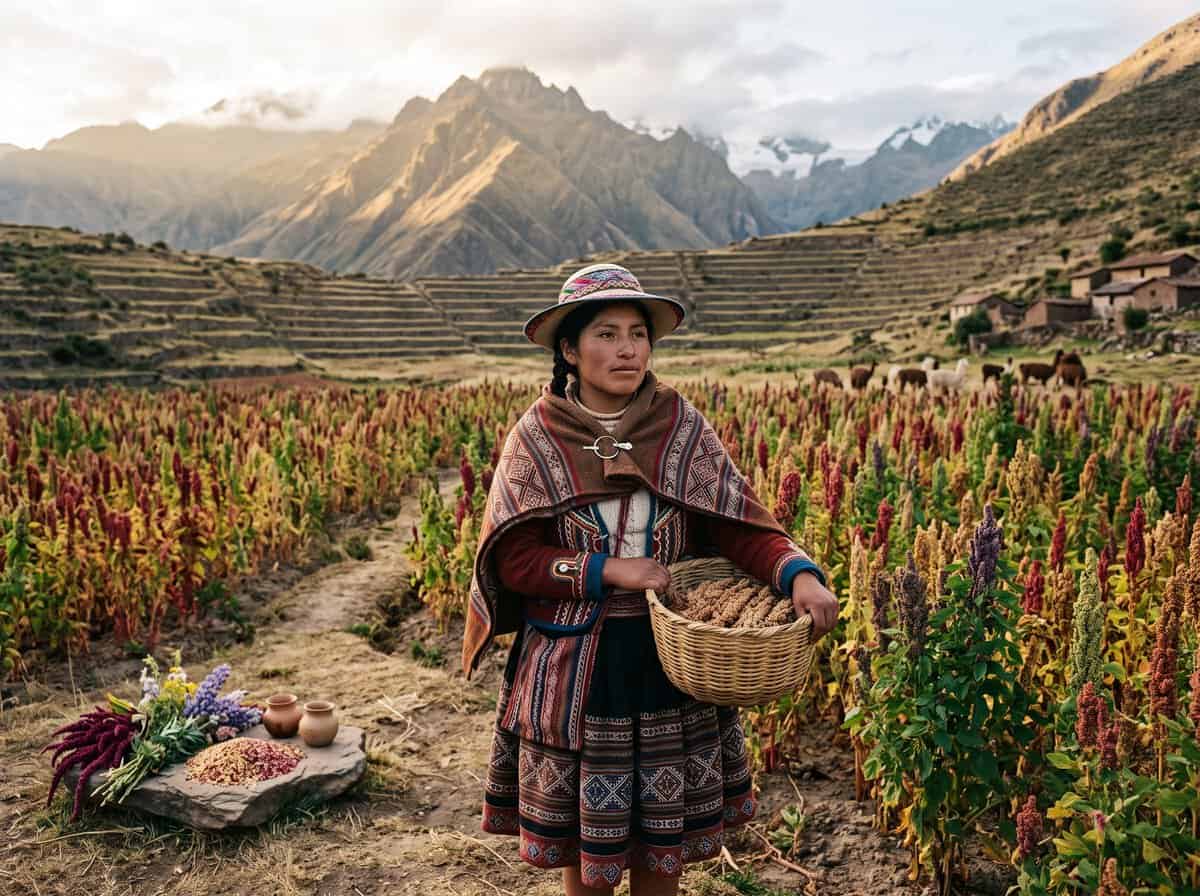
Quinoa is another pseudocereal. And in the Andes, it has been cultivated for thousands of years.
Andean peoples relied on it because it could grow in difficult high-altitude conditions.
Under the Inca Empire, quinoa had both practical and ceremonial importance.
Historical accounts describe the Inca ruler taking part in ceremonies connected with planting.
The crop existed within a much larger religious world shaped by the Sun, the earth, mountains, ancestors, and agricultural cycles.
Quinoa therefore represented much more than nutrition. It was part of surviving in a demanding landscape.
That may be the strongest connection shared by all the grains on this list.
Ancient people knew exactly where food came from. They watched seeds disappear into the ground.
They waited for rain. They worried about the harvest.
And when food finally grew, giving some of it back to the gods could feel like the most natural thank-you in the world.

自出生以来,我一直感觉到自己与神灵有着紧密的联系。作为一名作家和导师,我的使命是帮助他人在最黑暗的时刻找到爱、幸福和内心的力量。