
Long before the Gospels were written, people were telling stories about children born in ways that defied nature.
A queen swallows a bead of light, or a goddess decides she doesn’t need a husband at all!
Almost every culture dreamed up a miraculous birth, and it was never without a reason.
These myths mark someone as set apart.
The idea underneath is always the same: life can begin from something bigger than us.
1. Horus
Egypt has one of the oldest miraculous conceptions myths, and it begins with a murder.
Set kills his brother Osiris, and scatters his pieces across the land.
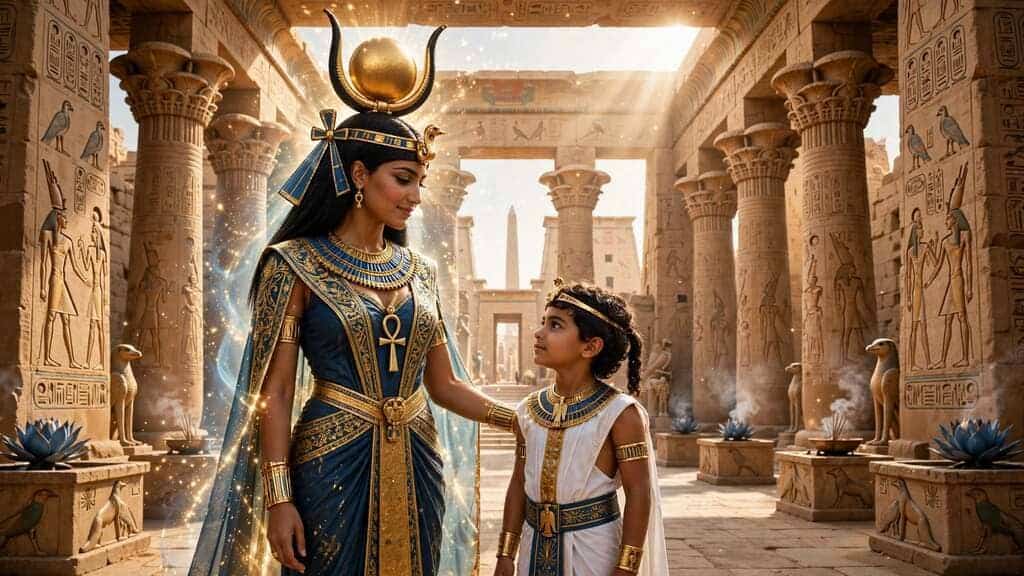
Isis is grieving and furious, so searches the whole country, gathers the fragments, and breathes life back into her husband just long enough to conceive.
In some tellings, she hovers above him as a kite and that’s how Horus comes to be.
She hides the baby in the papyrus marshes, guarding him from Set’s wrath, and he grows up to avenge his father and claim the throne.
Osiris is the dead king, Horus is the living one, and every pharaoh was said to be Horus himself!
Death isn’t the end, but a 续展.
Isis represents devotion that refuses to quit, and the idea that something new can rise from the worst grief imaginable.
2. Perseus
King Acrisius of Argos got a prophecy that his grandson would be the one to kill him.
So he locked his daughter, Danaë, in a bronze chamber so no man could ever reach her.
Zeus, naturally, saw this as a challenge. He slipped in as a shower of golden light, and Danaë became pregnant with Perseus.
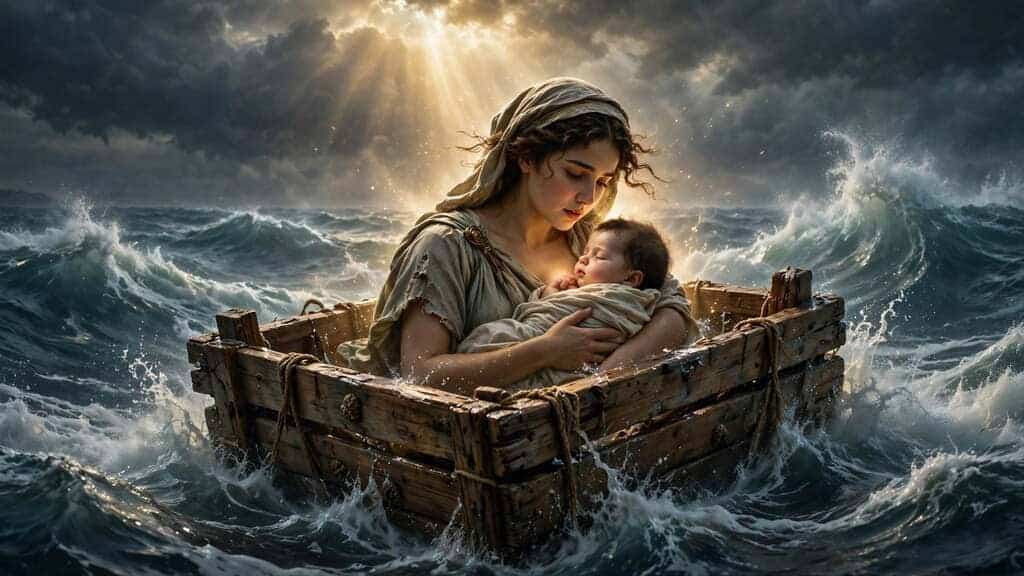
When Acrisius discovered the baby, he sealed mother and child in a wooden chest and threw them into the sea, but they survived.
Years later, Perseus grew up to behead Medusa, rescue Andromeda, and, in one of Greece’s bitterest ironies, accidentally kill his grandfather with a thrown discus!
Gold stands for 神力, and the chest is symbolic of womb and tomb at once!
Like many other Greek myths, this once reminds us that 命运 cannot be outrun.
3. Hephaestus
Zeus once gave birth to Athena straight from his own head, which made Hera furious.
She decided that, if he could create a child without a partner, so could she.
In Hesiod’s version of the myth, she conceived Hephaestus entirely on her own.
But Hephaestus was born lame, and Hera was so ashamed she hurled him from Olympus!
He fell for a day and landed in the sea, where sea goddesses raised him and he learned to forge metal in a hidden cave.
Years later, the rejected child became the smith of the gods, someone indispensable.
He is proof that imperfection and genius can coexist.
His birth also hints at an old tension between male and female creative power.
Whose body gets to make life, and who gets all the credit?
4. Romulus and Remus
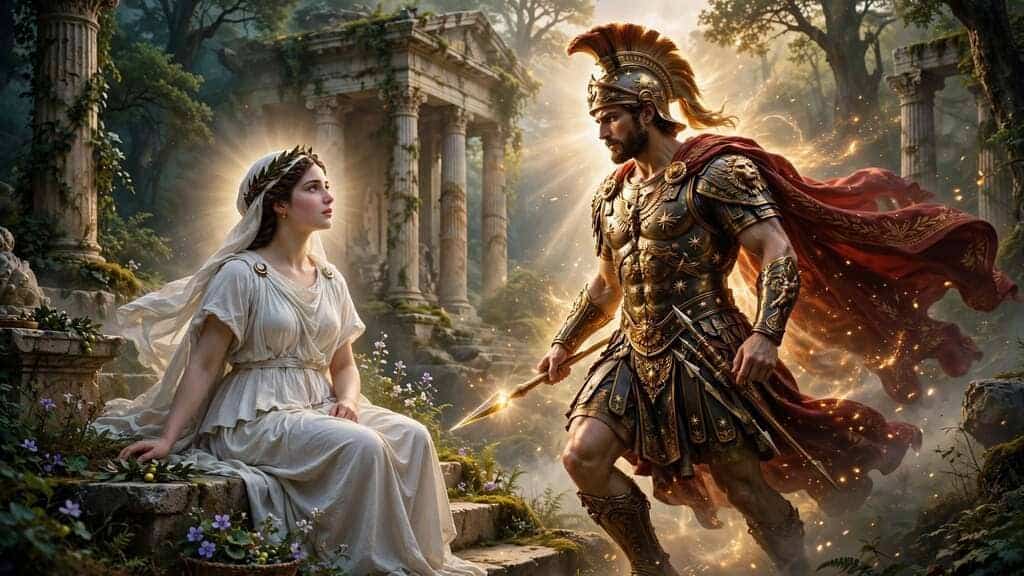
Rome’s founding story starts with a woman who wasn’t supposed to have children.
Rhea Silvia was a Vestal Virgin, forced into the priesthood by her uncle Amulius, who had stolen the throne from her father and wanted no rival heirs.
但是 火星 came to her, and she had twins, Romulus and Remus.
Amulius had the babies set adrift on the flooded Tiber.
The basket drifted ashore under a fig tree, where a she-wolf nursed them and a woodpecker brought them food.
A shepherd eventually found and raised them.
As men, they toppled Amulius and founded a city, and then Romulus killed Remus over a dispute about its walls.
Divine blood gives Rome its warlike destiny, the wolf gives it wild strength, and the broken brotherhood reminds Romans that greatness often begins with blood.
It’s a founding myth with no illusions about the price of empire!
5. Buddha
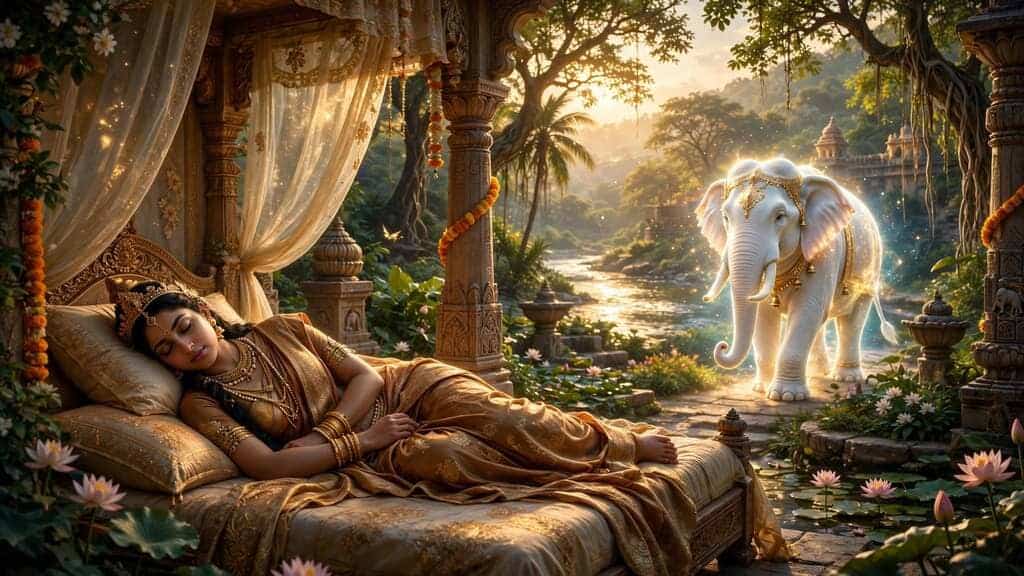
Queen Maya dreamed one night that a white elephant with six tusks drifted down from the heavens and entered her side without pain.
The wise men told the king the dream meant she carried a child who would either become a universal ruler or a fully awakened Buddha!
She gave birth standing in the gardens of Lumbini, holding a tree branch, with the infant emerging from her side, unstained.
The baby took seven steps, and lotus flowers bloomed under each foot! He declared this would be his final birth.
In this myth, the white elephant stands for purity and mindfulness.
The lotus grows from mud yet stays clean, a perfect image for awakening inside an imperfect world.
6. Karna
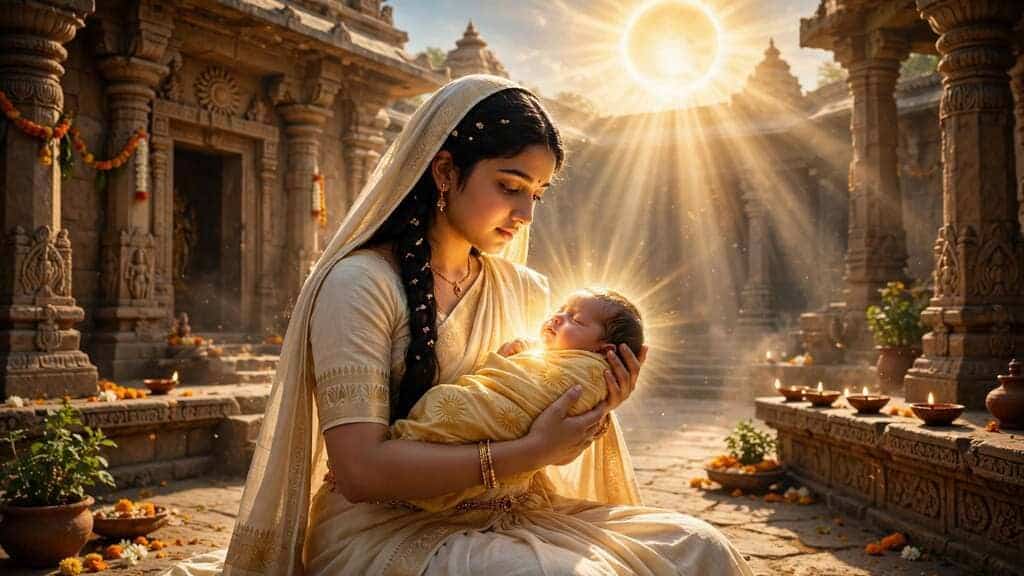
In the Mahabharata, princess Kunti receives a mantra from the sage Durvasa that lets her call any god and bear his child.
She summons the sun god Surya and finds herself pregnant before she’s even married.
Her son Karna is born radiant, with golden armor and earrings fused to his body.
Terrified of scandal, Kunti places the baby in a basket and sets him on the river.
A carter and his wife find him and he grows into one of the greatest archers alive. It’s an age-old myth of a hero who stands out despite his humble beginnings.
Kunti stays silent, and Karna ends up fighting his own half-brothers, and dies at the hands of Arjuna.
The symbolism is incredible because Karna lives in shadow even though he is the sun.
7. Huitzilopochtli
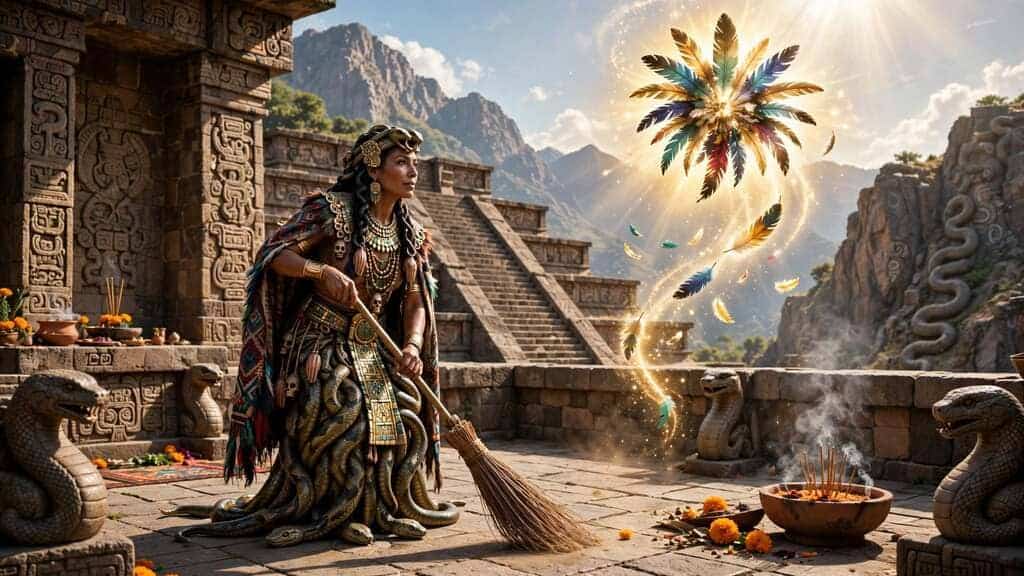
The earth goddess Coatlicue was sweeping a temple on Snake Mountain when a ball of bright feathers fell from the sky.
She tucked it into her bosom, and when she looked again it had vanished, leaving her pregnant.
Her daughter Coyolxauhqui and her four hundred sons were horrified and plotted to kill their mother to erase the shame.
As they marched up the mountain, the unborn child spoke from the womb and comforted her.
Then Huitzilopochtli was born fully grown and armed, with a serpent of fire in his hand.
He defeated all of Coatlicue’s older children.
Huitzilopochtli is the sun,"...... moon and stars are his siblings, and every dawn replays the battle between light and darkness!
For the Aztecs, this was more than a myth. The sun needed their devotion to keep rising!
8. Attis
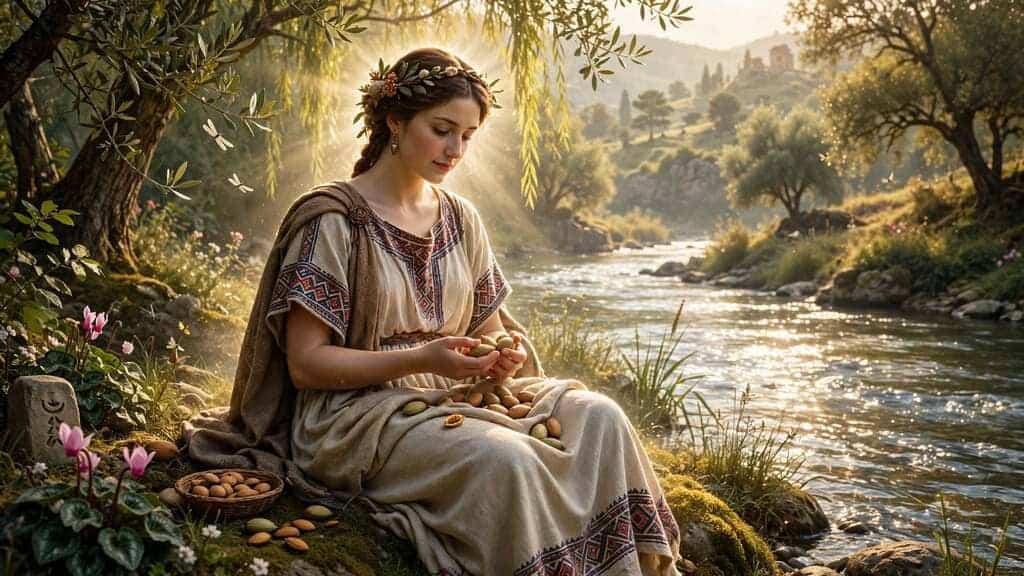
In Phrygian myth, Agdistis is castrated by the gods, and from the wound grows an almond tree.
The daughter of the river god Sangarius, Nana, picks the fruit, tucks it into her lap, and it vanishes.
She conceives a child named Attis. Her father is horrified and leaves the baby to die, but a goat finds and nurses him.
Attis grows into a beautiful shepherd, beloved by the mother goddess Cybele.
Betrayed and driven mad, he dies beneath a pine tree, and Cybele makes sure he never fully decays.
Attis is the vegetation that withers in winter and returns in spring, and his festival featured mourning followed by joy.
The almond, the pine, the violets said to grow from his blood all point to the same truth: life and death are tied together in one slow cycle.
9. The Saoshyants
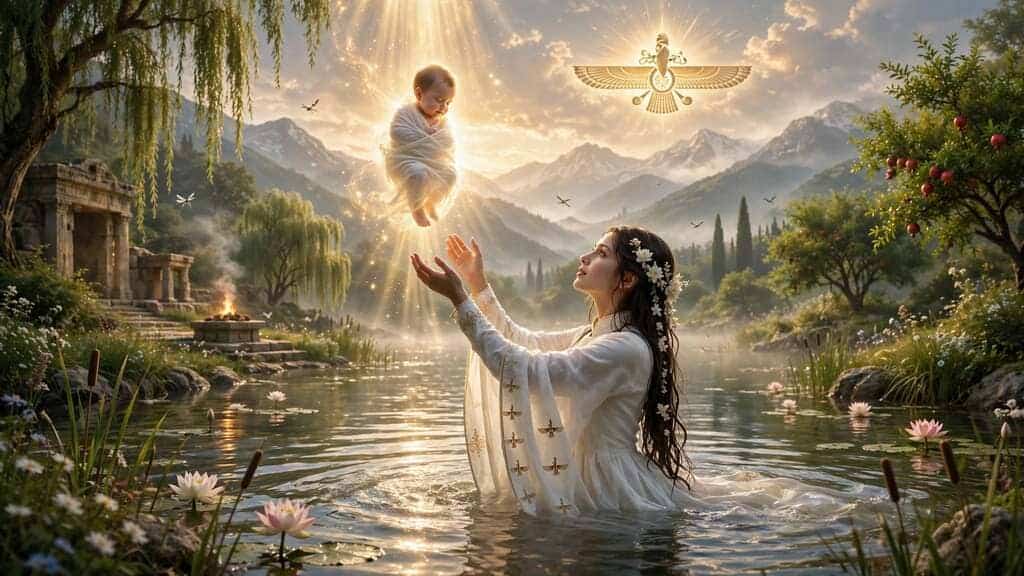
In Zoroastrian mythology, the Prophet Zoroaster’s seed is preserved at the bottom of Lake Kansaoya.
At the end of every thousand years, a virgin will bathe in the lake and become pregnant, giving birth to a renewer of the world.
The first two bring renewal in their own ages, and the third, the Saoshyant, will arrive at the end of time.
He’ll lead the final battle against evil, raise the dead, and cleanse the world in a fire of molten metal, a process called Frashokereti!
的象征意义。 water and patience is crucial here.
The lake holds the seed like a promise waiting for its moment. Virginity stands for readiness and purity of purpose.
It’s a myth about hope, the belief that the world will eventually be healed.
10. Hou Ji

The Book of Songs tells of Jiang Yuan, a woman who longed for a child.
During a ritual to pray for one, she stepped into a giant footprint left by a god, and felt something stir inside her.
When the baby was born, she was afraid and abandoned him, but the oxen and sheep stepped around him and fed him.
Then, she left him in a forest, and woodcutters found him.
She left him on frozen ice, and birds covered him with their wings.
Finally, she took him back and named him Qi, “the abandoned.”
Qi grew to love planting and became Hou Ji, the god of agriculture and ancestor of the Zhou dynasty.
In the myth, the footprint marks the divine touching earth.
And a farmer-god born from a miracle suggests that feeding people is sacred work!
11. Väinämöinen

The Finnish epic Kalevala opens before the world even exists.
Ilmatar is a virgin daughter of the air, and she gets lonely in the endless sky and descends to the sea.
The wind stirs the waves, and she becomes pregnant by the sea.
For seven hundred years she floats until a duck lays eggs on her knee.
When the eggs roll into the water and break, their pieces become the earth, sky, sun, moon, and stars.
Finally, her son is born. Väinämöinen emerges already old and wise, and swims ashore to begin his work.
He shapes the land, plants the first trees, and sings the world into harmony with a voice that moves mountains.
He represents creation through sound.
The myth teaches that words and music can shape reality!
12. Cú Chulainn
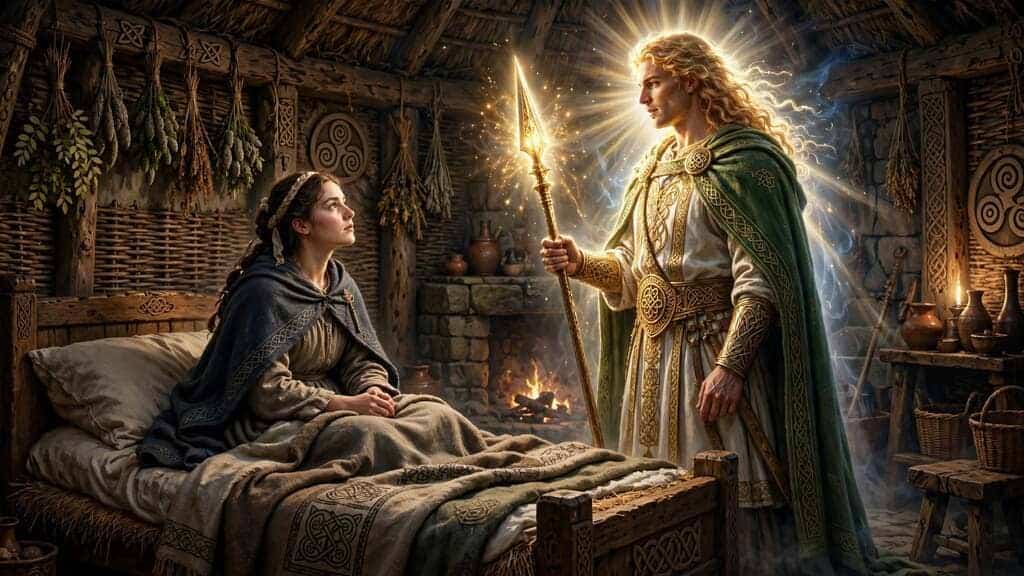
Deichtine was at a feast when an insect fell into her cup. She drank it without noticing.
That night she dreamed of the god Lugh, who told her she would have his son, and that the child would be named Sétanta.
The boy grew fast and fierce, and as a child he accidentally killed the hound of Culann the smith with a hurled ball.
He promised to take its place as the smith’s guard dog, and so became Cú Chulainn, the Hound of Culann.
He became a mighty warrior, and he died young, tied to a standing stone so he could face his enemies upright.
His birth ties him to Lugh, the god of skill, and his myth carries the lesson that burning too bright usually doesn’t mean burning for long.

A little Aquarius, devoted to writing and embroidery. Through my writing, I hope to empower readers to align with their true selves and navigate life’s mysteries with confidence.