
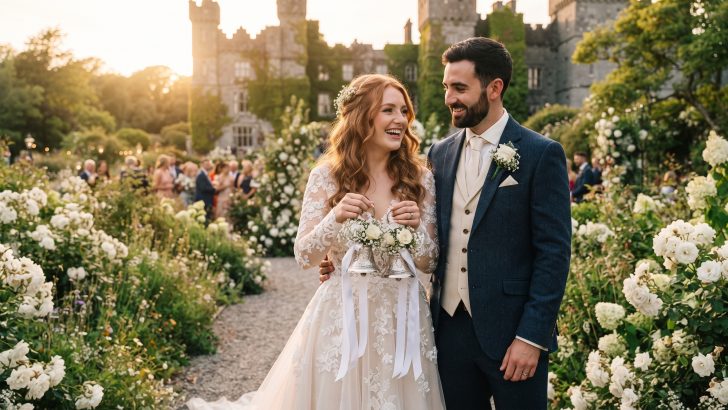
Weddings have always been surrounded by strange little rules. Some people believe rain on a wedding day brings good luck.
Others insist the couple should never see each other before the ceremony.
And almost everyone has heard that a bride needs something old, something new, something borrowed, and something blue.
But these familiar customs are only a small part of wedding folklore.
Around the world, people have developed fascinating traditions meant to protect newlyweds, attract prosperity, encourage fertility, and keep misfortune away.
Some involve food. Others require unusual gifts, special clothing, or symbolic household objects.
A few sound completely ridiculous until you discover the meaning behind them.
Many of these customs are still practiced in certain communities, while others survive mainly in family stories and historical accounts.
Here are ten unusual wedding superstitions from around the world that you might never have heard before.
1. Greece – A Sugar Cube Could Make Marriage Sweeter
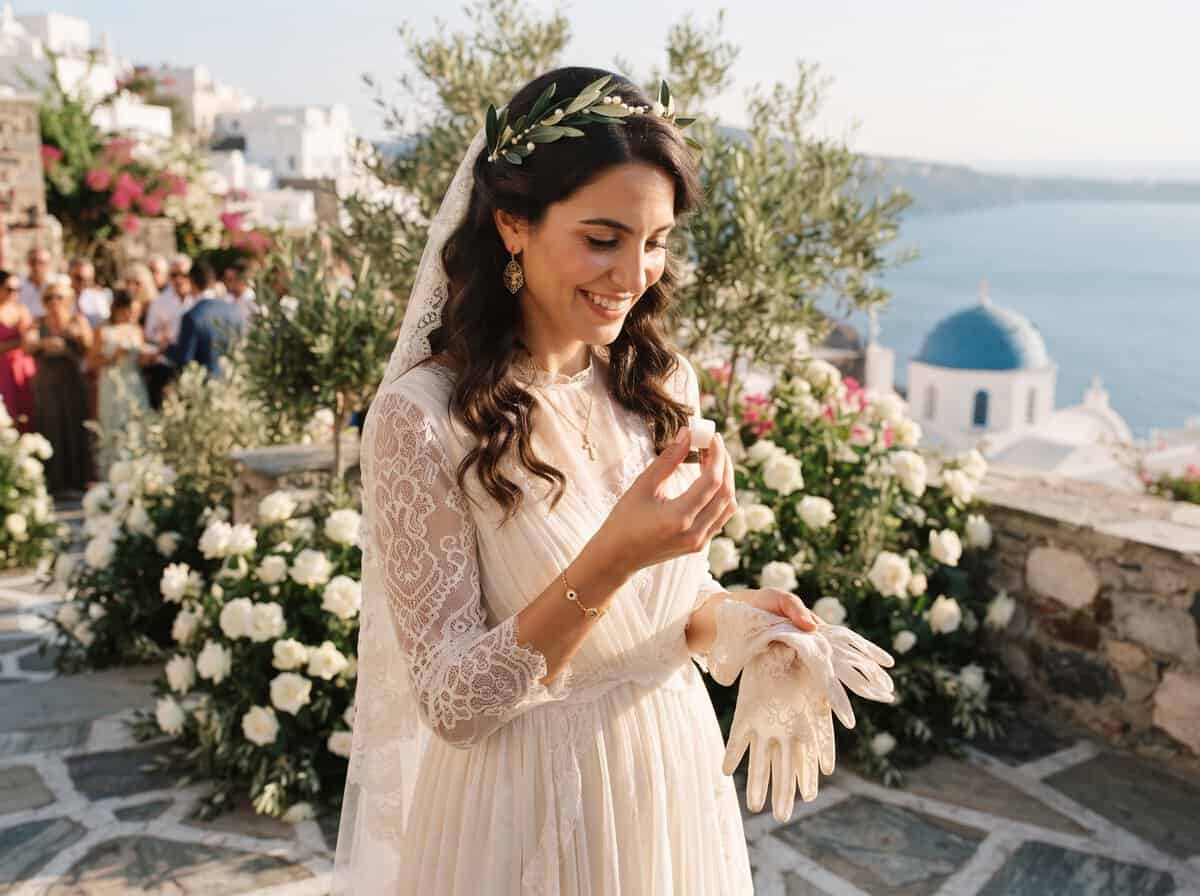
In Greek wedding folklore, sweetness has often been connected with the hope for a happy marriage.
One traditional belief involved placing a sugar cube inside the bride’s glove. The idea was simple.
Sugar represented sweetness, and carrying it during the wedding was supposed to encourage a sweet married life.
It was a tiny gesture with a surprisingly lovely meaning. After all, weddings are filled with enormous promises.
Two people agree to share their lives, support each other, and face whatever comes next.
But sometimes a little piece of sugar was considered enough to symbolize those hopes.
The custom also reflects a wider pattern found in wedding traditions around the world.
Sweet foods frequently represent affection, happiness, and good fortune.
Honey, sugar, and sweet pastries appear in many different marriage celebrations.
Of course, a sugar cube cannot guarantee a peaceful relationship. But as a symbolic wish, it is charming.
And it reminds us that a happy marriage is often built from small acts of kindness rather than grand romantic gestures.
2. England – A Spider on the Wedding Dress Was Considered Lucky

Most brides would probably be horrified to discover a spider crawling across their wedding dress.
But according to an old English wedding superstition, this could actually be a good sign.
A spider found on the bridal gown was sometimes considered an omen of good luck.
That is certainly an unusual wedding guest. Spiders have complicated meanings in European folklore.
In some traditions, they were associated with patience, industriousness, and prosperity.
Their carefully constructed webs could represent skill and the ability to create something lasting.
Those qualities fit surprisingly well with marriage. A strong relationship also requires patience and steady effort.
Still, the superstition probably offered little comfort to someone who disliked spiders.
Imagine spending hours preparing a beautiful wedding outfit only to discover an eight-legged visitor hiding in the fabric.
According to the belief, however, there was no reason to panic. The spider might have been bringing a little extra good fortune.
3. Sweden – Coins in the Bride’s Shoes Were Believed to Bring Prosperity
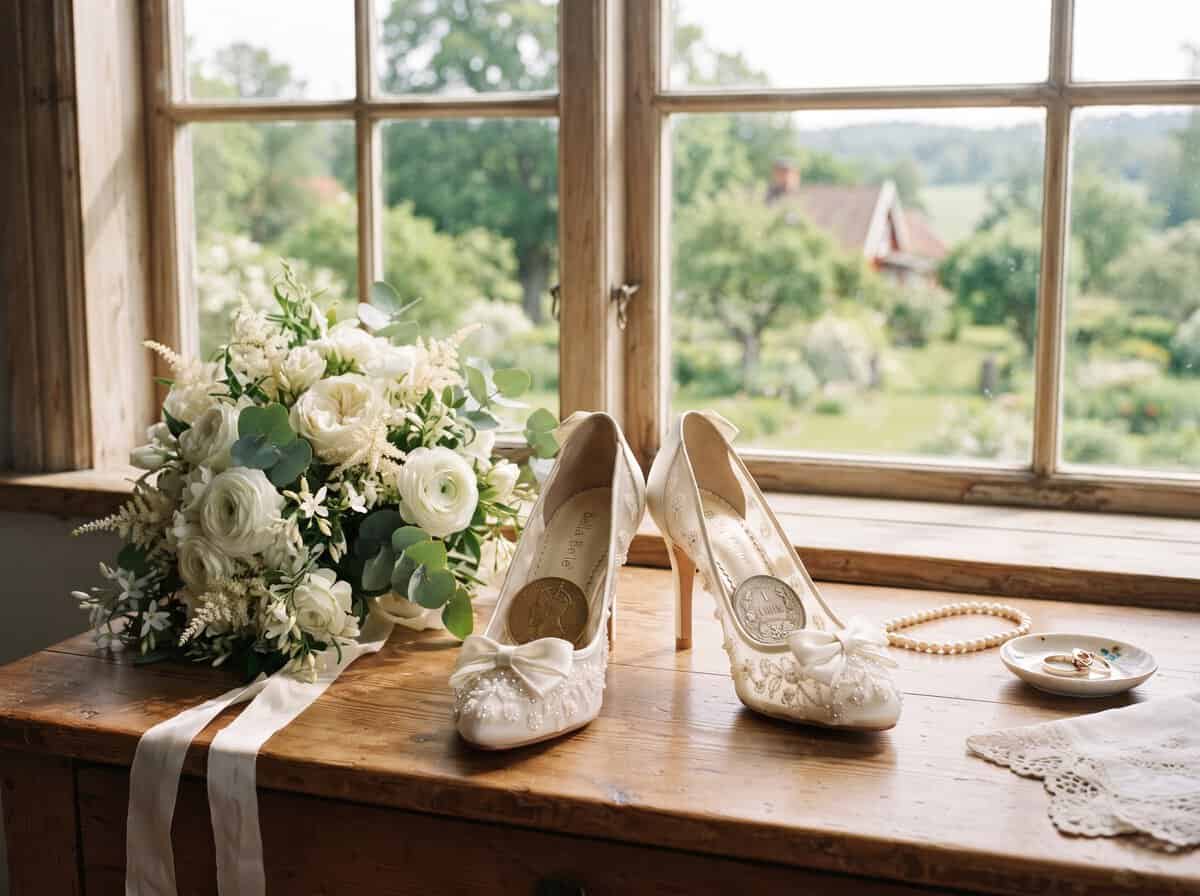
In a traditional Swedish wedding custom, a bride could carry coins inside her shoes.
A silver coin was placed in one shoe, while a gold coin went into the other.
The coins were often given by her parents. They represented wishes for prosperity and financial security in married life.
The symbolism is easy to understand. A wedding marks the beginning of a new household.
And throughout history, financial stability has been an important concern for newly married couples.
The coins expressed the hope that the couple would always have enough.
There is also something beautiful about receiving them from family members.
The gifts represented support as the bride entered a new stage of life.
Unlike expensive wedding jewelry, the coins were not mainly intended to impress anyone.
Their value was symbolic. They carried a blessing for the future.
According to the superstition, a little discomfort was worth the promise of good fortune.
4. Ireland – Wedding Bells Were Believed to Keep Evil Spirits Away
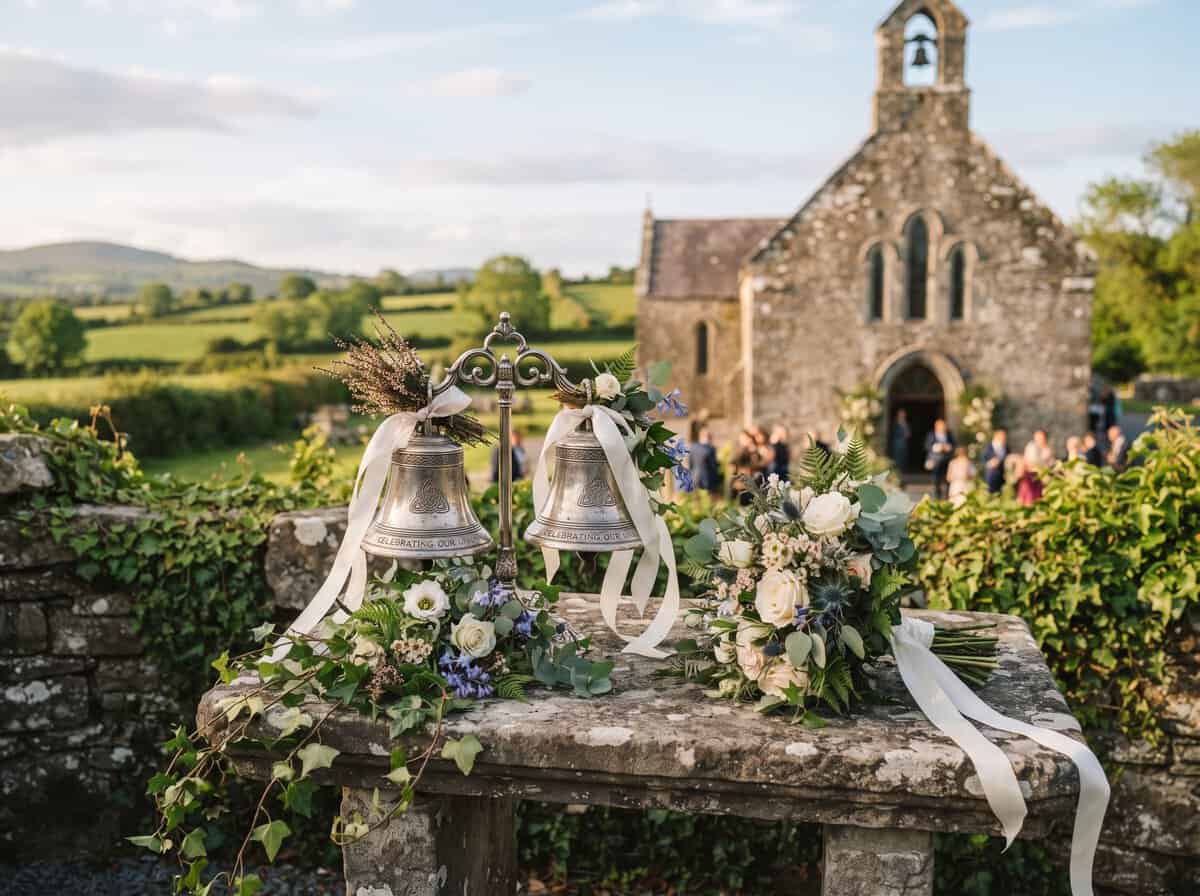
Bells are familiar sounds at weddings. But in Irish wedding folklore, they were sometimes believed to do more than announce a celebration.
Their ringing could help drive away harmful spirits and misfortune.
The idea belongs to a wider tradition in which loud sounds were thought to frighten unwanted supernatural forces.
Wedding bells also became symbols of harmony and happiness.
In some Irish wedding customs, couples received small bells as gifts.
These could represent the importance of peace within marriage.
Later interpretations sometimes suggested ringing a bell during an argument as a reminder to restore harmony.
That is a surprisingly practical symbol. A bell cannot solve a disagreement.
But it can remind two people to stop and listen to each other.
The protective meaning is especially interesting because weddings were often considered vulnerable moments.
A couple was leaving one stage of life and entering another. In folk belief, important transitions sometimes required extra protection.
The sound of bells helped mark that change while symbolically keeping misfortune at a distance.
5. Germany – Breaking Porcelain Was Supposed to Bring Good Luck
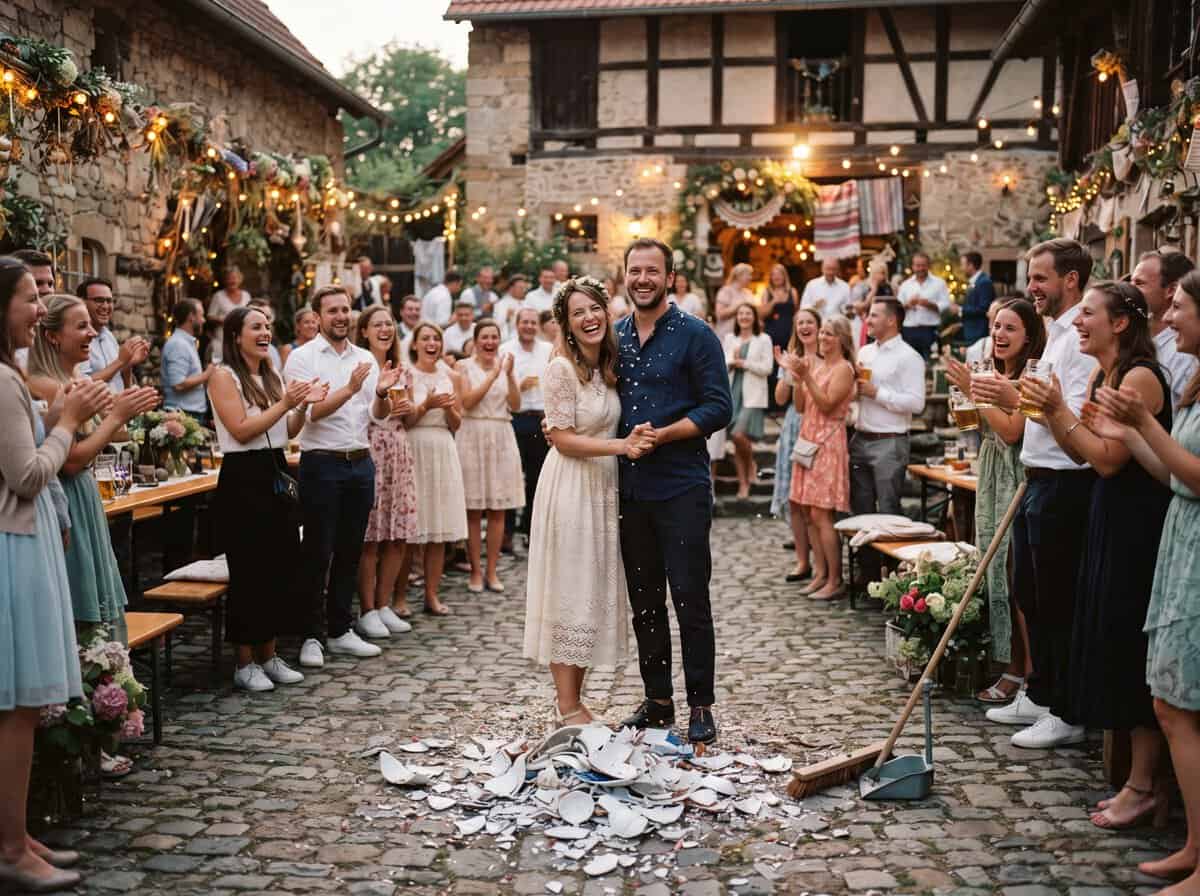
Most people would consider a pile of broken dishes a terrible way to begin a wedding celebration.
But in Germany, a tradition known as Polterabend turns broken porcelain into a symbol of good fortune.
The custom usually takes place before the wedding. Friends and relatives gather and break porcelain items.
The couple then cleans up the pieces together. According to traditional beliefs, the noise helps drive away harmful spirits.
But the cleanup carries another meaning. It represents cooperation.
Marriage will not always be easy. There will be problems, disagreements, and unexpected messes.
The important thing is learning to face them together. That makes the tradition more meaningful than it first appears.
It is not simply about smashing dishes. It is about beginning married life with a reminder that teamwork matters.
The custom traditionally focuses on porcelain rather than glass, which has different symbolic associations in some versions.
Today, the celebration continues in parts of Germany. And although it creates quite a mess, its message is surprisingly sweet.
A couple that can clean up together may be better prepared for the challenges ahead.
6. Italy – Breaking a Glass Could Predict Years of Happiness
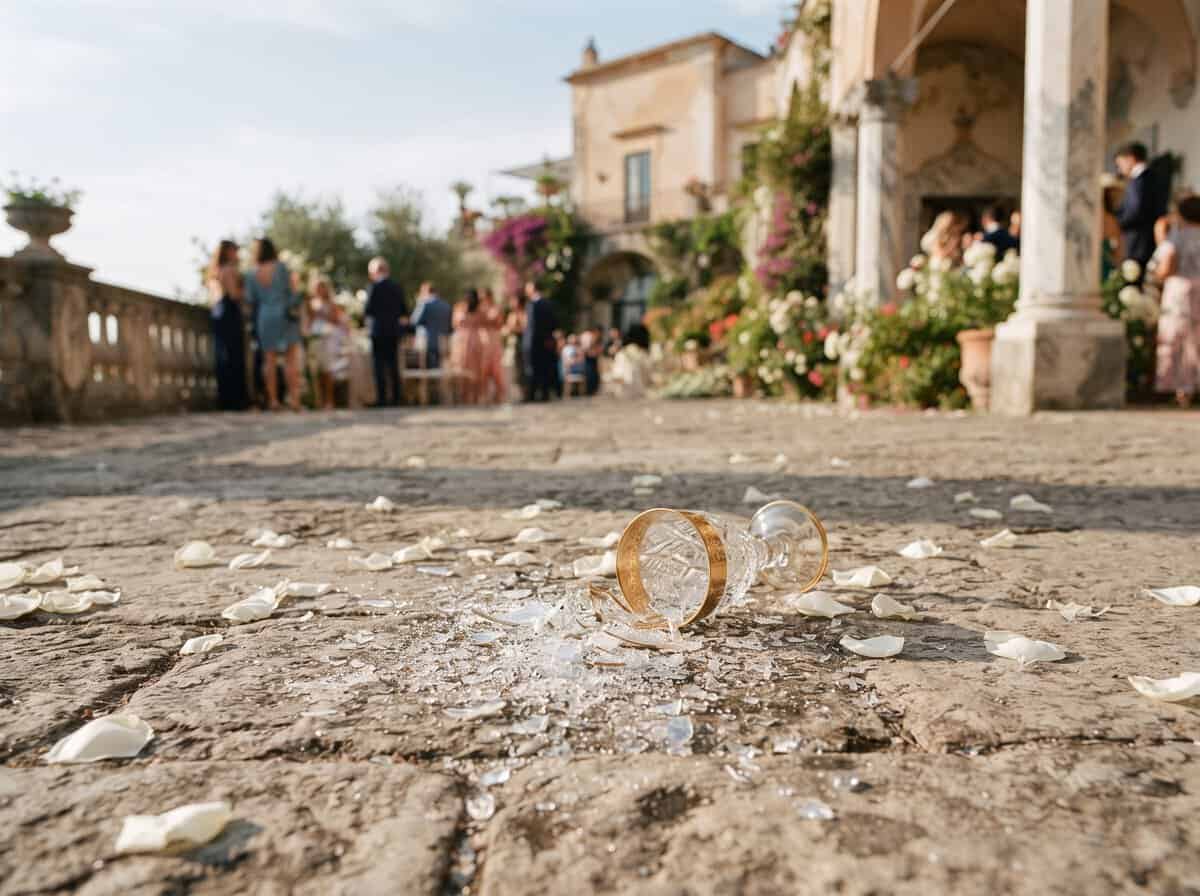
Italy has its own wedding tradition involving broken objects. In some regional customs, a glass or vase was broken during the celebration.
The number of pieces was sometimes believed to predict how many happy years the couple would enjoy together.
Was every tiny fragment included? What happened if someone missed a piece?
And did a particularly enthusiastic smash guarantee an extraordinarily long marriage?
The belief reflects a familiar theme in wedding folklore.
Breaking an object can symbolize leaving an old life behind and beginning something new.
It may also represent the hope that misfortune will be broken apart rather than allowed to follow the couple.
Not every Italian region shares the same custom, and wedding traditions vary considerably across the country.
Still, the symbolism is memorable. Something breaks, but the moment is meant to bring happiness rather than sadness.
7. Scotland – The Bride and Groom Were Covered in Messy Substances for Protection

One of Scotland’s most unusual pre-wedding traditions is known as blackening.
In communities where the custom is practiced, the bride, groom, or both may be covered in messy substances before the wedding.
Modern versions can involve things such as flour, treacle, or other unpleasant mixtures.
The participants are sometimes paraded around while friends and relatives make plenty of noise.
It sounds more like a prank than a blessing. But the tradition is often explained as a way of preparing the couple for married life.
If they can endure an embarrassing, uncomfortable experience together, perhaps ordinary difficulties will seem easier afterward.
Some accounts also connect the practice with older protective beliefs.
The noise and unusual treatment may have been understood as ways of keeping harmful influences away.
The precise origins are debated, and customs differ between communities.
Still, the central idea is memorable. Marriage involves facing unexpected situations together.
And apparently, in some Scottish traditions, that lesson begins before the wedding clothes are even put on.
8. India – The Bride’s Henna Was Believed to Reveal Her Marriage’s Fortune
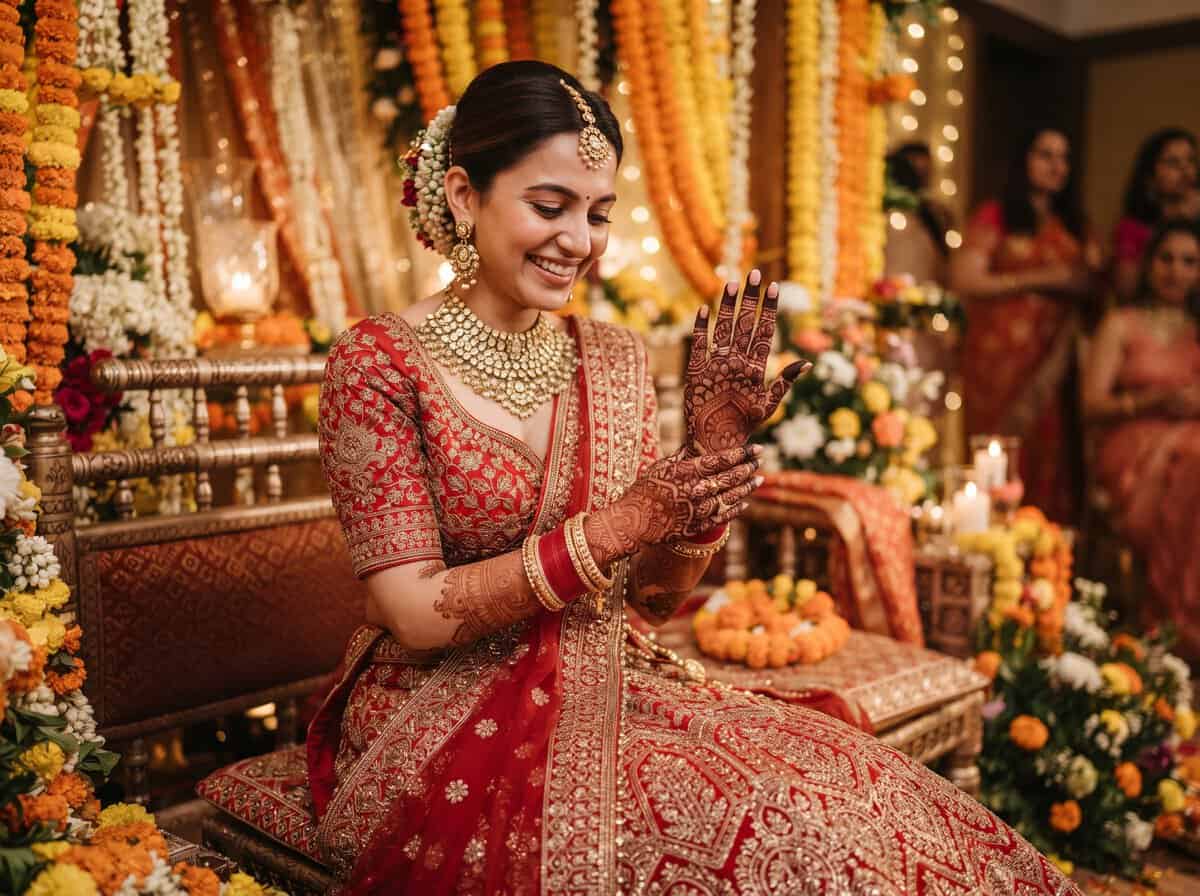
Henna has a long history in wedding celebrations across South Asia, the Middle East, and North Africa.
In many Indian wedding traditions, elaborate henna designs are applied to the bride’s hands and feet before the ceremony.
The practice is known as mehndi. Beyond its beauty, henna has acquired several popular wedding beliefs.
One familiar superstition suggests that the darker the henna stain, the stronger the love between the bride and her partner.
Other versions connect the darkness of the color with affection from the bride’s new family.
These interpretations vary between families and regions. Henna’s actual color depends on factors such as the preparation, application, and skin chemistry.
But the superstition gives the decoration an additional romantic meaning.
There are also playful customs involving hiding the groom’s name or initials inside the designs.
He may then be challenged to find them. The result is a mixture of artistry, celebration, and affectionate teasing.
And it shows how wedding magic does not always require mysterious objects. Sometimes it appears in beautiful patterns painted onto the skin.
9. China – A Red Umbrella Could Protect the Bride From Bad Luck
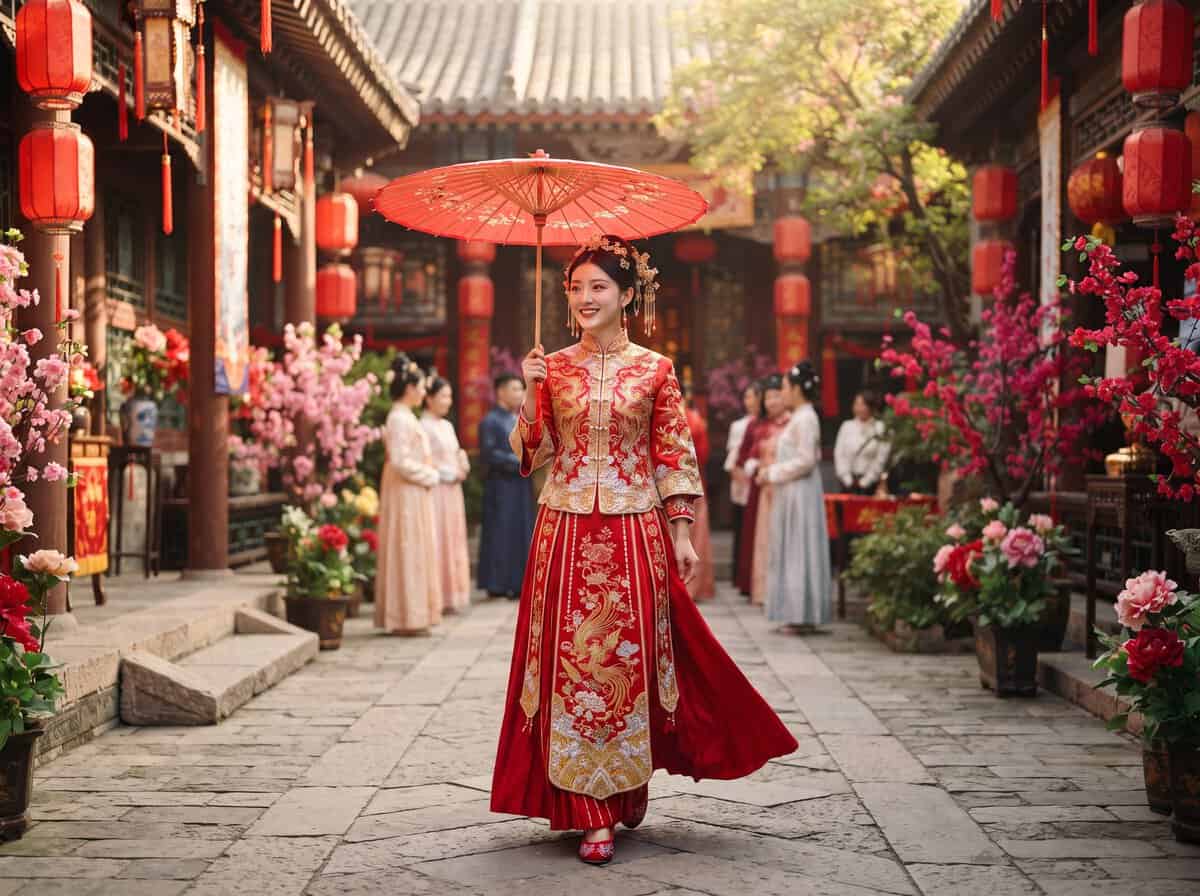
Red is one of the most important colors in traditional Chinese wedding celebrations.
It is associated with happiness, good fortune, and prosperity.
That symbolism appears in clothing, decorations, gifts, and wedding accessories.
In some Chinese regional customs, a bride may be escorted beneath a red umbrella.
The umbrella serves as a protective symbol during her journey.
Traditional explanations sometimes connect it with shielding the bride from harmful influences or unwanted attention from spirits.
Other interpretations emphasize blessings and good fortune.
The details vary between communities. But the image is beautiful.
A bride steps into a new chapter of life beneath a bright red canopy.
The umbrella represents protection during an important transition.
It also reflects a broader theme found in wedding folklore.
The journey from one household to another was often treated as a meaningful moment.
People wanted the couple to begin married life surrounded by blessings rather than misfortune.
And sometimes a simple red umbrella was enough to express that wish.
10. Mexico – A Wedding Lasso Symbolized an Unbreakable Bond
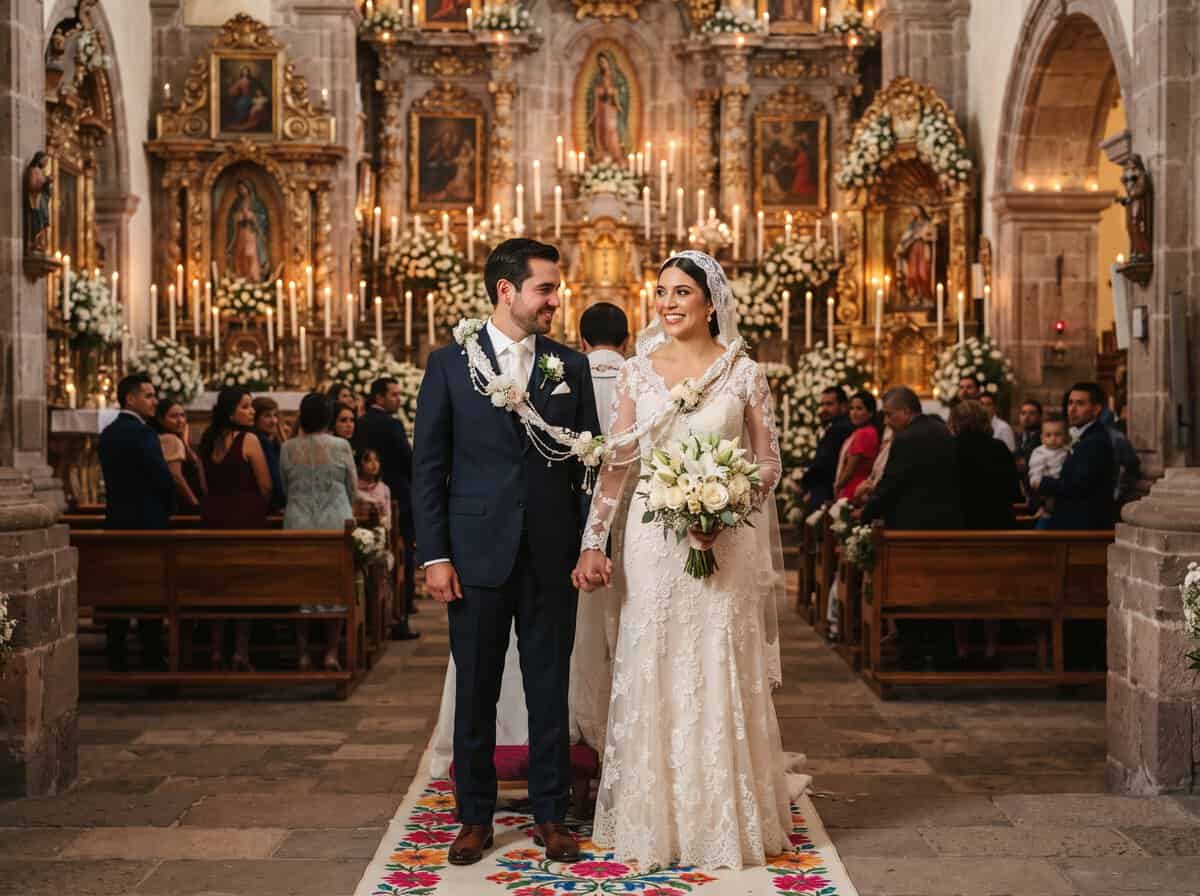
In Mexican Catholic wedding traditions, a decorative cord or rosary may be placed around the couple during the ceremony.
This custom is commonly known as the lazo, or wedding lasso.
The cord is usually arranged around the couple’s shoulders in a figure-eight shape.
It represents their union and the commitment they are making. The connected shape represents two lives joined together.
The figure eight can also resemble the infinity symbol, although that interpretation is not the original meaning of every version of the custom.
Family members or chosen sponsors may participate in placing the lasso.
That makes the moment especially meaningful. Marriage is not only a promise between two individuals.
In many cultures, it also brings families and communities together. The lasso represents a bond that should be treated with care.
And unlike some wedding superstitions, it does not involve predicting the future through broken objects or unusual omens.
Its message is much simpler. Two people are choosing to build a life together.
And the cord becomes a visible reminder of the promises they have made.

自出生以来,我一直感觉到自己与神灵有着紧密的联系。作为一名作家和导师,我的使命是帮助他人在最黑暗的时刻找到爱、幸福和内心的力量。