

Heartbreak makes you feel like no one ever has suffered so much.
But people have been going through it from the beginning of time, and some of the smartest minds in history had something to say about it!
These philosophies come from different eras and cultures, yet they all address the same ache.
You don’t have to pick just one.
Think of them as different kinds of comfort. Take what helps and leave what doesn’t!
1. Marcus Aurelius
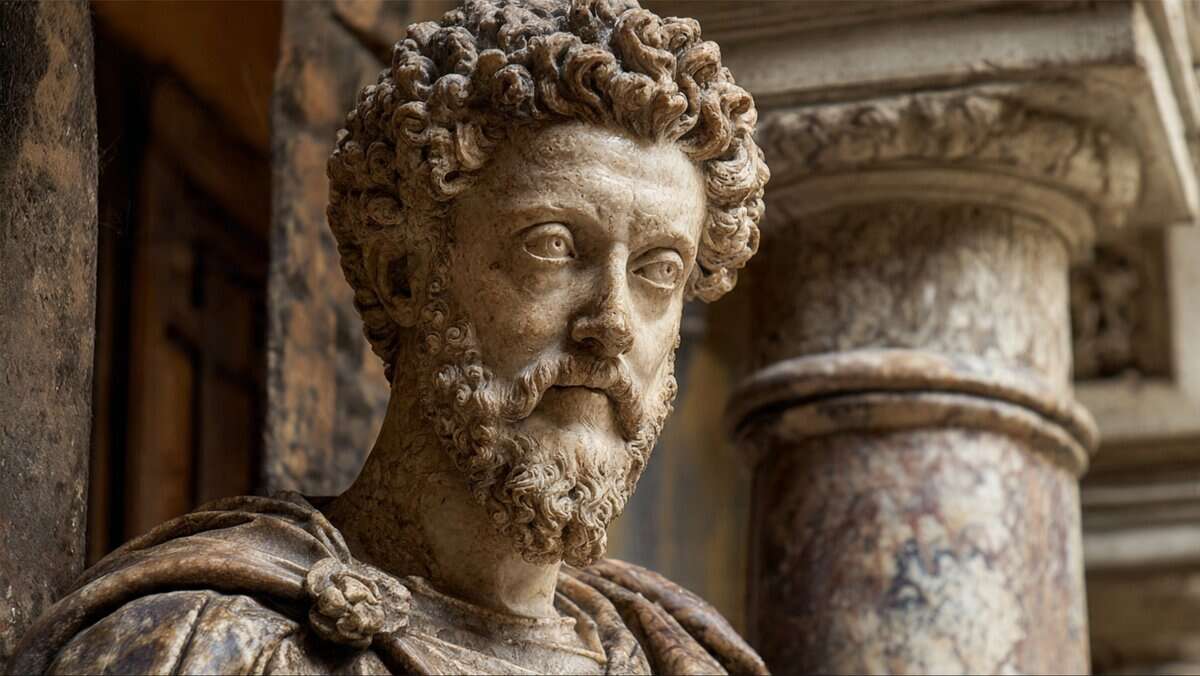
Marcus Aurelius ruled the Roman Empire, yet he knew complete control wasn’t possible.
That’s the heart of Stoicism. Separate what’s up to you from what isn’t.
You can’t make someone stay, and you can’t rewrite the past. Spending your energy on those things only wears you out.
What you can control is how you treat yourself today, and what you do with your days going forward.
That’s a recipe for true peace.
Acknowledge your pain and cry if you need to. Just don’t let the sadness make your decisions for you.
You can’t change what happened, but you can absolutely change what comes next!
2. Buddhism

Buddhism teaches that heartbreak comes from clinging too hard. Some things were always meant to change, and that’s something you need to accept.
Not every love is meant to last, and that doesn’t make yours less meaningful. Some relationships are just chapters of your life.
They teach you new things and shape who you become, and then they end.
You can remember the person fondly and recognize how much they meant to you, and still choose to let go.
Loosen your grip on how things were supposed to turn out.
When you catch yourself replaying old memories, name the feeling, and let it pass through.
You might need to do it a hundred times, and that’s okay.
Each time, the grip gets a little bit softer, and slowly, you become free.
3. Existentialism

Existentialists like Sartre believed that you’re free, and that 自由 can feel both terrifying and powerful.
After the heartbreak, the life you pictured is gone, and the blank page can feel scary. But a blank page also means you get to create something new!
Nobody hands you a ready version of who you should be.
You decide what your pain turns you into: bitter, wiser, softer, braver.
You don’t have to figure it all out this week. It’s simply a reminder that you’re not a victim of the story, but the author!
Ask yourself what you actually want now, not what you wanted when you were with someone.
Rebuilding starts there, little by little.
4. Taoism

Taoist thinkers like Lao Tzu talk about the 生命之流, like a river that keeps moving whether we’re ready or not.
When someone breaks your heart, it can feel like the river took something from you. But Taoism invites you to see it differently.
What leaves creates space for something new.
Right now that empty space hurts, but try not to force yourself to move on faster than you’re ready to.
Chasing closure or rushing into a new relationship usually just creates more tension.
Instead, trust the flow.
Water doesn’t push against the rocks, it finds its way around them, and eventually, so will you.
5. Nihilism

Nihilism sounds like the bleakest option on the list, but stay with it for a moment.
The idea is that the universe doesn’t hand out 意义, so we have to make our own.
After a heartbreak, that can actually be a relief.
It hurts because it mattered. You loved someone, and that was real, even if it didn’t last.
Feeling lost right now doesn’t mean meaning has vanished from your life. It means the old meaning was lost, and you’re allowed to build a new one.
There’s no rule for what your life should look like now. No one gets to tell you what to care about or how fast to heal.
That’s equal part scary and freeing!
So, when you’re ready, start asking what you want to care about next, on your own terms.
6. Epicureanism

Epicurus is often misunderstood as the philosopher who prioritized nothing but joy, but he actually taught something much calmer.
For him, a good life meant peace, friendship, 和 simple joys, not wild pleasure.
That’s a gentle message for a broken heart.
A good life comes down to what makes you whole.
So what makes you feel whole?
Is it surrounding yourself with good friends or reading meaningful books?
These small things might feel pointless right now, but they add up. Joy doesn’t have to be monumental. It can be a warm cup of tea and a good laugh with someone who gets you.
And you’re not ignoring your grief by choosing joy. You’re simply reminding yourself that it doesn’t depend on one person.
7. Cynicism

Cynicism gets a bad reputation, but the original Greek Cynics, like Diogenes, prioritized 诚信 和 living simply.
They had no patience for illusions. After a heartbreak, one of the biggest illusions is the version of your ex you built in your head.
We tend to remember the best moments and forget the red flags.
Nobody is perfect, and the person you miss is partly a fantasy.
Someone who leaves has revealed something about where they stand. That can hurt, but it also saves you from wasting more time.
Honestly think about things that didn’t work in the relationship.
Seeing them with realistic eyes prevents you from putting them on a pedestal.
8. Humanism

Humanism claims that every person has inherent value, no matter their achievements and relationships.
That matters so much after a heartbreak, because rejection has a way of making us question our worth.
You might be wondering why you weren’t enough.
Humanism reminds you that there’s nothing wrong with you.
Having someone’s love is wonderful, but it was never the measure of your worth. You are still you, with the same strengths you had before.
Surround yourself with people who see you clearly and care about you.

A little Aquarius, devoted to writing and embroidery. Through my writing, I hope to empower readers to align with their true selves and navigate life’s mysteries with confidence.