
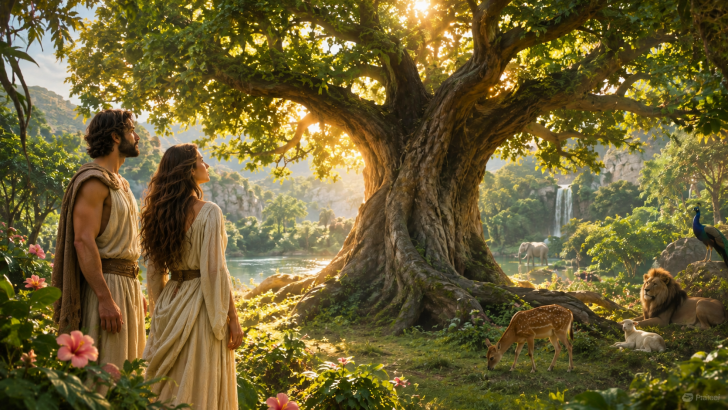
The Garden of Eden was a place of extraordinary beauty, peace, and abundance.
According to the Book of Genesis, God created a garden filled with trees that were pleasing to the eye and good for food.
Adam and Eve could enjoy its fruits, care for the land, and live in the presence of their Creator.
But one tree was different. The Tree of the Knowledge of Good and Evil stood in the garden with a divine command attached to it.
God told Adam that he could eat from the other trees, but not from this particular one.
The warning was serious. Eating its fruit would bring death. This raises one of the most fascinating questions in the Bible.
If God knew what would happen, why did He place the forbidden tree in Eden at all?
Why create something that could lead humanity into temptation, suffering, and separation from paradise?
The answer reaches into some of the deepest themes of the biblical story, including free will, obedience, wisdom, and the relationship between God and humanity.
For centuries, Jewish and Christian thinkers have explored the meaning of this mysterious tree.
Here are five reasons God placed the Tree of Knowledge in the Garden of Eden.
1. God Wanted Humans to Have the Freedom to Choose
One of the most important explanations for the Tree of Knowledge concerns free will.
God created Adam and Eve with the ability to make decisions.
They were not simply creatures following instructions without understanding or choice.
They could respond to God’s guidance and decide how to live.
The forbidden tree gave that freedom a meaningful boundary.
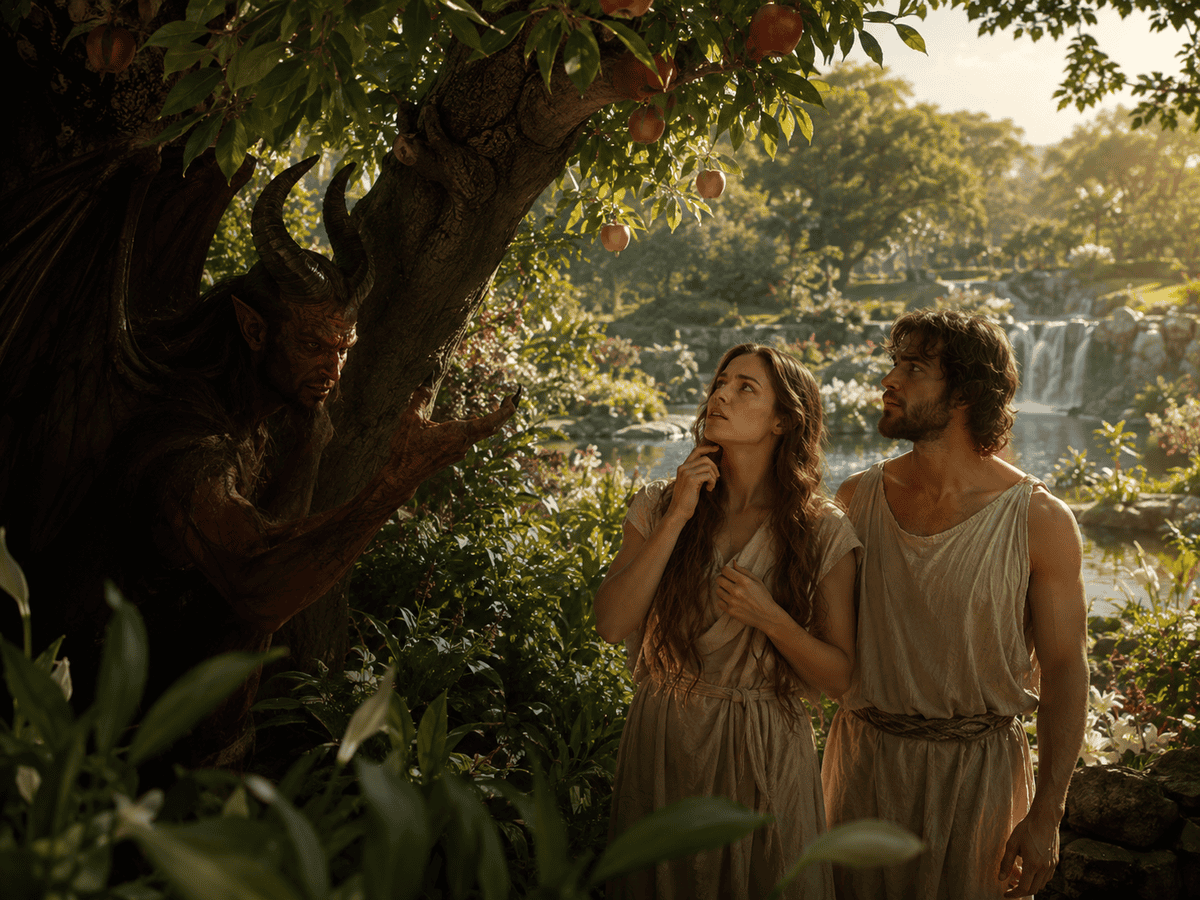
In Genesis 2:16–17, God permits Adam to eat from the trees of the garden but commands him not to eat from the Tree of the Knowledge of Good and Evil.
The command creates a genuine choice. Adam and Eve can trust God’s instruction, or they can act against it.
Without the possibility of disobedience, obedience would have a different meaning.
This is why many Christian theologians understand the tree as an important part of humanity’s freedom.
God wanted a relationship with human beings who could respond willingly.
Love and trust become meaningful when they are freely given.
The tree therefore represented more than forbidden fruit.
It marked the difference between living according to God’s wisdom and choosing independence from His command.
Adam and Eve were surrounded by abundance. They had access to the garden’s many other trees. Only one was forbidden.
That detail is important because it shows that the command was not intended to deprive them of everything good.
Instead, it established a limit within an otherwise generous creation.
The presence of the tree made trust something Adam and Eve could actively choose.
2. The Tree Was a Test of Trust and Obedience
The Tree of Knowledge also reveals an important theme found throughout the Bible.
Trust in God is demonstrated through actions. Adam and Eve received a clear instruction before the serpent entered the story.
They knew which tree was forbidden. They also knew that God had warned them about the consequences.
The test was not whether they could recognize a dangerous-looking object.
Genesis describes the tree’s fruit as attractive and desirable.
The challenge was whether they would trust God’s word even when something forbidden appeared appealing.
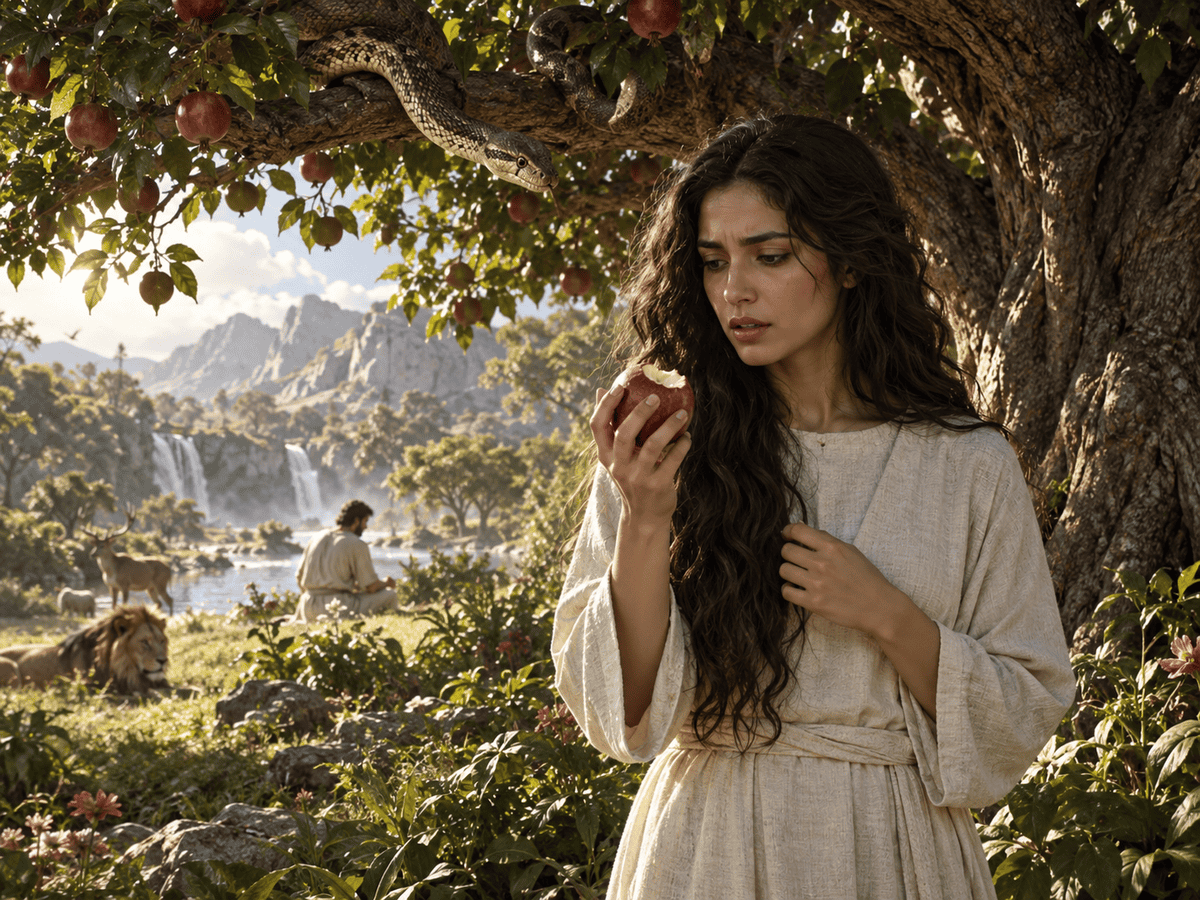
This became especially important when the serpent questioned the divine command.
In Genesis 3, the serpent suggests that eating the fruit will open their eyes and make them like God, knowing good and evil.
Suddenly, the issue is no longer simply about food. It becomes a question of whose words deserve trust.
Will Eve believe the command given by God? Or will she accept the serpent’s promise of greater knowledge?
The story shows how temptation often begins by making a boundary appear unreasonable.
Something that was previously accepted becomes a source of doubt.
Many Christian interpretations understand the tree as a test of faithfulness.
Adam and Eve were not required to understand every reason behind God’s command.
They were asked to trust the One who had given them life and provided everything they needed.
Their decision reveals the difficulty of obedience when desire begins to compete with faith.
The tree reminds believers that trust sometimes means respecting a boundary even before its full purpose becomes clear.
3. The Tree Represented Knowledge That Belonged to God

The name of the forbidden tree is one of the most mysterious details in Genesis.
It is called the Tree of the Knowledge of Good and Evil. But what exactly does that mean?
The Bible does not provide a complete explanation.
Over the centuries, interpreters have offered several possibilities.
One important understanding is that the tree represents the authority to determine good and evil.
God is the Creator and the ultimate source of moral wisdom.
Human beings, however, are created to live within the order He establishes.
The serpent’s temptation challenges that relationship.
It promises that eating the fruit will make Adam and Eve like God.
This suggests a desire for more than ordinary knowledge.
It involves reaching for a kind of independence that belongs to divine authority.
Adam and Eve want to decide for themselves rather than continue trusting God’s instruction.
In this interpretation, the forbidden tree represents the temptation to become one’s own final authority.
The problem is not that learning or wisdom is evil.
Elsewhere, the Bible repeatedly praises wisdom and encourages people to seek understanding.
The Book of Proverbs, for example, presents wisdom as something precious and desirable.
The difference lies in how knowledge is pursued. Wisdom received with humility is a blessing.
But knowledge pursued through disobedience becomes part of humanity’s separation from God.
The tree therefore marks a boundary between human understanding and divine authority.
Its presence reminds Adam and Eve that they are created beings, not the Creator Himself.
4. The Tree Revealed the Consequences of Disobedience
Before eating the forbidden fruit, Adam and Eve lived in a garden characterized by abundance and direct fellowship with God.
Afterward, everything changed. The change is immediate.
Genesis 3 describes their sudden awareness of nakedness, their attempts to hide, and the fear they experience when God approaches.
Instead of enjoying the relationship they previously knew, they become afraid.
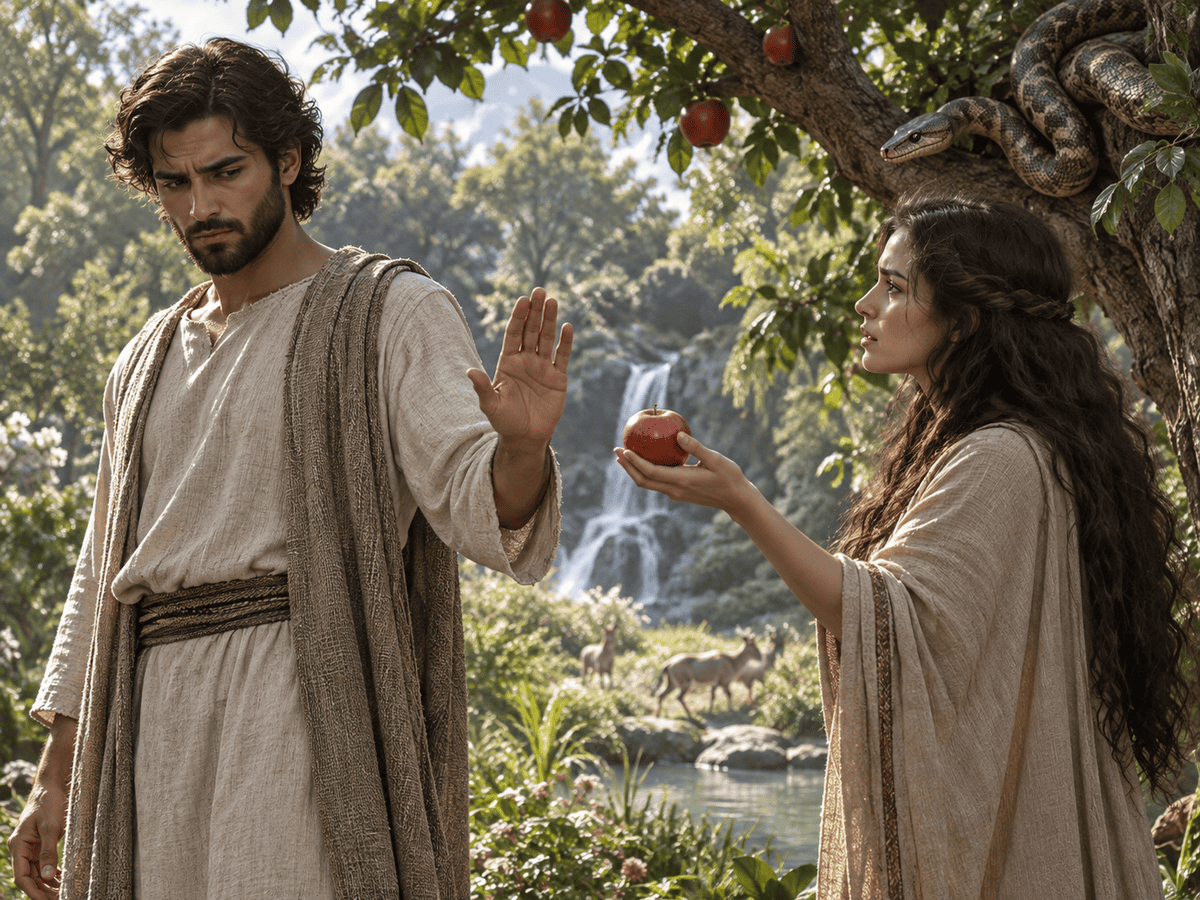
When God questions them, Adam and Eve respond with explanations that shift responsibility.
Adam points toward Eve. Eve explains that the serpent deceived her.
The harmony of Eden begins to unravel. The consequences extend beyond their immediate feelings.
The ground becomes difficult to cultivate. Human life becomes associated with hardship and mortality.
And Adam and Eve are eventually sent away from the garden.
The Tree of Knowledge becomes the center of a story about how disobedience affects relationships.
The first broken relationship is between humanity and God.
But the effects also reach the relationship between Adam and Eve and their connection with the natural world.
This is why the account has such importance in Christian theology.
The fall of Adam and Eve is traditionally connected with the entrance of sin into human experience.
The Apostle Paul later develops this theme in Romans 5, where he contrasts Adam’s disobedience with the obedience of Jesus Christ.
The tree helps reveal that moral choices carry consequences beyond the immediate moment.
A decision that seems small can change the direction of an entire life.
In Genesis, eating the fruit becomes the turning point between humanity’s original life in Eden and the difficult world that follows.
5. The Tree Became Part of the Greater Story of Redemption
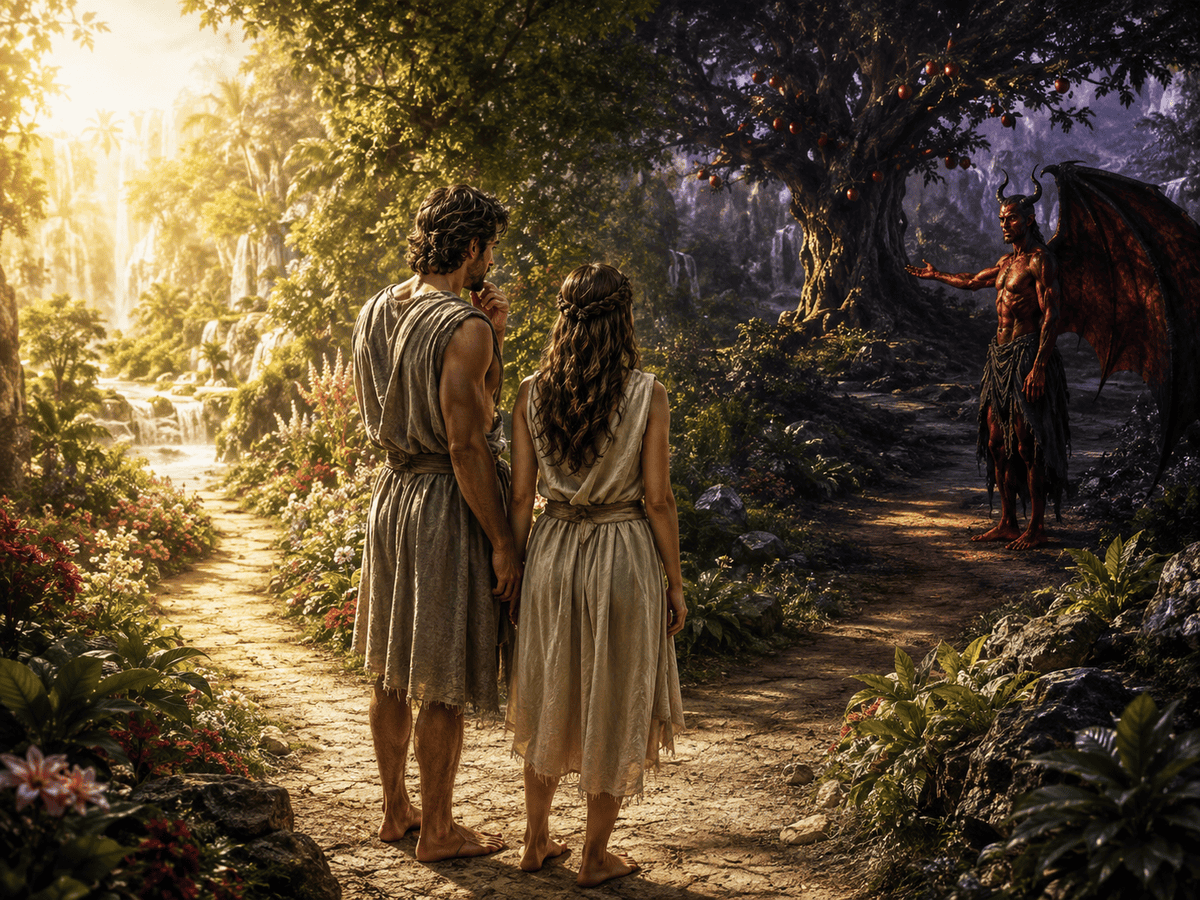
One of the most profound Christian interpretations of the Tree of Knowledge concerns the larger story of salvation.
Genesis begins with humanity losing access to paradise. But the Bible does not end with that separation.
Instead, the story continues through God’s relationship with Israel, the promises of the prophets, and the coming of Jesus Christ.
For Christians, the events in Eden help explain why humanity needs redemption.
Adam and Eve’s disobedience introduces the problem that the rest of the biblical story addresses.
This connection becomes especially clear in the writings of Paul.
In Romans 5, Paul presents Adam and Christ as contrasting figures.
Through Adam’s disobedience, sin enters the human story.
Through Christ’s obedience, the possibility of reconciliation and new life is revealed.
Early Christian writers developed this contrast further.
Some described Christ as the new Adam, whose obedience answers the disobedience of the first man.
The symbolism of trees also became important. Humanity’s fall was connected with a tree in Eden.
Christian tradition later connected redemption with the wood of the cross.
This creates a striking relationship between the beginning of Genesis and the story of Jesus.
The Bible also ends with another important tree.
In Revelation 22, the Tree of Life appears in the renewed creation.
Its leaves are associated with the healing of the nations.
The image recalls the Tree of Life that stood in Eden alongside the forbidden tree.
At the beginning of the biblical story, humanity loses access to the garden.
At the end, the vision of renewed creation includes restored access to life.
This gives the Tree of Knowledge a place within a much larger spiritual narrative.
The forbidden tree was not presented as something evil in itself.
It was part of God’s creation, but it carried a command that humanity chose to break.
The consequences were serious, yet the biblical story continued with promises of mercy, restoration, and hope.
For Christians, this is one of the deepest meanings of Eden.
Human disobedience did not bring God’s purposes to an end.
The story that began with a forbidden tree eventually became a story about redemption, renewed fellowship with God, and the promise of everlasting life.

自出生以来,我一直感觉到自己与神灵有着紧密的联系。作为一名作家和导师,我的使命是帮助他人在最黑暗的时刻找到爱、幸福和内心的力量。