
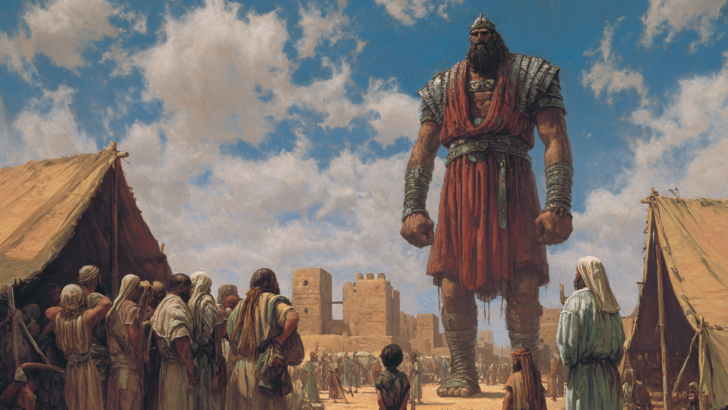
The stories of giants are found in many ancient civilizations, but the Bible gives some of the best-known examples.
Powerful figures such as the Nephilim and the giant warrior Goliath have generated debate for many years.
Some historians feel these stories were meant to be symbolic or exaggerated, while others feel they may be based on real people who were unusually tall or powerful.
Archaeologists, theologians, and other researchers are still researching the ancient texts and historical records in search of answers. There is no uniform agreement over the theories concerning the biblical giants. However, it is a fascinating topic that continues to create controversy.
1. The Mysterious Nephilim
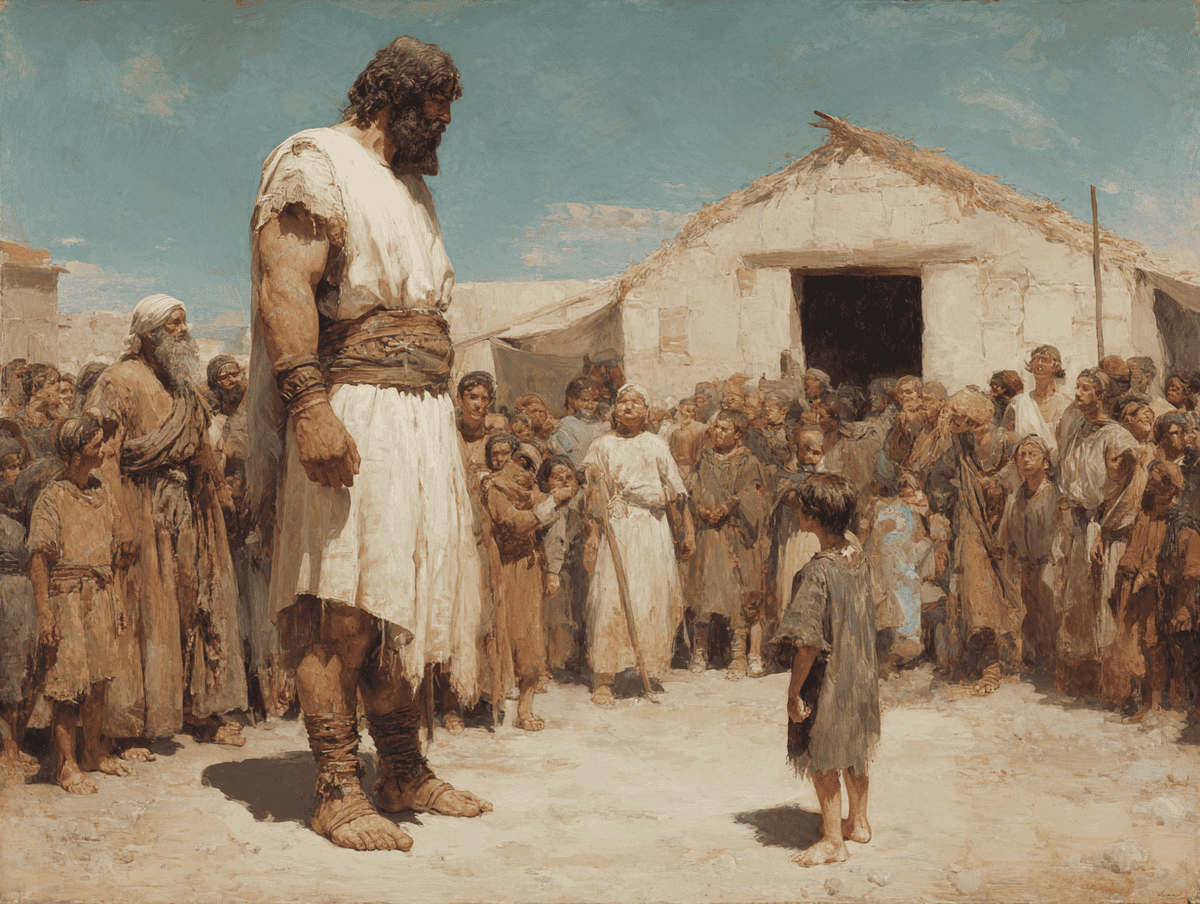
Many people talk about the Nephilim in ancient scripture. They can be referred to as ‘giants’ or simply powerful beings from the past.
Some people think they were heroes or warriors, but some people say large amounts of power are usually tied to chaos and disorder and won’t refer to them as giants anymore.
Historians think it is possible that they were used to refer to larger tribes or simply legendary fighters rather than physical giants.
2. The Story of Goliath
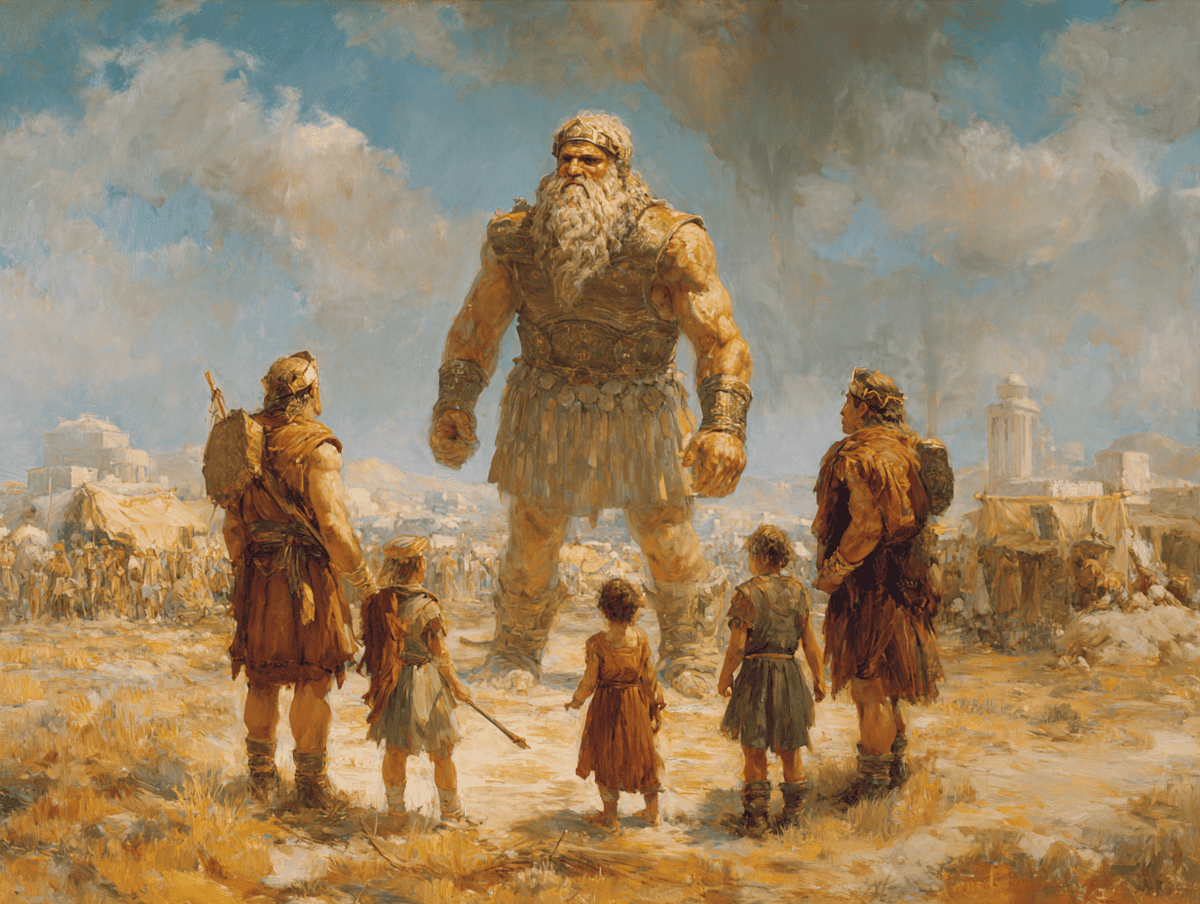
The biblical story of David vs. Goliath entails Goliath being an enormous giant (as described in the Bible) who was taken down by a boy named David.
Some think the tallness of Goliath is embellished or exaggerated. Others believe Goliath may have had some kind of deformity or medical condition, such as “gigantism,” and therefore would be much taller than average.
It is possible that the historical basis for this story is based on a true occurrence.
3. Ancient Cultures and Giant Legends
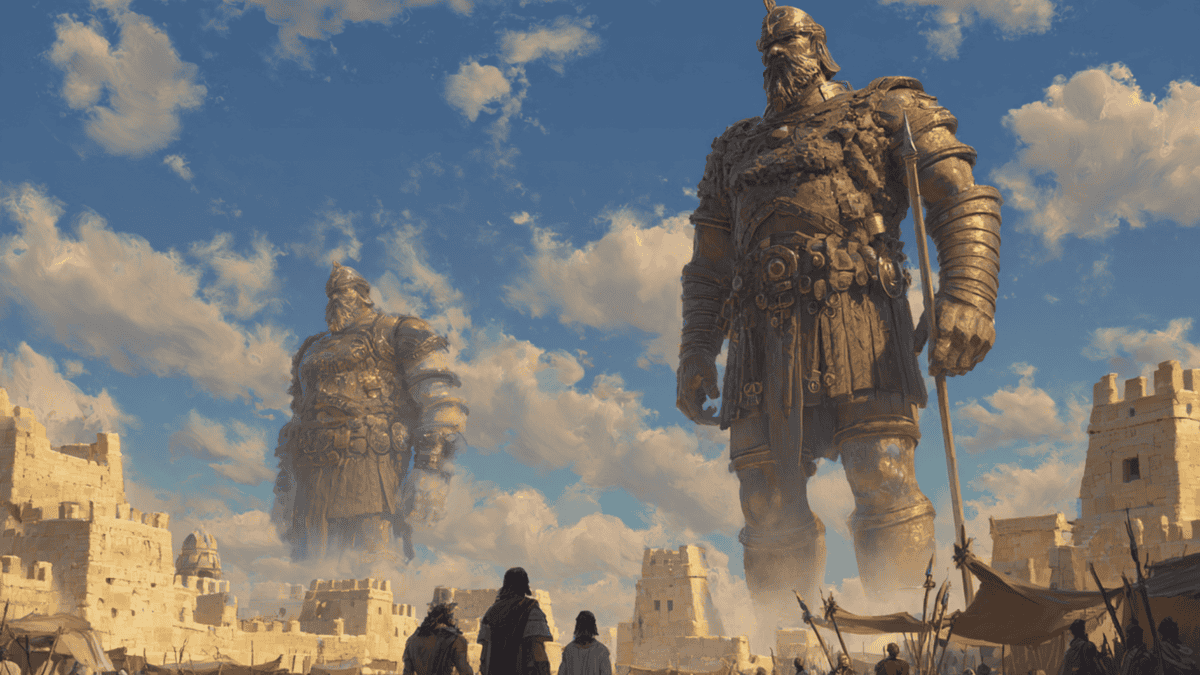
Giant stories are not exclusive to the Bible; they’re found in ancient cultures, e.g., giants appear in Greek (Titans) and Norse (Jotnar) mythology, as well as in indigenous cultures worldwide.
Historians suggest these similarities suggest a common ancestry. Some interpret the repeated images of giants to embody power/chaos rather than size.
These recurring structures demonstrate the use of storytelling by early civilizations to explain the forces of nature.
4. Archaeological Discoveries and Misinterpretation

There are claims circulating on the Internet of archaeological digs producing “giant” skeletons, and nearly all of these accounts are believed to be either fraudulent or wildly exaggerated.
Skeptics believe that many of the bones left behind belonged to some larger animal than a human; the dinosaur and the woolly mammoth would be typical examples of larger animals.
But believers are positive that these large bones are exactly the proof of Biblical giants. Today, archaeologists conduct extensive studies on these skeletal remains in order to better define what they are.
While there have been some humans who were exceptionally tall, there are no historical records documenting anything that was human-like but triple the size.
5. The Role of Translation

The translation of biblical passages regarding “giants” may contribute more to the debate than the actual meaning of “giants.”
The authors of the Old Testament wrote in Hebrew, the New Testament in Greek, and portions of both were written in Aramaic. Many of the words used in these languages have multiple meanings depending on context (i.e., strength/power/dominance = giant).
Many scholars feel that the way the translations were made over time has impacted how people interpret these passages today. By studying the historical context of a language, one can help uncover an alternative meaning for the word “giant.”
6. Medical Explanations for Giant Figures
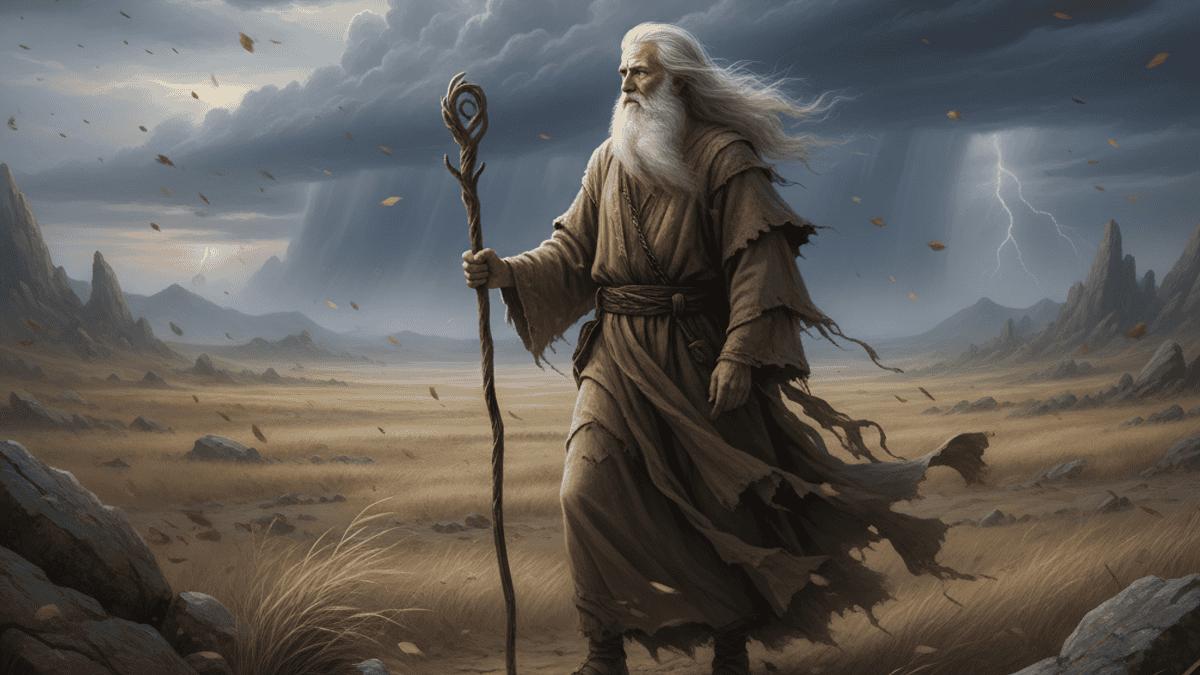
Gigantism and acromegaly, hormonal imbalances affecting growth, are known to cause extremely tall people in modern science.
Historians have considered whether these tall people were observed in ancient times, leading to giants being mythical creatures described throughout the ages.
There may also be cultural/racial factors at play that contributed to perceptions of giant stature due to the vast differences between average heights in many early civilizations.
7. The Influence of Oral Storytelling
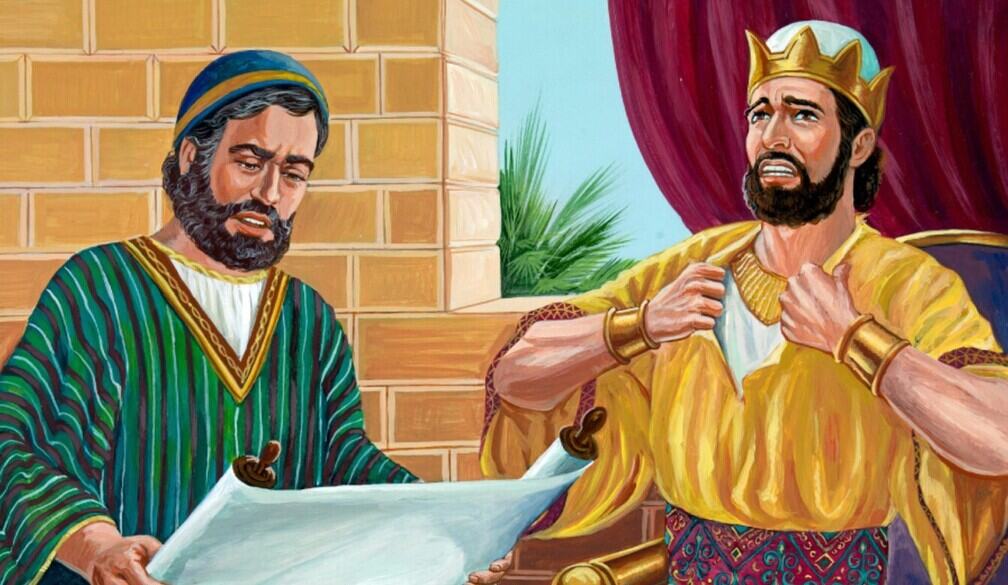
Many stories were shared through verbal means before they were recorded in written form.
Exaggerated tales help tellers remember them more easily; therefore, what was once described as a tall warrior could become a huge hero.
Historians point out that oral traditions can represent real-life occurrences in more of an epic or mythical narrative.
8. Symbolic Meaning in Ancient Texts

Some scholars theorize that the references to giants are, in fact, a symbol of their importance. Many stories depict giants as someone who will cause enormous difficulty and/or as an enemy.
In addition, the size of a giant is commonly associated with power and danger, as seen in literature or within mythology.
Therefore, it has been suggested that the reference to giants in these stories is more often meant to communicate a moral or spiritual message than that of a written record of actual human beings who have/have not existed on this planet.
9. Why the Giant Theory Persists
The concept of ancient giants continues to attract admiration, despite science not proving they ever existed. Legends of lost civilizations and mysterious beings come easily to the imagination.
Additionally, modern media and conversations in the online community can sometimes add fuel to the fire of belief in these theories.
The uncertainty with regard to ancient writings adds another element of mystery that is likely to lead individuals to speculate further. Many people like to consider alternate realities rather than accept the traditional version.
10. What Historians Believe Today
Most historians and archaeologists agree that there is no credible evidence of giant races in ancient history, yet many agree that many historical narratives began as true stories or involved real figures.
It’s possible that stories of giants arose from the fact that tall people were fierce fighters, and that traditional stories often tell an exaggerated or symbolic tale about a person or event.
The biblical story of the giants, therefore, may not be a simple account of real giants but rather a blend of mythical elements, real-life events, and cultural storytelling.

Born and raised in Bosnia and Herzegovina. Ever since I was a little girl, my imagination knew no bounds. I remember vividly how I’d scribble down short stories, each page bursting with adventures and characters conjured up from the whimsy of my mind. These stories weren’t just for me; they were my way of connecting with my friends, offering them a slice of my fantasy world during our playtimes. The joy and excitement on their faces as we dived into my fictional realms motivated me to keep writing. This early passion for storytelling naturally evolved into my pursuit of writing, turning a childhood hobby into a fulfilling career.