
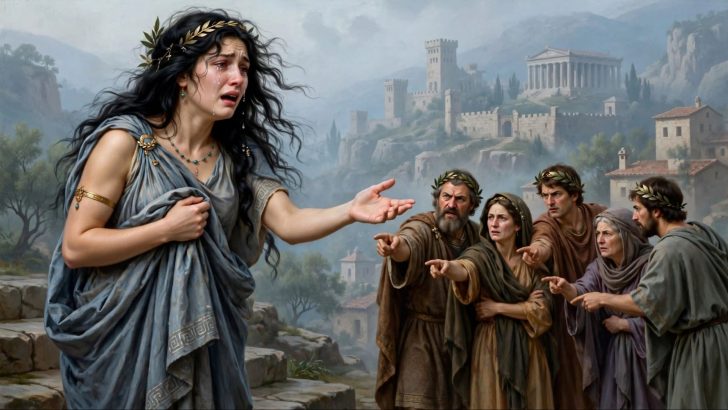
The Cassandra Complex is a psychological phenomenon where someone tells the 真理, but no one believes 他们。
They’re met with condescension or laughter, regarded as though they don’t know what they’re talking about.
这是一个 isolating, scary experience, and its name has its roots in Greek mythology.
So, who was Cassandra, and how did she end up as the face of such a tragic phenomenon?
1. A Princess and a Prophet

Cassandra was the daughter of King Priam and Queen Hecuba of Troy. She was born into one of the most powerful royal families of her time.
She’s described as clever and beautiful, and it’s also said that she was sensitive to things many other people didn’t notice.
All of these traits suggest divine attention.
Her fate feels even scarier when you know her status; she was important, rich, and a royal, but it still wasn’t enough for people to take her words seriously.
2. Apollo’s Gift

Apollo is the god of the sun, stasis, music, poetry, and prophecy. He noticed Cassandra because of her beauty and wanted her.
Some versions of the myth say that she was already a priestess in his temple.
He approached her with a gift: she would gain true prophecy if she slept with him.
Cassandra accepted the gift, but she refused to deliver her end of the bargain, and this was a turning point for her and the city of Troy.
Apollo couldn’t take back the gift he had already given her, but he could add a curse on top of it.
She had the true sight, and she spoke the truth, but no one would believe a single word she said!
Being a prophetess of Apollo usually gained you massive respect, but the god made it so that the gift ruined her life.
3. She Gained True Sight, but Lost Everything Else
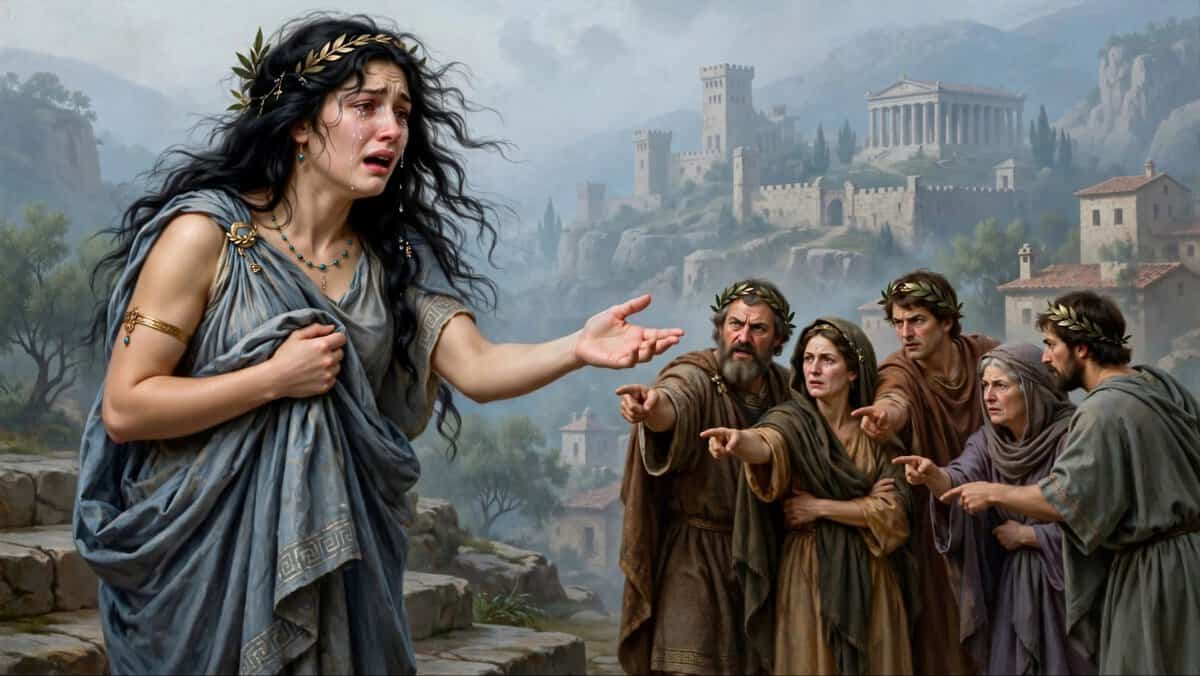
So, Apollo took the one thing that gave any prophecy its value: belief.
Cassandra could see the future with complete accuracy. She could articulate it clearly. She could communicate her visions.
But every single person who heard her refused to believe. No amount of detail could change their minds.
Even as the events she predicted were unfolding right before everyone’s eyes, no one believed her.
This is typically regarded as one of the most sophisticated psychological curses in mythology because it recognizes the importance of how others perceive us.
Truth without an audience is a form of madness.
4. The Trojan War
We know how the Trojan war ended, and Cassandra had spent years warning everyone about the city’s destruction.
When her brother Paris prepared to sail to Sparta, she knew what would happen. She knew he would steal Helen and bring her back to Troy, and that this would start the war.
No one listened, and Paris went anyway.
When Helen arrived in Troy and the Greek fleet began assembling for war, Cassandra described what was coming for the city.
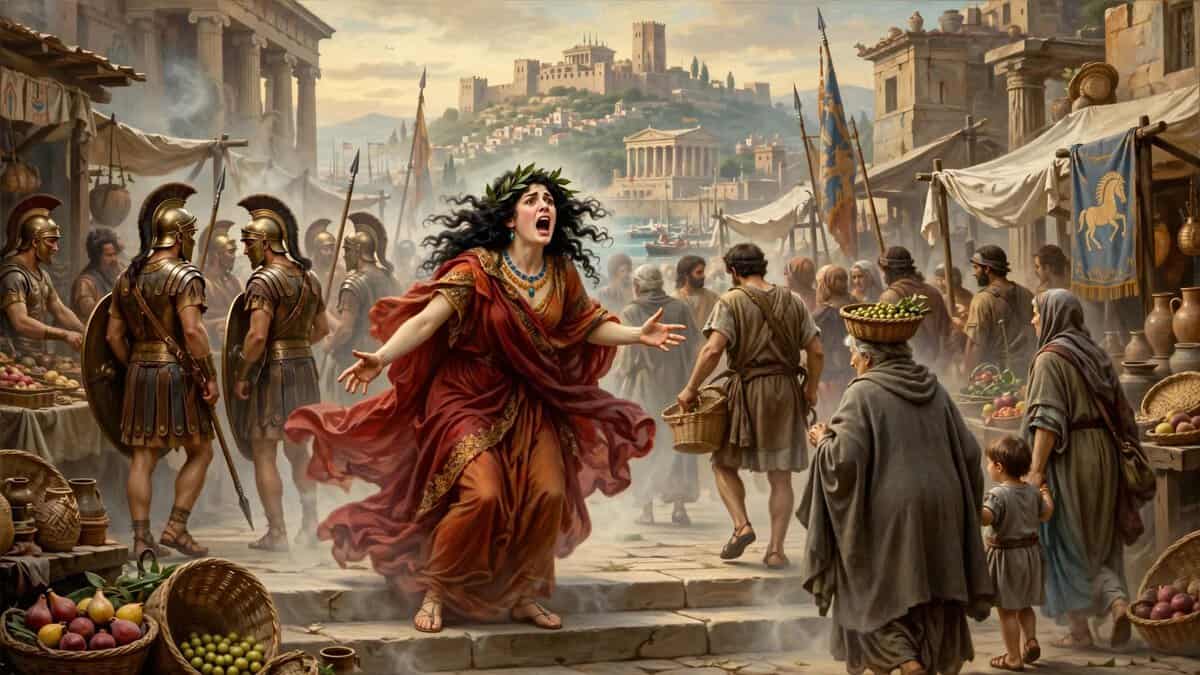
Throughout the ten years of siege, she continued to warn everyone, but was regarded as delusional.
And most famously, she screamed a warning about the Trojan horse, but the others decided to bring it in anyway. Troy was destroyed before morning.
5. The Personal Cost of Knowing

This adds another painful layer to Apollo’s curse: Cassandra could see every terrible future event, but was powerless to stop any of it.
Her personal experience is the real tragedy!
She had to watch her brother leave for Sparta, knowing exactly what that would cost the whole family.
She watched the war unfold exactly as she said, and saw the wooden horse being wheeled in, when she knew what was inside.
Mythology goes on to describe her as grieving and erratic, which is a clear trauma response.
6. Being Proven Right
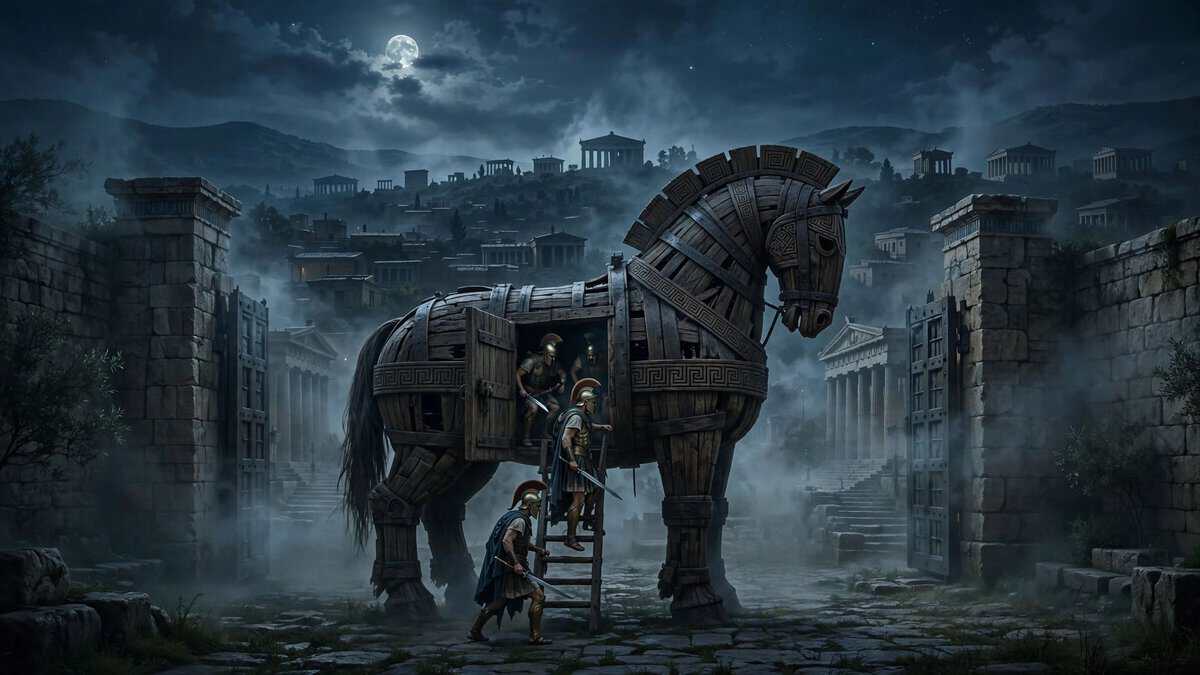
When Troy finally fell, exactly as Cassandra said it would, there was no pleasure to be found in being right.
When the Greek soldiers poured out of the horse and the city began to burn, the truth was visible to everyone.
But being proven right in the rubble of your own city, having lost everything, just added to the tragedy.
During the sack of Troy, she sought refuge in the temple of Athena, but misfortune followed her even there.
She was assaulted by the Greek warrior Ajax the Lesser.
She was then taken as a war prize by Agammemnon and taken to Mycenae.
7. Losing Hope

In Mycenae, she also immediately knew what was about to happen. Agammemnon would be betrayed and murdered by his wife and her lover, and Cassandra knew she would die, too.
Standing at the door of his palace, she described what would happen to them both in haunting detail.
The people listened, but of course, no one believed her.
By that point, she became completely resigned. Since she knew what awaited her, she could have run or tried to seek protection.
A lifetime of being unheard made her believe she had no hope of changing anything.
Both she and Agammemnon were killed by Clytemnestra and Aegisthus, exactly as she’d predicted.
8. The Cassandra Complex Today

The reason Cassandra’s name had survived three millennia and became a psychological term is that the experience she represents remained relevant.
The instances of people being accurate about something important while being dismissed have been documented many times.
Some of the examples include doctors who made crucial discoveries before their peers were ready to believe them.
Ignaz Semmelweis, for instance, recognized the importance of washing his hands before treating patients, and was ridiculed by his colleagues.
The Cassandra Complex is present in people’s 私人生活, too. It happens when one person sees the problem that could ruin the relationship, while the other gaslights them.
This complex isn’t something you can solve by communicating better because it’s not up to you. It’s up to those who refuse to hear you.

A little Aquarius, devoted to writing and embroidery. Through my writing, I hope to empower readers to align with their true selves and navigate life’s mysteries with confidence.