

The church would have us believe that the Emperor Constantine suddenly “found Jesus” and decided to turn his entire empire Christian overnight.
But that might not be the whole truth, and his reasons for accepting the new faith might not have been as pure and honest as they seem.
Christianity has a message of unity and acceptance, and the Romans saw great potential in that.
They had a long and tumultuous history of dealing with conquered peoples, and they knew that brute force wasn’t enough for the Roman influence to truly last.
A Tapestry of Gods and Cultures

The Roman Empire was a melting pot of different cultures and religions. There was a god for every occasion, every city, and every aspect of life.
This strong religious tradition was deeply woven into daily routines and laws.
These were all national cults, and each and every people that the Romans conquered had their own.
The pantheons were a huge part of people’s identity, and no amount of Roman force would get them to give that up.
Not to mention, these conquered peoples loathed the very idea of the Romans, and rejected all that was imposed on them.
但是 Christianity was not Roman. That’s why the Empire recognized it as the one assimilation strategy that wouldn’t cause outright rebellion.
Why Would Romans Accept Christianity?

The Romans themselves had a proud and established pagan religion, so why would they choose to accept the faith that seemed so foreign to them?
The answer lies in the core message of Christianity itself. It was completely inclusive – Jew and Gentile, rich and poor, free and slave – all were welcome to follow Christ.
This universal appeal was a game-changer. It offered a new kind of social cohesion that didn’t rely on local traditions.
By converting to Christianity, the Romans didn’t lose their identity; instead, they created a new one that could unify diverse peoples under a single banner – Christian.
The new faith made it much easier to govern and control such a vast, varied empire.
Identity and Loyalty

One of Rome’s smartest moves was using Christianity to redefine loyalty.
They promoted the idea that everyone was part of a larger Christian community rather than focusing on separate pantheons.
This shift helped diminish rival loyalties, like local or national deities, that could spark rebellion.
By making faith a unifying force, Rome could foster a sense of belonging that crossed borders and cultures.
The idea was simple: if everyone shared the same faith, they’d see themselves as part of one empire, one people.
Religion as a Tool for Division and Control

Enforcing Christianity wasn’t just about unification; it was also about control.
The Roman authorities found that faith could be a powerful tool to keep people in line. Laws began to favor Christian practices, while pagan rituals were suppressed as much as possible.
This created a new social order where loyalty to faith went hand-in-hand with loyalty to Rome.
The church, in turn, became a means of social control; morality, discipline, 和 服从 were all reinforced through Christian doctrine.
The Roman state effectively turned religion into a method of social regulation, making dissent much harder.
The Church as a Reflection of Roman Strategy

The early Christian church, especially the hierarchy and structure it developed, mirrored Roman political and social organization.
It adopted Roman approach to law and hierarchy with its bishops, councils, and legal codes.
The church became a tool that reinforced the Roman strategy, providing a centralized authority that could spread and enforce the new faith across the empire.
This emphasis on uniform doctrine and discipline echoed Roman administrative methods, making it an ideal partner in maintaining stability and control.
The Ideological Cover

On paper, the church presented itself as a spiritual and moral guide, but beneath that, it also served as an ideological shield for Roman interests.
By promoting Christianity as a religion that emphasized obedience and humility, the church provided a moral justification for Roman rule.
That way, the conquest was framed as part of a divine plan.
Resistance became less appealing since religious teachings became interwined with the idea that obeying Roman law was part of serving a higher purpose.
The Long Game

Rome’s acceptance of Christianity was a long-term strategy.
By aligning the church with imperial authority, Rome ensured that the new religion would be a unifying, stabilizing force for centuries.
As Christianity spread, it absorbed and adapted to local customs, making it even more appealing and harder to resist.
Over time, it became the backbone of Roman identity – something that could be used to legitimize rulers and maintain control.
Essentially, Rome managed to take a potential threat and turn it into a powerful tool to serve its purpose.
The Hidden Power of Unified Identity
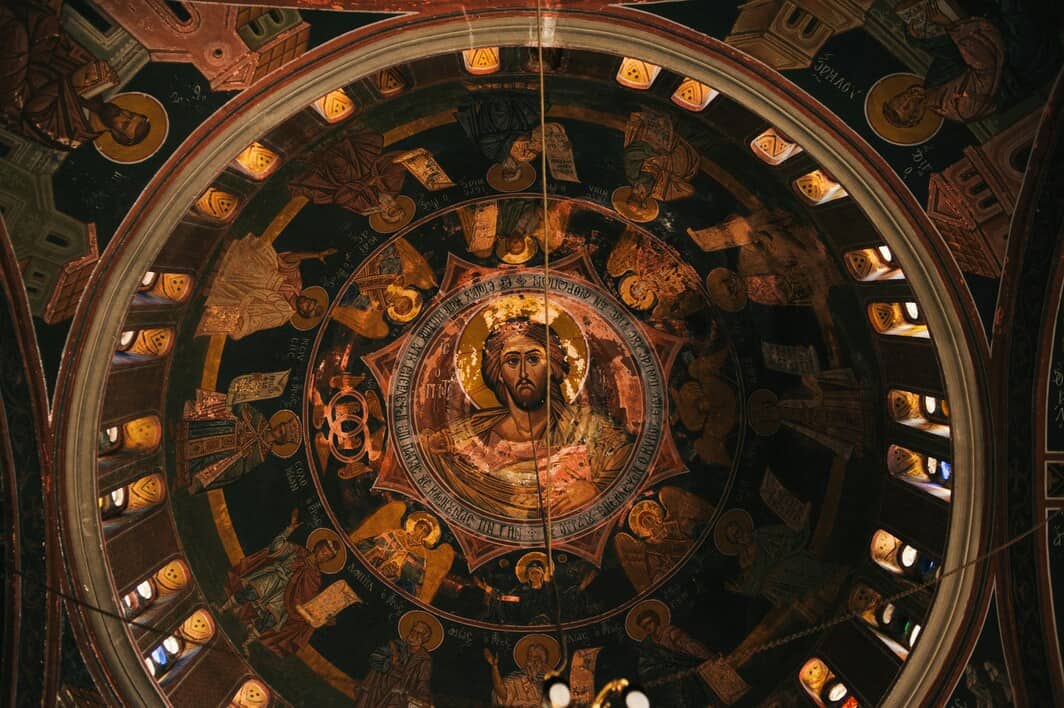
The Christian message of unity helped Rome understand something crucial: a shared identity could be more powerful than any army.
Christianity gave them exactly that.
By encouraging people to see themselves as part of a global faith, they created a sense of unity that was hard to break.
The church enforced this new identity, using faith as a form of social glue. The empire’s control was no longer just political or military, but deeply ingrained in the worldview of its people.
That’s how Christianity turned out to be Rome’s secret weapon in building an enduring empire.

A little Aquarius, devoted to writing and embroidery. Through my writing, I hope to empower readers to align with their true selves and navigate life’s mysteries with confidence.