

Ancient mythology is full of captivating characters, and one of them is Naamah, one of the 4 Queens of Hell.
She is a complex being whose story speaks of paradise lost and the seduction of the unknown.
Naamah’s story challenges the notion that 天使 were incapable of error and desire.
From a celestial beauty, she became a demoness, and her journey reveals the dangers of unchecked curiosity and forbidden knowledge.
1. Naamah’s Divine Beauty

Before the darkness took hold, Naamah was actually a picture of divine perfection.
She had incredible wings that shimmered in bright colors and would hurt the eyes of those who stared too long. Her hair was a waterfall of gold.
And her eyes were so mesmerizing that it seemed as though she could see through you!
However, her true weapon, even before becoming a demoness, was her voice. It was so melodic and sweet that everything stopped when she spoke.
But there was a restlessness in Naamah. She wanted more than to just be beautiful.
Her eyes revealed that she was hungry for something that Heaven’s perfection just couldn’t provide.
2. The Temptation

You know how it goes with being told you can’t have something; overnight, it becomes the one thing you can’t stop thinking about.
The demoness Naamah was the same.
She became obsessed with uncovering the secrets of the Universe – the very secrets that Heaven forbade her to even think about.
Naamah didn’t hate the divine, but she did feel as though there was a whole plane of existence that she was excluded from.
She started to believe that these hidden powers and knowledge were the tools of true freedom.
Then, she crossed paths with the Watchers. These were the angels tasked with watching humanity, and she approached them as a friend.
She tempted them with the idea of more. She spoke of the forbidden knowledge that could give them dominion over mortals and even help them rise in the heavenly hierarchy.
3. The Seduction of the Watchers
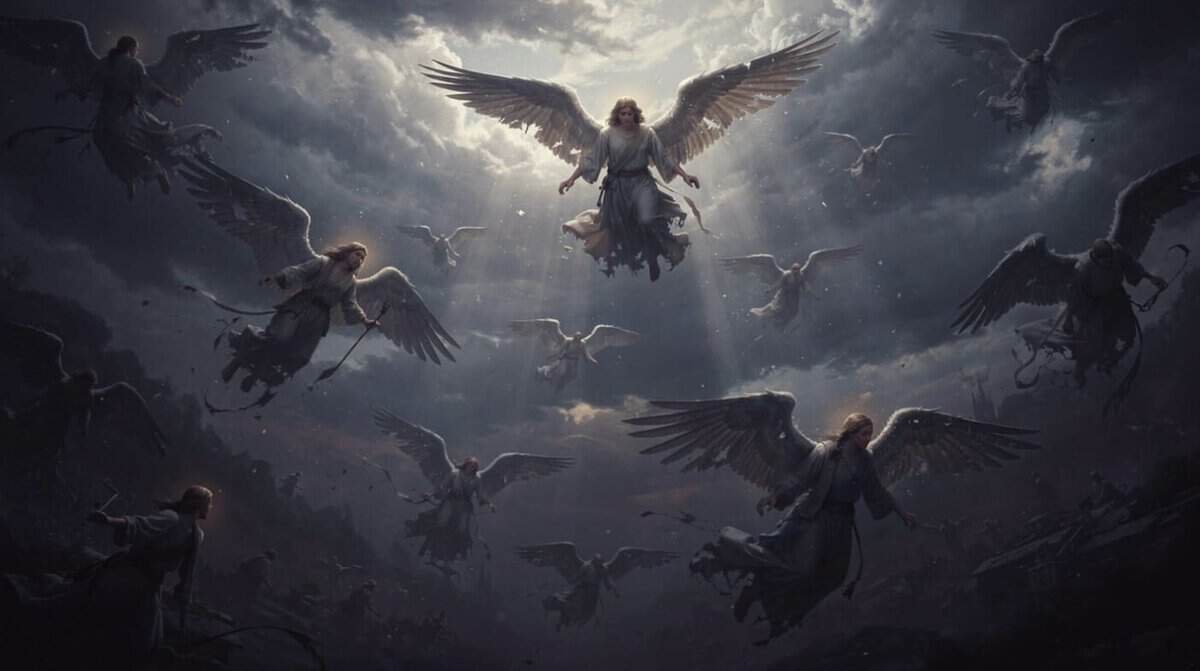
Let’s keep in mind all of Naamah’s charms and the power of her voice. When she spoke to the Watchers, they were compelled to listen.
She unlocked this idea that they were the victims of an unjust system, like the divine was unfair to them when they deserved so much more.
Slowly, she got them to abandon 他们的 heavenly duties and join her.
The demoness promised enlightenment, but she also promised pleasure of all kinds. Since the Watchers no longer felt bound by divine law, they felt like it was okay to give in to their darkest impulses.
The Watcher’s sins are their own, of course. Naamah never forced anyone to join her, but she compelled and talked them into turning their backs on God.
She ignited a spark of rebellion that eventually consumed them.
4. The Fall
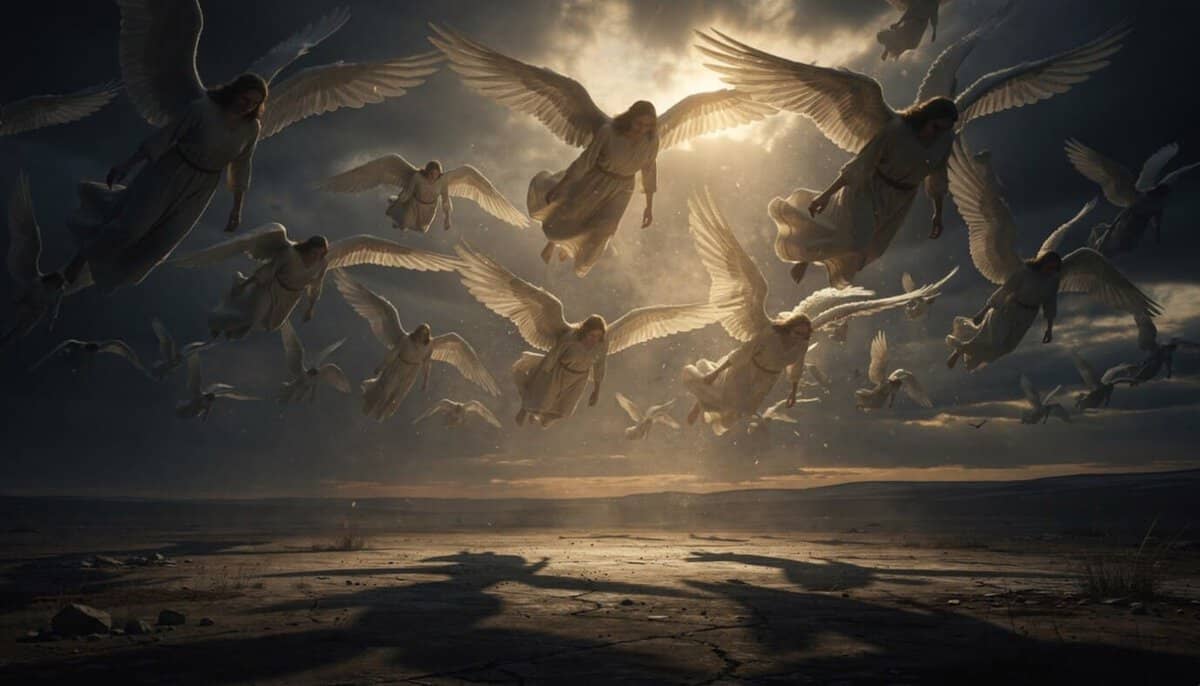
With the Watcher’s decision to abandon their duties, the heavenly harmony was shattered.
Their betrayal is so tragic because none of them were demons yet, including Naamah. They were beings of light and beauty, going down a path they couldn’t return from.
Under Naamah’s guidance, a whole group of them made the choice to walk away from everything they knew.
他们 descended from the Heavens, and that act alone marks their Fall.
Naamah had convinced them that divine law was a cage, and that by descending among mortals, they would find their freedom.
The future queen of hell was the main catalyst. She made the unthinkable feel not only possible, but necessary.
5. Naamah’s Transformation into a Demoness
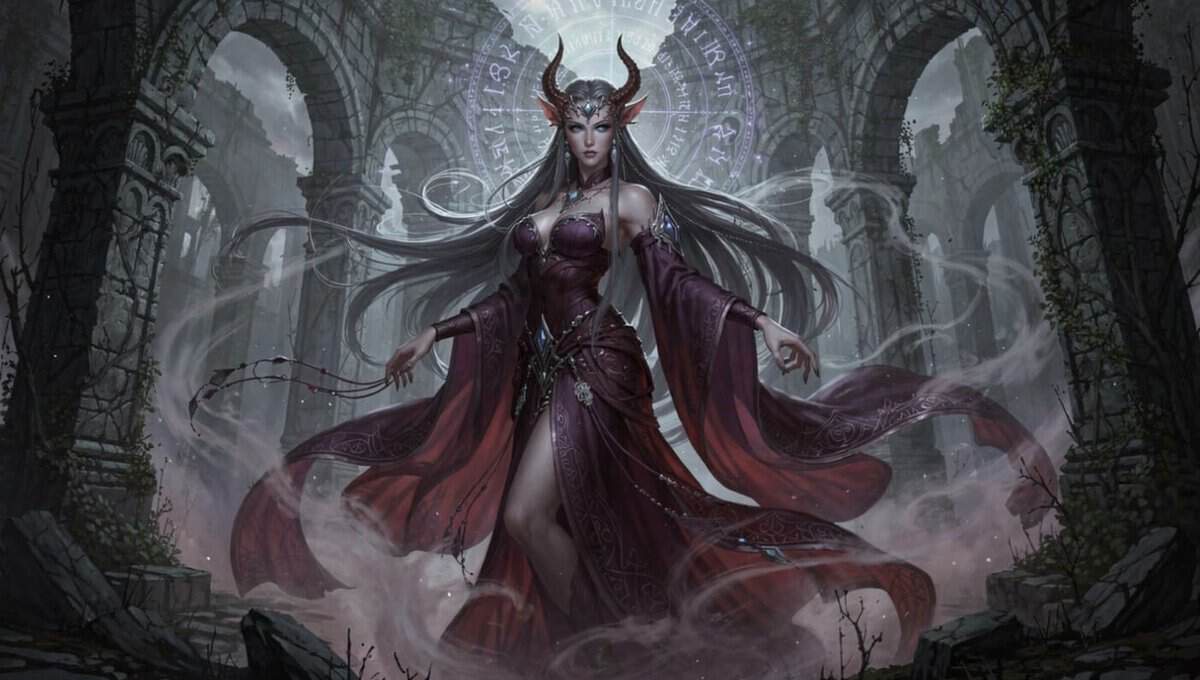
With her temptation of the Watchers, Naamah broke the fundamental laws of the universe.
Once the rebellion settled down, she was punished. She was cast down, but fascinatingly, that didn’t stop her.
Instead of being defeated, she evolved.
She was transformed into a demoness, one of the four queens of hell, but this promotion came at a price. Her beautiful form got twisted into something unrecognizable.
She didn’t lose her beauty, but it became warped and haunting!
Her wings turned dark, and the glow in her eyes also turned into something sinister and hungry.
Naamah officially became the temptress, a demoness who used her allure to get exactly what she wanted.
6. Her Influence

Naamah’s domain is marked by eternal darkness. It’s a realm of illusions and shadows, and it’s completely under her control.
As a demon queen, Naamah rules with cunning and seduction, not an iron fist. It’s the kind of hell where you’re tricked into wanting to stay.
It’s a place designed to trap unwary souls, feeding on their deepest desires, only to then punish them through their worst fears.
However, her influence isn’t confined to hell.
The demoness also reaches the mortal realm, and she is believed to be temptation itself. She’s that voice that beckons you to do something you know is completely wrong.
She encourages sin because she feeds on it.
7. Character and Traits
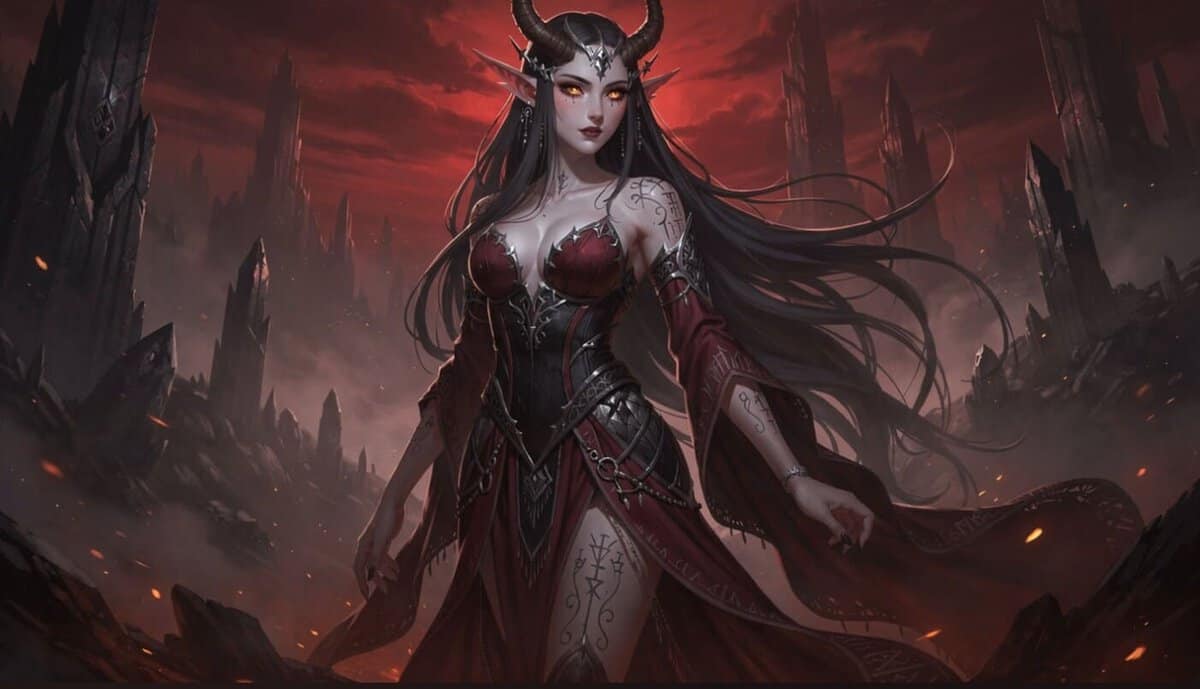
Naamah represents duality.
She might come off as compassionate and wise; she’ll caringly support you in making the worst decisions of your life.
Under her temptation, you’re led to believe that she’ll guide you to happiness, just like the Watchers did.
She’s the ultimate 机械手; she controls desire and fear, and she flips between them effortlessly.
Despite all this, there is a tragic element to this demon queen.
She is the ultimate symbol of corruption, but also of everything that’s lost.
Her terrifying, twisted beauty is a constant reminder that she didn’t have to become a monster if only she had chosen differently.
8. Naamah’s Legacy

Looking at the whole story, Naamah’s is a clear cautionary tale.
Her name has become synonymous with seduction and intellectual arrogance.
She’s the demon of knowing better, and most of us are tempted by her. We’re always on the edge of turning away from the divine if it means gaining more forbidden knowledge.
Naamah represents the true allure of rebellion.
She shows us that the angels didn’t rebel out of hate, but out of simple curiosity, which is far scarier.
Her legend remains relevant because it relates to the age-old fear that we, too, could be led astray.

A little Aquarius, devoted to writing and embroidery. Through my writing, I hope to empower readers to align with their true selves and navigate life’s mysteries with confidence.