
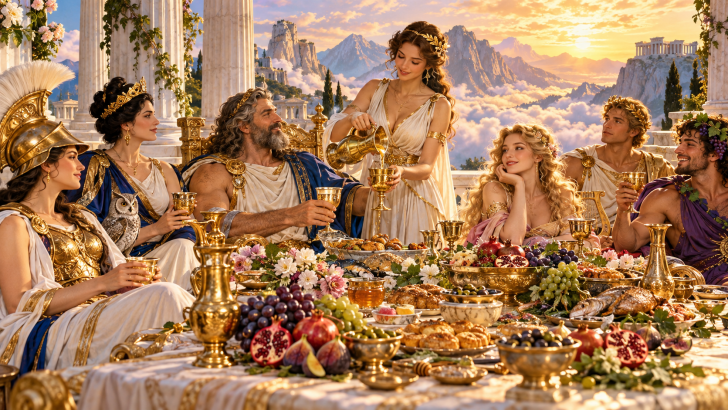
A feast on Mount Olympus sounds like it should be enormous. Golden tables. Endless dishes.
Gods drinking from beautiful cups while musicians play somewhere nearby.
Greek mythology gives us plenty of material for that image. But the gods did not simply eat ordinary meals.
So what would actually appear at a feast for the Greek gods? Some foods come directly from mythology.
Others were foods ancient Greeks offered during real religious ceremonies.
Put them together, and the divine table starts looking surprisingly rich.
Here are ten foods and drinks you might find at a feast for the Greek gods.
1. Ambrosia – The Food of Immortality
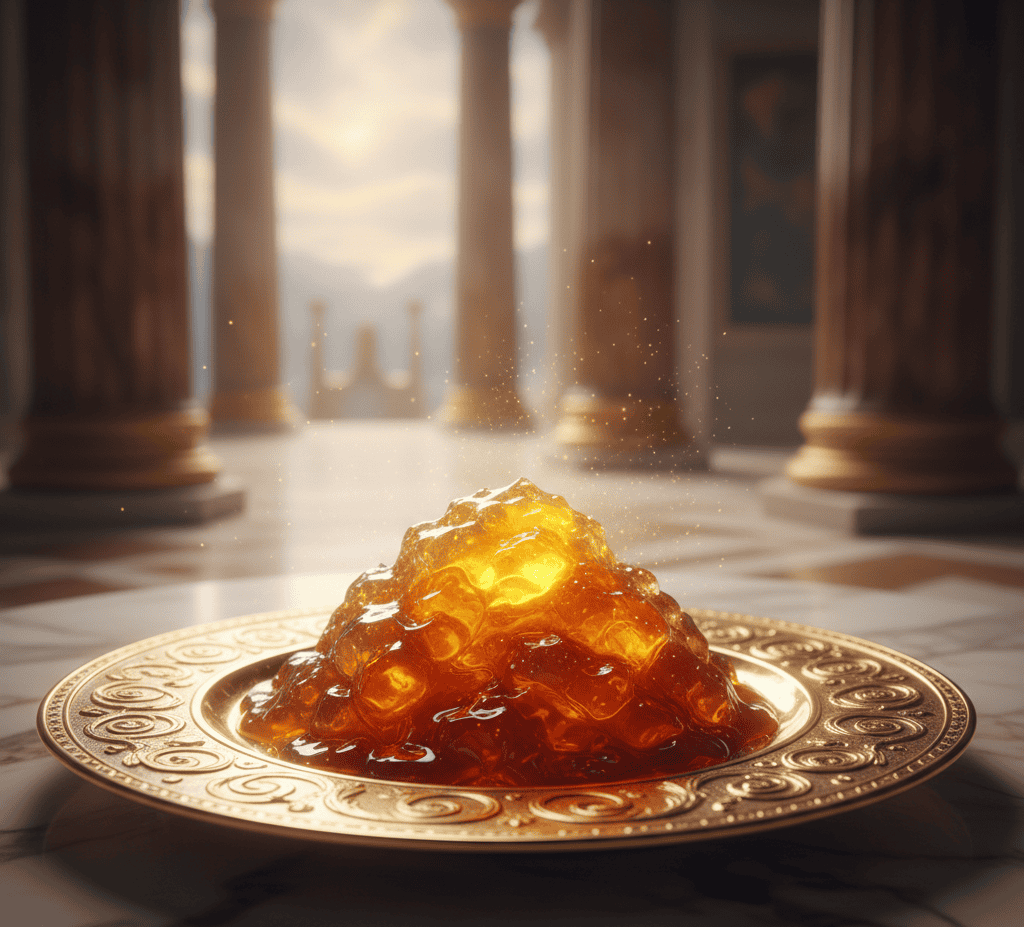
No feast for the Olympians could begin without ambrosia. Ancient Greek texts connect ambrosia closely with the gods.
Exactly what it was is not always clear. Sometimes it appears as something eaten.
In other stories, it can act more like a divine substance used on the body.
What remains consistent is its connection with the divine world.
Ambrosia was not an ordinary food humans could simply prepare in their kitchens. It belonged to the gods.
Later traditions often describe it as the food that gave immortality, although ancient stories are more complicated than that.
At an Olympian feast, ambrosia would probably be the dish no mortal guest could stop staring at.
2. Nectar – The Drink of the Gods
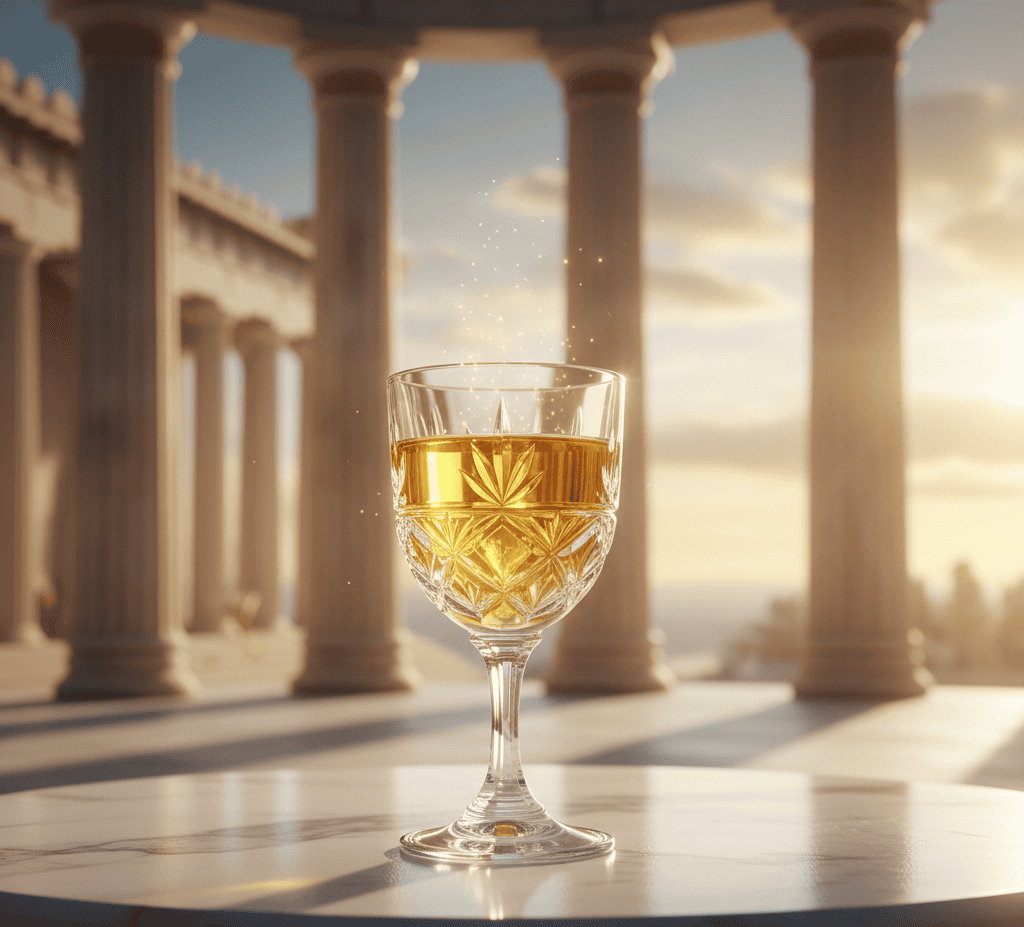
If ambrosia is on the table, nectar should be nearby. Nectar is commonly described as the drink of the Greek gods.
Divine attendants such as Hebe and Ganymede became connected with serving drink to the Olympians.
That makes nectar easy to imagine at a great feast. Zeus raises a cup.
Aphrodite drinks nearby. Apollo listens to music while another cup is filled.
Ancient sources do not give us a simple recipe for nectar.
That has not stopped later writers from imagining it as something sweet, fragrant, and impossible for humans to copy.
Maybe that is part of its charm. Some divine foods are interesting because mythology never tells us what they would actually taste like.
3. Honey – Nature’s Ancient Sweetener
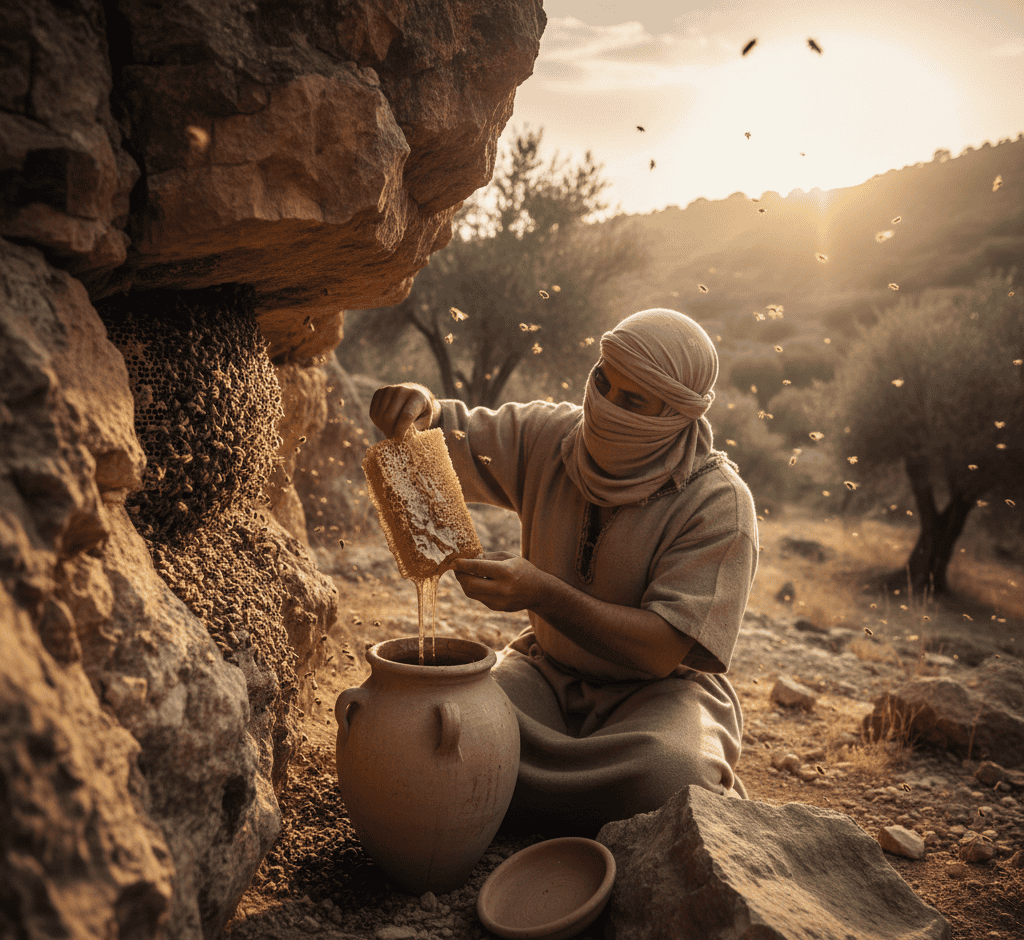
Honey was one of the great sweet foods of the ancient Greek world.
Long before modern sugar became common, honey could sweeten cakes, drinks, and other foods.
It also had religious importance. Honey and honey mixtures could be offered to gods, heroes, and the dead.
Bees themselves gathered plenty of mythology too. They could be connected with divine figures, sacred places, and mysterious stories.
Honey therefore fits naturally on an imagined table for the gods. It is sweet. It keeps well.
And even today, there is something unusual about the fact that tiny insects create it from flowers.
For ancient people, that process could seem even more remarkable.
A bowl of golden honey would not look out of place on Olympus at all.
4. Barley Cakes – A Simple Sacred Food
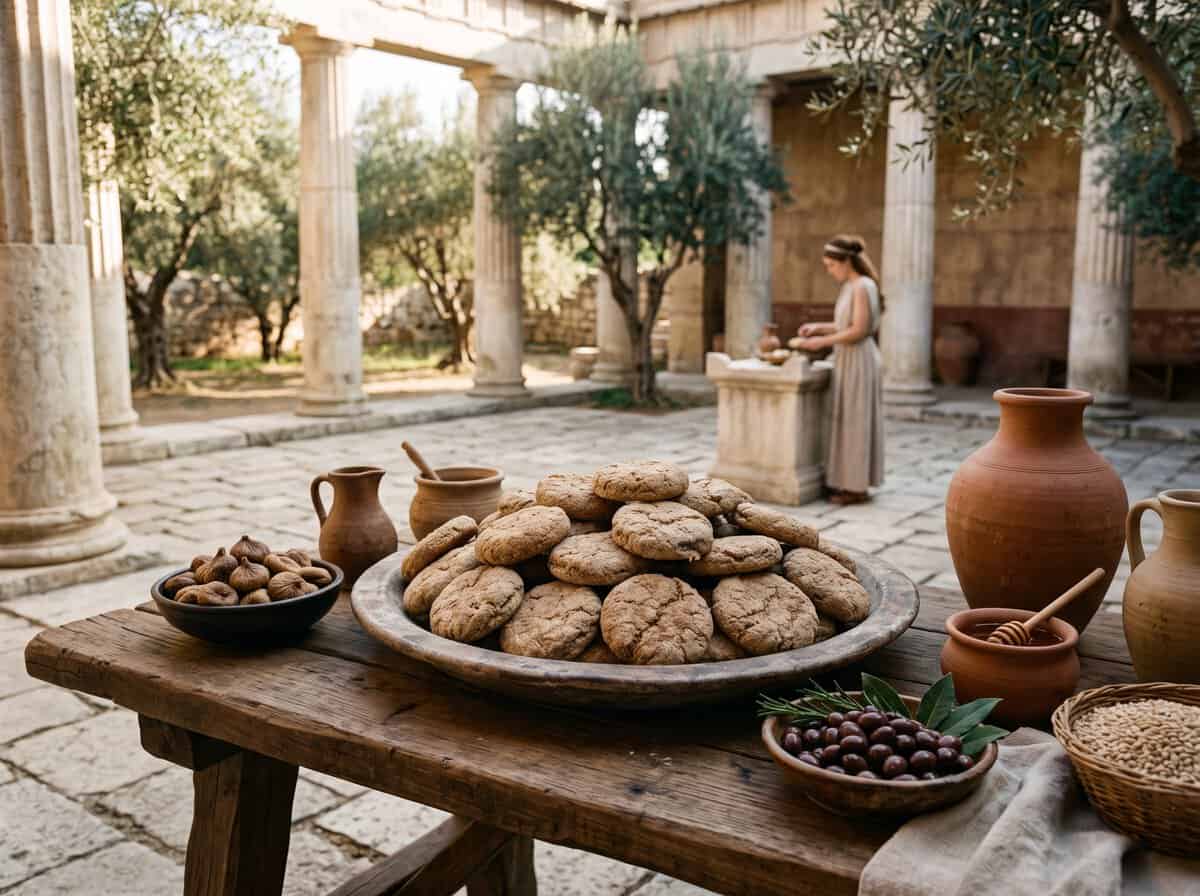
Not everything offered to the gods needed to be luxurious. Sometimes simple grain mattered just as much.
Barley was one of the most important crops in ancient Greece. It could be turned into porridge, bread-like foods, and cakes.
Grain also played an important role in religious life. Offerings could include cakes prepared for particular gods or ceremonies.
Different shapes and recipes could carry different meanings.
That makes barley cakes a good reminder that divine food was not always about impossible substances such as ambrosia.
The same grain that fed an ordinary family could become sacred when offered to a deity.
A simple cake could say something important. This came from our harvest.
We depend on it. And we are giving some of it back.
5. Pomegranates – The Fruit of Persephone
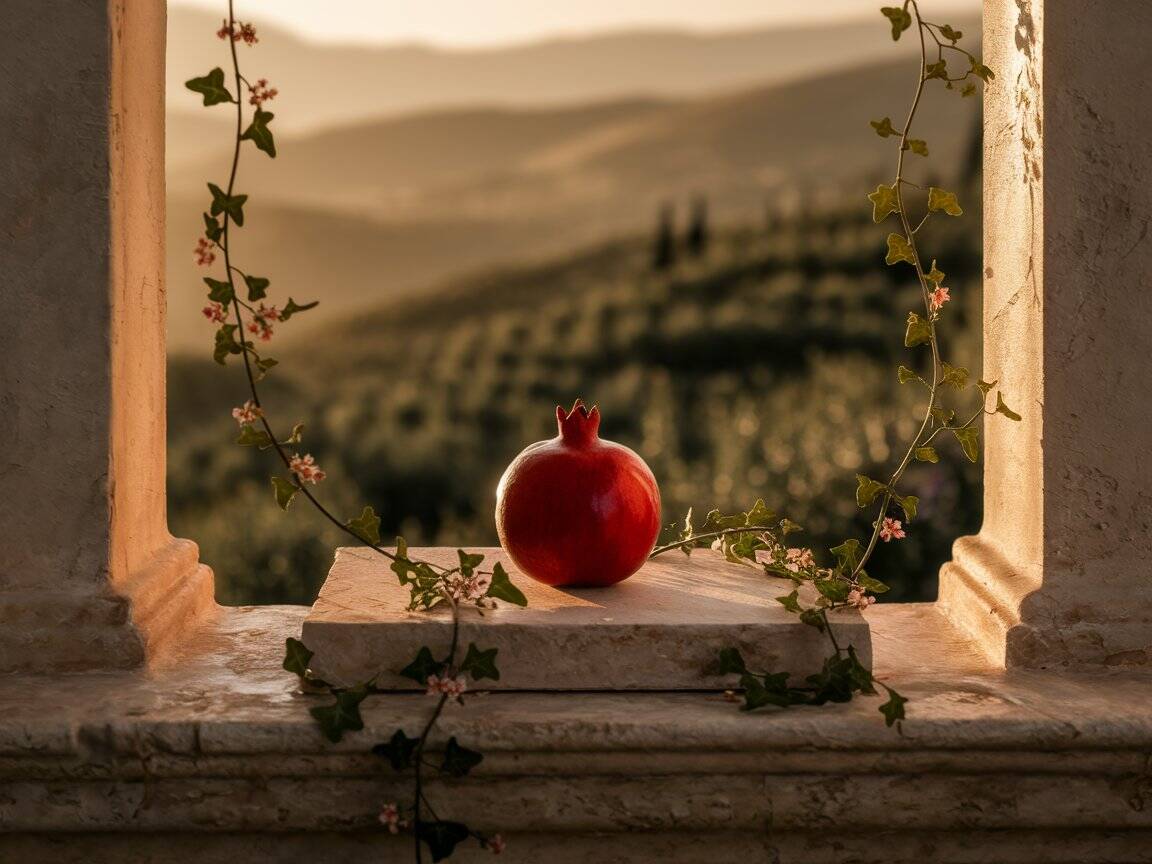
A Greek mythological feast would feel incomplete without pomegranates. One fruit changed Persephone’s story forever.
After Hades took her to the underworld, Persephone ate pomegranate seeds.
Those seeds became part of the reason she could not simply leave the underworld behind forever.
The pomegranate became strongly connected with Persephone, death, fertility, marriage, and the cycle of the seasons.
That gives the fruit a strange place at our imagined feast. It is beautiful and full of bright seeds.
But everyone at the table knows the story. Demeter probably has complicated feelings about seeing it.
Hades, on the other hand, may be perfectly comfortable. Few fruits could create more awkward dinner conversation.
6. Olives – Athena’s Famous Gift
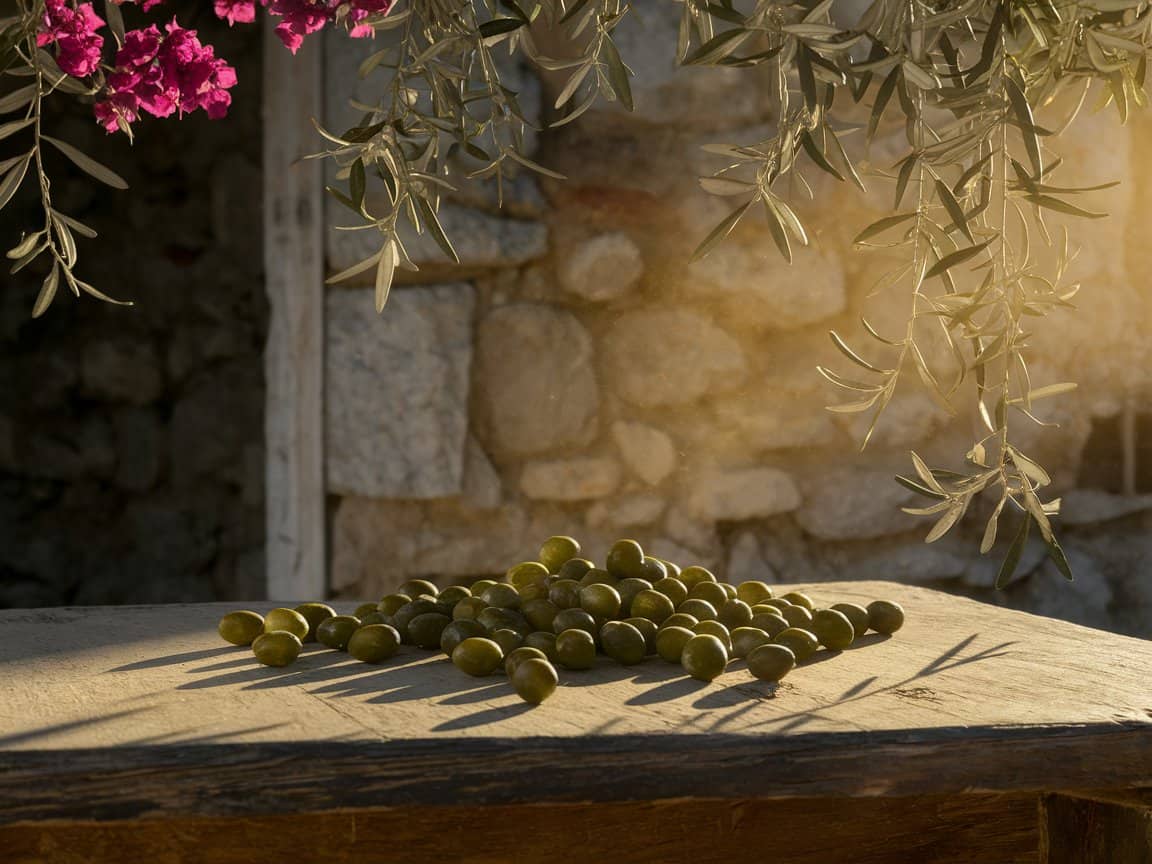
Olives belong on Athena’s side of the table. According to a famous myth, Athena and Poseidon competed for control of Athens.
Each offered the city a gift. Poseidon produced a powerful water source in common versions of the story.
Athena gave the olive tree. Her gift won. The olive tree could provide food, oil, wood, and other useful resources.
That made it an incredibly valuable gift in the Mediterranean world. Olive oil also became central to Greek daily life.
People cooked with it. They used it on their bodies. It appeared in lamps and religious practices.
At a divine feast, bowls of olives would therefore represent much more than a snack.
They would remind everyone that Athena once won an entire city with a tree.
7. Grapes – The Fruit of Dionysus
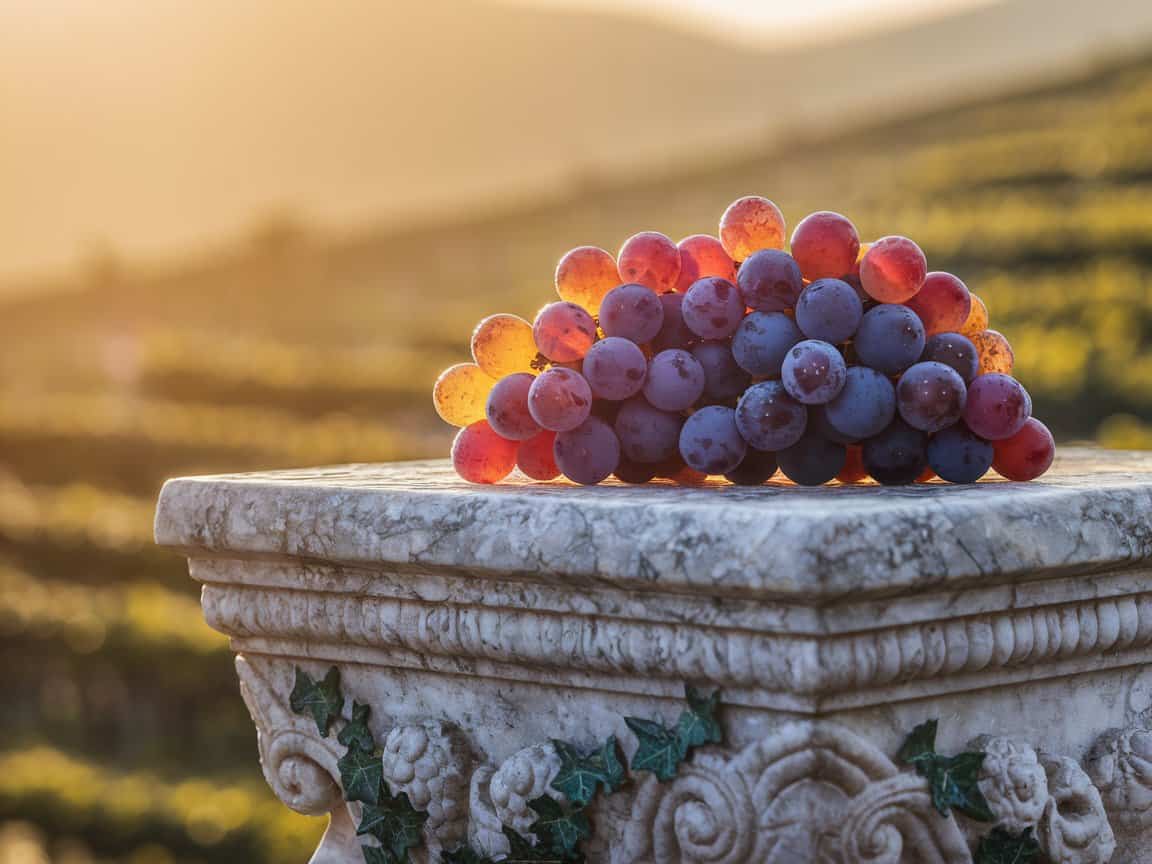
If Dionysus attends the feast, grapes are coming with him. Dionysus was the god of wine, theater, ecstasy, and altered states.
Grapevines are one of his most recognizable symbols. That makes fresh grapes an obvious addition to the table.
But their meaning goes beyond the fruit itself. Grapes become wine through transformation.
A simple fruit is crushed, fermented, and turned into something completely different.
That process became part of the world surrounding Dionysus. He could represent celebration and freedom.
But his myths also show the dangerous side of losing control. So enjoy the grapes.
Just remember that anything connected with Dionysus can become much wilder than expected.
8. Figs – The Sweet Fruit of Greece
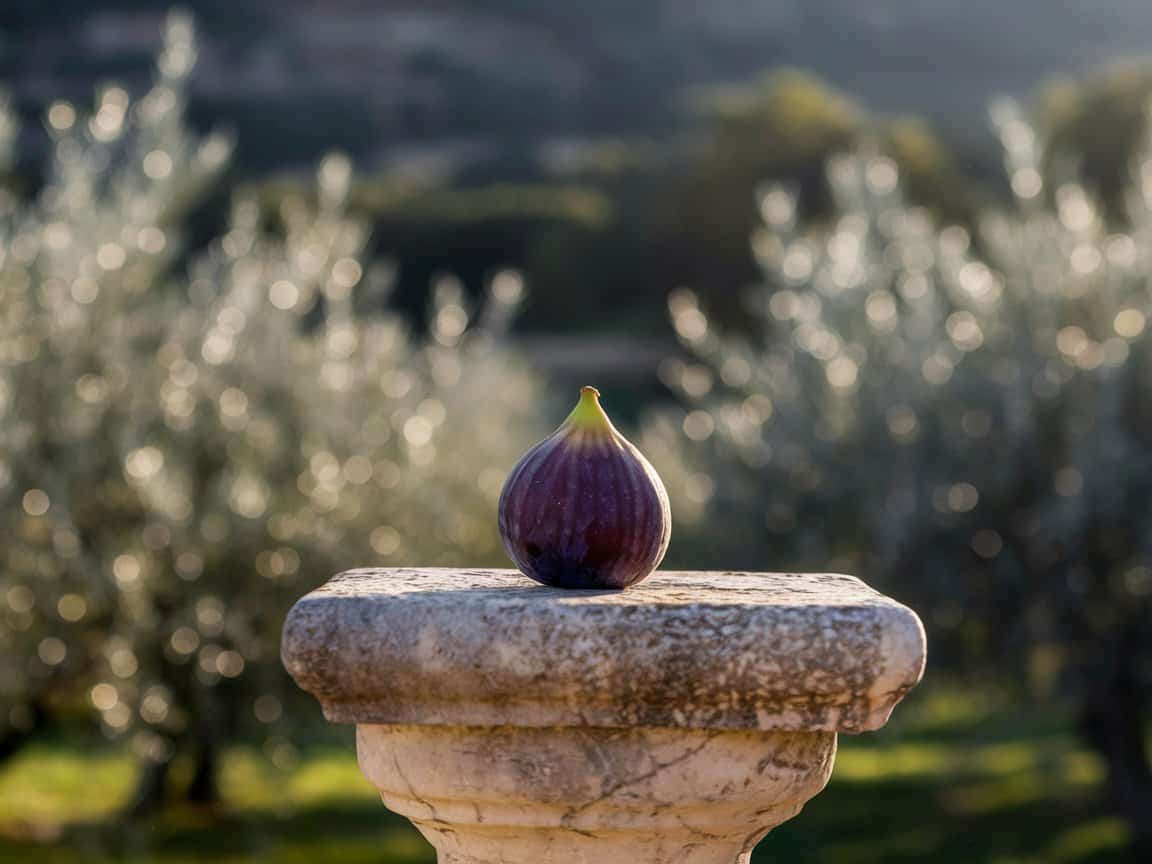
Figs were another familiar food in the ancient Greek world.
They could be eaten fresh or dried and were an important source of sweetness and energy.
Figs also gathered religious and mythological associations.
Different stories connected fig trees with gods including Dionysus and Demeter.
The fruit could carry ideas of fertility and abundance too. It is easy to understand why.
Cut open a fig, and the inside is filled with tiny seeds. One small fruit seems to contain an entire collection of possibilities.
At an Olympian feast, figs would probably be one of the quieter foods on the table.
No dramatic immortality. No famous underworld bargain.
Just something naturally sweet that humans and gods could both appreciate.
9. Roasted Meat – The Portion Shared With the Gods
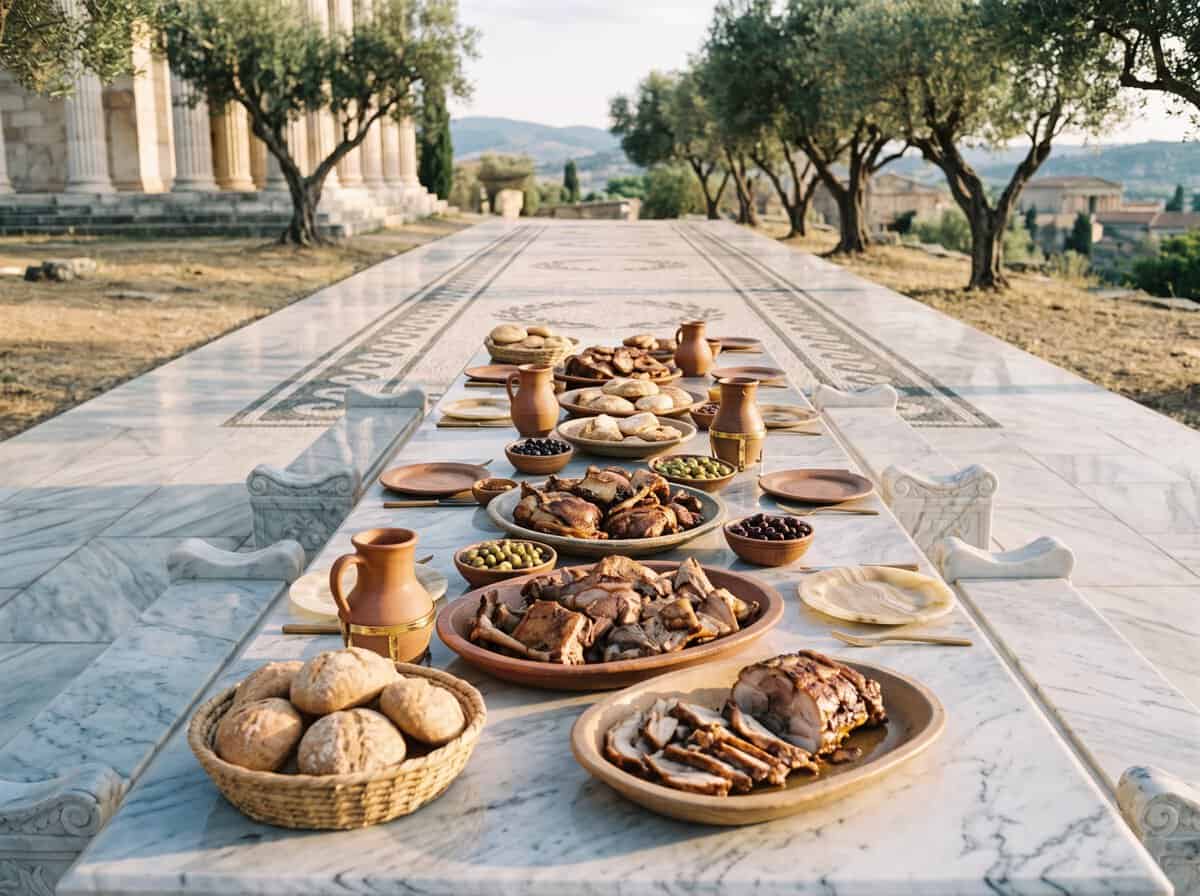
Animal sacrifice was an important part of ancient Greek religion.
During certain sacrifices, an animal would be killed and divided.
Part was offered to the gods. Other portions could be eaten by the human participants.
The practice created a symbolic meal shared between mortals and divine beings.
Greek mythology even has a story explaining why the gods received particular sacrificial portions.
Prometheus tricks Zeus during a division of an ox by arranging the portions deceptively.
Zeus chooses the pile that looks better but contains bones hidden beneath fat.
The story helps explain sacrificial customs in mythological terms. So roasted meat belongs at our feast.
But it comes with a reminder. Eating with the gods was not simply about food.
It could be part of the relationship between humans and the divine.
10. Wine – The Drink That Brought Gods and Humans Together
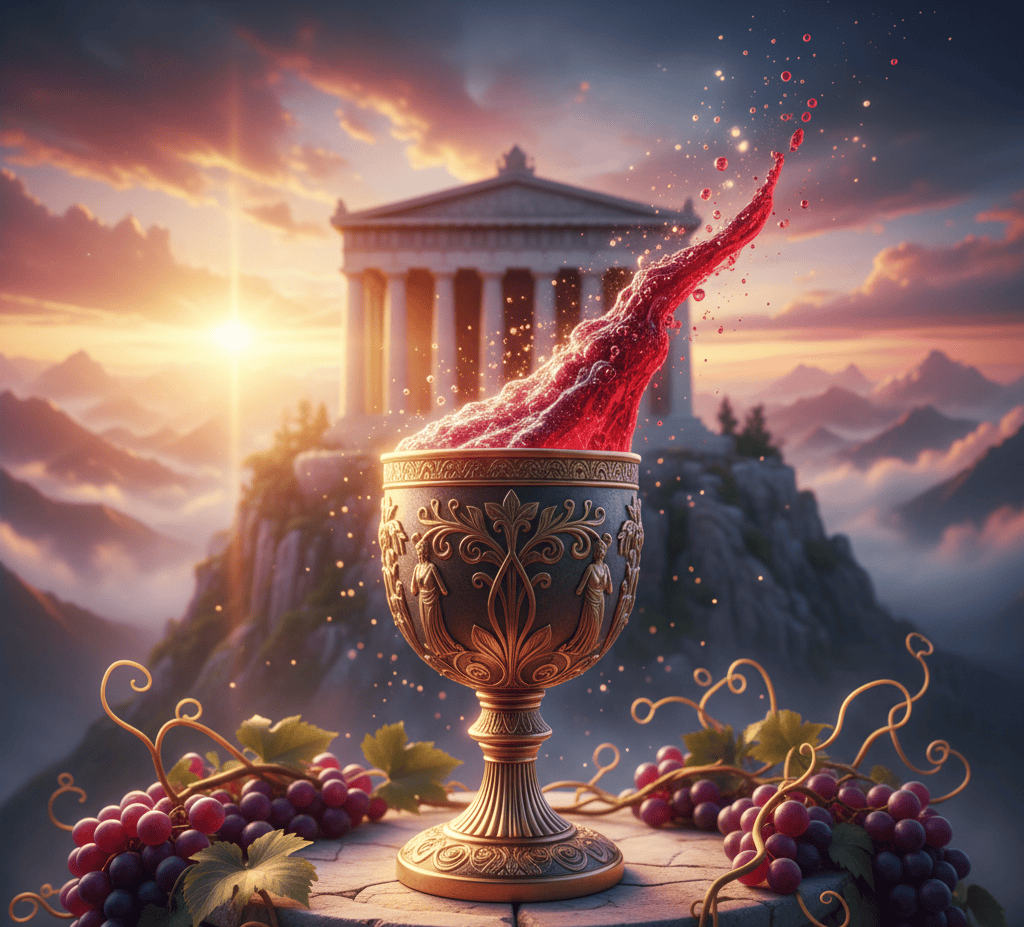
Nectar may belong to the gods. But wine belongs to both worlds.
Ancient Greeks drank wine regularly, usually mixed with water.
It was also used in religious ceremonies and poured as a libation to the gods.
And, of course, wine was closely connected with Dionysus. That makes it the perfect final item for the feast.
A cup could be raised for Zeus. A libation could honor Athena. Dionysus could be thanked for the wine itself.
Wine could bring people together at celebrations and religious gatherings.
But Greek culture also understood that too much could bring chaos. That balance feels perfectly mythological.
At a feast for the gods, there would probably be plenty of beauty, music, food, and laughter.
But once Dionysus starts pouring the wine, nobody should expect Olympus to remain quiet for long.

自出生以来,我一直感觉到自己与神灵有着紧密的联系。作为一名作家和导师,我的使命是帮助他人在最黑暗的时刻找到爱、幸福和内心的力量。