
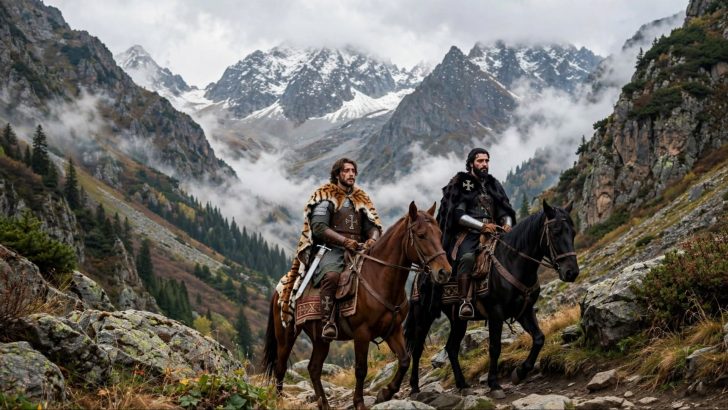
Georgia is tucked between the Black Sea and the Caucasus mountains, and there, it has been telling stories for thousands of years.
Its tales grew out of high peaks, deep valleys, vineyards, and a proud people who kept their tradition alive through countless invasions.
Some of these stories are pagan myths about heroes and goddesses, while others are Christian legends and royal chronicles.
These myths exist between history and imagination, and that’s exactly why they’re so impactful.
1. Amirani
Every culture has a rebel who defies the gods, and for Georgians, that’s Amirani.
He was born to Dali, the goddess of the hunt, and a mortal hunter, and he grew into a giant who feared nothing.
In the tales, he clears the land of monstrous giants, and protects villages.
But his pride keeps growing until he challenges God himself!
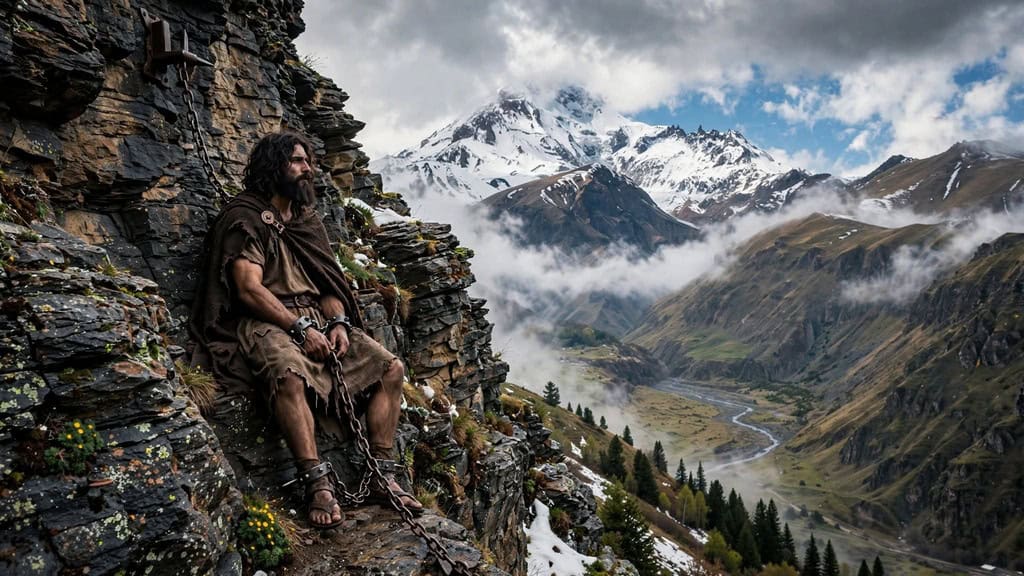
For that, he’s chained to a rock in the Caucasus mountains, where the legend says he still lies today!
His loyal dog gnaws at the chain, trying to set him free.
Every year the iron grows thin, and every year it grows strong again, because blacksmiths strike their anvils to renew it.
Scholars often compare him to Prometheus, and the echoes are noticeable.
Yet Amirani is a rebel who is never fully punished or fully forgiven.
He’s a reminder that courage and arrogance live very close together!
2. Dali
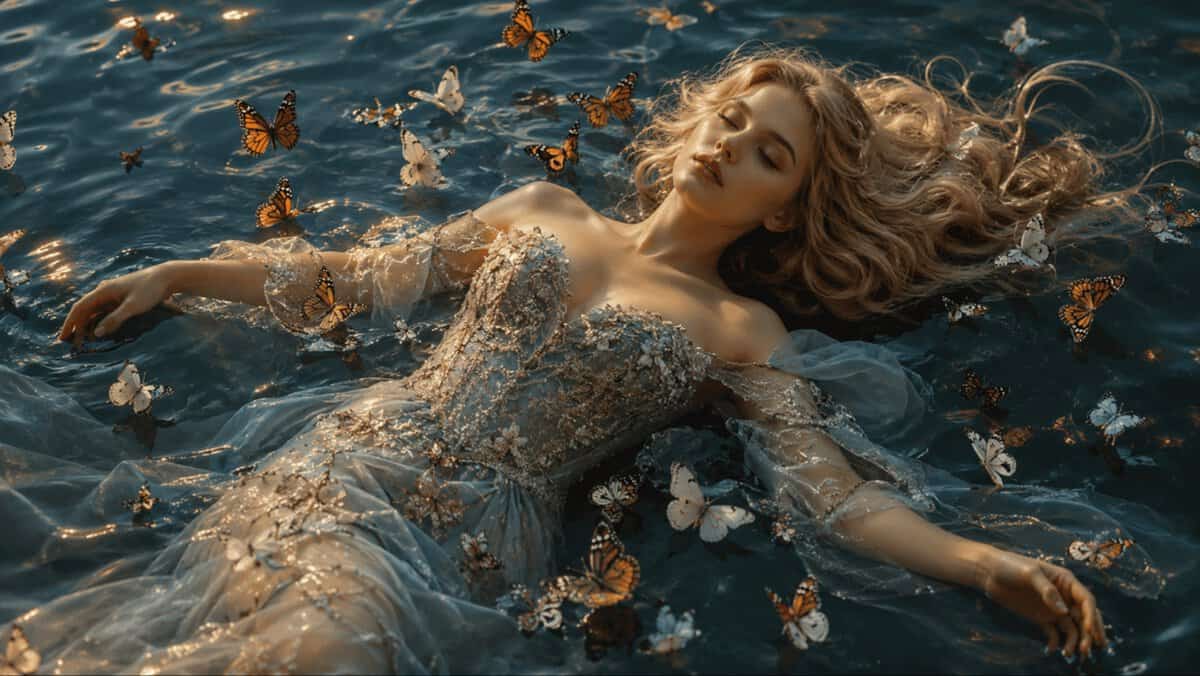
Dali lives deep in the high mountains, where the snow never melts.
She’s the golden-haired goddess of the hunt, and she guards every wild animal that roams her peaks, especially the ibex and the deer.
Hunters feared and loved her in the same breath.
A man who wanted a good hunt had to earn her favor, and the rules were strict.
He could never boast about his catch, and never take more than he needed. And if an animal was protected by Dali, it couldn’t be hunted at all.
Hunters who broke these rules could lose their lives!
Georgian tales say Dali often takes a mortal lover, usually a hunter, and some of those men are never seen again.
Others come back changed, carrying unbelievable tales.
Her myth speaks of conservation, passed down by people who lived off the land and knew that nature remembers!
3. Colchis and the Golden Fleece
Long before Georgia was Georgia, its western coast was known to the ancient Greeks as Colchis.
They saw it as a rich and mysterious land at the edge of the world.
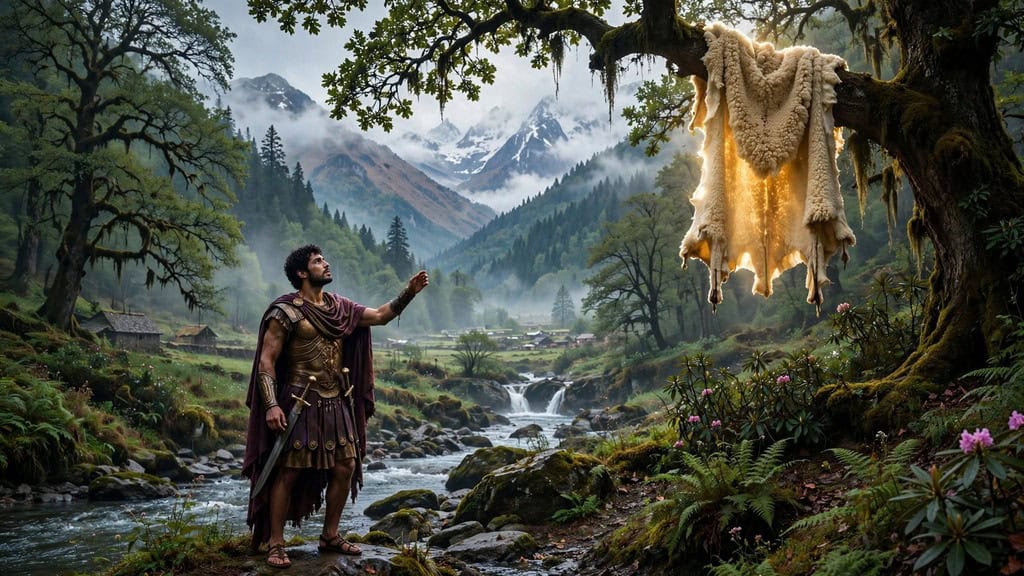
In the Greek myth, Jason and his Argonauts sail there to take the Golden Fleece from King Aeëtes. Georgians have never treated this as a foreign story because it happened on their soil.
The river Phasis is a real place in the myth’s geography.
Medea, the king’s daughter and a powerful sorceress, falls for Jason, helps him win the fleece, and flees with him across the sea.
Now, for the most interesting part! The ancient writer Strabo noted that people in the region caught river gold by laying sheepskins in the water, so the fleece trapped tiny glittering flakes!
Archaeology also shows that Colchis had real goldworking skills thousands of years ago.
The legend of the golden fleece might just be rooted in real craftsmanship!
4. The Land God Kept for Himself
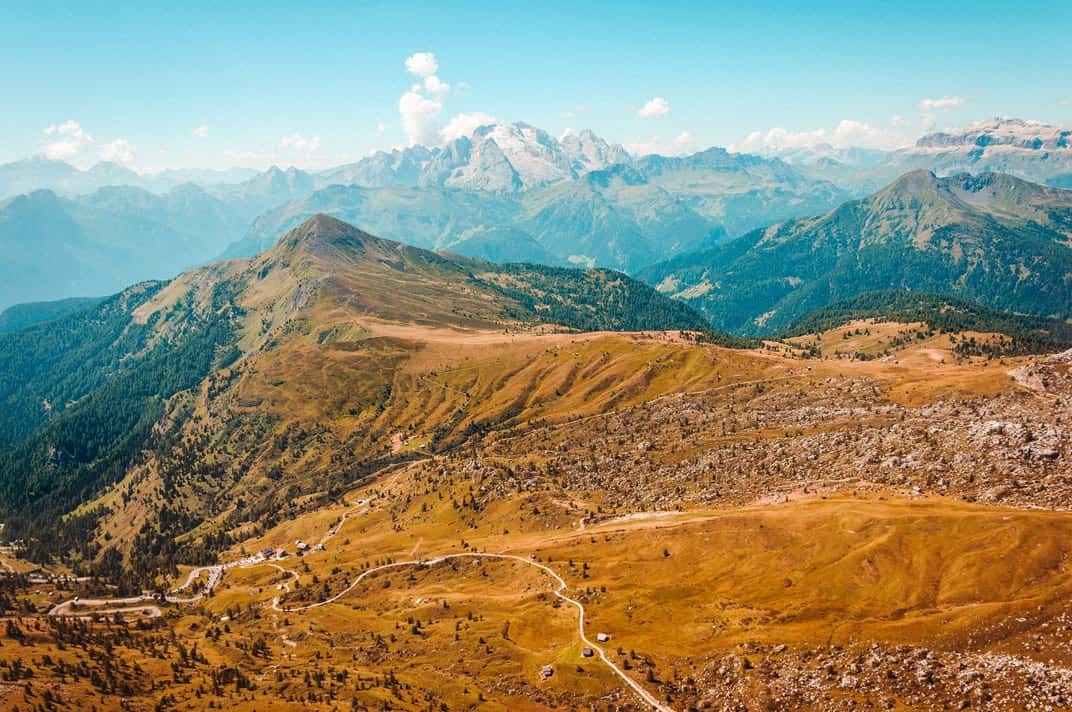
When God was dividing the earth among the nations, every people came forward to claim their share. The Georgians were late!
They’d been busy at a long feast, drinking wine and toasting to God’s health.
When they finally arrived, every piece of land was gone. They explained, humbly, that they’d been raising glasses in His honor and God was moved.
He told them he’d kept one corner of the earth for himself, a paradise of mountains, rivers, and sunshine, and he gave it to them as a gift!
This folk legend embodies the pride Georgians feel about their land, the sacred place of hospitality, and the toastmaster who leads each feast with long speeches!
5. Nino and the Cross of Vines
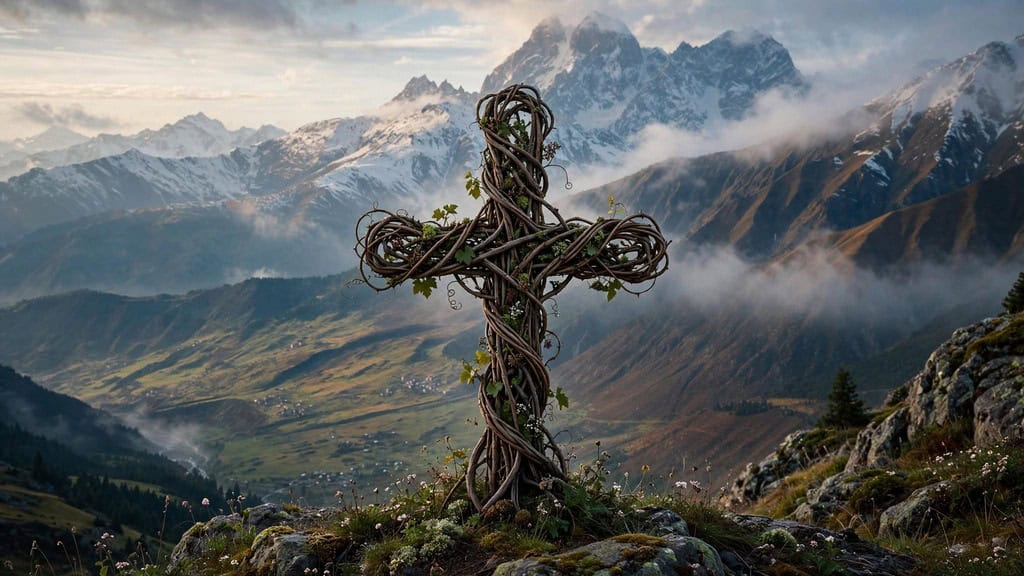
In the early fourth century, a young woman named Nino arrived in the Georgian kingdom of Iberia, carrying a cross made of grapevine, bound with her own hair.
According to tradition, she came from Cappadocia after a vision of the Virgin Mary told her to carry the faith to others.
In the story, she heals the sick, including Queen Nana, and her quiet kindness wins the people over.
那么 King Mirian III ends up caught in darkness during a hunt, and he prays to the God of Nino.
The light returns, and he converts. Christianity became the state religion, traditionally dated to 337, which makes Georgia one of the first nations to adopt it.
Today, the nation’s Orthodox Church still honors the Nino cross, with its drooping arms, as a sacred and national symbol.
6. Sidonia, the Robe, and the Living Pillar
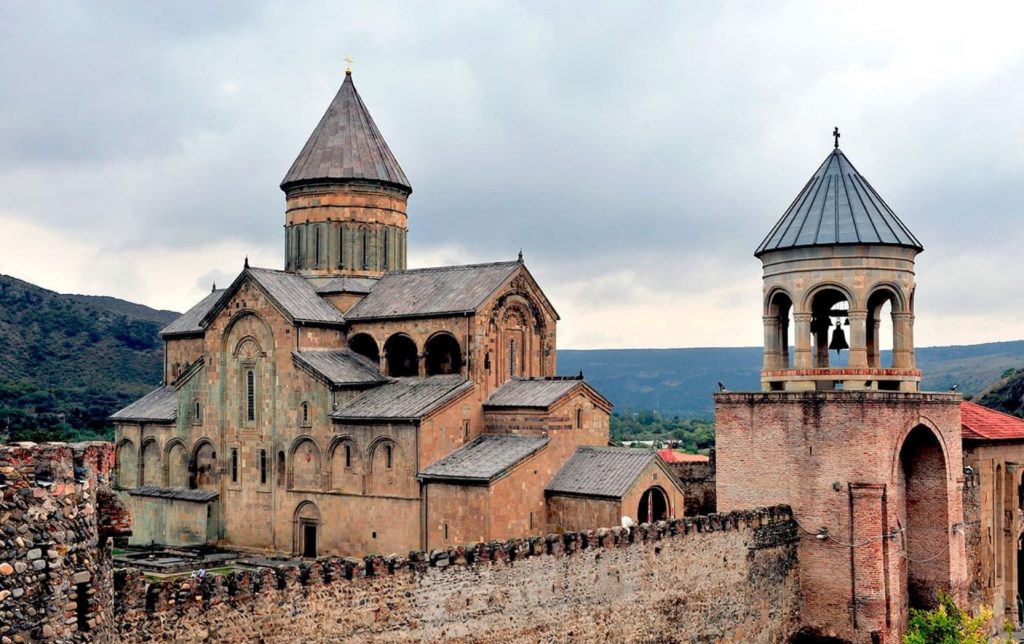
Mtskheta is one of Georgia’s oldest cities, and its great cathedral, Svetitskhoveli, holds one of the country’s most haunting legends!
According to tradition, a local Jew named Elioz of Mtskheta was in Jerusalem during the crucifixion.
He bought Christ’s robe from a Roman soldier and carried it home. His sister Sidonia took the robe in her arms, and overwhelmed with feeling, she died on the spot, clutching it so tightly nobody could pull out of her hands.
They buried her with the robe.
From her grave, a cedar tree grew. Years later, when Nino and King Mirian wanted to build a church, they cut the tree for its columns.
One pillar rose into the air on its own and only came to rest after Nino’s prayers. That’s why the cathedral’s name means Life-Giving Pillar!
7. Vakhtang and the Warm Springs of Tbilisi
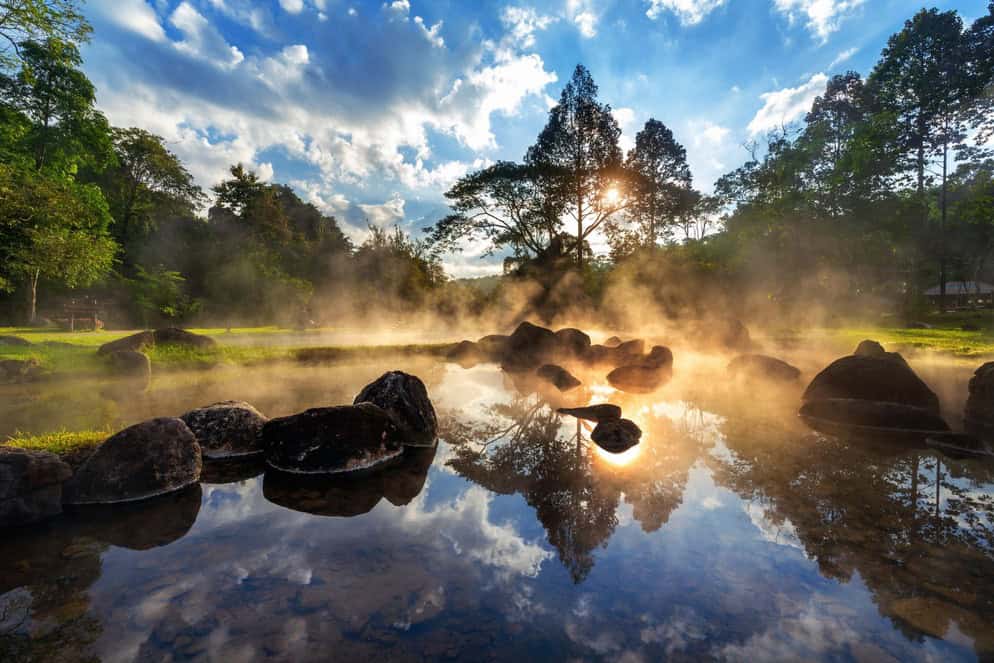
Like every capital, Tbilisi has a foundation myth.
In the fifth century, King Vakhtang Gorgasali was hunting with his falcon. He wounded a pheasant, or in some versions a deer, and it fell into a hot spring.
When the king’s men went to find it, they discovered it was cooked.
Vakhtang was amazed by the natural hot spring, so he decided that was the perfect place to build a city.
The Georgian word tbili means warm, and Tbilisi means place of warmth.
Historians say the real story is more complex, since the city grew and became the capital under Vakhtang’s successors, but the legend still lives in the sulfur baths of Abanotubani.
8. Davit Gareja, a Monastery in the Desert
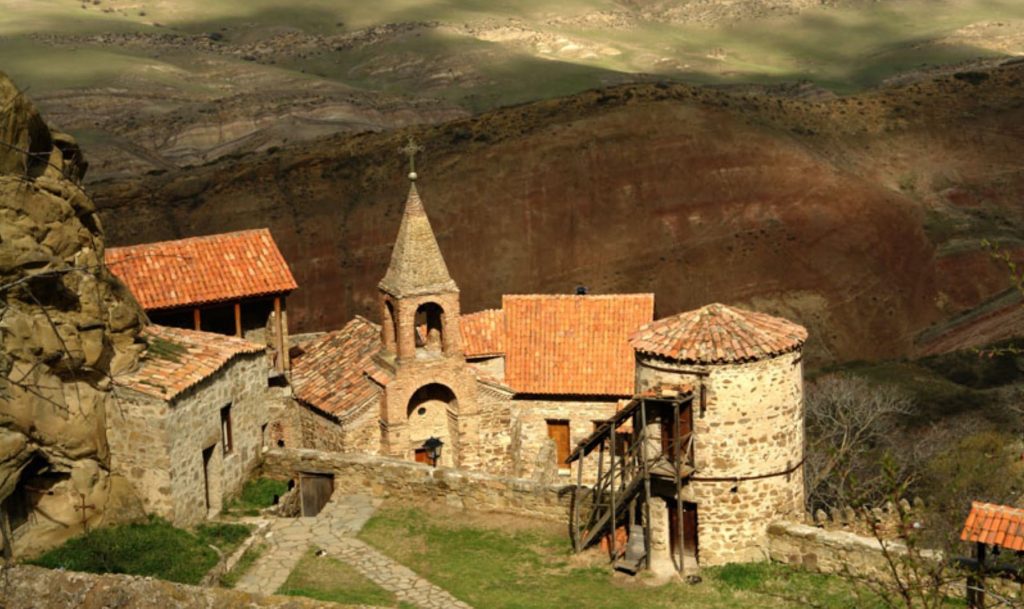
In the sixth century, a monk named David, one of the Thirteen Assyrian Fathers who came to strengthen monastic life in Georgia, settled in a cave there.
Soon other monks carved cells and chapels right into the rock.
The complex became a center of prayer and learning.
The locals even believe that three pilgrimages to Gareja equal one to Jerusalem! That really tells you how deeply people cherished this place.
The monasteries survived Mongol and Persian attacks, and later, Soviet military training in the desert.
Today, monks still pray in those caves.
9. Little Tamar and the Cave City of Vardzia
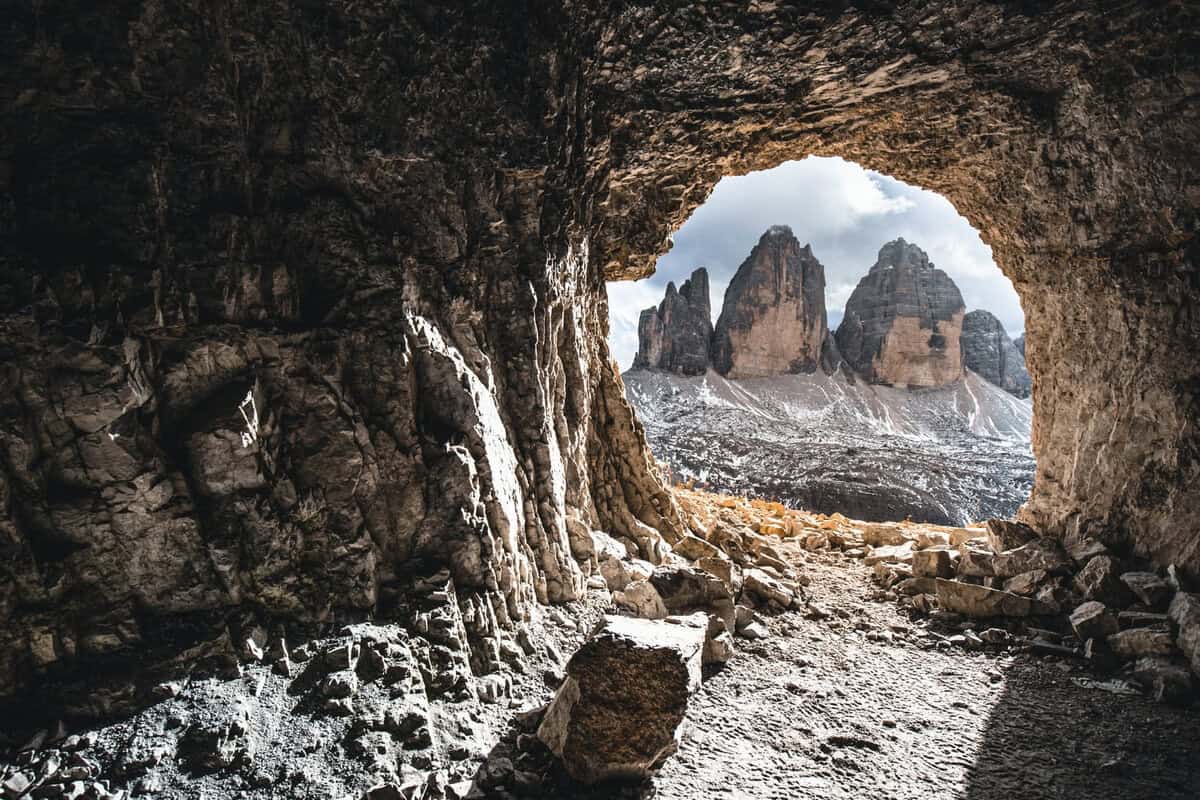
Vardzia is a whole city made of caves.
At its peak, it may have held thousands of rooms across many levels, including a church, a bell tower, living quarters, wine cellars, and secret tunnels.
King George III began building it in the 12th century as a fortress against invaders, and his daughter, Queen Tamar, completed the work and had its church painted with beautiful frescoes!
Georgians love a charming story about how it got its name.
The legend says Tamar was playing in the caves when she was little, and got lost.
Her uncle shouted her name in the tunnels, and she answered, Ak var, dia, meaning I’m here, uncle.
That’s supposedly where the name Vardzia comes from.
Historians see it as folk etymology rather than historic, but the image it paints really is beautiful!
10. The Knight in the Panther’s Skin
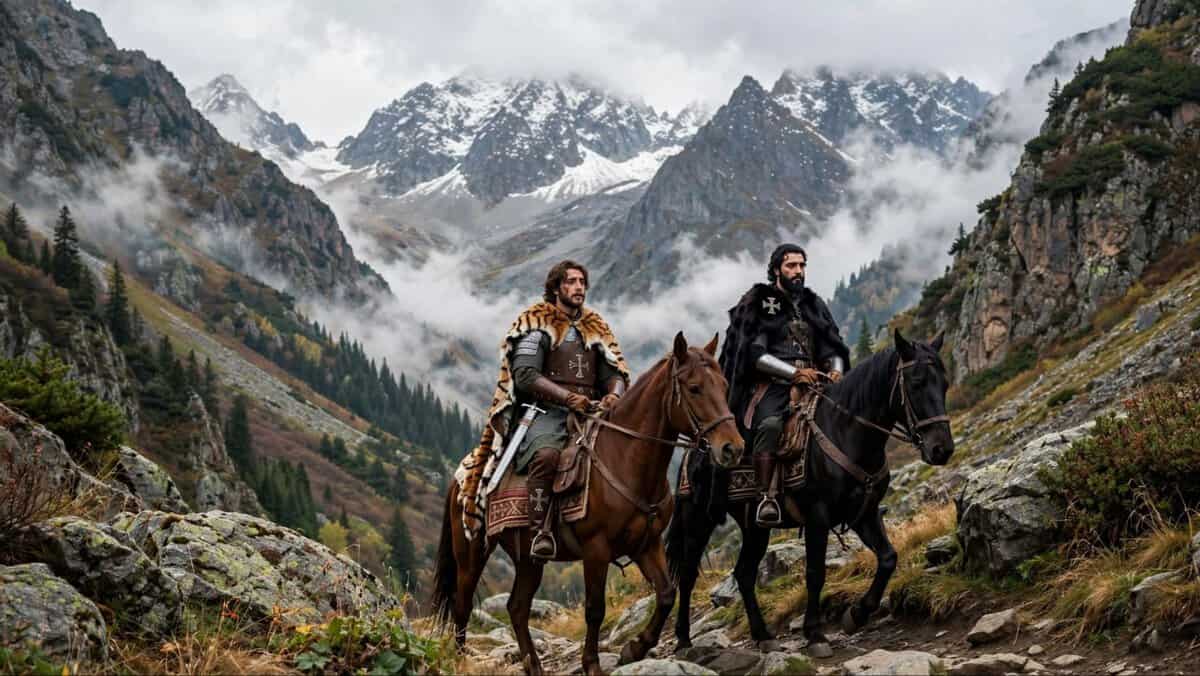
The Knight in the Panther’s Skin is the 12th century epic poem by Shota Rustaveli, written during Queen Tamar’s age.
For Georgians, it’s a national treasure, and a copy was traditionally part of a bride’s dowry!
The story follows Avtandil, a loyal knight who sets out to find a mysterious warrior in a panther skin.
The stranger is Tariel, a heartbroken knight whose beloved has been taken from him.
Avtandil and Tariel become brothers in spirit, and together they cross lands, face monsters, and rescue her from the fortress of the Kajis.
But beyond the adventure, the poem is about loyalty, and a love that is pure and true.
One line is popularly quoted: what you give away is yours, what you hoard is lost.

A little Aquarius, devoted to writing and embroidery. Through my writing, I hope to empower readers to align with their true selves and navigate life’s mysteries with confidence.