

The gods and goddesses of the ancient Slavs were connected with some of the most powerful forces people encountered in everyday life.
Thunder belonged to Perun. Veles became associated with cattle, wealth, magic, and the underworld.
Mokosh was connected with women, spinning, fertility, and moisture, while other divine figures became linked with the Sun, winds, fire, and seasonal change.
Modern manifestation practices obviously did not exist in ancient Slavic religion in the form we know today.
Still, the symbolism surrounding these deities can inspire creative techniques for setting intentions, changing habits, visualizing goals, and deciding what you want to bring into your life.
The following exercises are therefore modern practices inspired by Slavic mythology rather than reconstructed pagan rituals.
Here are ten manifestation techniques inspired by ten Slavic gods and goddesses.
1. Perun – The Thunder Decision Technique
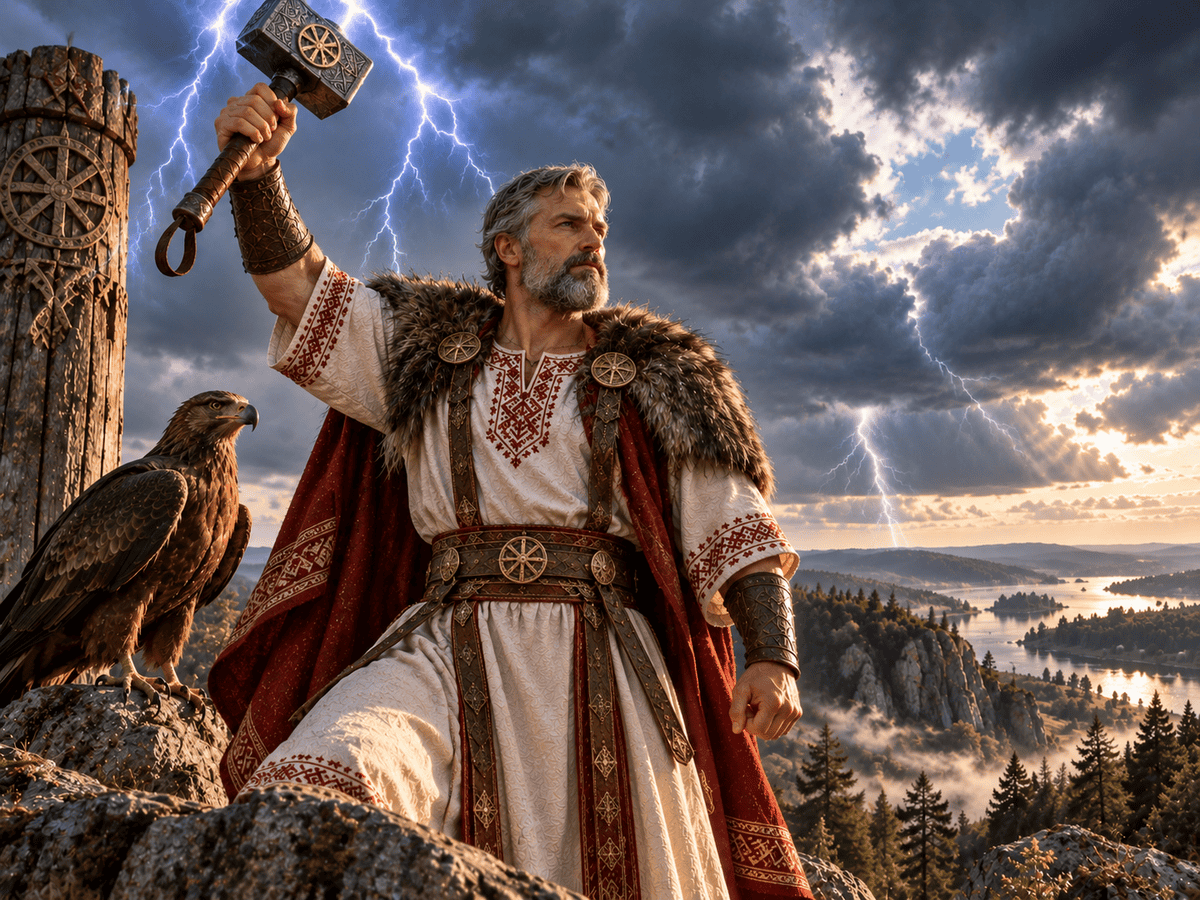
Perun was one of the most important gods of the ancient Slavs. He was associated with thunder, lightning, weapons, warfare, and authority.
Prince Vladimir famously placed an idol of Perun among the major deities honored in Kyiv before the Christianization of Rus.
His decisive energy inspires a manifestation technique for people who spend too much time changing their minds.
Choose one intention. Write it as clearly as possible. Then underneath it write:
“This is the direction I have chosen.” Put the paper away and stop rewriting the goal every day.
The technique is less about repeatedly asking for something and more about making a decision.
Perun’s thunder does not quietly debate whether it should strike.
Symbolically, this practice asks you to bring the same decisiveness to your intention.
Once you know what you want, your next job is to start behaving in ways that support it.
2. Mokosh – The Thread Technique

Mokosh provides the perfect inspiration for a manifestation technique involving thread.
Later traditions strongly associate this mysterious Slavic goddess with spinning, women’s work, fertility, moisture, and the earth.
Take a piece of ordinary thread and choose one long-term goal. Tie three loose knots in it.
The first represents where you are now. The second represents the changes required along the way.
The third represents the desired result. Keep the thread somewhere safe.
Whenever progress feels nonexistent, remember the distance between the knots.
Manifestation is often imagined as jumping directly from the first point to the last.
Mokosh’s association with spinning suggests another image. A thread is created gradually.
One small section follows another until something much longer exists. Your intention can develop the same way.
3. Veles – The Hidden Wealth List

Veles is one of the most fascinating figures in Slavic mythology.
He is commonly associated with cattle, wealth, the underworld, magic, poetry, and a famous mythological rivalry with Perun.
For a Veles-inspired prosperity technique, make a list titled: “Wealth I Already Have.” Do not limit wealth to money.
Include useful skills, supportive people, knowledge, opportunities, belongings, creativity, available time, and anything else that gives you some form of advantage.
Then choose one item from the list that could help create more abundance. Perhaps a skill could become a project.
Maybe existing knowledge could help you apply for a better opportunity.
The technique turns attention away from constantly thinking about what is missing.
Veles symbolizes discovering resources that may already be hiding in your world.
Sometimes the first step toward more is recognizing what you already have to work with.
4. Morana – The Release Before Receiving Technique
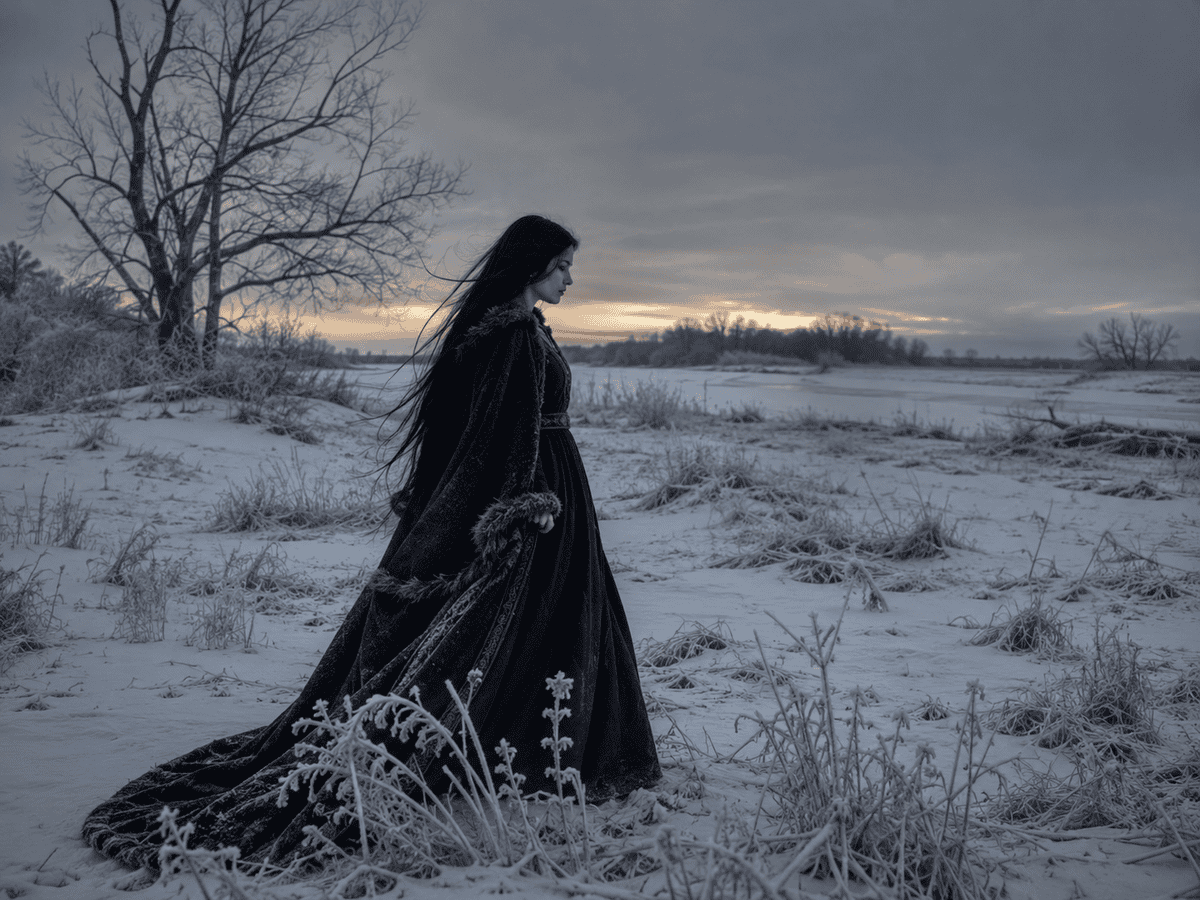
Morana, also known through related names such as Marzanna, is associated with winter and seasonal death in Slavic tradition.
Folk customs involving a figure representing Marzanna famously mark the departure of winter and the arrival of spring.
That makes her an ideal inspiration for a manifestation technique about endings.
Take a piece of paper and write one habit, assumption, or situation you are ready to stop carrying.
Then write what will occupy the space instead. “Procrastination” might become “consistent action.”
“Constantly checking for results” might become “letting the goal develop.” Fold the paper so the new statement is visible.
Morana’s symbolism reminds us that manifestation is not always about adding.
A garden cannot remain permanently in every season at once.
Sometimes the old version of something has to end before the next stage has room to begin.
5. Dazhbog – The Sunrise Visualization

Dazhbog is commonly interpreted as a Slavic deity associated with the Sun and giving or prosperity, although details about his original worship remain limited.
His solar symbolism inspires a simple morning manifestation technique.
Soon after waking, choose one goal and imagine a completely ordinary moment that would happen if it were already part of your life.
Do not imagine fireworks or everyone applauding you. Imagine normality.
If your intention involves a new opportunity, picture an ordinary morning after receiving it.
If it involves confidence, imagine handling a normal conversation confidently.
Keep the visualization short. Then begin your day. The rising Sun does not need to prove that morning has arrived. It simply appears.
The Dazhbog technique uses the same symbolism by imagining the desire not as an impossible future event but as something that could eventually become an ordinary part of life.
6. Stribog – The Wind Release Technique

Stribog is one of the deities named in the Primary Chronicle among the gods honored by Prince Vladimir.
He became particularly associated with winds, and the Tale of Igor’s Campaign famously refers to the winds as Stribog’s grandchildren.
His element naturally inspires a technique about releasing excessive control. Write your intention in one sentence.
Read it once. Then put the paper somewhere you will not constantly see it.
Go outside for a few moments and notice the movement of the air. You cannot control where every current travels.
Use that as the symbolic lesson. Decide what you can influence and stop mentally attempting to control everything else.
Manifestation can become exhausting when someone believes they must determine every person, event, conversation, and coincidence leading to the result.
7. Lada – The Relationship Standards Technique

Lada is popularly presented today as a Slavic goddess of love, beauty, marriage, and spring.
Her historical status is debated, however, and some scholars question whether she was genuinely worshipped as a pre-Christian goddess.
For a Lada-inspired manifestation exercise, write five qualities you want a healthy relationship to contain.
Do not describe a person’s height, appearance, job, or exact identity. Write qualities such as:
“Mutual affection.” “Respect.” “Consistency.” “Humor.” “Honest communication.”
Then ask whether you are accepting situations that contradict your own list.
This technique shifts attention away from manifesting one particular person’s behavior. Instead, you become clearer about the relationship itself.
Love becomes less about obtaining someone and more about recognizing what deserves to stay once it arrives.
8. Zhiva – The Growing Goal Technique
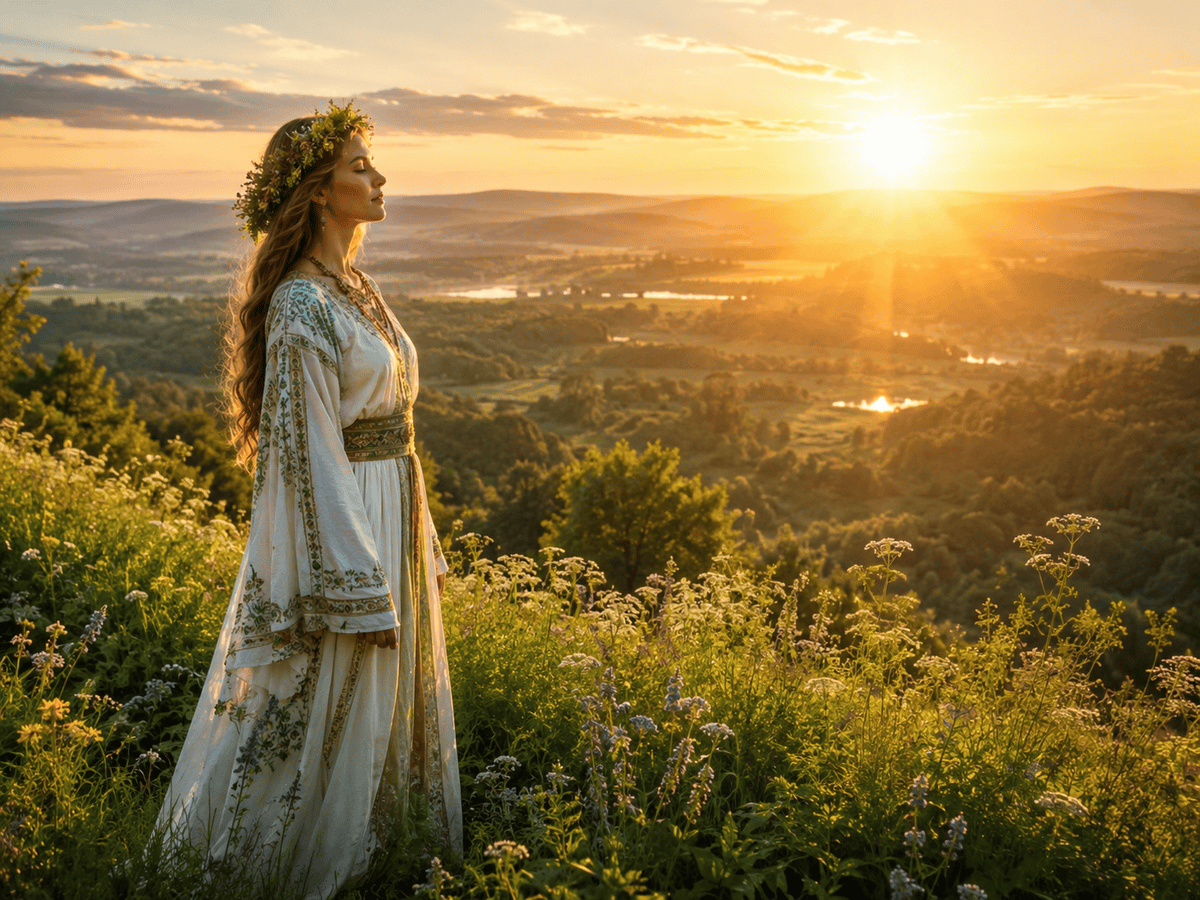
Zhiva, or Siwa, appears in medieval sources connected with the Slavs and is commonly interpreted as a goddess whose name relates to life or living.
Modern reconstructions often expand her into a goddess of life, fertility, and growth.
That symbolism makes her ideal for a manifestation technique based on gradual development.
Choose one goal and draw a small plant with five leaves. Each leaf represents one stage necessary before the goal becomes real.
For example: Learn. Practice. Apply. Improve. Receive.
As you complete each stage, mark the corresponding leaf. The technique deliberately removes the expectation that a desire must appear instantly.
Plants do not fail simply because they are not fully grown three days after being planted.
Zhiva’s symbolism represents giving something enough time and attention to become alive in your actual world.
9. Jarilo – The First Move Technique
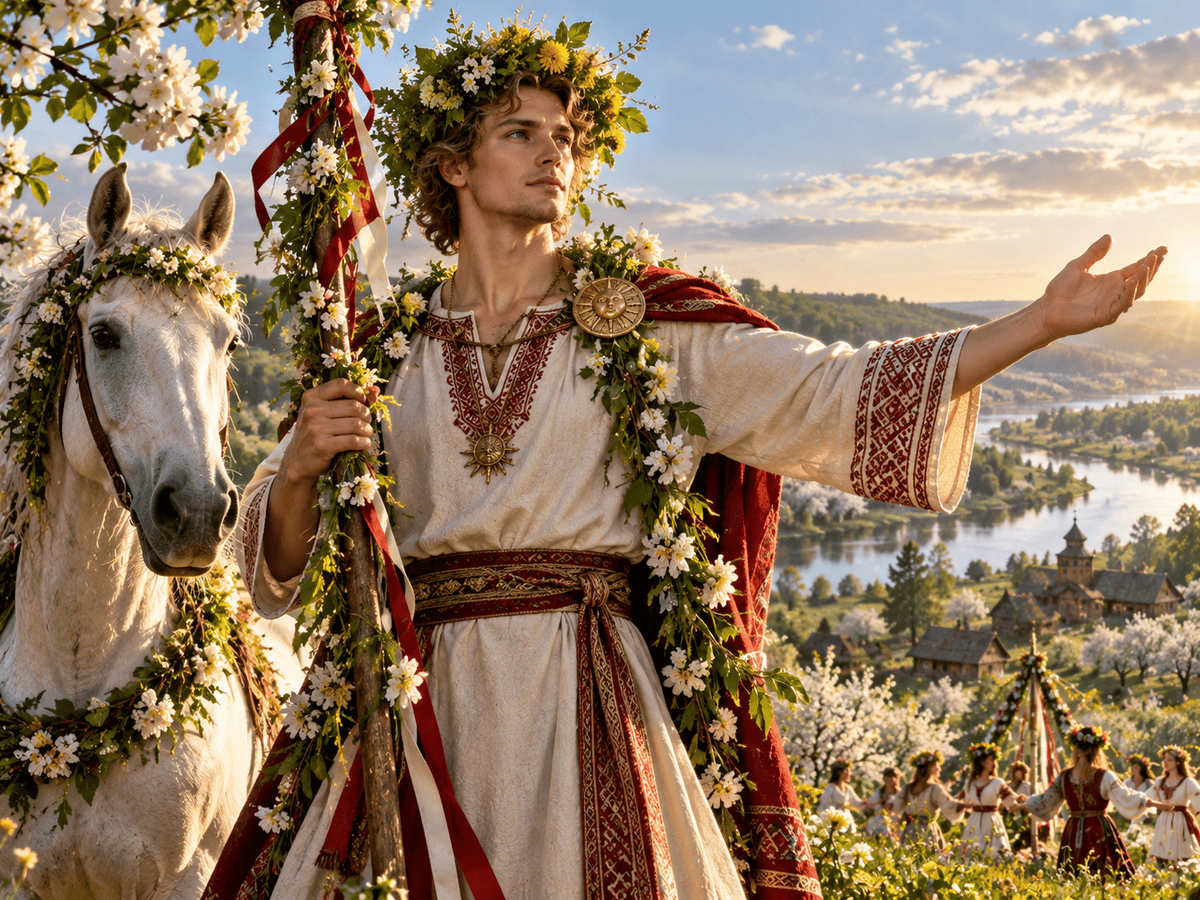
Jarilo is a complicated figure reconstructed from Slavic seasonal folklore and is often associated with spring, fertility, vegetation, youth, and returning life.
His springtime symbolism makes him perfect for intentions that have remained ideas for too long.
Choose something you have been “manifesting” without taking any practical step toward it.
Then identify the smallest possible first action. Not the entire plan.
Just the beginning. Send the application. Open the document. Research the course.
Start the conversation. Practice for ten minutes. Jarilo represents the moment when frozen ground begins producing new life.
The first signs of spring are usually small, but they change the direction of the entire season.
The same can happen with a goal. One real action can sometimes accomplish more than another month spent thinking about starting.
10. Svarog – The Forge Technique

Svarog is an important but mysterious Slavic deity associated in later interpretation with fire, the sky, and smithing.
That makes the forge a powerful final metaphor for manifestation. Write your goal at the top of a page.
Underneath it, create two columns. One says: “What I Can Imagine.” The other says: “What I Can Build.”
The first column contains the vision. The second contains practical actions.
If you imagine financial stability, the second column might contain learning a useful skill, saving regularly, or seeking better opportunities.
If you imagine creative success, the second might contain practicing, producing work, and sharing it.
A smith does not stare at metal and hope it becomes a finished object. Heat, repetition, patience, and skill gradually change its form.
Svarog’s manifestation technique carries the same message. Visualization can show you the shape you want.

自出生以来,我一直感觉到自己与神灵有着紧密的联系。作为一名作家和导师,我的使命是帮助他人在最黑暗的时刻找到爱、幸福和内心的力量。