
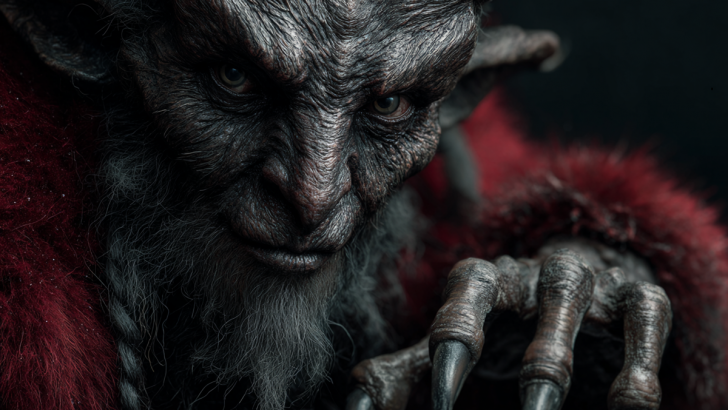
While Santa Claus brings joy and gifts to good children, there’s a darker figure lurking in European Christmas traditions.
Krampus, a half-goat, half-demon creature, roams the streets punishing naughty kids during the holiday season.
This terrifying character has roots stretching back centuries, and his legend continues to fascinate people around the world today.
Ancient Origins in Alpine Folklore
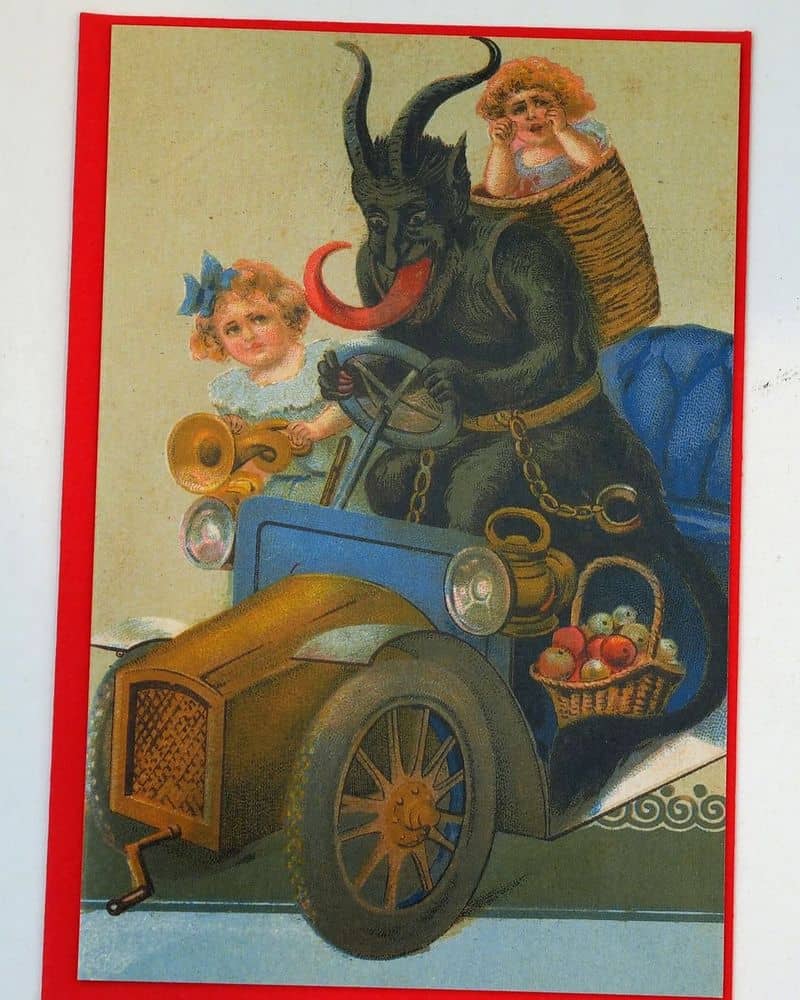
Long before Christmas cards and holiday movies, people in the Alpine regions told stories about a frightening creature who visited during winter. Krampus emerged from Central and Eastern European folklore, particularly in areas like Austria, Germany, and Hungary. Many experts believe his roots connect to ancient pagan celebrations held during the winter solstice.
The earliest written records mentioning Krampus date back to the 1500s, though oral traditions likely existed much earlier. Farmers and villagers passed down tales of this monster to keep children well-behaved during the dark winter months. His legend survived centuries of change, adapting to Christian traditions while maintaining his fearsome reputation.
The Name Behind the Nightmare
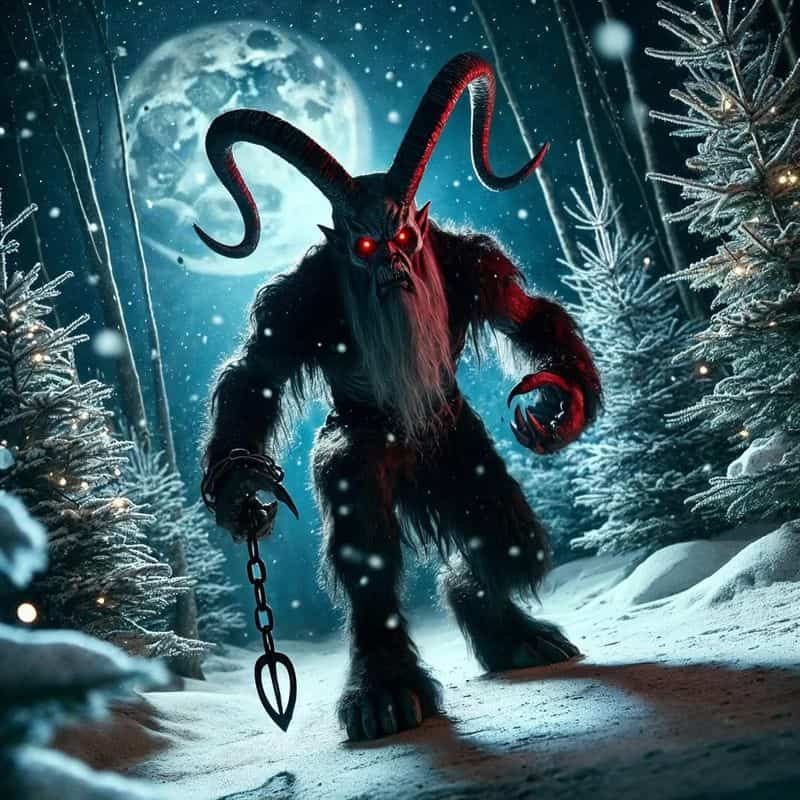
Ever wonder where such a strange name comes from? Krampus gets his title from the German word “krampen,” which translates to “claw.” This makes perfect sense when you see traditional depictions of the creature with his razor-sharp talons ready to grab misbehaving children.
The name itself sends shivers down spines, sounding harsh and menacing when spoken aloud. German-speaking communities used this word to describe his most frightening feature. Parents would warn their kids that Krampus’s claws could snatch them away if they didn’t behave, making the name a powerful tool for encouraging good behavior throughout December.
A Terrifying Physical Appearance
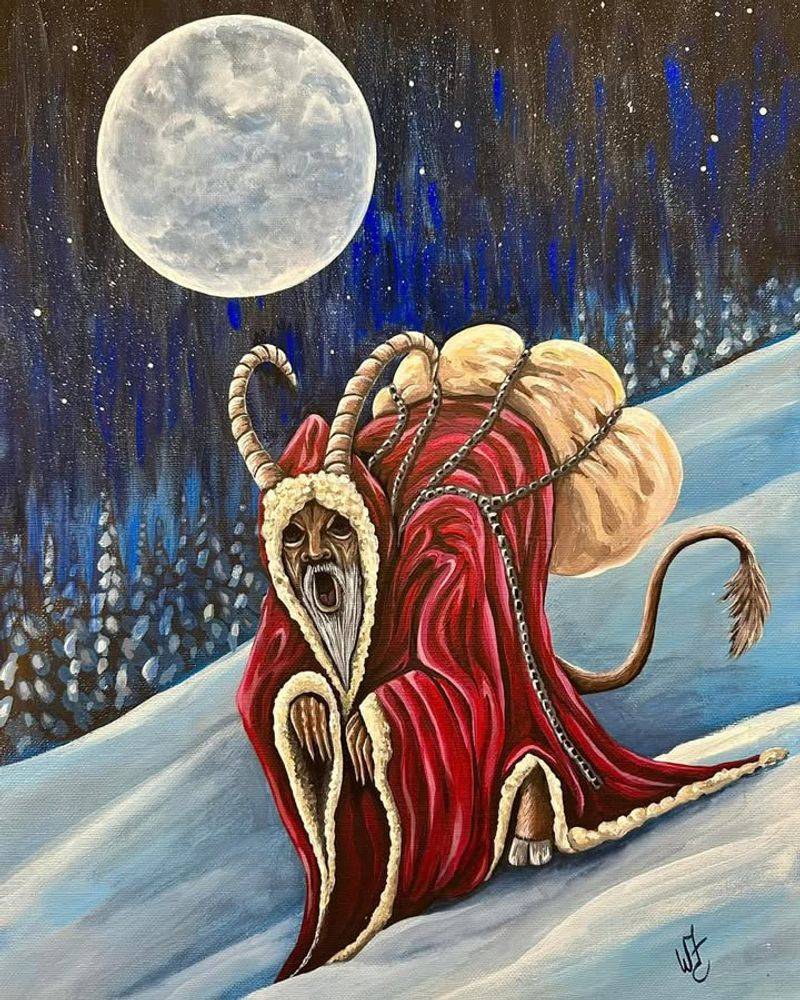
Krampus looks like something straight out of your worst nightmare. Covered in matted black or brown fur, he towers over children with massive curved horns sprouting from his head like a mountain goat. His mouth reveals rows of sharp fangs, and a grotesquely long tongue dangles out, adding to his horrifying appearance.
Heavy chains wrap around his body, clanking loudly as he moves through the streets. He carries a bundle of birch branches called “ruten” to swat naughty children. Some versions show him with cloven hooves instead of feet, completing his half-demon, half-beast look that makes even adults feel uneasy.
Saint Nicholas’s Dark Partner
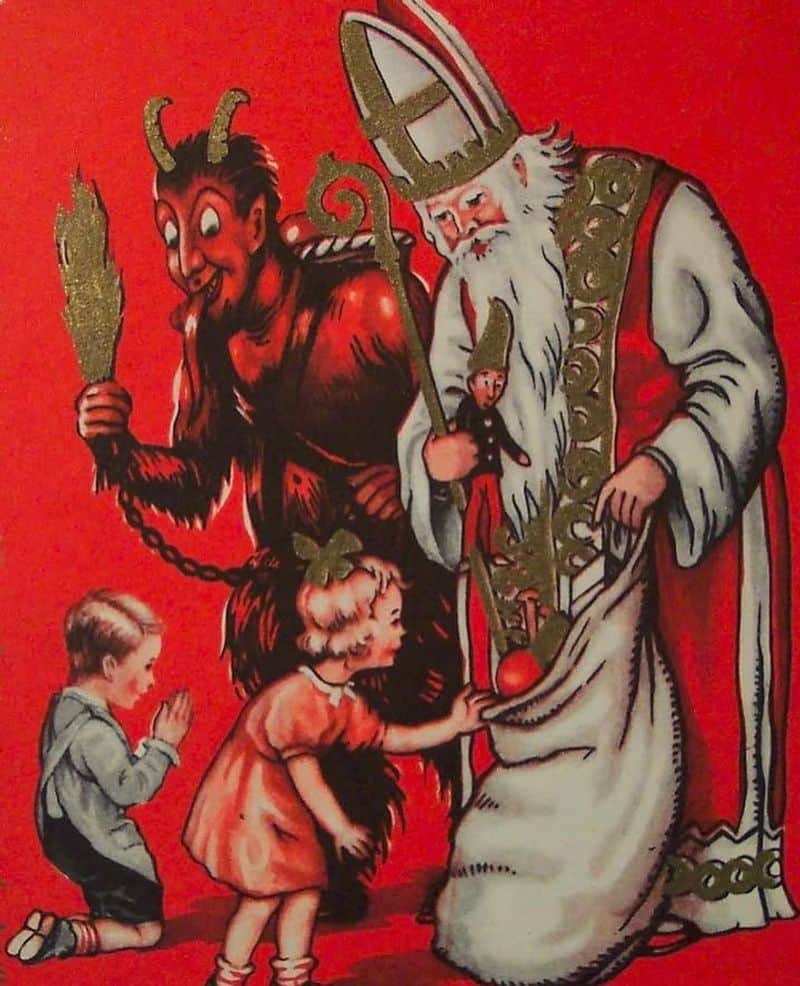
While Saint Nicholas rewards good children with presents and treats, Krampus handles the opposite end of the behavior spectrum. These two figures work as a team in Alpine Christmas traditions, representing reward and punishment. Saint Nick appears dressed in bishop’s robes, kind and generous, while his companion remains hidden in shadows until needed.
This partnership creates a complete moral system for children during the holidays. Good behavior earns gifts from the saint, but bad actions bring Krampus to your door. Together, they balance kindness with consequences, showing kids that choices matter and actions have real results during the Christmas season.
Krampusnacht: The Night of Terror
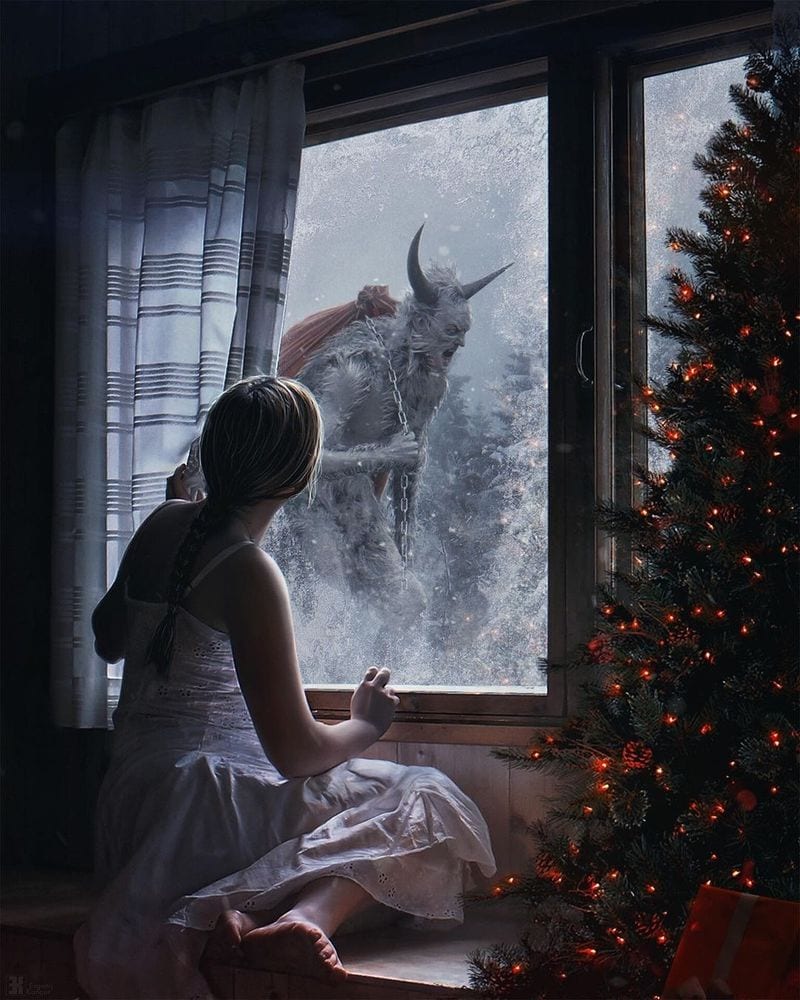
Mark your calendar for December 5th because that’s when Krampus officially comes out to play. Called Krampusnacht, or “Krampus Night,” this evening transforms quiet Alpine towns into scenes of controlled chaos. Darkness falls early in winter, creating the perfect spooky atmosphere for this bizarre celebration.
Communities gather in town squares as costumed figures emerge from the shadows. Children huddle close to their parents while teenagers dare each other to get closer to the creatures. The air fills with the sound of bells, chains, and occasional screams as Krampus performers chase spectators through cobblestone streets, keeping this ancient tradition alive.
The Krampuslauf Parades
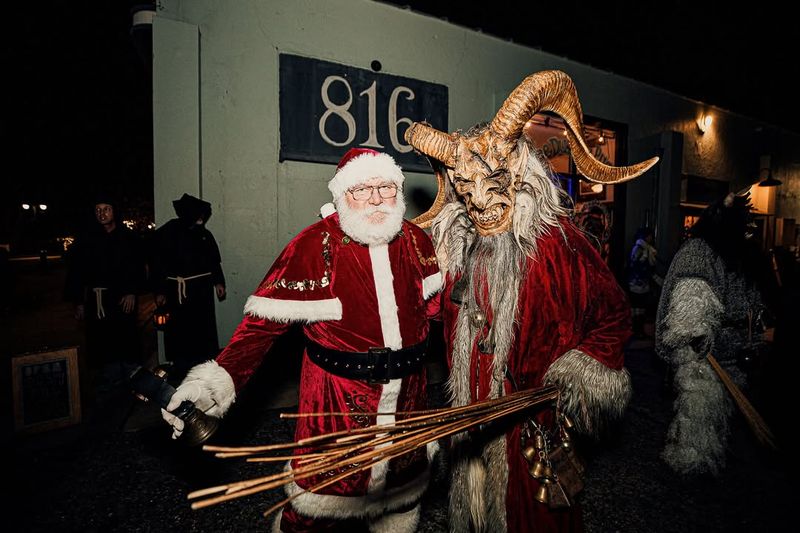
Imagine dozens of Krampus creatures charging down your street all at once. That’s exactly what happens during a Krampuslauf, which means “Krampus run” in German. These wild parades feature performers in elaborate demon costumes, complete with hand-carved wooden masks, fur suits, and authentic-looking horns.
Participants take their roles seriously, spending months crafting costumes and practicing their terrifying moves. They sprint through crowds, rattle chains, and playfully terrorize spectators who line the streets. Some brave souls even volunteer to be “caught” and given gentle swats with birch branches, all in good fun while honoring centuries-old traditions.
Punishment Methods and Warnings
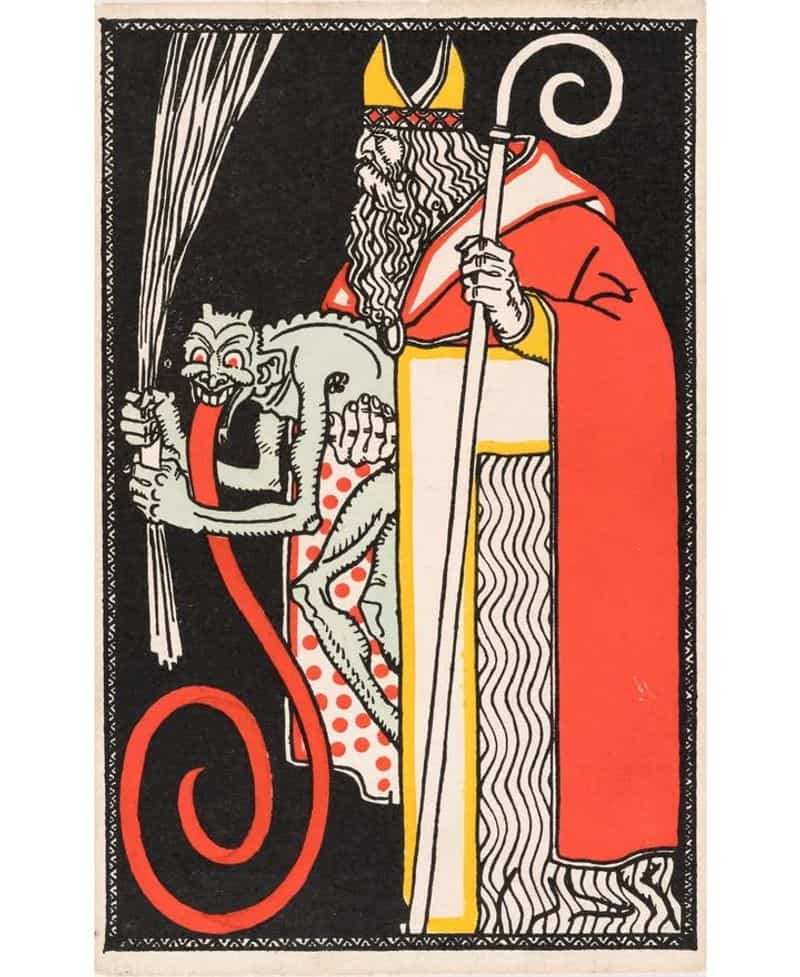
What exactly does Krampus do to naughty children? According to legend, he carries multiple tools for dealing with bad behavior. The birch branch bundle serves as his primary weapon, used to swat kids who’ve been disrespectful or disobedient throughout the year.
But his most frightening punishment involves the large sack or basket strapped to his back. Stories warn that Krampus stuffs truly terrible children into this container and drags them away to his mountain lair. Some tales say he takes them to his cave, while darker versions suggest he drowns them or eats them, though modern celebrations focus more on scares than actual harm.
Modern Pop Culture Revival
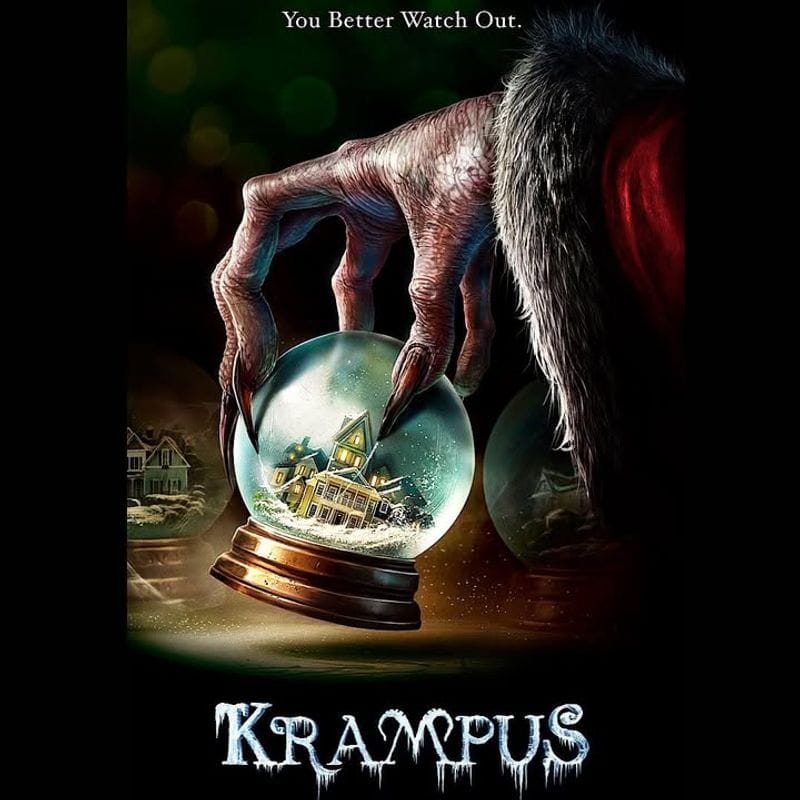
Krampus nearly faded into obscurity during the mid-1900s, but he’s made a roaring comeback in recent decades. The 2015 horror-comedy film “Krampus,” directed by Michael Dougherty, introduced millions of Americans to this European legend. The movie blends family dysfunction with supernatural terror, bringing the monster into modern suburban settings.
Beyond cinema, Krampus now appears on greeting cards, television shows, and holiday merchandise. Craft breweries create Krampus-themed beers, and cities across the United States host their own Krampuslauf events. This resurgence proves that people still love a good scare, even during the supposedly cheerful Christmas season, keeping ancient folklore alive for new generations.
