
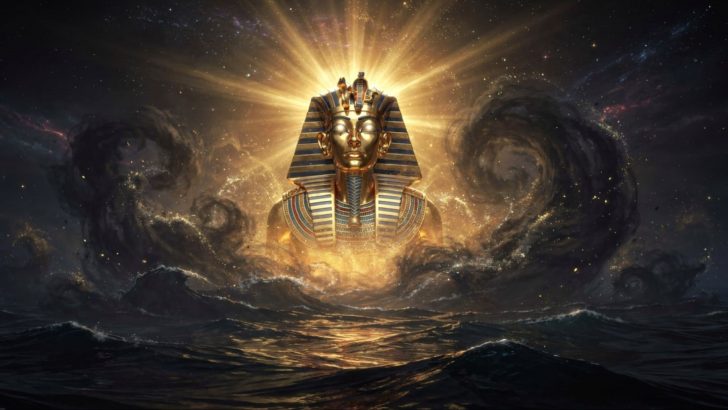
Ancient Egypt had multiple creation stories, which developed in different cities and by different priesthoods.
Each one was convinced that their local god was the one who actually created the universe, and surprisingly, the religion was flexible enough to allow these myths to coexist.
Every myth answered the same set of questions: How could something come from nothing, and how did the chaos become order?
1. The Heliopolitan Creation Myth

This creation myth starts with Nun: a dark, endless ocean without any form or timeline.
Out of that void raised a small hill, and on top of it stood Atum, the self-created god.
Atum then sneezed and created Shu and Tefnut, who are air and moisture. Air and moisture went on to create earth and sky (Geb and Nut).
Then, Geb and Nut produced Osiris, Isis, Set, and Nephthys.
This lineage is known as the Nine Gods of Heliopolis, and they have been the foundation of Egyptian cosmology for centuries.
This creation myth stands out for its simplicity. It speaks of consciousness itself leaving the primordial water, and things just taking their natural course from there.
2. The Ogdoad of Hermopolis
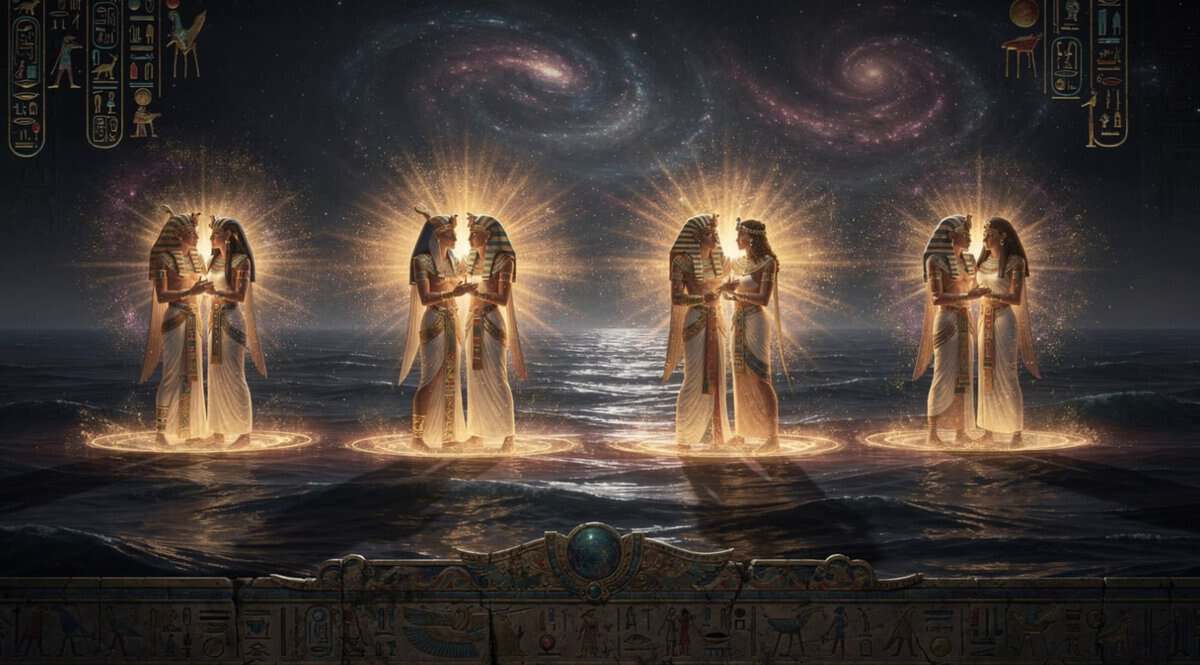
Instead of one creator god, Hermopolis speaks of eight primordial deities, in male and female pairs: Nun and Naunet, Heh and Hauhet, Kek and Kauket, and Amun and Amaunet.
Together they’re called the Ogdoad, and they represent water, infinity, darkness, and invisibility.
This myth presents their energies swirling and working together to bring out a mound of earth from the ocean, which then allowed the sun god to emerge.
Only then did the real creation begin.
The fascinating thing about this myth is its naturalistic view of life. Instead of one deity creating everything, life came as a result of complementary forces colliding just right!
It describes the conditions that allowed chaos to finally give birth to order.
3. The Memphite Theology of Creation
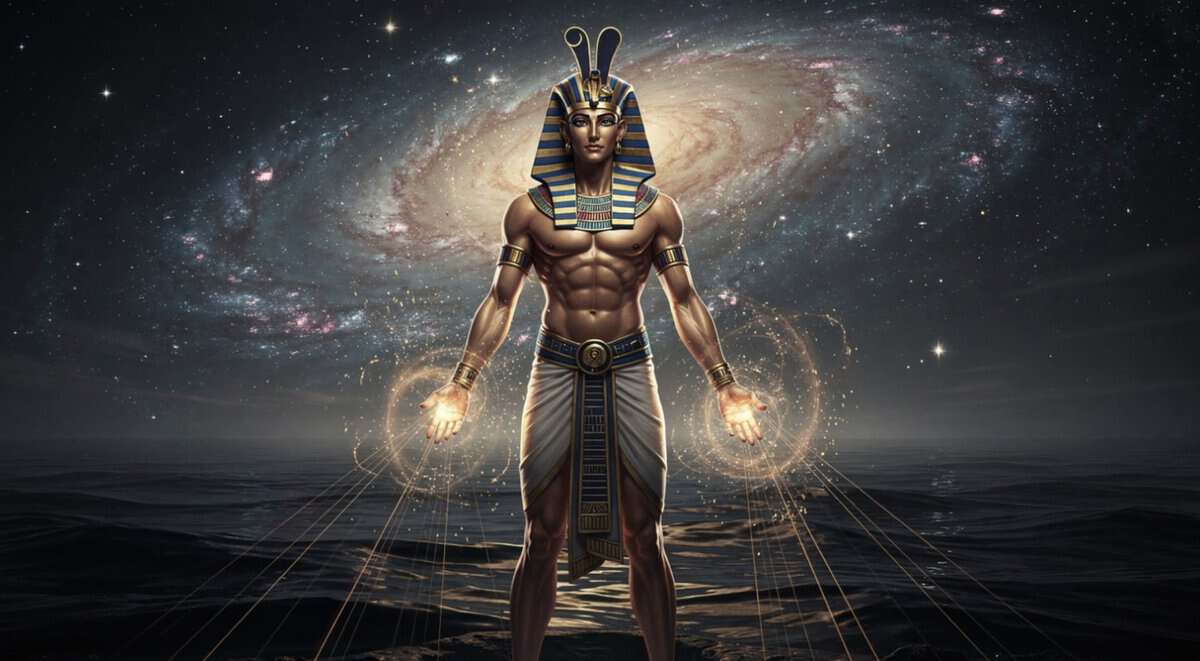
Memphis had a philosophical approach to creation, centering the myth around Ptah, the god associated with craftsmanship and cleverness.
Instead of any physical acts, Ptah created the universe through thought and speech alone.
He conceived every single thing that exists in his heart first, and then spoke them into existence.
It’s an abstract version of creation, reminiscent of much later religious traditions.
The Memphite priests placed Ptah above Atum and the Nine Gods, presenting him as the mind behind the acts.
This myth prioritizes intellect and intention above physical force.
4. Khnum the Creation
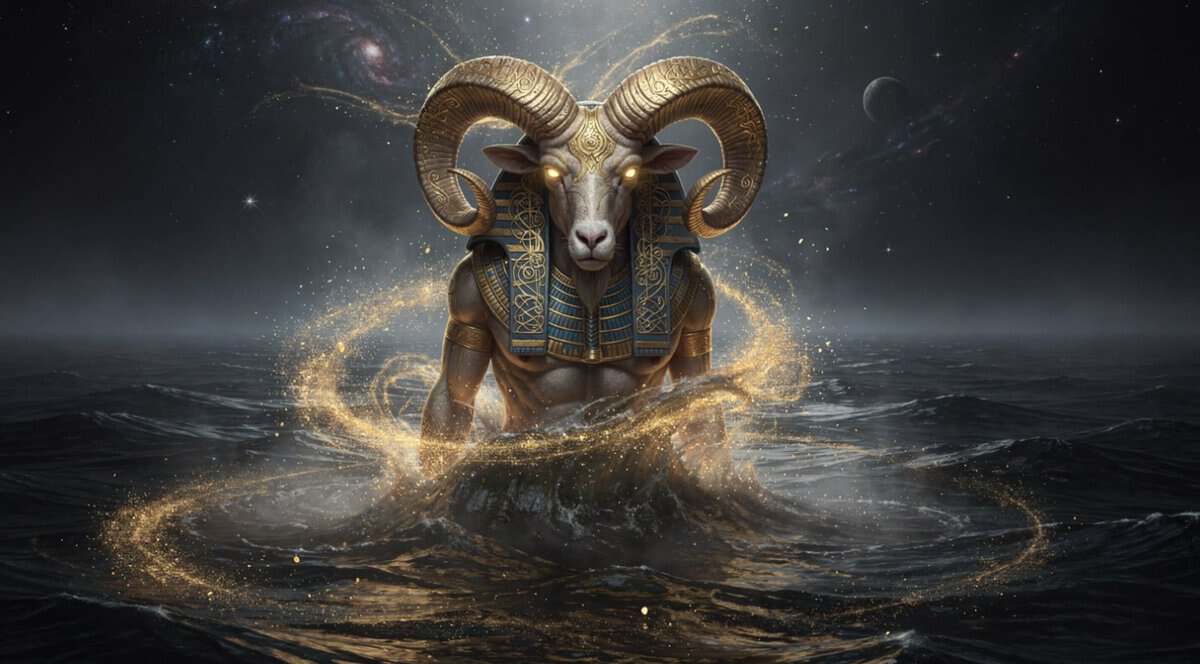
In Elephantine, the local priesthood worshipped Khnum, a ram-headed god.
Khnum shaped human beings out of clay and river silt from the Nile.
It’s considered one of the most intimate creation myths of Egypt because Khnum isn’t a distant force; he’s down in the mud, molding life with his own hands.
He is closely associated with the river’s floodwaters, which allowed Egyptian agriculture to survive.
Some versions even credit him with shaping the ka, the spiritual double believed to accompany every person through life.
5. Amun, the Supreme God
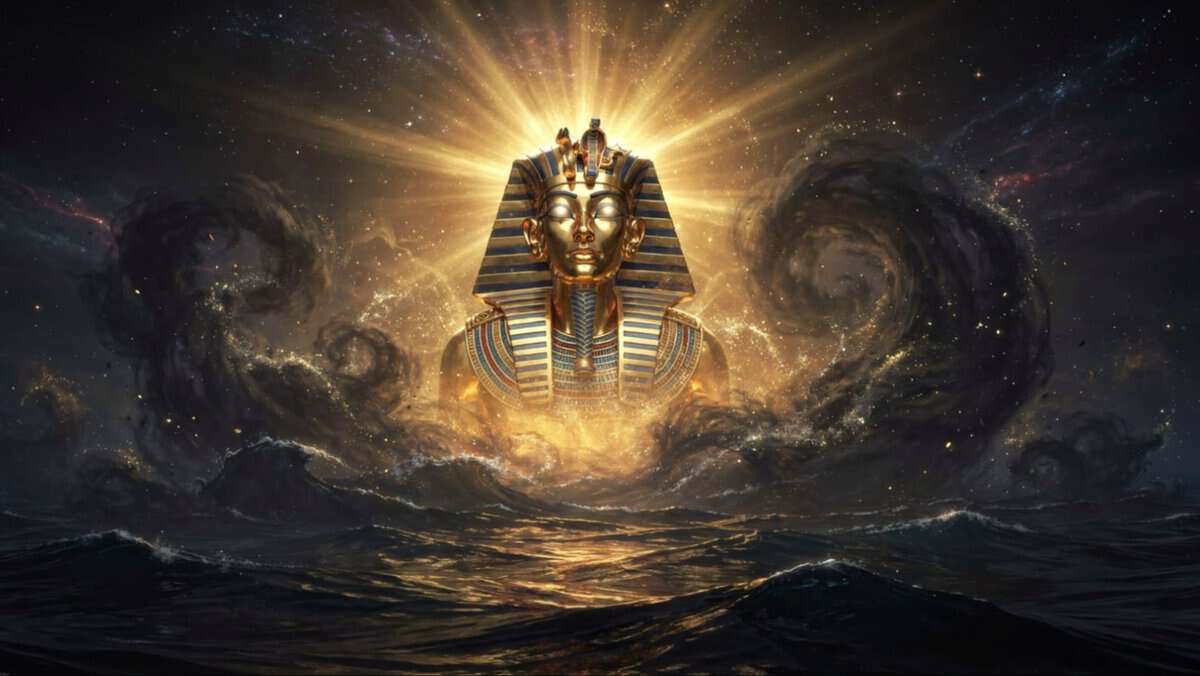
By the time Thebes rose to political power, Amun had been elevated from a relatively minor deity into the supreme creator god.
His name means the hidden one, and that mystery is very important in his mythology.
He’s described as the invisible force moving all the other gods, secretly influencing every creation act.
Eventually, he became one with the sun god Ra to become Amun-Ra, one of the most powerful deities in the entire Egyptian pantheon.
He was worshipped as the single source of all existence.
Priests at Karnak described him as a god that can’t be comprehended, present everywhere but impossible to see.
This description feels very familiar because it sounds precisely like the Judeo-Christian description of the Holy Spirit.

A little Aquarius, devoted to writing and embroidery. Through my writing, I hope to empower readers to align with their true selves and navigate life’s mysteries with confidence.