

There are tarot cards that make you feel like the universe just handed you a bouquet of roses. The Two of Cups? Adorable. The Lovers? Promising. Ten of Cups? Somebody cue the romantic soundtrack. And then there are the cards that appear in a love reading and make you stare at the reader as if you would like to formally appeal the decision.
Of course, tarot is symbolic rather than a guaranteed prediction of the future. A so-called difficult card does not automatically mean a breakup, betrayal, or lifelong romantic disaster. The meaning depends on the question, surrounding cards, position in the spread, and the reader’s interpretation. Still, some cards have acquired reputations for bringing particularly uncomfortable themes into relationship readings. They can point toward conflict, endings, confusion, unhealthy attachments, or emotional upheaval — basically, all the things you were hoping your Friday-night tarot session would help you avoid.
Here are five cards that can be especially unsettling when romance is the subject.
1. Three of Swords
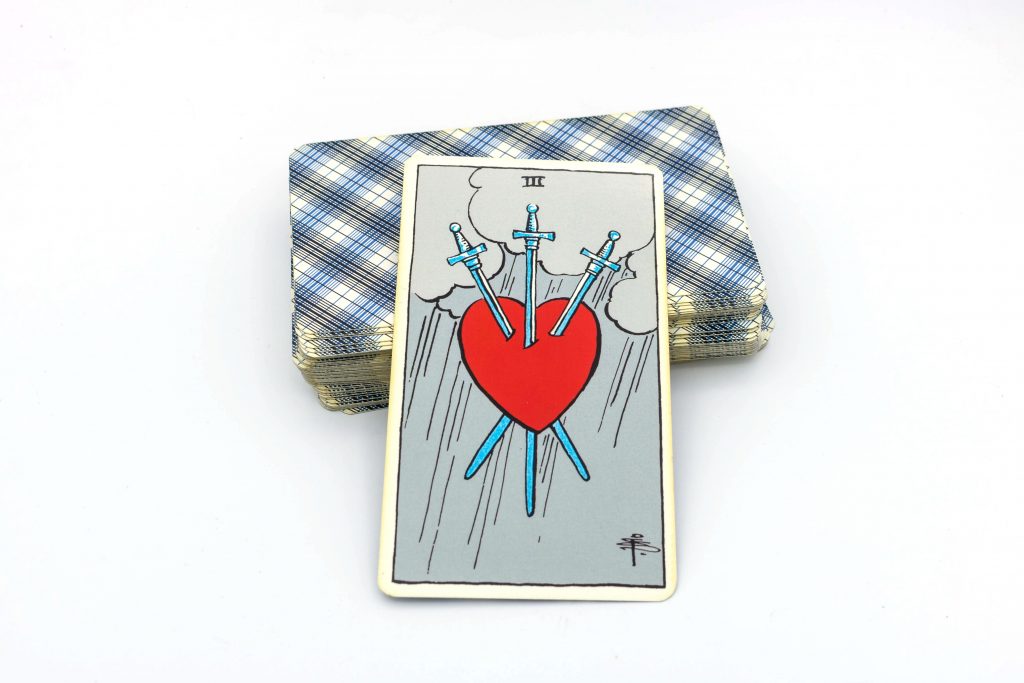
If tarot cards had facial expressions, the Three of Swords would probably be staring directly into your soul while holding a box of tissues. Traditionally, the card depicts a heart pierced by three swords, making its symbolism about as subtle as a breakup text sent at 2 a.m. The Three of Swords is commonly associated with heartbreak, sorrow, separation, grief, and painful truths.
In a love reading, it can point toward emotional pain or disappointment, but that does not automatically mean your relationship is doomed. Depending on the surrounding cards, it might represent unresolved hurt from the past, a difficult conversation, mourning the end of a relationship, or finally acknowledging something that has been bothering you. It can even describe emotional wounds that existed before the current relationship began.
The important thing is not to interpret the card as a cosmic sentence. Tarot symbolism is contextual. If the Three of Swords appears alongside cards suggesting healing or reconciliation, the message may be about confronting pain so that it can eventually be processed. Sometimes the card is less “your love life is over” and more “please stop pretending that everything is fine when it very clearly isn’t.”
2. The Tower
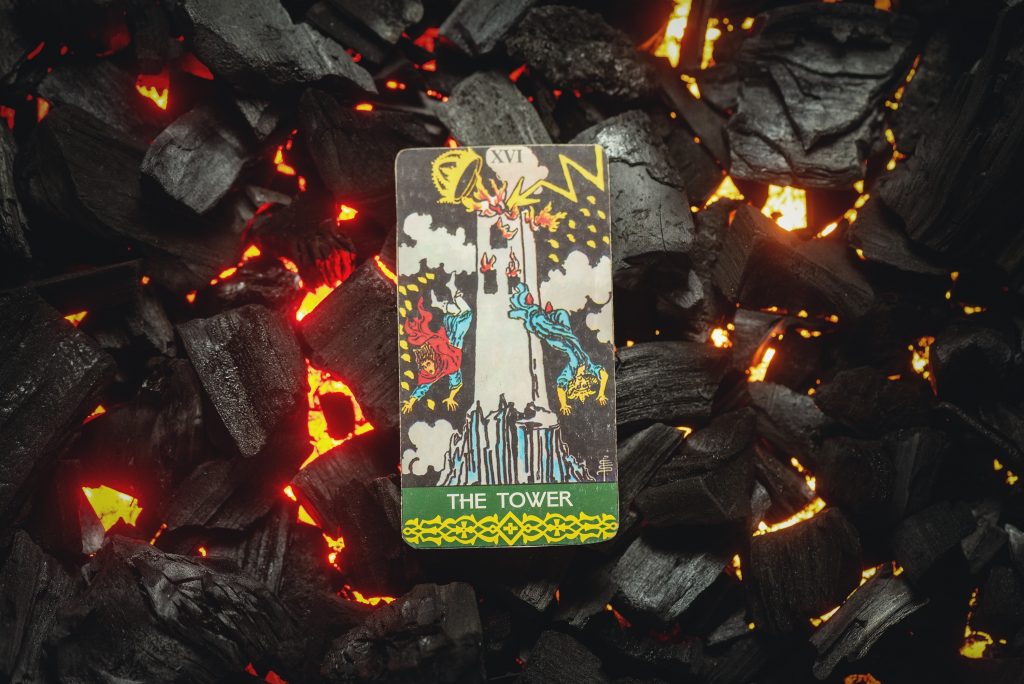
Few tarot cards have a reputation quite like The Tower. It depicts a structure being struck by lightning, with people falling from it while flames erupt around them. In other words, subtlety has officially left the building.
Traditionally, The Tower represents sudden upheaval, disruption, revelation, collapse, and the breaking apart of established structures. In a love reading, that can certainly sound alarming. It may symbolize a relationship experiencing a major shake-up, an unexpected revelation, or the collapse of assumptions that one or both people have been relying on.
However, The Tower does not necessarily mean a breakup. Its deeper symbolism concerns instability and sudden change. A relationship built around denial, secrecy, unrealistic expectations, or unhealthy patterns might need a dramatic reset. Alternatively, an unexpected event could force two people to confront reality rather than continue operating on assumptions.
The uncomfortable part is that The Tower rarely asks permission before making its point. It represents change that can feel disruptive precisely because it challenges something that appeared stable. But destruction is not necessarily the same thing as permanent loss. Sometimes a structure has to come down because it was never particularly sturdy to begin with. Tarot, apparently, has no interest in gentle feedback when a sledgehammer will do.
3. The Devil
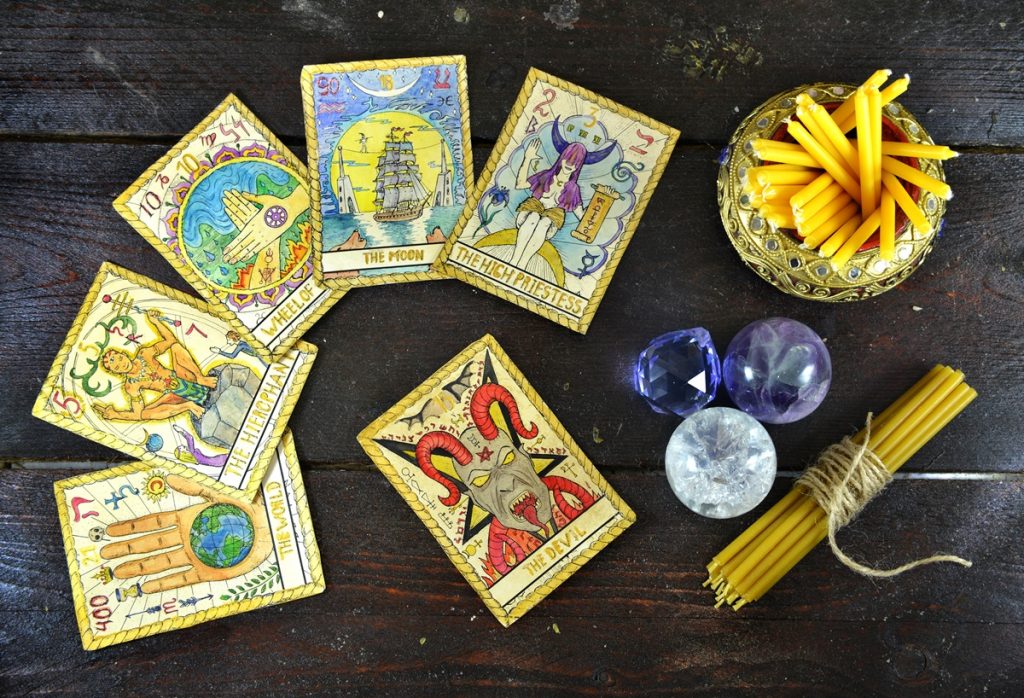
The Devil is one of those cards that can make someone immediately assume the worst. It features a horned figure looming over two chained human figures, so it is not exactly giving “healthy communication and emotional security.” Yet its traditional symbolism is more nuanced than simply meaning evil or doomed romance.
In relationship readings, The Devil is often associated with attachment, temptation, unhealthy patterns, obsession, dependency, material or physical desire, and feeling trapped. It can sometimes point toward an intense attraction that is difficult to control. The chemistry may be extremely strong — perhaps so strong that everyone’s common sense has quietly packed a suitcase and left.
The chains in the imagery are particularly important. The card can symbolize situations in which people feel bound to something, whether that involves jealousy, fear, compulsive behavior, insecurity, or a relationship dynamic that has become difficult to break. It can also bring attention to the difference between genuine intimacy and attachment based primarily on fear or desire.
But The Devil does not mean that a relationship is automatically toxic or that someone is secretly a villain. It can simply invite an honest examination of what has power over you. Sometimes the card asks a very uncomfortable question: “Are you choosing this relationship freely, or are you afraid of what happens if you leave?”
4. Five of Cups
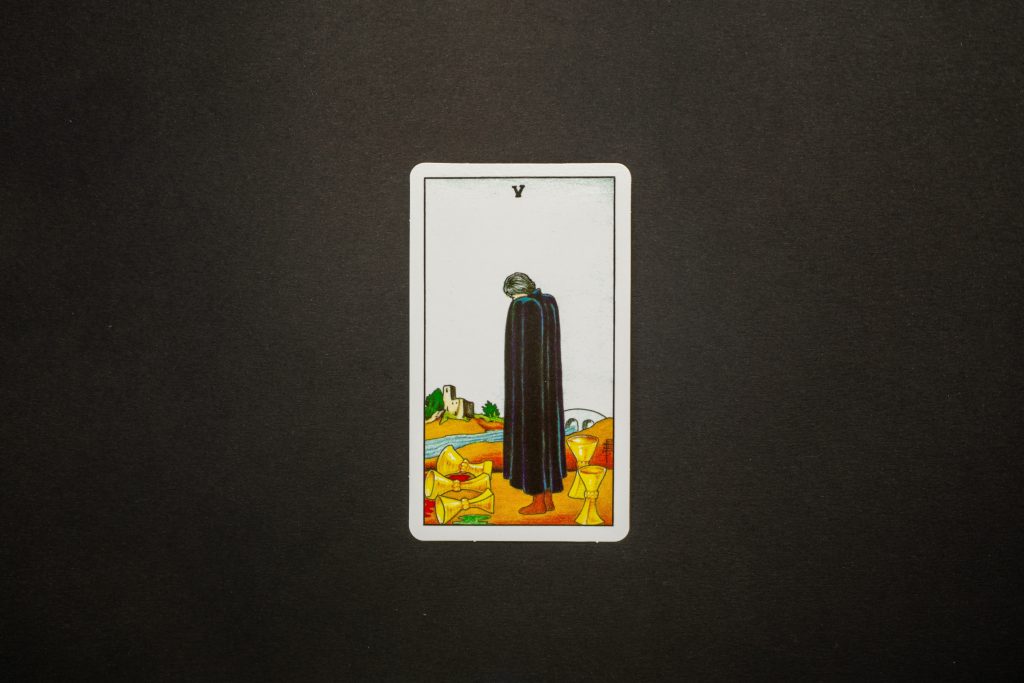
The Five of Cups is the tarot equivalent of sitting on the edge of your bed while dramatically staring out the window because someone did not text back. Its traditional imagery shows a cloaked figure looking sadly at three spilled cups while two upright cups remain behind them.
The card is commonly associated with disappointment, grief, regret, loss, and focusing on what has gone wrong. In a love reading, those themes can understandably feel ominous. It may reflect sadness over a relationship, disappointment in someone’s behavior, regret about the past, or difficulty moving beyond an emotional wound.
But there is an important detail in the traditional imagery: not every cup has been knocked over. Two remain standing. That symbolism is often interpreted as a reminder that loss does not necessarily mean everything has been lost. Something valuable may remain, even when the person receiving the reading is understandably too upset to notice it.
In an existing relationship, the Five of Cups might highlight unresolved disappointment that needs to be addressed. For someone recovering from a breakup, it could reflect the grieving process itself. For someone asking about a potential romance, it might suggest that old emotional baggage is influencing how they view new possibilities.
Basically, this card says: yes, something hurts. But before you write an entire tragic novel about it, look behind you. You might have forgotten that two perfectly good cups are still sitting there.
5. Ten of Swords
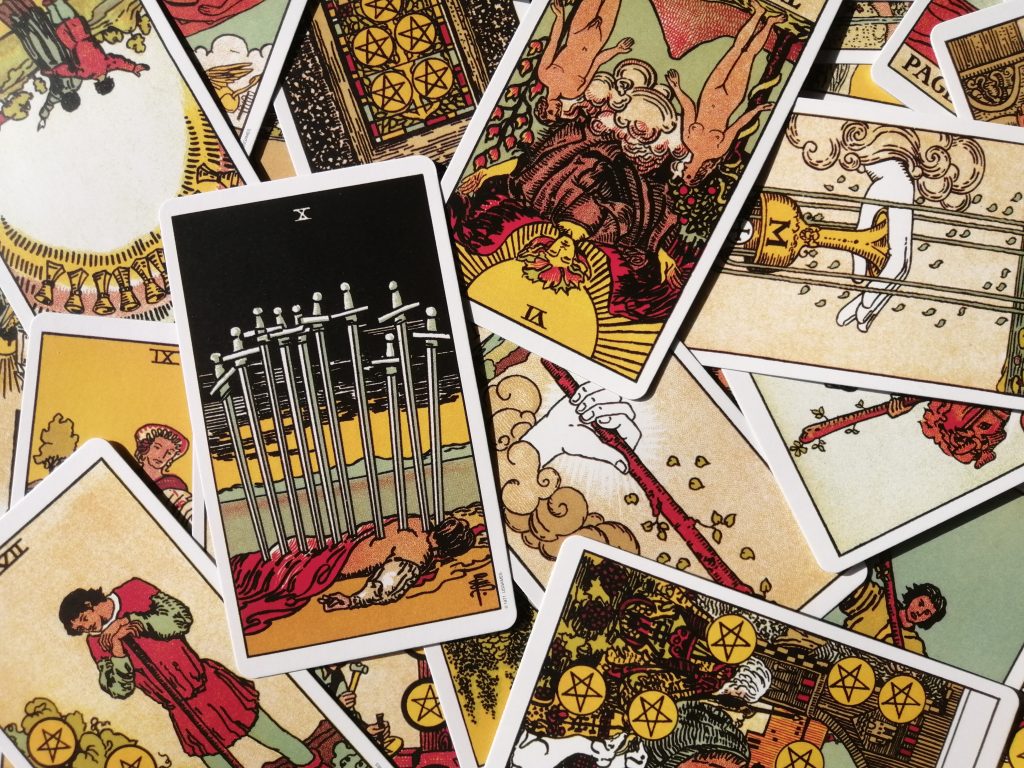
The Ten of Swords is probably the tarot card most likely to make someone say, “Can we just reshuffle?” Its traditional image shows a person lying face-down with ten swords across their back, beneath a dark sky. If tarot had a category called “Well, this looks absolutely terrible,” the Ten of Swords would probably be nominated every year.
Traditionally, the card is associated with endings, painful conclusions, betrayal, exhaustion, defeat, and reaching the end of a difficult cycle. In a love reading, it can point toward a relationship or emotional situation that has reached a significant turning point. It may reflect the aftermath of betrayal, the end of a relationship, or the realization that continuing in the same way is no longer possible.
However, the Ten of Swords also carries an important theme: finality. The darkest part of the situation has already happened or is reaching its conclusion. In that sense, the card can represent closure rather than endless suffering. Something is ending, and endings create the possibility of something different afterward.
It can also describe an emotional mindset rather than an external event. Someone who feels completely defeated in love may be experiencing the energy of the Ten of Swords even if their relationship circumstances are not objectively catastrophic. The card can therefore encourage someone to recognize when they are mentally replaying an old wound long after the original situation has ended.
So yes, it looks dramatic. Very dramatic. But tarot’s Ten of Swords is not necessarily saying, “Your romantic life is finished forever.” Sometimes it is simply saying, “This particular chapter is done. Please stop trying to resurrect it.”

Lover of good music, reading, astrology and making memories with friends and spreading positive vibes! 🎶✨I aim to inspire others to find meaning and purpose through a deeper understanding of the universe’s energies.