
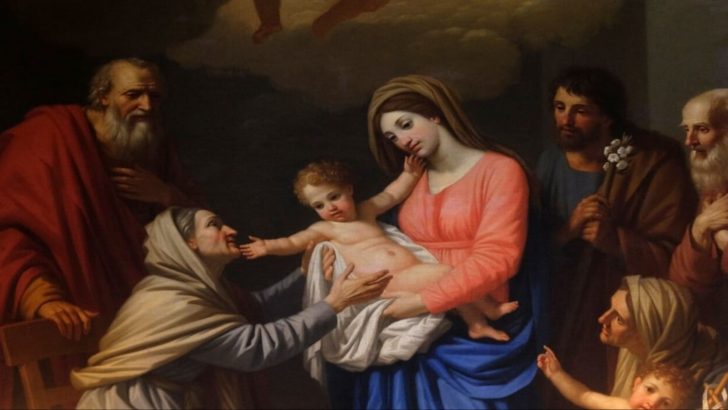
Motherhood is a practical role, but it’s also a spiritual vocation. It requires a level of bravery and selflessness that only saints have.
With that said, we’re going to look at the lives of 7 holy mothers.
These women raised apostles, martyrs, and emperors. It’s their love and guidance that changed the world.
However, not all of them belong to ancient history. Some of these holy women are going to show us that sainthood is very much possible in our day, too.
1. St. Anne
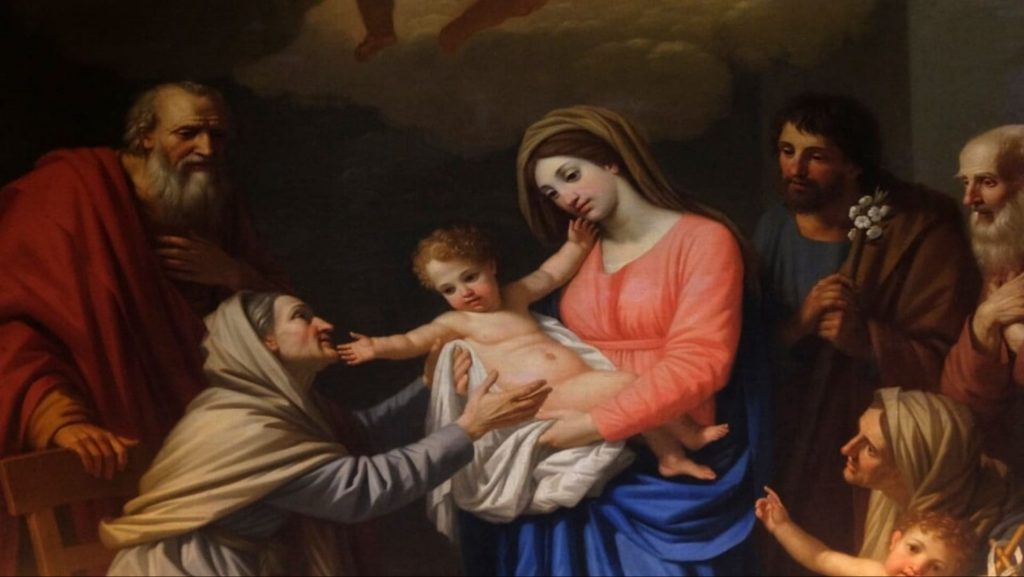
We don’t have a lot of details about the life of St. Anne, and somehow, that only makes her story more powerful.
She is the grandmother of Jesus, yet the Gospels don’t record a single word she spoke.
We know she was married to Joachim, and they suffered for years with infertility, which was a deep shame in their time.
However, in many legends, not being able to conceive for a long time was also a sign of something special. The child that the couple ends up having turns out to be specific and fated for greatness.
St. Anne and Joachim didn’t lose hope; they prayed for a child, and God finally blessed them with a daughter.
Anne raised the girl who would become the Ark of the Covenant, the Holy Mother of God.
She taught Mary the Scriptures and how to love God with an undivided heart.
St. Anne’s holy work was preparing a pure soul to fulfill its ultimate purpose.
2. St. Elizabeth
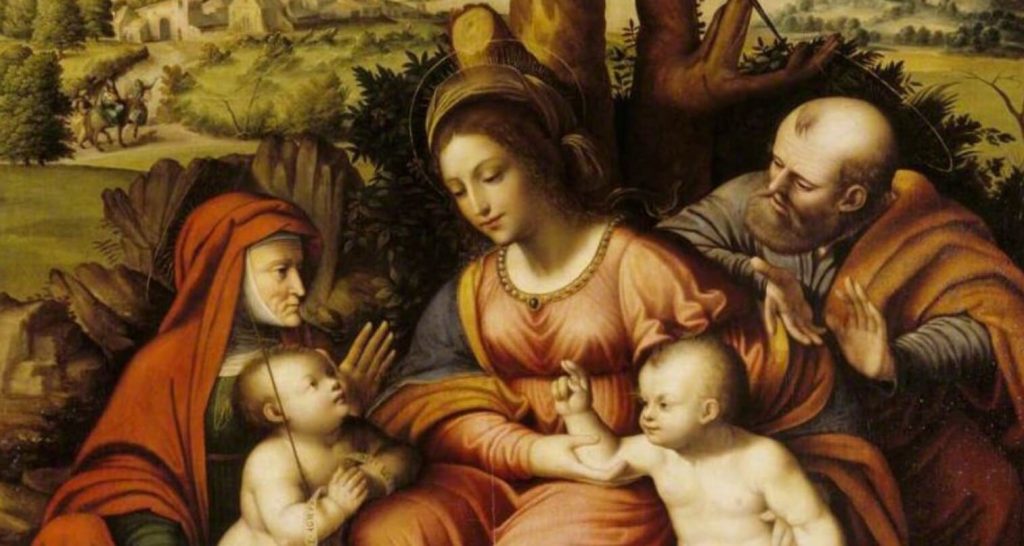
St. Elizabeth’s story is one of miraculous intervention.
Like her relative Anne, she was advanced in years and considered infertile. However, God had a plan.
Her husband Zechariah was struck mute by an angel because he doubted the news that they would have a son.
That son, John the Baptist, would prepare the way for the Messiah.
When the pregnant Mary came to visit, Elizabeth felt baby John leap in her womb, filled with the Holy Spirit.
She was the first to proclaim Mary as “the mother of my Lord.”
Elizabeth validated Mary’s faith, giving her the support she needed in that scary time.
She did more than raise the prophet; she recognized the Messiah before He had even been born.
St. Elizabeth teaches us about the maternal instinct to see the truth.
Her life encourages us to trust God’s timing, even when the odds seem stacked against us.
3. St. Monica
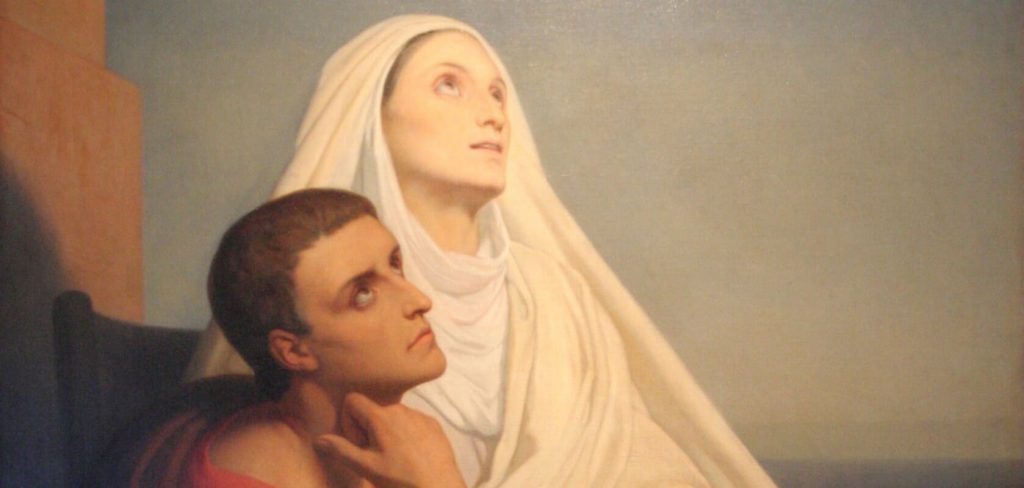
St. Monica is the patron saint of all believers who are surrounded by sin, especially in their family life.
She was married to a pagan official with a violent temper and a mother-in-law who made her life miserable.
But the greatest cross she bore was her son Augustine.
Though brilliant, he led a sinful lifestyle, rejecting his mother’s holy faith.
For seventeen years, she chased him from North Africa to Rome and then to Milan, constantly praying.
Through her persistence and the guidance of St. Ambrose, Augustine finally accepted God. He converted and became one of the greatest theologians in Church history.
St. Monica shows us the power of a mother’s influence.
Despite a turbulent life, she died peacefully, knowing that her son’s soul was saved.
4. St. Helena
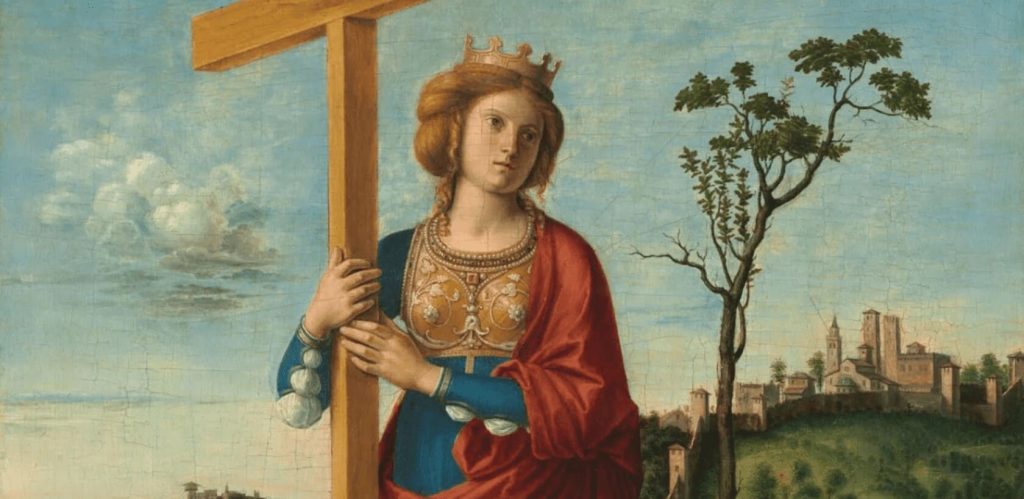
St. Helena was the mother of Emperor Constantine I, and she was on a divine mission herself.
She had humble beginnings, but never let the power make her arrogant, even after becoming a royal.
After her son converted and legalized Christianity, Helena went on a pilgrimage to the Holy Land… in her seventies!
She oversaw excavations in Jerusalem, where tradition says she discovered the True Cross on which Jesus Christ was crucified.
She also built churches over the Holy Sepulcher and the Nativity, essentially establishing the route of Christian pilgrimage we use to this day.
Helena’s story proves that it’s never too late to seek God.
She was a fierce protector of faith and her son’s greatest ally.
5. St. Perpetua and St. Felicity
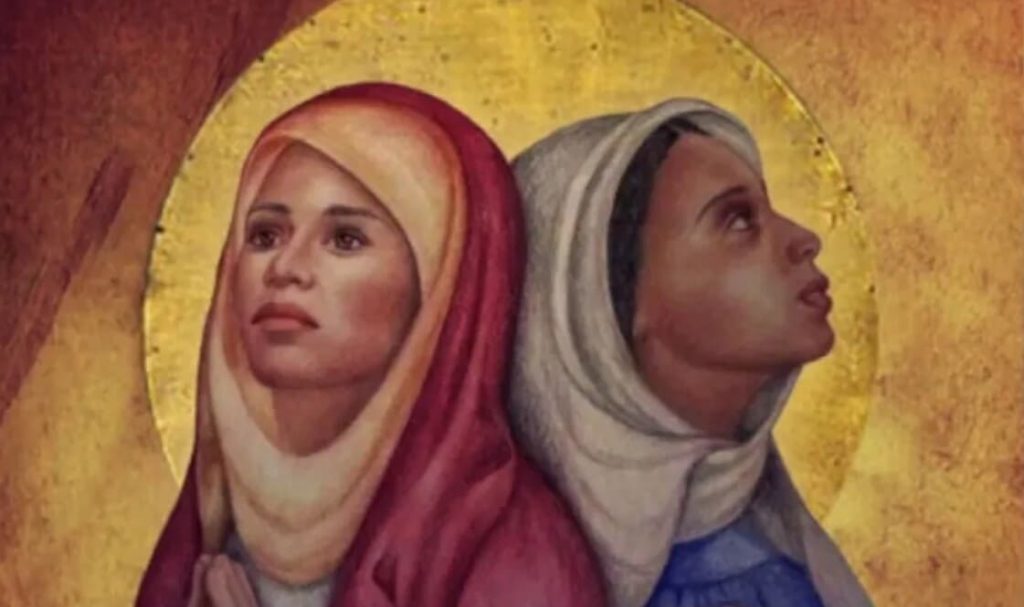
These two women were locked in a dark Roman prison.
Perpetua was a young noblewoman and nursing mother, while Felicity was a pregnant and enslaved.
Arrested for being Christian in Carthage around 203 AD, they faced a terrifying fate: the arena.
Perpetua was heartbroken at the thought of leaving her infant, and Felicity was afraid she wouldn’t be martyred along with other Christians because pregnant women couldn’t be executed under Roman law.
She gave birth in prison just before the games.
At the arena, the two holy women embraced each other as the wild beasts attacked them.
Their sacrifice was so powerful that the witnesses started converting.
They trusted that God would protect their children, going against all of their instincts rather than abandon their faith.
6. St. Zelie Martin
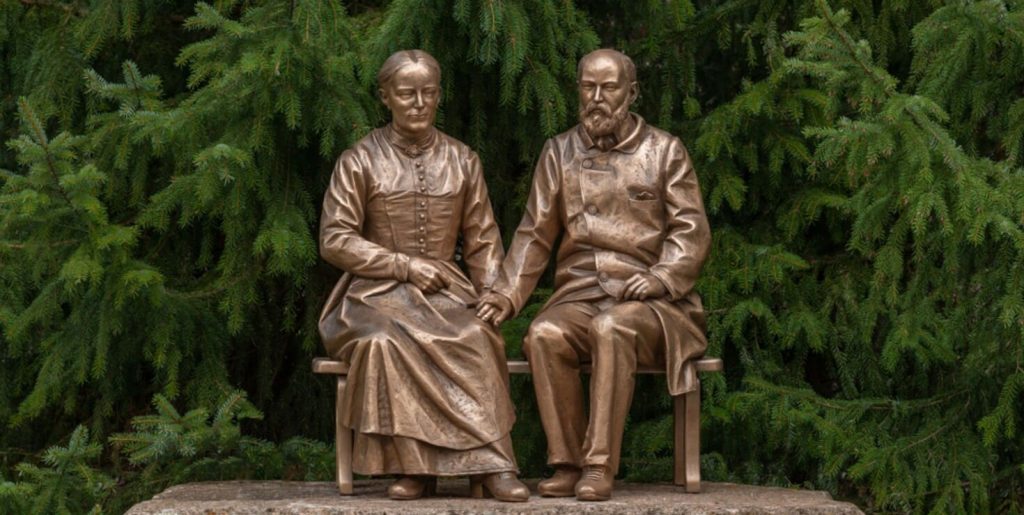
Zelie Martin was the mother of St. Thérèse of Lisieux; however, she was a saint in her own right.
Zelie was a working mother in 19th-century France, running a successful lacemaking business to support her nine children.
Her life was harsh. She lost multiple children and died of breast cancer at just 45.
But she left behind letters that reveal a woman of immense humor and love.
She didn’t have much time to devote to the church, but she prayed through hard work and service.
She once wrote that she lived her life to serve God in her little corner.
Zelie raised her daughter to be holy by example and tenderness.
She teaches us an important lesson about faith: you can find God anywhere, anytime, as long as you want to find Him.
7. St. Gianna Beretta Molla
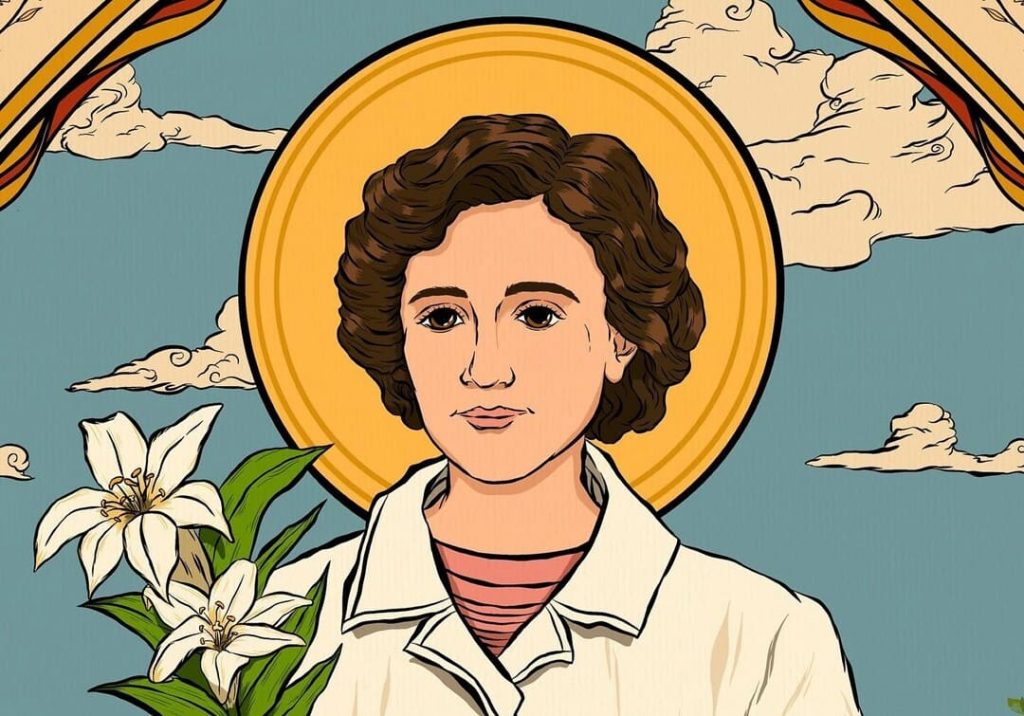
Gianna Beretta Molla lived in the 1900s. She was a doctor and a mother.
In the early 1960s, during her fourth pregnancy, Gianna was forced to make a terrible choice: her life or her baby’s.
A dangerous tumor was discovered in her uterus, so she could have it removed, and the baby would die, or she could deliver the baby at the cost of her own life.
She insisted that the child had to be saved, no matter what.
She underwent surgery to remove the tumor, but carried her baby to term.
On April 21, 1962, she gave birth to Gianna Emanuela, but complications set in, and she died a week later.
She is venerated as a holy woman because of the martyrdom that she didn’t seek but ended up choosing for her baby’s well-being.

A little Aquarius, devoted to writing and embroidery. Through my writing, I hope to empower readers to align with their true selves and navigate life’s mysteries with confidence.