

The religious tend to see atheists as sad and lost, while the atheists see them as delusional.
Either side has strong arguments for why we should or should not believe in God, and I’d like us to explore some atheist talking points that actually make a lot of sense.
These don’t have to change any of our beliefs, but it might be good to hear what the other side has to say instead of sticking to our echo-chambers.
So, here are 10 atheist arguments we can’t easily dismiss.
1. Religion Is a Political Tool

Religion might not have been a political tool back when each city-state and tribe had their own native cult, but a global religion is absolutely political.
Throughout history, rulers have used religion to legitimize their power and justify wars.
Think about how Christianity was enforced during the Crusades or how Islamic rulers used faith to legitimize purely territorial conquests.
Religion continues to serve political ends; it still divides society and creates inequality.
It’s a tool to rally people around a cause. Atheists argue that this was and is the only purpose of a global religion.
This portrays faith as a human invention manipulated for political gain. That’s a powerful argument worth our attention, and perhaps, even our agreement.
2. Holy Books Are Filled with Violence and Misdeeds

Atheists often lead with this argument: If religion is truly moral, why are its sacred texts riddled with violence and slavery?
Both the Bible and the Quran contain stories of revenge, genocide, and suffering of the innocent that are often supported by holy figures or even by God Himself.
Whether that was the goal or not, these texts are often cited to justify real-world violence.
Atheists also point out glaring moral contradictions, and they express concern that these acts are seen as divine commands that we ought to emulate in real life.
Can we even counter this argument?
3. Jesus Never Claimed to Be a God
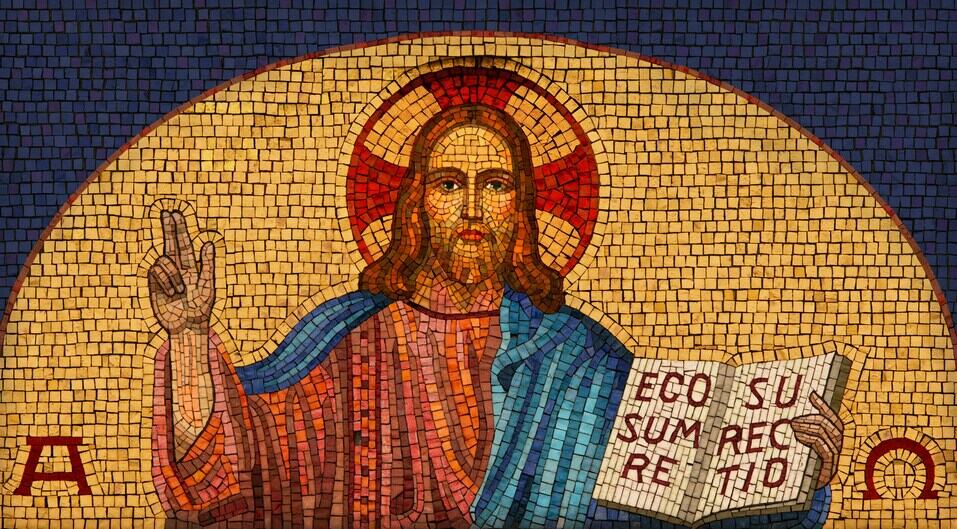
In Christianity, Jesus is divine and human; however, many atheists claim that the Gospels don’t explicitly state that He ever claimed to be God.
Some scholars argue that the divine status was a later theological addition, not part of His original teachings.
This distinction matters because it suggests that the core of Christian faith may have been invented by later followers.
If Jesus never personally claimed to be God, then much of Christian doctrine is built on a misinterpretation or a myth, and that’s a pretty big argument to consider.
Now, although this claim can be considered, it can also be argued.
Jesus might not have said “I am God,” but He made it very clear that He and the Father were one, and that He was the Lord of the Sabbath, etc.
The Gospels were, in fact, written after His death, but they were written by His closest disciples.
4. The Gospels Misquote Jesus

The Gospels are the primary sources for understanding Jesus, but they do contain certain errors and contradictions.
Scholars have identified passages where Christ’s words were likely altered, either intentionally or by accident.
For example, the “turn the other cheek” quote appears to be a later addition.
These instances suggest that the stories about Jesus were shaped by oral tradition and theological agendas rather than fact.
Atheists argue that if these core stories are unreliable, then the entire foundation of the Christian faith becomes shaky.
This argument pushes us to question the reliability of religious texts.
5. The Pagan Roots of Monotheistic Religions
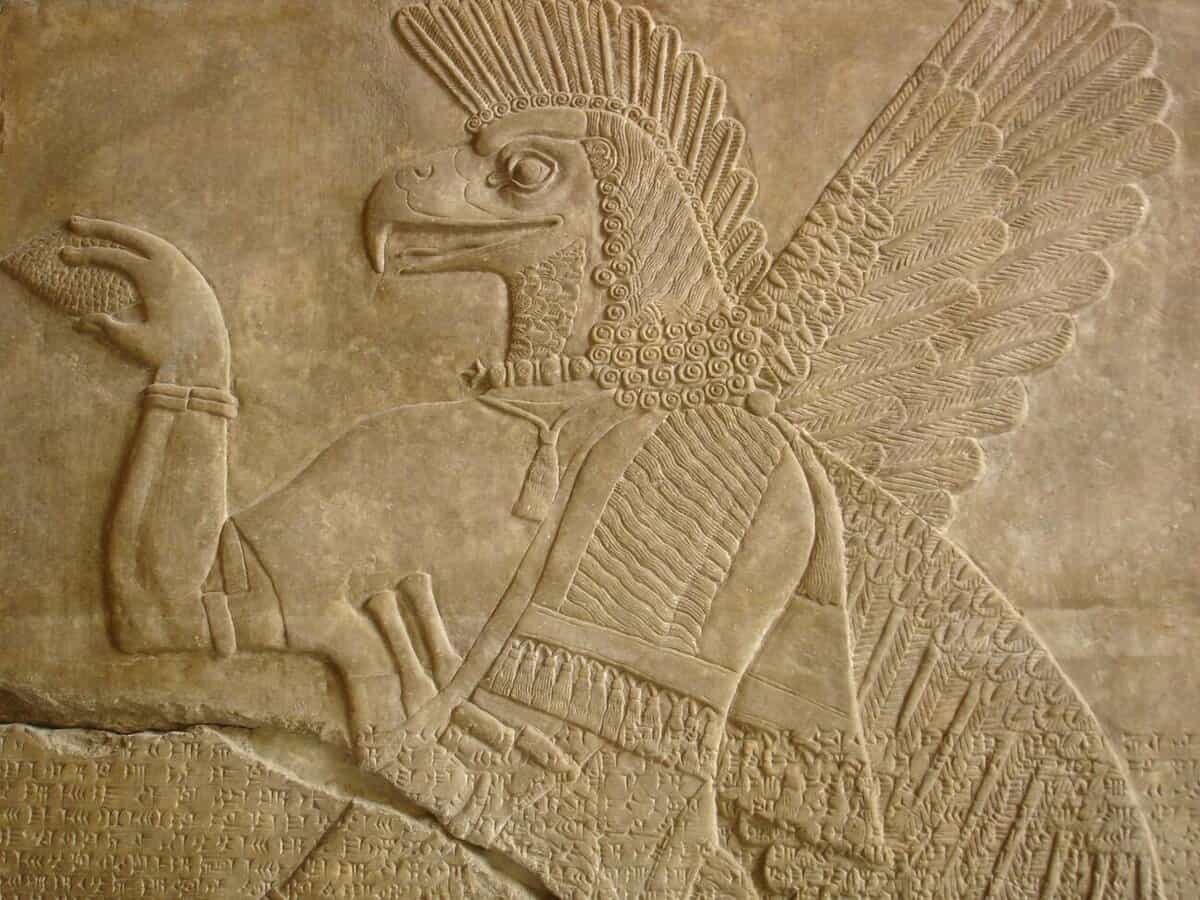
Many of the stories and symbols in Judaism, Christianity, and Islam have clear parallels to older pagan religions.
Sun gods, resurrection myths, flood stories – they all appear in cultures predating these religions.
For instance, the story of a dying and rising god is common in ancient mythologies like Egyptian (Osiris) or Greek (Dionysus).
These similarities suggest that the major religions borrowed from older myths, rebranding them within monotheistic frames.
These connections show that these faiths aren’t entirely original or new, but rooted in pre-existing cults and practices.
Atheists often use this argument to ask why we wouldn’t then worship the older Sumerian or Egyptian gods, since they seem to be the blueprint of monotheistic traditions anyway.
6. Atheist Countries Tend to Be More Prosperous

If religion were essential for morality and a successful society, wouldn’t religious countries be the most prosperous?
Data shows that many of the wealthiest nations, like Norway, Sweden, or Japan, are largely secular.
These countries tend to have higher standards of living, better education, and more social equality compared to religious societies.
In fact, the more religious a country is, the worse its education and living standards seem to be.
Atheists argue that the idea of religion being necessary for progress doesn’t hold up when you look at these facts.
Secular nations prove that morality and prosperity can thrive without divine authority, making this argument very compelling in debates.
7. Our Morality Is Innate

For the longest time, we upheld the belief that religion is the source of morality, but atheists argue that humans have an innate sense of right and wrong.
Evolutionary psychologists argue that moral instincts (empathy, fairness, cooperation) are built into our biology because they helped early humans survive.
These traits are observed in many animals, too.
The main argument atheists make here is that the very idea that we need divine commandments to be moral is flawed.
Morality based on instinct and social cooperation is more flexible and universal than religious rules.
Recognizing that morality stems from our nature rather than divine decree challenges the notion that faith is necessary for ethical behavior.
8. Jesus Is a Sun Deity
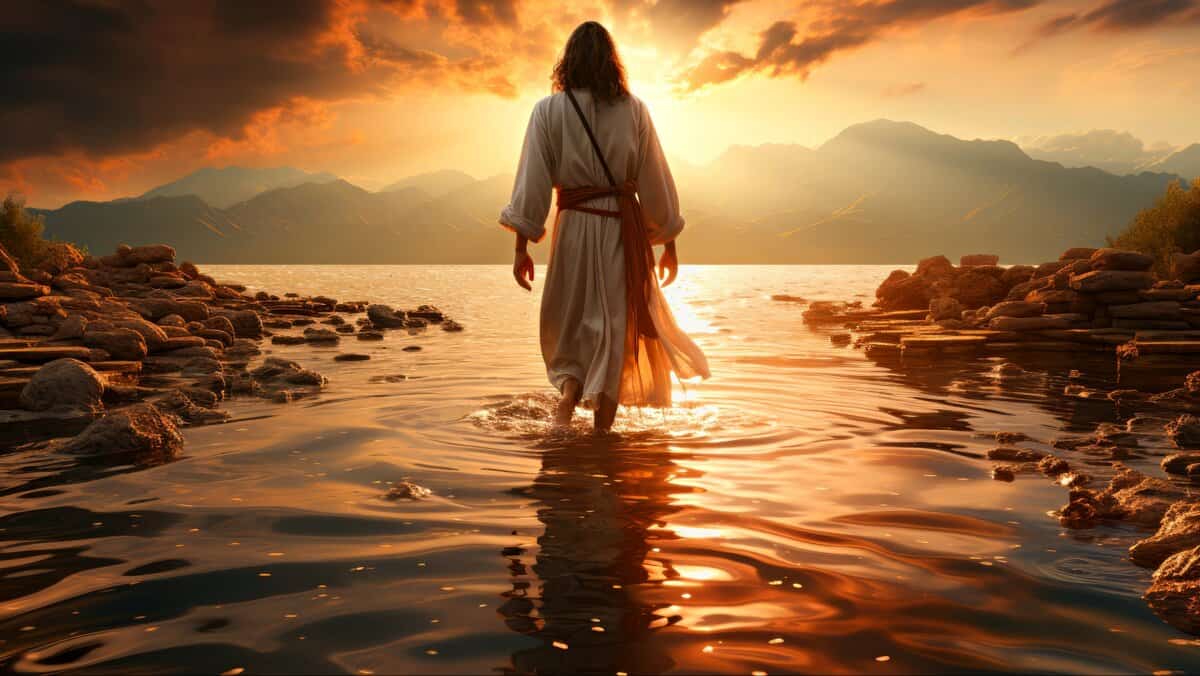
Many scholars and mythologists see Jesus as an archetype of a Sun god; He dies, then rises again, promising renewal and eternal life.
This motif appears across all ancient religions, since every culture celebrated the life-giving Sun.
The story of Jesus, with His death and resurrection, mirrors these solar myths, symbolizing the cycle of death and rebirth.
The “light in darkness” theme also neatly fits into this symbolism, suggesting that Jesus Christ is an allegory for celestial phenomena.
This argument doesn’t diminish the cultural importance of Jesus, but simply connects Him to ancient belief systems.
It’s a perspective that pushes us to see religious stories as man-made symbols rather than absolute truths.
9. Faith Opposes Critical Thinking

Faith, by definition, involves belief without evidence. Atheists claim that this makes it opposed to reason.
When religious doctrines are accepted on faith, they often resist questioning and scrutiny, even when they have a negative impact on society.
This can hinder progress, and promote dogmatism and ignorance.
Religion was opposed to science all throughout history; the church rejected both heliocentrism and evolution.
Faith can be rigid, preventing open discussion and critical thinking.
This argument highlights that faith and reason are essentially incompatible.
If we can’t question the status quo and explore different possibilities, society can’t progress.
10. Modern Christianity Is a Roman Invention
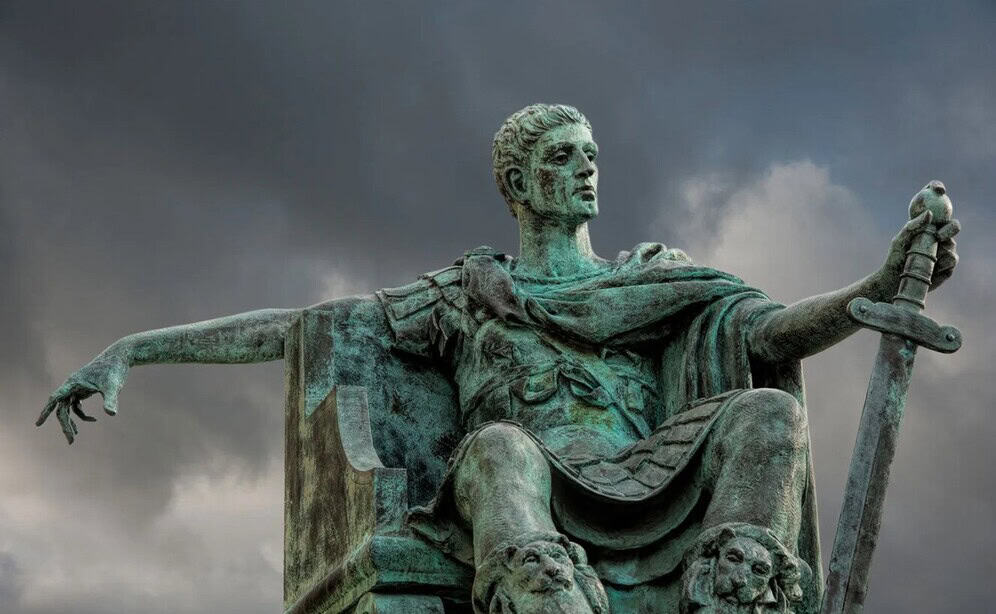
Atheists argue that Christianity, as we know it today, was shaped by political motives, mainly by Emperor Constantine.
He convened the First Council of Nicaea and played a major role in defining Christian doctrine, turning it into an instrument of imperial power.
Constantine’s conversion was political as much as it was spiritual; some claim that it was entirely political.
He used Christianity to unify and control the Roman Empire.
The church became a centralized institution that supported imperial authority rather than just spiritual pursuits.
Constantine used the new faith to crush local traditions and cults that stood in the way, and to strengthen Roman influence across conquered territories.
This argument forces us to question what we truly know about the purpose of Christianity and global religions in general.

A little Aquarius, devoted to writing and embroidery. Through my writing, I hope to empower readers to align with their true selves and navigate life’s mysteries with confidence.