
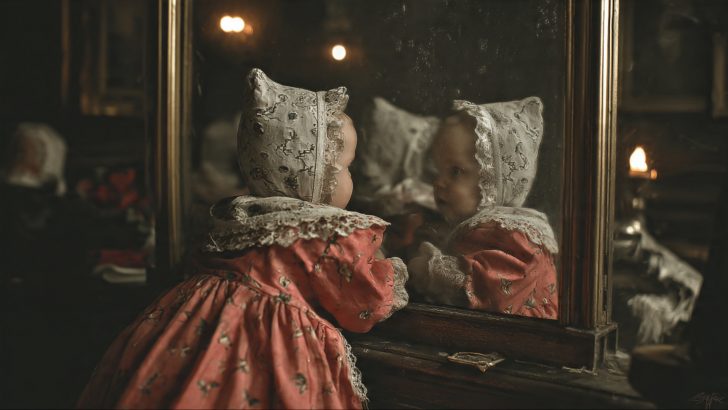
For centuries, especially among the ancient Slavs, parents have been warned to keep their babies away from mirrors.
The superstition was that a mirror can steal one’s soul, but the critical age varies.
Some say that a baby shouldn’t look into a mirror until they’re at least a year old, while others claim it has to be forty days old.
The latter has stuck to this day, so in some regions, parents still cover up the mirrors in their home until their infant reaches that milestone.
Here’s why tradition claims that infants shouldn’t see their reflection – and how science proves it’s more than just a superstition.
1. The Fear of Losing the Soul
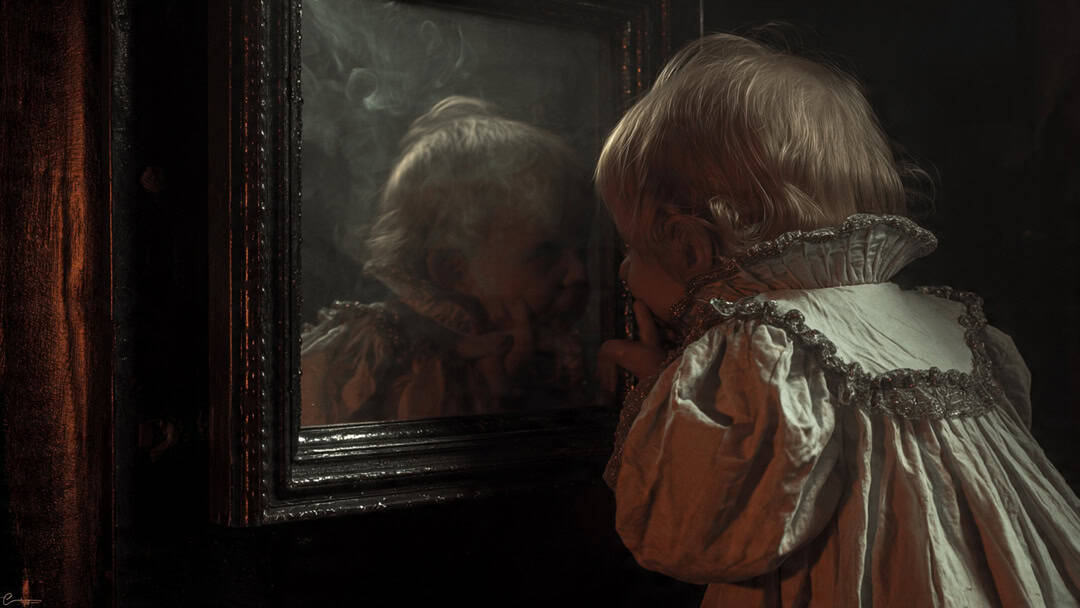
Slavic people believed that infants were especially vulnerable to losing their souls if they looked into mirrors too early.
They thought that a mirror could trap a piece of a child’s spirit, leaving them weakened and incomplete.
While people don’t belive this as strongly nowadays, most Slavs are reluctant to let their babies see a mirror before a certain amount of time has passed.
The idea is that the child’s soul is still forming, and exposure to a flat, endless surface might interfere with that.
These beliefs reflect a deep understanding of an infant’s vulnerability.
Today, however, we see that there is a scientific basis for this fear.
2. How a Baby’s Brain Reacts to Mirrors
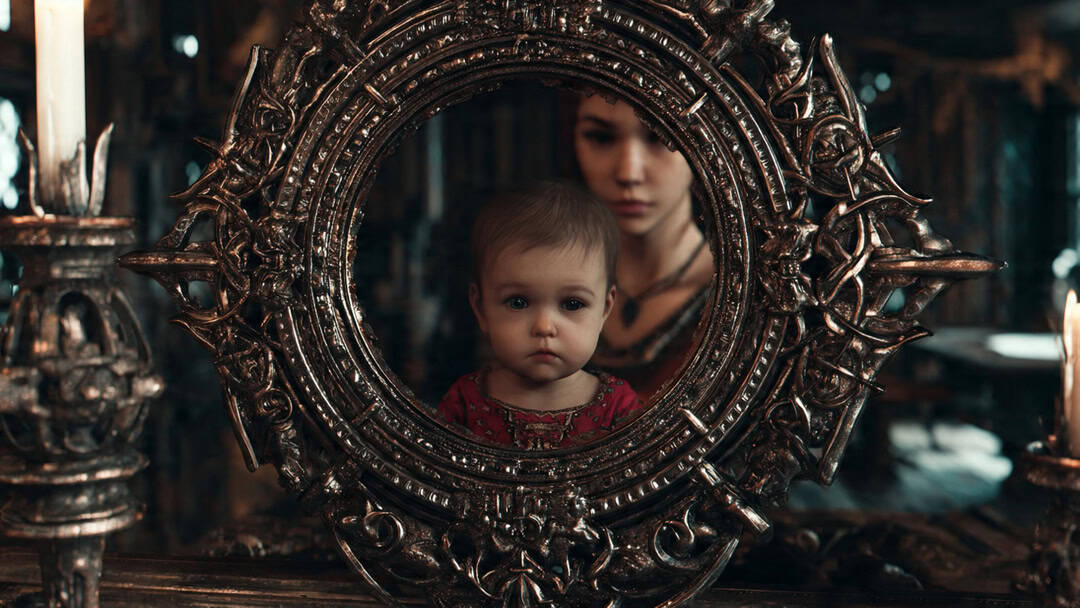
For babies, a mirror is a confusing, overwhelming stimulus.
Their brains are still learning how to interpret visual information, and mirrors present a strange puzzle.
Before an infant is about eight months old, they don’t recognize that the reflection is actually them.
Instead, they see a mysterious, repeating image that mimics their every move. This creates deep confusion because the brain expects tactile confirmation, which isn’t there.
The result is a sensory overload that can cause them stress.
It triggers a spike in cortisol, which can interfere with healthy brain development, especially in areas responsible for memory and emotional regulation.
3. Cortisol and Its Impact on Development
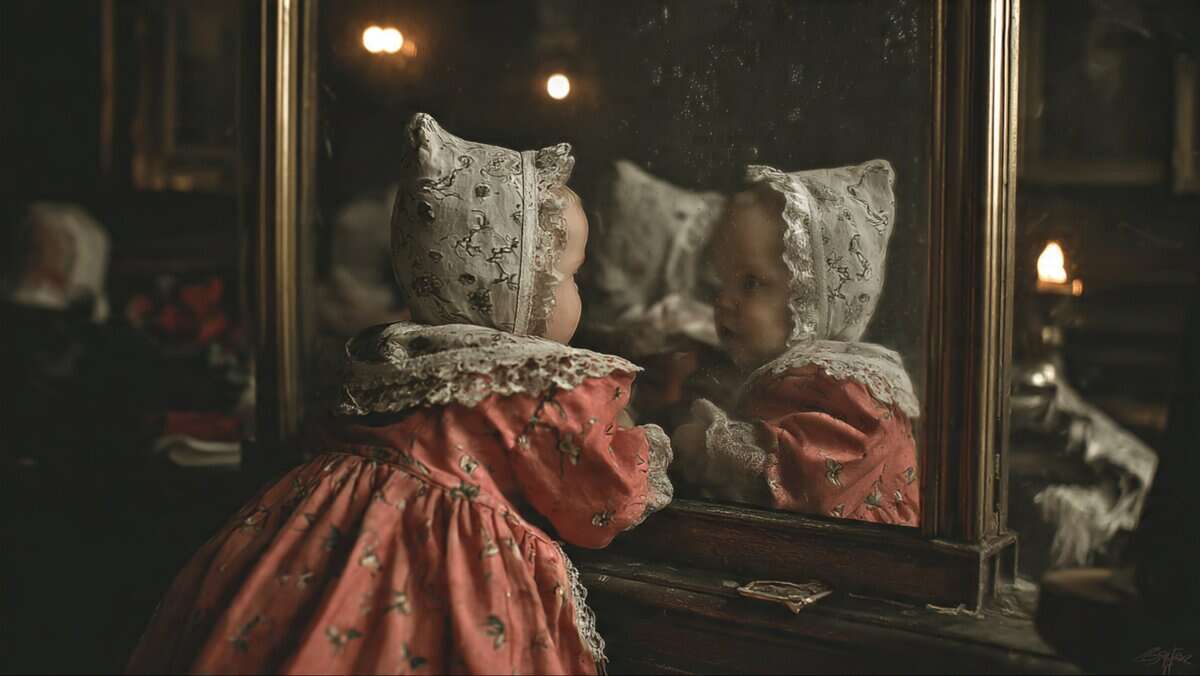
When a baby sees a mirror and experiences this confusion, their body releases cortisol in response to the stress.
High cortisol levels, especially if persistent, can be dangerous for a child’s developing brain. It can inhibit the growth of the hippocampus.
And this isn’t just a temporary reaction; overexposure to confusing visual stimuli can have long-lasting effects.
It can impair a child’s ability to learn, speak, and regulate their emotions later in life.
This is why the ancient fears about mirrors causing speech delays and emotional issues have a scientific foundation, even though people couldn’t put it into words back then.
4. Why Mirrors Distort a Child’s Perception
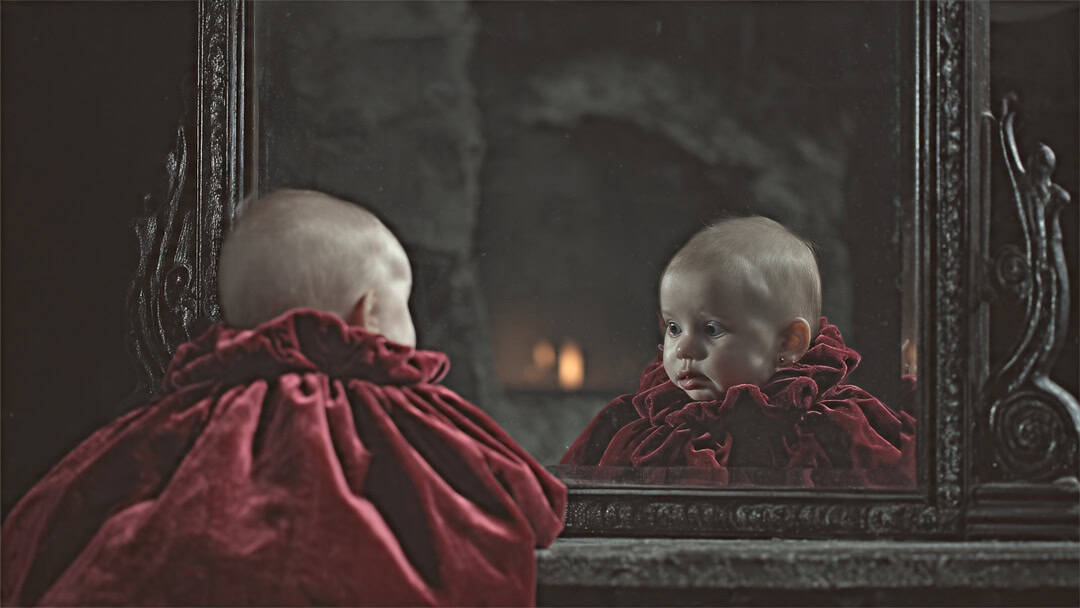
Old mirrors contained metal impurities that caused distortions – warped, floating contours that scared children.
These optical illusions could have consequences for infants, especially those with sensitive vision.
Seeing a shifting reflection could trigger deep fears and even nervous tics.
In those days, parents might not have understood why their children were suddenly anxious or afraid at night, but it was likely due to these visual distortions.
That early fear could develop into lifelong anxieties or phobias if experienced repeatedly.
5. Mental Health Risks
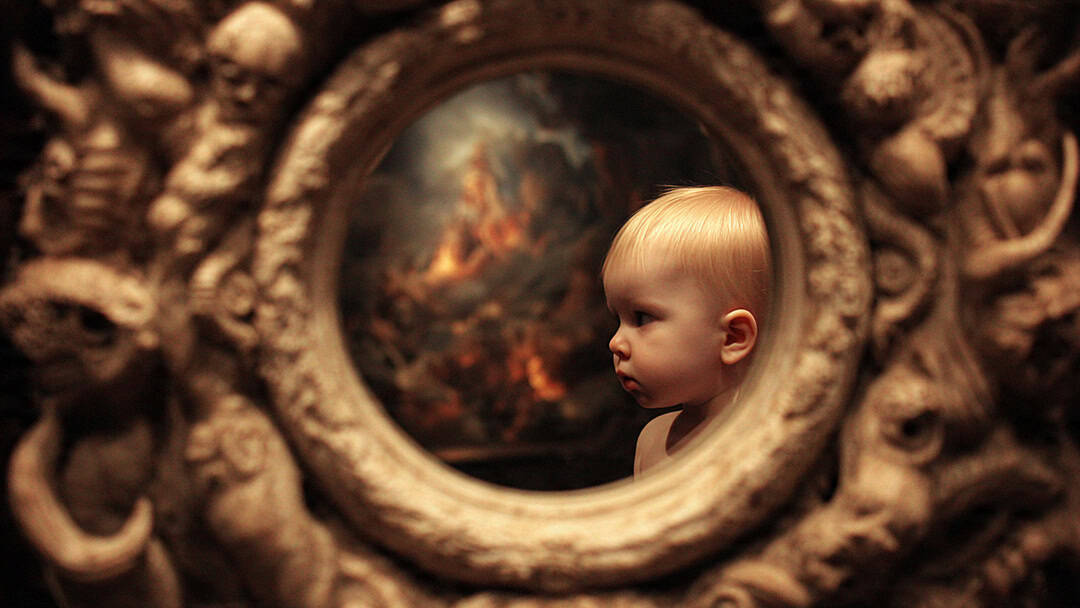
Modern psychologists now agree that mirrors in a baby’s environment can be risky.
The developing brain needs to understand the real, three-dimensional world before it confronts a flat reflection.
When children are exposed to mirrors too early, they risk developing distorted perception and emotional issues.
The ancient taboo of avoiding reflections was primitive but effective – it protected children’s consciousness from disrupting confusion.
Infants need time to develop a solid sense of reality, free from illusions that could interfere with their growth.
6. Protecting the Young Mind
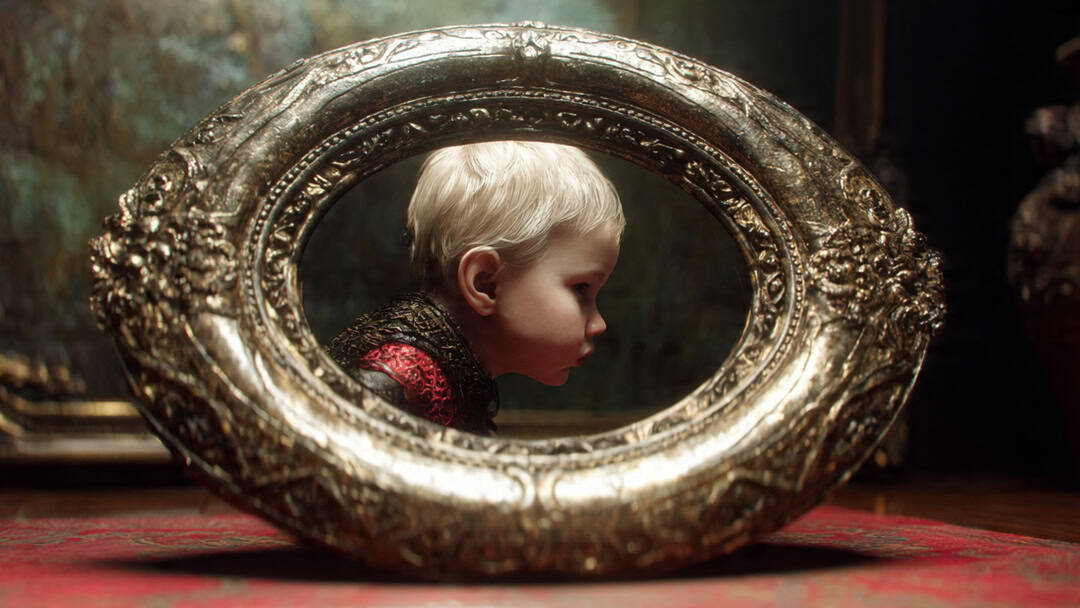
Both tradition and science agree: early exposure to mirrors can be harmful to an infant’s developing brain and emotional well-being.
Waiting until they’re old enough helps ensure their nervous system is ready for the complex task of understanding reflections.
The ancient belief that a mirror could steal a child’s soul has a scientific basis, rooted in the brain’s reaction to visual stimulation.
Many old superstitions persist for a very good reason, although some of them still go unexplained.

A little Aquarius, devoted to writing and embroidery. Through my writing, I hope to empower readers to align with their true selves and navigate life’s mysteries with confidence.