

From ancient times, societies have associated chaos, darkness, and mystery with femininity.
Legendary monsters often had female names, and even in our day, natural disasters are named like women (Katrina, Sandy, Irma…).
This reflects how we view the world and women, and it really has nothing to do with seeing women as lesser or evil, as some interpret it.
This worldview simply recognizes chaos as a vital part of creation, a force that’s misunderstood and beyond us.
1. The Origins of Feminine Chaos
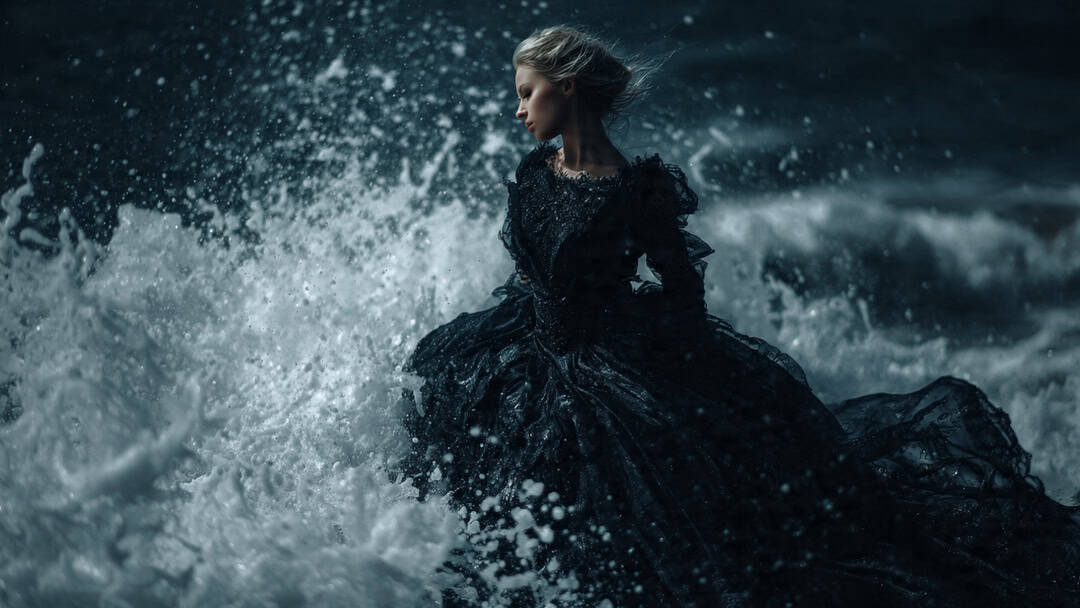
In the distant past, people saw chaos and darkness as female because they represented the unknown.
Women’s ability to create new life was mysterious and inspiring, especially at a time when science still hadn’t uncovered the secrets of this natural process.
No one truly understood how a tiny egg could turn into a human, so it was seen as a sacred secret kept by women.
This divine mystery connected women to the unknown and the universe, making femininity seem unpredictable and even dangerous.
Yet, it was also the source of all creation.
Our ancestors revered this mystery, recognizing that without it, there would be nothing.
This feminine force was so fearsome because it held the key to life’s greatest miracle – birth.
2. Chaos and Mythology

All the major mythologies feature stories about goddesses and monsters that embody chaos and transformation.
A good example is Gaia, the primal earth goddess, or Tiamat, the she-monster from Babylonian myths.
These stories reflect an understanding that the unknown isn’t just destructive but also the birthplace of new worlds.
Women, as creators, were seen as the embodiment of this chaotic force.
Their ability to bring life from darkness was seen as divine.
Mythology often portrays women as powerful and unpredictable, highlighting their ability to both destroy and create.
This portrayal recognizes that chaotic mystery is an essential part of the cycle of life.
3. Light and Order as Masculine Forces

In contrast, masculinity has been historically linked to clarity and order.
The male reproductive system is more straightforward, and so men’s role in creation was easier to observe and understand.
This is how they became symbols of stability, logic, and predictability.
This is just a reflection of biological realities; it was never an attempt to compare male and female and pit them against each other.
The external world was seen as masculine because it was more tangible and measurable.
Meanwhile, women’s internal world remained largely hidden and misunderstood (hormonal mood changes, menstrual cycle, the mystery of pregnancy…).
This was seen as a reflection of the sacred chaos that women embody.
Sadly, it has been misused to diminish women’s roles in society for much of history.
4. The Sacredness of the Feminine

Feminine chaos is unpredictable and scary, but it’s also holy.
Women’s emotional depth, the capacity for transformation, and the power to give life always challenged the simple understanding of the world.
It was always fearsome because it forced us to confront just how little we know about the universe.
It’s all so mysterious and secretive, which is why women were typically thought to hold the keys to both creation and destruction.
For instance, Hecate is the goddess of both death and childbirth, which were equally mysterious.
Historically, this power was feared because it couldn’t be understood.
Recognizing this sacredness brings us one step closer to valuing women not by male standards of logic and predictability, but as the ultimate creators.
It might be hard to go back to this way of thinking, since we’ve managed to demystify everything, but it’s definitely worth a try.
5. Reproductive Power as Mythic Inspiration
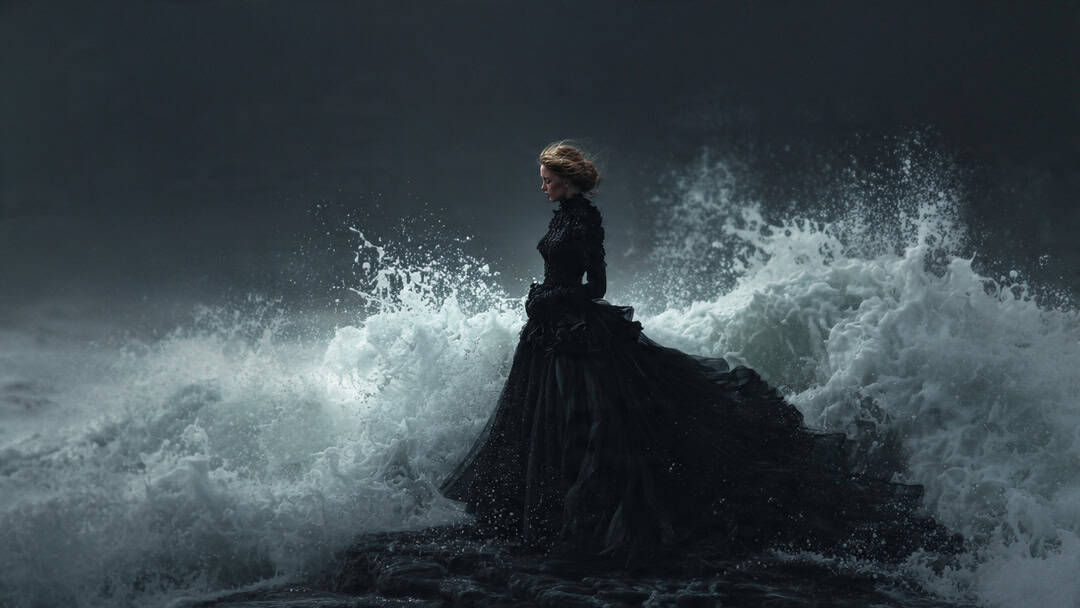
Women’s ability to grow a human in their womb and bring new life into the world sits at the core of pretty much all ancient myths.
From fertility figurines in prehistoric times to mother goddesses across mythologies and religions, this power is central to our collective consciousness.
It’s seen as a force of all creativity, transformation, and life itself.
The process of pregnancy was hidden from view for much of history, it gained a sacred aura.
The reproductive power makes feminine chaos so vital; without it, nothing new can become.
Ancient myths reflect this fact: chaotic and creative forces are intertwined, and only women hold the key to that sacred cycle.
6. The Mystery of Feminine Power

For several millennia now, the feminine power has been hidden and overshadowed by layers of mystery and stigma.
Men being more understandable and predictable was translated as them being better, leaving women’s inner worlds to stay largely unseen.
That creative chaos and hormonal changes stopped being seen as holy, and instead were observed as weakness.
Women’s social roles were more and more controlled, especially with the rise of monotheistic religions, which claimed there was only one creator and that he was a man.
This led to women being seen as less rational, less capable, and the process of life creation as something shameful.
So much so that the ideal mother was presented as a virgin, with all else marked as sin.
As spirituality spreads across the modern world, we seem to be more and more open to loving that ancient, chaotic, and creative side of women.
We even see that in lifestyle and diet tips created specifically for women, in order to honor their unique nature.
Do you think we’re on a good track?

A little Aquarius, devoted to writing and embroidery. Through my writing, I hope to empower readers to align with their true selves and navigate life’s mysteries with confidence.