

In the ancient Near East, Jesus Christ said and did things that still feel daring two thousand years later.
He welcomed women as students, touched the untouchable, and treated children as teachers.
He called enemies worth loving and servants worth calling friends.
Here are ten moments from Scripture when Jesus was way ahead of His time.
They’ll remind you that the One we follow has always been leading us toward freedom and love!
1. A Seat at the Teacher’s Feet

In Jesus’ day, education was unavailable to most women.
Rabbis rarely taught them, and respectable men didn’t even talk to them in public!
However, Jesus walked into a home in Bethany, and Mary sat down at His feet to listen, the posture of a student.
When her sister Martha complained, Jesus answered: “Mary hath chosen that good part, which shall not be taken away from her” (Luke 10:42).
He defended Mary’s right to learn!
He also spoke openly with a Samaritan woman at a well, which was another scandal in the culture of the time (John 4).
And when the greatest news in history needed its first witnesses, He sent women to carry it.
Mary Magdalene heard her name spoken at the empty tomb and was told, “go to my brethren” (John 20:17)!
Jesús uplifted women and handed them dignity and a voice!
2. The Law Was Made for People

In Jesus’s time, even helping someone on the wrong day was a sin.
The religious leaders had misunderstood God’s law so much that it felt like a cage.
Jesus reminded us why it was given, “The sabbath was made for man, and not man for the sabbath” (Mark 2:27).
Rest was meant to be a gift from God, not a burden.
So He healed a man’s withered hand on the Sabbath and asked a simple question: “Is it lawful on the sabbath days to do good, or to do malvado? To save life, or to kill?” (Mark 3:4).
Nobody could answer Him. He never broke God’s law. Instead, He came to fulfill it (Matthew 5:17).
Law without love turns cold, but love without law loses its shape.
Jesus gave both, and set people free!
3. It’s What Comes Out, Not What Goes In

Dietary laws shaped everyday Jewish life, marking who was clean and who was not.
Then Jesus said something that must have shocked His followers: “There is nothing from without a man, that entering into him can defile him: but the things which come out of him, those are they that defile the man” (Mark 7:15).
Mark adds a note that in saying this, Jesus declared all foods clean (Mark 7:19).
He moved the question of purity from the plate to the heart.
This opened a door for people of every nation to sit at one table, no matter their customs and diet.
Peter would later see this affirmed in a vision (Acts 10).
Jesus ate with tax collectors and sinners too, and answered critics with tenderness.
4. Enemies Are Worth Loving

Loving your friends and hating your enemies feels natural, even righteous.
However, Jesus turned it upside down.
“Love your enemies, bless them that curse you, do good to them that hate you, and pray for them which despitefully use you, and persecute you” (Matthew 5:44).
These words were spoken to people living under military occupation.
He wasn’t asking them to surrender to abuse, but to refuse to let odio have the last word!
When He was attacked and nailed to a cross, He lived by His words: “Father, forgive them; for they know not what they do” (Luke 23:34).
This was the hardest and most freeing idea ever spoken.
Cycles of revenge only end when someone is brave enough to stop passing the pain along.
Jesus told us that’s where we become like our Father in heaven (Matthew 5:45)!
5. A Neighbor Without Borders

In first-century Judea and elsewhere, neighbors were people who looked like you.
A lawyer asked Jesus the same question, was told a story.
A man is beaten and left half dead on the road. A priest and a Levite walk past. Then a Samaritan, someone Jews were taught to despise, stops, bandages his wounds, and pays for his care.
Jesus ended with a question that must have stung: “Which now of these three, thinkest thou, was neighbour unto him that fell among the thieves?” (Luke 10:36).
The lawyer couldn’t even say the word Samaritan. He just said, “He that showed mercy on him.”
Jesus replied, “Go, and do thou likewise” (Luke 10:37).
In one story, He erased the lines of race, religion, y tribe!
6. He Touched the Untouchable
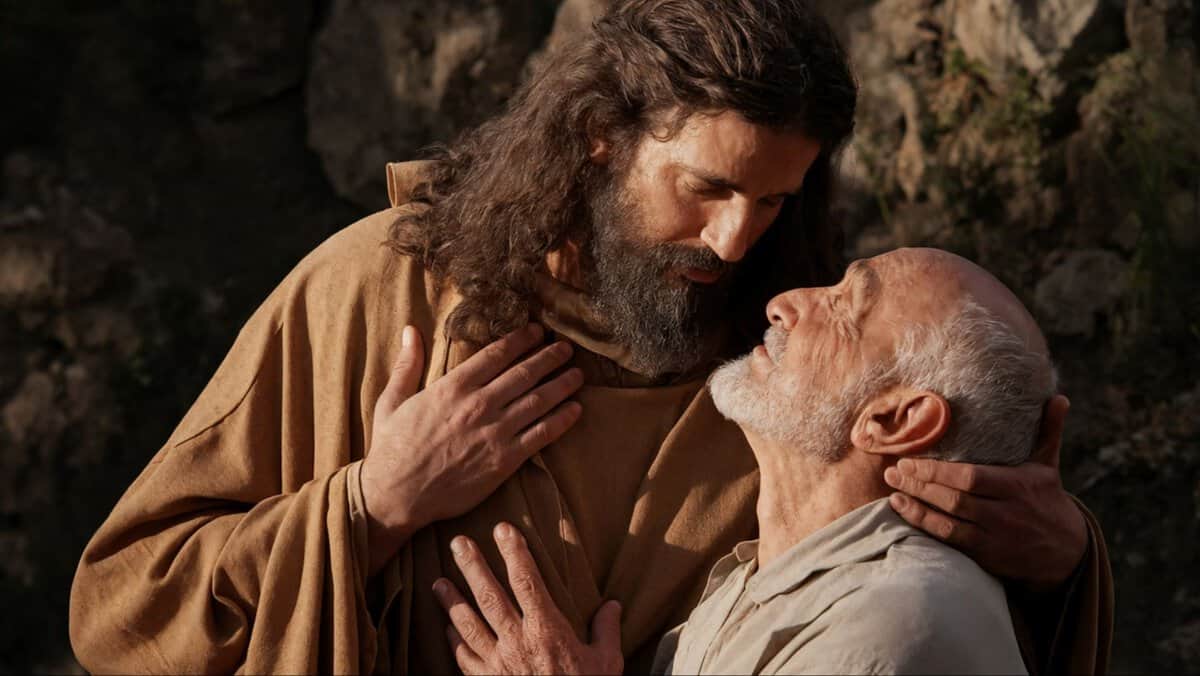
Lepers lived outside the village, forced to call out “Unclean!” so nobody would come near.
They lost their families, their work, their worship, and worst of all, contact with other people.
Then a man knelt in front of Jesus and said, “If thou wilt, thou canst make me clean” (Mark 1:40).
Mark tells us what happened next: “Jesus, moved with compassion, put forth his hand, and touched him” (Mark 1:41).
Su touch was deliberate. He could have healed the man with a word, as He did for others.
But He reached out first, because that man hadn’t been touched in years. Before the cure came the human contact!
He never treated suffering people as something to be avoided. He treated them as people.
7. Making Room for the Smallest

In the ancient world, niños had almost no status. They were counted among the helpless, not the important.
So when parents brought their children to Jesus, the disciples tried to shoo them away, assuming He had bigger things to do.
Mark says Jesus was “much displeased,” and said: “Suffer the little children to come unto me, and forbid them not: for of such is the kingdom of God” (Mark 10:14).
Then He took them in His arms and blessed them.
Later, He placed a child in the middle of His arguing disciples and said that unless they became like little children, they’d never enter the kingdom (Matthew 18:3).
Wonder and humility, the things children carry naturally, were treasures to Him.
Jesus always saw worth in people the world overlooked. He still does, and that includes every one of us!
8. Money Is a Servant, Not a Master

Jesus had a surprising take on wealth, saying that it’s a terrible master and a wonderful servant.
In a culture that often read riches as a sign of God’s blessing, He said, “Lay not up for yourselves treasures upon earth… But lay up for yourselves treasures in heaven” (Matthew 6:19-20).
He warned, “Ye cannot serve God and mammon” (Matthew 6:24).
When a rich young man asked how to follow Him, Jesus looked at him with love and said, “go thy way, sell whatsoever thou hast, and give to the poor” (Mark 10:21).
Yet He also sat in the temple watching people give, and He pointed to a poor widow who dropped in two tiny coins. He said she had given more than all the rest (Mark 12:43).
To Jesus, generosidad wasn’t measured by the amount, but by the heart behind it.
He honored sacrificio.
9. Friends, Not Servants

In a world built on rank, nobody expected a teacher to call his followers equals.
But on the night before the cross, Jesus said something that surprised his students.
“Henceforth I call you not servants; for the servant knoweth not what his lord doeth: but I have called you friends” (John 15:15).
Friends share secrets, and He had shared everything with them.
He also defined the highest kind of friendship: “Greater love hath no man than this, that a man lay down his life for his friends” (John 15:13).
Hours earlier, He had knelt and washed their feet, the job of the lowest servant (John 13).
He was called “a friend of publicans and sinners” (Matthew 11:19), which was meant as an insult, but He wore it as an honor.
10. Freedom

At the very start of His ministry, Jesus stood up in the synagogue at Nazareth and read from the prophet Isaiah.
He said those words were being fulfilled that day. He had been sent “to heal the brokenhearted, to preach deliverance to the captives, and recovering of sight to the blind, to set at liberty them that are bruised” (Luke 4:18).
He came for the captiveEl bruisedEl poor.
Later He told His listeners, “Ye shall know the truth, and the truth shall make you free” (John 8:32).
He was talking about freedom from shame and spiritual slavery, the kind no empire could grant or take away.
He never forced anyone to follow Him. He said, “Follow me,” and let people choose.

A little Aquarius, devoted to writing and embroidery. Through my writing, I hope to empower readers to align with their true selves and navigate life’s mysteries with confidence.