
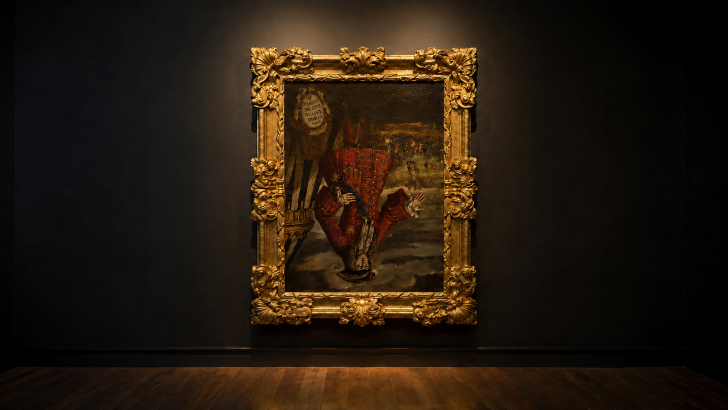
Inside the Museum of Fine Arts in Xàtiva, Spain, one royal portrait looks very different from the rest.
King Philip V appears in full court dress, surrounded by the usual signs of authority. But the entire canvas hangs upside down.
It isn’t a mistake, and the artist didn’t paint it that way.
The reason goes back to a war that ended with the destruction of a city. The act of revenge came more than two centuries later.
1. He’s the Only King Hanging Upside Down
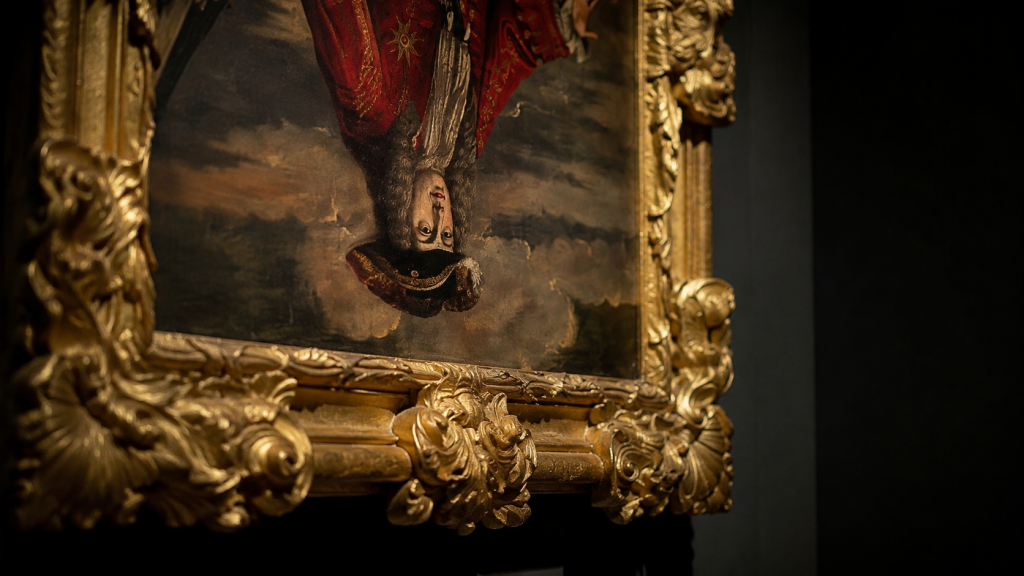
The portrait occupies a prominent place in the museum’s collection of royal paintings.
Philip is shown standing in an elaborate coat, with one arm extended toward a battle scene in the background.
Turned the right way up, it would look like a fairly conventional image of an eighteenth-century monarch. Hanging upside down, it’s another story entirely.
The museum is located in the Casa de l’Ensenyança, a former school building in the historic center of Xàtiva.
Some people often place the portrait in the nearby L’Almodí Museum. That isn’t exactly wrong—it was displayed there before the city’s fine arts collection moved to its current home.
The unusual display has made the painting far better known than its artistic quality probably would have managed on its own.
2. Spain Was Left Without a Clear Heir
The story begins in 1700, when King Charles II of Spain died without children.
Charles had named Philip of Anjou as his successor. Philip was a grandson of the French king Louis XIV, and he took the Spanish throne as Philip V.
He became the first Bourbon king of Spain.
That choice worried several European powers. A close connection between the French and Spanish crowns could shift the balance of power across Europe.
A rival claim soon formed around Archduke Charles of Austria, a member of the Habsburg family that had ruled Spain before Philip. What followed was the War of the Spanish Succession.
It was a European conflict, but it also became a civil war inside Spain. Different regions backed different claimants, and the choice could carry serious consequences once one side took control.
3. Xàtiva Backed Philip’s Rival
Xàtiva, in the Kingdom of Valencia, supported Archduke Charles.
For many people in the territories of the old Crown of Aragon, the Habsburg claim seemed more likely to protect their traditional laws and political arrangements.
Philip’s Bourbon rule looked more centralized. His French background also created plenty of suspicion.
Local politics were more complicated than a simple city-wide decision. Different social groups had their own reasons for choosing sides. Still, Xàtiva became firmly associated with the Habsburg cause.
That placed the city in a dangerous position.
Xàtiva was fortified and strategically important. It also refused to surrender easily.
Once the Bourbon army gained the advantage in the region, the city wasn’t likely to receive gentle treatment.
4. The Defeat at Almansa Left the City Exposed
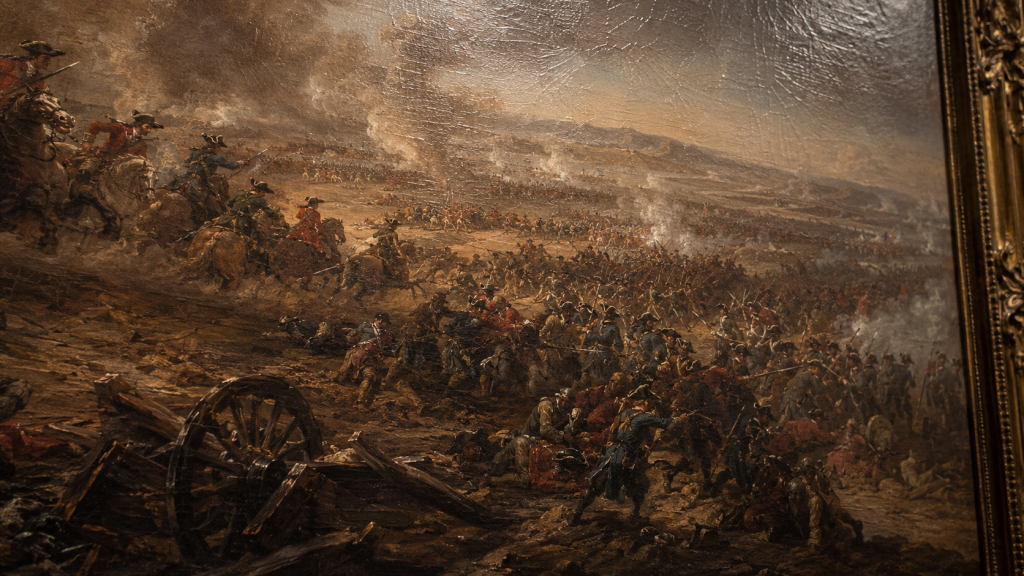
On April 25, 1707, Bourbon forces defeated the allied Habsburg army at the Battle of Almansa.
The victory opened the way into Valencia. Xàtiva remained one of the places still resisting, so troops under the French commander Claude François Bidal d’Asfeld moved against it.
The city held out through a siege, but Bourbon artillery eventually broke through its defenses.
Xàtiva was captured in June.
The punishment, however, went well beyond an ordinary military occupation.
Under Philip V’s authority, residents were expelled and much of the city was burned. The destruction also worked as a warning to other towns that might continue resisting Bourbon rule.
Even the city’s name was taken from it. Xàtiva became San Felipe, also recorded more formally as Colonia Nueva de San Felipe.
The old name eventually returned, but the events of 1707 never really left the city’s identity.
5. Then Xàtiva Commissioned His Portrait
This is the part of the story that can seem confusing.
A city destroyed under Philip’s authority somehow ended up owning a large portrait of him. And the painting wasn’t captured or donated years later.
The city council commissioned it around 1719.
By then, the political situation had changed. Philip had won the Spanish throne, and a Bourbon-aligned administration was running the renamed city.
A royal portrait in the city hall showed loyalty to the ruling monarch and the new political order.
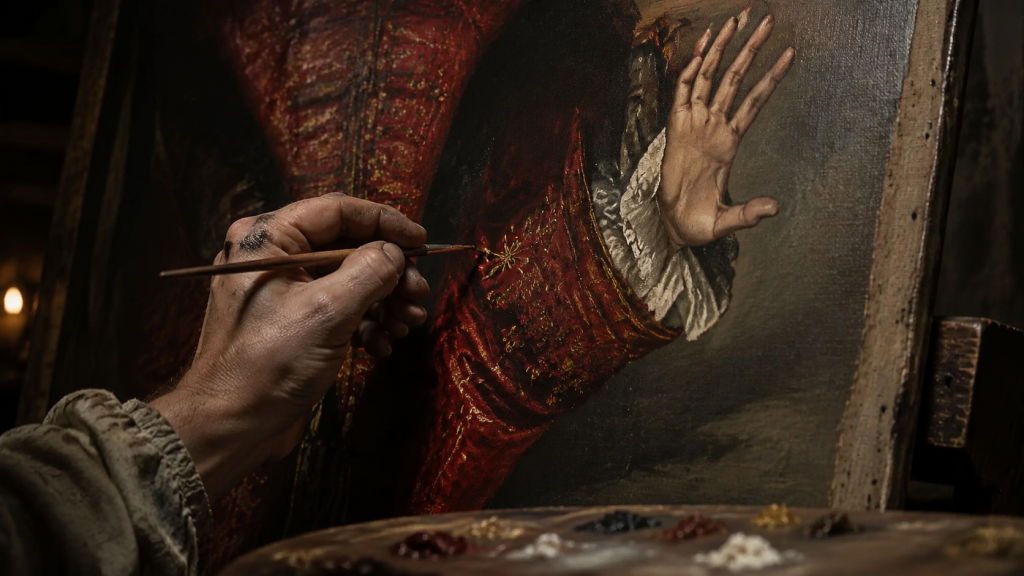
Local painter Josep Amorós produced the work. He also painted other members of the royal family for the municipal collection.
Philip appears in formal court clothing, gesturing toward the Battle of Almansa in the background. The image presents him as the man behind the victory that had decided Xàtiva’s fate.
For generations, though, the portrait hung upright. Whatever local residents thought of the king, the painting itself remained a normal piece of royal display.
6. A Curator Finally Turned Philip Upside Down
That changed in the mid-1950s.
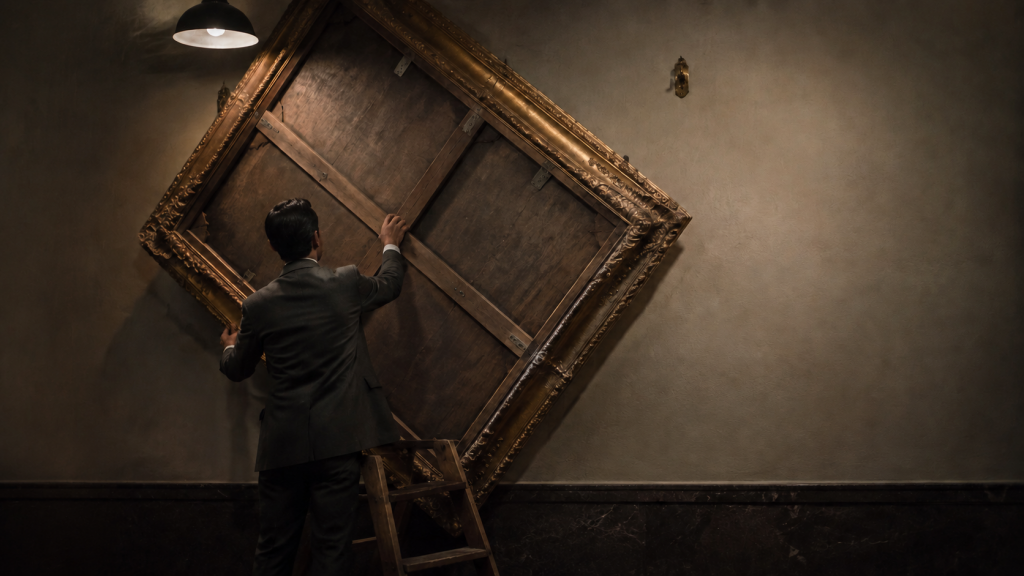
Carlos Sarthou Carreres, the municipal museum’s director and curator, decided to hang Philip’s portrait headfirst. Most detailed accounts date the act to 1956, although some sources place it a little later.
Sarthou was born in Vila-real, another Valencian city damaged by Bourbon troops. He had also developed a close connection with Xàtiva.
Turning the canvas was his symbolic response to what had happened to both places.
So the famous display wasn’t an angry gesture made just after the city burned. More than two hundred years separated the destruction from the moment the frame was inverted.
That distance is part of what makes the act so interesting. Sarthou took a conventional portrait created to honor royal power and changed its meaning without touching the paint.
7. The Portrait Has Never Been Turned Back
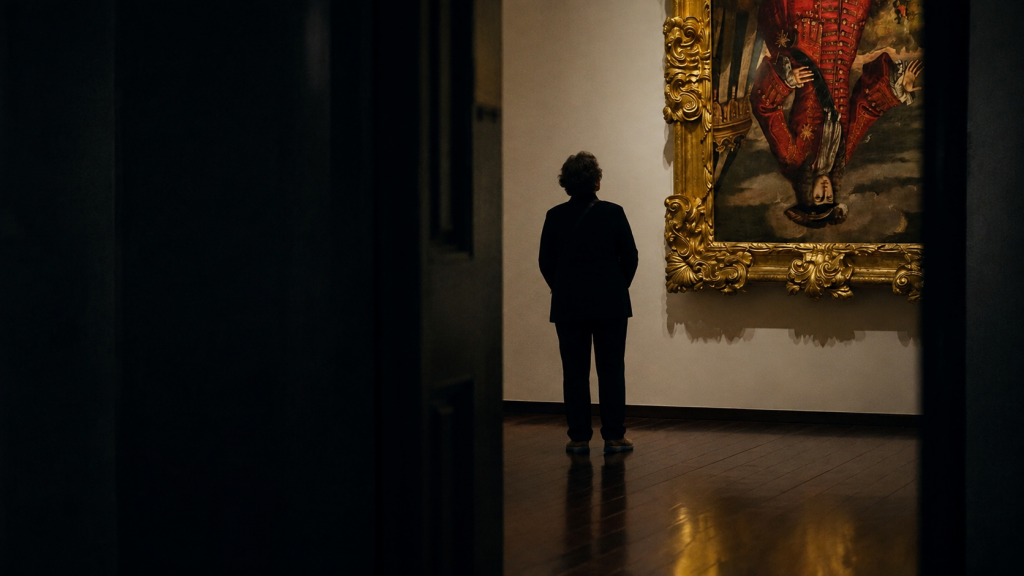
The upside-down king eventually became one of Xàtiva’s best-known images.
There have been occasional suggestions that the portrait might be returned to its normal position, sometimes tied to the idea of a royal apology. But those proposals have gone nowhere.
Today, the painting is usually understood as a local act of memory rather than a serious attempt to punish a man who died centuries ago. It keeps the destruction of 1707 visible in a very simple way.
The display also shows how a museum can change the meaning of an object.
Amorós painted a respectful royal portrait. Sarthou turned the same canvas into a public insult, and he did it without adding a single mark.
Visitors now find Philip V in a room devoted to Spanish art at Xàtiva’s Museum of Fine Arts. The frame is ornate, and the king is formally dressed.
The canvas is still upside down.
