

The story of one of the most mysterious tribe disappearances is still a topic full of speculations, myths, and unanswered questions.
Who were the Khegayk? How could they simply vanish, and what caused their disappearance? Is there a deeper, more mystical story tied to them?
Let us examine what could’ve happened and what their tribe’s story teaches us today.
A Tribe Lost to Time

The Khegayk were a Circassian tribe that lived on the northeastern portion of the Black Sea coast. Their people were known for their strength, traditional customs, and tight-knit communities.
The internal records of the Khegayk’s extinction are relatively sparse; therefore, historians have difficulty determining when the Khegayk eventually disappeared.
Many historians believe that disease, war, and forcibly relocating the Khegayk contributed to their extinction, while others attribute the gradual process of assimilation as the ultimate cause of their loss of identity.
In addition to the very few surviving records left about the Khegayk’s existence, the complete disappearance of an entire population from time is a haunting reminder of the potential for large conflicts to completely eliminate the cultural survival of smaller communities.
The Impact of Conflict and Forced Migration

The Khegayk were greatly impacted by the 19th century’s violent upheaval, most notably during the Russian-Circassian War. All tribes in the Circassian region experienced displacement and destruction of homes, forcing them to migrate to new areas.
As many Khegayk people left their homeland and never returned, they were lost, and their roots were severed. This loss of ancestral homelands and cultural roots creates a gap in continuity; thus, their identities faded.
Furthermore, the Khegayk people do not just no longer exist; their existence is a testimony to how war can result in the loss of history, language, and entire populations in one generation.
Cultural Absorption and the Loss of Identity
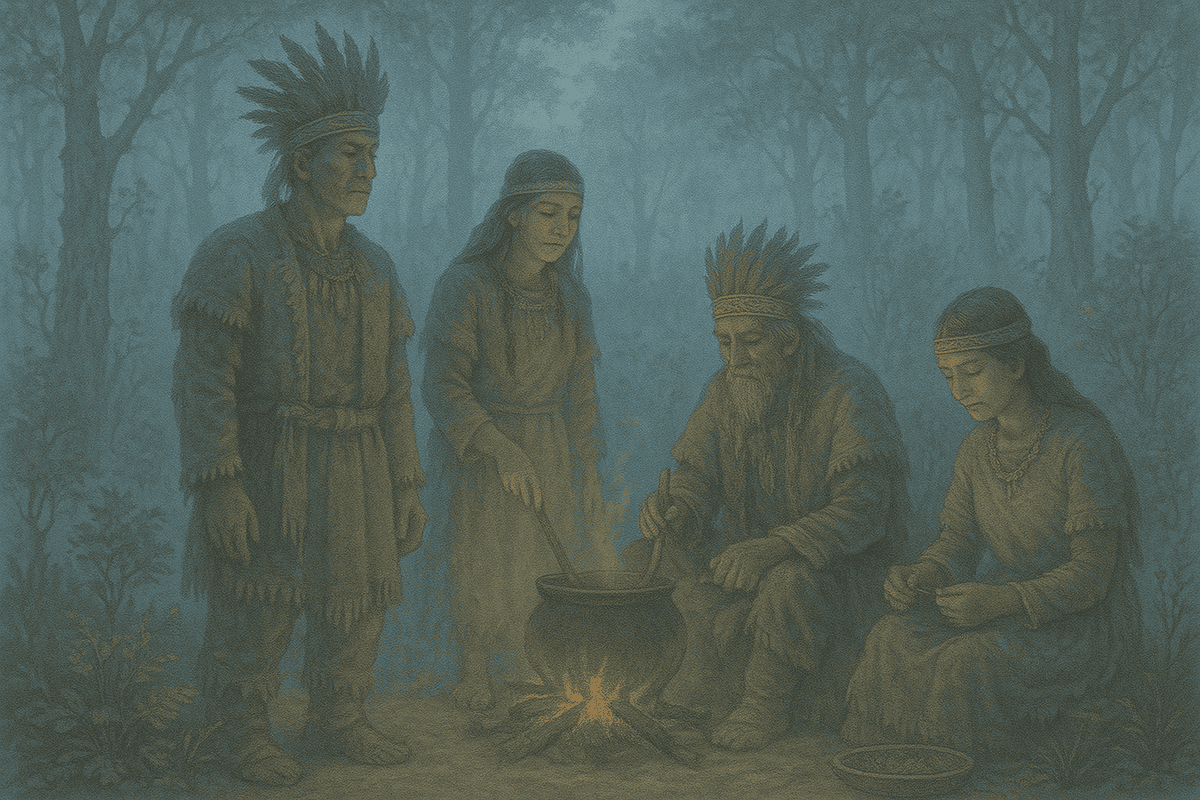
War and displacement forced even the Khegayk that survived into extinction. Many of them became a part of other tribes or communities and thereby lost their unique customs, dialects, and social systems.
Eventually, after many generations of intermarriage and migration for practical reasons, they blended their cultural identity with other communities through various means.
Religious practices, as well as their name, would eventually be replaced and changed over time, and no longer recorded in any formal records. This illustrates how extinction does not necessarily happen violently; it can also happen silently.
When a people lose the ability to pass down their language and lore to their descendants, their identity is gone, even though their descendants are still here. The Khegayk experience shows that cultural uniqueness can fade away slowly without anyone realizing until it’s too late.
The Silence Left in Historical Records

The Khegayk disappearance remains a mystery due to the absence of any documentation about the Khegayk.
Written documentation is limited, with most of the information coming from neighboring tribes, foreign explorers, and comments by military reports that are not comprehensive enough to allow historians to get a detailed picture of the Khegayk society.
Historians are left trying to solve a jigsaw puzzle with missing pieces, which suggests that the Khegayk people were overrun by larger forces and had no opportunity to document their own existence.
Similar erasures of documentation have occurred to many Indigenous groups due to war and colonization.
At the time of Khegayk’s disappearance, the Khegayk were absent from history books because of this and also due to the fact that they did not possess the means or political power to protect, preserve, and document their stories.
Why Their Disappearance Matters Today

The Khegayk’s extinction is more than a historical curiosity; it serves as a poignant reminder of the fragility of cultural diversity, as their painful demise is indicative of broader struggles faced by all marginalized populations due to displacement, assimilation, and/or political oppression.
By studying the Khegayk, we are reminded of the importance of every culture, including those that only leave behind faint evidence through the passage of time.
In doing so, we are reminded to show compassion to those currently in peril, while also respecting the traditions of those who overcame adversity. Keeping the Khegayk memory alive is a way to honor the millions of people who have been forgotten in the annals of history.
Lessons We Can Learn From a Vanished People

The Khegayk’s story invites us to reflect on identity, memory, and the importance of safeguarding cultural heritage. It shows how easily a people can fade when they lose their land, language, or collective strength.
Their disappearance also highlights the resilience of communities; even when a tribe dissolves, its descendants carry fragments of forgotten stories within them. Spiritually, their fate reminds us of the responsibility we have to protect vulnerable cultures today.
When we honor the past, we help prevent history from repeating itself. The Khegayk may be gone, but the lessons they leave behind remain deeply relevant.

Born and raised in Bosnia and Herzegovina. Ever since I was a little girl, my imagination knew no bounds. I remember vividly how I’d scribble down short stories, each page bursting with adventures and characters conjured up from the whimsy of my mind. These stories weren’t just for me; they were my way of connecting with my friends, offering them a slice of my fantasy world during our playtimes. The joy and excitement on their faces as we dived into my fictional realms motivated me to keep writing. This early passion for storytelling naturally evolved into my pursuit of writing, turning a childhood hobby into a fulfilling career.