
A prayer leaves the human mouth as breath.
But in one strand of Jewish mystical tradition, it doesn’t arrive in heaven that way.
Sandalphon is waiting—an angel tall enough to touch the highest living creatures, gathering earthly prayers and turning them into crowns for God.
1. He Began as a Wheel
Sandalphon doesn’t appear by name in the Bible. The trail begins instead with one of its strangest visions.
In the Book of Ezekiel, the prophet sees four living creatures carrying the divine throne. Beside them are enormous wheels, alive with movement and covered in eyes.
Then Ezekiel notices one wheel standing upon the earth.
Centuries later, the rabbis returned to that image. In the Babylonian Talmud, Rabbi Elazar interprets the wheel as an angel whose feet remain on Earth while his head reaches the heavenly creatures above.
A second teaching gives the angel a name.
Sandalphon.
So he emerged from a single mysterious object in Ezekiel’s vision, as though readers stared at the wheel long enough for an angel to rise out of it.
2. They Measured Him in Centuries
The Talmud doesn’t tell us Sandalphon’s height in feet or cubits.
It says he stands five hundred years’ journey above his fellow.
That’s impossible to picture, which is exactly the point. Sandalphon belongs to a heavenly world where ordinary measurements break down.
His feet can touch the earth while his head reaches the hayyot, the living beings surrounding God’s throne.
And those beings are already immense.
Calling Sandalphon a giant almost makes him sound too ordinary. Giants still fit inside landscapes. This angel becomes part of the landscape itself, stretching through layers of creation that a human being couldn’t cross in a lifetime.
His size also suits the role later tradition gives him. Prayer begins in the smallest possible place—inside one person—and has to travel toward something infinite.
Sandalphon fills the distance between them.
3. He Waited Behind the Heavenly Chariot
Sandalphon became one of the great figures of Merkabah mysticism, named for the divine chariot in Ezekiel’s vision.
But he doesn’t sit upon the throne. He stands behind the chariot.
From there, the Talmud says, he weaves crowns for his Creator.
The image carries the language of kingship into heaven. A king wears a crown because others recognize his rule, and mystical tradition imagined that recognition taking visible form around God.
Scholar Arthur Green traces this strange theme across centuries of Jewish writing in Keter: The Crown of God in Early Jewish Mysticism.
The crown became a way of imagining what human worship could add to heaven.
And that’s the beautiful reversal at the center of Sandalphon’s story. People pray because they need something from God. Yet their prayers rise upward and become something given back.
4. But Even He Couldn’t Reach God
The rabbis immediately found a problem with their own image.
How could Sandalphon place a crown on God’s head?
Another verse in Ezekiel praises God’s glory “from His place,” language taken to mean that the divine location remains unknown. Even the angels can’t simply walk up and find it.
So the Talmud gives Sandalphon a limit.
He finishes the crown and speaks a divine name over it. Then the crown rises by itself and settles where the angel himself can’t go.
That detail changes everything. Sandalphon isn’t powerful because he has unrestricted access to God. He can stand higher than other angels and still reach a boundary he can’t cross.
His job is to prepare the offering.
The last part of the journey belongs to the divine name—and to mystery.
5. Then the Crown Filled With Prayer
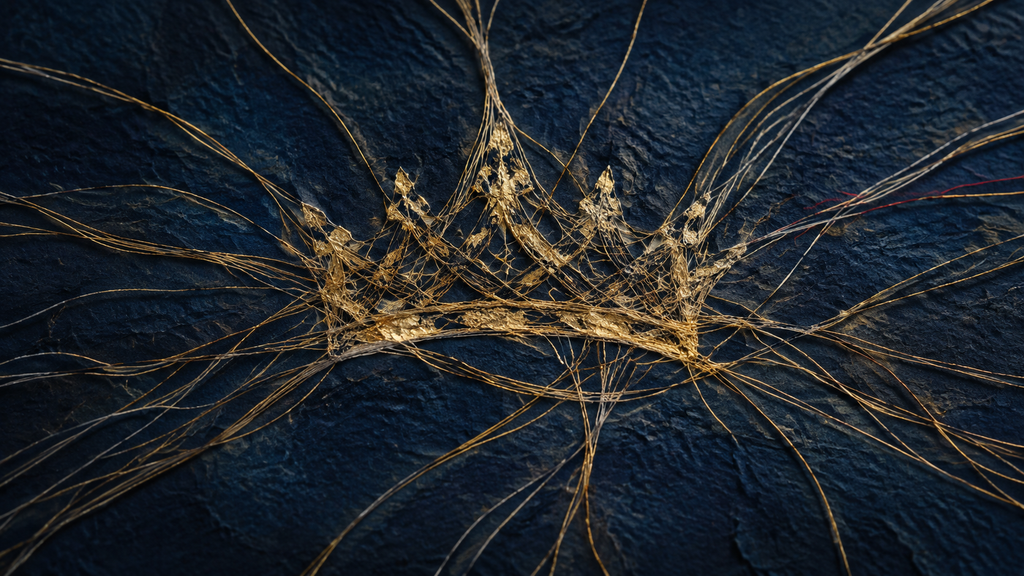
The earliest Talmudic passage says Sandalphon makes crowns, but it doesn’t clearly say what they’re made from.
Later Merkabah literature supplied the answer: the prayers of Israel.
In these traditions, words spoken in synagogues don’t vanish when the voices stop. Sandalphon gathers them, binds them together, and reshapes them into a crown for the divine throne.
について Encyclopaedia Judaica describes him almost as a heavenly translator, changing earthly language into a form heaven can receive.
Sandalphon isn’t simply carrying requests to a higher office. And the old tradition doesn’t promise that every request will return with the answer someone hoped for. The prayer itself becomes the gift.
Even a frightened or unfinished prayer can join something larger than the person who spoke it.
By the time it reaches the throne, human need has become divine splendor.
6. Then People Remembered Elijah
Sandalphon didn’t originally come with a human past. But later Jewish mystics gave him one.
The prophet Elijah never receives an ordinary death in the biblical story. A fiery chariot appears, and a whirlwind carries him into heaven.
That open ending left plenty of room for tradition to wonder what he became.
One answer was Sandalphon.
The sixteenth-century Kabbalist Moses Cordovero identified the towering angel with Elijah after his transformation, according to the Jewish Encyclopedia.
Later tradition also placed Sandalphon beside Metatron, another exalted angel linked in mystical tradition with a human being who never died in the usual way: Enoch.
The two became heavenly counterparts. Even Sandalphon’s name was explained as a form of the Greek word for a fellow or “co-brother,” tying him more closely to Metatron.
But these are layers added across time, not one biography preserved from the beginning. First came the wheel. Much later, the wheel was given a life on Earth.
7. A Poet Turned the Crowns Into Flowers
Sandalphon eventually traveled far beyond the old mystical writings.
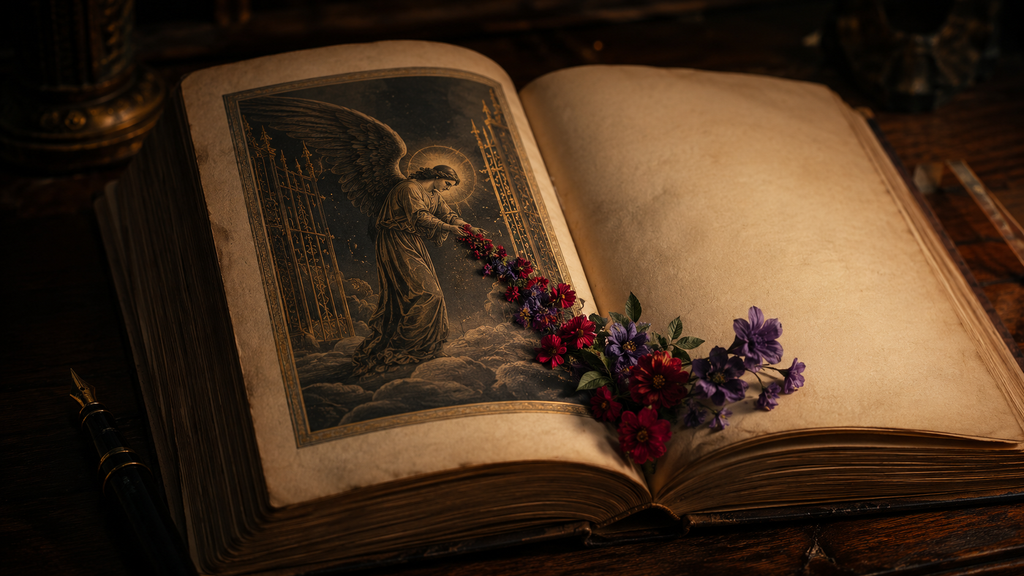
In 1858, Henry Wadsworth Longfellow placed him at the center of a poem simply called “Sandalphon”.
The poet kept the angel impossibly tall, but changed what happened in his hands.
Sandalphon listens to prayers rising from people broken by grief. Then the prayers become flowers—purple and red—and their fragrance drifts through the heavenly city.
Longfellow openly calls the story a fable. Still, he admits that it haunts him.
Perhaps that’s because the legend offers something facts alone can’t.
People rarely pray in perfect language. They repeat themselves. They lose their place. Sometimes all they can offer is a name, a fear, or a few words spoken into darkness.
Sandalphon’s story says the words don’t have to arrive beautifully.
He’ll take care of that.
The prayer leaves Earth carrying all its human confusion. Somewhere on the impossible climb toward heaven, the giant angel gathers it into his hands.
And what reaches God is a crown.
