
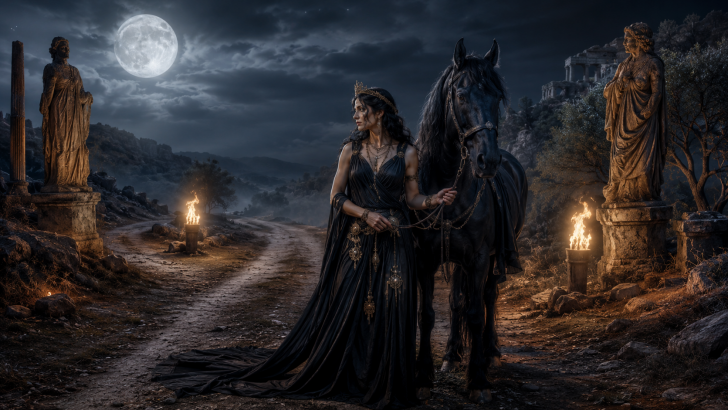
Few goddesses in Greek mythology are as mysterious and fascinating as Hecate. She is truly interesting.
Often associated with magic, crossroads, spirits, the night, and hidden knowledge, Hecate occupied a unique place in the ancient Greek world.
While she was not the ruler of the underworld like Hades, she was closely connected with ghosts, liminal spaces, and the boundaries between the worlds of the living and the dead.
Because of these associations, many animals became linked to her worship and symbolism. Some accompanied her through the night.
Others were believed to carry messages between worlds or serve as guardians of sacred places.
Together, they helped shape the image of one of mythology’s most powerful and enigmatic goddesses.
Here are ten animals connected to Hecate.
1. Dogs Were Hecate’s Most Sacred Animals
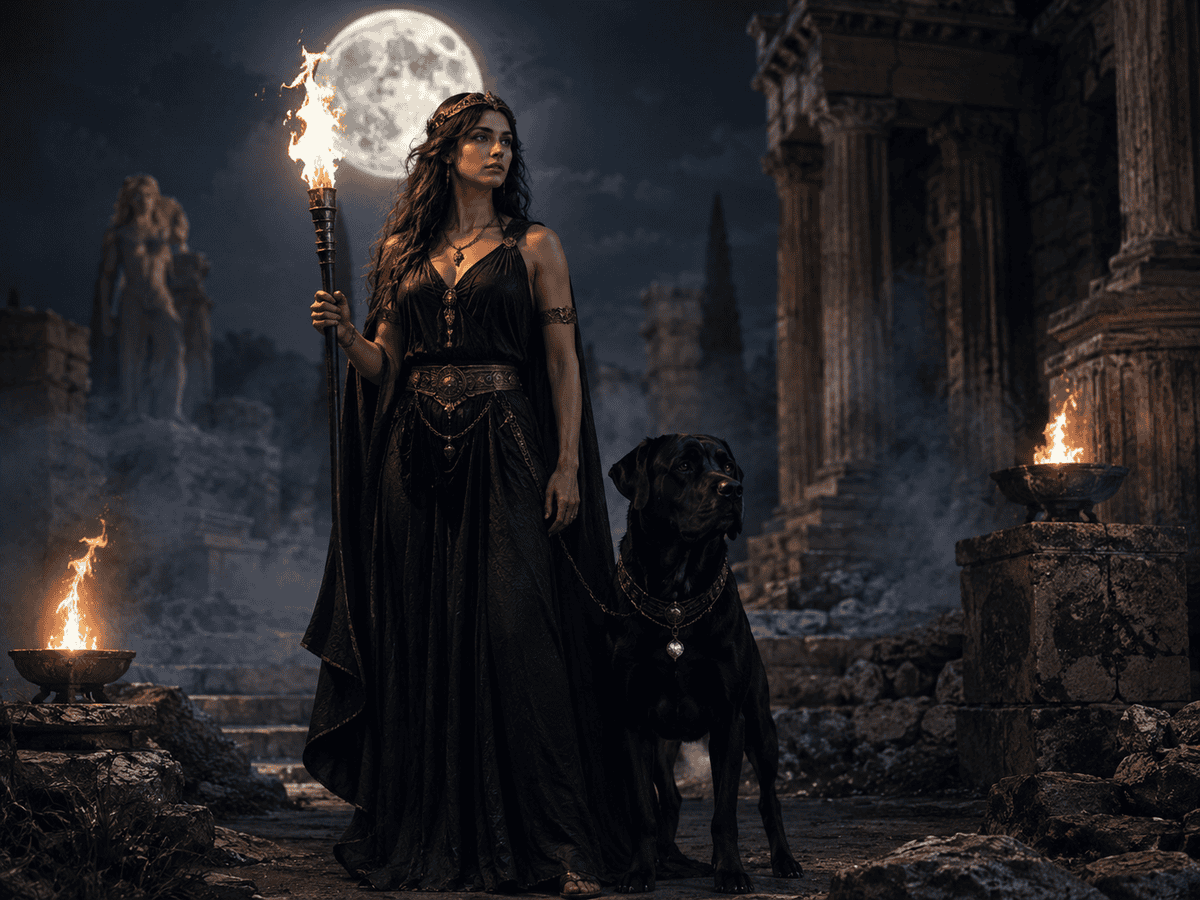
No animal is more closely associated with Hecate than the dog.
Ancient sources frequently mention dogs accompanying the goddess during her nightly journeys, and the sound of barking dogs was sometimes believed to signal her presence nearby.
Black dogs held a particularly strong connection with her worship.
Some rituals dedicated to Hecate involved offerings of dogs, reflecting their sacred status within her cult.
The animal’s role as guardian and protector made it a fitting companion for a goddess associated with thresholds and boundaries.
Dogs also possess keen senses that often seem almost supernatural to humans.
Their ability to detect unfamiliar sounds and movements likely strengthened their connection with spirits and the unseen world.
Even today, dogs remain one of the symbols most commonly linked with Hecate in modern interpretations of Greek mythology.
2. Owls Represented Wisdom and Night Vision
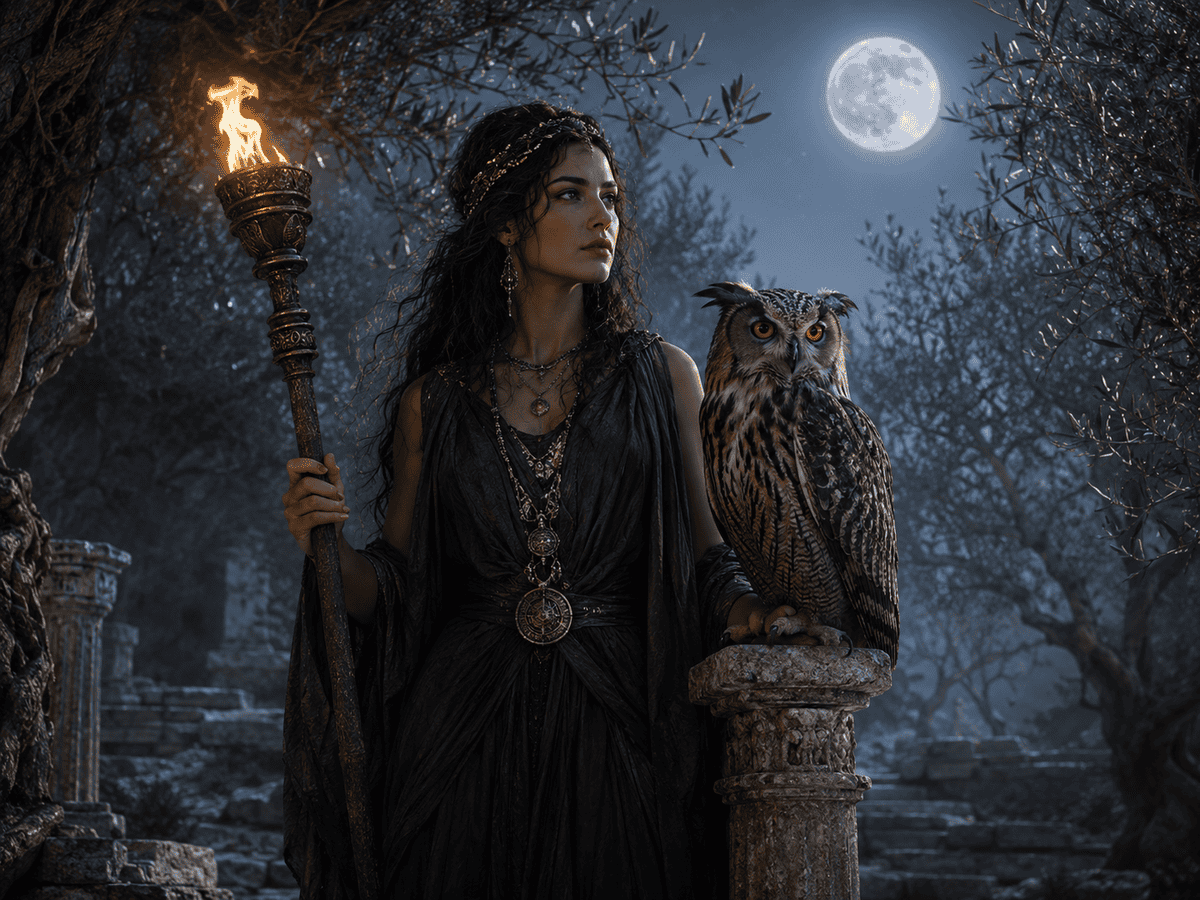
Owls frequently appear alongside deities connected with wisdom and mystery, and Hecate was no exception.
Because owls thrive in darkness and possess remarkable night vision, ancient people viewed them as creatures capable of seeing what others could not.
This ability made them natural companions for a goddess associated with secrets and hidden knowledge.
The owl’s silent flight added to its supernatural reputation. Many believed the bird moved effortlessly between the visible and invisible worlds.
Its watchful eyes and nocturnal habits reflected Hecate’s own role as a guide through darkness and uncertainty.
For worshippers seeking wisdom or protection during difficult times, the owl became a symbol of insight and awareness.
3. Serpents Symbolized Transformation and Hidden Wisdom
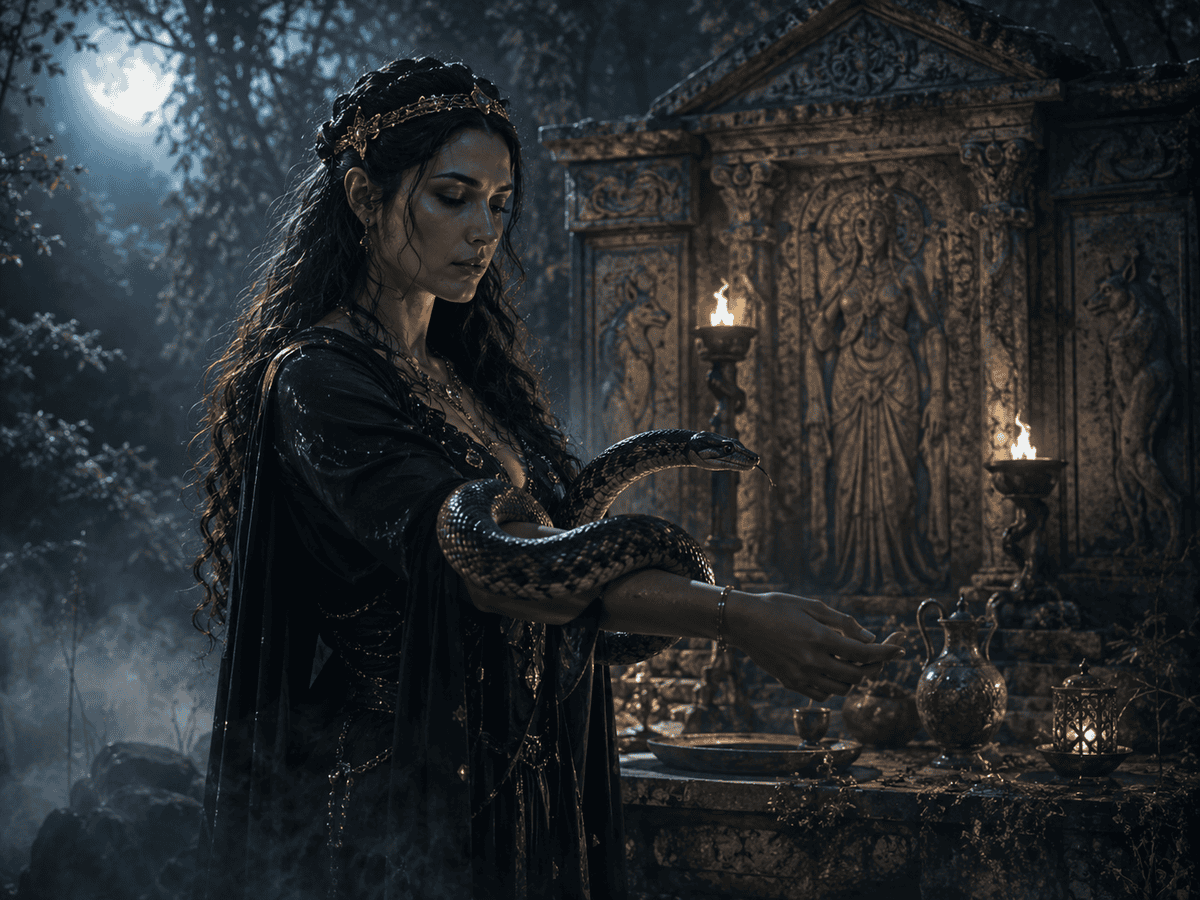
Snakes held sacred meaning in many ancient religions, and Hecate was often associated with them.
Ancient artwork sometimes depicts the goddess carrying serpents or wearing serpent imagery.
Their ability to shed their skin made snakes powerful symbols of rebirth and transformation.
Because Hecate guided people through periods of change and transition, the symbolism fit her perfectly.
Serpents also lived close to the earth and frequently appeared in places associated with mystery, such as caves, ruins, and hidden spaces.
Many cultures connected them with wisdom and secret knowledge. Their presence in Hecate’s symbolism reflected her role as a keeper of mysteries.
4. Horses Connected Her to Travel and Crossroads
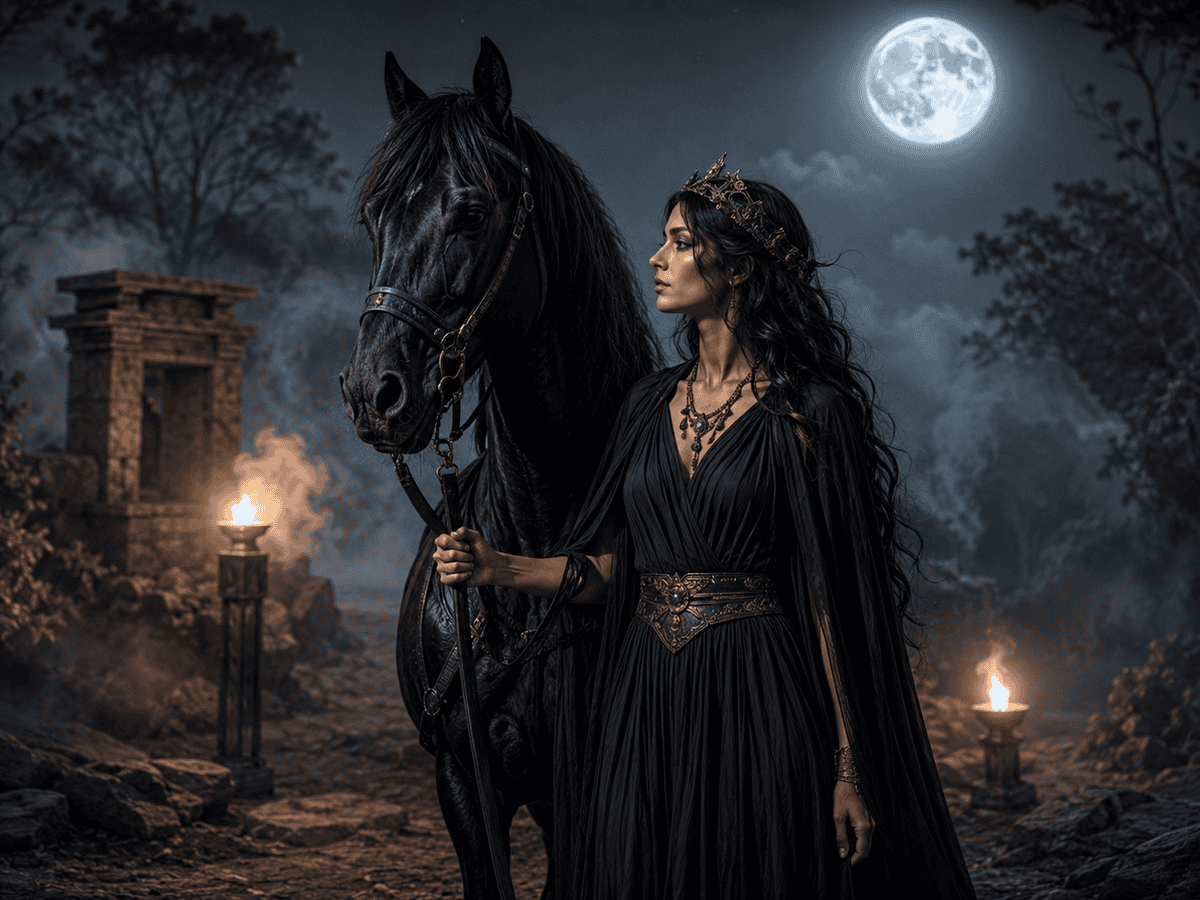
Although less famous than her dogs, horses also shared important connections with Hecate.
The goddess was often associated with crossroads and journeys, places where travelers faced important choices and uncertain futures.
Horses represented movement, transition, and guidance along these paths. Their speed and strength reflected her ability to travel between different realms.
Some ancient depictions portray Hecate alongside horses or riding in chariots during her nighttime travels.
Because crossroads were considered sacred spaces under her protection, animals associated with travel naturally became part of her symbolism.
The horse represented both physical journeys and personal transformations.
5. Ravens Carried Messages From the Unknown
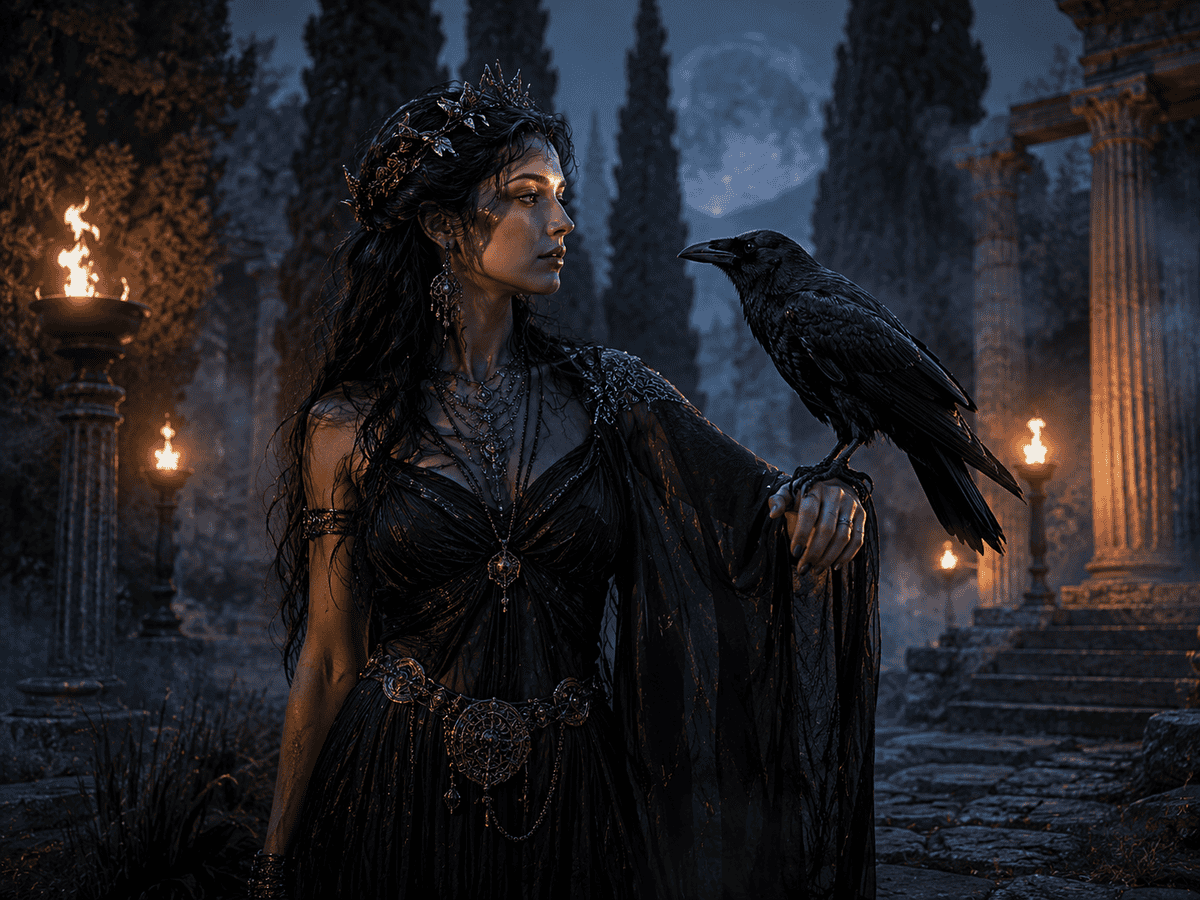
Ravens have long been associated with prophecy, intelligence, and communication with unseen worlds.
Their dark feathers and scavenging habits often connected them with death and mystery in ancient cultures.
For a goddess who moved between life and death, the raven became a fitting companion.
Ancient people admired the bird’s intelligence and ability to thrive in harsh environments.
Its appearance near battlefields and burial places strengthened its connection with spirits and the afterlife.
Many later traditions associated ravens with magical knowledge and hidden messages.
These qualities aligned closely with Hecate’s reputation as a goddess of prophecy and secret wisdom.
6. Polecats Were Linked With Magic and Witchcraft
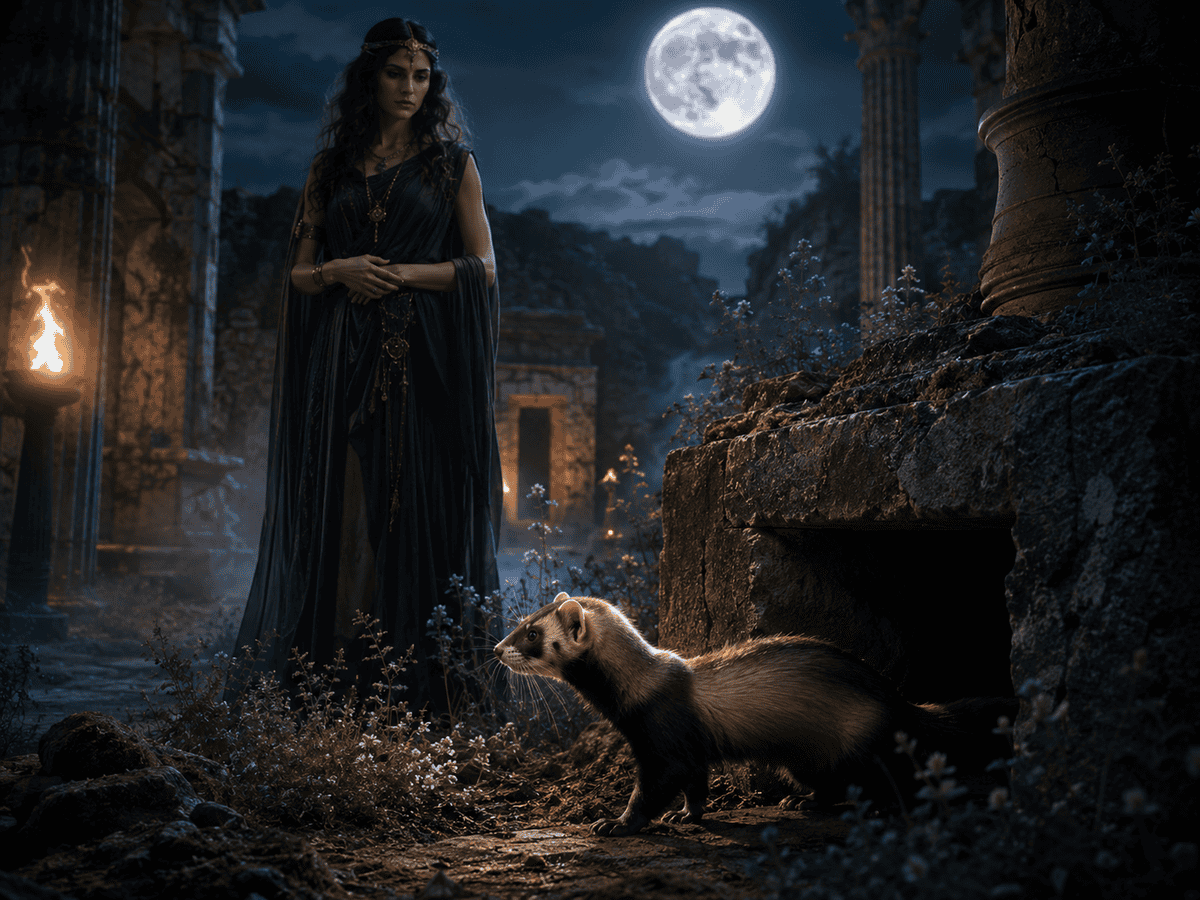
One of the more unusual animals associated with Hecate was the polecat.
Ancient stories sometimes linked these small nocturnal creatures with magic and transformation.
Some later traditions even claimed that witches or servants of Hecate could take the form of polecats.
Since polecats moved quietly through darkness and often remained hidden from human sight, they became symbols of secrecy and mystery.
Although not as famous as dogs or owls, they occupied an interesting place within traditions surrounding the goddess and her magical followers.
7. Frogs Represented Transformation and Hidden Worlds

Frogs frequently appear in mythology as creatures of change because they move between water and land during their lives.
This ability to exist in different environments made them symbols of transition and transformation.
Hecate’s role as a guardian of boundaries and crossroads connected naturally with these ideas.
Frogs were also active at night and often appeared near marshes, springs, and hidden places associated with mystery.
For those who worshipped Hecate, the frog could symbolize movement between different states of existence and the possibility of renewal after difficult periods.
8. Bats Reflected Her Connection With the Night
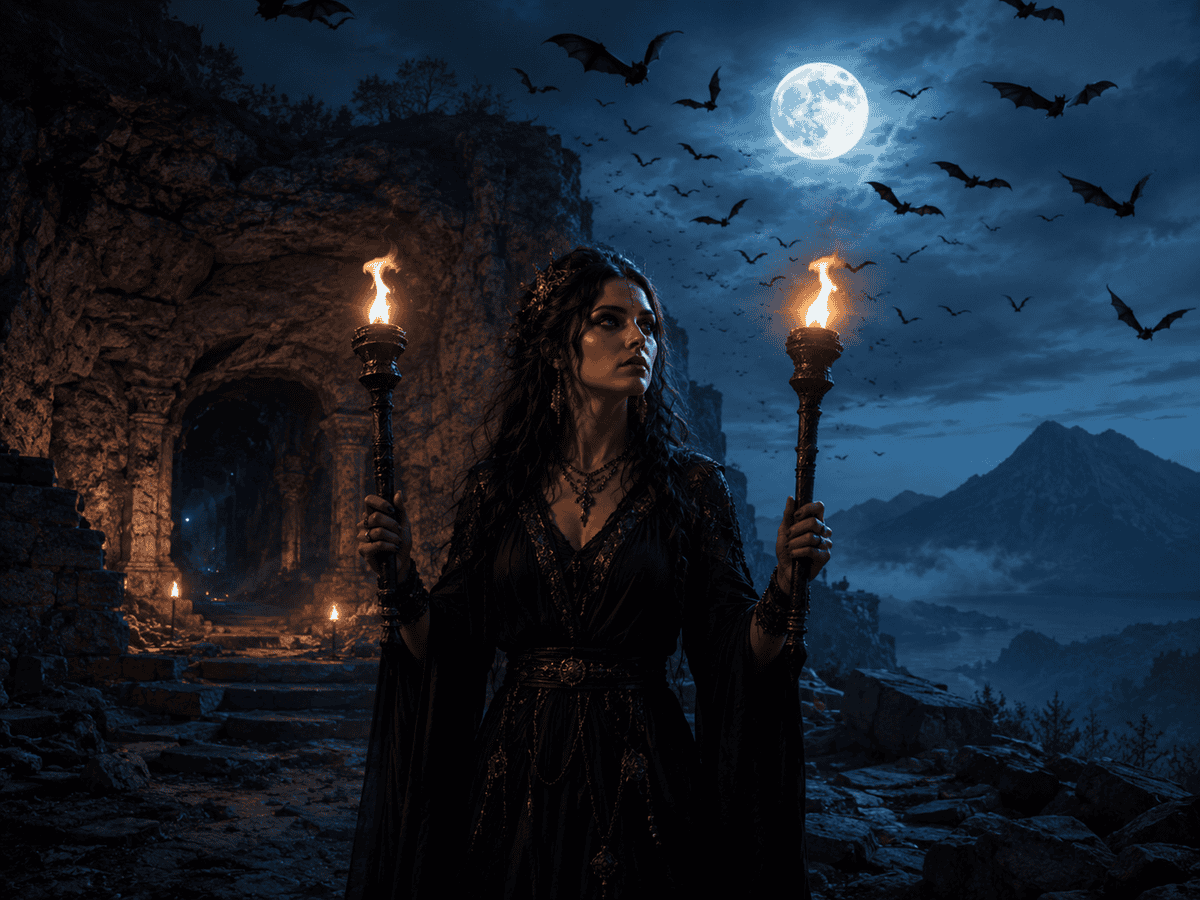
Bats rarely appear in surviving Greek myths, but their nocturnal habits and mysterious appearance eventually linked them with Hecate in later traditions.
Because bats emerge only after sunset and navigate through darkness with extraordinary skill, they became symbols of hidden knowledge and unseen pathways.
Their association with caves and abandoned places strengthened these connections. To many people, bats seemed to belong partly to the world of shadows.
This made them natural symbols for a goddess who guided souls and watched over places where different worlds met.
Their ability to thrive in darkness reflected Hecate’s role as a protector during uncertain times.
9. Wolves Symbolized Independence and Power
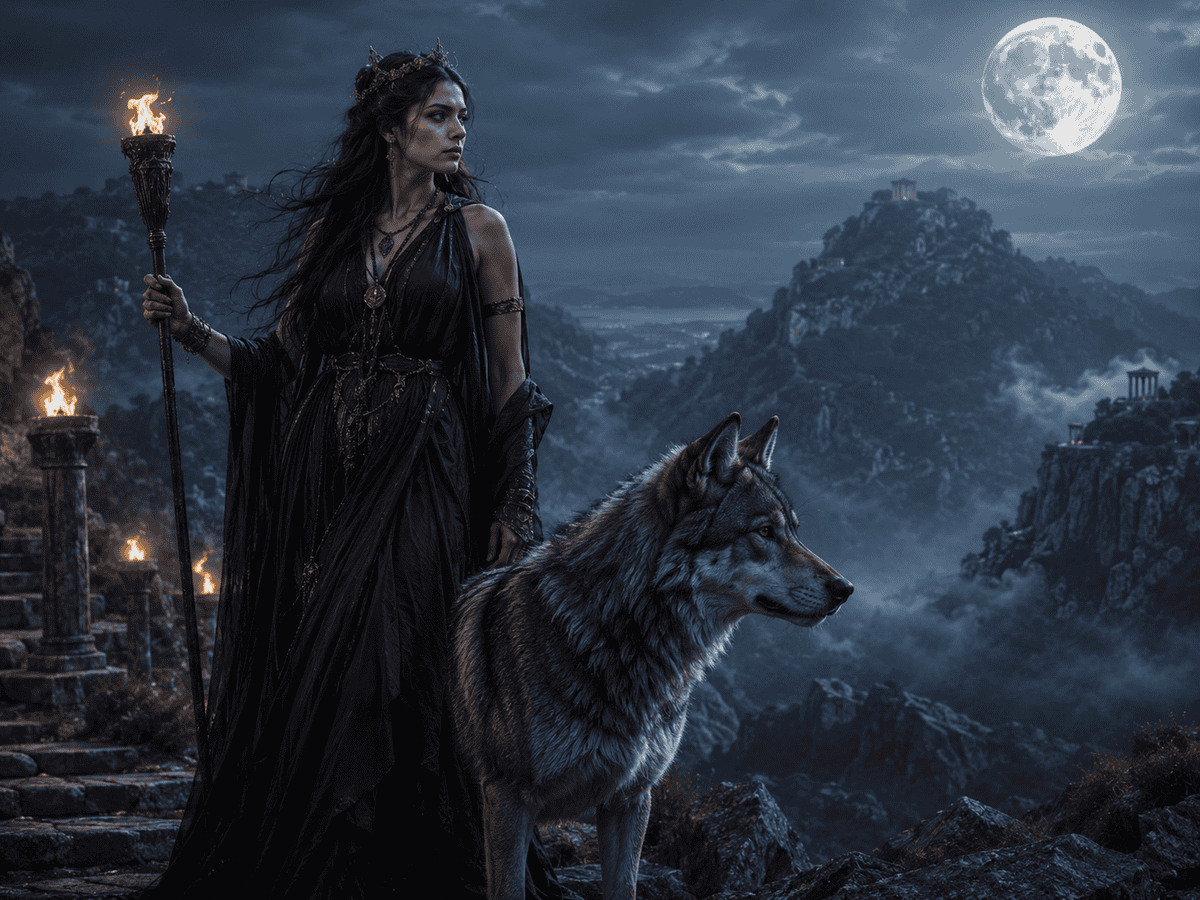
Wolves were respected and feared throughout the ancient Mediterranean world.
Their intelligence, teamwork, and hunting abilities earned admiration, while their nighttime howls added an element of mystery.
Some traditions connected wolves with Hecate because of their wild and untamed nature.
Unlike domestic animals, wolves represented independence and survival beyond the safety of civilization.
Hecate herself often existed outside ordinary boundaries, moving between wilderness and city, life and death, gods and mortals.
The wolf’s reputation as a creature of the night made it a fitting symbol for her power and freedom.
10. Moths Represented Souls Drawn Toward Light
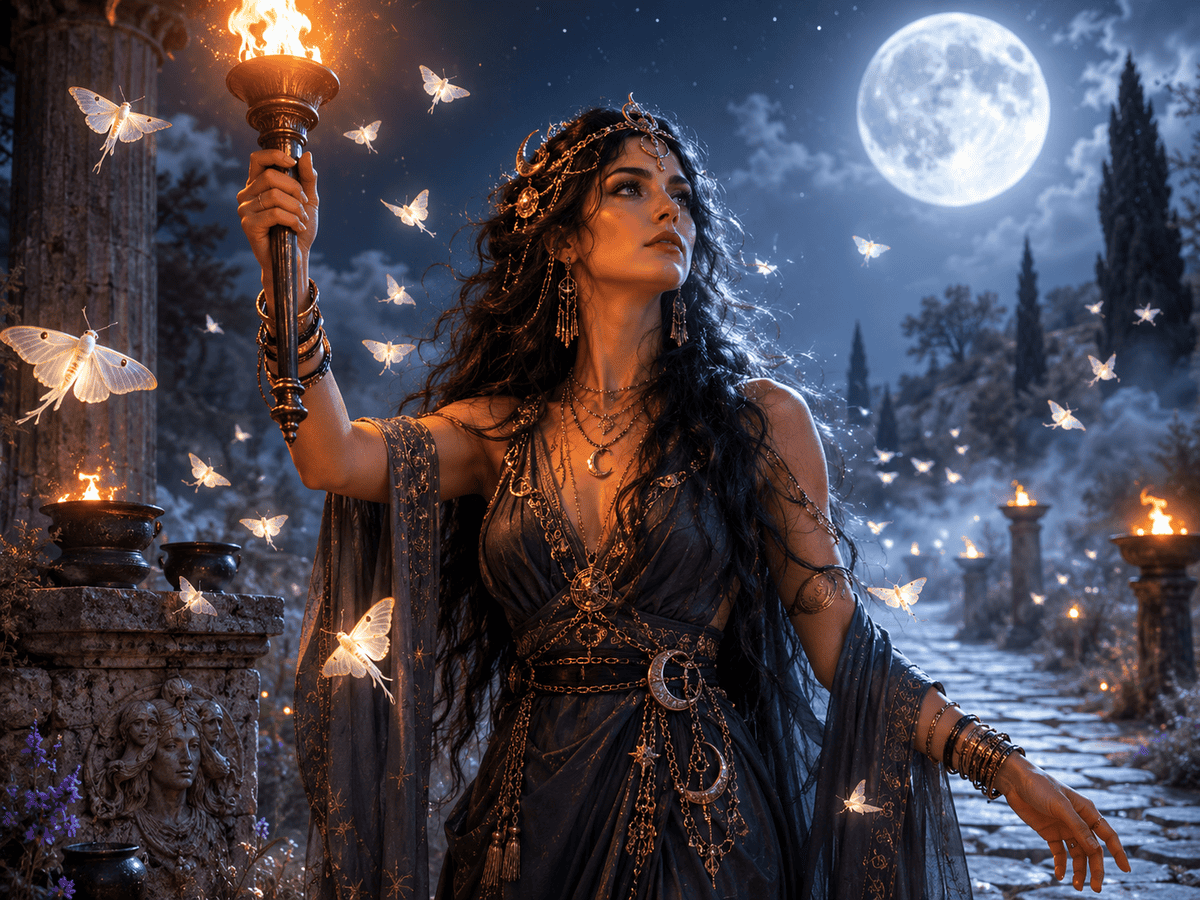
One of the lesser-known animals connected with Hecate is the moth.
Because moths emerge after sunset and instinctively move toward light sources, some later traditions associated them with wandering souls seeking guidance.
This symbolism fits remarkably well with Hecate’s role as a torch-bearing goddess who illuminated dark paths.
Ancient depictions often show her carrying torches as she guided travelers and spirits through uncertain places.
Among the many creatures associated with Hecate, the moth beautifully captures her role as a guide through mystery and transition.

Sempre senti uma forte ligação com o Divino desde o meu nascimento. Como autora e mentora, a minha missão é ajudar os outros a encontrar o amor, a felicidade e a força interior nos momentos mais sombrios.