
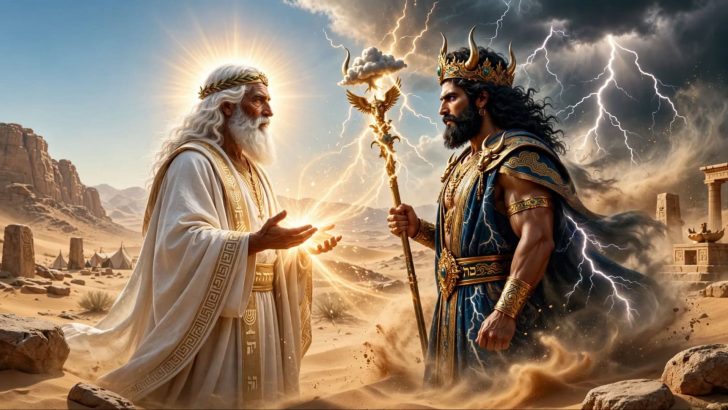
Most of us know Baal as the false god. Yahweh is the one God, and the two were mythical enemies.
The Hebrew Bible tells it that way. But when you set the biblical text beside the Ugaritic tablets and the archaeology of ancient Israel, the picture gets more interesting.
Baal and Yahweh are not the same deity, but the overlap is hard to ignore.
They’re both related to storms, battles against the sea, mountain thrones, rain and harvest, and even shared worshippers!
1. Baal
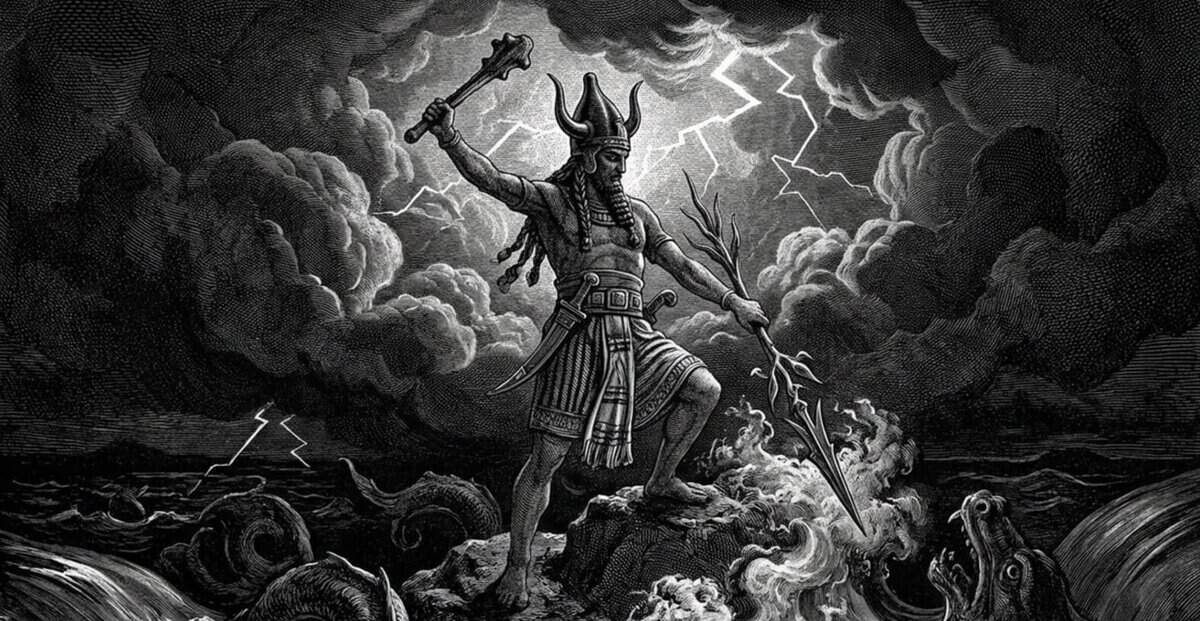
Baal is a Northwest Semitic word meaning “lord” or “master,” and it works as a title before it works as a name.
The god behind it is Hadad, the storm god worshipped across Syria and Mesopotamia long before Israel existed, with major cults at Aleppo, Mari, and Ugarit.
In 1929, at Ugarit, archaeologists uncovered clay tablets from roughly 1400 BCE that preserve the Baal Cycle, our best source for how Canaanites told his story!
There he rules from Mount Zaphon, commands rain, lightning, and thunder, and is called Rider on the Clouds.
Because “baal” simply meant lord, the word attached itself to many local cults, like Baal of Peor or Baal-Hermon.
That flexibility matters later, because the same word could be applied to any deity, including Yahweh!
2. Yahweh
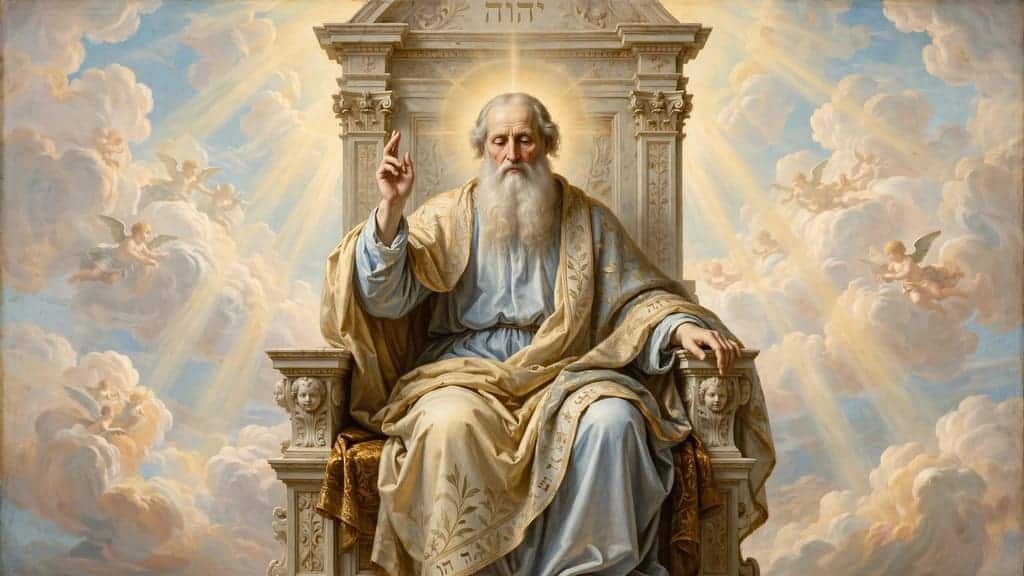
The oldest biblical poems, like Judges 5, Deuteronomy 33, and Habakkuk 3, picture Yahweh marching up from the south.
Egyptian inscriptions from the time of Amenhotep III and Ramesses II list a group called the “Shasu of Yhw,” nomads in the southern Transjordan region, and many scholars see this as the earliest trace of the name.
This fits the Kenite hypothesis that Yahweh was a southern desert god first worshipped by groups around Edom and Midian, then adopted by the tribes that became Israel.
The Bible hints at it too, since Moses meets Yahweh while living with the priest of Midian.
So the origins of these deities really are separate.
Baal rose in the north, Yahweh in the south.
Their overlap came later.
3. Two Storm Gods

Both gods are storm gods in how the texts describe them.
Baal is the “Rider on the Clouds,” and the Baal Cycle gives him thunder, lightning, and rain.
Yahweh gets almost the same description.
Psalm 68:4 tells people to extol the one who rides on the clouds, though that translation is debated.
Psalm 18 shows him riding a cherub, shooting arrows of lightning, sending hail and burning coals, with his voice thundering from heaven.
Psalm 29 may be the clearest case. It describes the voice of Yahweh over the waters, scholars have argued it’s an adapted Canaanite hymn to Baal-Hadad.
Now, the one God is not only connected to thunder. He’s also a warrior, a lawgiver, and a god of history.
But when biblical poets needed imagery of power, they reached for the storm, the same imagery Baal’s worshippers used!
4. Kings Who Beat the Sea

Both gods also win their titles by defeating the sea.
In the Baal Cycle, Baal fights Yam, whose name literally means “Sea,” and crushes him with magic clubs.
Elsewhere the texts mention Lotan, a twisting seven-headed serpent that Baal destroys.
In the Bible, Psalm 74 says Yahweh split the sea and smashed the heads of Leviathan. Psalm 89 says he rules the raging sea and crushed Rahab.
Job 26 and Psalm 93 have the same pattern.
Isaiah 27:1 talks about Yahweh punishing Leviathan, the twisting serpent, and the wording is almost identical to the Ugaritic line about Lotan.
After the victory, the warrior god is proclaimed king and gets a house.
5. Mountains and Temples

Both gods live on a mountain and need a proper house.
Baal’s home is Mount Zaphon, the modern Jebel al-Aqra, and in the Baal Cycle he can’t feel like a real king until El lets him build a palace.
Its built from cedar, silver, and gold, and Baal opens a window in it so his thunder and rain can come through.
Yahweh is tied to Sinai and then Zion, and Solomon’s temple in Jerusalem is built with Lebanese cedar and gold.
Psalm 48:2 describes Mount Zion with the Hebrew phrase yarketei tsafon, which uses the very name of Baal’s mountain for Yahweh’s hill in Jerusalem!
In both traditions, the god wins his battle, then gets a temple, and the cosmos stays stable.
6. Rain and Harvest
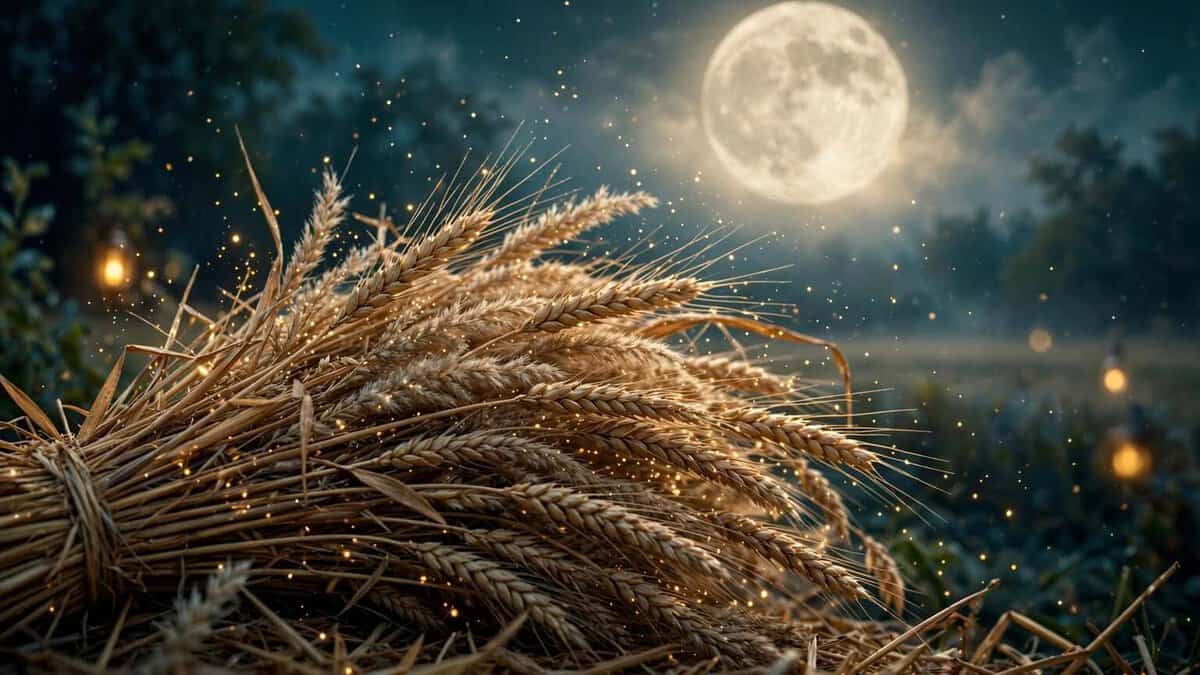
Both gods are in charge of rain, and rain meant survival.
In Canaan, farming depended on winter rains rather than rivers like in Egypt or Mesopotamia, so whoever controlled the storm controlled the harvest.
Baal brings rain, dew, grain, and fertility, and when he goes down to Mot, the land withers until he returns.
The Bible gives Yahweh the same role.
Deuteronomy 11 promises early and late rains, grain, new wine, and oil if Israel obeys, and a drought if it doesn’t.
Hosea 2 allows us to witness the rivalry.
There, Israel credits the Baals for food and oil, and Yahweh answers that the grain, wine, and oil were his gifts all along.
7. One Pantheon?
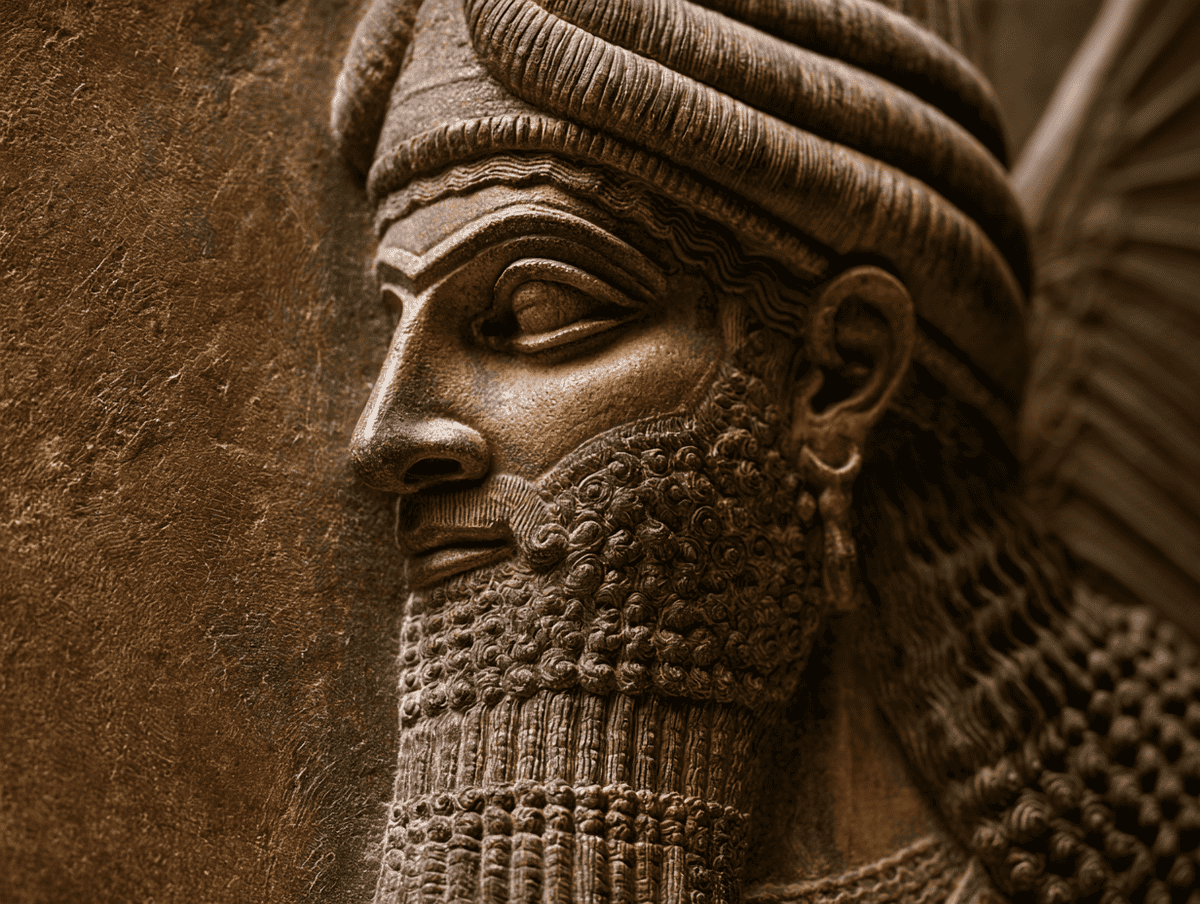
Were they part of the same pantheon? In a sense, yes.
The Ugaritic pantheon is headed by El, the high god, with his consort Asherah and their many sons, the seventy sons of Athirat.
Baal is a major figure the pantheon.
Deuteronomy 32:8-9, in the Dead Sea Scrolls reading, says Elyon divided the nations according to the number of the “sons of God,” and Yahweh received Israel as his portion.
That makes Yahweh one of El’s sons.
Psalm 82 shows God standing in the divine council to judge the other gods.
The name Israel itself contains El, not Yahweh.
Inscriptions from Kuntillet Ajrud mention “Yahweh of Samaria and his Asherah,” though scholars debate whether that means a goddess or a cult object.
So the shared pantheon is real, but Yahweh went on to become the monotheistic God.
8. Worshipped as One?
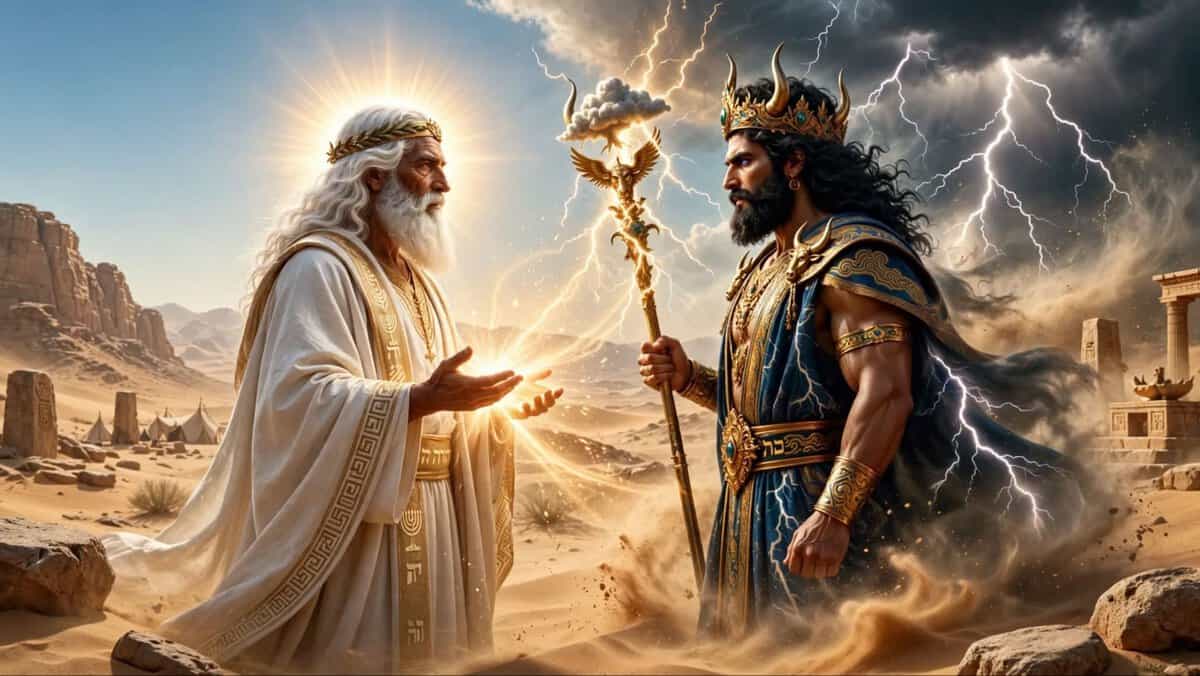
Were they ever worshipped as one?
Not formally, but the line was blurry for a long time.
Hosea 2:16 has Yahweh saying that Israel will call him “my husband,” not “my Baal,” which suggests some people were calling Yahweh Baal.
Because “baal” meant lord, that wasn’t strange.
This word is also present in ordinary names. Saul had a son named Eshbaal, Jonathan’s son was Meribbaal, and Gideon had the alternate name Jerubbaal, all from families devoted only to Yahweh.
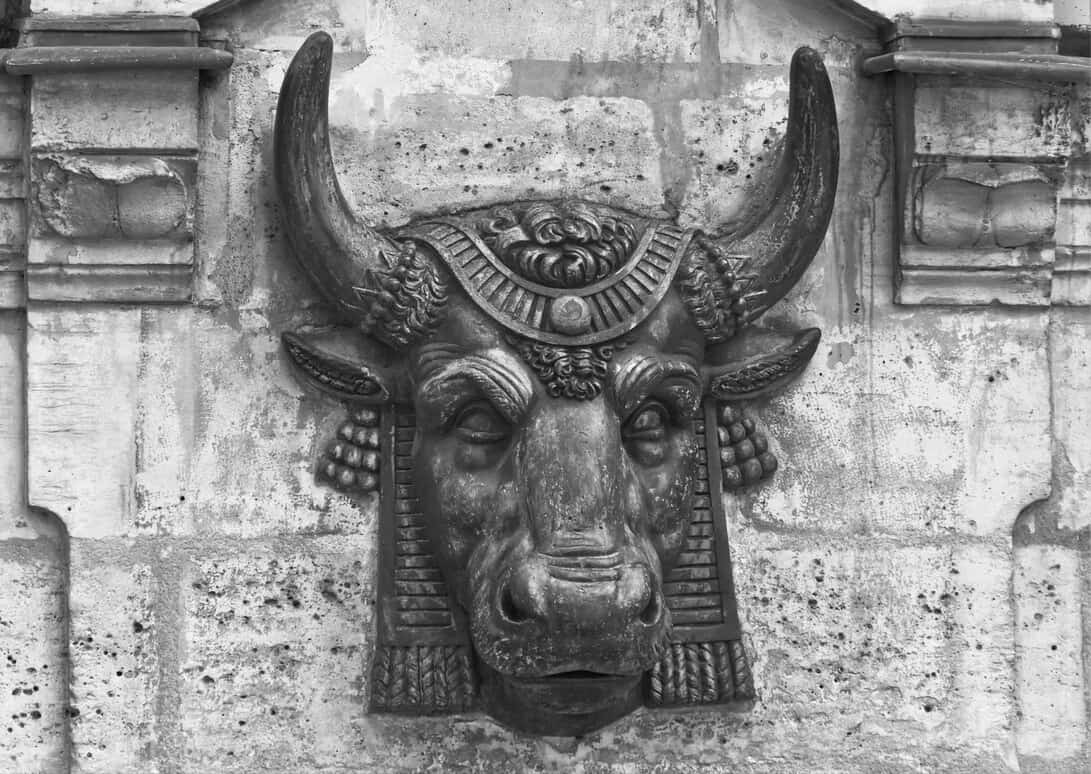
Bull imagery points the same way. Baal and El were both linked to bulls, and Jeroboam I placed golden calves at Bethel and Dan for Yahweh.
Worship wasn’t neatly divided since people mixed and matched their gods freely.
9. Yahweh Before Monotheism

So what was Yahweh before the Bible made him the only God?
Most historians describe a long, gradual progression.
Early on, he was the national god of Israel and Judah, one deity among many, the way Chemosh was for Moab.
In Judges 11:24, Jephthah argues that Chemosh gives land to his people just as Yahweh does for Israel, treating both as real gods.
The Mesha Stele, from around 840 BCE, shows Moab’s king speaking of Chemosh the way Israelite writers spoke of Yahweh.
Exodus 15:11 asks, “Who is like you among the gods, Yahweh?”
The first commandment never says other gods don’t exist. It says Israel shouldn’t have other gods before him!
Strict monotheism only shows up in Second Isaiah, during the Babylonian exile in the sixth century BCE.
10. Why the Rivalry Got So Bad
So, why does the Bible fight Baal so hard?
Probably because these two deities were close.
When two gods compete for the same job, one of them must inevitably disappear.
The prophets pushed for Yahweh alone, no mixing.
Hosea, Elijah, and Josiah’s reforms in the late seventh century BCE all treat Baal worship as betrayal.
In practice, Yahweh absorbed Baal’s key attributes: the storm, the rain, the warrior, the king.
The name itself became tainted, so now we can see it belongs to a demon, Baalzebub.
Baal and Yahweh had different myths, and Baal dies and returns while Yahweh never does.
But the parallels are fascinating. On the surface, they can lead you to think these two gods are one and the same.

A little Aquarius, devoted to writing and embroidery. Through my writing, I hope to empower readers to align with their true selves and navigate life’s mysteries with confidence.