
The Japanese Sun goddess had sealed herself inside a cave, leaving heaven and Earth in darkness.
The other gods couldn’t command her to return. They couldn’t move the stone without her opening it first.
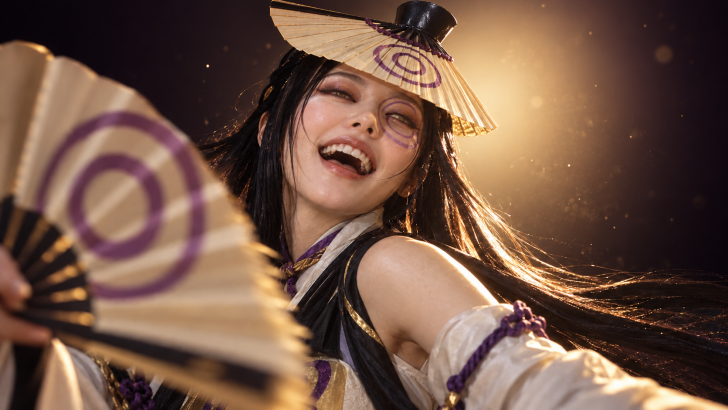
Then Ame-no-Uzume overturned a wooden tub, climbed on top, and began the strangest dance in Japanese mythology.
Soon, all heaven was laughing. And inside the cave, the Sun began to wonder what she was missing.
1. A Storm God Drove the Sun Away
The story begins with Amaterasu, the goddess of the Sun and one of the most important divine figures in Japan’s Shinto tradition.
Her younger brother is Susanoo, a powerful storm god whose behavior becomes increasingly destructive.
He tears through Amaterasu’s rice fields, damages the channels carrying water to them, and disrupts the sacred ceremonies she oversees. Then his rampage reaches her weaving hall, where attendants are making divine garments.
Susanoo breaks through the roof and throws the body of a flayed horse into the room.
The women panic. In the Kojiki, one of the weavers falls against her shuttle and dies. The Nihon Shoki, another early Japanese chronicle, preserves slightly different versions of the death.
But the result is the same.
Amaterasu has watched her brother violate everything she’s responsible for protecting. Now someone has been killed inside her own sacred hall.
So she withdraws.
She enters a place called the Heavenly Rock Cave, closes the stone door, and refuses to come out.
This isn’t the story of a goddess becoming upset over one insult. Amaterasu retreats after violence has entered the center of her world—and when the Sun shuts herself away, everyone else is forced to live with the consequences.
2. The Cave Turned Day Into Endless Night
Amaterasu doesn’t simply control sunlight from a distance. Her presence is the light.
Once the stone closes behind her, both the heavenly realm and the human world fall into darkness. The old story describes an endless night in which disasters multiply and troubling voices swarm through the dark.
Nothing can continue as it did.
The fields below need sunlight. The heavenly order depends on Amaterasu occupying her place within it. Even the other gods lose the distinction between day and night.
In Japanese tradition, these divine beings are called kami. The word can refer to gods, sacred powers, or spiritual presences connected with nature, places, and ancestral forces.
Now countless kami gather to solve a crisis affecting every level of existence.
They meet beside the Heavenly River and turn to Omoikane, a god of wisdom, for a plan.
But the obvious solution won’t work.
A god of tremendous strength is present, yet he can’t simply tear the cave open. If Amaterasu feels attacked, she can retreat farther into the darkness or resist them completely.
The door has to open from the inside.
Before anyone can bring the Sun back, they need to give her a reason to look out.
3. The Gods Built a Plan Around One Locked Door
Omoikane’s plan uses nearly everyone.
Roosters are brought to the cave and made to crow, producing the sound that normally announces sunrise.
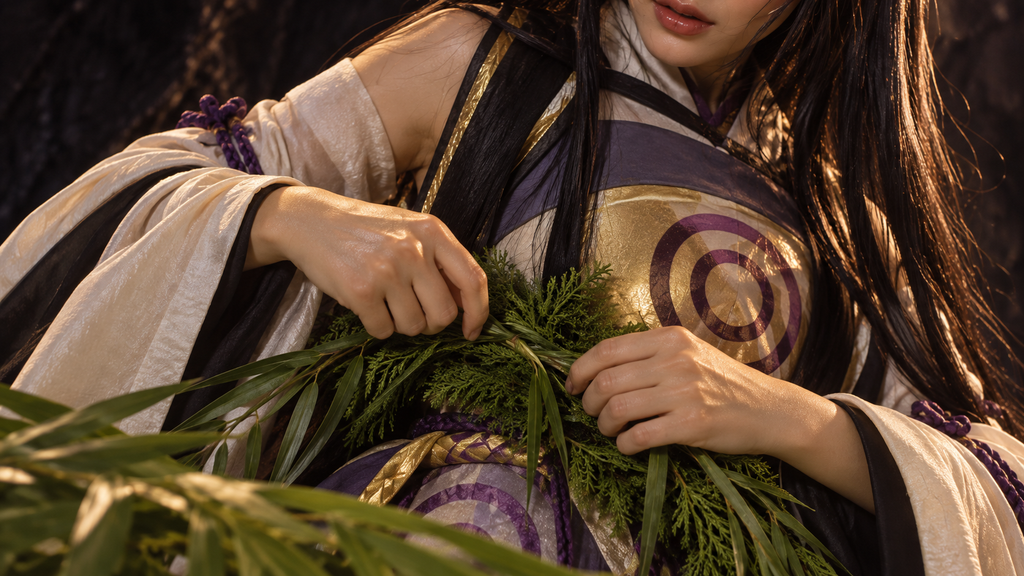
Craftspeople forge a polished metal mirror. Others create long strings of magatama—curved beads associated with sacred authority and ritual power.
The mirror, beads, cloth offerings, and prayers are arranged on the branches of a sakaki tree, an evergreen used in Shinto worship.
None of these objects is random decoration.
The gods are assembling the signs of light, sacred order, and divine presence outside the place where light has disappeared.
The mirror will catch anything that shines. The roosters will call for a morning that hasn’t arrived. And the decorated tree becomes the center of an enormous ritual.
A powerful god hides beside the entrance, ready to act if Amaterasu opens the door.
Everything is carefully positioned.
But a perfect arrangement still can’t create curiosity. The gods can fill the darkness with prayers, yet Amaterasu already knows they want her back.
They need something she isn’t expecting. And that’s when Ame-no-Uzume steps forward.
4. Uzume Turned a Tub Into a Stage
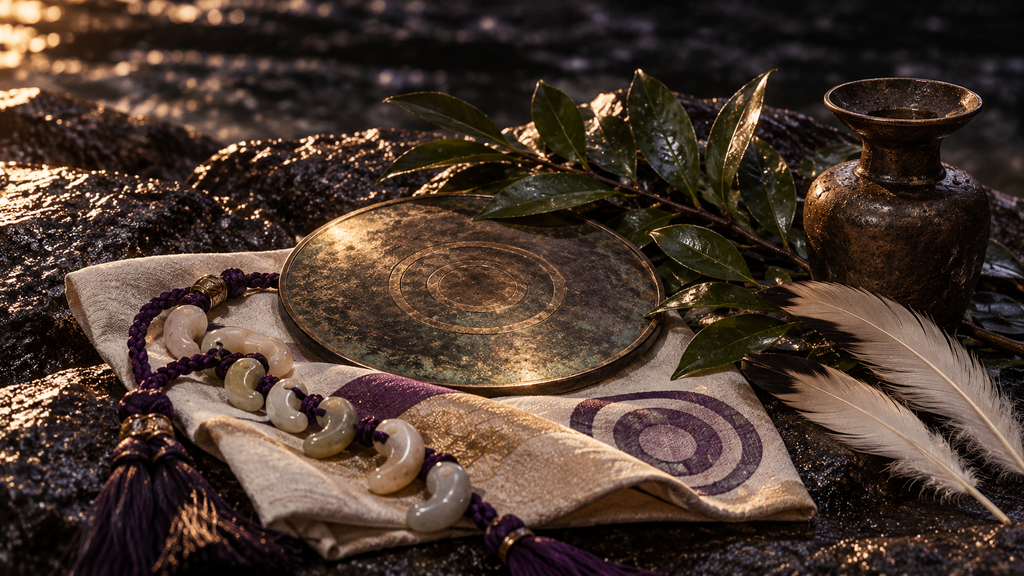
Uzume is a divine performer associated with boldness, ritual movement, and laughter.
According to the old accounts, she wraps clubmoss around her body, places branches from a spindle tree in her hair, and carries bamboo leaves in her hands.
O Encyclopedia of Shinto connects this appearance with the clothing and ornaments of an early divine medium.
Uzume dresses herself in living things because she’s about to perform between two worlds: the silent darkness inside the cave and the frightened world waiting outside it.
Then she overturns a wooden tub near the entrance.
The hollow tub becomes a drum beneath her feet.
Uzume climbs onto it and stamps until the sound travels through the stone. The Kojiki describes her as behaving as though a divine power has entered her. Her movements grow wilder, and her clothing falls open as she dances.
The scene is sexual, sacred, ridiculous, and deliberately shocking.
Uzume creates so much life, noise, and disorder that the sealed cave can no longer feel separate from what’s happening outside.
Her feet strike the wood. The leaves around her body shake. And one by one, the watching gods begin to laugh.
5. Laughter Made the Sun Curious
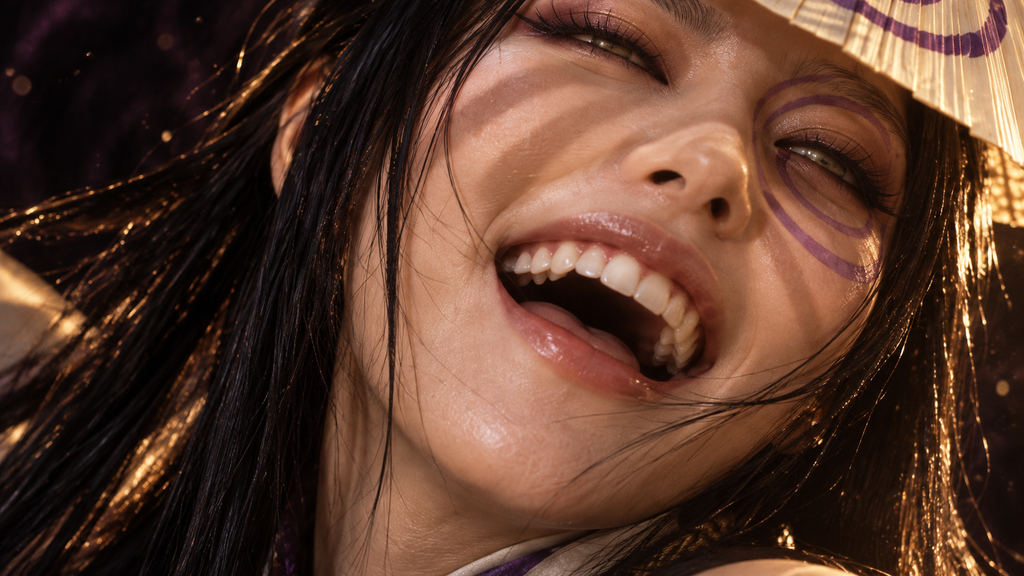
Soon the laughter becomes enormous.
O Kojiki says the entire heavenly realm shakes with it. And inside the cave, Amaterasu can hear everything.
She knows the world has lost its light. She expects the gods to be frightened, grieving, or begging her to return.
Instead, they sound as though they’re celebrating. It’s that contradiction that finally reaches her.
Amaterasu calls from inside the cave and asks why everyone is laughing when heaven and Earth should be dark.
Uzume answers that they’ve found another deity—one even more radiant than Amaterasu.
It’s a trick. But the trick works because Uzume understands what arguments have failed to do.
If she tells Amaterasu that everyone is suffering, the Sun goddess can remain behind the stone. She already knows they need her.
But if something impossible has happened outside, Amaterasu has to see it for herself.
Has another source of light really appeared? Who could possibly shine more brightly than the Sun?
Uzume hasn’t overpowered Amaterasu’s grief or frightened her into returning.
She has made the darkness curious. Then, slowly, the stone door begins to open.
6. A Mirror Finished the Trick
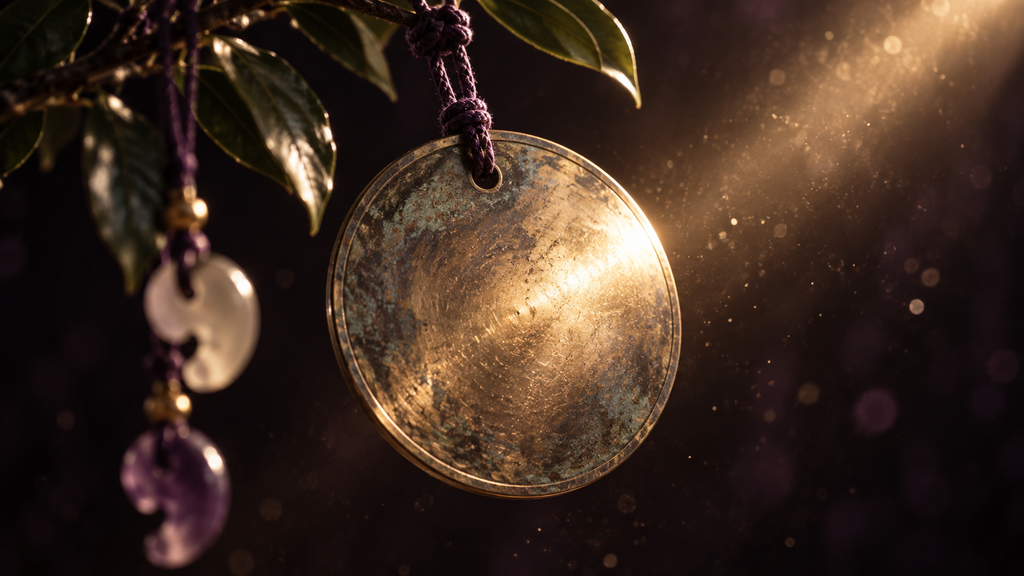
Amaterasu opens the cave just far enough to look outside.
The gods immediately bring forward the polished mirror hanging from the sacred tree.
Light appears inside it.
Amaterasu has been told that another radiant deity is waiting, and now she sees a shining figure before her.
The old text doesn’t explain exactly what she thinks in that instant. But the radiance in the mirror is her own. She leans farther from the cave to examine it.
That’s the opening the other gods have been waiting for.
The god of strength hiding beside the entrance takes Amaterasu by the hand and pulls her fully into the open. Another god stretches a sacred rope behind her, marking the boundary she must not cross to return to her hiding place.
Then the world becomes bright again.
Uzume didn’t complete the rescue alone. The mirror caught the returning light. The hidden strongman moved at the right moment. And the rope closed the way back into darkness.
Yet none of those things could matter while the door remained shut.
Uzume accomplished the part strength couldn’t. She made Amaterasu turn toward the world again.
7. Her Dance Outlived the Myth
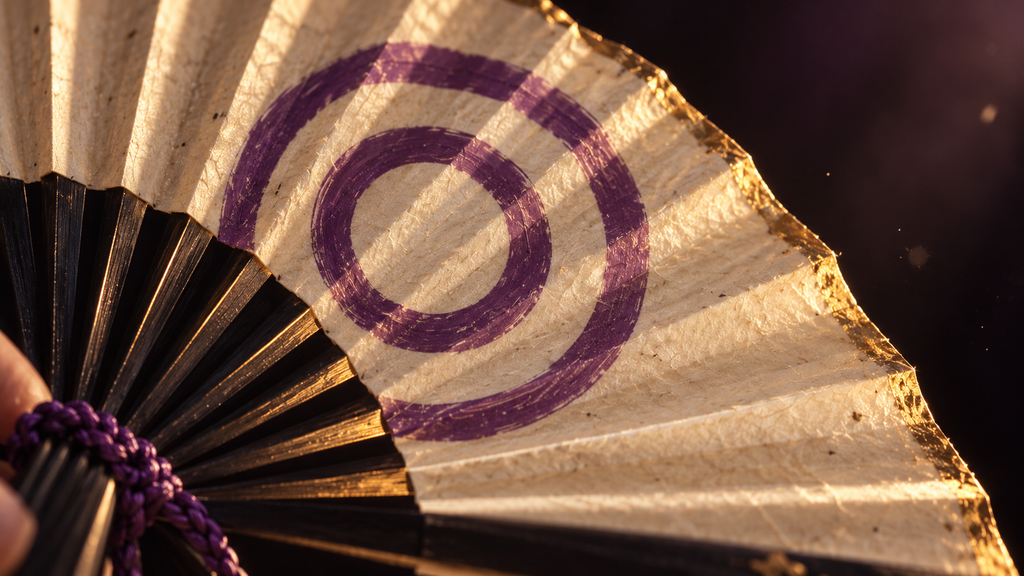
Uzume’s story doesn’t end at the cave.
In another myth, a frightening and unfamiliar god named Sarutahiko blocks the path between heaven and Earth. The other gods are afraid to confront him.
But Uzume approaches him.
That encounter strengthens her later reputation as a divine negotiator—someone willing to face the strange, the intimidating, and the unknown when everyone else hesitates.
She also became associated with the Sarume clan, whose members performed ritual dances. Over time, Uzume was remembered as a protector of performers and the arts.
Her dance outside Amaterasu’s cave is traditionally connected with the beginning of kagura, the music and dance performed for the kami at Shinto shrines and festivals.
That legacy helps explain what her laughter means.
She laughs because despair has taken control of the scene—and she refuses to let it remain the only force capable of moving through the crowd.
Her performance gives the frightened gods something they can do together. One laugh joins another until the sound becomes powerful enough to pass through stone.
The strongest god couldn’t open the cave first, and the wisest god couldn’t reason Amaterasu through the door.
But Uzume climbed onto an overturned tub and created one impossible sound inside a world that had gone dark.
Joy without the Sun.
Amaterasu opened the door to understand it. And when she did, the light waiting inside her returned to everyone else.
