
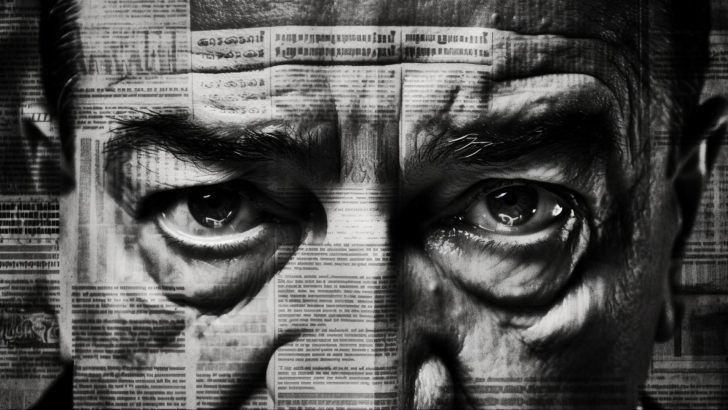
George Orwell died in 1950, which is hard to believe when you realize how accurately he presented modern life in his political fiction.
1984 和 Animal Farm were commentaries on Stalinist totalitarianism, but reading them, we can’t help but look around in suspicion.
Now, Orwell wasn’t a prophet, but he realized the important truth about power and politics that still shapes our lives in the 2020s.
1. Constant Surveillance

The telescreen in 1984 is one of Orwell’s most memorable inventions. It’s a two-way screen mounted in every private and public space, through which the Party watches the citizens.
“Big Brother is watching you” was written by Orwell as a warning, but today, it’s become perfectly normal.
We’re all aware of the surveillance and data trafficking that happens through our devices at all times of day.
However, we took it one step further, since, unlike the telescreen, our devices provide connection, entertainment, information, working tools, etc.
The system is set up so you quite literally can’t do business or connect with most of your friends if you’re not carrying the phone everywhere with you.
Aside from that, smart appliances have invaded most modern homes, which means the rooms they’re in are actively being watched.
Facial recognition technology is also present in most public spaces. And all of these things sparked short outrage, and then we quickly got used to them.
The masses will always choose the path of least resistance, and those who created the system know it.
2. Erasing History

Also in 1984, Winston Smith’s job is to change historical records on demand; any text that contradicts the Party’s current propaganda needs to disappear.
The Memory Hole is the device used to burn the original versions of the texts, so it’s genuinely like they never existed!
One of the Party slogans says, “Who controls the past controls the future,” and don’t we know it?
If you were to visit, say, ten different countries, looking for historical records of the exact same event, you’d likely find ten different, contradicting versions of what happened!
School curriculums and monuments are constantly changed to fit the current ideology.
The internet theoretically allows you to do your own research, but this is where resistance comes in again.
ǞǞǞ algorithm buries anything that those behind it don’t want us to think about, while pushing forward the things they want us to see.
Another simple but meaningful example is older movies. Entire dialogues and events are often carefully edited out to make the movies more inclusive or suitable for modern audiences.
And if you wish to watch the original, you’d have to stream it on suspicious sites.
3. Censorship

Newspeak is the official language of Oceania in 1984, and its main function is to limit the range of thought of the speakers.
If the vocabulary doesn’t contain a word for something, that thing becomes unthinkable!
Orwell showed the language being systematically impoverished to make resistance impossible. If people can’t articulate what’s wrong with the system, they can’t challenge it.
So many times, Orwell’s main character struggles to define why he loathes the Party so much, and can’t. He only knows that there’s a feeling in his bones that something’s wrong.
In the recent decade, we’ve also been dealing with our fair share of language censorship.
Words are constantly assigned new meanings, presented as dangerous or hateful, and there are no signs of stopping, despite the freedom of speech activism.
We’re being conditioned to speak safely, which limits our ability to say exactly what we need to.
4. The Impact of Pornography

This is one of Orwell’s predictions that doesn’t get discussed as often, even though in our age, the adult content industry is running rampant.
In 1984, the Party keeps an entire department that creates this crude, mass-produced material and distributes it to the Proles (the majority of the population).
It’s designed to leave them 六神无主 和 emotionally numb. They’re unable to direct their energy toward anything politically “dangerous.”
The Party also provides the Proles with gambling, entertainment, and alcohol to keep them subservient.
In our day, conversations about the 破坏性的 nature of this content are constantly had, but it feels like most people aren’t listening.
It affects people’s ability to form connections and enjoy healthy intimacy; it also creates crooked relationship expectations and objectification of other people.
Not to mention, frequent exposure to this content leads to extreme and sick preferences that I can’t even name here.
Orwell noticed how dangerous it was back in the 1900s, when the content was much less extreme and less available.
5. The End of the Nuclear Family

One of the most interesting ways the Party maintains control in 1984 is by removing loyalty and love from families.
Marriages need to be approved, and they’re typically not if the couple seems to have any genuine closeness and mutual attraction.
Married couples have just one purpose, and it’s creating new members for the Party.
Orwell frequently shows how family members report each other, leading to the Party vanishing 个人。
Even children spy on their parents and neighbors, always looking for reasons to report them.
A healthy family takes people’s allegiance away from the Party, so Big Brother needs to insert himself even in that dynamic.
In our day, family values have been in decline for a long time now. Financial pressures and cultural changes contribute to it.
All over the world, natality suffers because modern lifestyle and policies don’t leave people with enough time and resources to raise strong families.
Raising children has also been institutionalized, since most parents simply don’t have the time to bring up their kids by themselves.
6. Manufactured Outrage
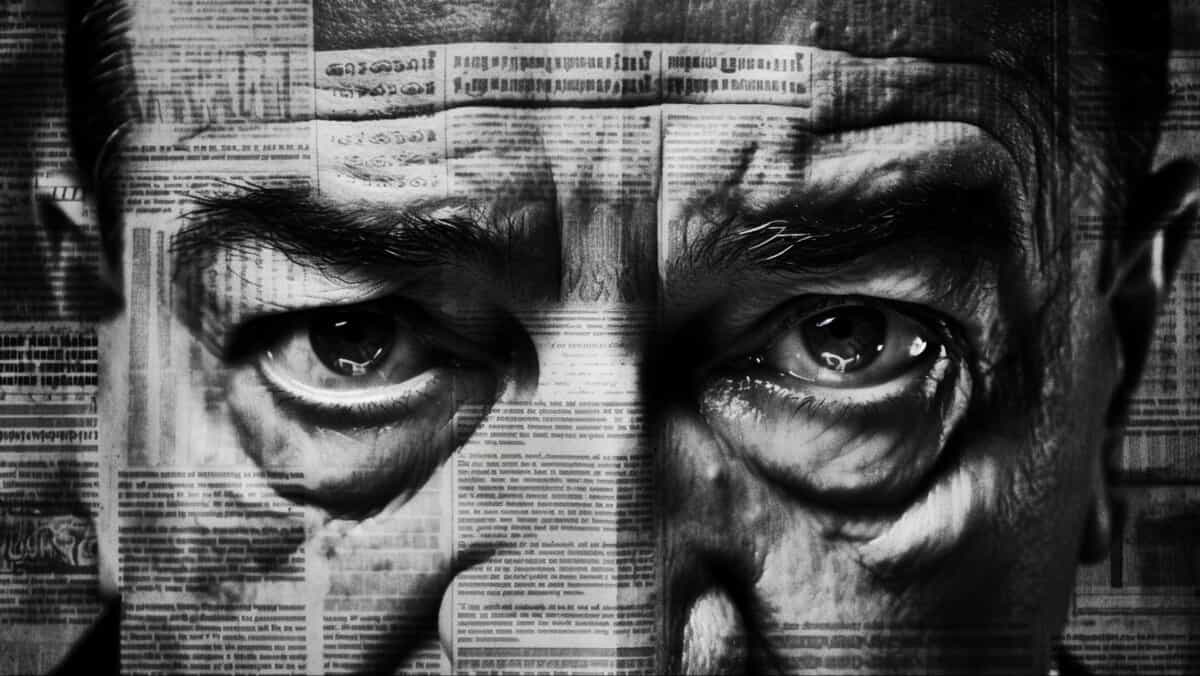
ǞǞǞ Two Minutes Hate 在 1984 is such a relatable scene.
Citizens have to gather in front of the telescreen each day and take part in a session of rage directed at the current enemy of the Party.
This ritual is meant to unite the people in hate and fear of some outside danger, preventing them from ever questioning the Party itself.
We see it on the news every day: politicians tend to scare us the most with the talk of invasions and wars as their own popularity collapses.
The internet also manufactures outrage on a massive scale. Anger and hate lead to the most engagement, so the algorithm serves you the exact things it knows will trigger these feelings.
I can’t scroll on Instagram even for a minute without seeing gender inequality and similar kinds of mistreatment.
The issue is that the anger this creates within us doesn’t last two minutes; it follows us throughout the day, influencing our thoughts and interactions.
7. The Power of the Elite

Animal Farm is Orwell’s shorter political allegory.
Animals overthrow their human farmer in the name of freedom and equality, and within a generation, the pigs that led the revolution turn into the same cruel masters.
“All animals are equal, but some animals are more equal than others” is the novel’s most quoted line.
Orwell exposes the nature of power, which inevitably leads to a hierarchy where the most resourceful and cruel among us end up on top.
Modern politics maintains this pattern. Governments and even regimes may change, but ruling classes remain.
They adapt and hide in plain sight, but they still pull the strings from the dark.
The specific animals at the top of the farmhouse may change, but the farmhouse stays.
8. “Doublethink”

Orwell describes doublethink as the ability to hold two contradicting beliefs at once and feel no discomfort that they make no sense.
Since history and news are constantly being censored and rewritten, the main character in 1984 keeps wondering if the masses even notice the changes.
He reaches a conclusion that they do notice, but they still believe the new versions completely, even though they must know it’s false.
Doublethink is a mental discipline that the Party enforces, and it’s the foundation of people’s compliance.
In the beginning, it might require some effort, but soon, people get used to not having to use their own heads. They even see it as convenient!
Similarly, the algorithm provides us with countless information so fast that it’s often impossible to make any comparison.
It also caters to whatever produces the most engagement, which means you likely receive a completely different version of news compared to some other people.
Orwell thought Doublethink would require institutional enforcement, but here it’s automatic.

A little Aquarius, devoted to writing and embroidery. Through my writing, I hope to empower readers to align with their true selves and navigate life’s mysteries with confidence.