
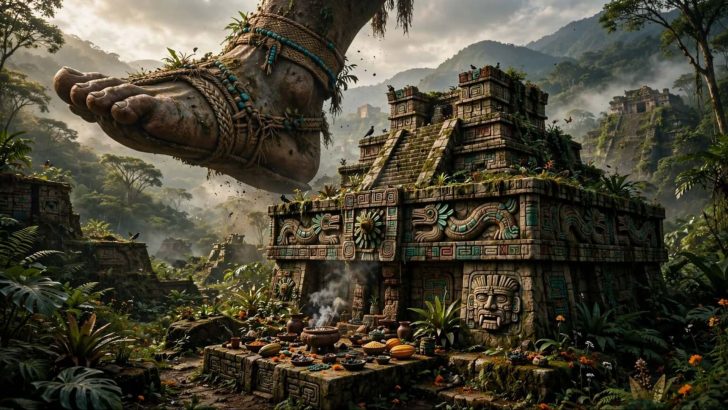
Don’t you ever wonder who built the Great Pyramid of Cholula?
The Aztecs wondered, too.
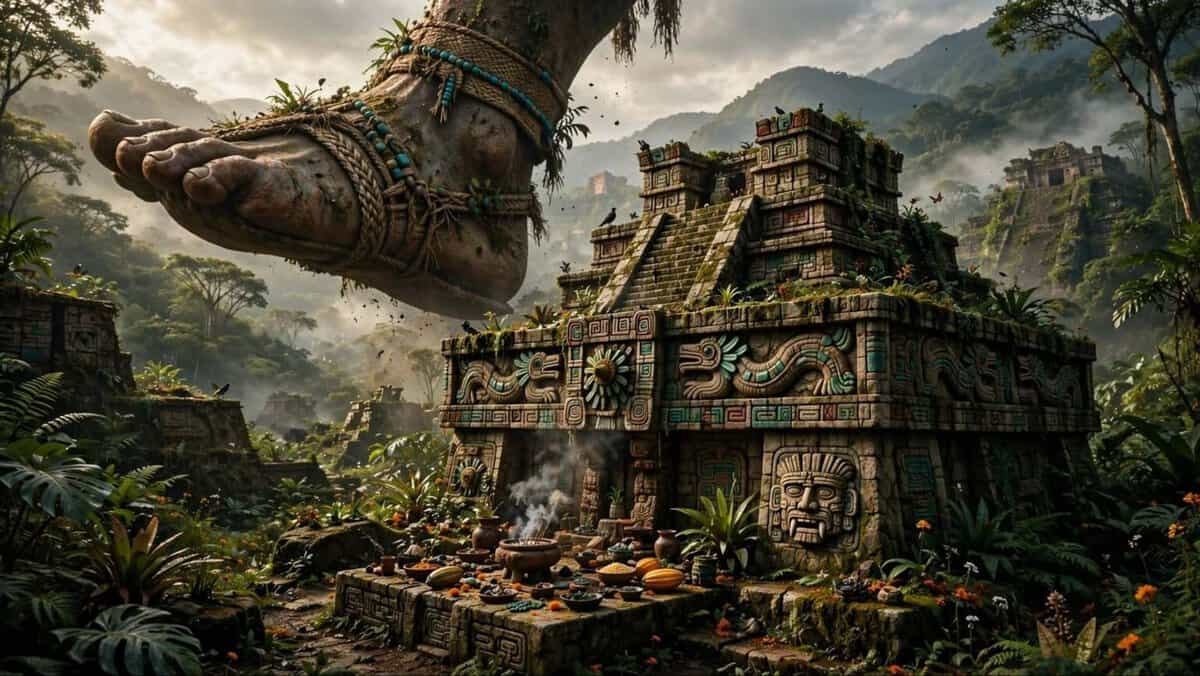
The Nahua credited a race of giants, the quinametzin, with building Teotihuacan and the Great Pyramid of Cholula.
These monuments seemed too great for ordinary people to have built.
However, giants belong to an age before the Aztecs, an age the oldest stories say ended in water.
This is their story!
1. A World Built, Broken, Built Again
The Nahua didn’t see history as a straight line.
They believed the world had been created and destroyed again and again. Each age had its own sun, and its own kind of people, and every age before ours ended in disaster.
Today, we live under the Fifth Sun, and the dots on the old calendar count the ages that came before us.
That means nothing is permanent, not even the sky itself!
It also gives us a reason to pay attention to the first one, because everything that follows grows out of it.
So let’s go back to the very beginning, to a world of water and giants.
2. Ten Water and the Jade Skirt
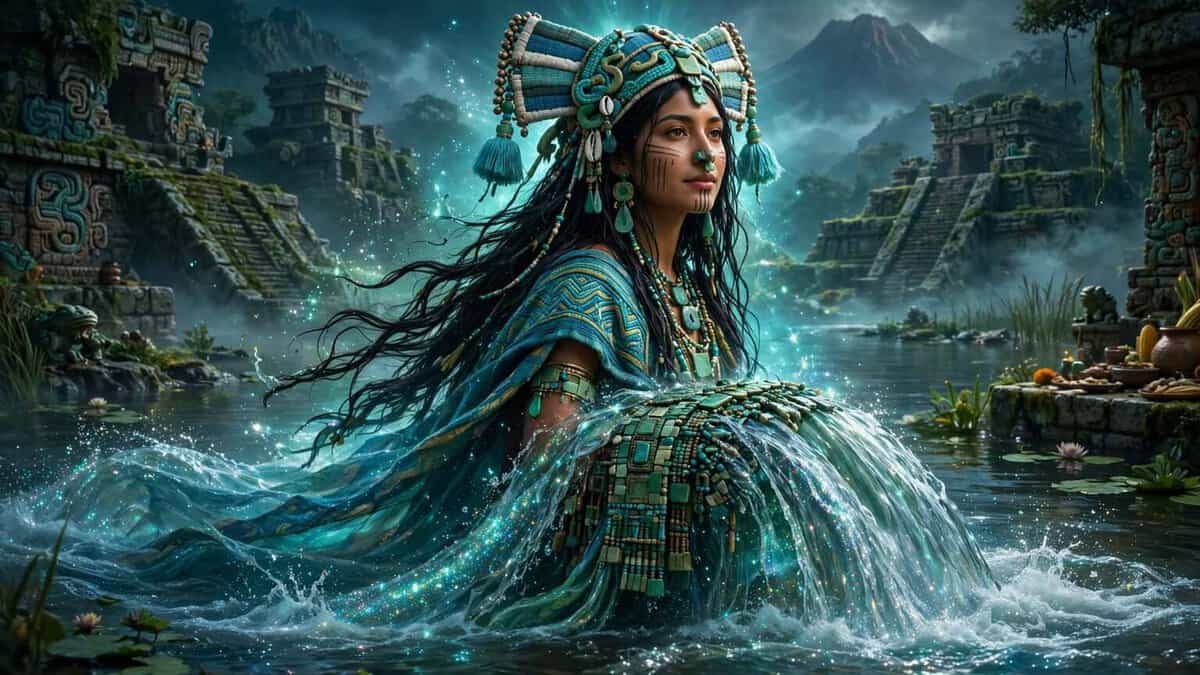
The first age was called Ten Water, and its ruler was a goddess named Chalchiuhtlicue (She of the Jade Skirt).
She was the goddess of waters, the one who watched over every spring, stream and shoreline.
Picture her in blue and green, with water pouring around her feet. It makes sense that the very first age belonged to her.
According to the story, this age lasted 4,008 years.
The people who lived at that time weren’t ordinary at all. They were giants, and they lived close to the water.
3. The Tzocuilicxeque
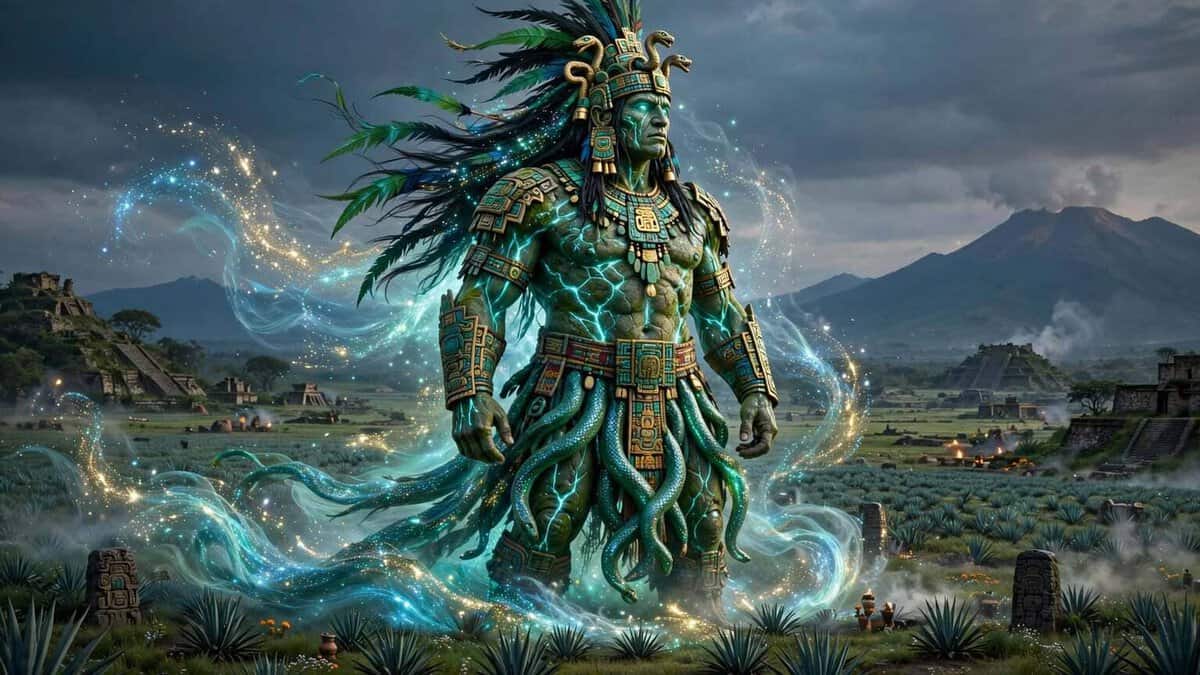
The Nahua called the giants 的 Tzocuilicxeque, which means “the goldfinch-footed ones.”
A goldfinch is a small songbird. Nobody can say for sure why the giants got a name like that, and how the birds relate to their feet!
Maybe it described the way they stood and moved, light and sure, in spite of their size?
Whatever the reason, the name doesn’t sound monstrous at all.
The giants weren’t beasts or villains. They were a race of people.
They lived on a wild water-maize that grew along the rivers and lakes of their goddess.
They didn’t farm. They simply lived off the plants the water gave them.
It’s a strangely peaceful picture.
4. The Rain That Never Stopped
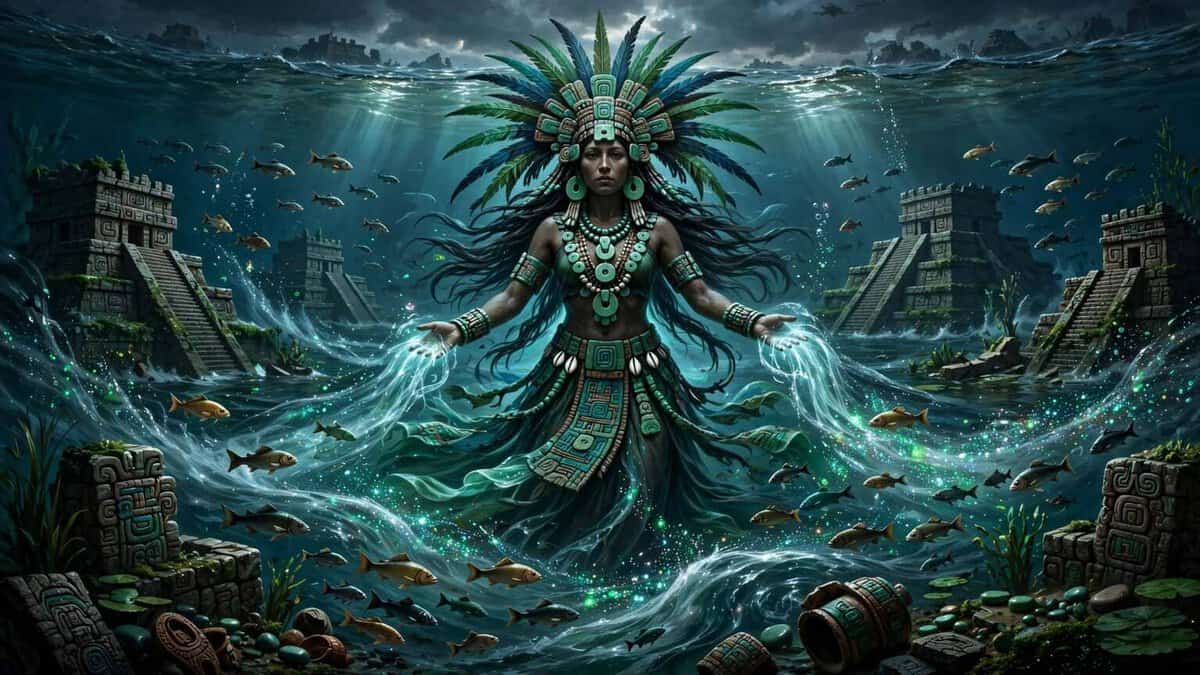
Then the rains came and wouldn’t stop. The sky stayed open, and the rivers swelled past their banks, and the lakes spilled into the land.
The Nahua called this flood Apachiohualiztli.
The goddess who had given life to the first age now watched it drown. And the people of that age, the giants, were turned into fish!
They didn’t vanish when the world changed; instead, they adapted.
It’s an end of an era, but it’s not without hope.
This tale reminds us that nothing is truly erased; it only becomes something else.
5. The Couple in the Tree
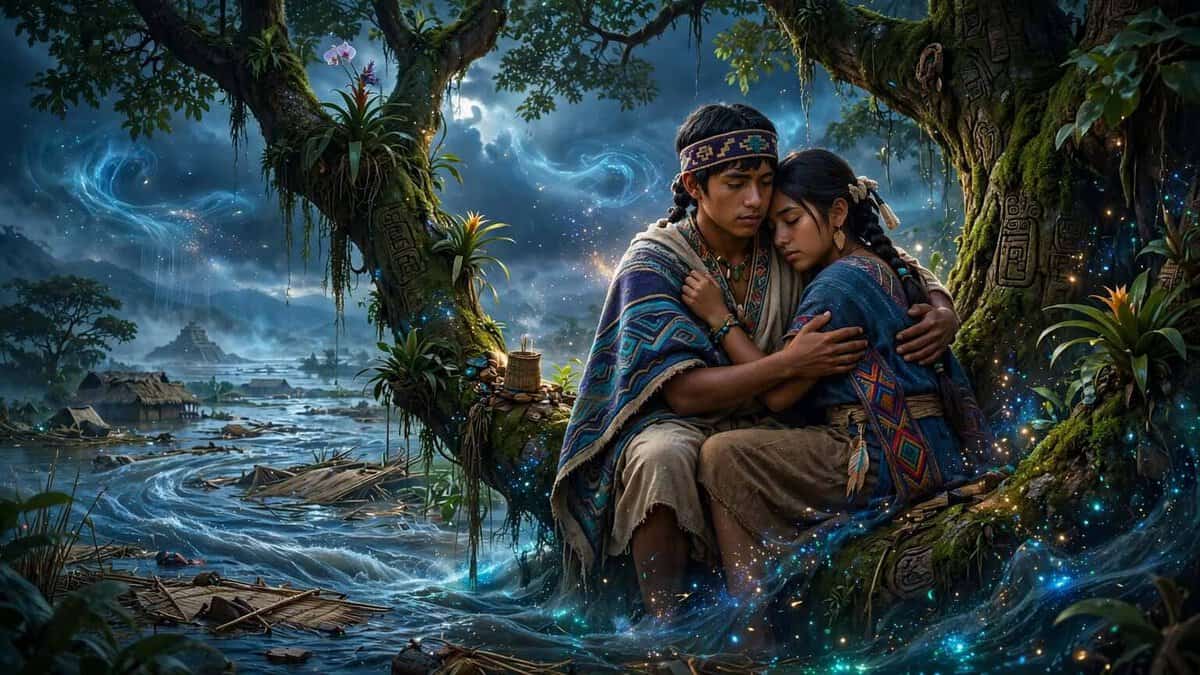
Only one giant couple survived the flood in their original shape.
While the water climbed, they found shelter inside an old tree beside the water.
They couldn’t see how far the flood reached, or when it would end.
They stayed hidden until the flood was over, and they stepped out into a silent world.
Stories like this show up in many cultures, with lone survivors 谁 carry life through the catastrophe.
6. Builders of Impossible Cities
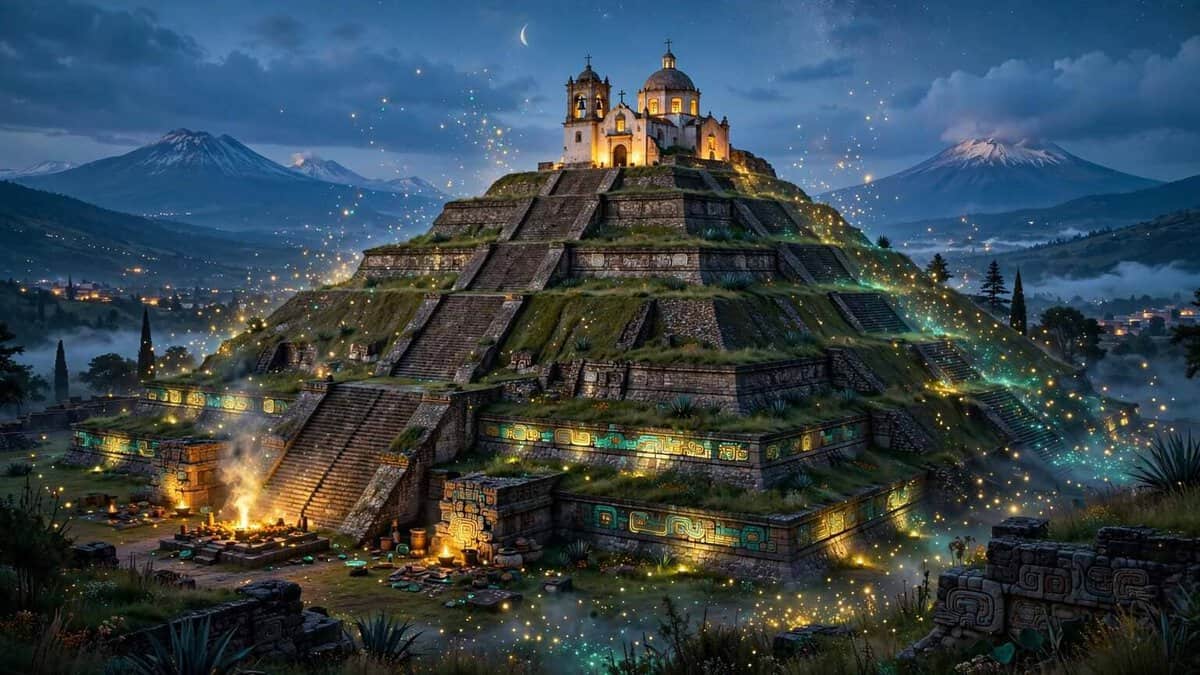
Giants turn up across Mesoamerican tradition, and not only in one age.
ǞǞǞ Nahua credited the quinametzin, with building their aforementioned monuments.
当 Aztecs found Teotihuacan, it had been abandoned for centuries, but its Avenue of the Dead and its towering Pyramids of the Sun and Moon still stood.
Nobody living knew exactly who had raised them, or how.
Cholula’s pyramid is even more astonishing. It’s the largest on Earth by volume!
To people standing in front of it, it felt impossible that human hands had built it. So they imagined much bigger hands!
The giants became the answer to a question that had no other answer.
7. The Bone Shown to Cortés
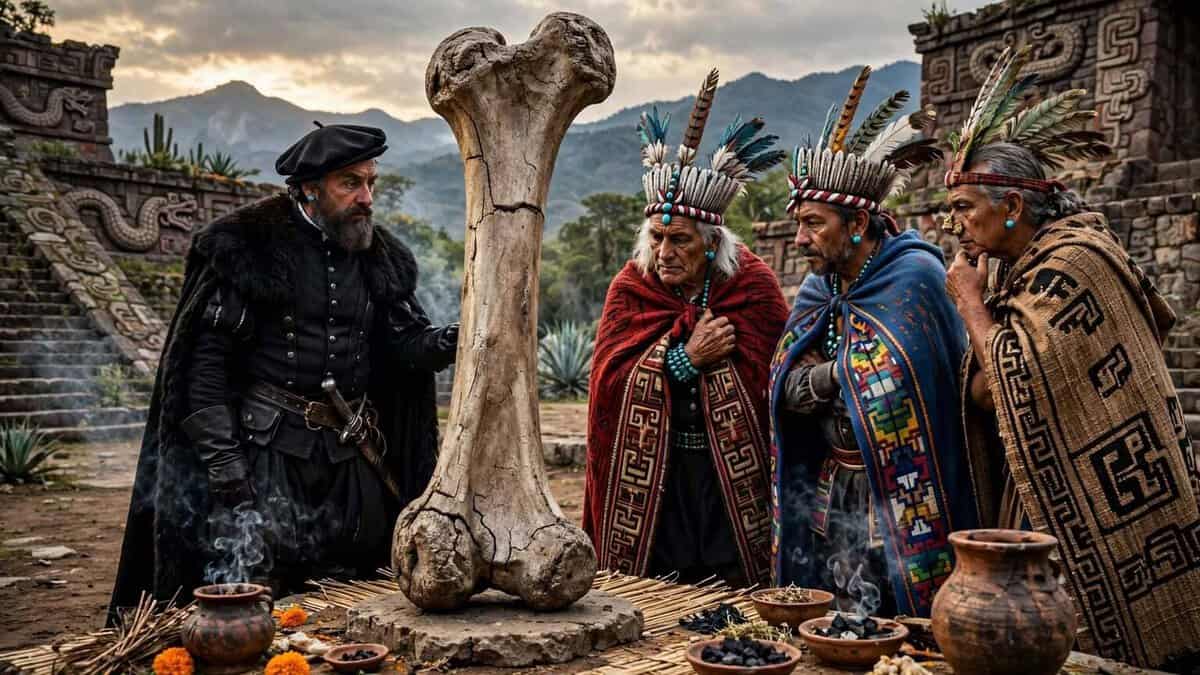
在 1519, Cortés and his men have marched inland from the coast.
In Tlaxcala, the elders tell them about the giants of the old stories. Then they do something more convincing than any story: they show them proof!
It was a huge thigh bone, as tall as a man.
Cortés took it seriously enough to act on it, and he sent the bone to the King of Spain!
So a Nahua legend crossed the Atlantic.
A piece of the giants’ world was carried all the way to a king’s court.
8. A Giant, or an Elephant’s Leg?
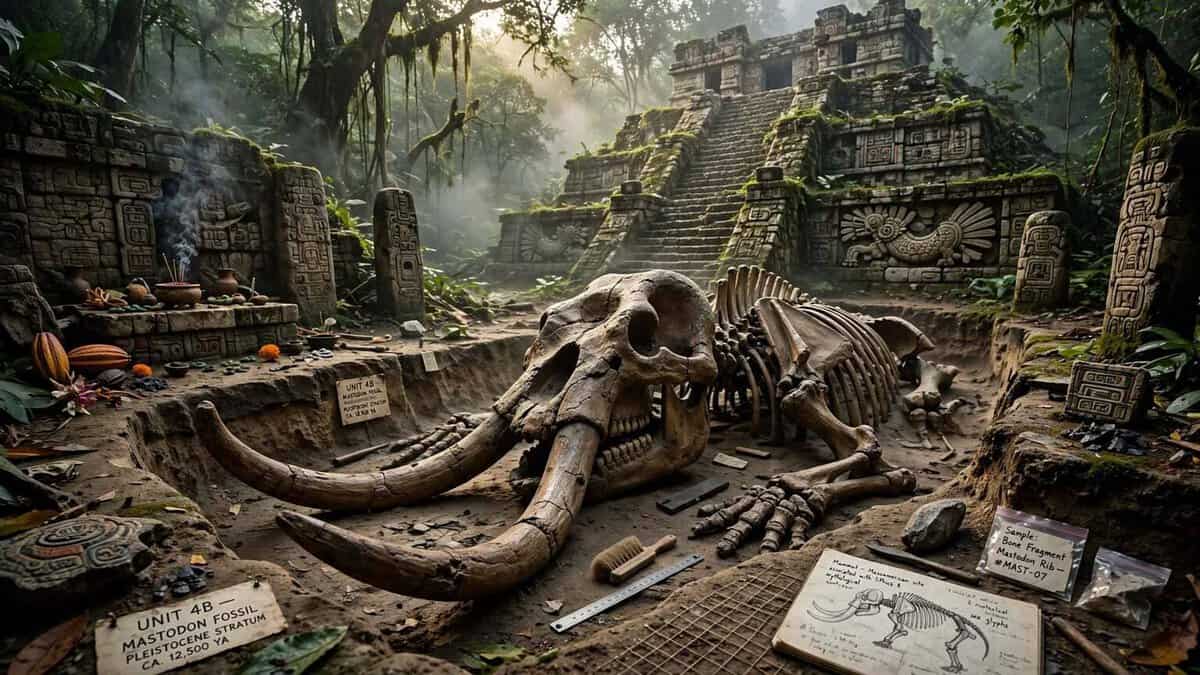
Sadly, there’s a high possibility that the bone belonged to a mammoth or mastodon. Central Mexico is full of their fossils.
Ice Age elephants once roamed the highlands, and when they died, their enormous bones were buried all over the place.
To someone who had never seen such an animal, a leg bone that tall could only belong to a giant.
The people of ancient Mexico found the bones of vanished Ice Age giants, and they gave those bones a story and a place in the history of the world.
9. One Painted Page
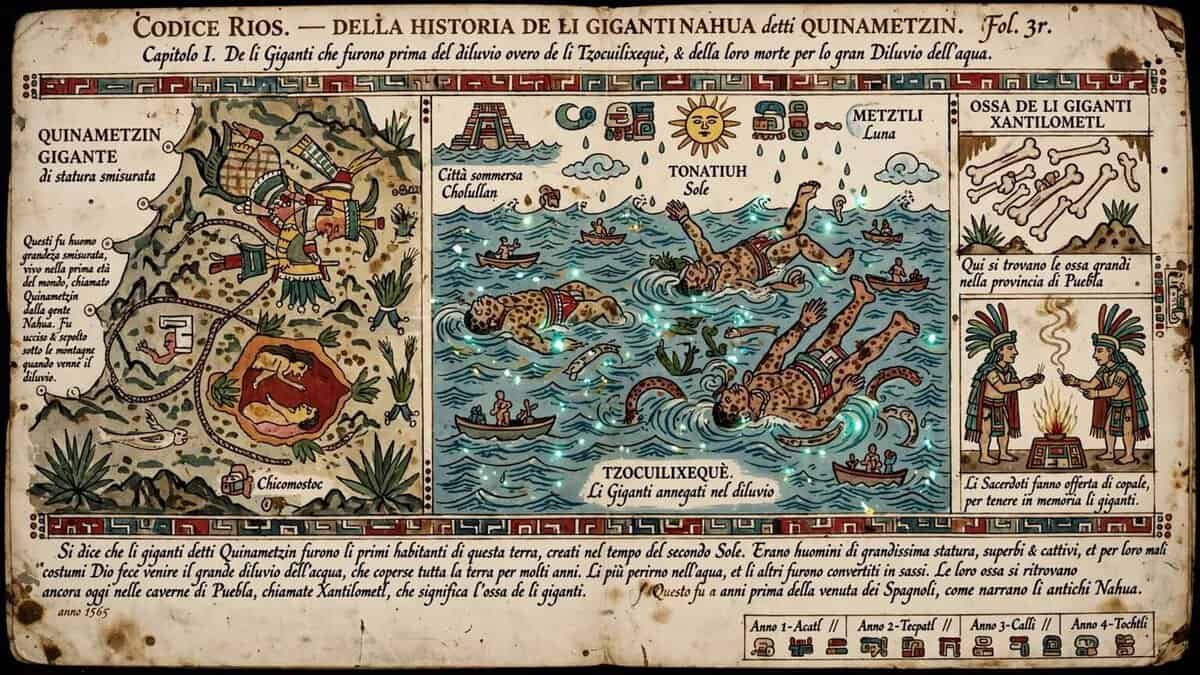
This story didn’t vanish with the flood.
It survives on one painted page of the Codex Ríos, made by Indigenous artists in the 1500s.
Today, it’s kept in the Vatican Library.
It speaks of the flood, the water goddess, and the 4,008 years. The couple is there too, and below them lies a long human figure labeled with the giants’ name.
Beside it, an Italian note reads, tanto erano giganti, meaning “this is how big the giants were.”

A little Aquarius, devoted to writing and embroidery. Through my writing, I hope to empower readers to align with their true selves and navigate life’s mysteries with confidence.