
Across Europe and far beyond, moths have been seen as witches in disguise, wandering souls, and omens that arrive uninvited.
In the Balkans, the link is so tight that some people call moths witches!
So let’s explore the folklore to find out what this connection is all about!
1. Children of the Night
Moths belong to the night, and so do witches. Butterflies get the sunshine and the flowers.
Moths get everything else, the moonlit hours when ordinary people are asleep and the world feels thin and unguarded.
Folklore has always handed the dark to the uncanny, so it’s no surprise the creatures that live there get the reputation.
Also, moths look like they’re made of ash and shadow, in soft browns, greys and ghostly whites, with wings that seem dusted with powder.
They fly in silence and throw themselves at flames with a kind of devotion that looks, to a superstitious eye, like possession!
Nobody could explain where they came from or why they wanted the light so badly.
With a mystery like that, the stories tell themselves.
2. The Balkan Superstition
In parts of the Balkans, the language itself has blurred the line between witches and moths.
In Serbia, Croatia and Bosnia, a witch is a vještica, and in some dialects that very word is also used for night-flying moths.
Local belief explains why. A witch could slip out of her sleeping body after dark and travel as a moth or butterfly, drawn to candle flames and open windows to spy on neighbors and drink the household’s luck!
So people crossed themselves, snuffed the candle, or shut the window tight to keep them out.
3. The Soul That Flutters Free
So how old is this whole idea? Older than the witch trials, and even older than Christianity.
The ancient Greeks used one word, 心理, for both the soul and 的 蝴蝶, and Aristotle used it for the insect in his writings on animals.
Artists later showed Psyche as a girl with butterfly wings, a soul fluttering free.
The notion that your spirit can leave the body as a winged thing seems to have been present in cultures that never met.
In the Aztec world, the goddess Itzpapalotl, the Obsidian Butterfly, was tied to sacrifice and the dead.
Germanic and Slavic lore describes a soul slipping out of a sleeper as a moth, a mouse, or a white butterfly.
And if a soul can leave the body in that shape, then a living person with the right skills could do it on purpose!
That’s the story behind moths being seen as shape-shifting witches!
4. Milk Thieves and Shape-Shifters
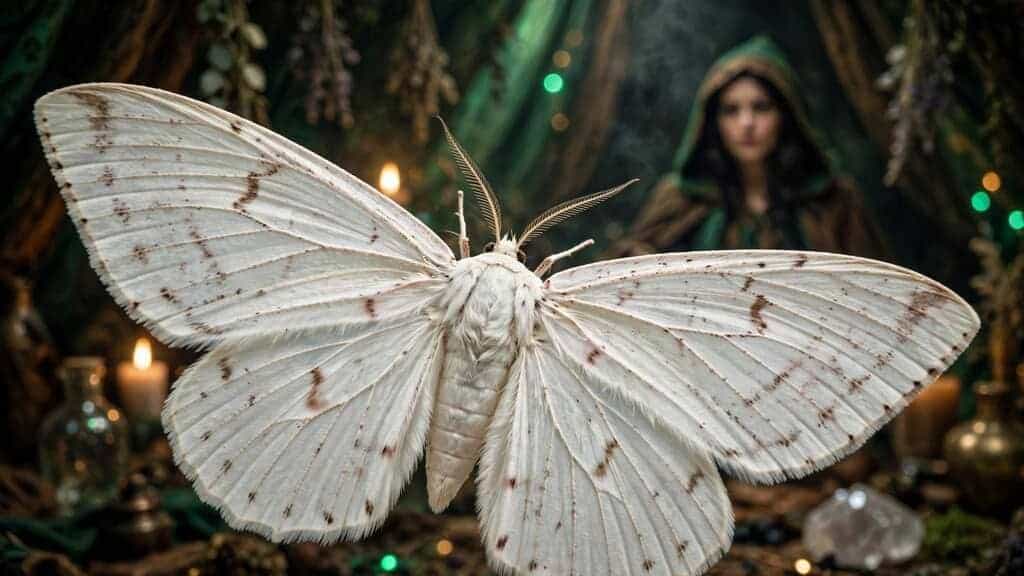
Across Britain, Ireland and German-speaking countries, folk tales warned that witches turned into butterflies and moths to steal milk and butter.
The German folk name Molkendieb (whey thief) makes the accusation obvious, and English 蝴蝶 may also carry this meaning.
Witch-hunting manuals like the Malleus Maleficarum obsessed over shape-shifting, mostly into cats, hares and mice.
But the wider belief that witches could borrow any small creature’s body left plenty of room for insects.
In Ireland, harming a white moth or butterfly was said to bring bad luck, since it might hold a dead relative’s soul.
So the same moth could be a visiting ghost or a witch. Folklore loves a double meaning.
5. The Skull on the Hawkmoth’s Back
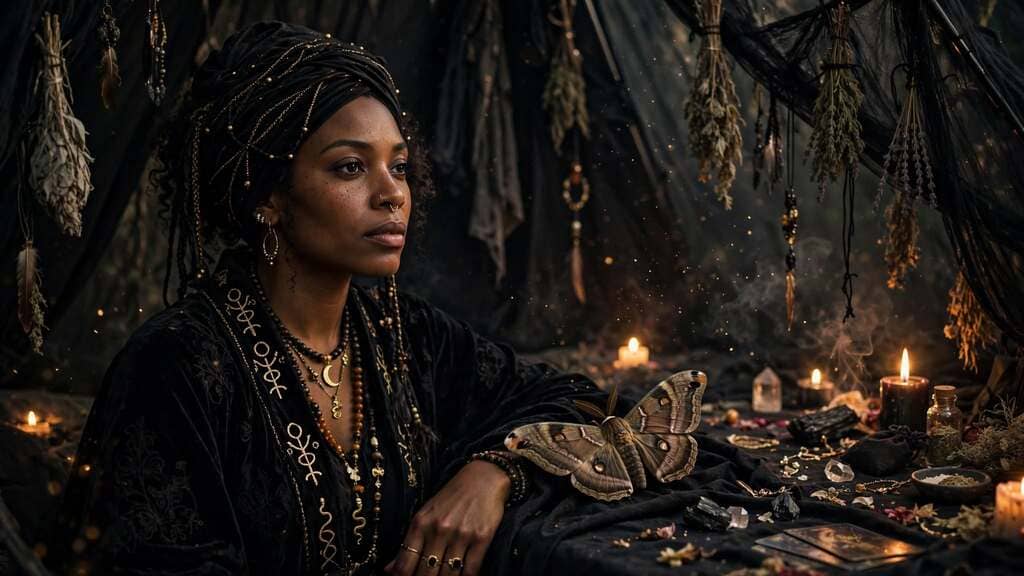
Not all moths are equal in the witchy hierarchy, and the death’s-head hawkmoth stands out as special.
Its wings contain a pale pattern that looks like a human skull. As if that weren’t enough, it squeaks when disturbed and raids beehives for honey!
Its name, Acherontia atropos, nods to Acheron, a river of the Greek underworld, and Atropos, the Fate who cuts the thread of life.
Across Europe, it was read as an omen of death, war and witches.
Hawkmoths are also pollinators of night-blooming flowers, including datura and other nightshades, the very plants tied to the legendary ointments of witches!
All of these facts fed the legends until they grew into what we know today.
6. A Coven of Witch Moths
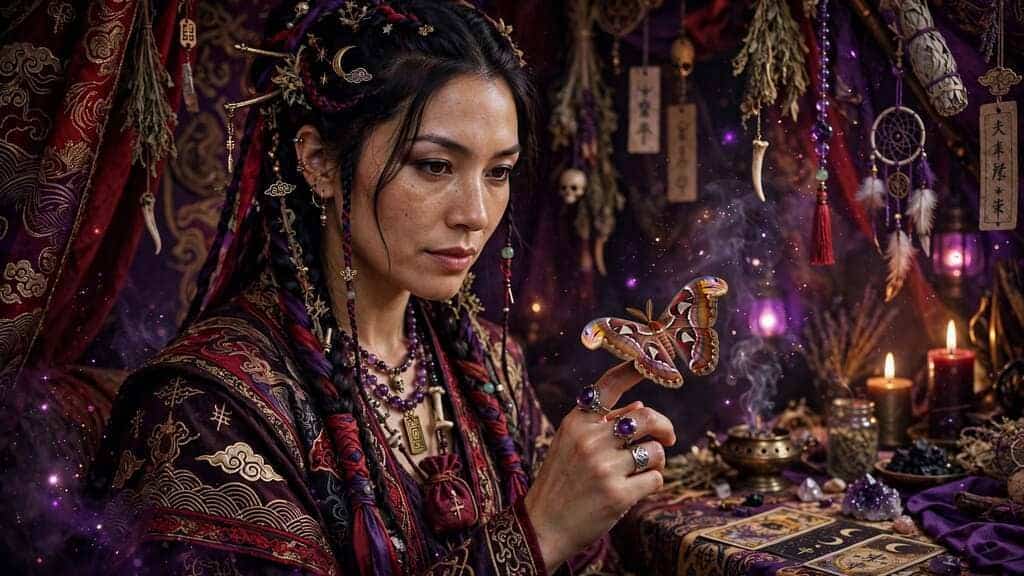
Many different kinds of moths carry names that remind us of witches.
The black witch, Ascalapha odorata, is a huge dark moth that exists across Mexico and Central America and sometimes far north.
In Mexico it’s called the mariposa de la muerte,"...... butterfly of death, and folk belief says that if one lands in your house, someone will die.
Then there’s the white witch, Thysania agrippina, with a wingspan of around thirty centimeteres, among the biggest of any insect.
Its pale wings carry markings that resemble strange handwriting.
ǞǞǞ luna moth has no working mouth as an adult and lives about a week, making it a symbol of moon magic and fleeting beauty.
ǞǞǞ hag moth‘s twisted caterpillar looks like a witch’s tangled hair, and the ghost moth shimmers white at dusk.
Each has inspired its own little legend, and together they resemble a coven.
7. Mystic Longing
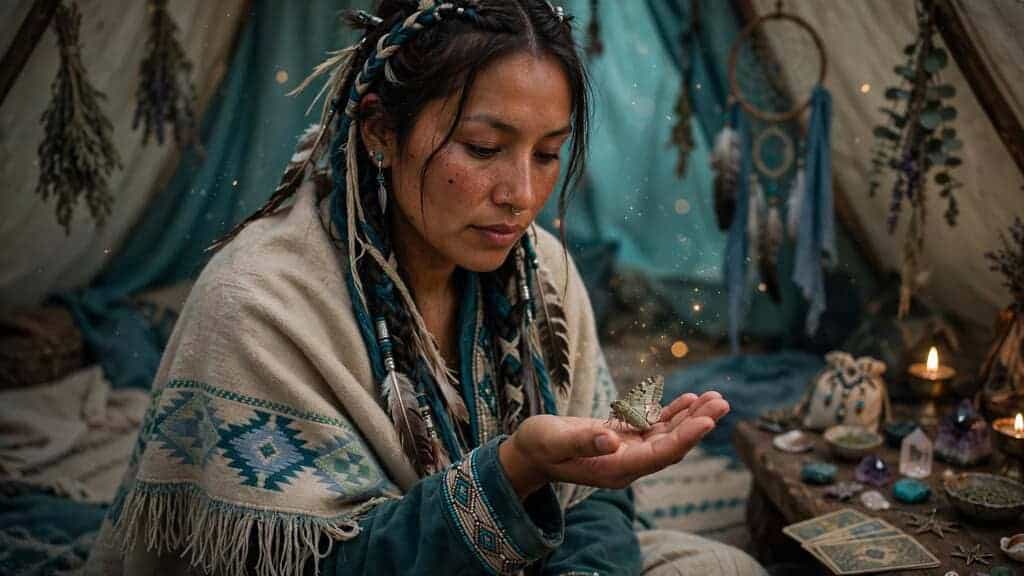
Now, there’s no grimoire that says witches become moths.
Their connection lives mostly in oral folklore, gathered later by collectors like Jacob Grimm.
But moths have a rich mystical afterlife too. Honestly, that’s where the story really gets beautiful.
In Persian Sufi poetry, the moth circling the candle is the soul drawn to divine fire.
Attar’s 12th-century Conference of the Birds has moths gathering to debate the flame, and the mystic al-Hallaj used moth and flame as an image of annihilation in love.
Modern occultists 和 neo-pagans have borrowed that imagery, treating the moth as a symbol of transformation and hidden knowledge.
Many witches today see the moth as a guide for shadow work and rebirth.
8. Why the Spell Still Holds
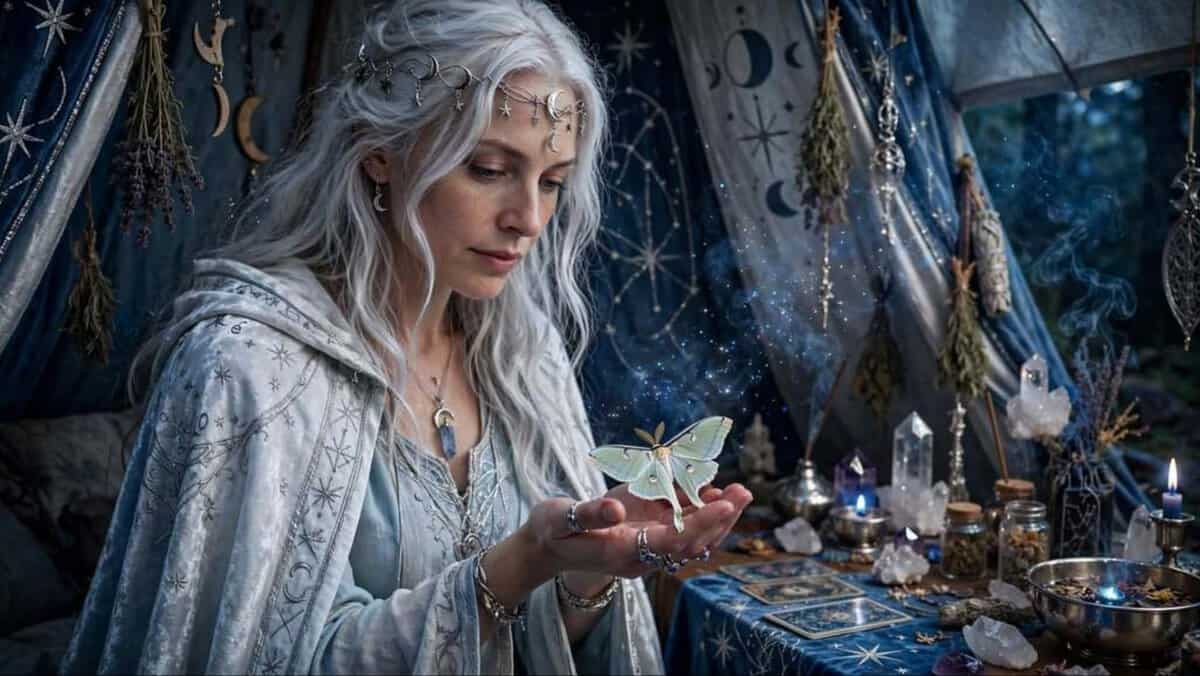
So why does the moth still have a place in our imagination?
Scientists think moths steer by keeping the moon at a steady angle, and a nearby lamp scrambles that compass, sending them spiraling.
To our ancestors, that looked like longing or enchantment.
Today, many moth species are declining, and their night world is fading under streetlights. Yet the 象征主义 只有 grows richer.
Moths stand for transformation, because each one melts down and rebuilds itself inside its pupa.
They stand for the overlooked, the shadow side.
And they stand for witches, the wise women pushed to the edges of society!

A little Aquarius, devoted to writing and embroidery. Through my writing, I hope to empower readers to align with their true selves and navigate life’s mysteries with confidence.