
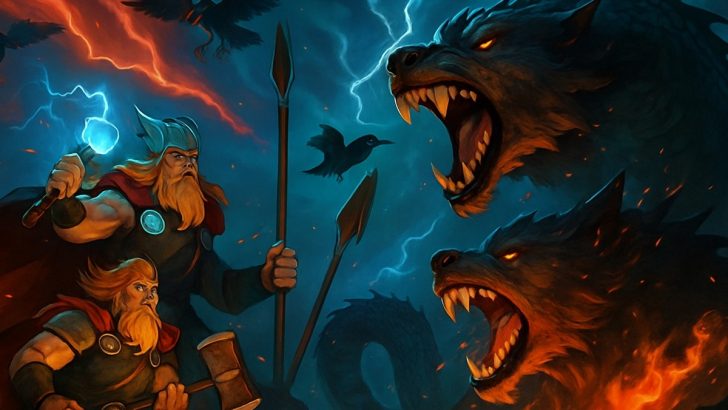
If you thought family drama was bad, wait until you hear about Ragnarok—the Norse version of the end of the world, where gods, monsters, and long-standing grudges all collide in one catastrophic final battle. This isn’t a gentle fade-to-black situation. It’s fire, chaos, betrayal, and a very clear message: even gods are not safe from destiny.
At the center of this apocalyptic showdown are a group of creatures who didn’t just happen to cause destruction—they were literally fated to take down the most powerful gods in existence. Think of them as the ultimate “problem children” of mythology, except their rebellious phase ends with cosmic annihilation.
Let’s meet the terrifying lineup that was destined to bring the gods to their knees.
1. Fenrir – The Wolf Who Broke His Chains
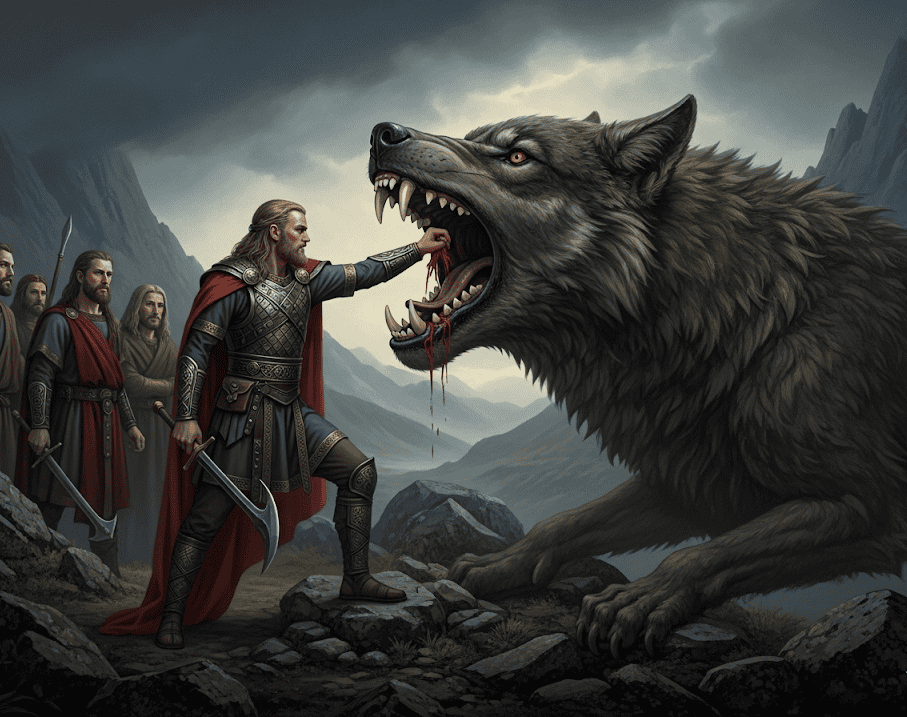
Fenrir is not your average “big bad wolf.” He’s the kind of wolf that makes entire pantheons nervous. The monstrous son of Loki, Fenrir grew so large and powerful that the gods decided to bind him before he could become a problem. (Spoiler: he still became a problem.)
They tricked him into being chained with a magical ribbon called Gleipnir, but Fenrir knew something was up. He agreed—on one condition: that one of the gods place their hand in his mouth as a sign of trust. Enter Týr, who promptly lost his hand when Fenrir realized he’d been deceived. Awkward.
At Ragnarok, Fenrir breaks free, grows to unimaginable size, and fulfills his destiny by killing Odin himself. Yes, 那 Odin. It’s less “underdog story” and more “cosmic revenge arc,” and Fenrir absolutely commits to it.
2. Jörmungandr – The World-Encircling Serpent
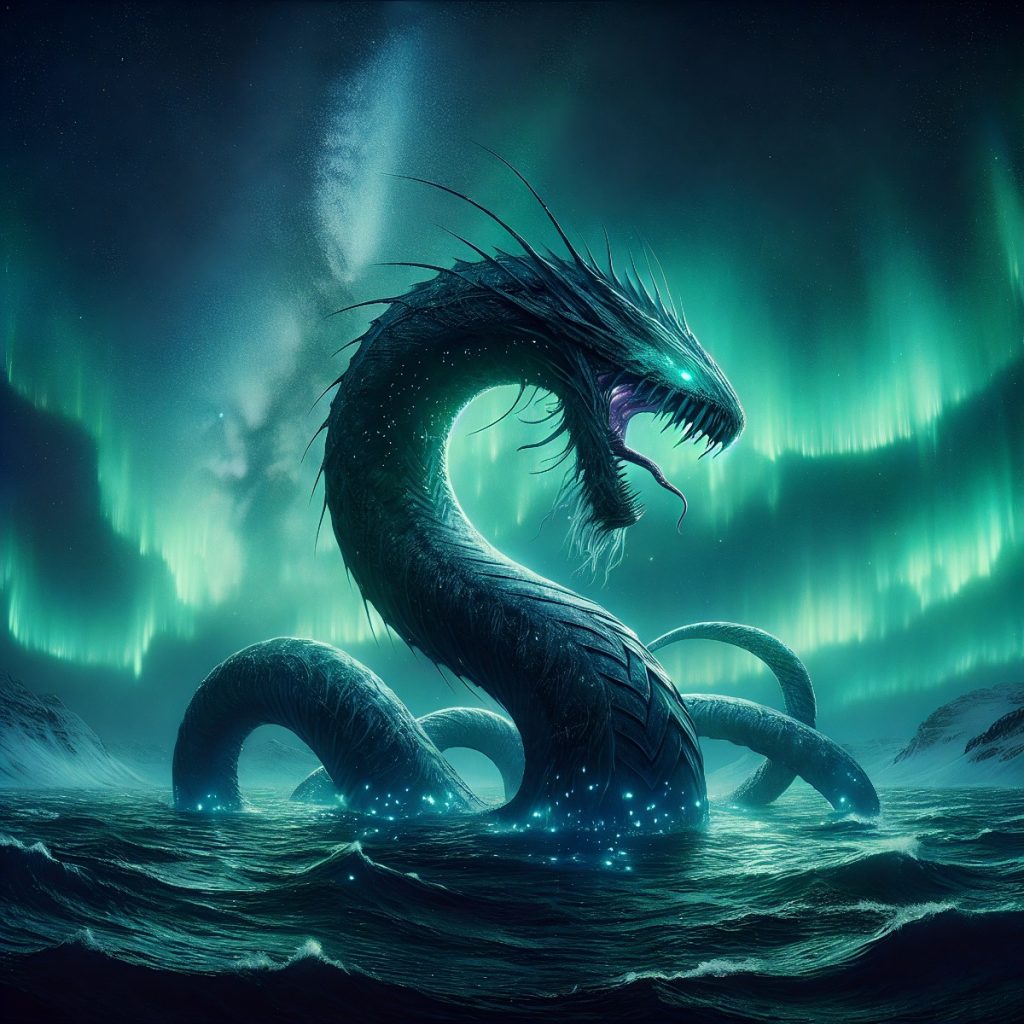
If you’ve ever felt overwhelmed, just remember: at least you’re not a serpent so large you can wrap around the entire world. Meet Jörmungandr, another one of Loki’s delightfully chaotic children.
Also known as the Midgard Serpent, Jörmungandr lives in the ocean and is so massive that it encircles the earth, biting its own tail like a very aggressive ouroboros. Its existence alone is unsettling—but its destiny? Even worse.
At Ragnarok, Jörmungandr emerges from the sea, poisoning the sky and land with its venom. It faces off against Thor in one of mythology’s most iconic battles. Thor manages to kill the serpent (heroic!), but only takes nine steps before succumbing to its poison (less heroic, but still dramatic).
It’s the ultimate mutual destruction—because in Norse mythology, even victories come with consequences.
3. Hel – The Ruler of the Dead
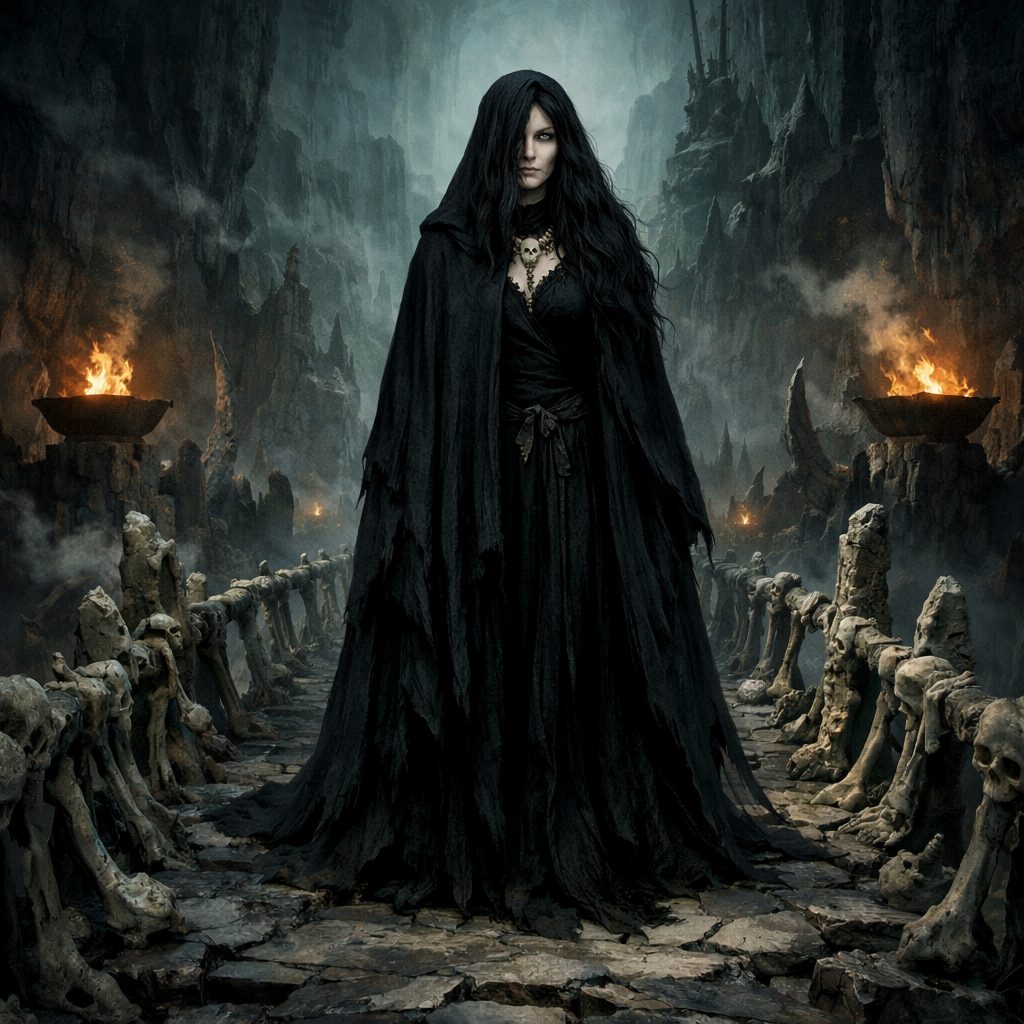
Not all destroyers need to swing swords or breathe fire. Some just… run the afterlife. Hel, daughter of Loki, rules over Helheim, a realm reserved for those who didn’t die gloriously in battle.
Often depicted as half alive and half dead (because subtlety is not Norse mythology’s strong suit), Hel embodies decay, inevitability, and the quiet power of death itself. She doesn’t chase the gods—she waits. And eventually, everyone comes to her.
During Ragnarok, Hel plays a crucial role by releasing the dead to join the final battle. Imagine an army of the deceased marching toward the gods under her command. Not exactly comforting.
Her power isn’t flashy, but it’s absolute. After all, you can’t defeat death—you can only delay it. And at Ragnarok, that delay runs out.
4. Surtr – The Fire Giant Who Ends It All
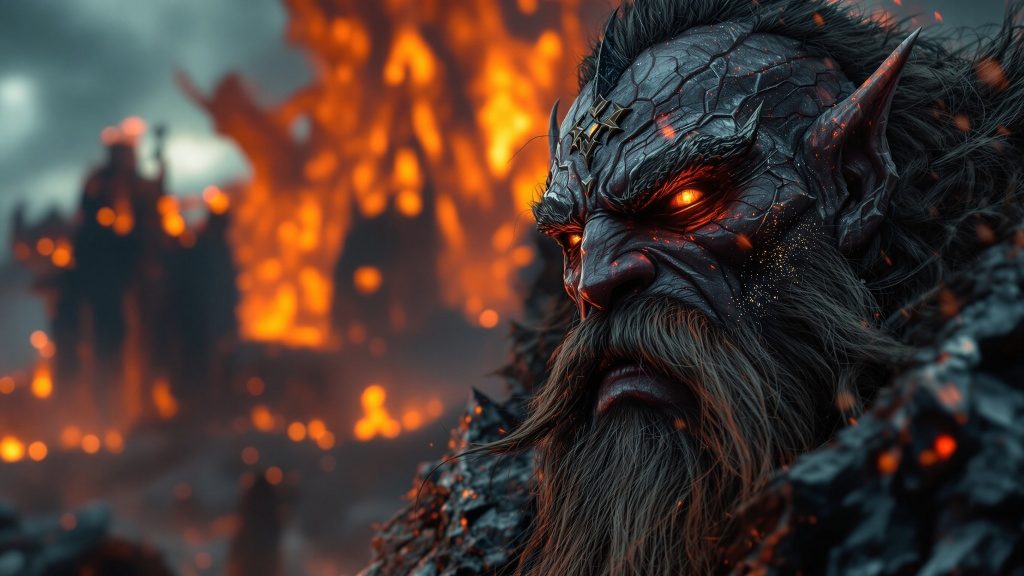
If Ragnarok had a grand finale, Surtr would be the one holding the flaming sword. This fire giant from Muspelheim doesn’t just participate in the apocalypse—he finishes 它。
Surtr leads an army of fire giants into battle, clashing with the gods and setting the world ablaze. His destiny is to kill Freyr, which he does with ease—partly because Freyr gave away his magical sword earlier (a decision that really comes back to haunt him).
But Surtr’s most iconic moment comes after the battles are done. He engulfs the entire world in flames, reducing everything to ash. It’s dramatic, final, and very on-brand for a being literally made of fire.
If Ragnarok is chaos, Surtr is the closing act—the one who makes sure there’s nothing left to rebuild… at least for a while.
5. Loki – The Trickster Who Turned on the Gods
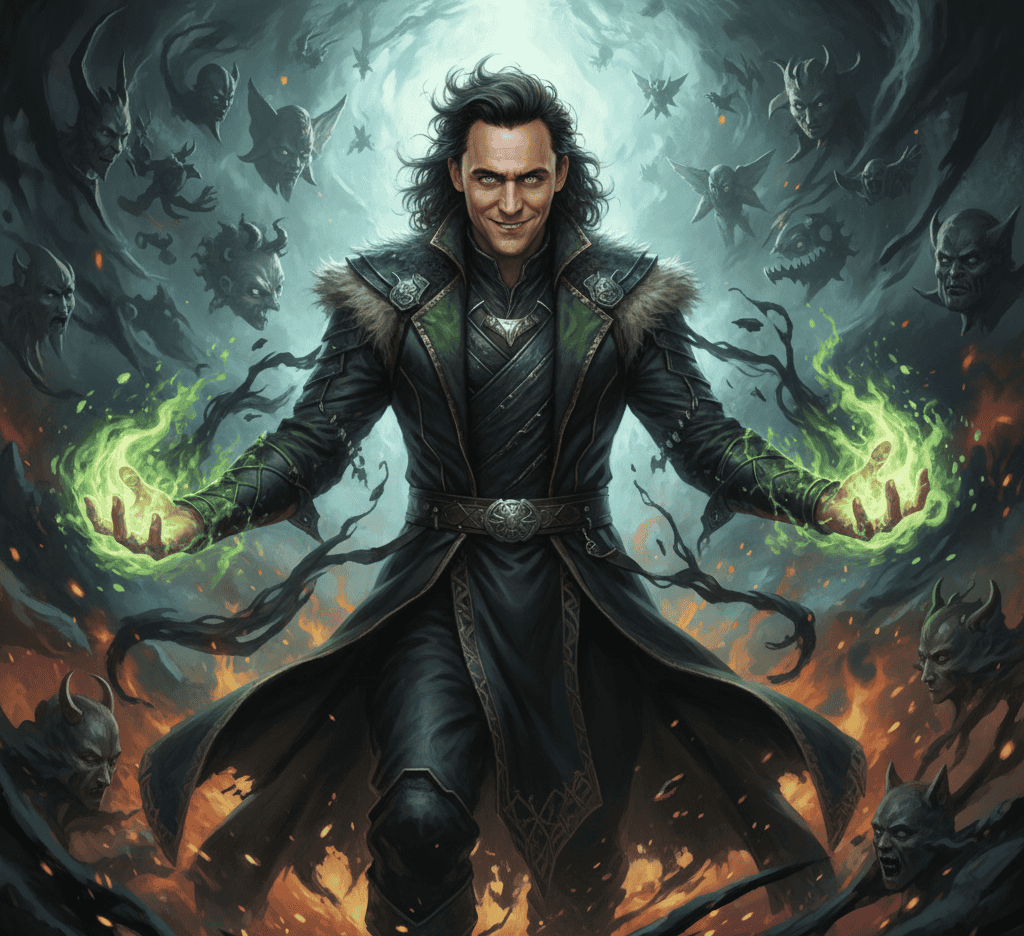
Ah, Loki—the original chaos agent. For most of Norse mythology, Loki exists in a morally gray area: sometimes helping the gods, sometimes causing problems, always keeping things interesting. But at Ragnarok? He fully commits to the villain arc.
After being punished by the gods for his role in the death of Baldr, Loki breaks free and joins the forces of destruction. He sails into battle on the ship Naglfar (made of dead people’s nails, because of course it is) and leads an army against the very gods he once called allies.
His final showdown is with Heimdall, and in true dramatic fashion, they kill each other. Loki’s story ends the way it lived: chaotic, unpredictable, and impossible to ignore.
6. The Valkyries’ Opposite – The Army of the Dead
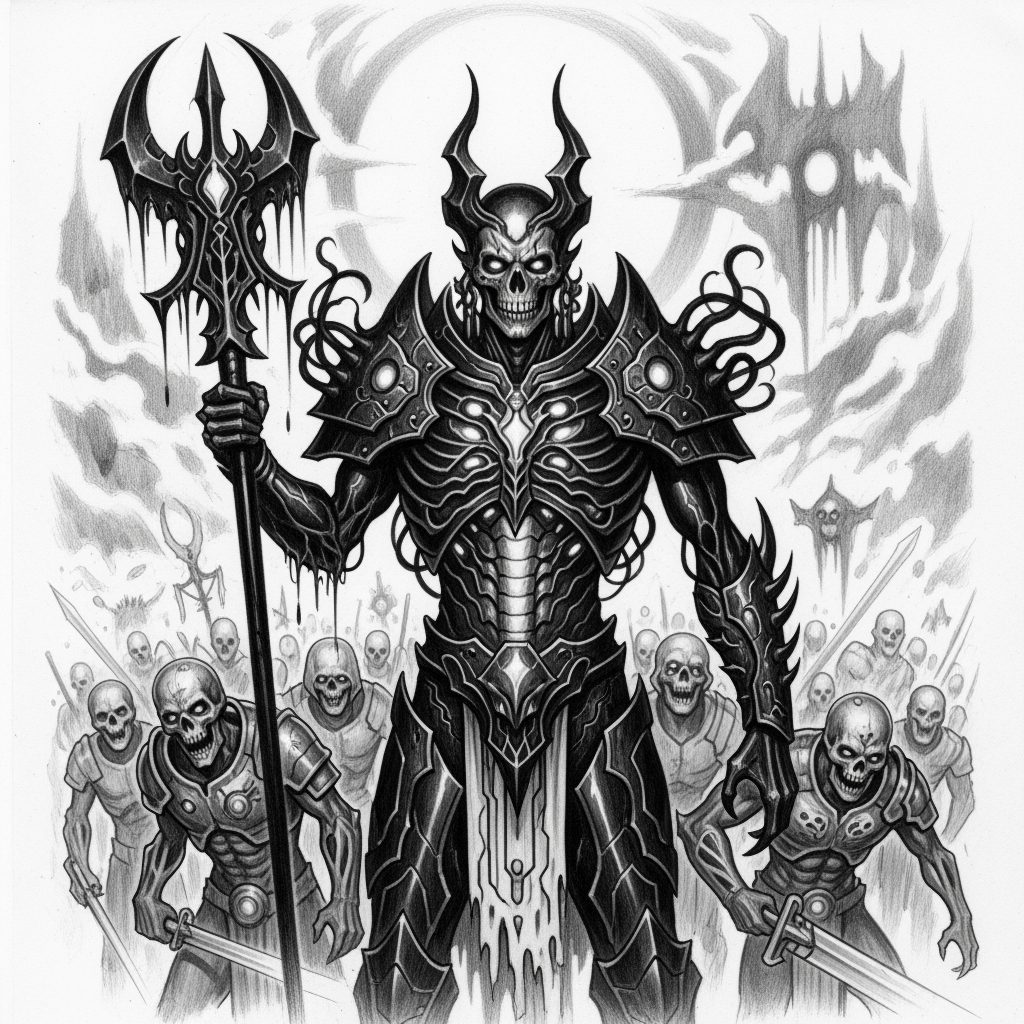
Usually, Norse mythology celebrates heroic warriors being chosen by Valkyries to enter Valhalla. But at Ragnarok, there’s another team entering the battlefield—and they’re not exactly glowing with divine approval.
Under Hel’s command, the dead who did not die in battle rise and march against the gods. This army represents everything the gods didn’t choose, didn’t honor, and perhaps underestimated.
They arrive en masse, adding to the overwhelming chaos of Ragnarok. It’s not just a battle between gods and monsters—it’s a full-scale collapse of order, where even the forgotten and discarded have a role to play.
There’s something almost poetic about it: in the end, it’s not just the powerful who shape destiny. It’s everyone—including the ones history tried to ignore.
7. Final Thoughts
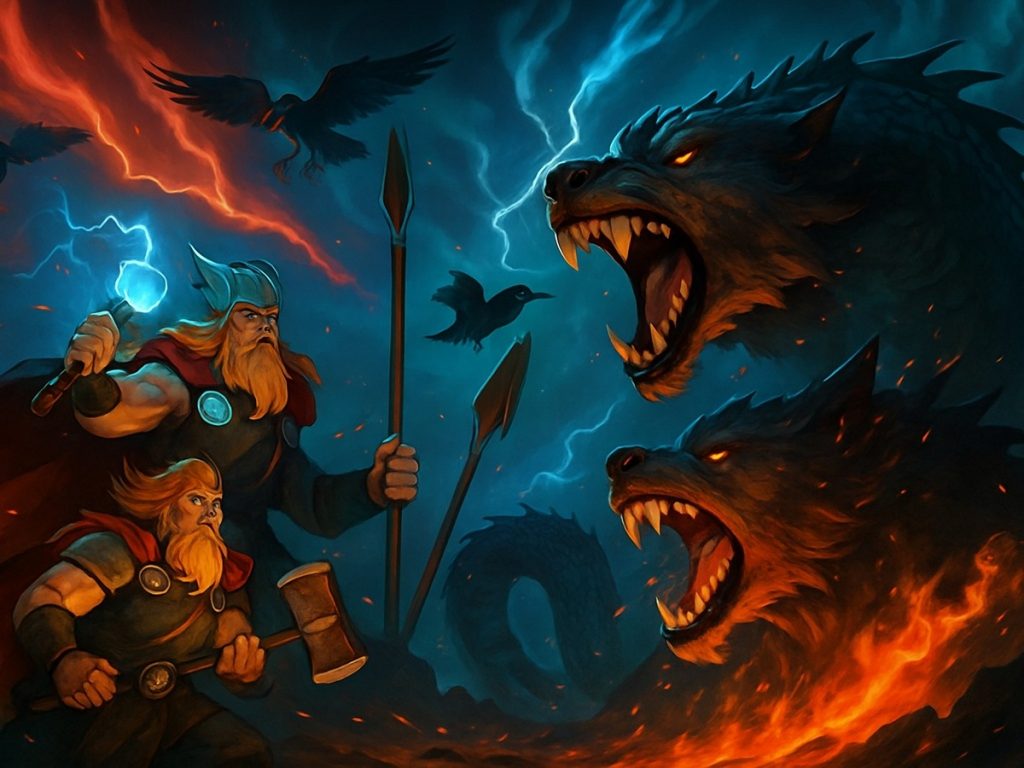
Ragnarok isn’t just about destruction—it’s about inevitability. These creatures weren’t random threats; they were woven into the fabric of fate itself. No matter how powerful the gods were, their endings were already written.
And honestly? There’s something strangely comforting about that. Even in a world of gods, monsters, and flaming swords, one truth remains: destiny always gets the final word.

Lover of good music, reading, astrology and making memories with friends and spreading positive vibes! 🎶✨I aim to inspire others to find meaning and purpose through a deeper understanding of the universe’s energies.