

Have you ever wondered why flowers bloom in spring, why summer feels so full of life, and why winter can seem cold and quiet?
In Greek mythology, the answer begins with one of the most dramatic family stories ever told.
According to the ancient Greeks, the seasons changed because Persephone, the daughter of Demeter, was taken to the underworld by Hades.
This myth has everything you could want in a story. Love, loss, grief, hope, and a magical fruit that changed everything.
It may sound like a fantasy movie, but for people in ancient Greece, this story explained why nature changes throughout the year.
Here are five fascinating facts about the myth that gave the world its seasons.
1. Hades Kidnapped Persephone and Changed the World Forever
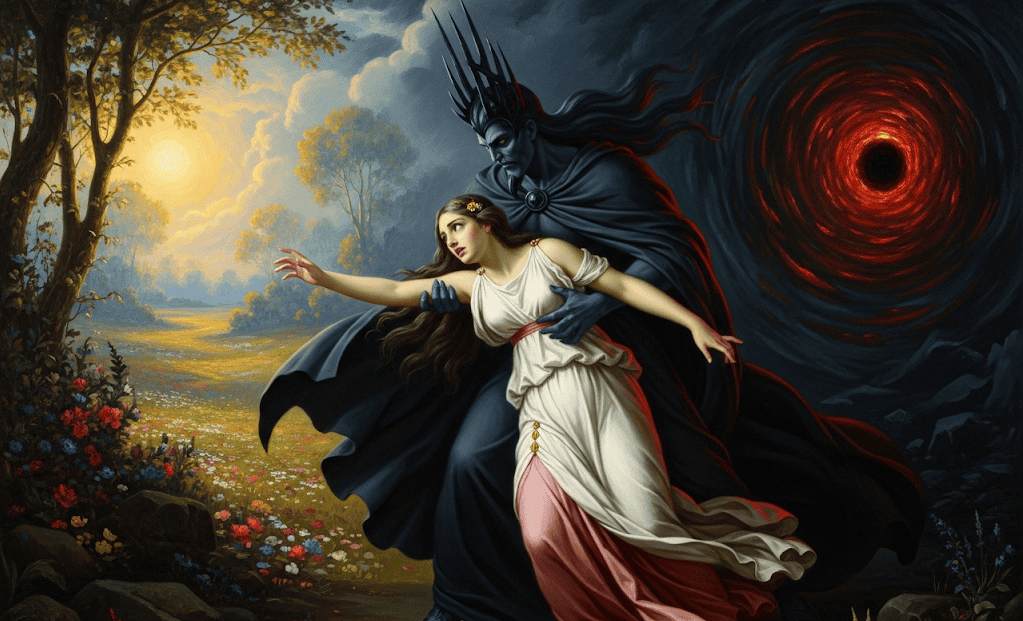
The story begins with Persephone, a young goddess who was gathering flowers in a peaceful meadow. It sounds like a perfect day.
The sun was warm, the grass was soft, and everything felt calm and beautiful. Then, without warning, the ground split open.
Hades, the ruler of the underworld, rose from the earth in his chariot and carried Persephone away to his dark kingdom.
It is one of the most dramatic moments in all of Greek mythology. Imagine going for a relaxing walk and suddenly finding yourself in a completely different world.
That is exactly what happened to Persephone. Her disappearance did not only affect her.
Persephone was the beloved daughter of Demeter, the goddess who cared for plants, crops, and all growing things.
When Persephone was taken, the emotional balance of the gods was shattered.
For the ancient Greeks, the feelings of the gods shaped nature itself. So when Persephone vanished, the world was never the same again.
2. Demeter’s Grief Caused Winter
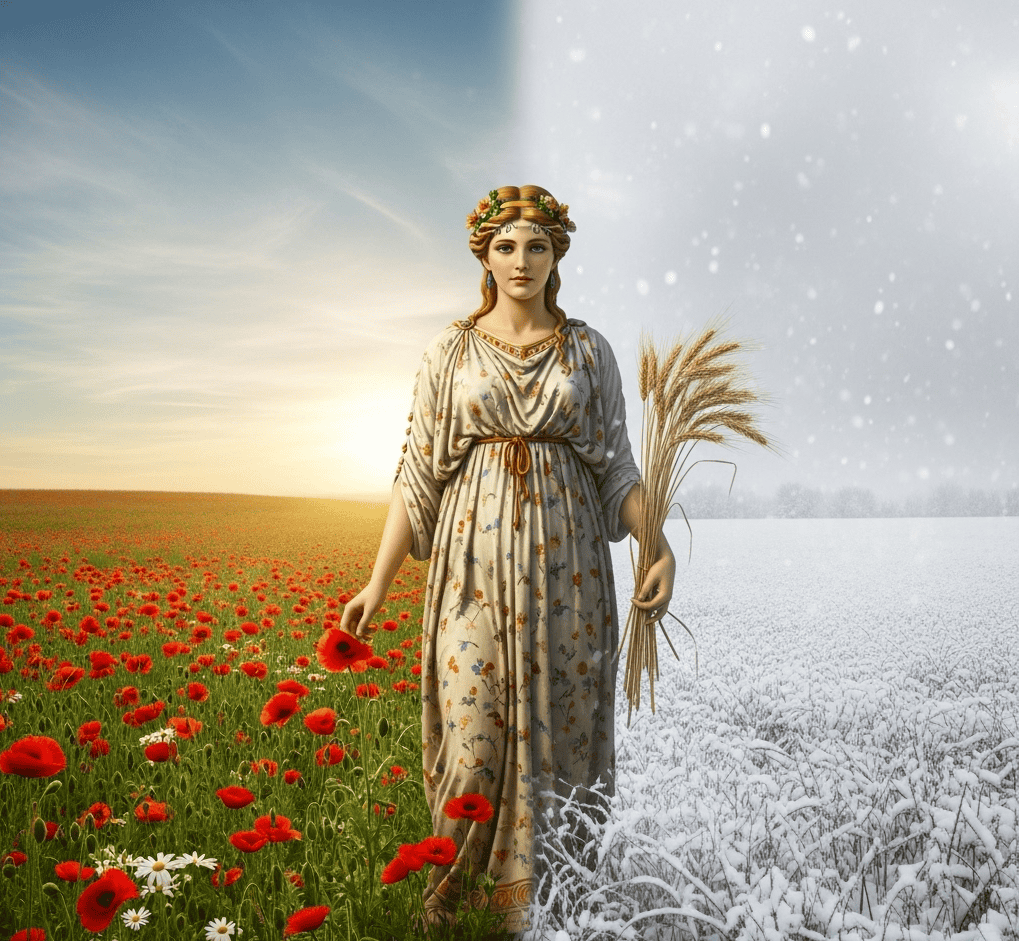
When Demeter realized her daughter was missing, she was heartbroken. She searched across the earth, carrying torches and asking everyone she met if they had seen Persephone.
You can almost picture a worried mother refusing to stop until she finds her child.
Demeter’s grief was so overwhelming that she stopped doing her job. As the goddess of agriculture, she was responsible for helping crops grow and keeping the earth fertile.
Without her care, plants stopped growing. Trees lost their fruit. Fields turned brown. The Earth became cold and barren.
This is how the Greeks explained winter. It was not just a weather season. It was the visible expression of a mother’s sorrow.
This part of the myth feels deeply human. When people are grieving, even everyday tasks can feel impossible. Demeter’s sadness was so powerful that all of nature seemed to mourn with her.
3. Zeus Stepped In Because Humanity Was Starving
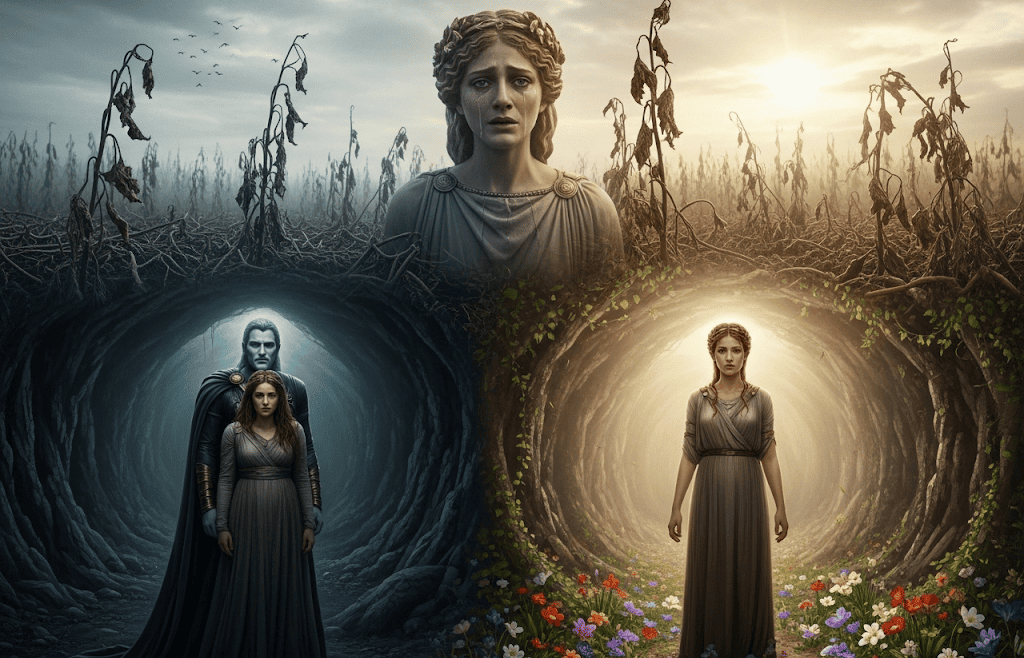
As Demeter continued to grieve, the world became more desperate. Crops failed, and people began to starve. There was no grain to harvest and no food to eat.
This became a serious problem for the gods too. If humans died, they would no longer bring offerings or prayers.
That is when Zeus, king of the gods, finally stepped in. He realized that what started as a family conflict had turned into a crisis for the entire world.
Zeus ordered Hades to return Persephone to her mother. This moment feels very relatable.
Sometimes a family problem grows so large that someone has to step in and say, “Enough. We need to fix this.”
Without Zeus’s decision, the earth might have stayed frozen and lifeless forever.
4. The Pomegranate Seeds Changed Persephone’s Fate

Just when it seemed Persephone would return home for good, there was one important problem. Before leaving the underworld, she ate several pomegranate seeds.
In Greek mythology, eating food in the underworld created a magical bond. Because Persephone had eaten there, she could not leave forever.
This tiny detail changed everything. As a result, Persephone had to spend part of each year in the underworld with Hades and the rest on earth with Demeter.
The pomegranate seeds became a powerful symbol. They remind us that even small choices can have lasting consequences.
It is almost funny when you think about it. A few seeds were enough to decide the rhythm of the entire world.
5. Spring and Summer Begin When Persephone Returns

The final arrangement explains the seasons. When Persephone returns to her mother, Demeter is filled with joy.
Flowers bloom, trees turn green, and crops grow again. The earth feels alive and beautiful. This is spring and summer.
When Persephone returns to the underworld, Demeter becomes sad once more. Leaves fall, the air grows colder, and the world becomes quiet. This is autumn and winter.
It is a beautiful idea. The seasons become the emotional story of a mother and daughter.
What makes this myth so memorable is how personal it feels. Spring becomes a joyful reunion, and winter becomes a time of longing.
Even today, this story reminds us that life moves in cycles. Sad seasons do not last forever. After every winter, spring eventually returns.

I always felt a strong connection to the Divine since my birth. As an author and mentor, my mission is to help others find love, happiness, and inner strength in the darkest of times.