
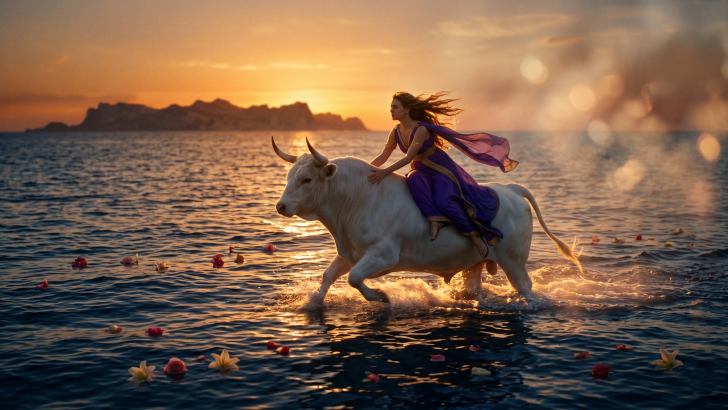
The story of Europa comes from ancient Greek mythology and is one of the most famous tales connected to the naming of a whole continent.
Europa was a beautiful princess whose life changed after a meeting with a powerful god in disguise.
Her story begins in ancient Phoenicia, a region in the eastern Mediterranean, and later connects to ancient Greece.
What makes her story so interesting is how a single myth became linked to the name of Europe itself. For centuries, storytellers have shared her journey as a mix of beauty, mystery, and adventure.
It is a story about trust, transformation, and how one person’s experience can become part of a much larger legend that lasts for thousands of years.
1. Europa Was a Phoenician Princess

Europa was a princess from Phoenicia, an ancient region that is part of modern-day Lebanon and surrounding areas.
She was the daughter of King Agenor, a powerful ruler. In stories from Greek mythology, she is described as kind, graceful, and very beautiful.
Her life in the royal palace was peaceful and comfortable. She lived surrounded by wealth, servants, and family.
However, like many figures in mythology, her ordinary life was only the beginning of a much larger story.
Her background in Phoenicia is important because it shows how myths traveled between cultures in the ancient world.
2. She Was Known for Her Beauty
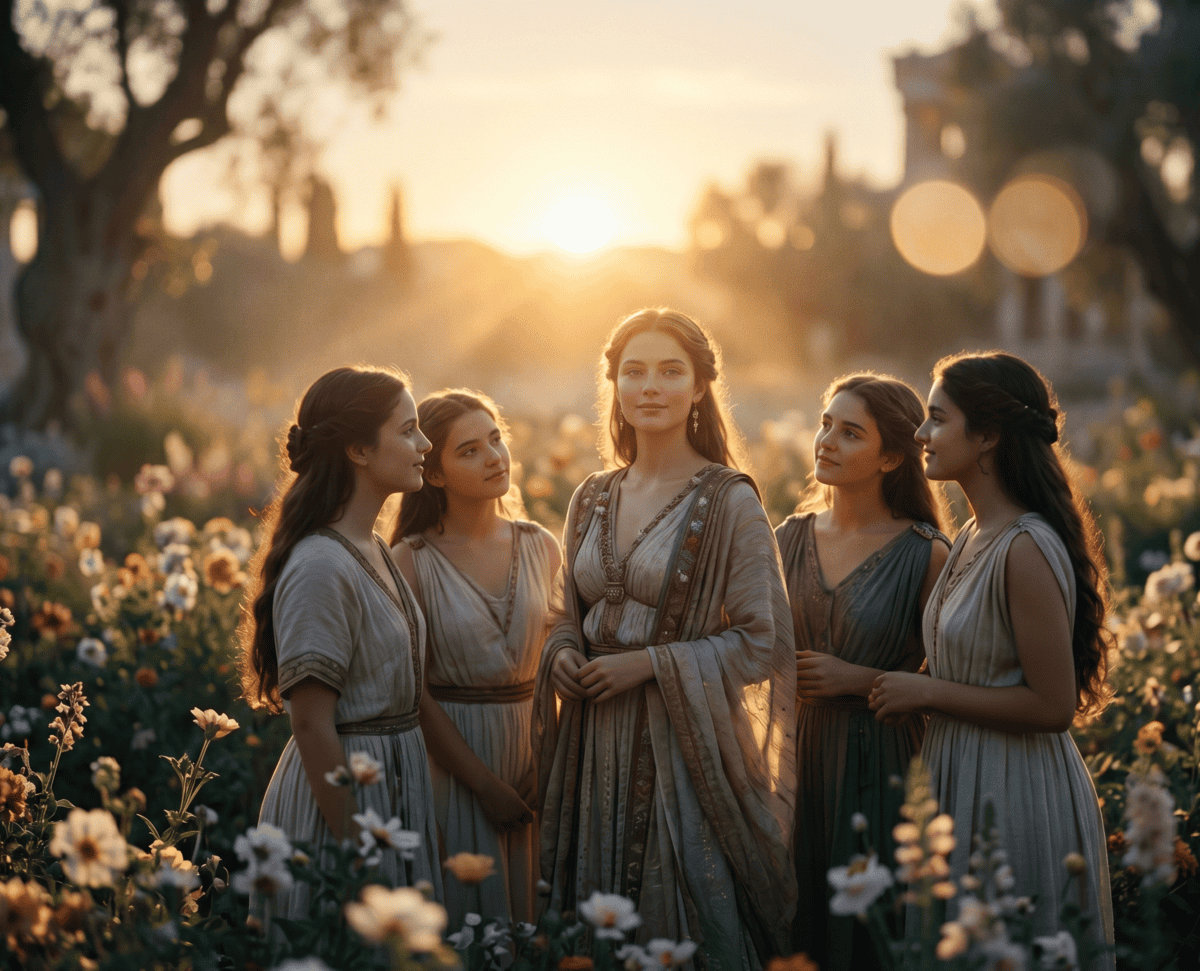
One of the most famous facts about Europa is her beauty. She was said to be so beautiful that even the gods noticed her.
In ancient myths, beauty often attracts the attention of divine beings, and Europa was no exception.
Her appearance was described as gentle and glowing, with a calm presence that made people feel drawn to her.
However, in mythology, beauty is often both a gift and a challenge. For Europa, it eventually led to a life-changing encounter that took her far away from everything she knew.
3. Zeus Saw Her and Fell in Love
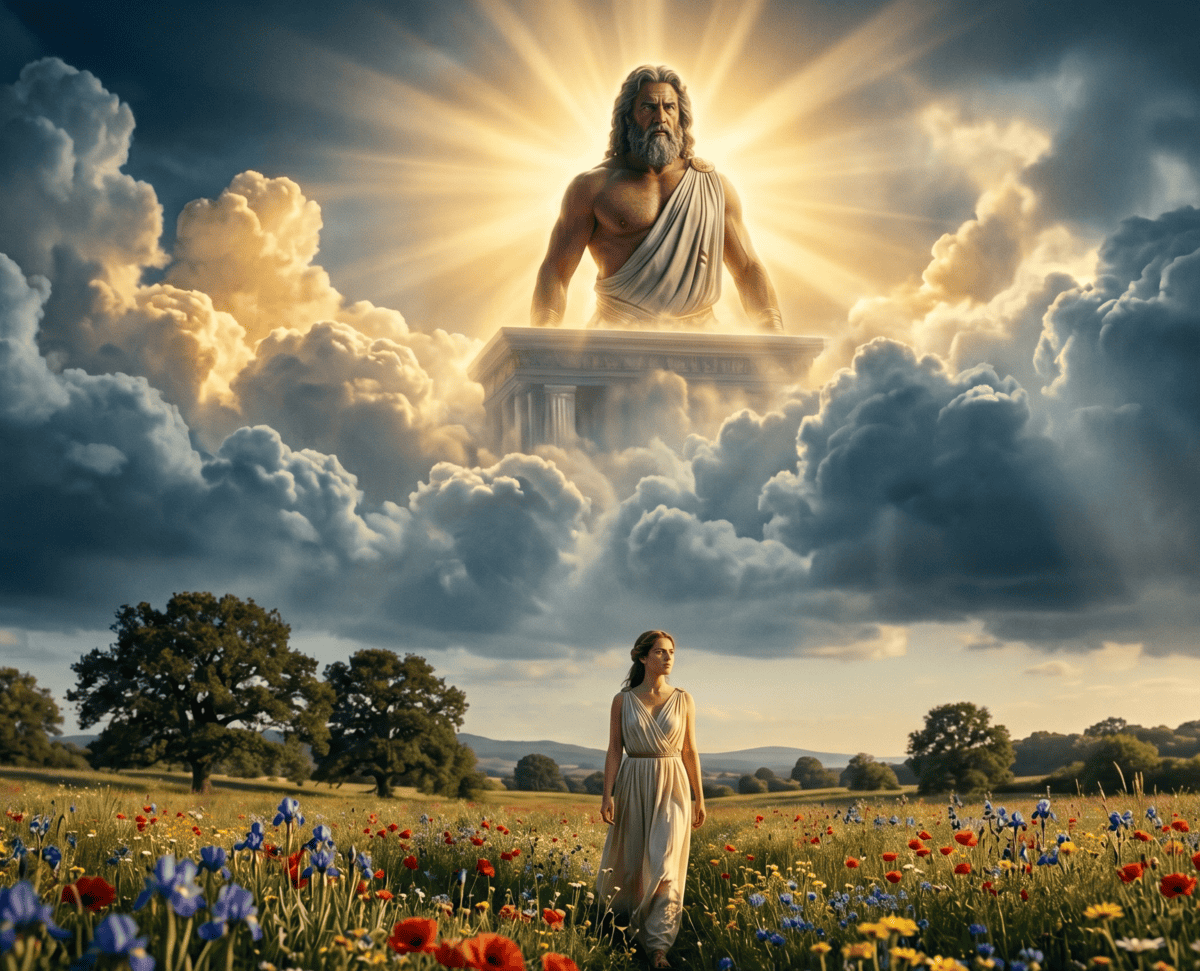
According to myth, the god Zeus, ruler of the gods in ancient Greece, saw Europa and became deeply fascinated by her.
Zeus was known for taking different forms when interacting with humans. He often appeared in disguise when he wanted to approach them.
In Europa’s case, he decided to become a white bull. This transformation was meant to make him appear gentle and harmless.
It is a reminder that in mythology, gods often used disguise to interact with the human world in surprising ways.
4. Zeus Appeared as a Gentle White Bull
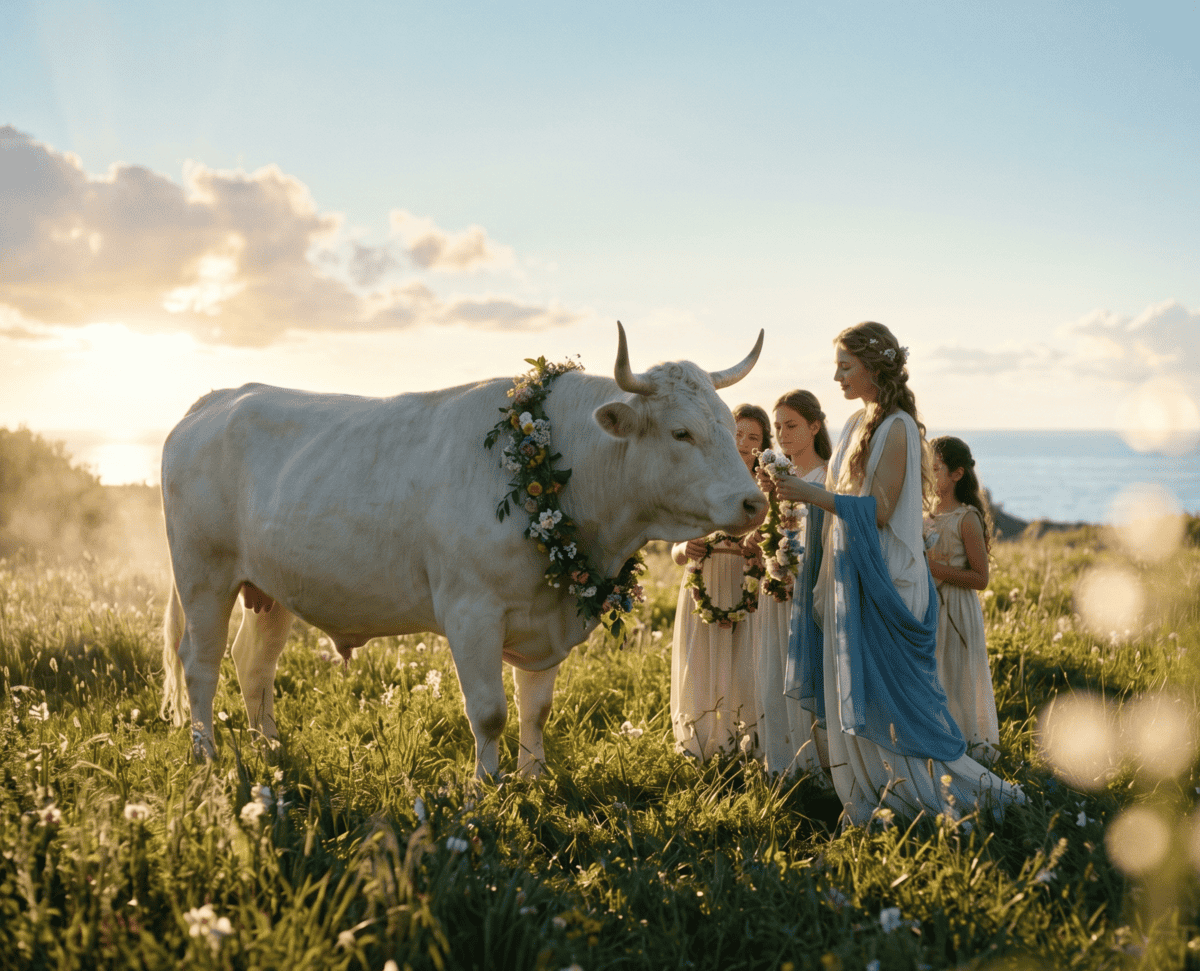
Zeus, in the form of a beautiful white bull, appeared near Europa while she was with her friends. The bull did not seem dangerous at all.
In fact, it looked calm and friendly. Europa and the other girls were drawn to it. They even decorated it with flowers and sat near it.
This moment is important in the story because it shows how appearances can be misleading. What seems safe may sometimes hide something powerful and unexpected underneath.
5. Europa Rode the Bull Across the Sea

At one point, Europa climbed onto the bull’s back. Once she did, the bull suddenly ran toward the sea. Before she could react, it began swimming across the water.
This was actually Zeus carrying her away. Europa was taken from her homeland and brought across the sea.
In mythology, this journey represents a dramatic change in her life. She left behind everything familiar and entered a completely unknown world. It is one of the most famous scenes in her story.
6. She Was Taken to the Island of Crete
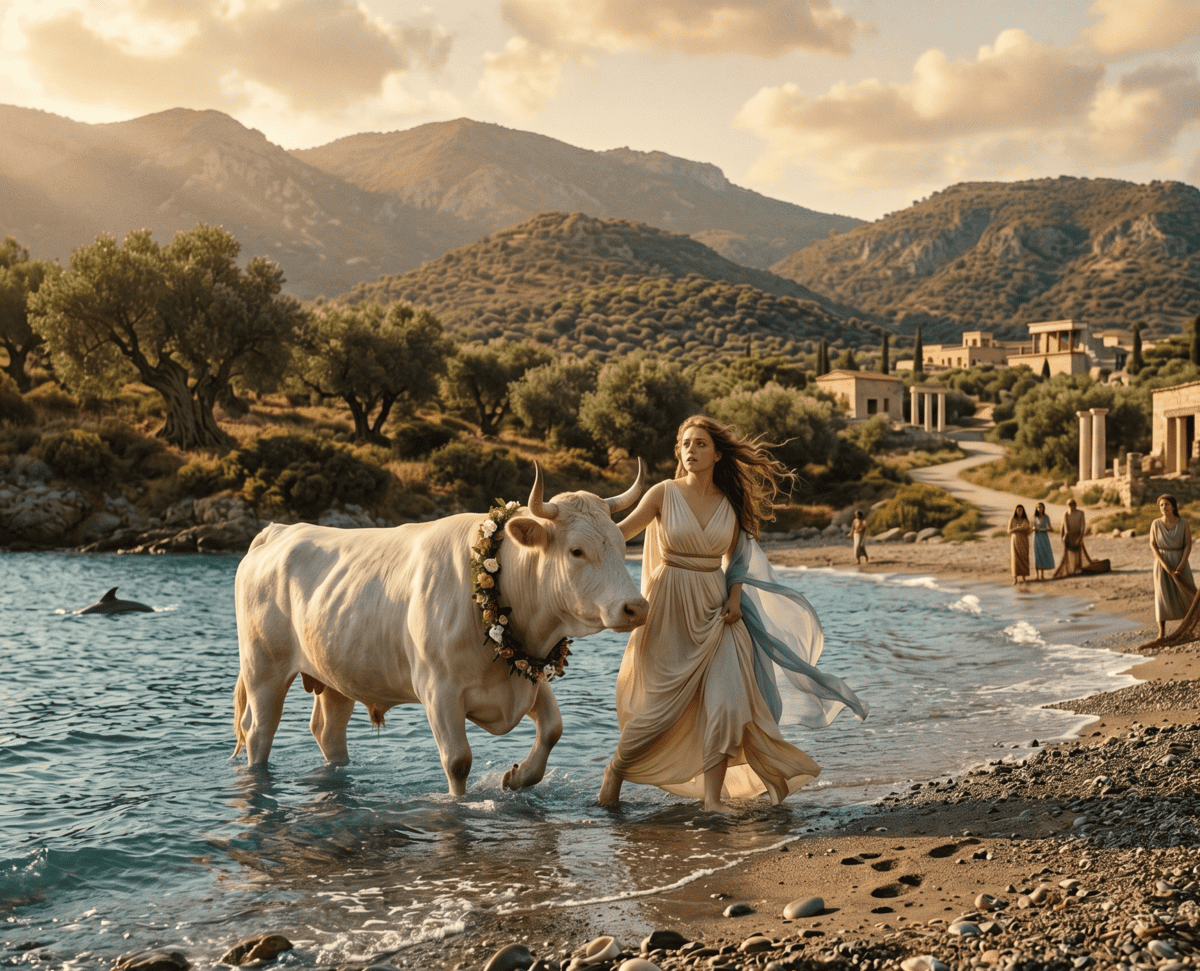
Zeus brought Europa to the island of Crete, a place in the Mediterranean Sea. In ancient Greek mythology, Crete was an important and sacred island.
It was also connected to many gods and legends. On this island, Europa began a new life far from her family.
This part of the story shows how myths often explain the movement of people and cultures across regions. Europa’s journey helped connect Phoenicia with Greek mythology in a symbolic way.
7. Zeus Revealed His True Identity
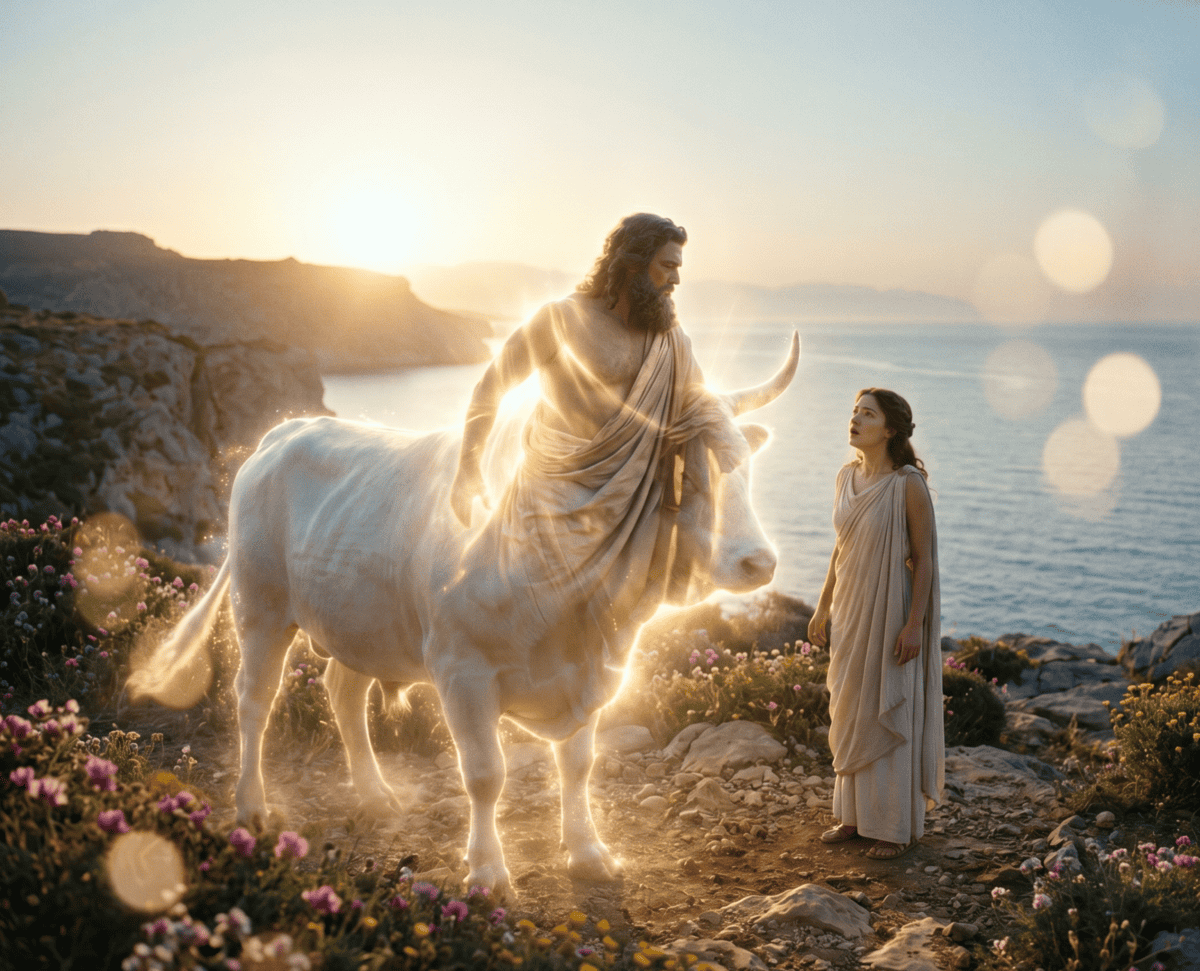
After reaching Crete, Zeus revealed that he was not really a bull but the king of the gods. He explained his true identity to Europa.
This moment marks a turning point in the story. Europa realized she had been carried away by a divine being.
In many versions of the myth, Zeus and Europa form a relationship after this event. This part of the story reflects how ancient myths often mix romance, power, and transformation in unusual ways.
8. Europa Became a Queen in Crete
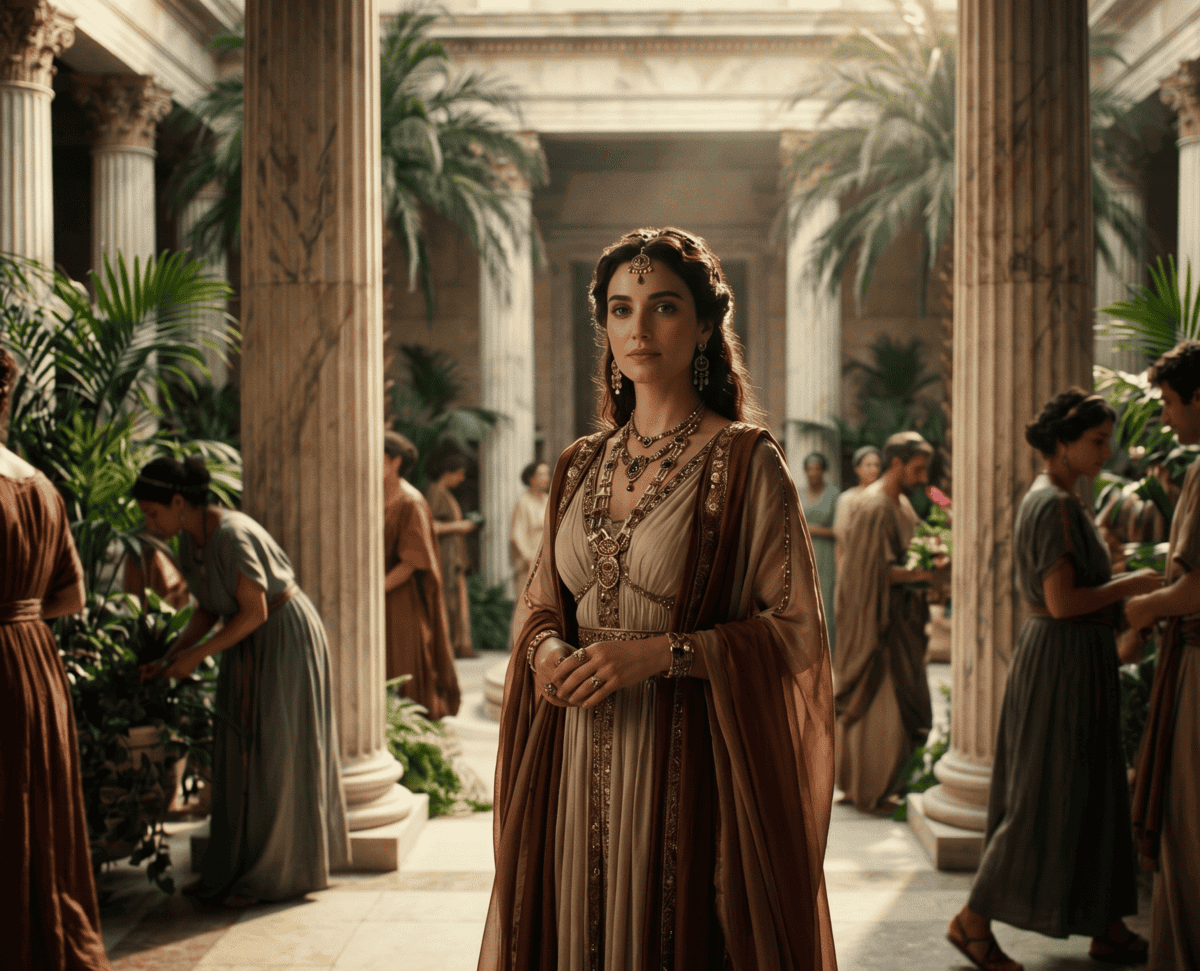
After arriving in Crete, Europa became the queen of the island. According to mythology, she had several children with Zeus, who became important figures in later myths.
One of her sons was Minos, who became a legendary king of Crete. This shows how Europa’s story connects to other famous myths in Greek tradition.
Her life changed completely, from a princess in Phoenicia to a queen in a new land. Her journey became part of a larger mythological history.
9. Europe Was Named After Her
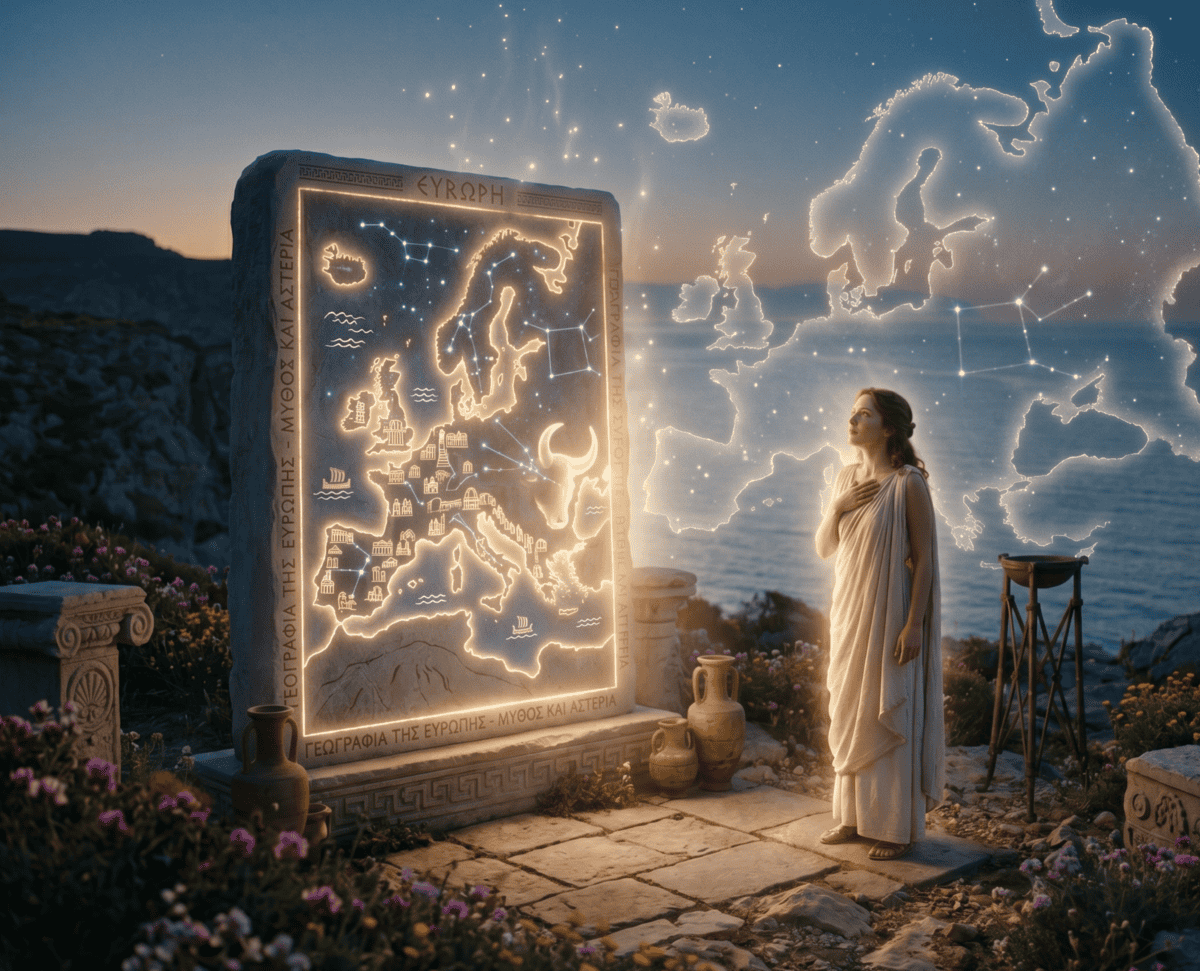
The name Europa eventually became linked to the continent we now call Europe. Ancient writers used her name to describe regions to the west of Greece.
Over time, this name became more widely used and eventually referred to the entire continent. Interestingly, a myth about a princess became connected to such a large part of the world.
This shows how stories from ancient times can influence geography, language, and culture in surprising ways.
10. Her Story Still Lives Today
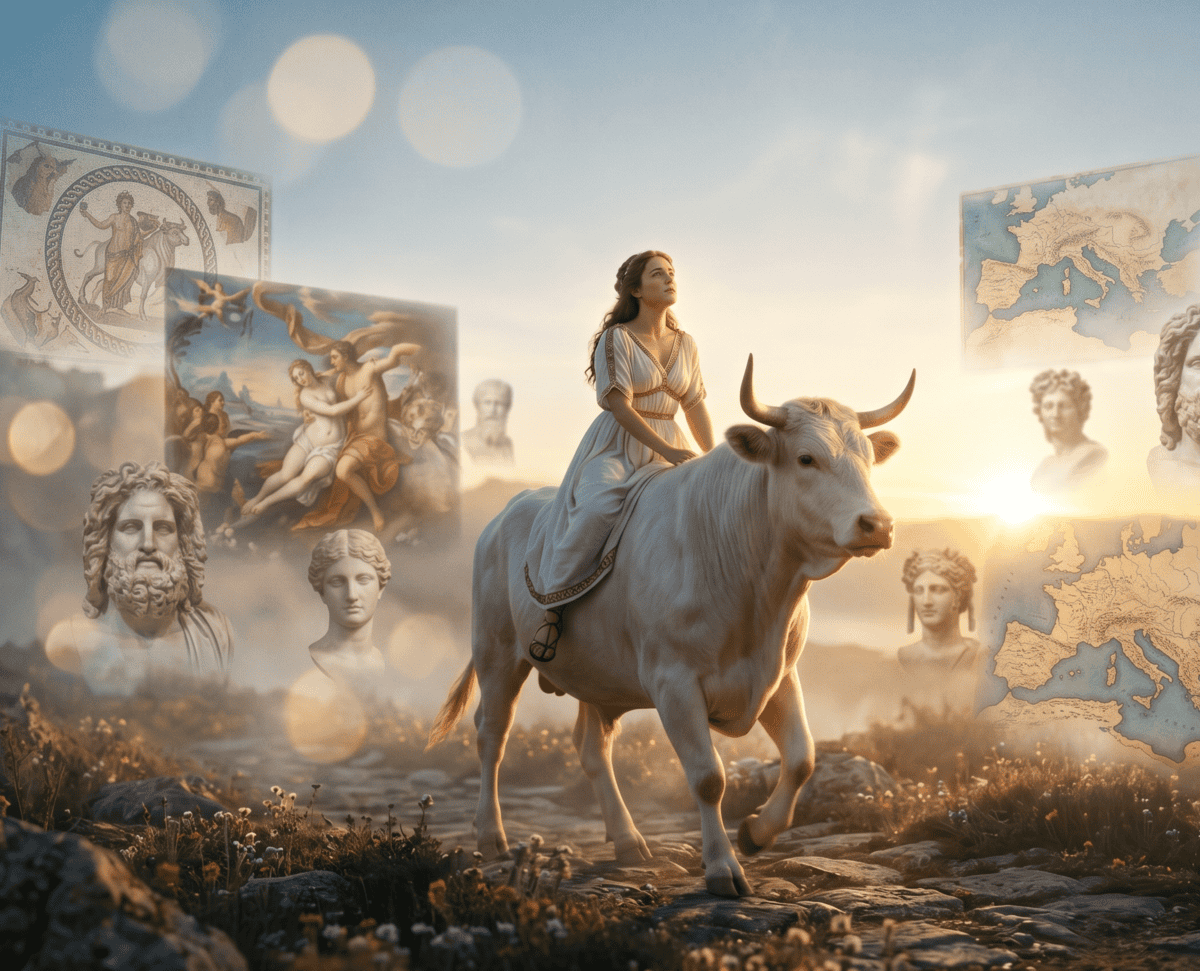
Even today, the story of Europa is still remembered in books, art, and culture. She appears in paintings, sculptures, and modern retellings of Greek myths.
Her story continues to fascinate people because it combines beauty, mystery, and transformation. It also shows how myths can explain the world in imaginative ways.
Europa’s journey from princess to queen, and from a girl in Phoenicia to the name of a continent, keeps her story alive in human imagination.

I always felt a strong connection to the Divine since my birth. As an author and mentor, my mission is to help others find love, happiness, and inner strength in the darkest of times.