

In Greek mythology, rainbows were not simply weather phenomena. They were connected to a divine figure named Iris, one of the most colorful and fascinating goddesses in the Greek pantheon.
While gods like Zeus, Athena, and Apollo often receive the most attention, Iris played an important role in the mythological world.
She served as a messenger of the gods, traveled between different realms, and acted as a bridge between heaven and earth.
Her connection to rainbows made her one of the most visually striking figures in Greek mythology.
Although she is sometimes overshadowed by more famous deities, Iris was an essential part of many myths and carried out responsibilities that few other gods could perform.
Here are eight fascinating facts about Iris, the Greek goddess of the rainbow.
1. Iris Was the Goddess of the Rainbow

The most famous thing about Iris is her connection to rainbows. Think about how magical a rainbow must have seemed in ancient times.
In Greek mythology, the rainbow was often seen as a pathway created by Iris as she traveled between the heavens and the earth.
Whenever people saw a rainbow stretching across the sky, they could imagine the goddess moving swiftly between worlds.
Without scientific explanations for weather, many people viewed natural phenomena as signs of divine activity.
The colorful arc in the sky appeared perfect for a goddess known for speed, beauty, and communication.
Because of this association, Iris became one of the most visually memorable figures in Greek mythology and remains closely linked to rainbows today.
2. She Served as a Messenger of the Gods

One of Iris’s most important responsibilities was delivering messages. The gods frequently needed information carried between Olympus, the earth, and other divine realms.
Iris acted as a trusted messenger who could travel wherever she was needed. Imagine being responsible for delivering instructions from Zeus himself.
That role required speed, reliability, and the ability to move freely between different parts of the cosmos.
While Hermes is often remembered as a messenger god, Iris also performed this important duty, particularly for the Olympian gods and especially for Hera.
Without messengers like Iris, communication among gods and mortals would have been much more difficult.
3. She Was Closely Associated With Hera
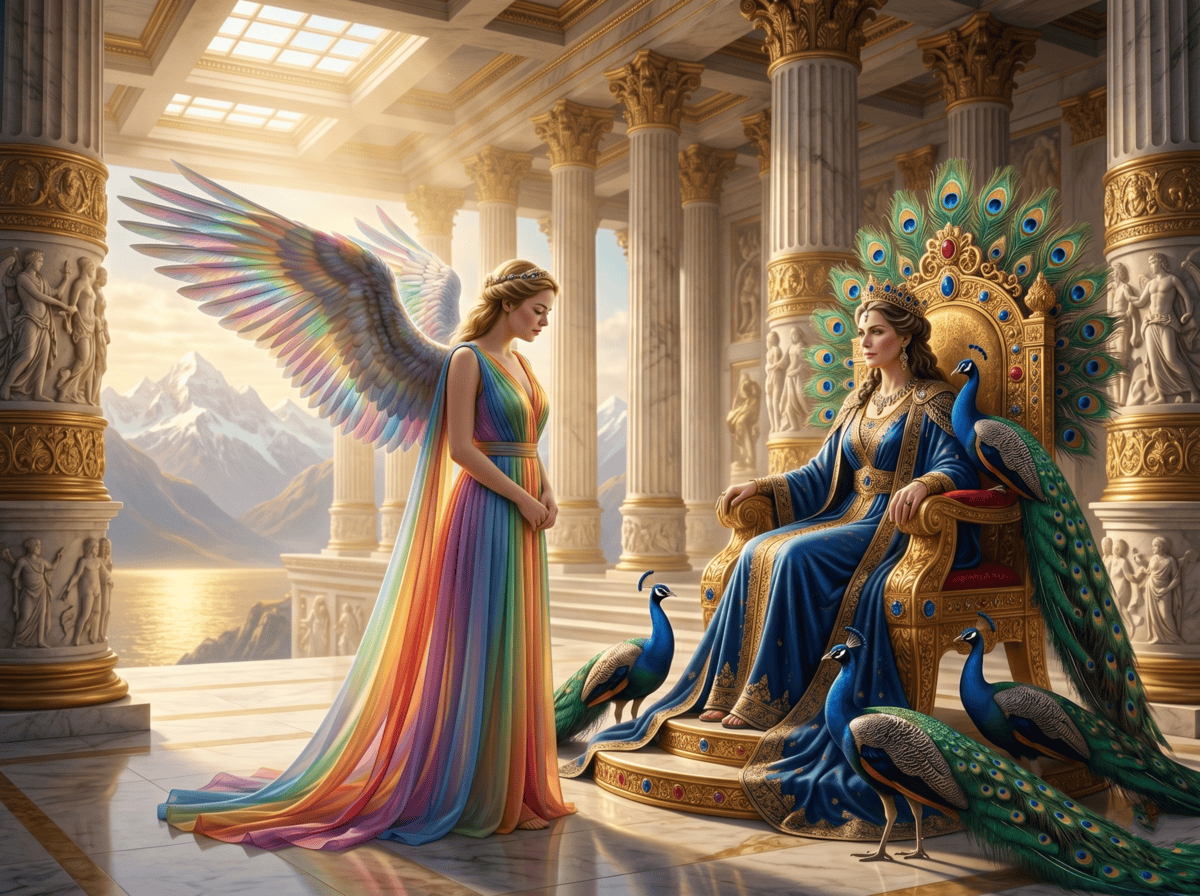
Although Iris served the Olympian gods in general, she was particularly connected to Hera, the queen of the gods.
In many myths, Iris acted as Hera’s personal messenger and assistant. This close relationship demonstrates how much trust Hera placed in her.
Whenever Hera needed information delivered or tasks completed, Iris was often the goddess chosen for the job.
Think about any important leader throughout history. Such individuals usually rely on trusted advisors and assistants.
In mythology, Iris often filled that role for Hera. Her loyalty and reliability helped strengthen her reputation as one of the most dependable figures among the Olympian deities.
4. Iris Could Travel Between Different Realms

One reason Iris was such an effective messenger was her ability to move freely between different worlds.
Greek mythology included numerous realms, including Mount Olympus, the earth, the sea, and even the underworld.
Iris could travel between these locations with remarkable ease. This ability made her uniquely valuable.
Imagine trying to deliver an important message while crossing vast distances between mortal and divine worlds.
Her journeys helped connect places that would otherwise remain separate, reinforcing her role as a bridge between different parts of the universe.
5. She Was the Daughter of Sea Deities

Iris came from an impressive family. This heritage connected Iris to both the sea and the natural world.
According to Greek mythology, she was the daughter of Thaumas, a sea god associated with wonders, and Electra, an Oceanid nymph.
The connection is fitting when you think about where rainbows often appear. Rainbows form when sunlight interacts with water droplets, creating a beautiful display of color.
Ancient storytellers may have found it natural to connect a rainbow goddess to divine beings associated with water.
Her parentage helped place her among the many powerful and fascinating figures that populated the Greek mythological family tree.
6. She Was Often Depicted With Wings
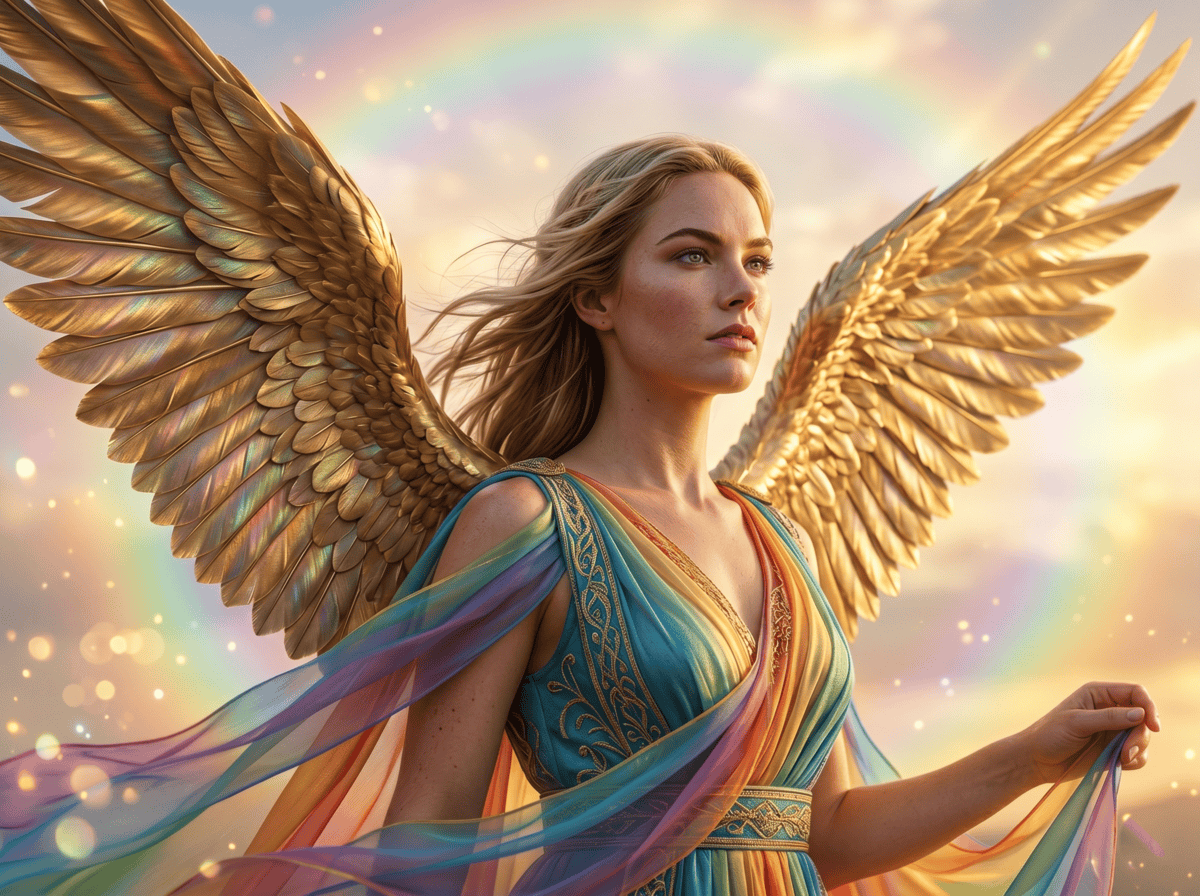
Ancient artists frequently portrayed Iris with large golden wings. These wings symbolized her incredible speed and ability to travel across the world in an instant.
Imagine being able to cross mountains, seas, and entire kingdoms within moments. That is the kind of freedom Iris represented.
Artists often showed her carrying a staff, pitcher, or other objects associated with her duties as a divine messenger.
The image of a winged goddess racing across the sky helped reinforce her connection to both communication and rainbows.
7. She Carried Water From the River Styx
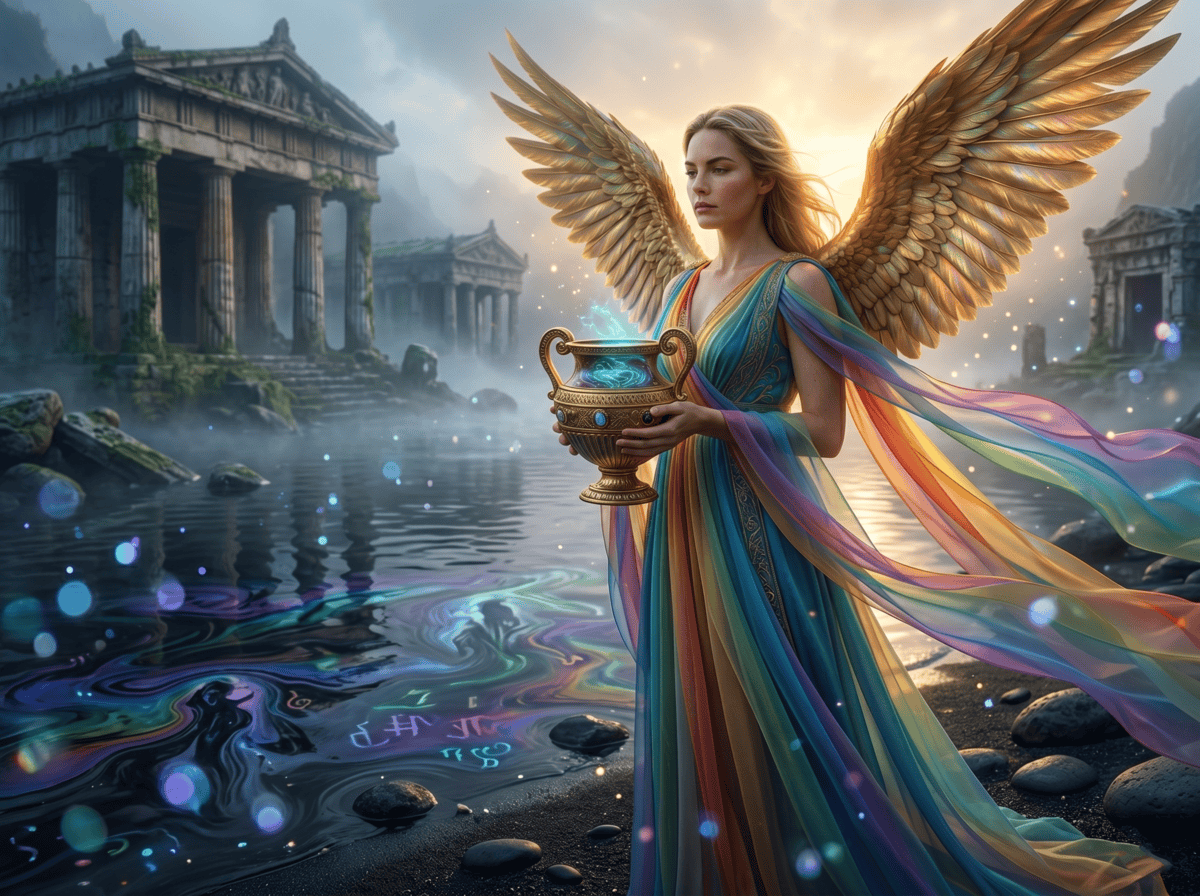
One lesser-known aspect of Iris’s mythology involves the River Styx. The Styx was one of the most sacred rivers in Greek mythology.
The gods sometimes swore powerful oaths upon its waters. According to certain traditions, Iris was responsible for carrying water from the Styx when such oaths were made.
This task highlights the trust placed in her by the Olympian gods. Think about how important promises were in mythology.
Breaking a sacred oath could lead to severe consequences. Her role extended far beyond simply delivering messages.
Because Iris handled these responsibilities, she became associated not only with communication but also with honesty and divine authority.
8. Iris Remains a Symbol of Hope and Connection

Thousands of years after the ancient Greeks first told stories about Iris, her symbolism continues to resonate.
Rainbows are often seen as symbols of hope, beauty, and connection. They appear after storms and remind people that difficult times eventually pass.
These meanings align perfectly with Iris’s role as a bridge between different worlds.
She connected gods and mortals, heaven and earth, and distant realms separated by vast distances. That idea remains meaningful today.
More than a goddess of rainbows, Iris represented communication, trust, and the connections that bring people together.
Her colorful pathway across the sky continues to inspire wonder, just as it did for the ancient Greeks who first imagined a swift winged goddess traveling upon its brilliant arc.

I always felt a strong connection to the Divine since my birth. As an author and mentor, my mission is to help others find love, happiness, and inner strength in the darkest of times.