
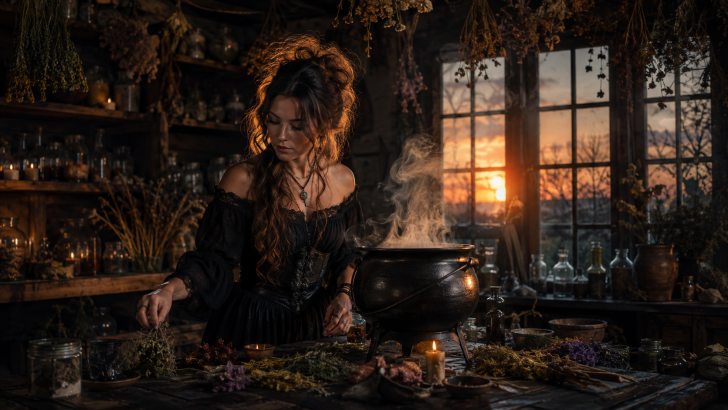
Picture a dark medieval cottage illuminated by firelight. Bundles of dried herbs hang from wooden beams, a heavy iron pot sits above the flames, and strange ingredients wait inside clay containers.
It sounds exactly like a witch’s kitchen. Surprisingly, much of this image comes from objects that really existed in medieval homes.
The difference is that they were usually used for cooking, food preservation, household medicine, and other completely ordinary purposes.
Here are five things to know about what a so-called medieval witch’s kitchen might really have looked like.
1. The Hearth Would Have Been the Heart of the Kitchen
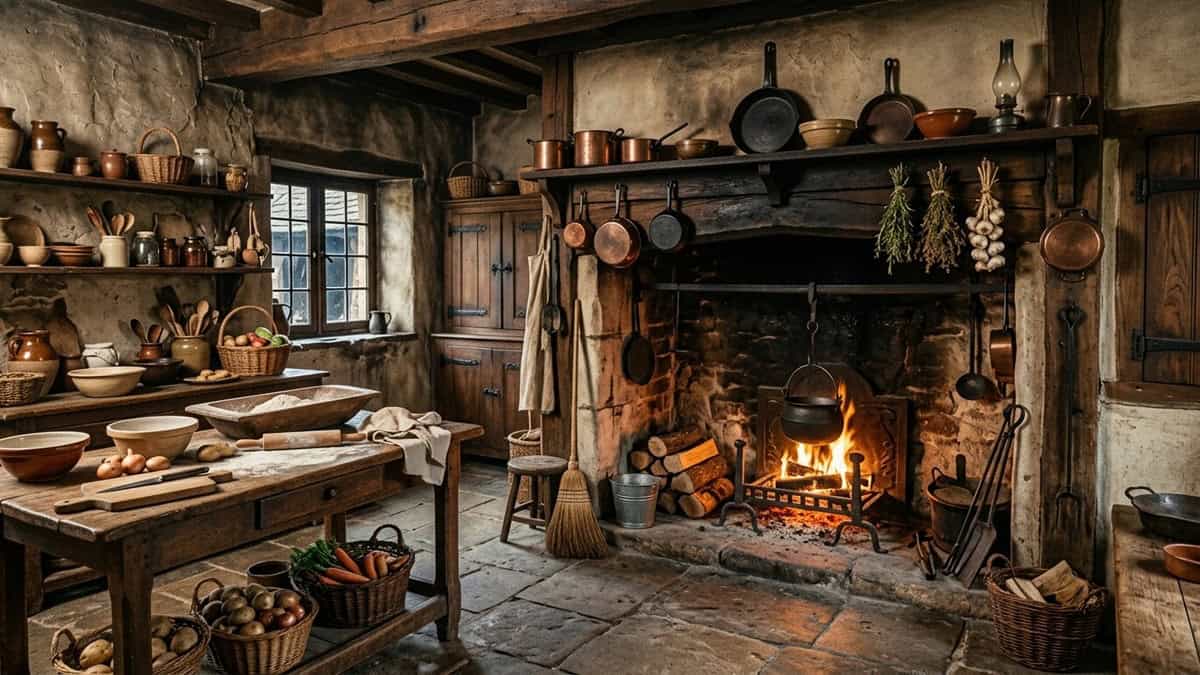
The most important feature would have been the fire. Before modern ovens and stoves, the hearth provided the heat necessary for preparing everyday meals.
Depending on the period, region, and wealth of the household, food could be cooked in pots suspended over flames or placed close to hot embers.
The hearth also provided warmth and some illumination. This meant that many household activities naturally happened around it.
Fire also carried symbolic importance in European folklore. Customs developed around keeping the household fire, protecting the hearth, and interpreting unusual events involving flames.
Because the hearth represented warmth, food, and the household itself, it could become surrounded by both religious and folkloric beliefs.
2. The Famous Cauldron Was Really an Everyday Cooking Vessel
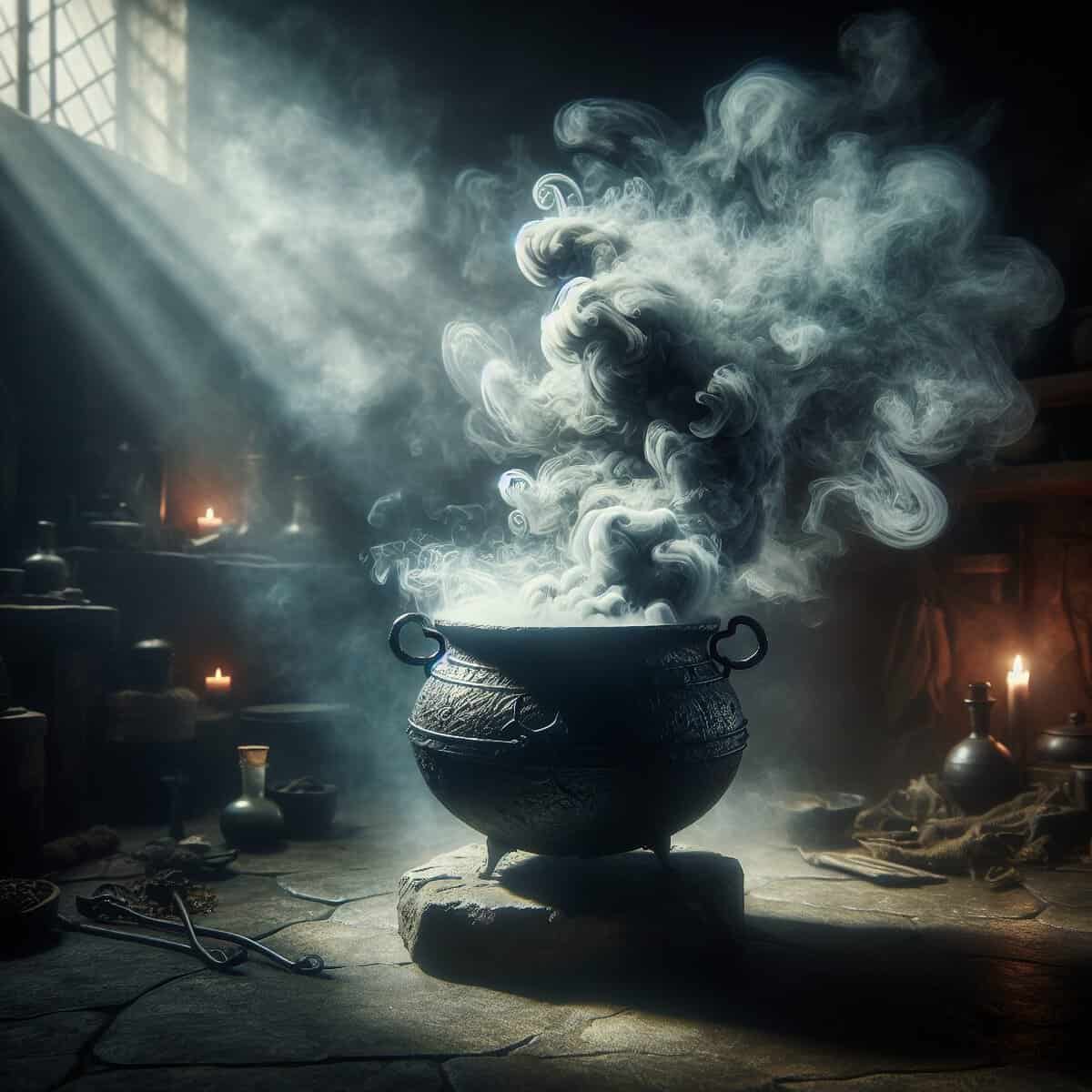
The bubbling cauldron is probably the most recognizable object inside any fictional witch’s kitchen.
Historically, large cooking vessels were far less mysterious. Metal pots were extremely useful because families could prepare substantial meals over a single fire.
Soups, broths, porridges, stews, and other foods could all be cooked inside them. A household might also heat water or prepare various practical mixtures using the same equipment.
For families with limited possessions, cookware needed to serve multiple purposes.
This ordinary reality probably helped the cauldron become such an effective symbol in later witch folklore.
Once accusations of magic entered the picture, an ordinary cooking vessel could suddenly acquire sinister meaning.
The contents mattered less than what suspicious neighbors imagined might be inside.
3. Herbs, Mortars, and Jars Could Make the Room Look Magical
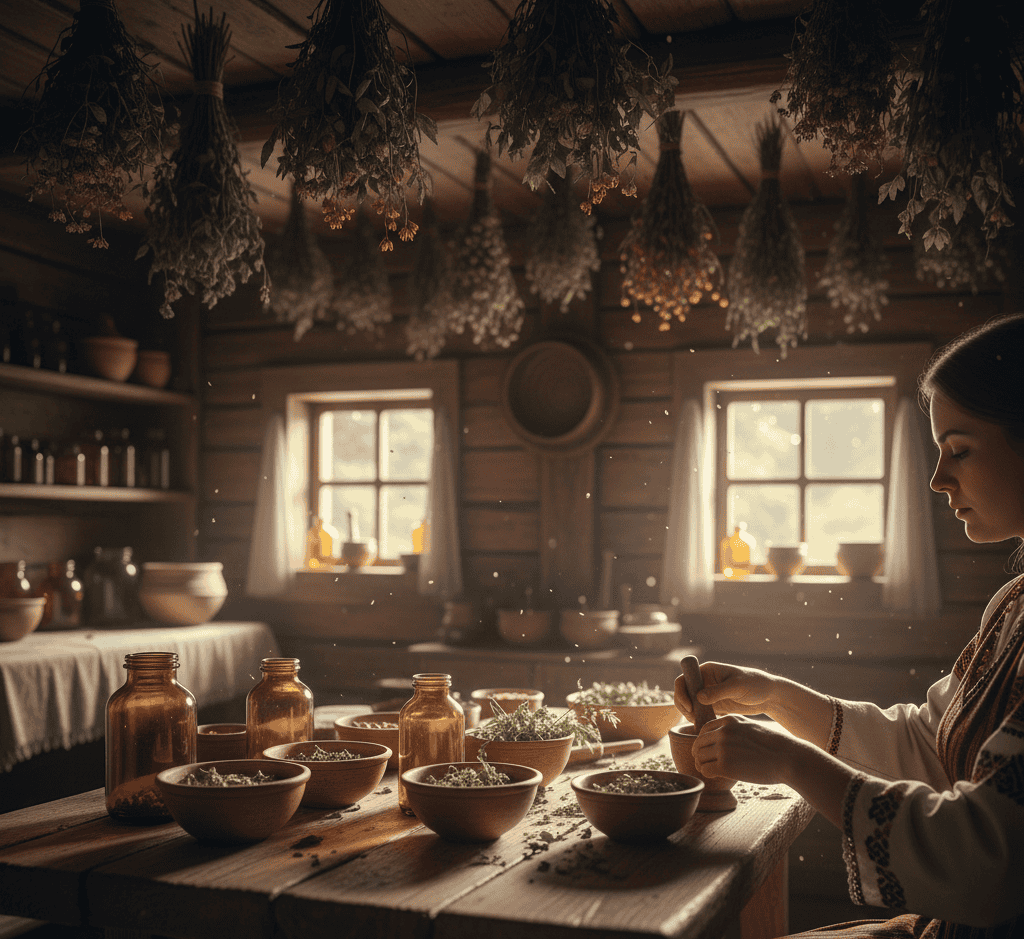
This is where the historical kitchen begins looking remarkably similar to the fictional version. Medieval people regularly used plants.
Herbs could flavor food, provide pleasant scents, and form part of traditional household remedies. Plants gathered during warmer seasons could also be dried for later use.
Depending on the region, people might be familiar with herbs such as mint, sage, fennel, parsley, rosemary, thyme, and many locally available plants.
Knowledge about these herbs could be passed between generations. A mortar and pestle was another useful object.
Herbs, spices, seeds, and other ingredients could be crushed before being added to food or preparations. Storage containers completed the scene.
4. Traditional Remedies Could Blur the Line Between Medicine and Magic

Medicine in medieval Europe looked very different from healthcare today.
People could seek help from trained physicians where available, but they also relied on household knowledge, herbal preparations, religious practices, and local traditions.
Some remedies had practical value. Others were based on ideas about illness that modern medicine no longer accepts.
Religion could also play an important role. Prayers, blessings, sacred objects, and appeals to saints existed alongside physical treatments.
Meanwhile, folk customs sometimes included charms, spoken formulas, or symbolic actions.
This created a world where the modern boundaries separating medicine, religion, superstition, and magic did not always exist in the same way.
Many people possessed practical knowledge about plants without being suspected of anything supernatural.
Suspicion could arise for much more complicated reasons involving local conflicts, reputation, unexplained illness, religious concerns, or accusations of harmful magic.
Once a person was suspected, ordinary activities could suddenly appear suspicious. A bundle of herbs was no longer simply herbs.
5. The Classic Witch’s Kitchen Was Largely Created Later
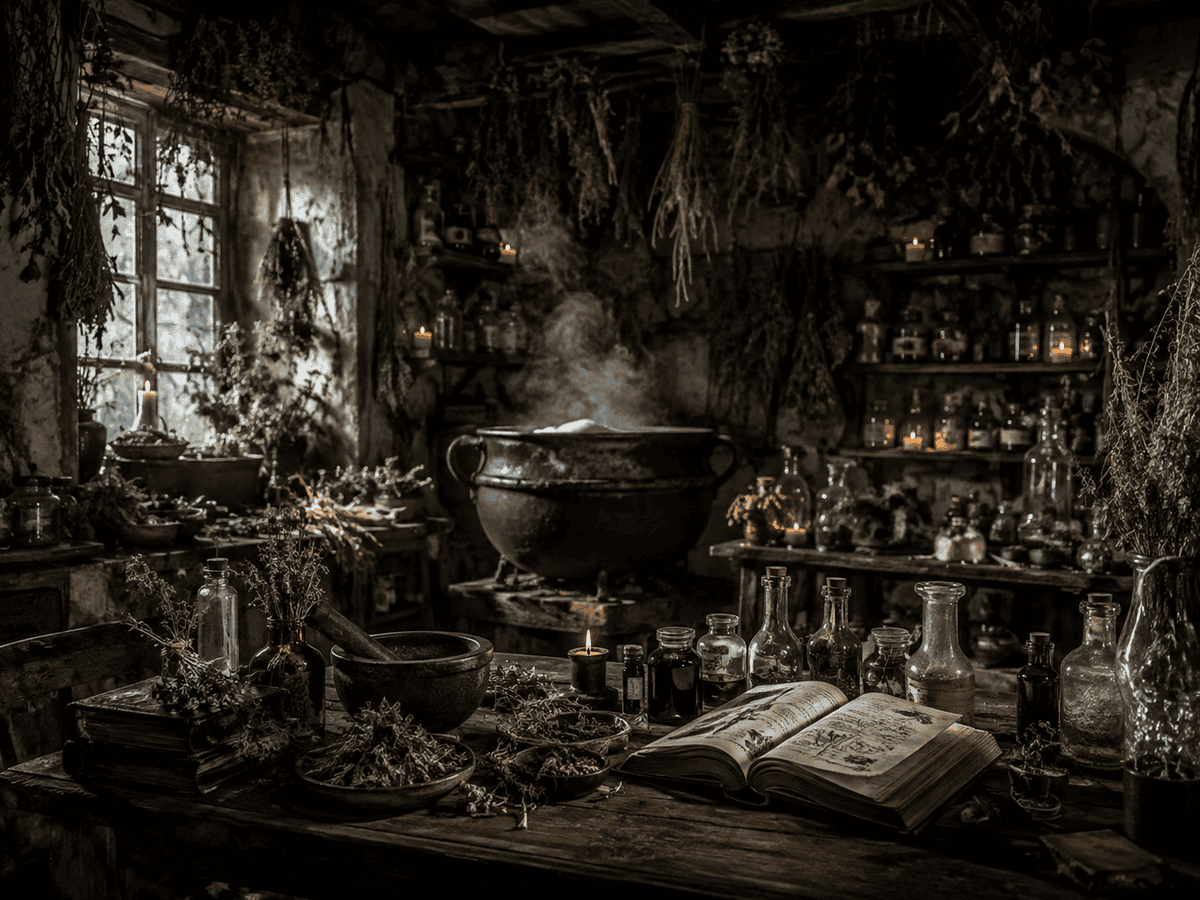
Perhaps the biggest surprise is that the famous medieval witch’s kitchen never really existed in the form popular culture imagines.
There was no standard room filled with spell books, magical bottles, bubbling potions, and supernatural equipment. Instead, the image developed gradually.
Medieval beliefs contributed some elements, but the early modern witch trials had an enormous influence on later ideas about witchcraft.
Printed books and illustrations helped spread stories about magical practices, strange gatherings, supernatural companions, and impossible forms of travel.
Eventually, literature, theater, Halloween traditions, movies, and television combined everything into the witch’s kitchen we recognize today.
Once ordinary domestic tools became connected with accusations and legends about witchcraft, they acquired entirely new meanings.
That may be why the image remains so convincing today. The fictional witch’s kitchen was never completely invented from nothing.

I always felt a strong connection to the Divine since my birth. As an author and mentor, my mission is to help others find love, happiness, and inner strength in the darkest of times.