

Before Hera became the famous queen of Olympus, Zeus had another wife. Her name was Metis.
She was a Titan goddess associated with wisdom, clever planning, good counsel, and the kind of intelligence that helps someone find a way out of an impossible situation.
Yet despite her importance, Metis gets far less attention than goddesses such as Hera, Athena, or Aphrodite.
That is especially surprising when you realize how deeply she is connected with Zeus’s rise to power.
Metis helped him defeat Cronus. She became his first wife. Then a prophecy warned Zeus that their children could threaten his rule.
His solution was disturbing even by Greek mythological standards. He swallowed her.
But Metis did not simply disappear. Her story continued inside Zeus and eventually led to one of the strangest births in all of Greek mythology.
Here are eight things to know about Metis, Zeus’s first wife and the goddess of cunning wisdom.
1. Metis Represented a Very Particular Kind of Intelligence

Calling Metis a goddess of wisdom is accurate, but it does not capture everything her name meant to the ancient Greeks.
The Greek concept of metis referred to clever intelligence, planning, skill, resourcefulness, and cunning.
It was the kind of wisdom needed when strength alone was not enough.
Someone using metis could recognize what others had missed, adapt quickly, and find an unexpected solution to a difficult problem.
That makes Metis very different from a goddess who possesses enormous knowledge. Her intelligence is practical.
She knows what to do with what she knows. This becomes especially important because clever strategy determines who gains and keeps power in early Greek mythology.
Zeus may eventually become king of the gods, but his victory is not achieved through thunderbolts alone.
Before he can rule Olympus, he needs exactly the kind of intelligence Metis represents.
2. She Helped Zeus Defeat His Father Cronus
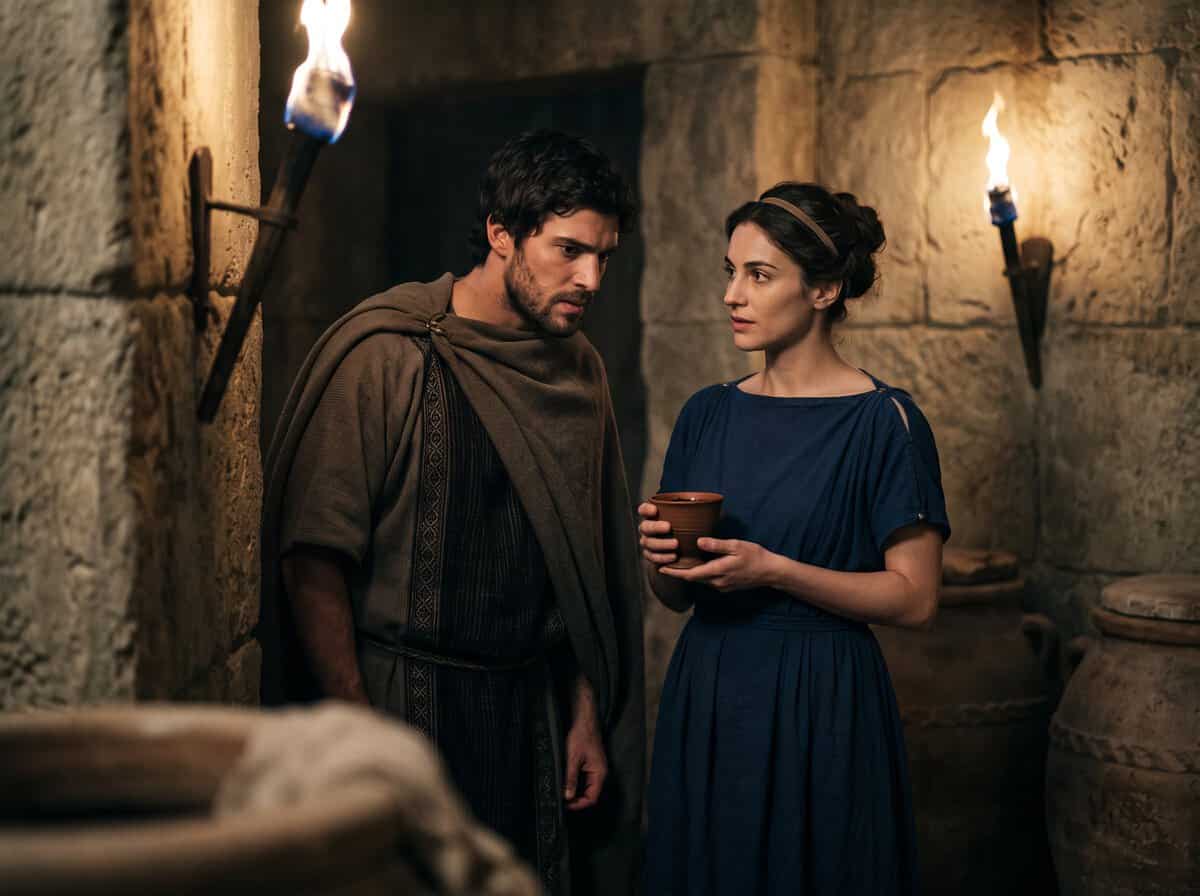
Zeus had a serious problem before he ever became ruler of the gods. His father, Cronus, had swallowed Zeus’s siblings.
Cronus had previously overthrown his own father, Uranus, and feared that one of his children would eventually do the same to him.
So he attempted to prevent the prophecy by swallowing them. Zeus escaped that fate and grew up in secret. But defeating Cronus required more than confronting him.
According to an important tradition preserved by Apollodorus, Metis gave Cronus a substance that caused him to bring up the children he had swallowed.
Zeus’s brothers and sisters were finally freed. The story perfectly suits Metis. She does not defeat Cronus by overpowering a Titan king.
She finds the trick that makes his own body surrender what he tried to keep hidden.
Without her clever intervention, the familiar Olympian family might never have emerged in quite the same way.
3. Metis Became Zeus’s First Wife

Hera is so strongly associated with Zeus that it is easy to assume she was always beside him.
Hesiod’s Theogony tells a more complicated story. It identifies Metis as the first wife Zeus took.
This makes her position in the divine family surprisingly important.
She belongs to the earliest stage of Zeus’s reign, when the new ruler is still establishing his authority after the defeat of the Titans.
Their relationship also brings together two qualities Zeus needs. He possesses enormous power.
Metis possesses extraordinary intelligence. For a moment, they look almost like the perfect combination for a new divine order.
But Greek mythology rarely allows power to remain uncomplicated.
Soon Zeus learns that having an exceptionally clever wife could create exactly the same problem that once terrified his father. And his grandfather before him.
4. A Prophecy Made Zeus Afraid of His Own Children

Metis became pregnant. That should have secured her position as the mother of an important new generation of gods.
Instead, it placed her in danger. According to Hesiod, Metis was destined to bear remarkable children.
First, she would have a daughter equal to her father in strength and wisdom.
But she was also destined to have a son who would become extremely powerful and rule over gods and humans.
For Zeus, that prophecy was terrifying. His family history was built around sons overthrowing fathers.
Uranus had been overthrown by Cronus. Cronus had been overthrown by Zeus. Now Zeus heard that his own son might continue the pattern.
Suddenly, Metis was not merely his wise wife. The child she might eventually produce represented a possible end to his reign.
5. Zeus Swallowed Metis While She Was Pregnant
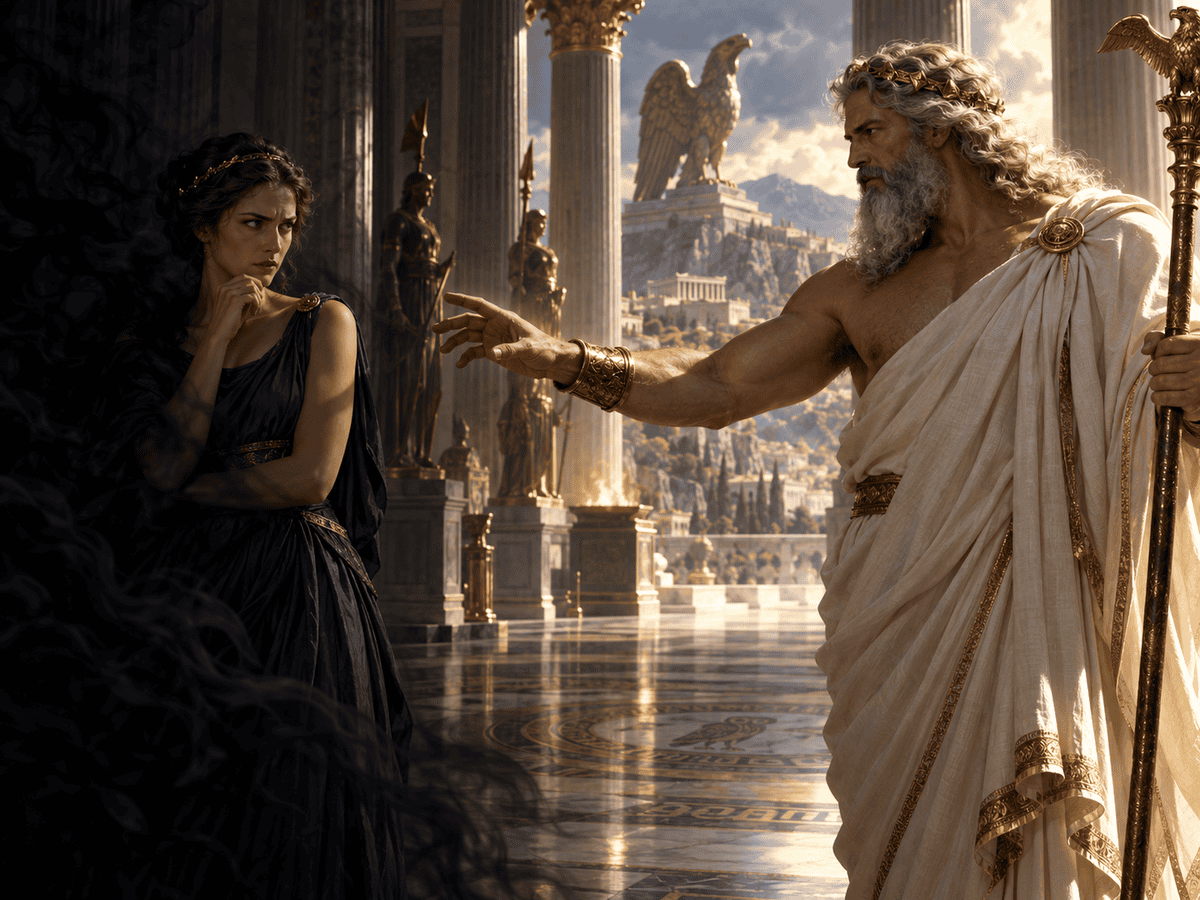
Zeus responded to the prophecy in a way that sounds strangely familiar. He swallowed Metis.
The irony is impossible to miss. Cronus had swallowed his children because he feared being overthrown.
Zeus had helped defeat Cronus and free those children. Then, faced with his own prophecy, Zeus also attempted to prevent the future by swallowing someone.
Hesiod says Zeus used clever words to deceive Metis before placing her inside his own body. That detail makes the story even more striking.
The goddess of cunning intelligence is herself defeated through cunning. But Zeus’s plan does not completely erase her.
Metis is already pregnant when she is swallowed. The daughter she carries continues developing.
So Zeus may have prevented the predicted son from being born, but he cannot prevent the first child from arriving.
Athena is still coming. She just needs a very unusual way out.
6. Athena Was Born From Zeus After Metis Disappeared Inside Him
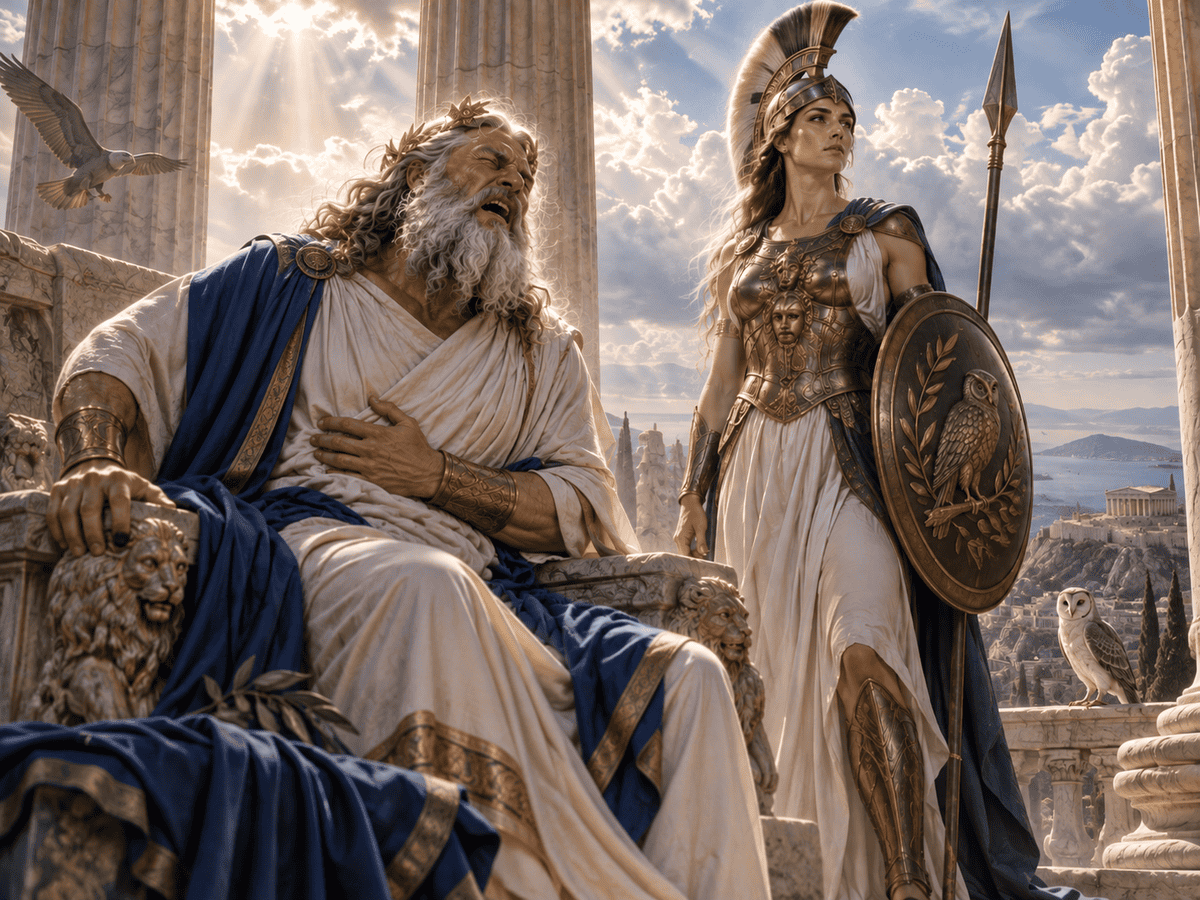
Eventually, Zeus experiences terrible pain in his head. Athena emerges from Zeus’s head, fully divine and often imagined already armed.
It is one of Greek mythology’s most extraordinary birth stories. Athena becomes the goddess of wisdom, strategy, skilled crafts, and warfare.
Those qualities make much more sense when Metis is remembered. Athena’s wisdom does not appear from nowhere.
Her mother literally personifies cunning intelligence. Yet Athena’s unusual birth allows Zeus to claim an extraordinary parental role as well.
He has swallowed the mother, contained the pregnancy within himself, and eventually produced the daughter from his own body.
Metis becomes almost invisible in the famous scene. Athena emerges from Zeus.
But behind that spectacular birth is the goddess whose intelligence helped shape both mother and daughter.
7. Zeus May Have Absorbed Metis’s Wisdom Along With Her

There is another fascinating layer to the swallowing story. Hesiod explains that Zeus kept Metis within himself so that she could advise him.
In other words, swallowing Metis does more than prevent a dangerous future child. Zeus effectively takes her wisdom into himself.
That changes the way we can understand his rise to supreme authority. Zeus does not merely defeat the goddess of cunning wisdom.
He absorbs her. Her intelligence becomes part of the ruler who will govern the Olympian world.
The symbolism is difficult to ignore. Raw power is not enough to maintain kingship.
A successful ruler also needs strategy and counsel. Metis provided exactly that.
Yet the myth gives Zeus the final advantage because her wisdom no longer stands beside him as an independent power.
It exists within him. Metis loses her visible place among the gods, while Zeus becomes harder to overthrow.
8. Metis Never Truly Returns to Greek Mythology

Perhaps the strangest part of Metis’s story is how quietly it ends. She does not escape from Zeus.
There is no great rescue. She does not return to demand her position beside him.
Athena is born and becomes one of the most powerful Olympian goddesses, while Metis remains inside Zeus.
For such an important figure, her disappearance feels surprisingly complete.
She helped make Zeus’s victory possible, became his first wife, carried Athena, and represented the intelligence necessary for stable rule.
Then the mythology moves on without her. That silence has made Metis particularly interesting to modern readers.
She can be seen as a hidden foundation beneath Zeus’s power and Athena’s wisdom.
Two of the most important figures in Greek mythology carry something that once belonged to her.
Zeus gains her counsel. Athena inherits the qualities of cunning intelligence and strategic wisdom.
Metis herself receives neither a throne on Olympus nor a dramatic return. Instead, she becomes something much stranger.
The goddess of cunning wisdom disappears, yet her influence remains almost everywhere.

I always felt a strong connection to the Divine since my birth. As an author and mentor, my mission is to help others find love, happiness, and inner strength in the darkest of times.