Even the Greek gods could not escape every rule of the universe. And few forces were more frightening than fate.
The ancient Greeks imagined fate in many ways, but three mysterious goddesses became especially important.
They were the Moirai. Today, they are often called the Three Fates.
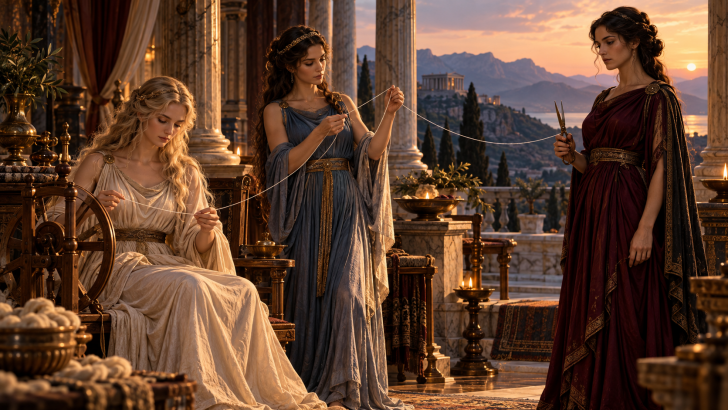
Each goddess had a different job. One spun the thread of life. Another measured it. The final sister cut it.
Together, they represented a simple but unsettling idea. Every life has a beginning.
Every life has a certain course. And eventually, every life reaches an end.
The Moirai were not usually the dramatic goddesses starting wars or falling into complicated love stories.
They did something much quieter. They controlled the thread behind the story.
Here are the three Moirai and what made each one so powerful.
1. Clotho – The Goddess Who Spun the Thread
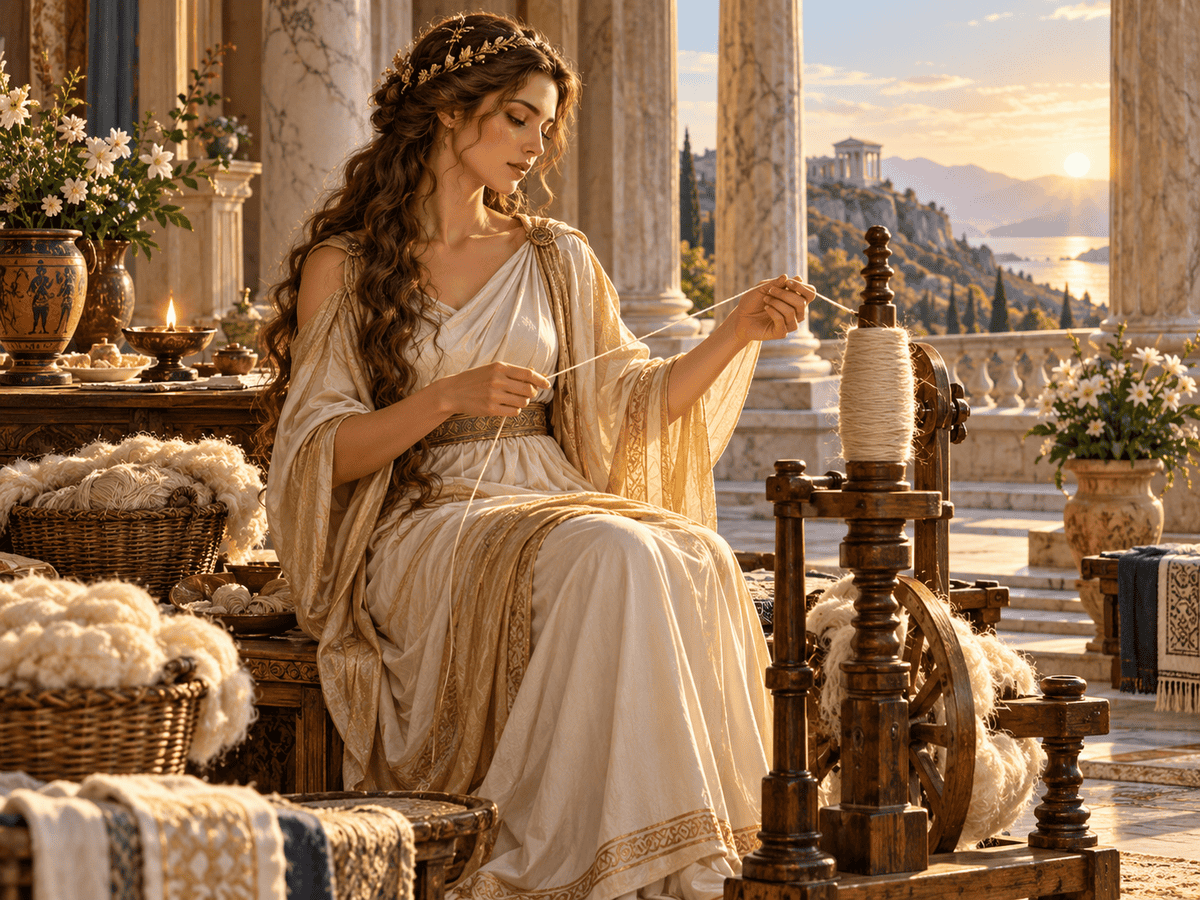
Everything begins with Clotho. Her name is connected with spinning.
She was the Moira responsible for spinning the thread of a person’s life.
Imagine every human life as a piece of thread. Before it can be measured or eventually cut, someone has to create it.
That was Clotho’s role. She represents birth and beginnings.
That sounds much gentler than what her sisters do, but Clotho still holds enormous power.
Without the first thread, there is no story. No childhood. No love. No victories. No mistakes.
Nothing happens until the thread begins. Ancient traditions did not always describe the Moirai in exactly the same way.
Their parentage could change between sources too.
Hesiod describes them as daughters of Zeus and Themis in one part of the Theogony.
Elsewhere in the same work, they are associated with Nyx, the goddess of Night.
That uncertainty somehow makes them feel even older and stranger.
The Greeks themselves had more than one way of explaining where fate came from.
Clotho also appears in the myth of Pelops. In one tradition, she helps restore Pelops after his father, Tantalus, commits a terrible act against him.
So Clotho was not simply sitting somewhere spinning endless thread. She could enter myths directly.
Still, her main image remains simple. She begins the thread.
And once she does, the other sisters can begin their work.
2. Lachesis – The Goddess Who Measured Your Life
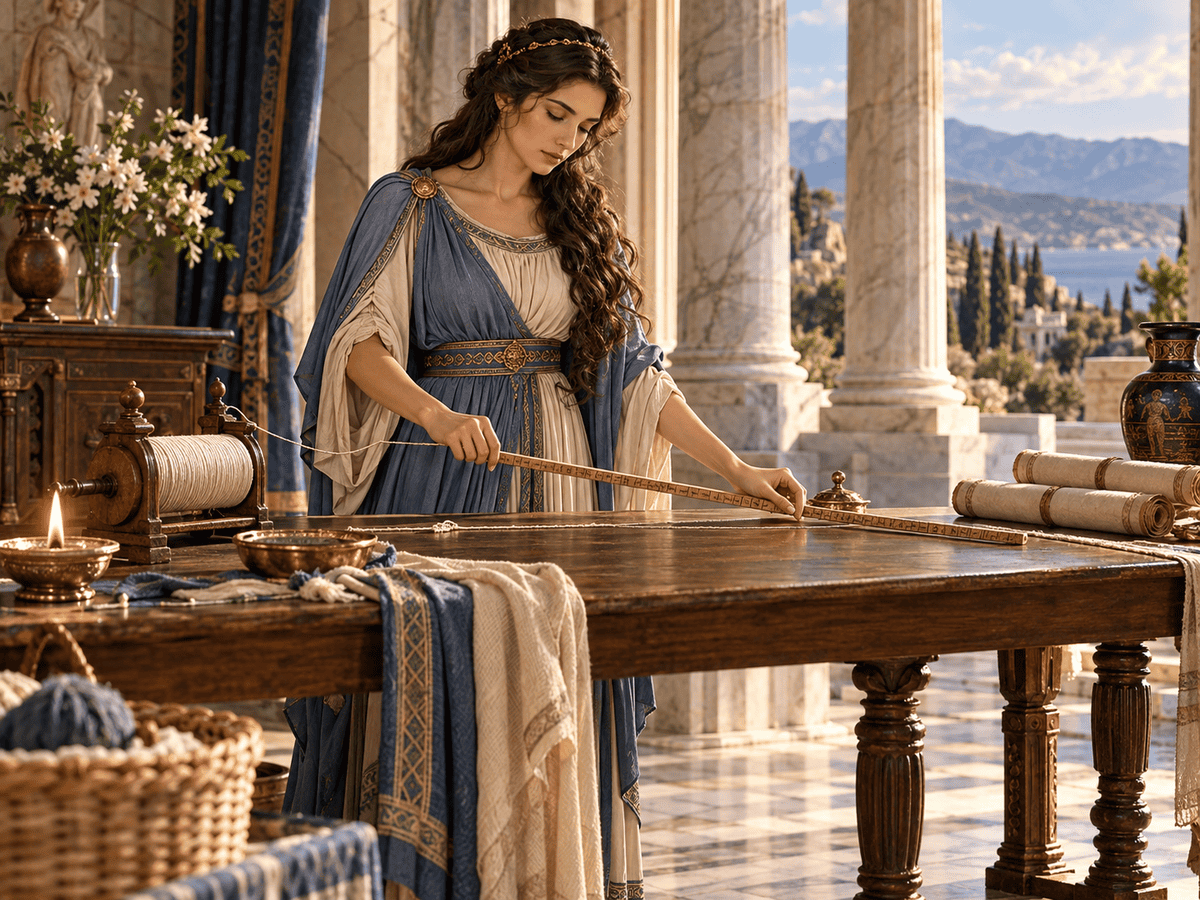
Clotho creates the thread. Then Lachesis takes over. Her job was to measure it.
Lachesis is connected with the idea of a person’s lot or portion. In other words, she represents what someone receives in life.
How long is the thread? What kind of path will it follow? What has been given to this particular person?
Those questions belong to the world of Lachesis. She is perhaps the easiest Moira to connect with the idea of destiny.
Two people can be born on the same day and live completely different lives.
One becomes a king. Another becomes a farmer. One travels across the world.
Another never leaves the place where they were born.
To ancient people, fate offered one way to think about those differences.
Not everything seemed to be under human control. Lachesis represents that uncomfortable truth.
You can make choices. But you do not choose every condition surrounding those choices.
You do not choose where you are born. You cannot control every person you meet.
And you definitely cannot control every unexpected event.
That does not mean ancient Greeks believed humans should simply sit around doing nothing.
Greek mythology is full of people making decisions. Those decisions still have consequences.
Lachesis simply reminds us that everyone is making those choices inside a life that already has certain limits.
She measures the thread. Humans still have to live along it.
3. Atropos – The Goddess Who Cut the Thread
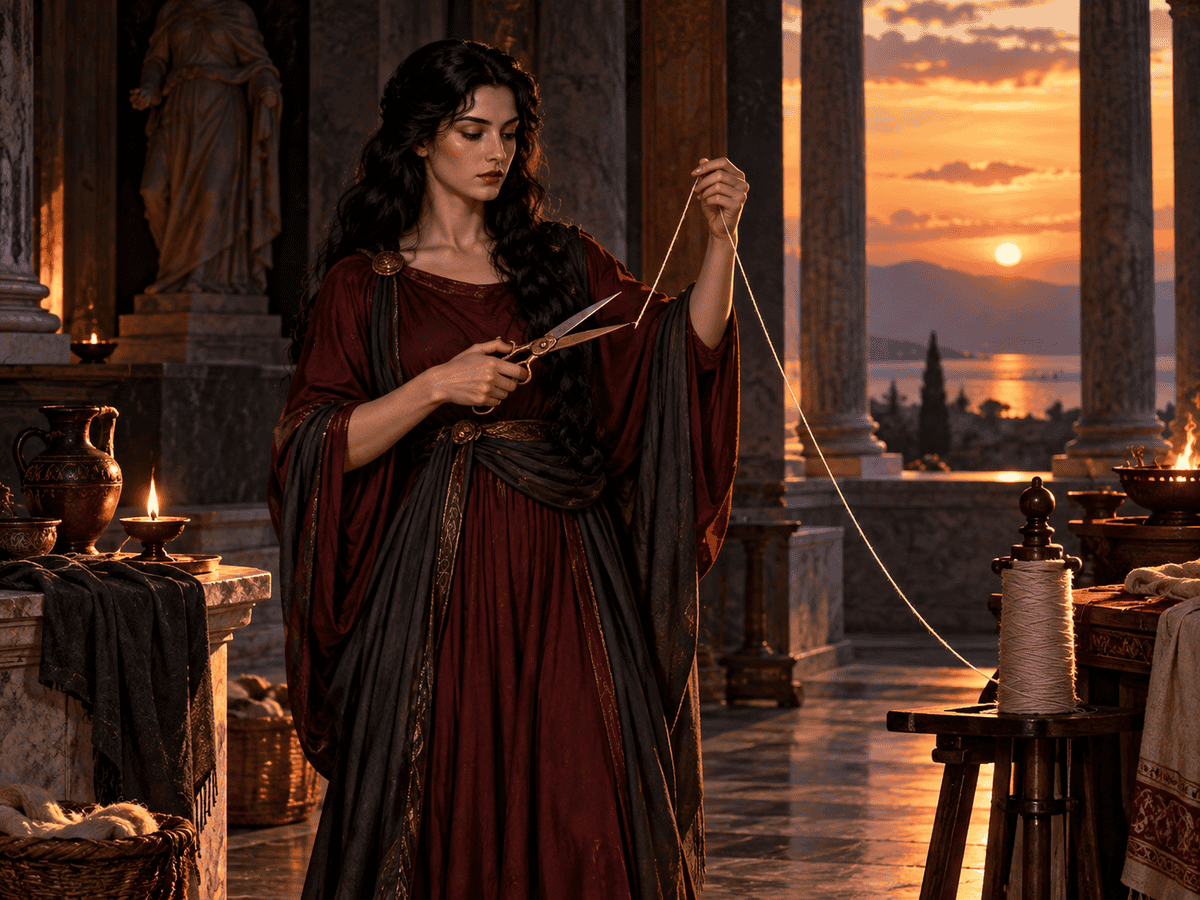
Then comes Atropos. Her name carries the idea of something that cannot be turned aside.
And her job is the one everyone remembers. Atropos cuts the thread.
Once she does, the life connected with it is finished. That makes her the most frightening of the three sisters.
Clotho represents the beginning. Lachesis represents the portion.
Atropos represents the point nobody can move beyond.
There is something especially powerful about how simple the image is.
No enormous weapon is required. No thunderbolt falls from the sky.
There is only a thread and something sharp enough to cut it. That small action ends everything.
Atropos therefore represents the part of fate that cannot be negotiated forever.
Greek heroes could defeat monsters. Kings could build powerful cities.
The gods themselves could interfere in human affairs. But every mortal life still had a limit.
Atropos waited at that limit. The exact relationship between Zeus and the Moirai can become complicated in Greek literature.
Sometimes Zeus appears closely involved with fate.
Other traditions make the power of destiny feel much harder for even the gods to escape.
That tension is part of what makes the Moirai so interesting. Who has the final word?
Zeus, the king of the gods? Or fate itself?
Ancient Greek stories never reduce that question to one perfectly simple answer.
But Atropos represents the moment when the question stops mattering. The thread has been cut.
And even the greatest human story has reached its final line.

I always felt a strong connection to the Divine since my birth. As an author and mentor, my mission is to help others find love, happiness, and inner strength in the darkest of times.