Not every ancient goddess represented love, beauty, or motherhood. Some represented war.
Others ruled over death, disease, vengeance, destruction, or forces humans could never fully control.
A few had powers that could threaten entire cities, punish terrible crimes, or bring consequences that nobody could easily escape.
That did not necessarily make them evil. Ancient religions were rarely that simple.
A goddess who could destroy might also protect. A goddess connected with death could also represent renewal.
And the same divine power people feared could become exactly the power they wanted on their side.
Here are eight goddesses whose reputations could make even gods and mortals nervous.
1. Sekhmet – The Goddess Who Nearly Destroyed Humanity
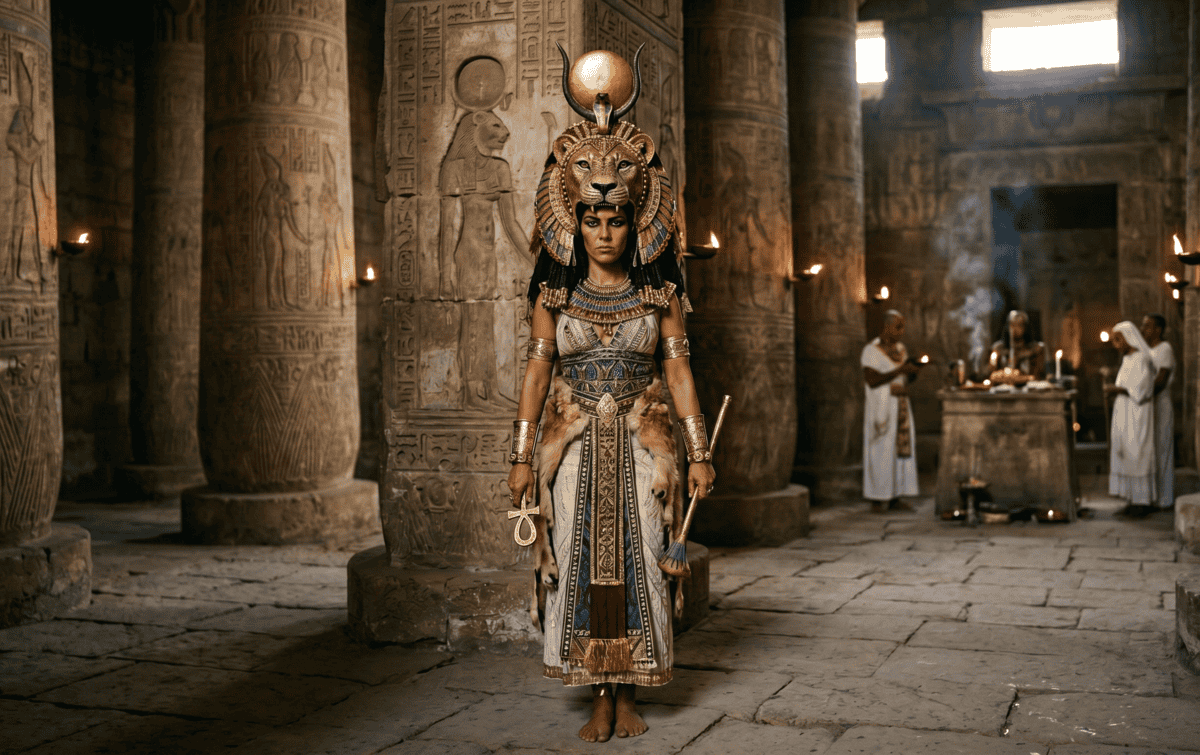
Few goddesses had a more frightening side than Sekhmet.
In ancient Egypt, she was represented as a lioness or a woman with the head of a lioness.
She was connected with war, destruction, disease, and the fierce heat of the Sun.
But Sekhmet was also a protector and could be associated with healing.
Her most terrifying story begins when humanity rebels against the sun god Ra.
Ra sends his divine Eye against them, and Sekhmet becomes the force of his anger.
Then something goes wrong. She enjoys the destruction so much that she does not want to stop.
According to the famous story, the gods eventually trick her with a huge amount of beer colored red.
Sekhmet drinks it, becomes intoxicated, and the destruction finally ends.
The story shows why she inspired both fear and respect.
Sekhmet was not a weak force that needed protection from other gods.
She was the force everyone else needed protection from.
2. The Morrígan – The Goddess Who Appeared Before Death

Seeing the Morrígan was rarely a comforting sign.
This mysterious figure from Irish mythology is strongly connected with war, fate, kingship, and death.
Sometimes the name Morrígan refers to an individual goddess.
Other traditions connect her with a group of female figures. That uncertainty only makes her more mysterious.
She appears throughout Irish myth around battles and warriors.
One of her most famous connections is with the hero Cú Chulainn. Their relationship becomes hostile after he rejects her.
The Morrígan later interferes with him during battle in different forms.
Near the end of Cú Chulainn’s life, supernatural signs connected with her appear again.
The Morrígan did not need to personally kill every warrior. Her presence could mean that death was already near.
Imagine going into battle and seeing a supernatural woman connected with your fate.
You might immediately wonder whether you were about to win. Or whether she had simply arrived to watch you die.
3. Kali – The Goddess Even the Battlefield Could Not Contain

Kali is one of the most visually powerful goddesses in Hindu tradition.
She is associated with time, death, destruction, and the defeat of evil.
But describing Kali as simply frightening misses much of her meaning.
She can also represent protection, liberation, and the destruction of forces that prevent spiritual freedom.
In one famous tradition, Kali becomes so consumed by the energy of battle that her destructive movement threatens everything around her.
Shiva lies beneath her. When Kali realizes she has stepped on him, she stops.
The image became one of the most famous representations of the goddess.
Kali’s terrifying appearance is not necessarily directed toward the people who honor her.
Her frightening side is often directed toward evil itself. That creates an important difference.
You may fear Kali’s power. But if she is protecting you, the thing threatening you has much more reason to be afraid.
4. Hecate – The Goddess of Crossroads, Ghosts, and Magic
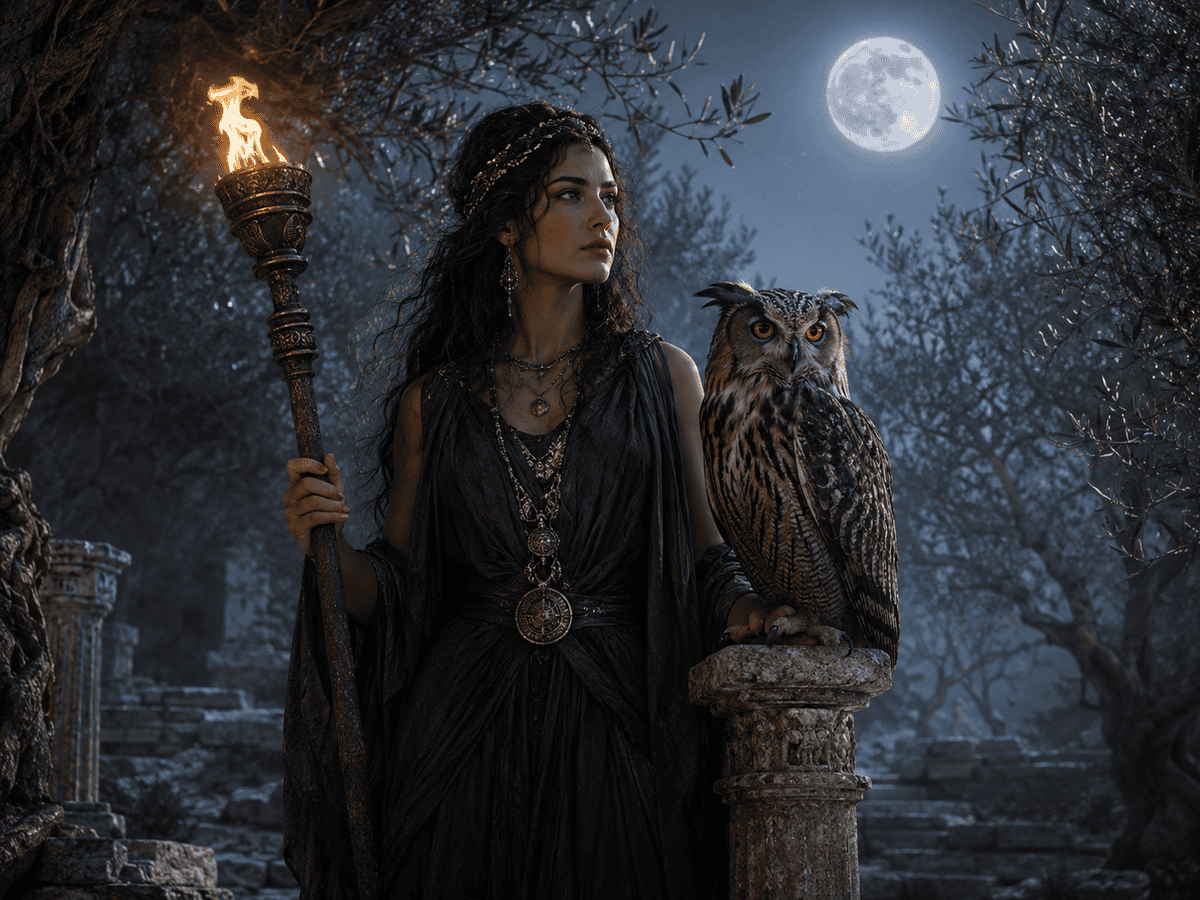
Hecate does not need to destroy an army to feel frightening. Sometimes mystery is enough.
The Greek goddess Hecate became connected with magic, crossroads, ghosts, torches, the night, and the boundaries between different worlds.
She appears in the myth of Persephone, where she helps Demeter search for her missing daughter.
Later, Hecate becomes closely associated with Persephone. Over time, her connection with magic became especially strong.
Ancient people could leave offerings for Hecate at crossroads. These places were already mysterious.
A crossroads represents uncertainty. You have arrived at a place where one road becomes several.
Now imagine that the darkness around those roads belongs to a goddess associated with spirits and magic.
Hecate was respected as a powerful divine figure. She could protect households and guide people.
When you stand at the boundary between the familiar world and something unknown, Hecate is already there holding the torch.
5. Ereshkigal – The Queen Even the Gods Had to Respect

Ereshkigal ruled the Mesopotamian underworld. And in her realm, her authority was enormous.
She is especially famous from the story usually known as The Descent of Inanna or The Descent of Ishtar, depending on the tradition.
Inanna decides to enter the underworld. At each gate, part of her clothing or jewelry is removed.
By the time she reaches Ereshkigal, she has lost the symbols of her earthly power. Then Inanna is killed, and her body is hung up.
Even one of Mesopotamia’s greatest goddesses cannot simply enter Ereshkigal’s kingdom and behave as though ordinary rules still apply.
That is what makes Ereshkigal so intimidating. The underworld belongs to her.
Other gods may hold tremendous power elsewhere. Down there, things are different.
Death has its own queen. And anyone entering her kingdom does so under her rules.
6. Nemesis – The Goddess Who Punished Excessive Pride
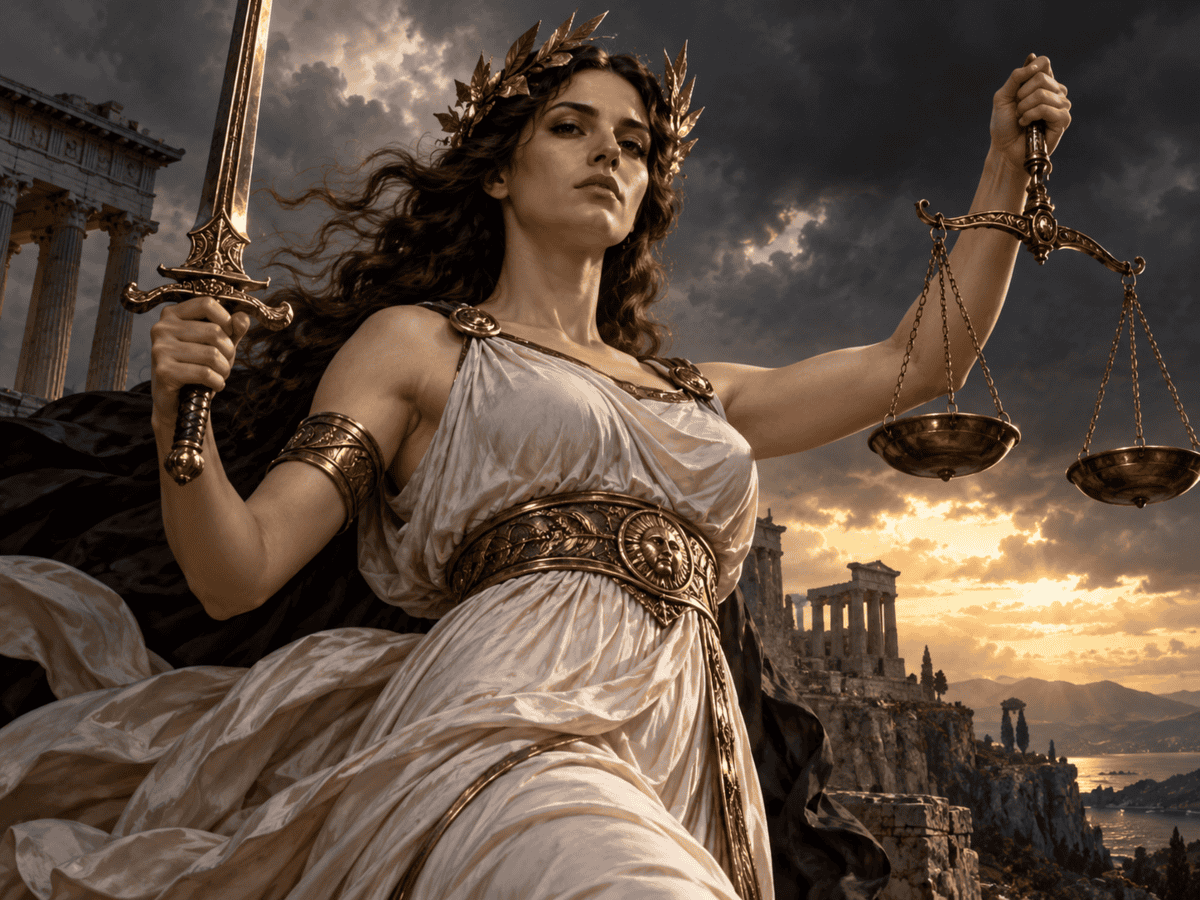
Nemesis did not need claws, armies, or an underworld kingdom. She had something much simpler.
Consequences. The Greek goddess Nemesis was connected with retribution and the punishment of excessive pride.
She represented the idea that nobody should rise so far above proper limits that they begin believing normal rules no longer apply.
That made her especially frightening to powerful people. Success can make someone feel untouchable.
A king becomes too proud. A beautiful person begins treating everyone else as inferior.
Someone receives extraordinary fortune and starts believing they deserve everything.
Then Nemesis enters the story. Her power is frightening because it does not always arrive immediately.
You may believe you escaped the consequences. You may even begin celebrating.
But balance has not necessarily forgotten you. Nemesis represents the moment when arrogance finally receives an answer.
7. Hel – The Goddess Who Ruled the Realm of the Dead
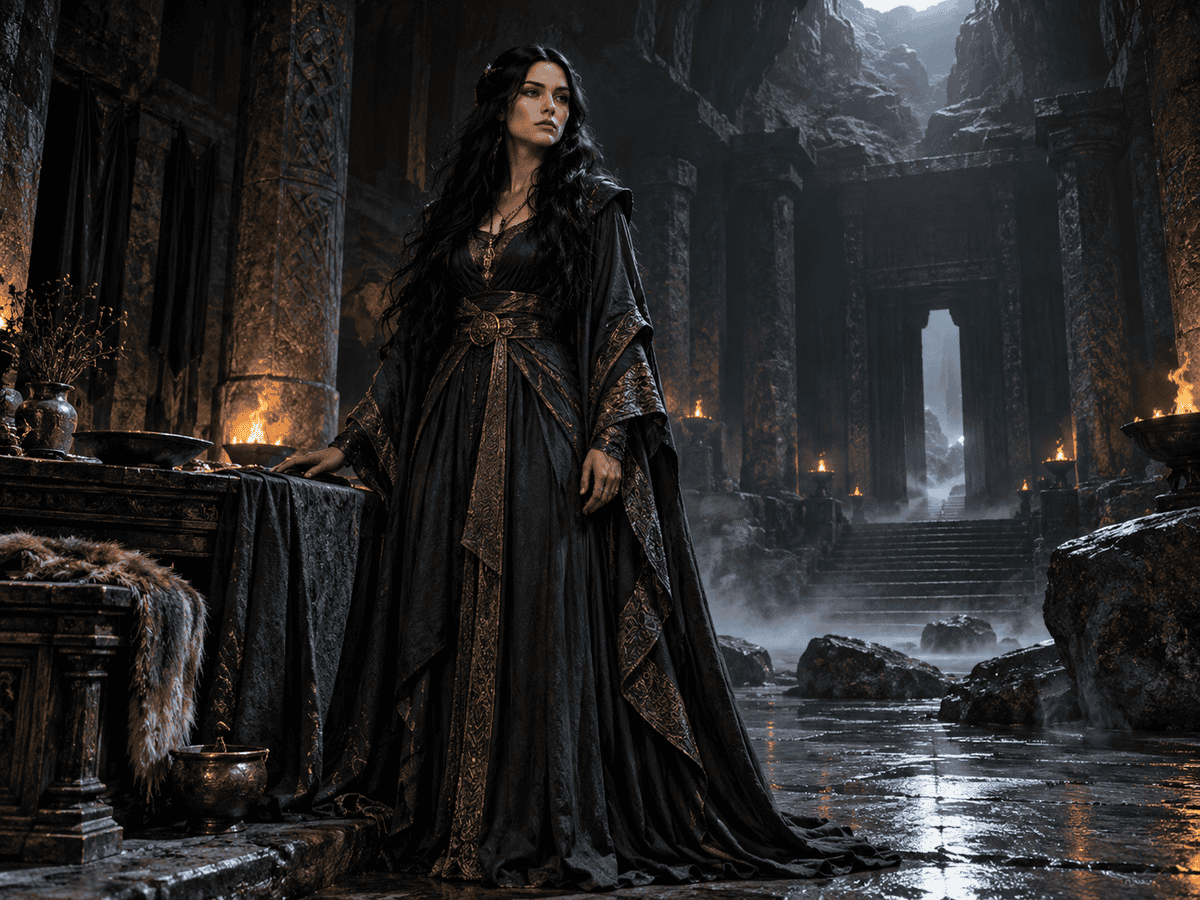
Hel is one of the most recognizable figures connected with death in Norse mythology.
She is the daughter of Loki and the giantess Angrboða. Her siblings are hardly ordinary either.
They include Fenrir, the enormous wolf, and Jörmungandr, the serpent surrounding the world.
The gods recognized that Loki’s children could become dangerous. Odin sent Hel to rule over a realm of the dead.
That realm also became known as Hel. One of the most famous stories involving her happens after the death of Baldr.
The gods desperately want Baldr returned. Hel agrees on one condition.
Everything in the world must weep for him. Almost everything does.
But one being refuses, and Baldr remains among the dead. That story shows Hel’s authority clearly.
The gods may desperately want someone back. That does not mean the ruler of the dead has to release him.
8. Tisiphone – The Avenger of Murder
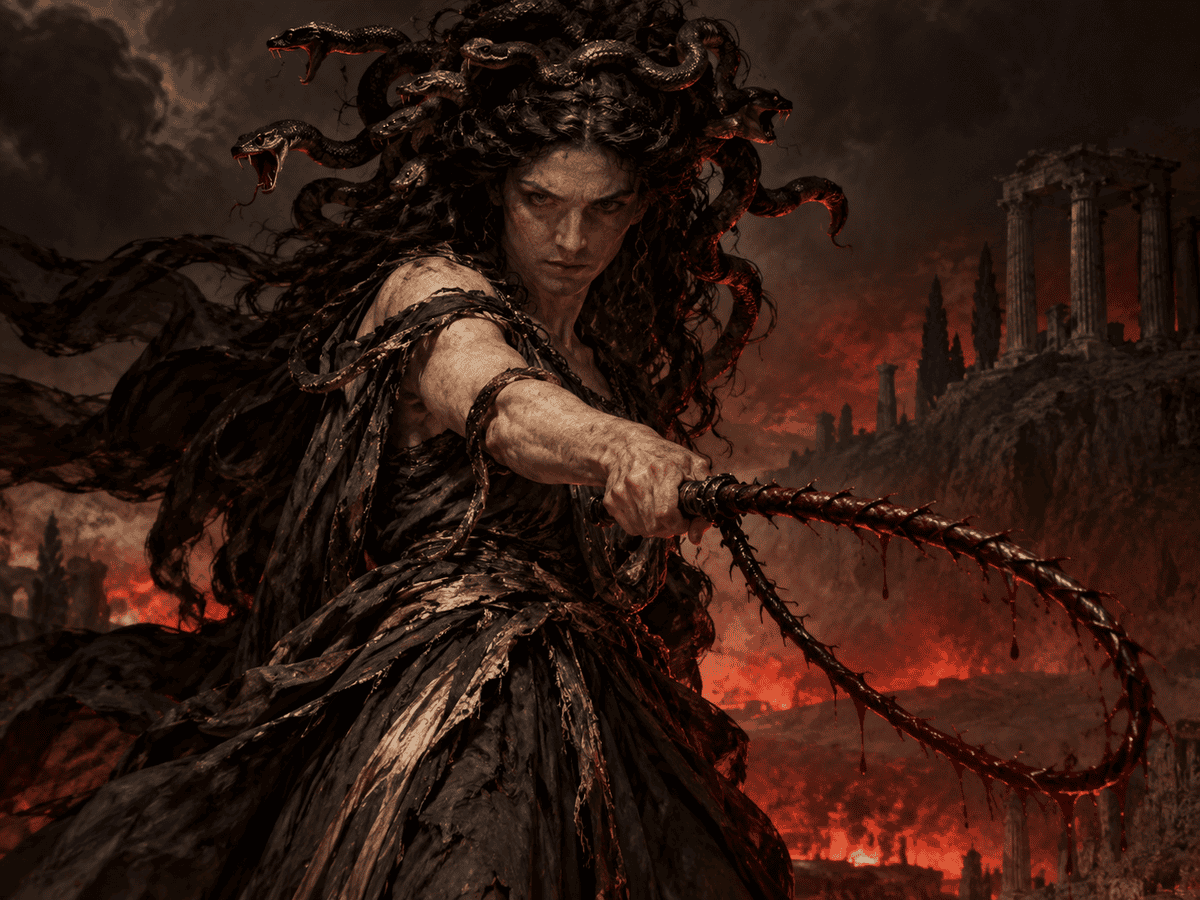
The final goddess belongs to one of the most terrifying groups in Greek mythology.
Tisiphone was one of the Erinyes, better known today as the Furies.
Alongside Alecto and Megaera, she represented divine punishment.
The Erinyes were especially connected with serious crimes involving family and blood.
Tisiphone became particularly associated with vengeance for murder.
The terrifying thing about the Furies was how difficult they were to escape.
You could hide a crime from other humans. You could leave the city. You could lie.
You could convince yourself that nobody would ever discover what happened.
But divine vengeance was different. The Erinyes could pursue the guilty.
They represented consequences that followed someone when ordinary justice failed. Even their names inspired fear.
People sometimes referred to them with gentler titles rather than risk attracting their anger.
That may be the greatest sign of how frightening a goddess can become.
Sometimes you do not even want to say her name carelessly.

I always felt a strong connection to the Divine since my birth. As an author and mentor, my mission is to help others find love, happiness, and inner strength in the darkest of times.