

Thousands of years before modern ideas about abundance appeared, people were already praying for successful harvests, healthy animals, profitable trade, good fortune, and enough food to survive the year.
Naturally, many cultures connected these blessings with goddesses. But ancient wealth did not always mean piles of gold.
A full field could make someone wealthy. So could fertile land, a successful business, a healthy family, or simply having enough food when winter arrived.
Some goddesses became directly connected with fortune and riches.
Others represented agriculture, fertility, or the abundance of the earth.
Their stories show us that prosperity has always meant more than money.
Here are ten goddesses from around the world associated with wealth, fortune, and abundance.
1. Lakshmi – Hindu Goddess of Wealth and Good Fortune

Few goddesses are as strongly connected with prosperity as Lakshmi.
In Hindu tradition, she is the goddess of wealth, fortune, beauty, abundance, and prosperity.
She is also closely connected with Vishnu. Lakshmi is often shown seated or standing on a lotus flower.
Gold coins may pour from one of her hands, while elephants sometimes appear beside her.
Her connection with prosperity is still very much alive. During Diwali, Hindu families honor Lakshmi and welcome her blessings.
Homes may be cleaned and decorated before the celebration. Lights are placed around them.
The idea is beautiful. Prosperity should have somewhere welcoming to enter.
Lakshmi also reminds us that real abundance is not simply having money.
Beauty, generosity, harmony, and gratitude can all belong to a prosperous life.
2. Fortuna – Roman Goddess of Fortune
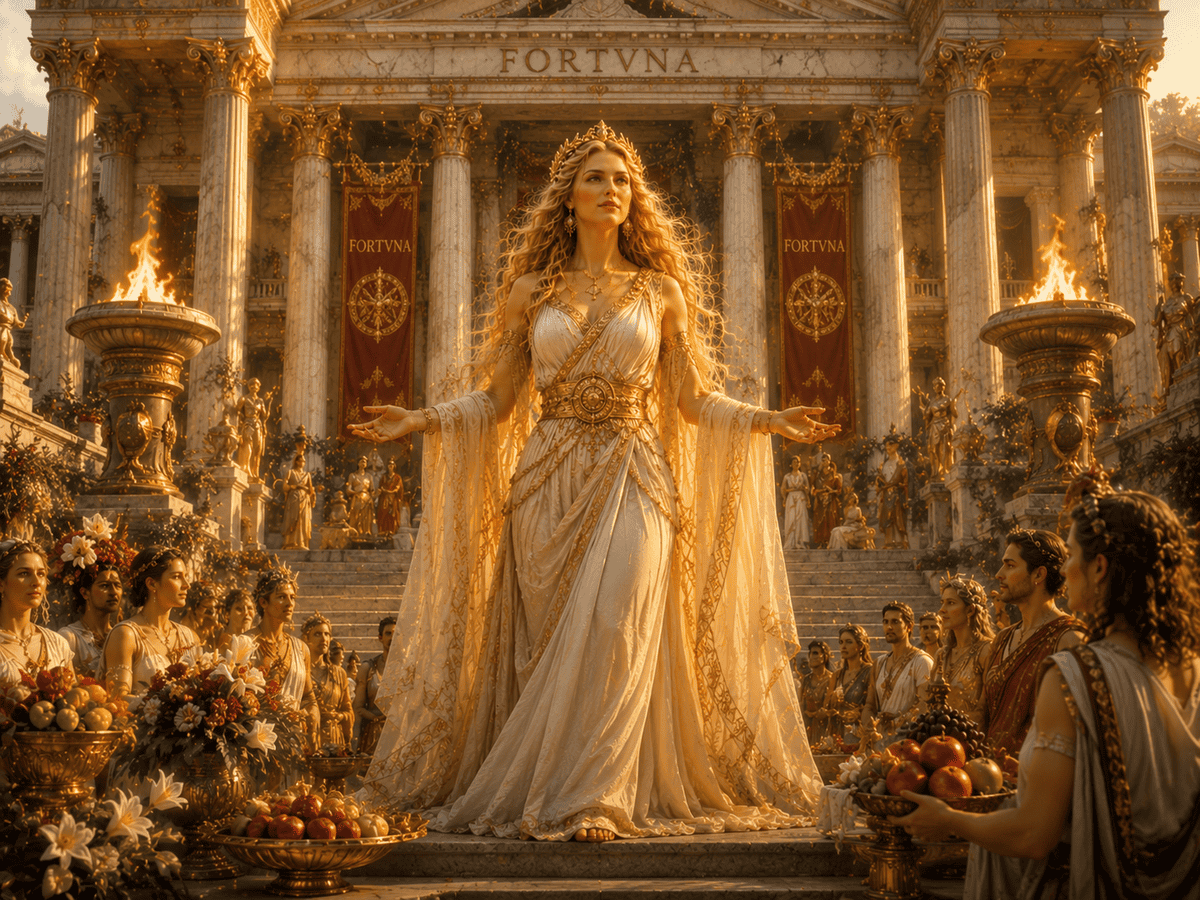
The Romans knew that fortune could change quickly. They gave that unpredictable power a goddess.
Fortuna. She was associated with luck, fate, prosperity, and chance. But Fortuna could bring both good and bad fortune.
That made her especially powerful. Someone could be wealthy today and lose everything tomorrow.
Another person could suddenly receive an opportunity they never expected. Fortuna represented those mysterious turns.
She was worshipped under many different titles connected with different parts of life.
Her famous wheel later became an important symbol of changing fortune. The wheel turns.
Sometimes you are rising. Sometimes you are falling. Fortuna reminds us to appreciate prosperity while it is present.
Good fortune is wonderful. But it should never make us believe life can no longer surprise us.
3. Abundantia – Roman Goddess of Abundance
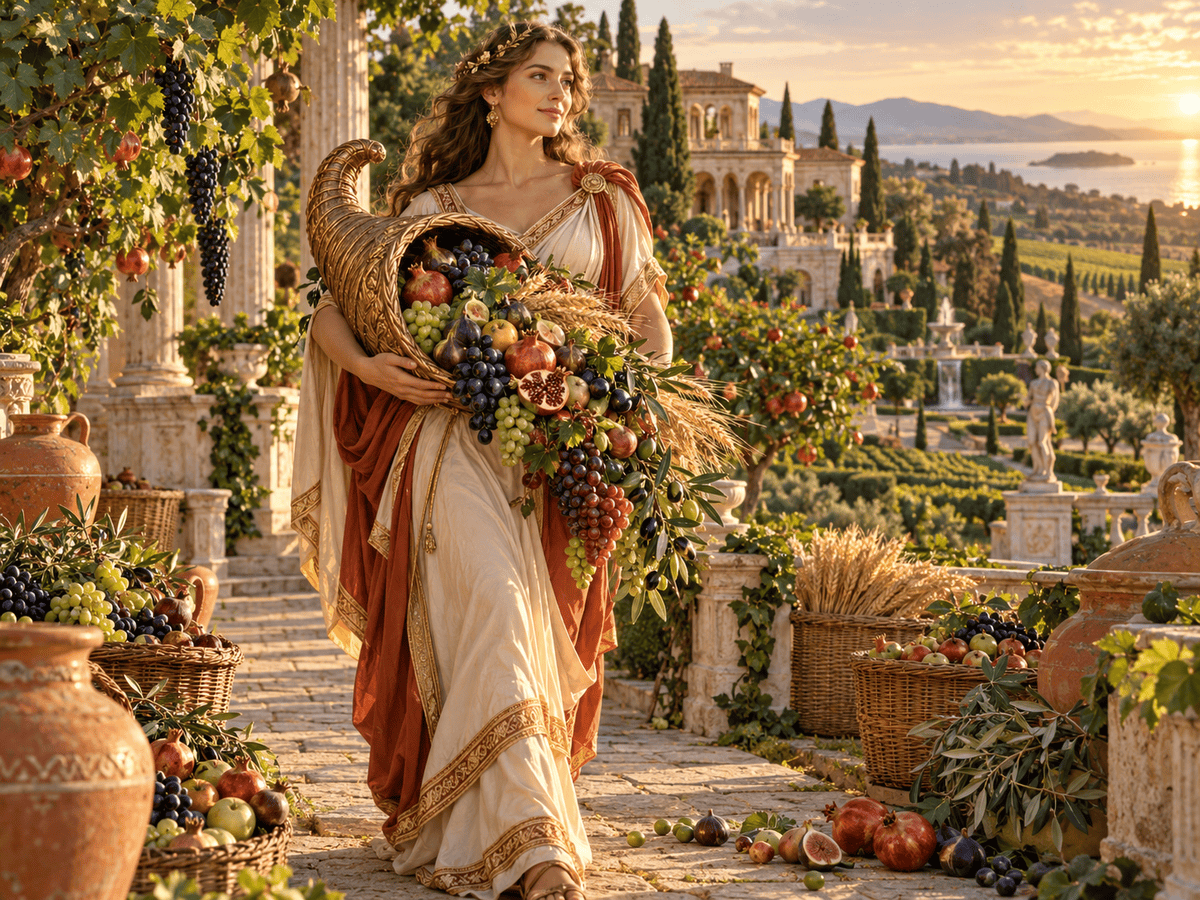
Her name tells you almost everything. Abundantia represented abundance and prosperity in Roman tradition.
She became especially associated with the image of the cornucopia.
The cornucopia is the famous horn overflowing with fruits, grain, and other food.
Today, we often see it as a decorative symbol. In the ancient world, that overflowing food represented something incredibly important.
Enough. Enough grain. Enough fruit. Enough resources to survive and enjoy life.
Later artistic traditions often showed Abundantia pouring wealth or food from the horn.
That makes her one of the clearest symbols of abundance on this list. Her message is not complicated.
Prosperity is something that overflows. When you have more than you need, you also have something you can share.
4. Demeter – Greek Goddess of the Harvest

Demeter may not immediately sound like a wealth goddess. But in the ancient world, a successful harvest was wealth.
Demeter was the Greek goddess of agriculture and grain. Her power affected the food people depended on.
Her most famous myth centers on the disappearance of her daughter Persephone.
When Persephone is taken into the Underworld, Demeter grieves. The earth suffers with her.
Crops stop growing. Human survival itself becomes threatened.
Only when an agreement allows Persephone to return does fertility come back to the land.
Demeter reminds us how closely prosperity depends on nature. Gold cannot feed you.
A field of grain can. Her abundance is practical. It is bread on the table, full storage rooms, and another successful harvest.
Sometimes the greatest form of wealth is simply knowing there will be enough.
5. Oshun – Yoruba Orisha of Sweetness and Prosperity

Oshun is one of the most beloved Orishas in Yoruba religion and related traditions.
She is strongly associated with fresh water, love, beauty, fertility, sweetness, and prosperity.
Her energy is often connected with rivers. That makes perfect sense. Water brings life.
It helps crops grow. It supports communities. Where fresh water flows, abundance can follow.
Oshun is also connected with luxury, beauty, and valuable things. But her stories remind people not to mistake softness for weakness.
In one famous tradition, the male Orishas try to create the world while excluding Oshun.
Their efforts fail. Only when they recognize her importance can things begin working properly.
That story carries a powerful message about prosperity. You cannot create true abundance while ignoring something essential.
6. Benzaiten – Japanese Goddess of Fortune

Benzaiten is one of Japan’s Seven Lucky Gods. She has a fascinating history.
Her origins are connected with the Hindu goddess Saraswati, whose worship traveled and transformed across cultures.
In Japan, Benzaiten became associated with music, eloquence, knowledge, water, and fortune.
She is often shown holding a biwa, a traditional Japanese musical instrument.
Her connection with prosperity feels different from a goddess simply pouring coins into someone’s hands.
Benzaiten represents talents that can create value. Music. Knowledge. Creativity. Communication.
Her presence among the Seven Lucky Gods also strengthened her connection with good fortune.
Benzaiten reminds us that sometimes prosperity begins with a gift you already have. The question is whether you actually use it.
7. Gefjon – Norse Goddess Connected With Abundance
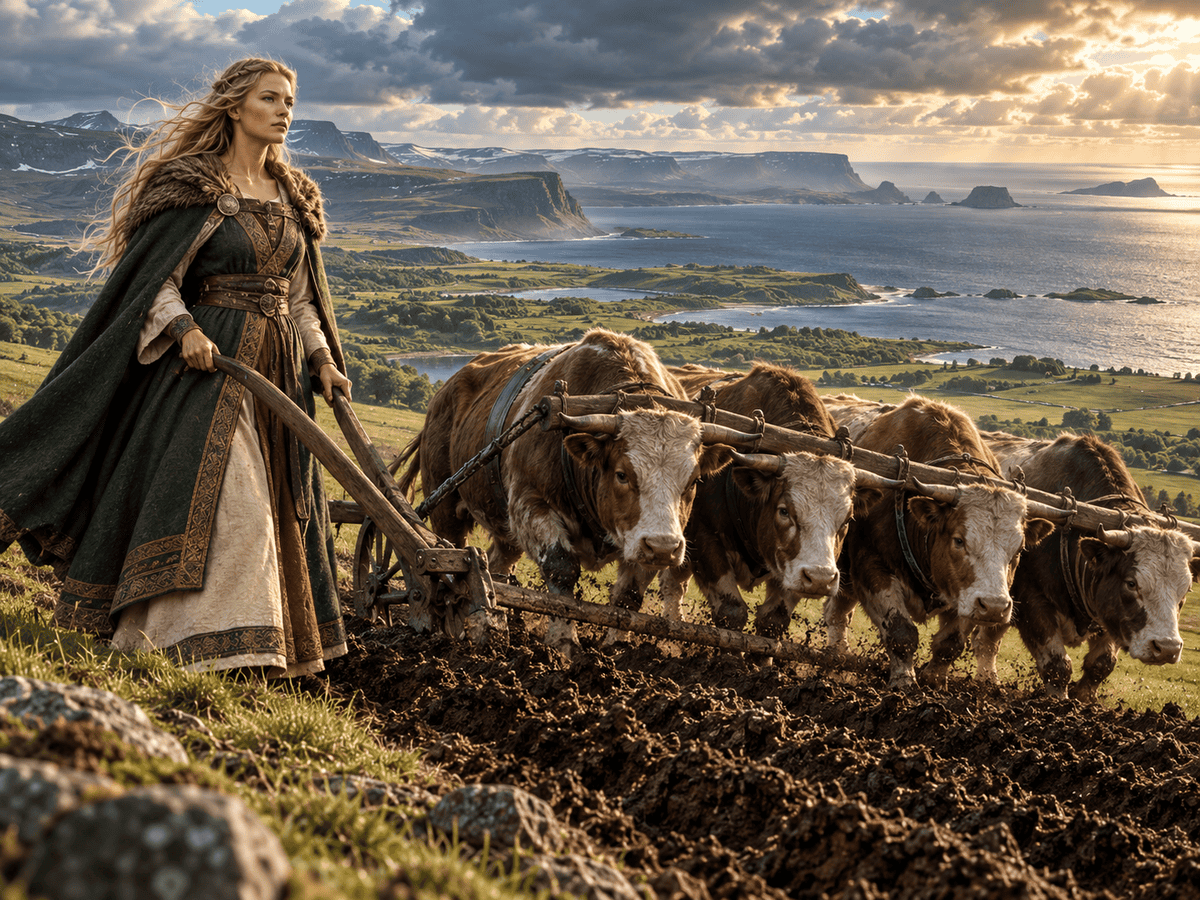
Gefjon is a mysterious goddess from Norse tradition. She is associated with agriculture, land, and prosperity.
Her most famous story involves King Gylfi of Sweden. He promises Gefjon as much land as she can plow during a certain period.
Gefjon does something extraordinary. She turns her four sons into powerful oxen.
Together, they plow an enormous piece of land away from Sweden.
According to the legend, that land becomes the Danish island of Zealand.
The story gives Gefjon an enormous connection with fertile land.
And in an agricultural society, land meant survival and prosperity.
Her wealth is not a treasure chest. It is territory. Soil. Fields. The ability to create abundance from the earth itself.
Gefjon reminds us that prosperity sometimes comes from taking an opportunity and doing far more with it than anyone expected.
8. Renenutet – Egyptian Goddess of Harvest and Fortune
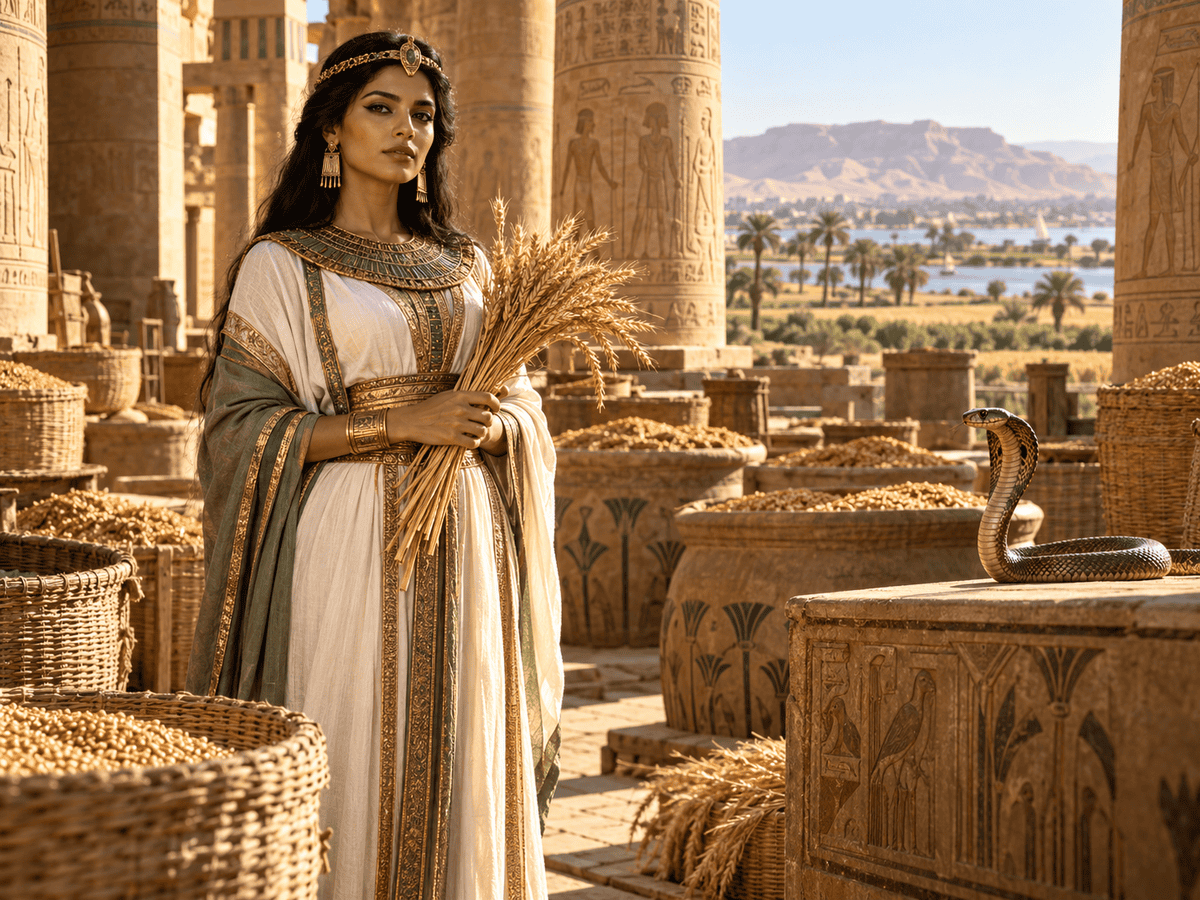
Renenutet was an ancient Egyptian goddess closely connected with nourishment and the harvest.
She was especially associated with the protection of crops. That made her extremely important.
A good harvest meant food and security. A bad one could become a disaster.
Renenutet was also connected with destiny and fortune.
Her name and role became associated with the nourishment and good things a person received in life.
She could be shown as a cobra or as a woman with a cobra’s head. That protective snake imagery makes sense.
The harvest needed protection. So did the stored grain after it was gathered.
Renenutet represents prosperity that has been carefully grown and preserved.
It is not enough for abundance to arrive. Sometimes you also need the wisdom to protect what you already have.
9. Rosmerta – Celtic Goddess of Plenty
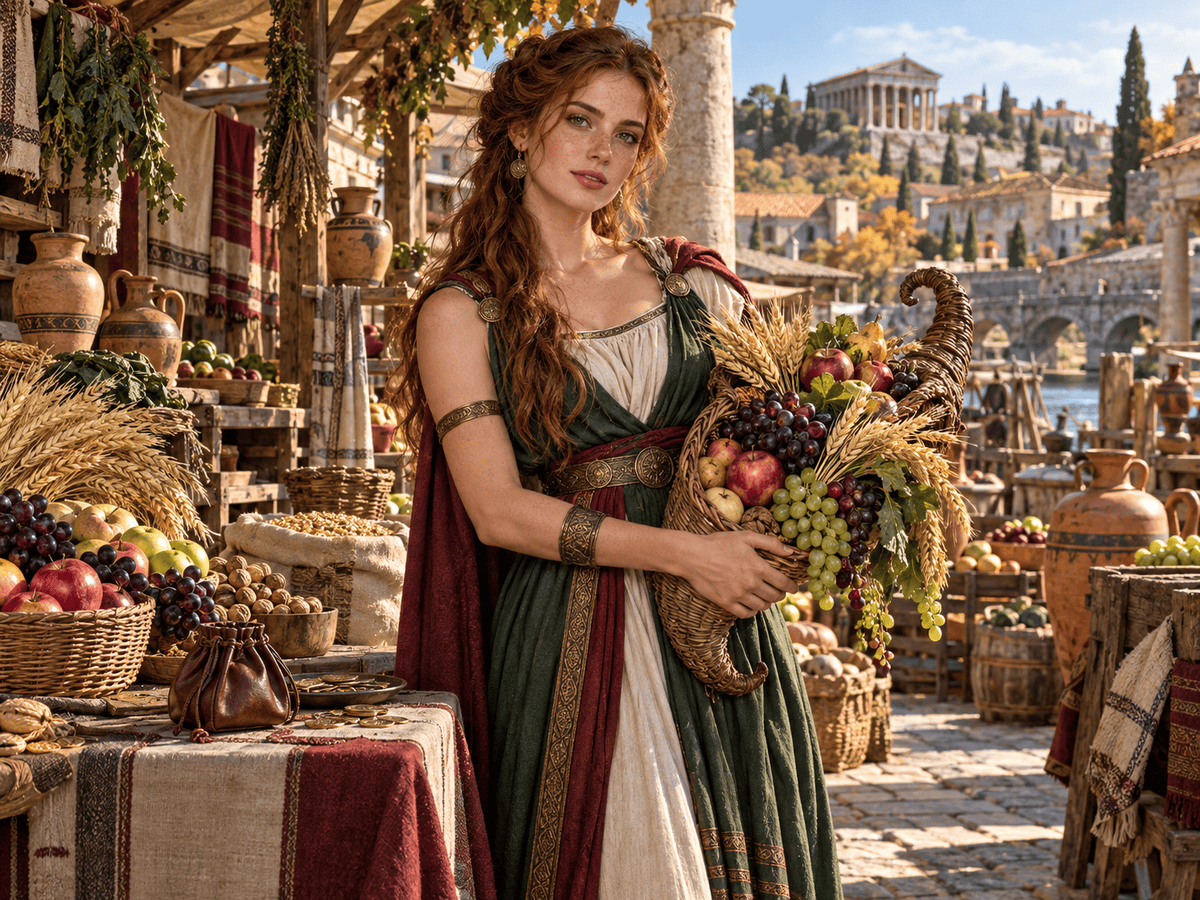
Rosmerta was worshipped in parts of the ancient Celtic world, especially in Gaul.
Her name is often interpreted in ways connected with providing or abundance.
She appears in Gallo-Roman religion and was frequently associated with the Roman god Mercury.
That pairing is interesting. Mercury could be connected with trade and commerce.
Rosmerta brought her own associations with plenty and prosperity.
She was sometimes shown carrying objects such as a cornucopia or purse.
Both are obvious symbols of abundance. Rosmerta therefore represents prosperity in a very practical form.
Resources. Trade. Plenty. Having something available when you need it. She may not be as famous today as Lakshmi or Fortuna.
But for people who once worshipped her, Rosmerta represented something everyone understood.
Life becomes easier when the things you need are plentiful.
10. Bixia Yuanjun – Prosperity Through Blessings

Bixia Yuanjun is an important goddess in Chinese religious tradition.
She is strongly associated with Mount Tai and has been worshipped as a powerful protector connected with birth, children, health, and human well-being.
She is not simply a goddess of money. Her form of prosperity is broader.
A healthy family could be considered an enormous blessing.
So could safety, a successful future, and protection through major stages of life.
That makes her a fitting final goddess for this list. Modern ideas about prosperity often become completely focused on money.
Ancient traditions remind us that people have always asked the divine for much more.
Enough food. Healthy children. Fertile land. Protection. Good opportunities.
A peaceful home. Money can make life easier. But prosperity has always been larger than what sits inside a purse.
Sometimes the richest blessing is simply having a life that feels full.

I always felt a strong connection to the Divine since my birth. As an author and mentor, my mission is to help others find love, happiness, and inner strength in the darkest of times.