
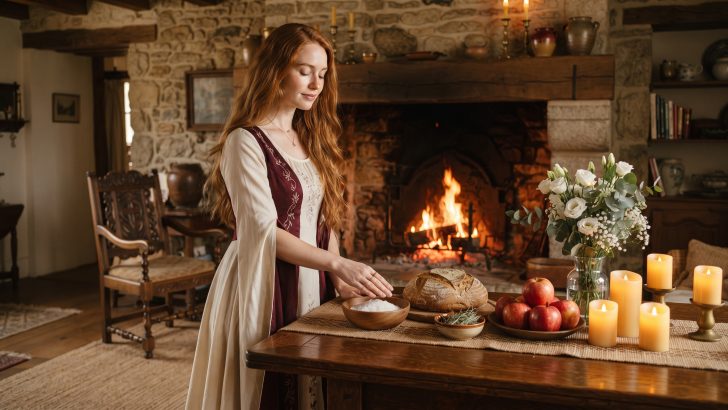
Long before modern kitchens, central heating, and electric lights, families gathered around a fire to cook their meals, share stories, and find warmth during cold evenings.
But the hearth was much more than a practical necessity. The hearth has always been the heart of the home.
It was a sacred place. In ancient Greece, the goddess Hestia protected the household flame.
In Rome, Vesta watched over the sacred fire, while Slavic and Baltic traditions honored the hearth as a place of protection, prosperity, and family unity.
A well-tended hearth represented a peaceful household. Its warmth brought people together, and its flame symbolized the life that continued within the home.
That is why so many ancient customs involved bread, salt, herbs, offerings, and blessings performed near the family fire.
Some rituals welcomed prosperity. Others strengthened family bonds, honored household guardians, or protected the home from unwanted influences.
These traditions can still bring meaning to modern homes, even without a traditional fireplace.
Here are eight ancient hearth rituals for peace, protection, and family happiness.
1. The Hestia Hearth Blessing for a Peaceful Home
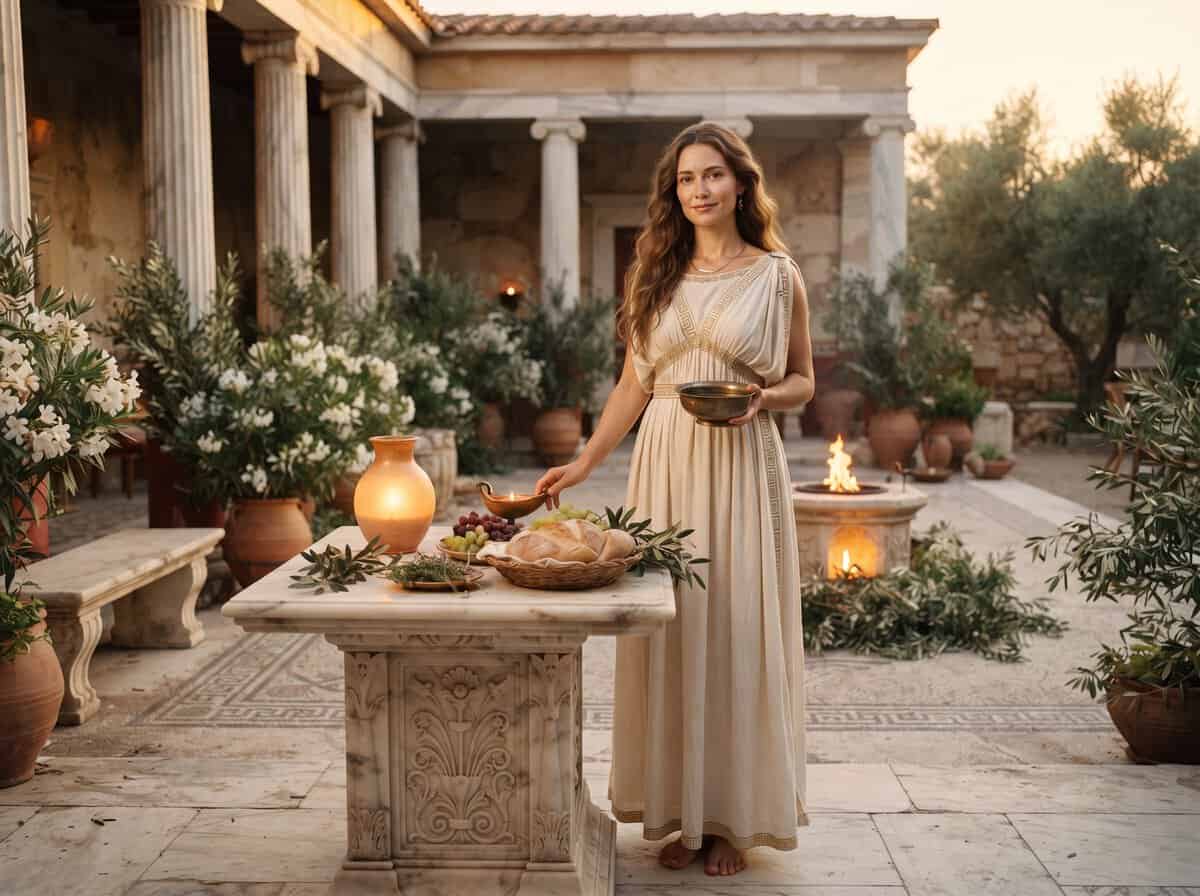
In ancient Greece, Hestia was the goddess of the hearth, household, and sacred fire.
She held a special place among the Olympian deities because every home depended on the warmth and protection of its central flame.
The Greeks honored Hestia at the beginning and end of important offerings.
She represented stability, hospitality, and the sacred bond between family members.
A household blessing dedicated to Hestia begins with preparing a peaceful space.
Clear your kitchen table and place a small bowl of clean water beside a piece of bread.
Add an unlit candle or a warm electric light to represent the hearth.
Stand quietly before the arrangement and welcome Hestia’s peaceful presence into your home.
Ask for patience during disagreements, kindness between family members, and warmth for everyone who enters.
Then break the bread into pieces and share it during a meal.
Bread represents nourishment, while the light symbolizes the sacred hearth.
This blessing is especially meaningful when a household has experienced stress or disagreements.
Hestia’s energy encourages everyone to remember that a home should be a place of comfort rather than constant conflict.
Her greatest gift is the quiet happiness of belonging somewhere.
2. The Roman Vesta Ritual for Family Unity
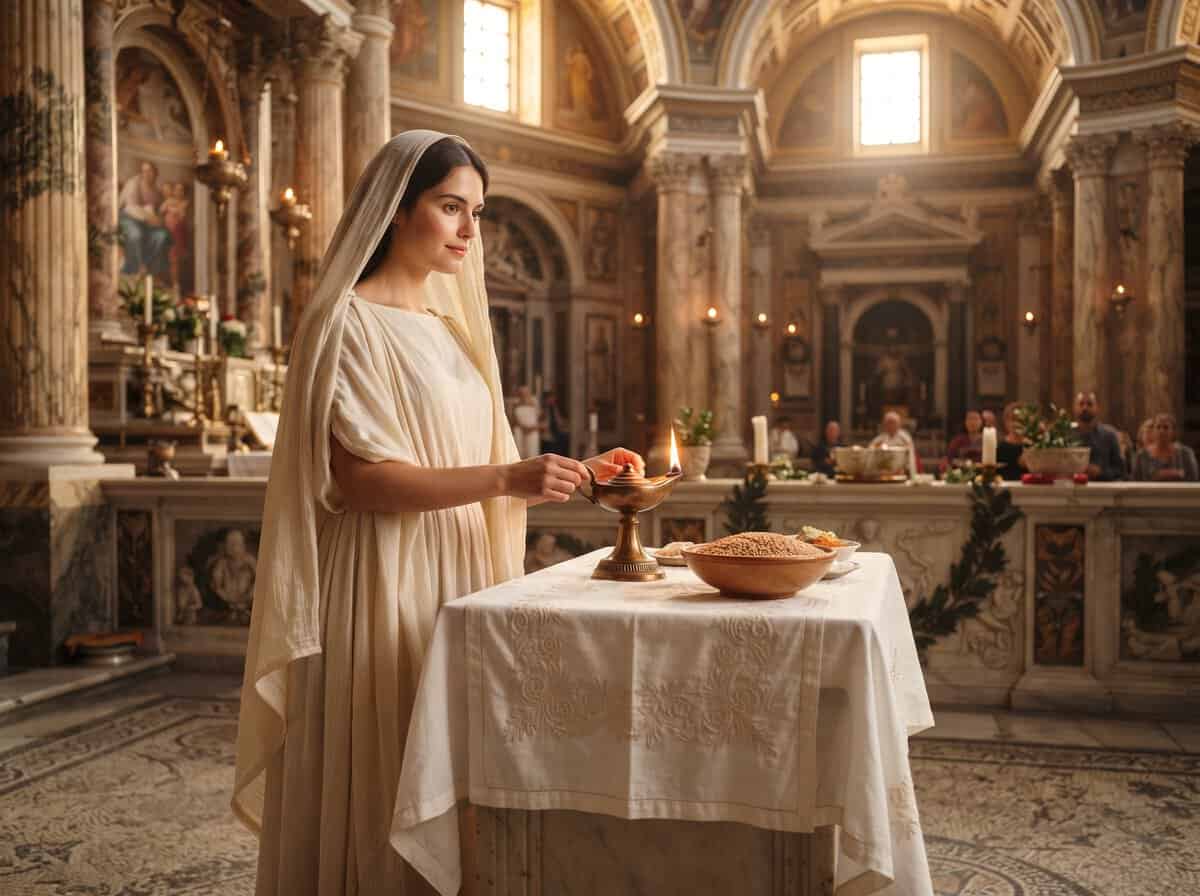
Vesta was one of the most important goddesses in ancient Roman religion.
She protected the sacred hearth and the continuity of the household.
Her eternal flame was maintained in Rome by the Vestal Virgins, priestesses entrusted with one of the city’s most sacred duties.
The flame represented the security and well-being of the Roman community.
Within individual households, the hearth also held an important religious meaning.
It connected daily family life with the sacred traditions of the home.
A Vesta-inspired ritual focuses on strengthening family unity.
Place a white cloth on your kitchen table. Arrange a small bowl of grain or bread in the center.
Beside it, place a warm light to represent Vesta’s sacred flame.
Think about the people who make your home meaningful.
Then speak a blessing for harmony, loyalty, and mutual understanding.
You can also write the names of family members on a piece of paper and place it beneath the bowl.
Leave the arrangement together during a shared meal. The grain represents nourishment and continuity.
The light represents the enduring spirit of the household.
Vesta’s blessing reminds every family that unity does not require everyone to think alike.
It grows when people continue treating one another with respect, even during difficult moments.
3. The Bread and Salt Ritual for Household Protection
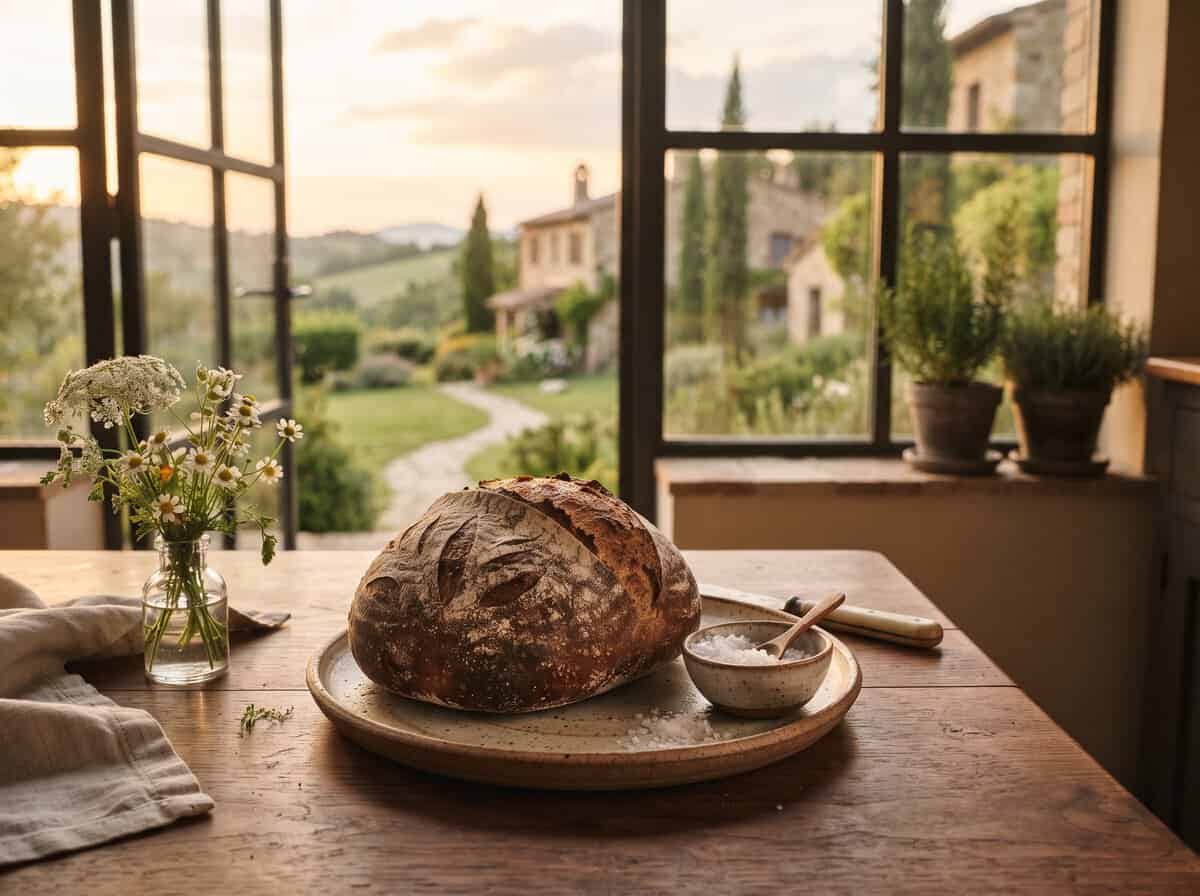
Bread and salt have held sacred meaning in many European household traditions.
Throughout parts of Eastern and Southeastern Europe, offering bread and salt became a powerful expression of hospitality.
Bread represented nourishment and abundance. Salt symbolized preservation, purity, and protection.
A simple bread and salt blessing begins by placing a small loaf of bread on a clean plate.
Set a little bowl of salt beside it. Arrange both near the center of your kitchen table.
Think about the atmosphere you want to create in your home.
Perhaps you want more patience, fewer arguments, or a stronger sense of togetherness.
Then speak a short blessing for peace and protection.
Touch the bread gently and give thanks for the nourishment your household receives.
The salt represents the boundaries that keep the home safe and peaceful.
When the ritual is complete, share the bread with family members or enjoy it during an ordinary meal.
Keep the display salt separate from food. This custom is especially meaningful when welcoming someone into a new home.
It expresses a beautiful wish. May this household always have enough to eat, enough kindness to share, and enough peace to welcome others.
4. The Gabija Hearth Ritual for Warmth and Harmony
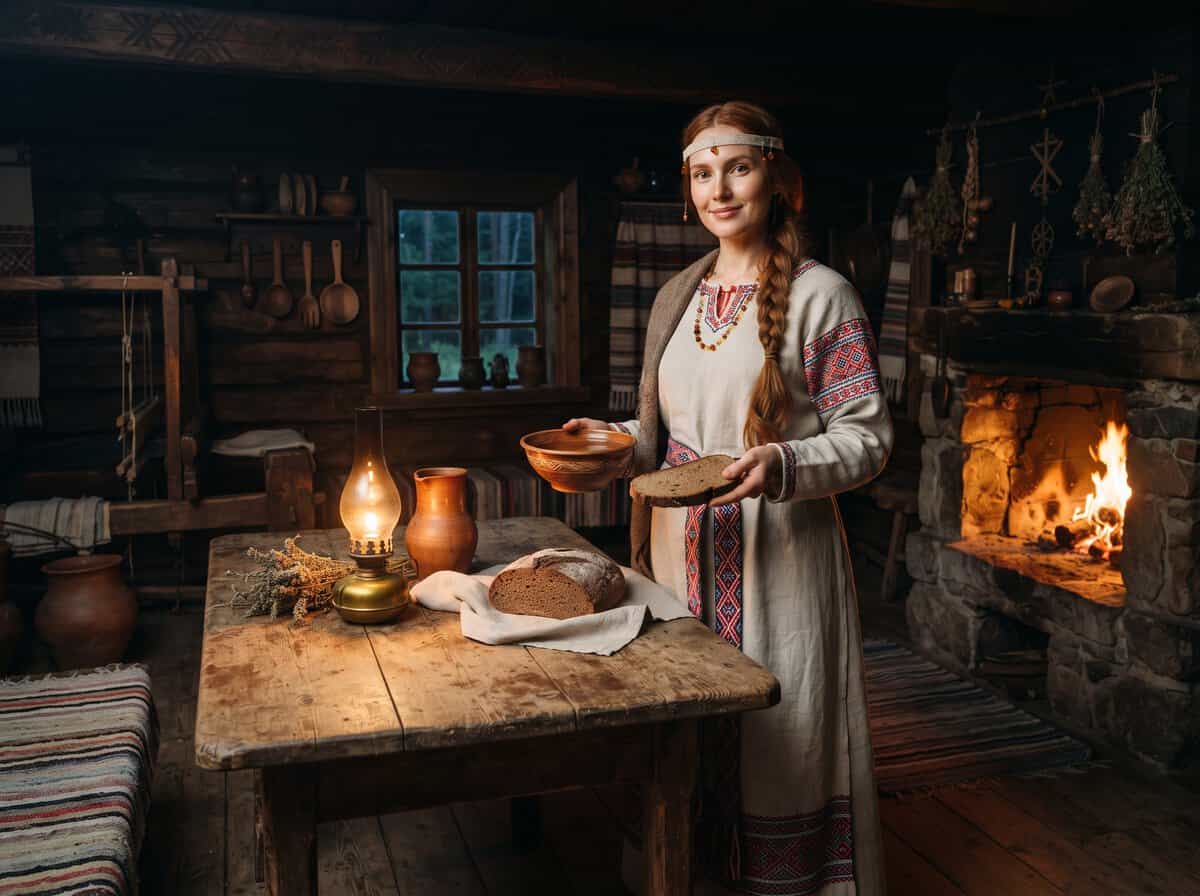
In Lithuanian tradition, Gabija is the sacred goddess or spirit of the household fire.
The hearth flame was treated with great respect because it protected the home, prepared food, and provided warmth.
Traditional customs surrounding Gabija emphasized the importance of caring for the fire properly.
The hearth was not something to neglect or disrespect. It was a living symbol of the household’s well-being.
A modern Gabija-inspired blessing can be performed with a bowl of water, a piece of bread, and a warm electric light.
Place these objects together on your kitchen table. The water represents care and balance.
The bread represents nourishment. The light represents Gabija’s sacred flame.
Stand before the arrangement and offer a blessing for everyone living in the home.
Ask that anger soften, misunderstandings become easier to resolve, and kindness remain stronger than resentment.
Then think of one practical way to bring more warmth into your household.
Perhaps you could prepare someone’s favorite meal. Maybe you could spend an evening together without distractions.
Or perhaps you could begin a small family tradition. Gabija’s power belongs to the warmth that makes a home feel alive.
Her ritual reminds us that household harmony needs attention, just as a hearth needs tending.
5. The Roman Lares Offering for Family Happiness
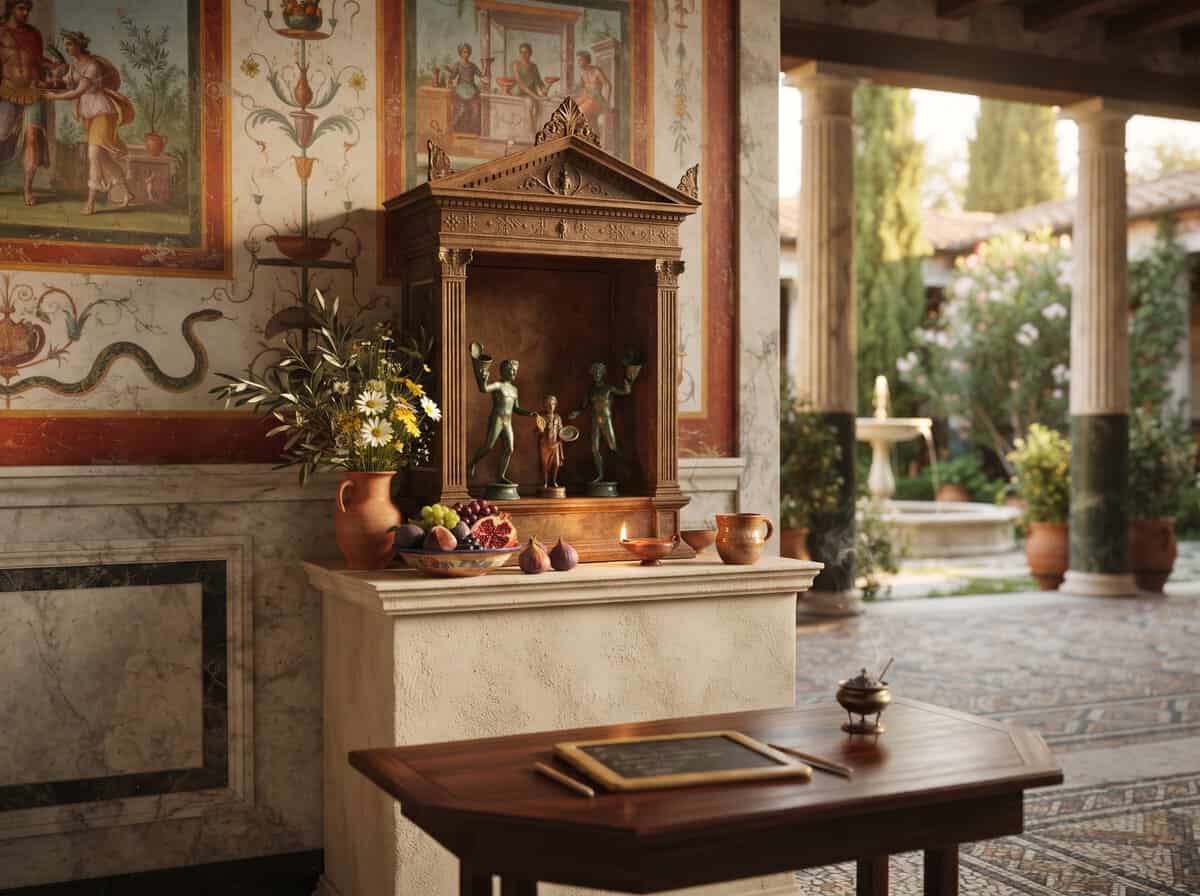
Ancient Roman households honored protective spirits known as the Lares.
These divine guardians were associated with the home, family, and household well-being.
Many Roman homes contained a small shrine called a lararium.
Families could place offerings there and honor the protective powers watching over their household.
Food, flowers, and other simple gifts formed part of domestic religious practice.
A Lares-inspired household ritual begins by choosing a small, clean space in your kitchen or living room.
Place a bowl of fruit there. Add a few fresh flowers and a small cup of water.
These objects represent nourishment, beauty, and the blessings of daily life.
Stand before the arrangement and give thanks for the protection and comfort of your home.
Then speak a wish for family happiness. Ask that everyone who lives there find patience, good health, and peaceful relationships.
You may also include a small object that represents your family, such as a photograph or a meaningful keepsake.
Leave the arrangement in place for a short time. Then enjoy the fruit and refresh the flowers.
The Lares remind us that a home is more than its walls and furniture.
It is a place shaped by the people, memories, and traditions that fill it.
6. The Rosemary Hearth Blessing for Peaceful Relationships
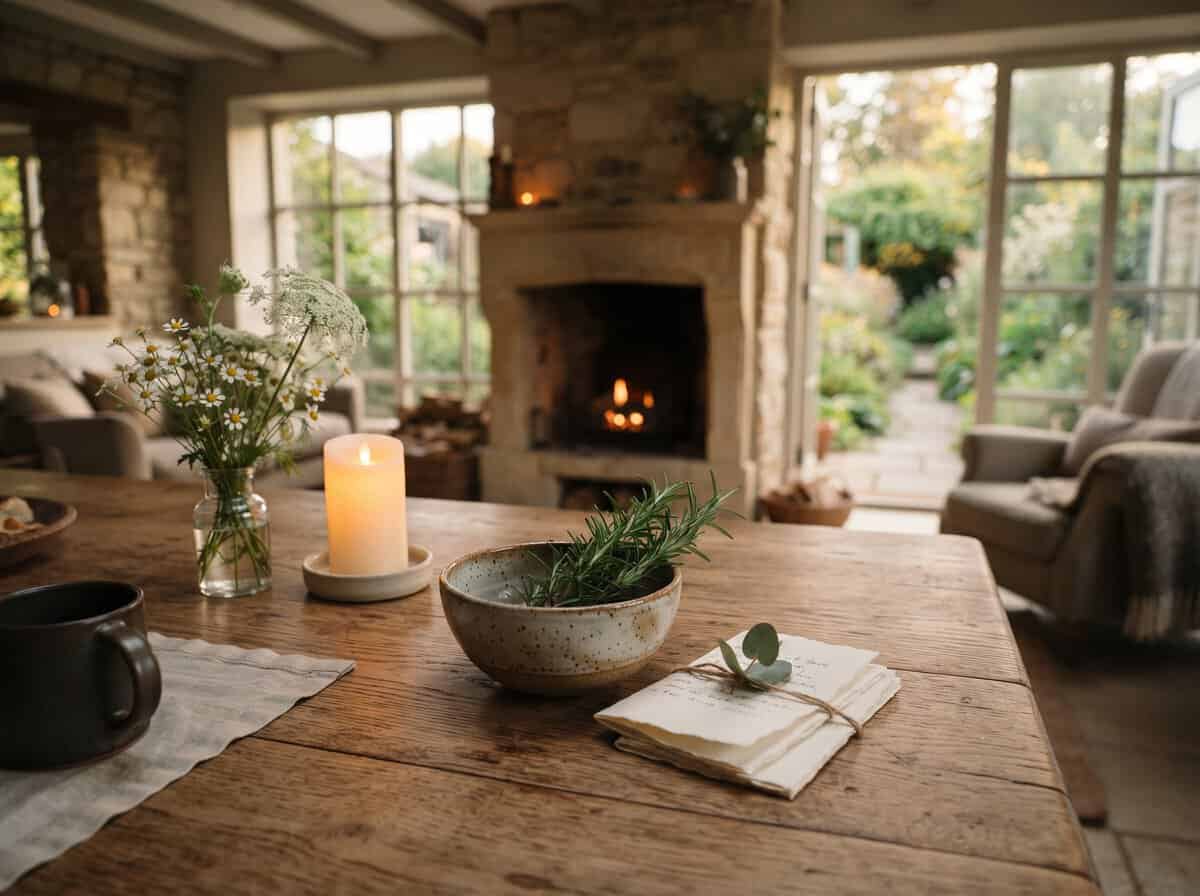
Rosemary has a long history in European household traditions.
It has been associated with remembrance, loyalty, and protection.
Its fragrance made it useful in cooking, while its evergreen leaves connected it with enduring affection.
Rosemary also appeared in wedding customs, where it symbolized faithfulness and lasting bonds.
That makes it a beautiful herb for a hearth blessing focused on family relationships.
Place a fresh rosemary sprig in a small bowl. Beside it, arrange three pieces of paper.
On the first, write the word patience. On the second, write kindness. On the third, write understanding.
These three qualities form the heart of the ritual. Place the bowl on your kitchen table and sit quietly for a moment.
Think about how each quality could improve your household. Perhaps patience would make difficult conversations easier.
And understanding could prevent small disagreements from becoming larger problems.
Keep the rosemary nearby during a family meal. Its fragrance represents the strength of affection.
When the ritual is complete, place the written words somewhere you will notice them.
The rosemary blessing encourages relationships to grow through everyday acts of care.
7. The Household Guardian Blessing From Slavic Folklore
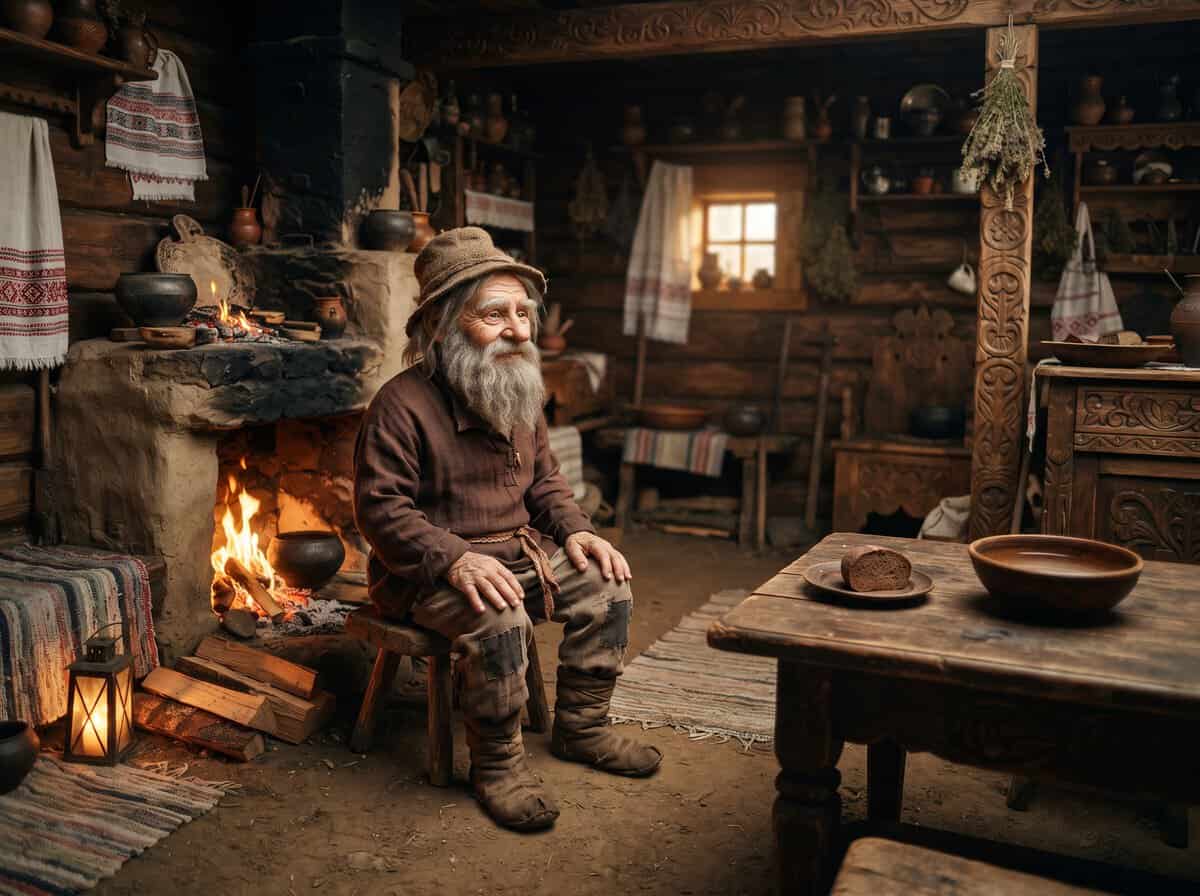
In Slavic folklore, the domovoi is a household spirit associated with the protection and well-being of the home.
Traditionally, the domovoi was believed to live near the hearth or in another quiet part of the household.
A content household guardian could help maintain order and protect the family.
But a neglected or offended domovoi might become troublesome.
That is why some families treated the household spirit with respect and occasionally left small offerings.
Bread and other familiar foods were commonly associated with such customs.
A domovoi-inspired blessing begins with preparing a small piece of bread.
Place it on a clean plate near your kitchen table. Beside it, set a small bowl of water.
Then speak a welcoming blessing for the guardian of your home.
Ask for peaceful nights, protection from misfortune, and harmony among everyone who lives there.
Take a moment to appreciate the ordinary things that make your home comfortable.
A clean kitchen. A warm room. A place to rest.
When the blessing is finished, clear away the offering respectfully.
This tradition carries an important message about household care. A home thrives when it receives attention.
Keeping the space welcoming and treating family members kindly are part of honoring the protective spirit of the household.
8. The Three Hearth Blessings for Love, Prosperity, and Peace
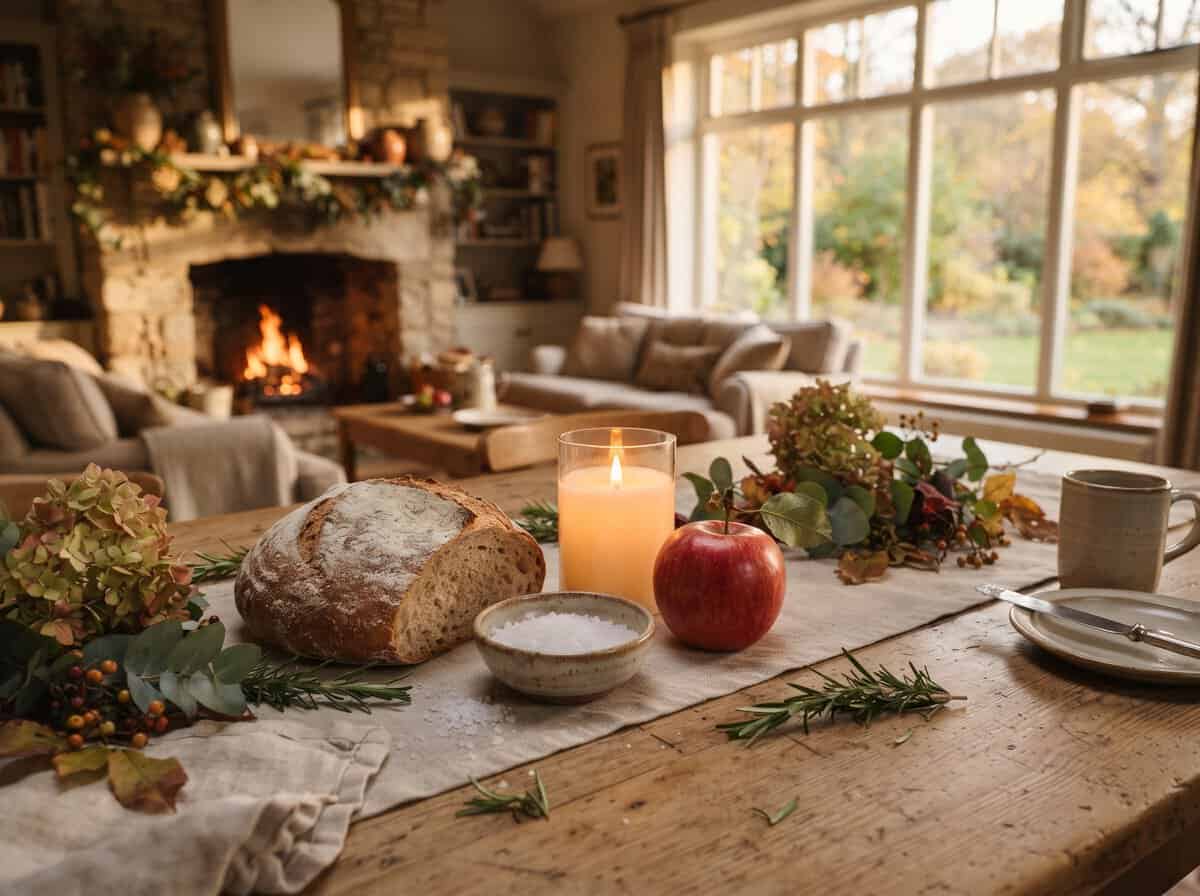
The number three appears frequently in European folklore, blessings, and traditional stories.
It can represent completeness, balance, and the joining of important forces.
For a final hearth ritual, three ordinary household objects can symbolize the blessings every family hopes to receive.
Place a piece of bread, a small bowl of salt, and an apple on your kitchen table.
Arrange them in a triangle. The bread represents prosperity and nourishment.
The salt represents protection and peace. The apple represents love, happiness, and the continuing renewal of life.
Place a warm electric light in the center of the arrangement to symbolize the sacred hearth.
Begin with the bread. Give thanks for the food, opportunities, and resources that support your household.
Next, turn your attention to the salt. Ask for protection from conflict and for wisdom during conversations.
Finally, look at the apple. Welcome affection, laughter, and joyful memories into your home.
When you finish, sit quietly for a moment and imagine your household surrounded by warmth and harmony.
Then share the bread and apple during a meal, keeping the salt separate.
This ritual brings together several of the most familiar symbols of European household traditions.
It honors the belief that peace, prosperity, and love belong together.
A home filled with possessions but lacking affection can still feel empty.
A household with plenty of love but constant conflict may struggle to find peace.
The three blessings encourage balance between these essential parts of family life.
And that is the lasting beauty of hearth traditions. The sacred hearth is not only the fire that warms a room.
It is the care, generosity, and togetherness that make a house feel like home.

I always felt a strong connection to the Divine since my birth. As an author and mentor, my mission is to help others find love, happiness, and inner strength in the darkest of times.