
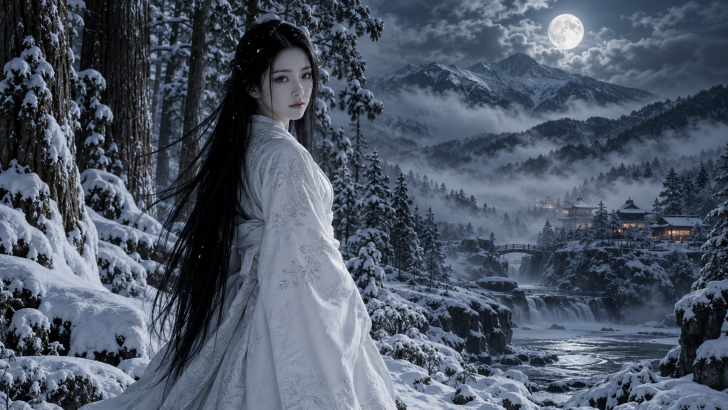
Deep in Japan’s snow-covered mountains, there is a beautiful woman whom travelers fear meeting after sunset.
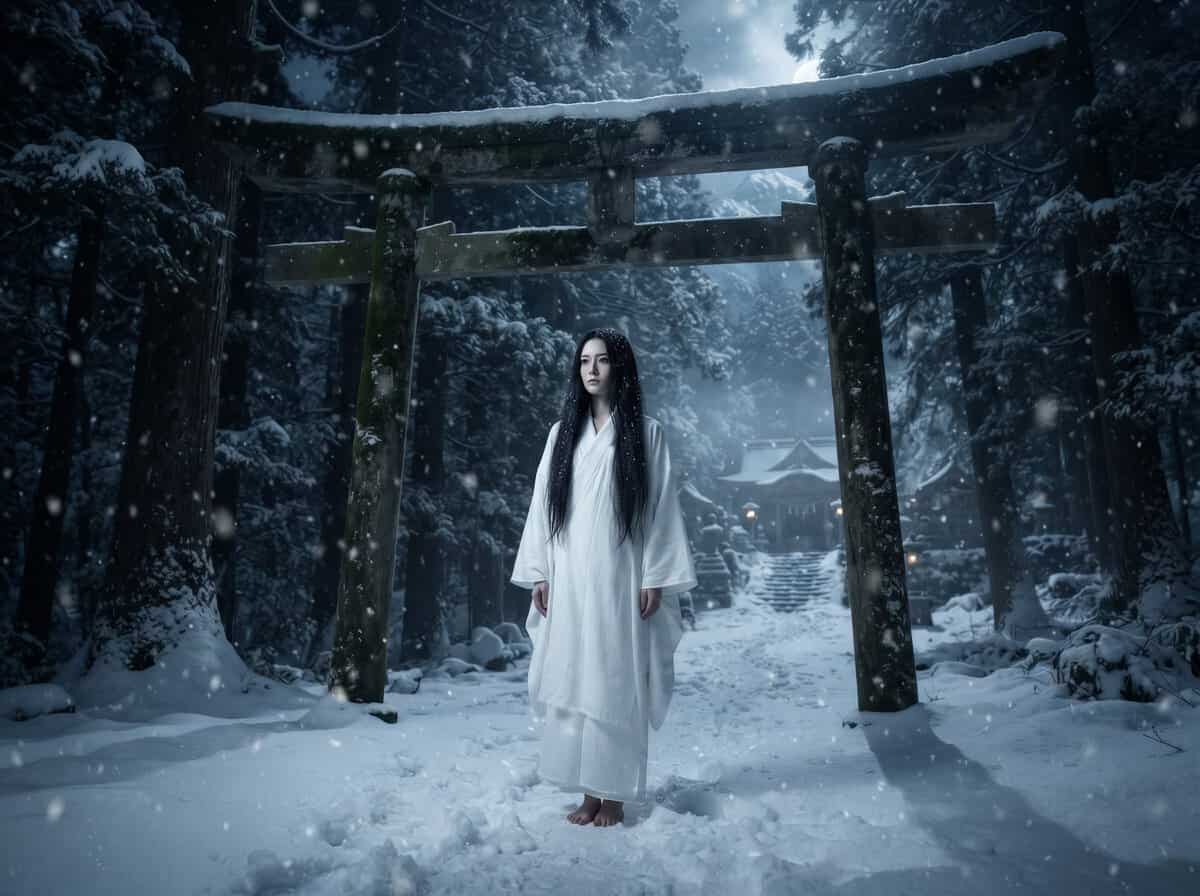
Her skin is as pale as freshly fallen snow. Her long black hair moves through the winter wind, and her white clothing seems to disappear into the frozen landscape.
She is known as Yuki-onna, the Snow Woman. For centuries, Japanese folklore has described her as one of the most mysterious spirits of winter.
Sometimes she appears during violent snowstorms, approaching travelers who have lost their way.
Other times, she stands silently beside a lonely mountain road, waiting for someone to notice her.
But Yuki-onna is not always the same creature. In some legends, she is a dangerous spirit who brings death through freezing cold.
In others, she is a sorrowful woman searching for someone she has lost.
She can be merciless, compassionate, beautiful, or deeply lonely.
That unpredictable nature makes her one of Japan’s most fascinating supernatural figures.
Here are eight dark legends about Yuki-onna and the secrets hidden beneath her beautiful appearance.
1. The Snow Woman Who Appears During Deadly Blizzards
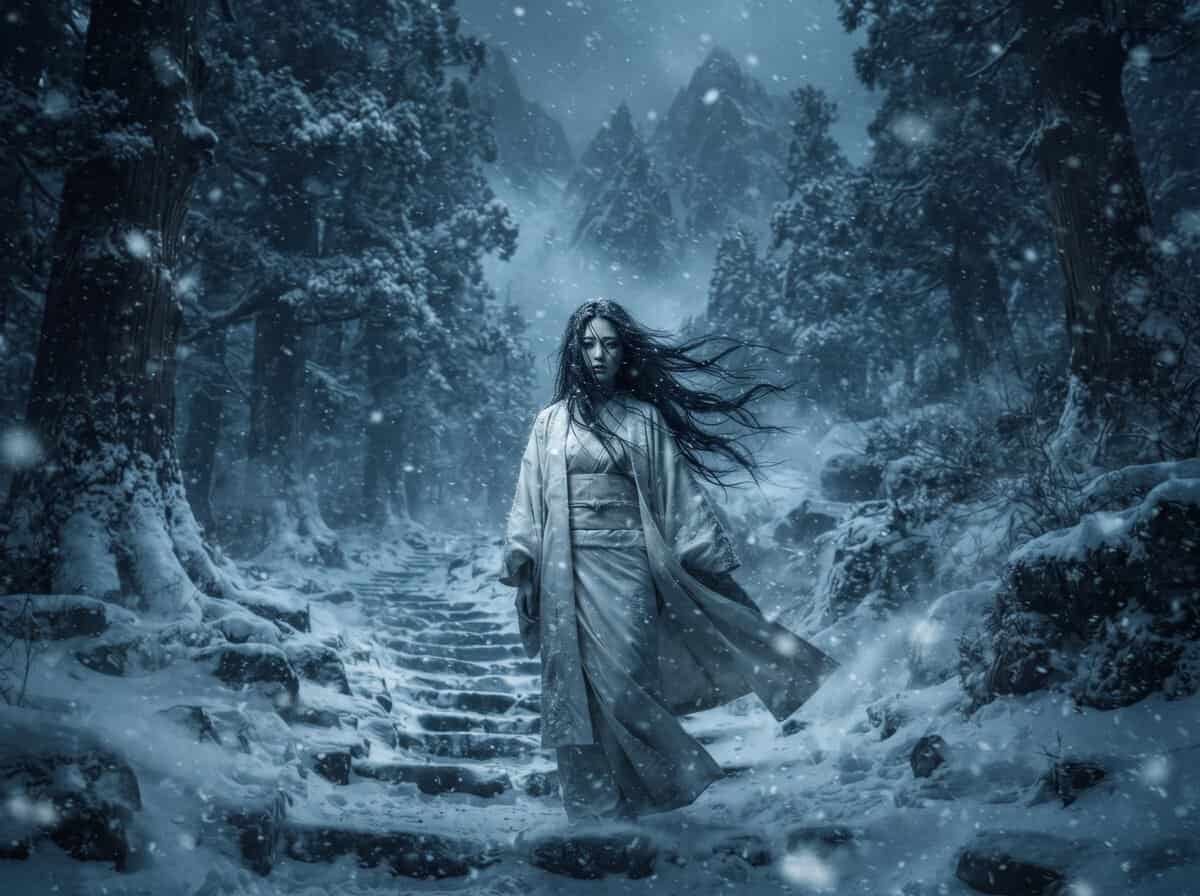
One of the oldest and most frightening beliefs about Yuki-onna connects her with dangerous winter storms.
In the mountains of Japan, heavy snowfall can transform familiar paths into endless stretches of white.
Roads disappear. Trees become difficult to recognize. And travelers can lose their sense of direction.
These are the moments when Yuki-onna is most likely to appear.
She emerges from the swirling snow as a beautiful woman dressed in white.
Her face is pale, her expression is calm, and her movements seem almost effortless.
Some legends describe her floating above the snow without leaving footprints.
Others say she moves so silently that travelers never hear her approaching.
A person who encounters her may initially believe she is another traveler in need of help.
But the closer she comes, the more unnatural her presence becomes.
She seems untouched by the freezing wind. Her clothing remains perfectly white. And her beauty carries an unsettling stillness.
In dangerous versions of the legend, Yuki-onna brings the cold that overwhelms those who meet her.
She is not simply a woman wandering through a storm. She is the storm given human form.
Her appearance represents the terrifying power of winter, especially in remote places where nature can quickly become unforgiving.
2. The Terrifying Night When Yuki-onna Spared a Young Man
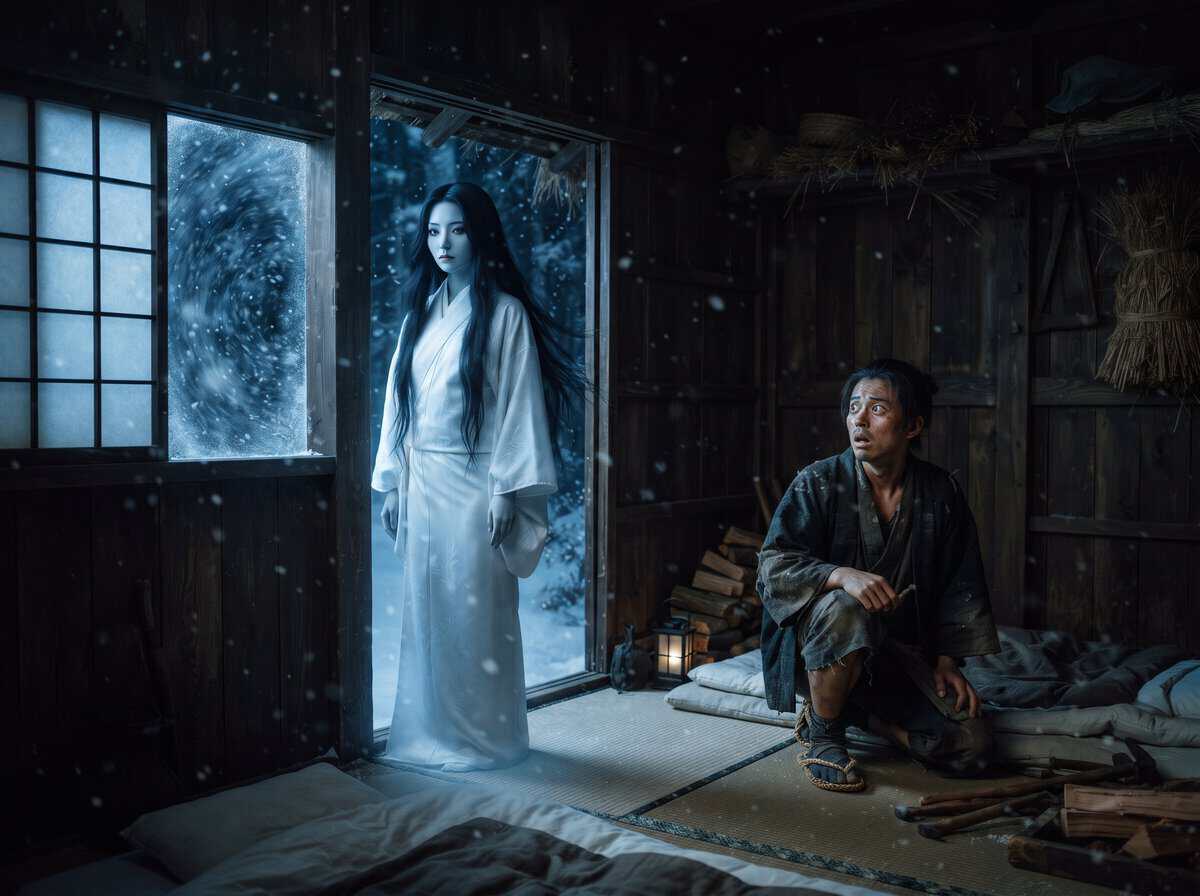
One of the most famous Yuki-onna stories was recorded by Lafcadio Hearn in his 1904 collection Kwaidan.
It begins with two woodcutters named Minokichi and Mosaku. One winter evening, the men are caught in a violent snowstorm.
Unable to cross a river, they seek shelter inside a small hut. As the storm continues outside, both men fall asleep.
During the night, Minokichi awakens and discovers a beautiful woman dressed entirely in white.
She is standing over the older woodcutter, Mosaku. Her presence brings an unnatural cold into the room.
When she turns toward Minokichi, he realizes that she is no ordinary woman. She is Yuki-onna.
The Snow Woman studies the young man and decides to spare him because of his youth.
But her mercy comes with a frightening condition. He must never tell anyone what happened inside the hut.
If he reveals the encounter, she promises to return. By morning, the mysterious woman has disappeared.
Minokichi survives, but Mosaku does not. The young woodcutter carries the secret for years.
This legend reveals one of Yuki-onna’s most unsettling qualities. She can show mercy, but her kindness is never entirely safe.
Even someone she chooses to spare may remain bound to her by a dangerous promise.
3. The Beautiful Wife Who Was Secretly the Snow Woman
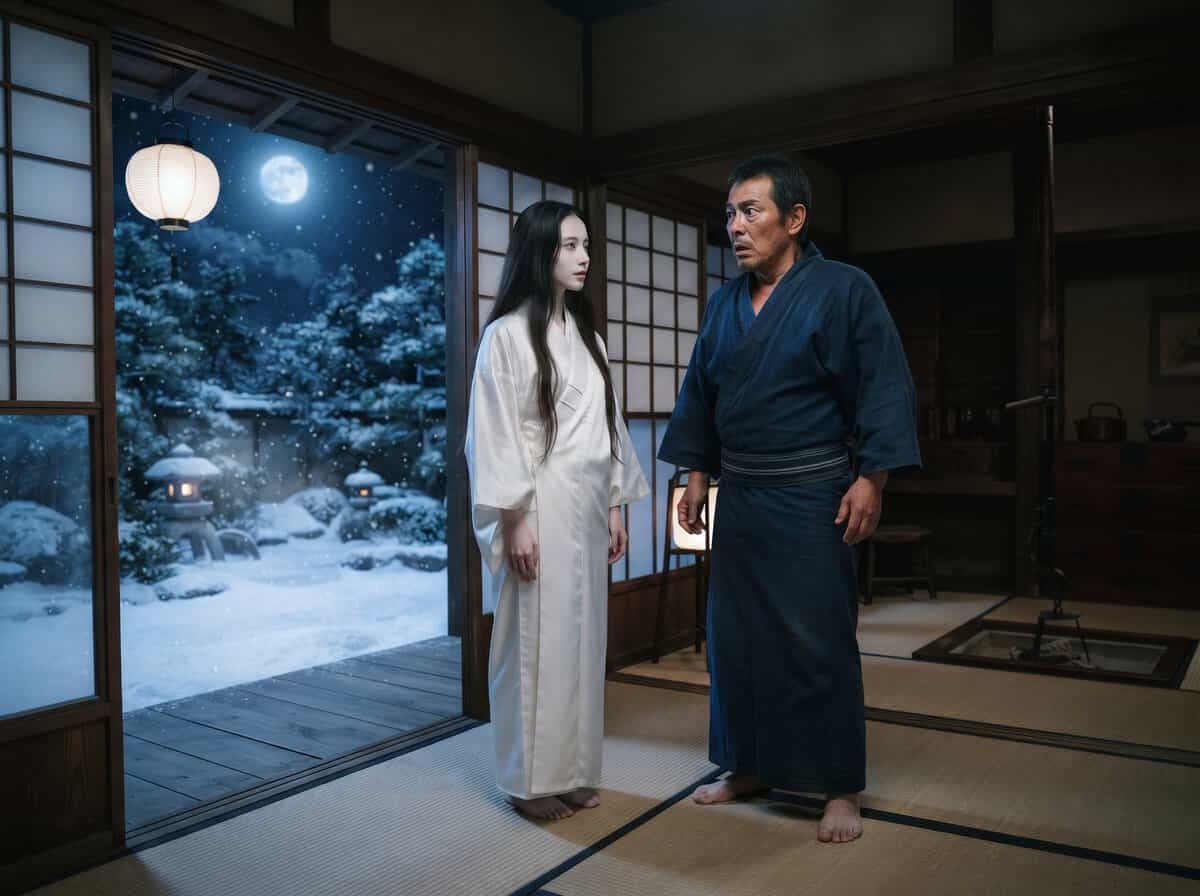
The story of Minokichi does not end with his escape from the mountain hut.
Some time later, he meets a beautiful young woman named O-Yuki.
She has pale skin, delicate features, and an unusually graceful appearance.
The two fall in love and eventually marry. Together, they build a peaceful household and raise children.
Years pass, and Minokichi begins to think of his terrifying encounter as a distant memory.
But one evening, while watching his wife, he remembers the mysterious woman from the snowstorm.
O-Yuki looks remarkably similar to her. Unable to keep the secret any longer, he tells his wife about the night he met Yuki-onna.
The moment he finishes speaking, everything changes. O-Yuki reveals that she was the Snow Woman all along.
She reminds him of the promise he made. Minokichi has broken his word.
In Hearn’s version, Yuki-onna chooses not to punish him because of their children.
Instead, she leaves the household and disappears. The man loses the woman he loves.
This is one of the saddest Yuki-onna legends because it combines romance with an impossible secret.
The Snow Woman is capable of affection and family life. Yet her supernatural identity cannot remain hidden forever.
And when the truth is revealed, the happiness she created disappears as suddenly as winter mist.
4. The Snow Woman Who Steals a Traveler’s Warmth
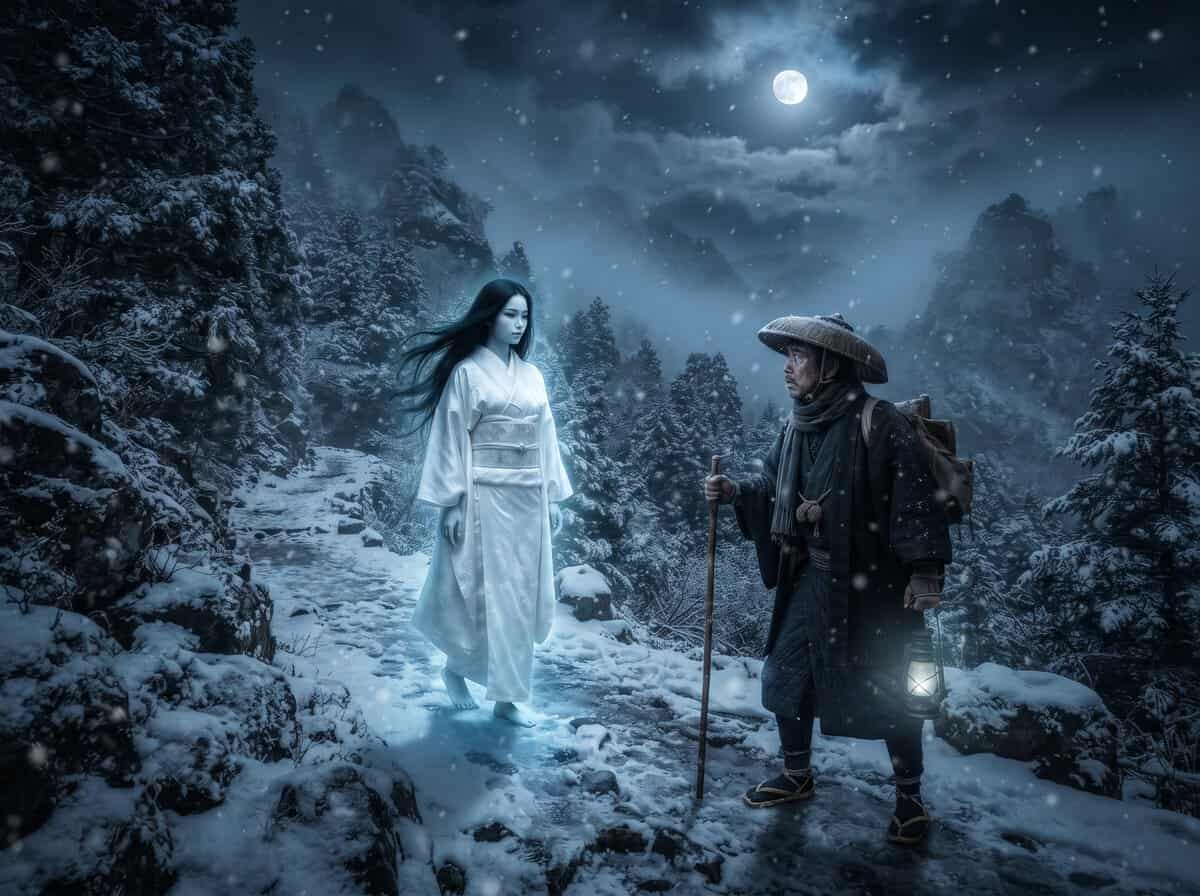
Some Yuki-onna traditions describe a spirit who approaches people trapped in the snow and drains away their warmth.
She may appear beside a mountain path or near a lonely shelter. Her beauty encourages travelers to stop and look at her.
But remaining near her is dangerous. The air grows colder, and the person gradually loses the strength to continue.
In certain versions, Yuki-onna uses her icy breath to overwhelm her victims.
In others, her presence alone is enough to bring an unnatural chill.
These stories make her different from many other Japanese supernatural beings.
She does not always need a weapon or a dramatic confrontation. Her power comes from the winter itself.
Cold becomes her invisible companion. The longer someone remains near her, the more difficult escape becomes.
This gives the legend an especially haunting quality. Yuki-onna may stand perfectly still while the danger grows.
Her silence becomes part of the threat. The story also reflects the ancient fear of becoming trapped in a snowstorm.
Winter can appear beautiful from a distance, with its quiet forests and glittering landscapes.
But its beauty can conceal extraordinary danger. Yuki-onna embodies that contradiction.
She is breathtaking to behold, yet her presence can turn an ordinary journey into a terrifying encounter.
5. The Snow Mother Who Carries a Mysterious Baby
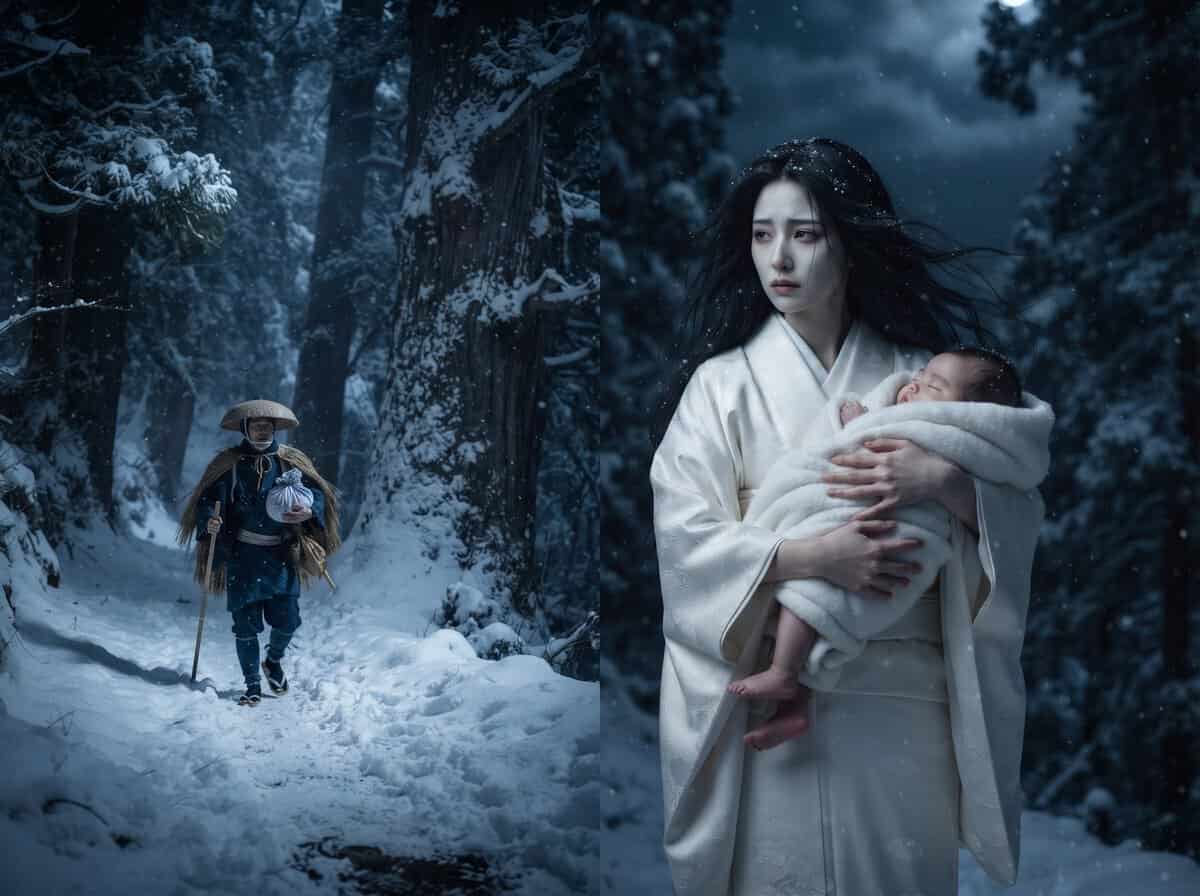
One of the strangest legends associated with Yuki-onna involves a woman carrying a child through the snow.
In some regional traditions, the Snow Woman approaches a traveler while holding a baby.
She appears exhausted and asks the stranger to carry the child for a moment.
The request seems innocent. A traveler who sees a mother struggling in freezing weather may naturally want to help.
But accepting the child can lead to an extraordinary supernatural experience.
In one type of story, the baby becomes increasingly heavy.
What begins as a small bundle soon feels almost impossible to hold. The traveler struggles under its growing weight.
The longer the person carries the child, the more difficult it becomes to move.
Some versions connect this mysterious encounter with the danger of being trapped in deep snow. Others give the story a surprising ending.
A traveler who endures the burden without abandoning the child may receive a blessing or unexpected strength.
These tales overlap with broader Japanese folklore about supernatural beings who ask strangers to hold mysterious children.
They reveal a different side of the Snow Woman. Instead of simply attacking travelers, she tests their compassion and determination.
The legend also creates a difficult choice. Should someone trust a mysterious stranger in the middle of a winter storm?
With Yuki-onna, even an act of kindness can lead into the supernatural world.
6. The Lonely Snow Woman Who Searches for Her Lost Husband
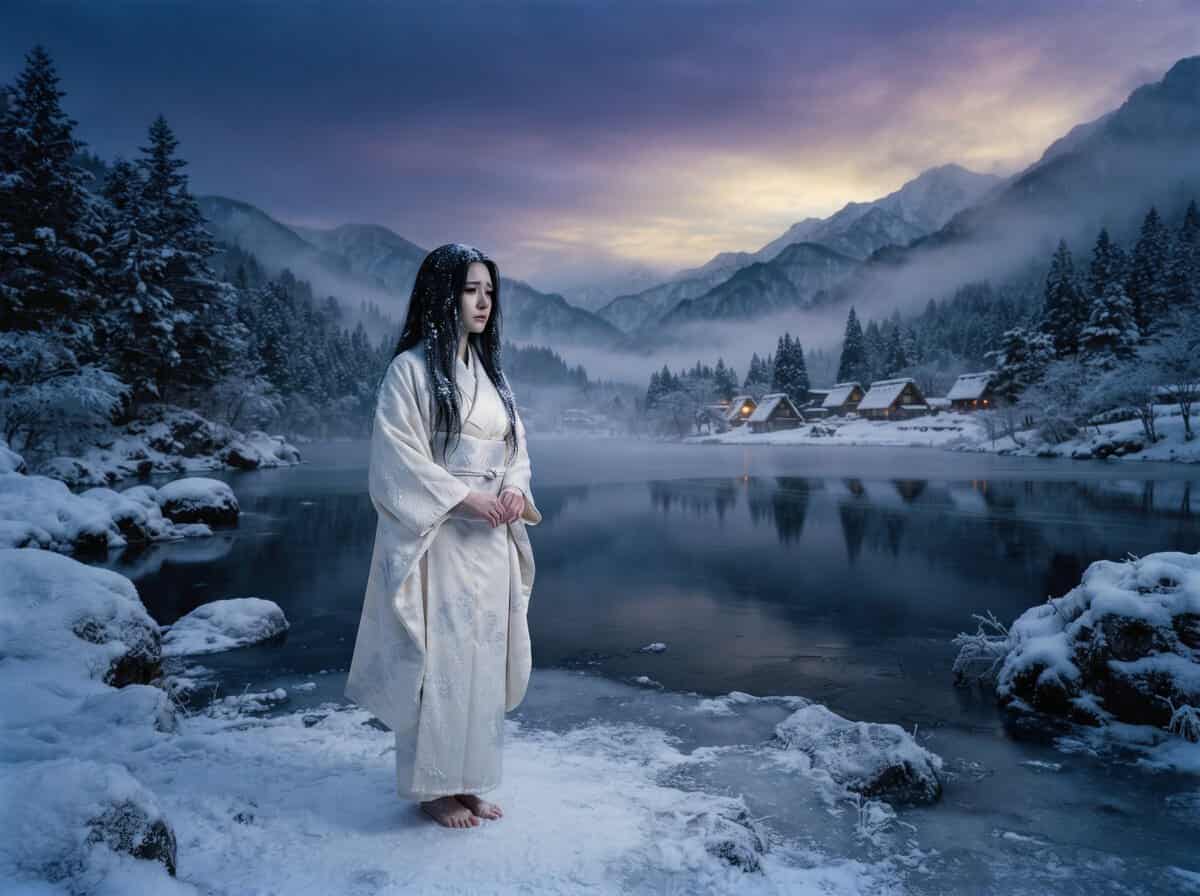
Not every Yuki-onna legend presents her as a cruel spirit.
Some regional stories describe her as a sorrowful woman connected with loneliness and loss.
One tradition recorded in northern Japan tells of a Snow Woman who appears during winter and speaks about a husband who has gone away.
Her longing becomes part of the mystery surrounding her.
Rather than appearing only as a dangerous supernatural figure, she resembles someone trapped between hope and grief.
The winter landscape makes this image especially powerful. Snow covers roads and separates distant villages.
Travel becomes difficult. And people waiting for loved ones may spend long evenings wondering when they will return.
Yuki-onna’s loneliness reflects those feelings. She wanders through a frozen world, searching for a connection.
In these stories, her beauty is accompanied by sadness.
Her white clothing resembles the snow surrounding her, making her seem almost inseparable from the landscape.
She belongs to winter, but winter also keeps her isolated. This version of Yuki-onna reveals how flexible Japanese folklore can be.
The same supernatural being may represent danger in one region and sorrow in another.
Her mysterious nature remains unchanged. But instead of fearing her cruelty, listeners may feel sympathy for her loneliness.
7. The Snow Woman Who Disappears When Spring Arrives
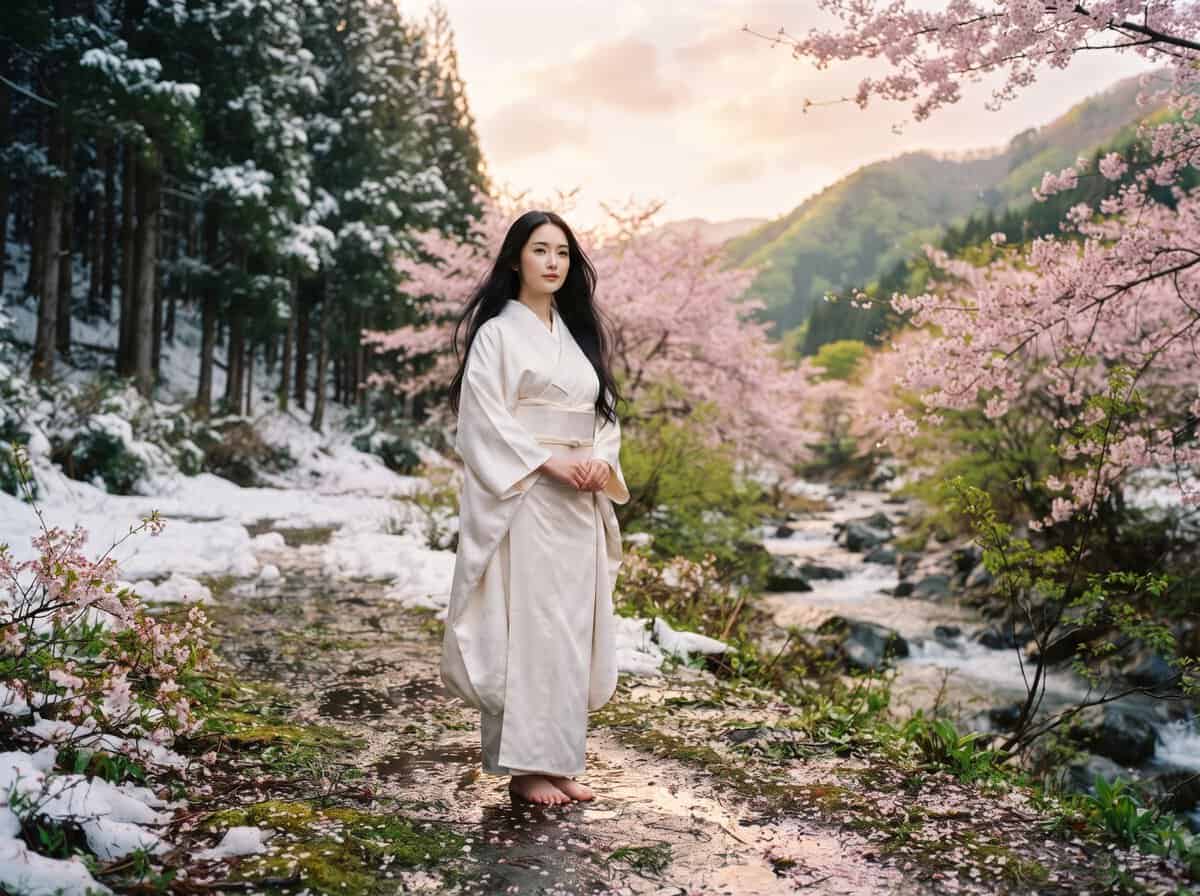
Yuki-onna belongs to winter more completely than almost any other Japanese supernatural figure.
Her pale appearance, white clothing, and icy powers connect her with the coldest season.
That relationship has inspired stories and interpretations in which her presence fades as the weather grows warmer.
During winter, she moves freely through snowy forests and mountain paths. The landscape belongs to her.
Frozen rivers, silent trees, and distant mountains create the perfect setting for her appearance.
But spring changes everything. Snow begins to melt. Streams return.
And the mountains gradually lose their white covering. The Snow Woman’s world disappears.
In some tellings and later interpretations, this seasonal change reflects the temporary nature of her presence.
She cannot remain in the same form when the warmth returns.
This gives Yuki-onna a connection with the cycle of death and renewal.
Winter brings stillness and separation. Spring restores movement and life.
Yet the Snow Woman is not permanently defeated. When the cold season returns, her stories become possible once again.
The legend makes winter feel like a living presence that withdraws and returns according to its own mysterious rhythm.
Yuki-onna may vanish with the melting snow, but the mountains never forget her.
8. The Snow Woman Who Is Neither Human Nor Ordinary Spirit
Perhaps the darkest mystery surrounding Yuki-onna is her true identity.
Japanese folklore does not provide one universal explanation for what she is.
Some traditions describe her as a yōkai, a supernatural being connected with snow and winter.
Others portray her as the spirit of a woman who died in the cold.
Certain stories give her the appearance of a ghost, while others treat her as a mysterious force of nature.
These different identities explain why her behavior changes so dramatically between legends.
Sometimes she is merciless. Sometimes she shows compassion. And occasionally, she falls in love with a human being.
Her appearance also changes. She may wear a white kimono.
She may have long black hair that contrasts with her pale face.
Some accounts describe her as almost transparent, blending into the snow around her.
Others emphasize her beauty so strongly that travelers fail to recognize the danger.
One of the most unsettling details is her ability to appear completely human.
A stranger might meet her on a snowy road without realizing that she belongs to another world.
A man might even marry her and spend years believing she is an ordinary woman.
Only an unexpected event reveals the truth. That uncertainty is what makes Yuki-onna so powerful.
She exists at the boundary between beauty and danger, love and loss, humanity and the supernatural.
The mountains are her home, the snow conceals her movements, and winter carries the possibility of her return.
For anyone traveling through a silent Japanese forest on a snowy evening, the most frightening sight might not be a monster hiding among the trees.
It might be a beautiful woman in white, standing alone beside the path, waiting to be noticed.

I always felt a strong connection to the Divine since my birth. As an author and mentor, my mission is to help others find love, happiness, and inner strength in the darkest of times.