
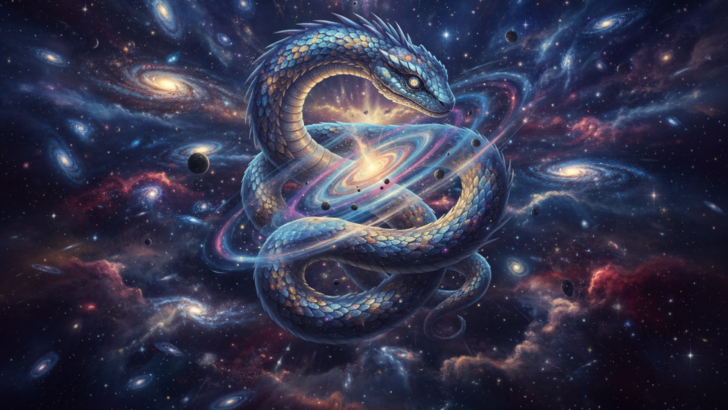
The ancient world is filled with strange and powerful beings whose stories shaped the way people understood creation.
Among these figures stands Ophion, a great serpent who appears in early Greek traditions.
His name is not as widely known as Zeus or Hera, yet his presence lies at the roots of some of the oldest myths.
Ophion was described as a serpent who once ruled the world before the rise of the Olympian gods.
This idea creates a picture of a cosmic guardian who understood patterns written across the night sky.
Exploring his story opens a path into ancient belief, mystery, and the power of celestial knowledge.
The Serpent Who Ruled Before the Olympians

Ophion’s earliest stories place him at the beginning of time. In these tales, the universe was not yet shaped into the familiar world.
There was only darkness and swirling energy. Out of this chaos came two beings. One was Eurynome, a goddess of creation.
The other was Ophion, the ancient serpent who moved with a calm and steady grace. Together, they brought life and order to the world.
Some stories say Eurynome danced over the waves while Ophion followed her movements. Their dance became the rhythm that shaped the sky and the earth.
Ophion was not described as a monster. Instead, he was wise and watchful. His long, coiled body represented the cycle of nature.
Serpents shed their skin and begin again, which made them symbols of renewal. Ophion carried this meaning on a grand scale.
He watched the birth of the world and understood the patterns that would guide it.
In one version of the myth, Eurynome shaped the world from chaos and placed Ophion beside her as a guardian.
Together, they ruled the early heavens. Before the Olympian gods were born, before Zeus held his thunderbolt, Ophion was one of the first beings to protect creation.
This early rule did not last forever, yet it shows how important he was in the earliest memories of Greek myth.
Eventually, the story shifts. Cronus and Rhea rise to power and challenge Ophion. They defeat him and cast him down from the heavens.
This fall marks the beginning of a new era. He became a figure who lingered in the background, remembered as one of the first teachers of cosmic knowledge.
His connection to the stars remained strong, and this became the foundation of later stories about him.
The Language of Stars and Ophion’s Ancient Knowledge
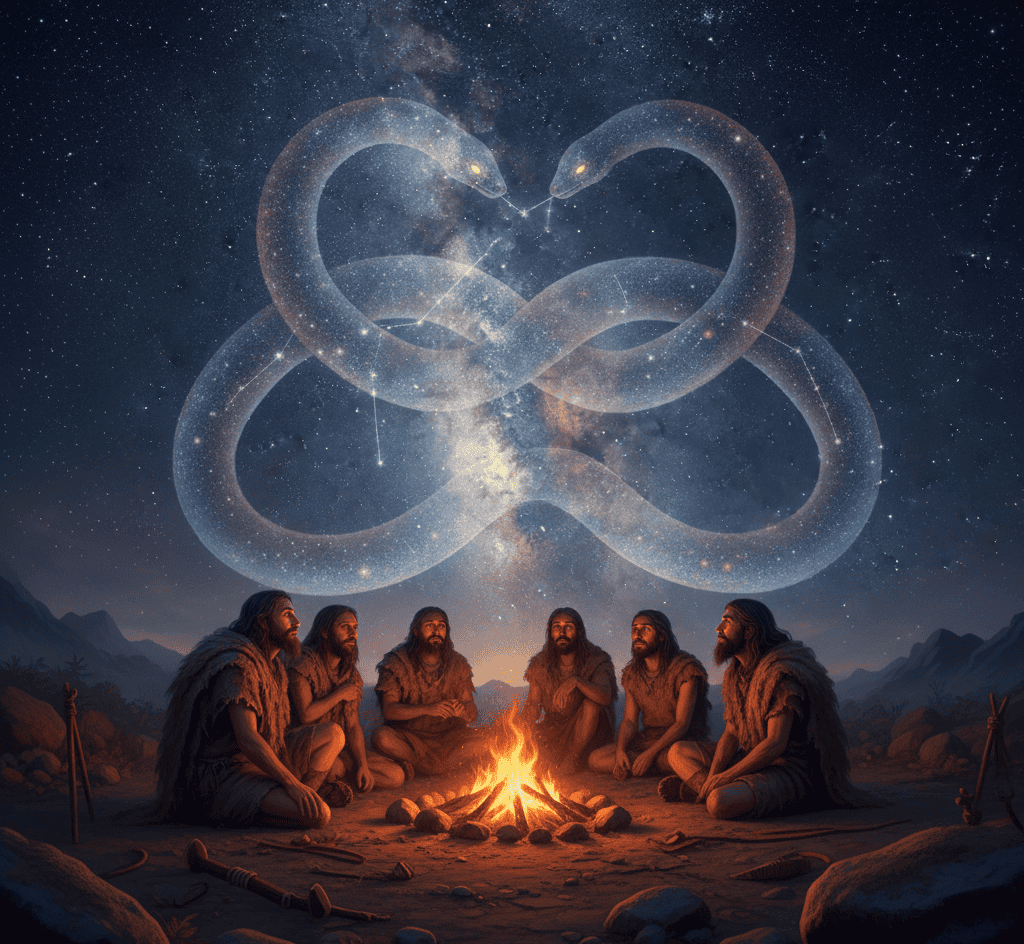
The most fascinating part of Ophion’s legend is the idea that he understood the language of the stars.
To ancient people, the night sky was a living map. The shapes of constellations guided sailors across oceans.
The rising and setting of stars marked seasons for planting and harvest. The glow of the Milky Way created a river of light that seemed to hold stories from long ago.
Ophion was believed to move through this sky with ease. His serpent form mirrored the curves and patterns of the constellations.
According to some stories, he did not keep this knowledge locked away. Instead, he taught early humanity how to read the stars.
The language of stars was not made of spoken words. It was a language of patterns, repetition, and timing.
When the same constellation returned to the same place in the sky each year, it carried a message.
In these tales, his fall from the heavens did not end his role. Instead, it allowed him to become a quiet teacher who spoke through symbols.
Even though he no longer ruled the world, he continued to influence it through the knowledge he shared.
Ophion as a Symbol of Cosmic Wisdom and Renewal
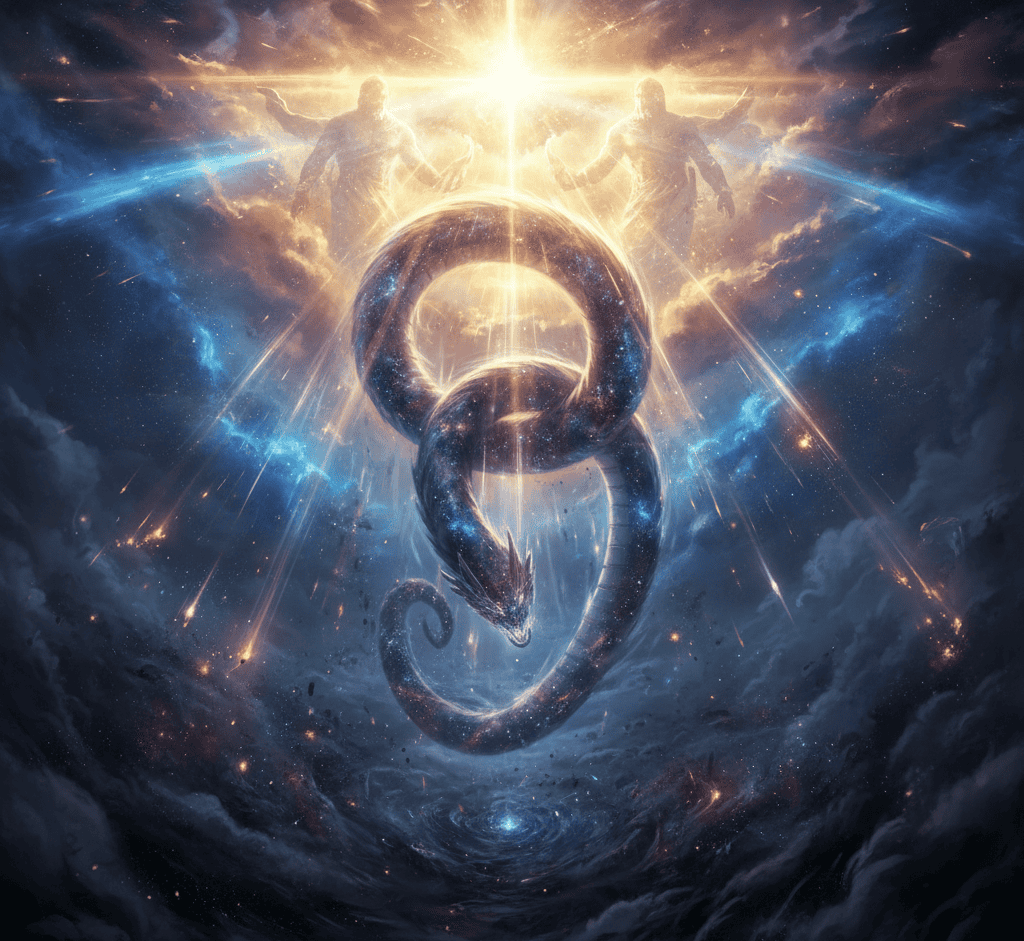
Ophion’s presence in myth is powerful because it blends two important ideas. He is both a serpent and a cosmic guardian.
In many ancient cultures, serpents carried deep meaning. They represented rebirth, healing, and hidden knowledge.
They moved close to the earth yet seemed timeless. People feared them, respected them, and saw them as creatures that understood secrets people could only guess at.
Because Ophion was a serpent of the heavens rather than the earth, his wisdom became even more meaningful.
He represented cycles not just of nature but of the entire universe. The stars, like serpents, follow patterns.
They rise and fall. They disappear and return. Ophion understood this rhythm better than anyone.
After losing his throne, he became a symbol of quiet endurance. He continued to influence the world in subtle ways rather than through direct rule.
People found comfort in this version of Ophion. He became a figure who survived loss and still offered guidance.
His story teaches that wisdom does not depend on power. It grows through experience, patience, and attention to the patterns of life.
Why the Legend of Ophion Still Inspires Curiosity Today
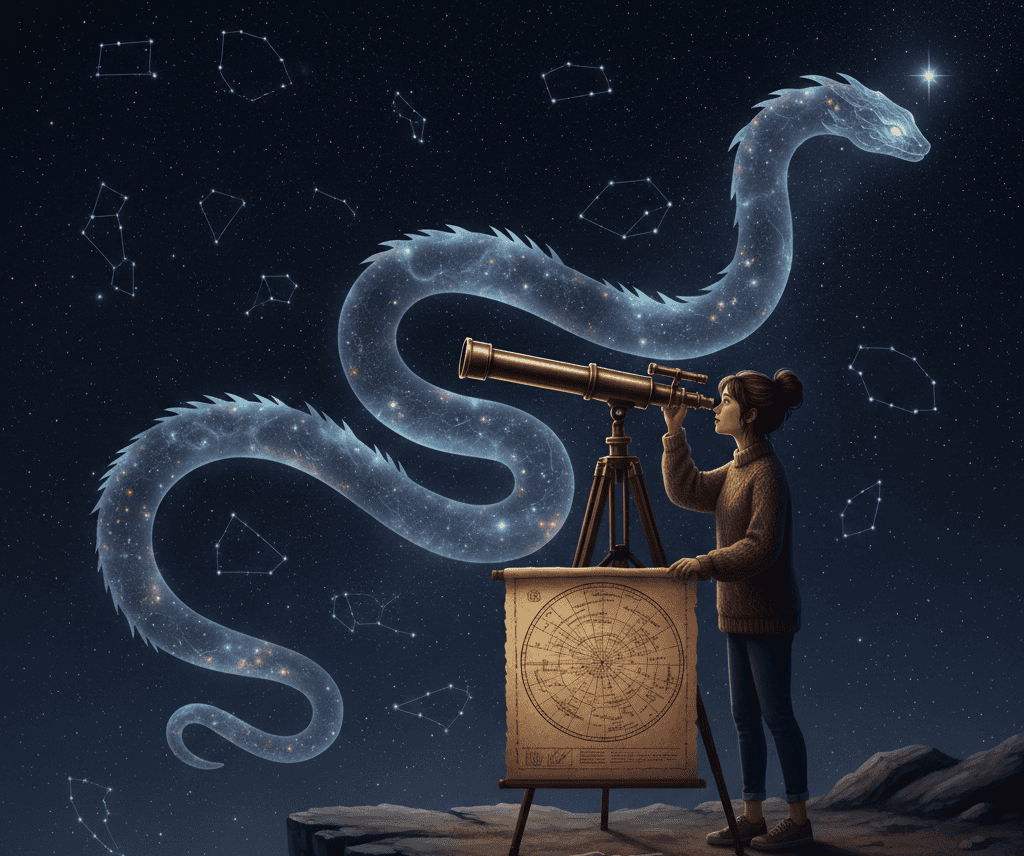
Ophion’s story continues to fascinate people because it feels both cosmic and personal. He is a figure who witnessed the birth of the world and still cared for humanity.
His gift was knowledge rather than force. He taught people to look up and see themselves as part of something greater.
The idea that a being once taught humanity how to read the heavens connects modern wonder with ancient belief.
Ophion becomes a bridge between science and myth, showing that both seek meaning in the sky.
He also inspires interest because he represents a gentle form of power. He did not command with loud voices or dramatic battles.
He guided with quiet wisdom. This makes him different from many other mythic figures. His presence is calm and steady, like the slow movement of constellations across the night.
Ophion remains an unforgettable figure because he embodies the wonder of the sky. He taught humanity to look upward with curiosity and respect.
His story encourages people to see the night sky not as empty darkness but as a map filled with meaning. Through him, the stars become a language, and the universe becomes a teacher.

I always felt a strong connection to the Divine since my birth. As an author and mentor, my mission is to help others find love, happiness, and inner strength in the darkest of times.