
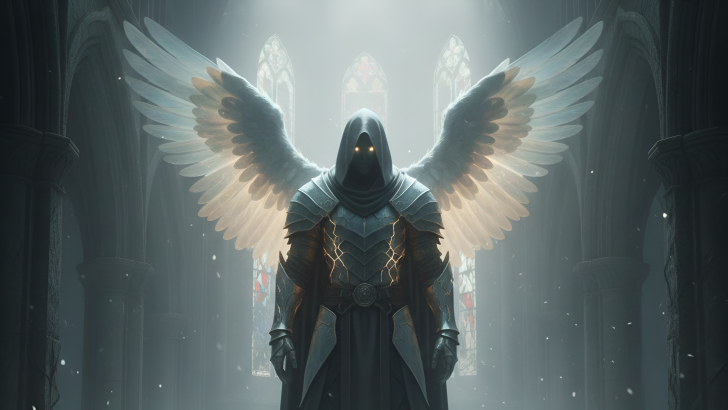
Angels are some of the most familiar spiritual beings in human imagination. They are often pictured as winged, glowing, and gentle, offering guidance, protection, and comfort.
Movies, books, and religious art reinforce this image, making angels seem almost human but perfect.
But, what if angels were not exactly what we imagine? What if their true nature was far stranger, more powerful, or more mysterious than the soft and comforting versions we are used to?
The Bible and other ancient texts describe angels in ways that challenge our modern ideas. Some are terrifying, some carry messages no one can fully understand, and some operate in ways that seem completely alien.
Thinking about angels differently can change how we understand spirituality, human history, and the invisible forces around us.
Here are five ways angels might be far different from the comforting figures we imagine.
1. Angels Might Not Be Human-Like at All

Most people picture angels as human-like, with wings and a glowing aura. This image comes from artistic interpretation rather than literal descriptions.
In biblical texts, angels often appear in forms that are not easily recognized as human. Some have multiple wings, many faces, or eyes all over their bodies.
These features are not meant to be cute or decorative. They convey power and mystery.
If angels were truly non-human, their presence might be overwhelming or even terrifying to humans. Their appearance could be incomprehensible to the human eye.
This suggests that what we imagine as friendly and gentle is just a small fraction of reality. The ancient descriptions may be metaphorical attempts to explain experiences with beings beyond human understanding.
Understanding angels as fundamentally non-human forces us to rethink our assumptions about spiritual hierarchy and what it means to interact with the divine.
2. Angels Might Operate Beyond Human Time
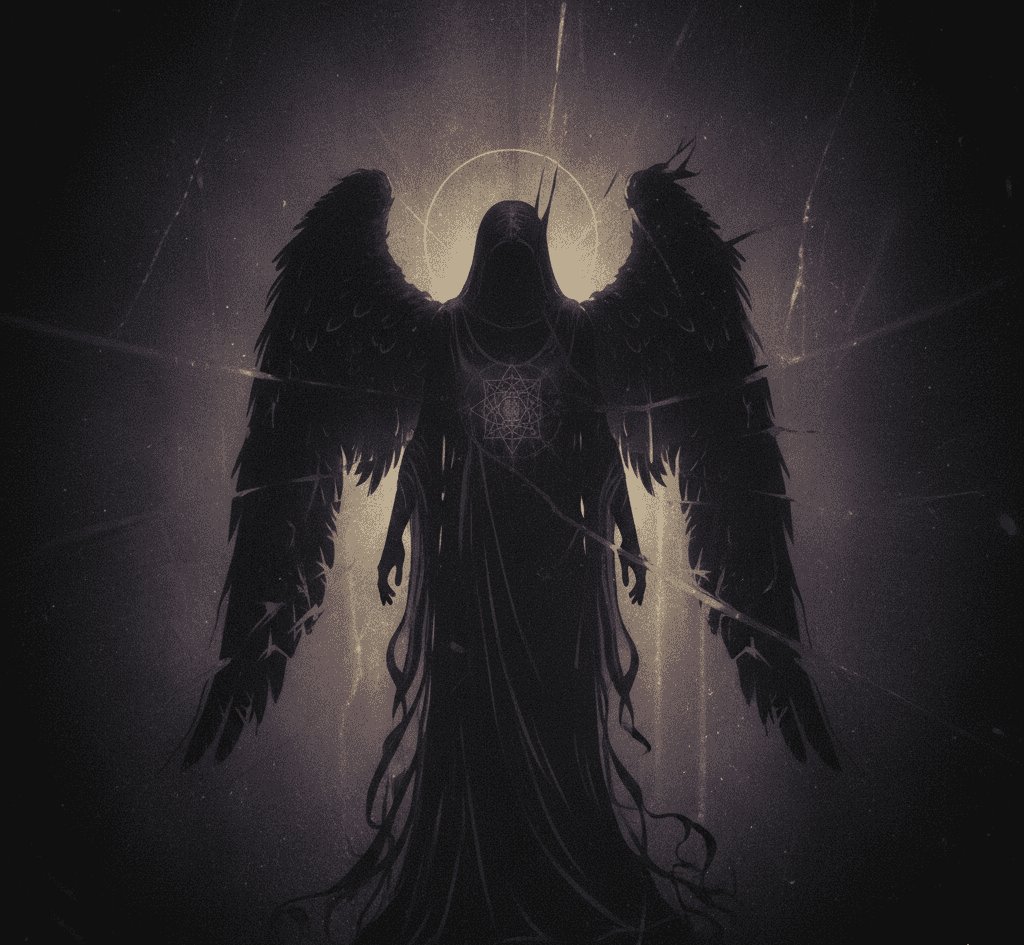
Another possibility is that angels experience reality differently from humans. Humans perceive time linearly: past, present, and future.
Angels, however, may operate outside of this sequence. Some texts describe angels as knowing the future, understanding hidden events, or moving instantaneously between distant places.
If this were true, it would explain accounts of angels appearing in one place and disappearing moments later, or delivering messages that seem perfectly timed.
Angels might not be limited by human rules of physics or time, making them more like forces of nature than individuals.
Thinking of angels as outside time changes how we view miracles, visions, and unexplained events.
Encounters with angels may be glimpses of a reality that humans are not fully equipped to understand.
3. Angels Could Have Moral Ambiguity
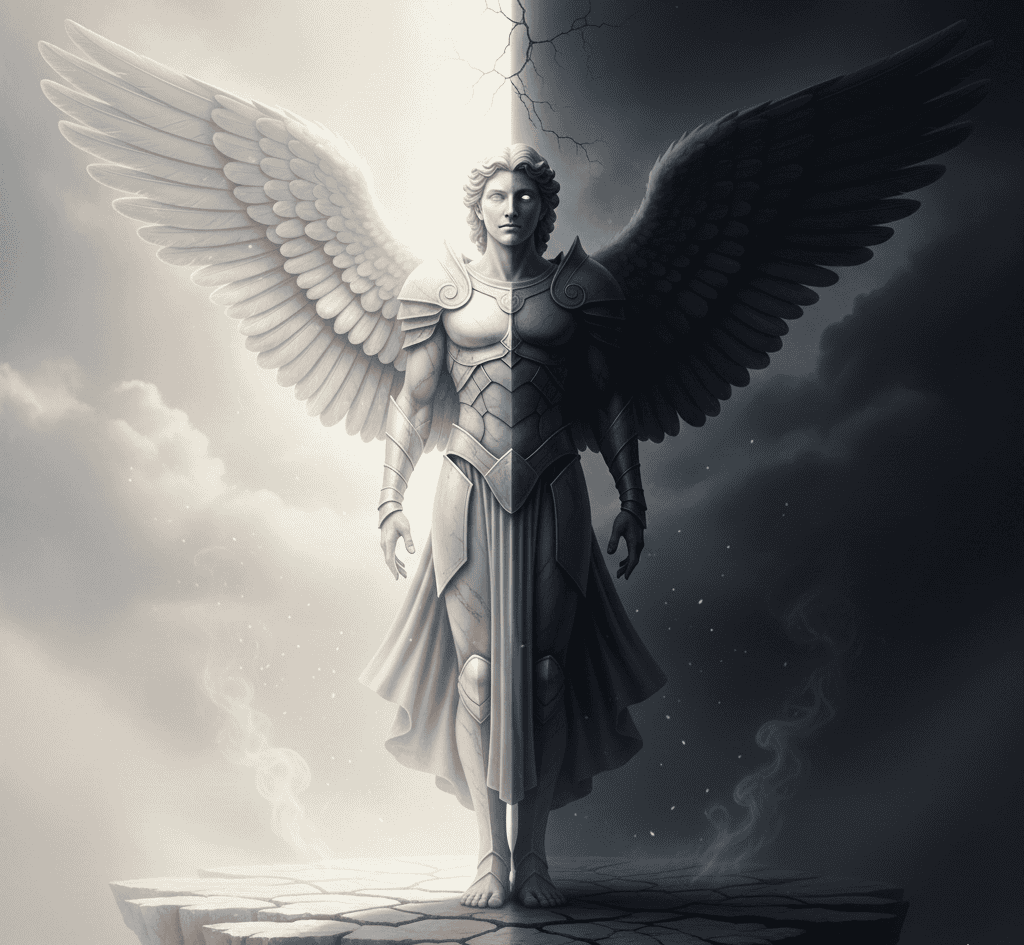
We often see angels as entirely good and demons as entirely evil. However, biblical texts and other ancient writings suggest that angels can act in ways that are morally complex.
Some angels bring destruction or punishment. Others interact with humans in ways that seem harsh or confusing.
For example, the angels who visited Sodom delivered both warning and judgment. The angel of death in Exodus caused great suffering but was acting according to divine command.
Angels may operate according to purposes humans cannot fully grasp, which can make their actions appear both good and frightening.
This challenges the idea that angels are gentle helpers. Instead, they might be agents of cosmic balance, enforcing rules, delivering justice, or fulfilling missions that are morally neutral or beyond human judgment.
4. Angels Might Influence Humanity in Hidden Ways

If angels are different from what we imagine, their interaction with humanity might be subtle, hidden, or indirect.
They may guide decisions, inspire thoughts, or create events that seem coincidental but are actually carefully orchestrated.
These influences could be spiritual, mental, or even physical. For instance, sudden insights, unexplained protection, or miraculous survival could be attributed to angelic intervention.
Considering this hidden influence makes us question the role of angels in history and daily life.
Many events we see as chance or luck might have deeper, unseen forces at work, and angels could be part of a system guiding outcomes according to divine purpose.
5. Angels Might Challenge Our Understanding of Reality
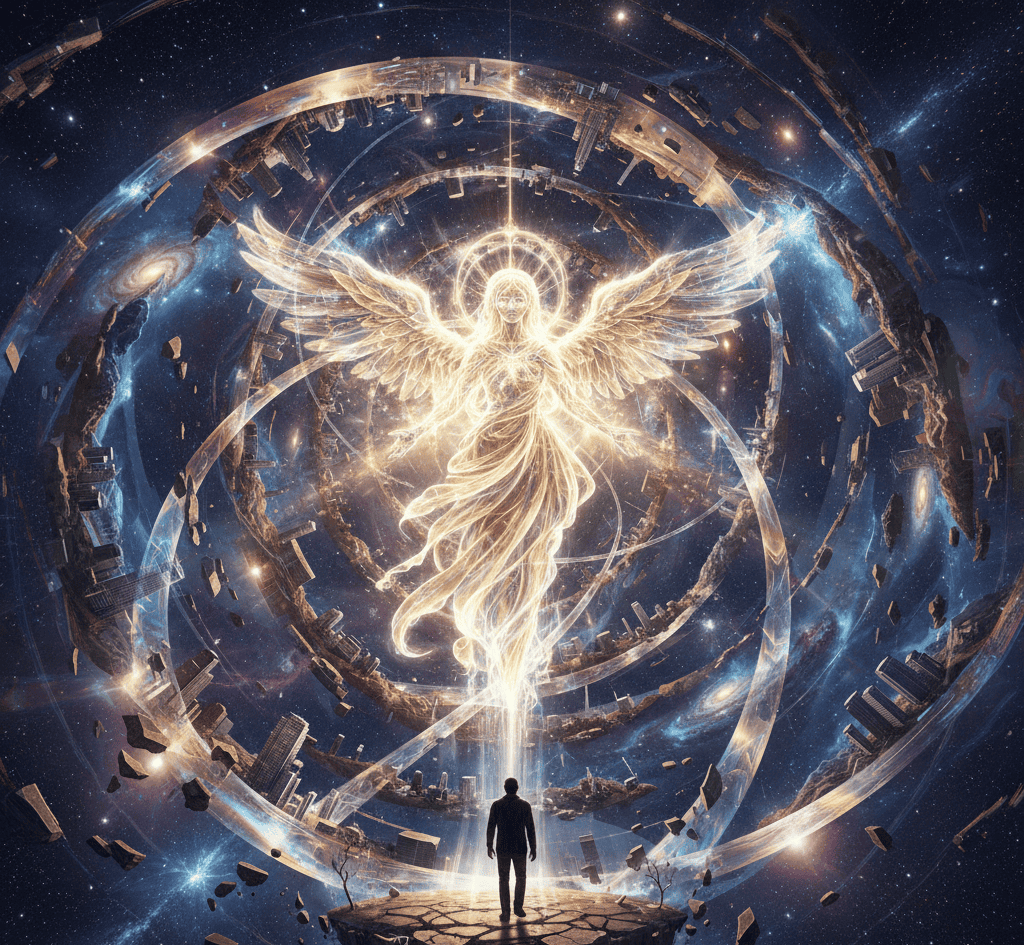
Finally, if angels are not what we imagine, encountering them could challenge our most basic assumptions.
Their nature, abilities, and perspective might be so different that humans cannot fully comprehend them.
Even descriptions of their multiple wings, flaming faces, or countless eyes hint at a reality that transcends human perception.
This possibility means that angels are not just comforting figures. They are reminders of a universe far larger and more complex than we usually consider.
They may operate on levels of existence beyond physical reality, influencing history, thought, and spirit in ways humans barely notice.
Understanding angels this way also opens up questions about free will, destiny, and the interaction between humanity and the divine.
If angels are truly different from what we imagine, they could be guides, enforcers, teachers, or mysterious forces whose purpose is beyond human comprehension.

I always felt a strong connection to the Divine since my birth. As an author and mentor, my mission is to help others find love, happiness, and inner strength in the darkest of times.