
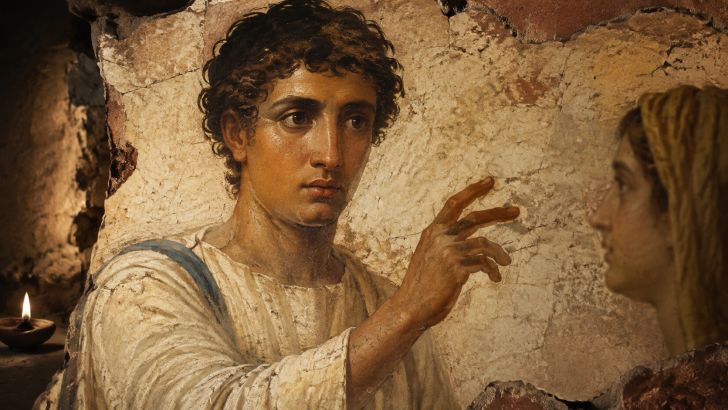
Most people would recognize an angel by its wings.
They’re practically the first thing we expect to see, whether the angel appears in a church painting, a Christmas decoration, or a stained-glass window.
But the earliest Christian artists didn’t always see things that way.
Their angels often looked like ordinary people in ordinary clothes. No feathers, no wings, and sometimes nothing supernatural about their appearance at all.
So what changed?
1. The First Christian Angels Looked Like Ordinary People
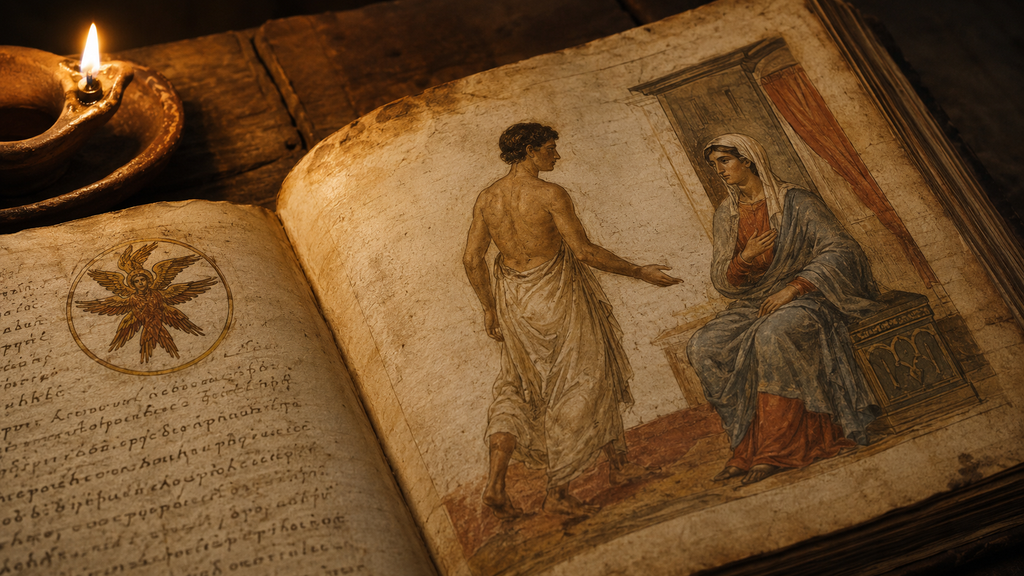
One of the most intriguing early examples appears in Rome’s Catacombs of Priscilla.
Inside a third-century burial chamber, a painted man stands before a seated woman, raising one hand as though he’s speaking.
The scene has traditionally been identified as the Annunciation, when the angel Gabriel tells Mary she’ll give birth to Jesus.
But Gabriel looks remarkably human.
He wears a simple tunic and doesn’t have wings. If you didn’t recognize the biblical story, you might assume you were looking at two ordinary people having a conversation.
Some scholars question whether the damaged image definitely represents the Annunciation. But that uncertainty actually helps explain the larger problem.
Without wings, an angel could easily be mistaken for an ordinary human being.
2. The Bible Didn’t Give Every Angel Wings
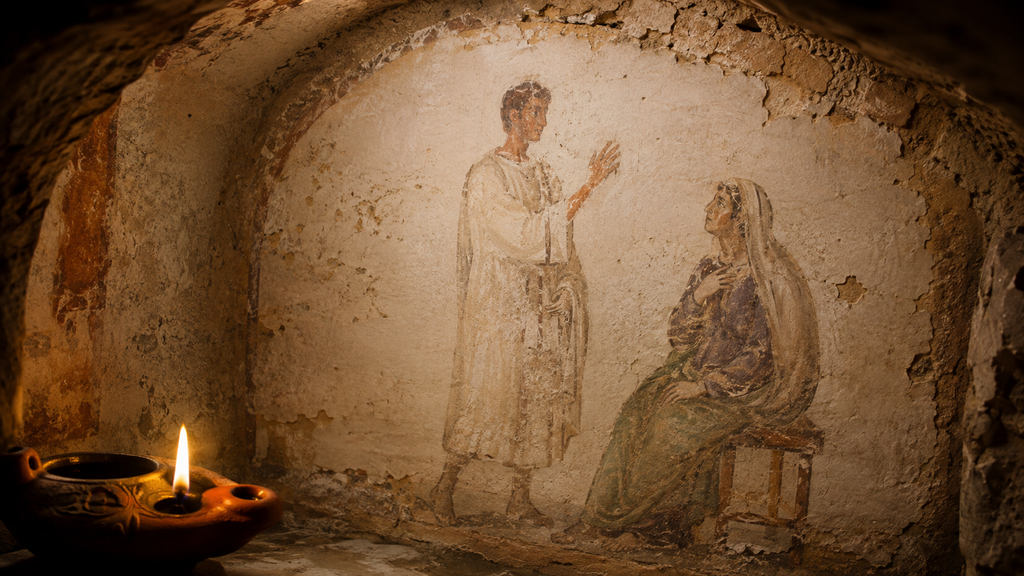
It’s tempting to assume the earliest artists simply left something out, but the biblical descriptions of messenger angels didn’t always give them wings in the first place.
In Luke’s account of the Annunciation, Gabriel is sent to Mary with an important message. The passage describes what he says, but it doesn’t mention feathers or wings.
Other biblical visitors appear so human that people don’t immediately recognize them.
The Letter to the Hebrews even encourages hospitality toward strangers because some people have welcomed angels without realizing it.
That wouldn’t make much sense if every angel arrived with a giant pair of wings.
Some heavenly beings do have them, of course. Isaiah describes seraphim with six wings, and biblical cherubim are also associated with wings.
But those descriptions don’t mean every divine messenger had to look the same.
An angel could appear perfectly human and still be an angel.
3. Artists Used Gestures Instead of Feathers
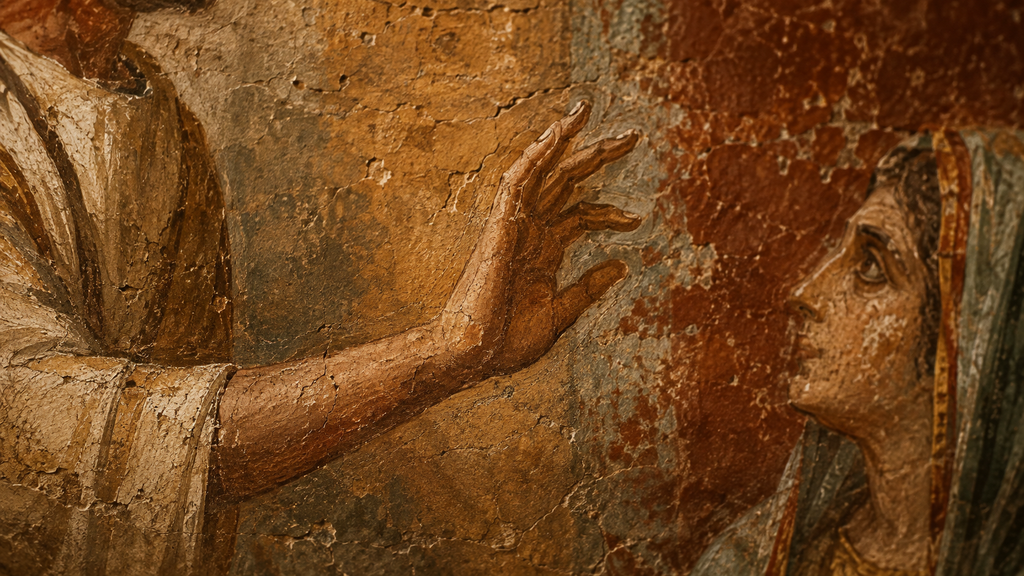
Early Christian viewers didn’t necessarily need wings to figure out who they were looking at.
The surrounding story usually did most of the work.
A man standing before Mary with his hand raised could be recognized as Gabriel because the gesture suggested he was delivering a message.
In Roman art, that kind of raised hand often indicated speech.
So the artist wasn’t trying to make the figure look particularly strange. He was showing what the angel had come to do.
Clothing could provide another clue.
Biblical messengers sometimes appeared in bright or white garments. Their position beside an important figure could also signal that they weren’t ordinary bystanders.
But those details weren’t always obvious.
As Christian art became more elaborate, artists needed a quicker way to separate heavenly visitors from everyone else in the scene.
4. Roman Art Already Had Plenty of Winged Figures
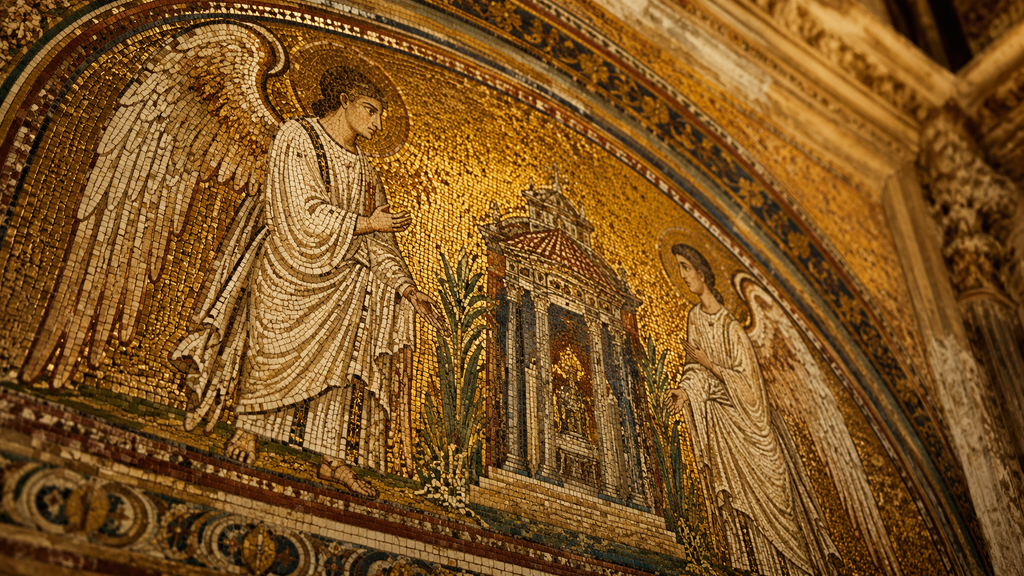
Christian artists didn’t have to invent the idea of a winged human figure.
The Roman world was already full of them.
The goddess Victory, known to the Greeks as Nike, regularly appeared with wings. She showed up on sculptures, coins, military decorations, and even everyday household objects.
The Metropolitan Museum of Art holds a Roman oil lamp from the first half of the first century that features a winged Victory on its surface.
That’s centuries before winged angels became common in Christian art.
Roman viewers already understood what wings suggested. They could represent supernatural movement, divine power, or a figure who belonged somewhere above ordinary human life.
So when Christian artists eventually began giving angels wings, they were working with a visual language people already knew.
They weren’t copying a pagan goddess in any simple or direct way. But they were borrowing an artistic idea that viewers immediately understood.
5. Angels Started Growing Wings Around the Fourth Century
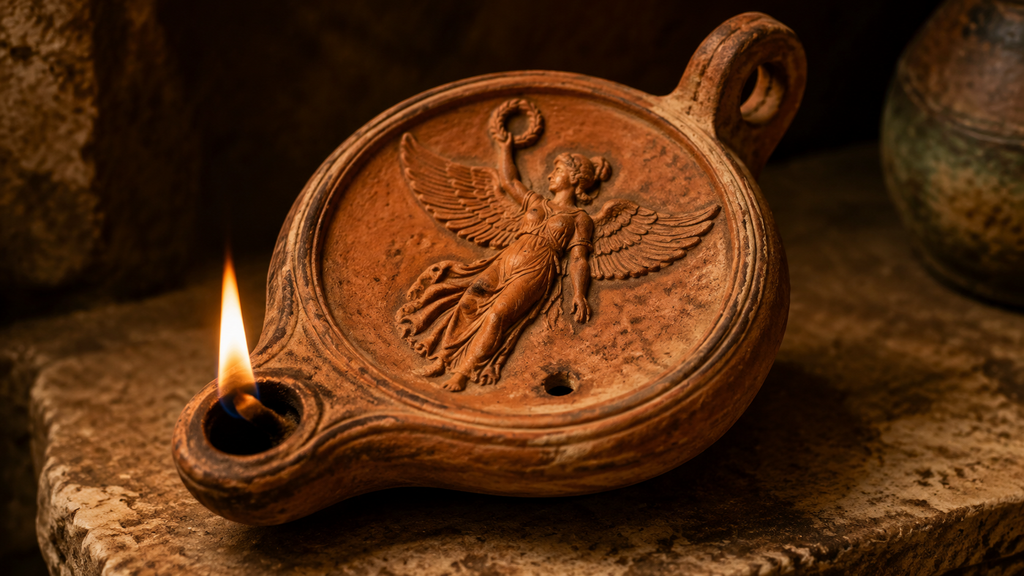
The change didn’t happen all at once.
Even in the middle of the fourth century, Christian artists were still depicting some angels without wings.
The sarcophagus of Junius Bassus, dated to 359, includes a scene showing Abraham and Isaac. The angel who intervenes appears in human form without the wings later viewers might expect.
By the end of the fourth century, however, winged angels were beginning to appear in Christian imagery.
During the fifth century, the new approach became much more visible.
The mosaics at Rome’s Basilica of Santa Maria Maggiore show winged heavenly figures surrounding important religious scenes.
Historian Norman Ricklefs describes these images as part of the process that helped establish the familiar angelic appearance for later generations.
The messenger hadn’t changed, but the way artists wanted viewers to recognize that messenger definitely had.
6. Wings Made the Invisible Easier to See
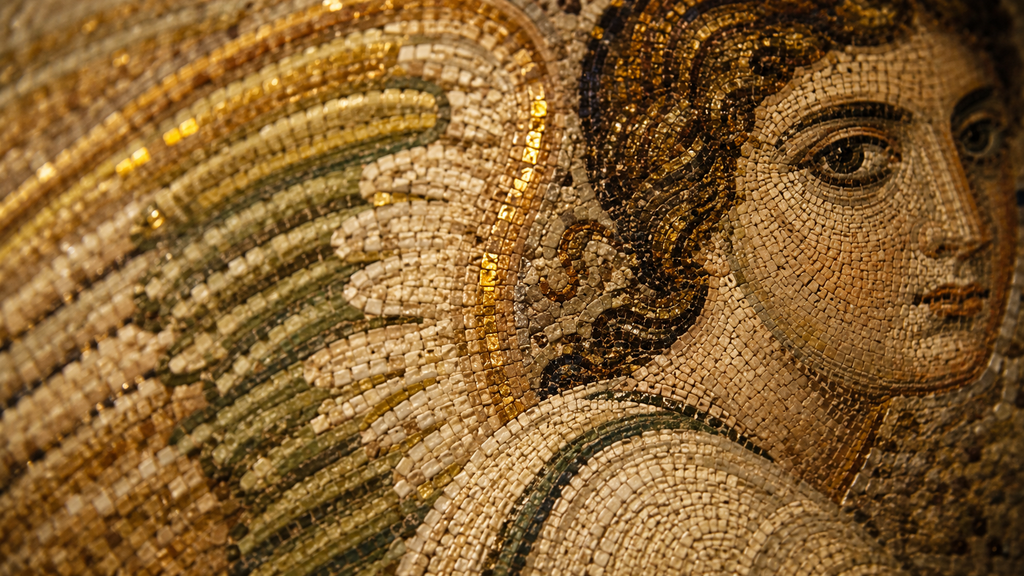
The wings weren’t necessarily meant as a literal explanation of how angels traveled.
They were a visual shortcut. An angel might need to appear human enough to communicate with people while still looking different from everyone else in the painting.
A pair of wings solved both problems.
The figure could keep a human face and body, but viewers would immediately understand that it belonged to the heavenly world.
Wings also suggested speed.
The word “angel” comes from a Greek term meaning messenger, and wings made that role feel visible.
The figure looked capable of moving between heaven and earth without being limited by ordinary distance.
But scholars don’t all agree that Roman Victory alone explains the transformation.
Other ideas about spiritual purity, divine power, and heavenly life may have influenced the change too. Whatever the exact combination, the result stuck.
Eventually, the wings became so familiar that their absence started looking unusual.
7. Wingless Angels Never Completely Disappeared
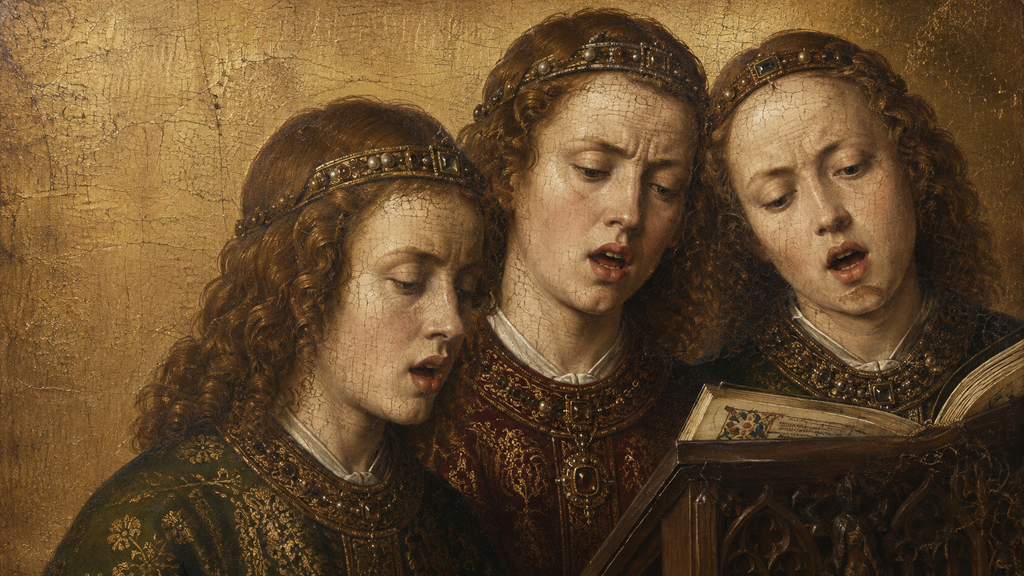
Even after wings became the standard, they were never absolutely required.
One surprising example appears in the Ghent Altarpiece, completed in 1432.
Among its painted figures are groups of heavenly singers and musicians dressed in richly decorated clothing.
They’re usually identified as angels. But they don’t have wings.
By then, winged angels had already appeared in Christian art for roughly a thousand years.
And yet an artist could still set the feathers aside. That brings the story back to where it started.
An angel didn’t need wings to carry a message, stand beside a sacred figure, or belong to the heavenly world.
The wings made angels easier to recognize. They just weren’t what made them angels.
