
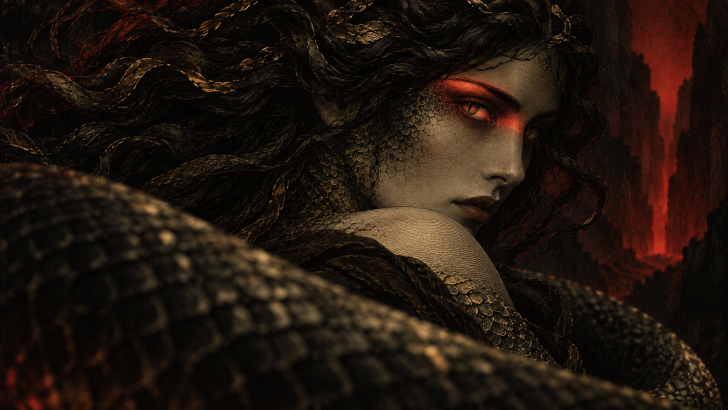
Greek mythology has plenty of monsters, but many of the most famous belong to the same terrifying family.
Cerberus, the Hydra, the Chimera, and the Sphinx all trace their bloodline back to Echidna—the half-woman, half-serpent creature remembered as the Mother of Monsters.
And her story is every bit as strange as the children she brought into the world.
1. Half Woman, Half Serpent
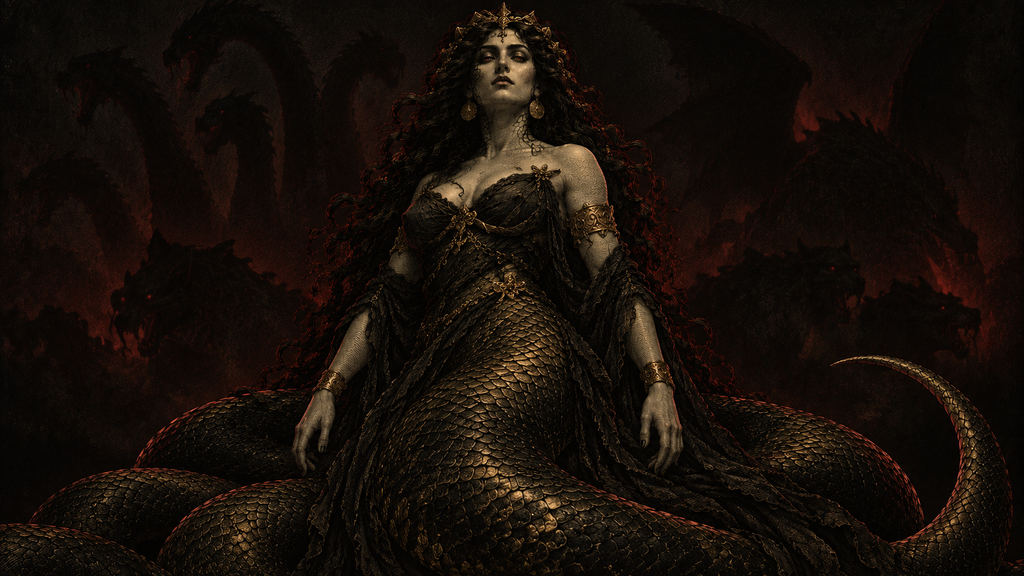
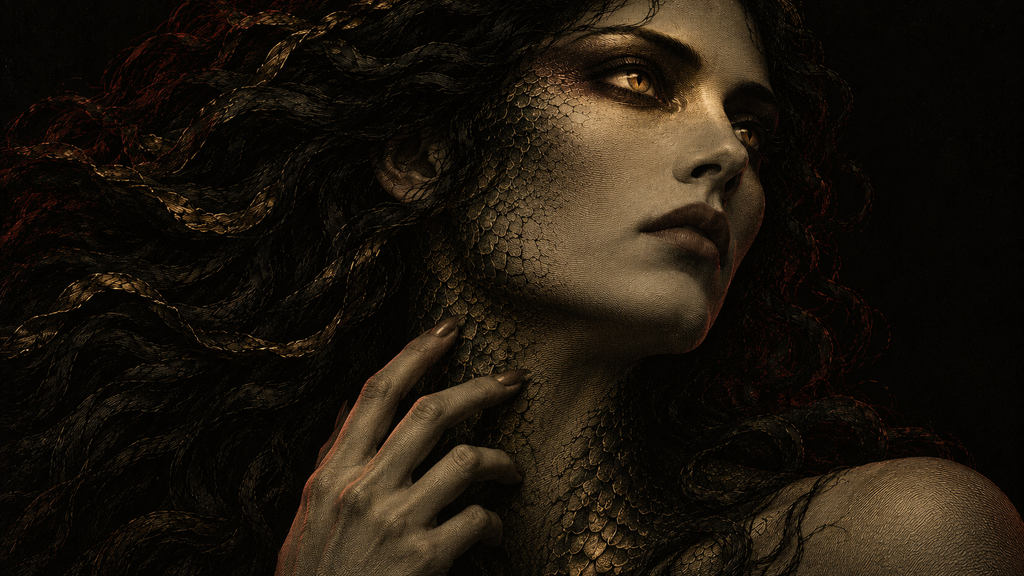
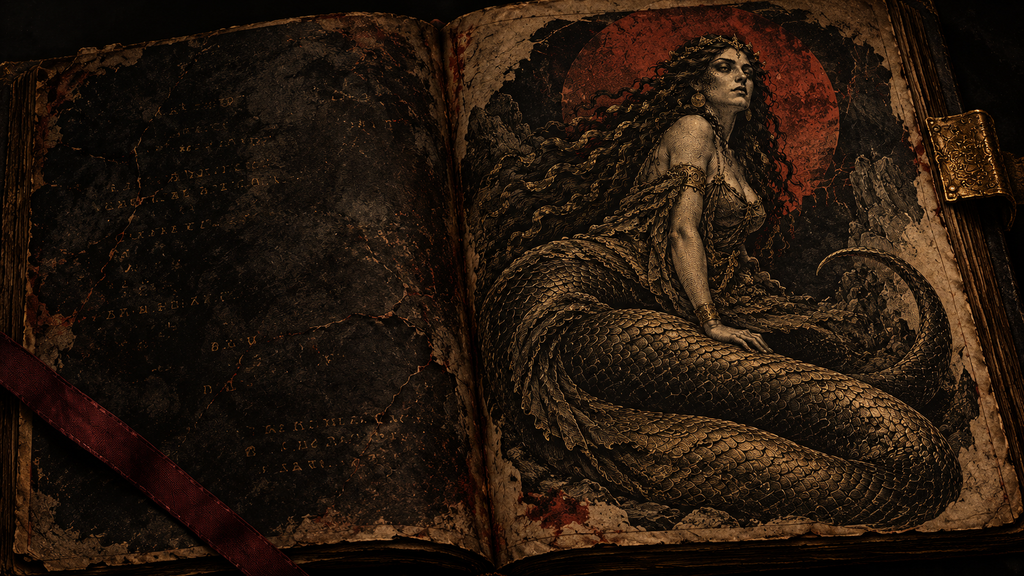
Hesiod describes Echidna as something that didn’t fully belong among humans or gods.
The upper half of her body looked like a beautiful nymph. She had bright eyes, fair cheeks, and a face that gave no warning of what continued below.
But the rest of her body belonged to an enormous serpent.
Something familiar and beautiful had been joined to something ancient, hungry, and impossible to control.
Hesiod calls her fierce and describes her eating raw flesh beneath the earth. He also says that she never aged or died, placing her somewhere between a goddess and a monster without making her completely either one.
Echidna existed between categories, and that made her much harder to understand.
2. Even the Myths Couldn’t Agree on Her Parents
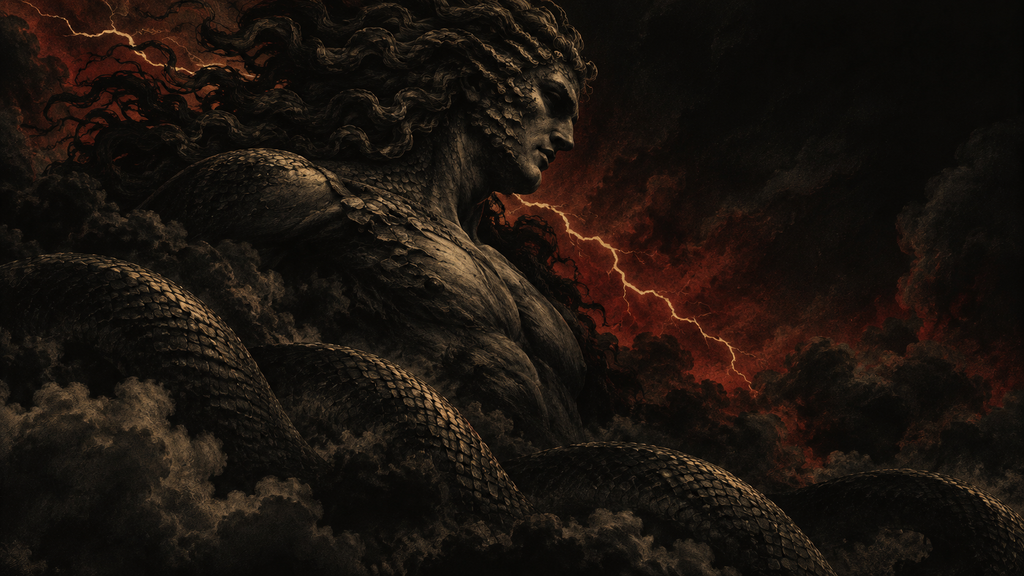
Echidna’s family begins changing before her own children are even born.
Hesiod appears to place her among the children of the ancient sea deities Phorcys and Ceto, a couple already connected with several creatures that lived beyond the safe edges of the Greek world.
But a later account gives Echidna a much darker origin.
The Library of Pseudo-Apollodorus calls her a daughter of Gaia and Tartarus. That would make her the child of the earth itself and the deepest region beneath the world.
Both versions place her close to forces much older than the Olympian gods.
Echidna wasn’t born into the bright palaces of Olympus. She came from the older parts of Greek mythology, where the sea, earth, and darkness could produce living forms that didn’t follow the rules established later.
3. She Lived Far Beneath the Ordinary World
Echidna didn’t wander through Greek cities looking for victims.
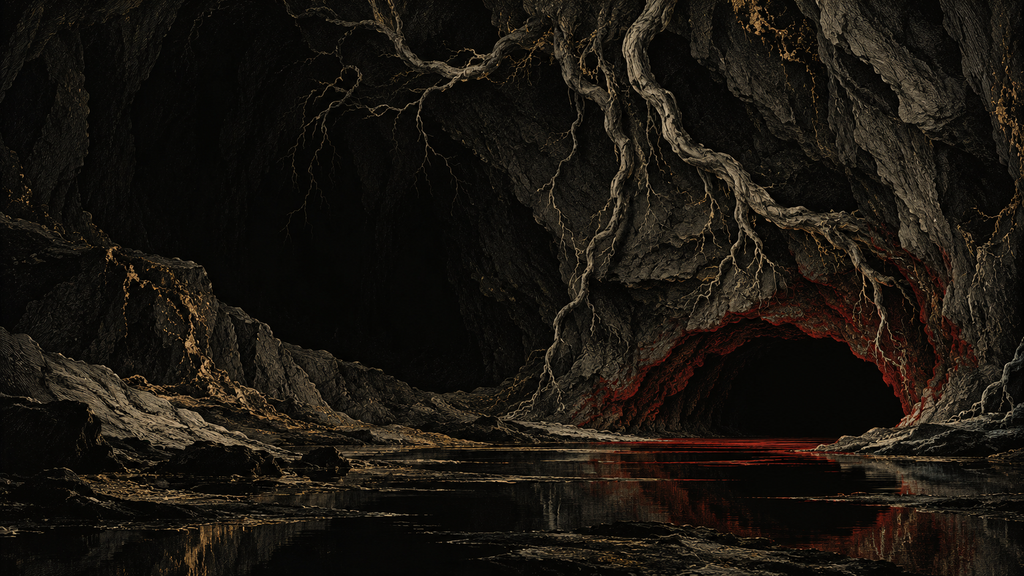
Hesiod places her inside a deep cave beneath a hollow rock, far from mortal humans and the immortal gods.
The location is called Arima, though ancient writers never fully agreed on where it was.
Different traditions connected it with places across Asia Minor and beyond, but the uncertainty only strengthened its atmosphere.
Arima existed somewhere distant, buried, and difficult to reach.
The gods themselves had apparently appointed the cave as Echidna’s home. There she remained underground, guarding a place most beings would never see.
That makes her different from monsters such as the Minotaur, which had been deliberately locked inside a human-built maze.
Echidna’s isolation felt older than punishment. She belonged beneath the earth as naturally as other creatures belonged beneath the sea.
4. Typhon Became the Father of Her Children
Echidna’s mate was Typhon, one of the most powerful monsters in Greek mythology.
Typhon challenged Zeus for control of the cosmos and came frighteningly close to threatening the entire divine order.
Ancient writers gave him enormous strength, serpentine features, and a voice that could sound like gods, wild animals, or something beyond recognition.
Together, Typhon and Echidna became the source of a monstrous dynasty. And their pairing makes sense within the myth.
Typhon represented violent power on an almost cosmic scale, while Echidna brought that power into the world through their children.
Those children were smaller than Typhon, but they were also harder to contain, and they appeared in caves, swamps, distant islands, and even the entrance to the underworld.
Typhon fought one enormous battle against Zeus, while Echidna’s bloodline spread the danger across generations.
5. Her Children Guarded Places Humans Weren’t Meant to Enter
Hesiod first names Orthus, the fearsome hound that guarded the cattle of Geryon.
Then came Cerberus, the many-headed dog stationed at the gates of Hades. Cerberus prevented the dead from escaping and made sure the living couldn’t enter the underworld without facing him.
Echidna also gave birth to the Hydra of Lerna, the serpent whose severed heads grew back faster than they could be destroyed.
Many of Echidna’s children appear wherever one world touches another.
Cerberus stands between life and death. Orthus guards cattle at the distant edge of the known world. The Hydra waits in a poisonous swamp where solid ground begins to disappear.
Echidna’s children guarded boundaries. And crossing those boundaries always came at a price.
6. Her Family Tree Grew With Every Retelling
The Chimera was also counted among Echidna’s children.
This fire-breathing creature combined the body parts of several animals and devastated the land of Lycia until Bellerophon attacked it from the back of Pegasus.
But Echidna’s family didn’t end there.
In Hesiod’s version, she later joined with her own son Orthus and produced two more monsters—the Sphinx and the Nemean lion.
The Sphinx terrorized Thebes with her deadly riddle, while the lion became the first great enemy Heracles faced during his famous labors.
Later storytellers expanded Echidna’s family even further. Different sources connected her with the dragon guarding the golden apples, the eagle that tormented Prometheus, and several other creatures.
There was never one perfectly settled family tree.
But whenever Greek mythology needed another ancient monster, Echidna was never far away.
7. Heroes Built Their Legends by Destroying Her Children
Echidna rarely enters the center of a heroic story herself. Her children do that for her.
Heracles kills the Nemean lion, destroys the Hydra, defeats Orthus, and later drags Cerberus out of the underworld. Bellerophon kills the Chimera, while Oedipus defeats the Sphinx by solving her riddle.
Again and again, a hero’s greatness is measured against something Echidna brought into the world.
And yet her own fate remains uncertain.
Hesiod describes her as ageless and deathless, which suggests that she remained beneath the earth long after many of her children were killed.
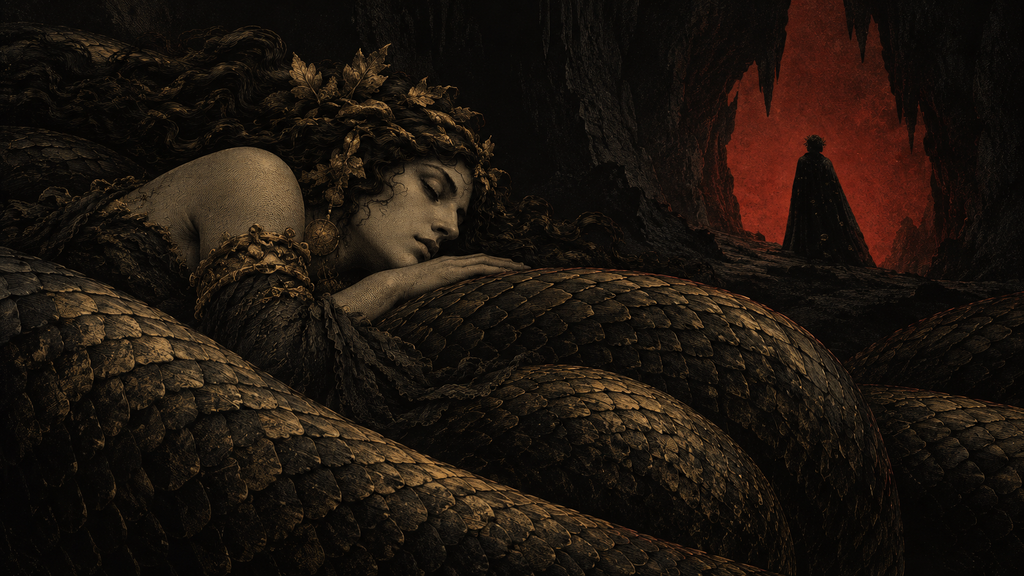
But Pseudo-Apollodorus preserves a different ending. In that version, Echidna begins carrying off travelers until Argus Panoptes—the all-seeing giant covered in eyes—finds her sleeping and kills her.
A creature divided between woman and serpent was given two endings too. In one, she dies quietly while sleeping. In the other, she never dies at all.
Her children disappear one by one, defeated by heroes whose names become legendary.
But somewhere beneath the earth, the Mother of Monsters remains.
