
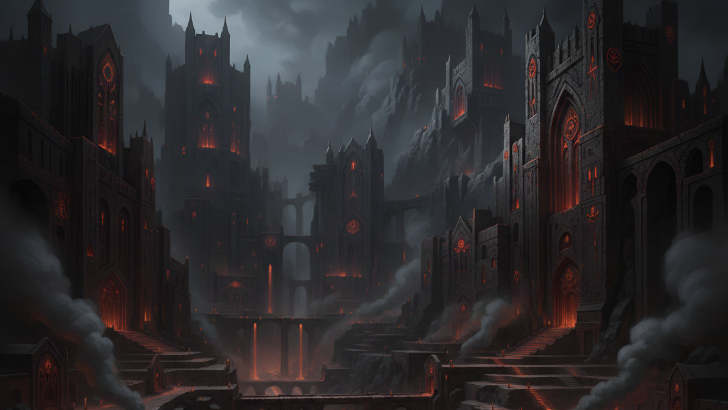
When people imagine hell, they often picture fire, strange creatures, and endless darkness. Most stories show it as a place without order, where everything is wild and chaotic.
But in many old traditions, hell was not a lawless world. Instead, it had its own structure and roles just like any kingdom.
Ancient writers and storytellers believed that even the darkest realm needed rules. They imagined a hidden hierarchy filled with leaders, messengers, and watchers who carried out their duties in silence.
This idea made hell feel more mysterious because it suggested that everything happening there had a purpose.
The stories of this unseen structure reveal how people in the past understood fear, punishment, and the balance between good and evil.
They also show how human minds try to organize even the scariest ideas into something familiar.
The Highest Rulers and Their Quiet Control
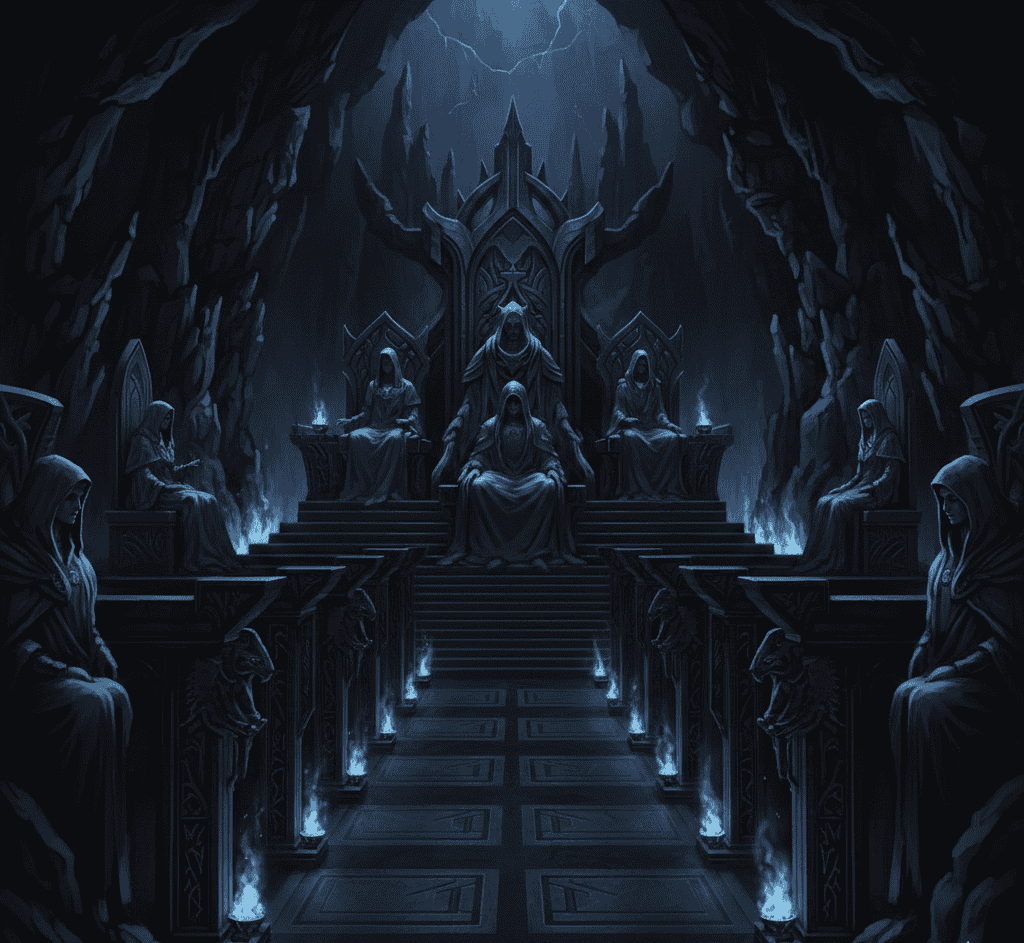
In many old traditions, the top of hell’s hierarchy was not a single ruler but a small group of powerful beings.
Different cultures described them in various ways, but they often shared similar traits.
They were ancient, wise in an unsettling way, and fully aware of everything that happened in their realm.
They were usually seen as the ones who set the rules for how souls were judged and how order was kept.
People imagined them sitting far above the chaos, looking down with a calm expression that made them even more frightening.
These rulers were not constantly involved in every detail. Instead, they acted through messengers and commanders.
Their power was shown in how smoothly the realm functioned. Nothing moved without their knowledge. Nothing happened without their permission.
This gave the idea of hell a strange sense of structure that reflected the way many ancient societies were organized.
People projected their understanding of kingdoms and courts onto the spiritual world. If the heavens had order, they believed the underworld must have it too.
One interesting part of these stories is that the highest rulers were often described as patient. They did not rush.
They moved slowly and watched everything unfold. Their silence made them appear even stronger. It suggested that their authority was so complete that they did not need to shout or show anger.
Their presence alone shaped the realm. This gave hell an atmosphere that felt cold and thoughtful rather than wild.
It also hinted at the deep fear humans had of power that could not be resisted or reasoned with.
The Middle Commanders Who Carried Out the Will of the Rulers
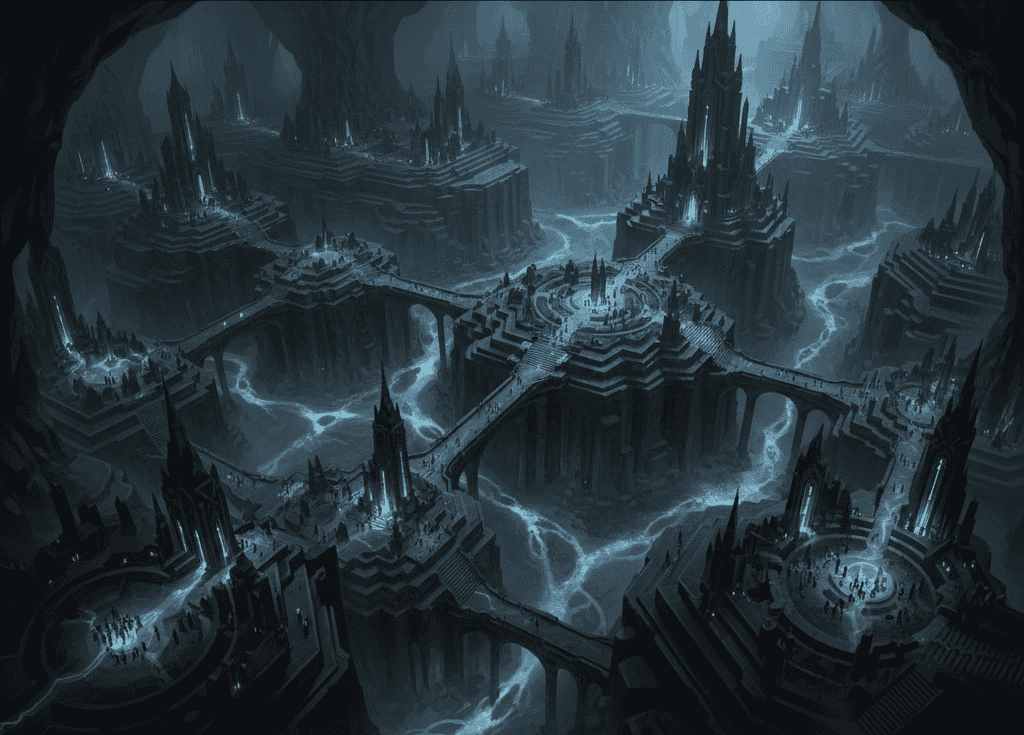
Below the highest rulers were the commanders and overseers. They were the ones who made sure the order of hell was followed.
They acted as the hands of the hierarchy. In old stories, they took care of tasks that were too detailed for the rulers to handle directly.
They were responsible for organizing the realm and supervising those who worked under them.
These commanders were not mindless servants. They were intelligent and sharp. People believed they understood the structure of hell better than anyone else.
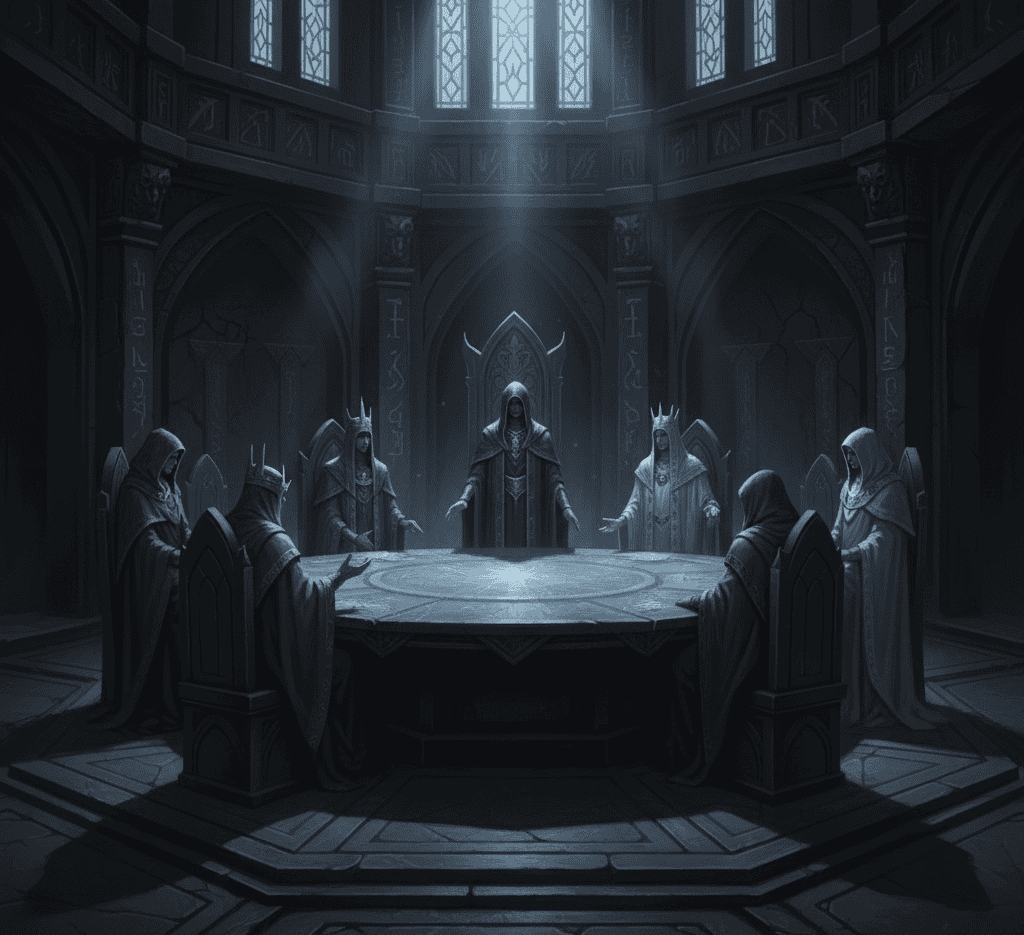
Many tales say these beings did not always agree with one another. Instead, they formed something like a council where each voice carried weight.
Their disagreements created tension, but they also helped maintain balance. One commander might focus on discipline while another paid attention to justice.
A third might be responsible for keeping order between different regions. Because of this, the hierarchy had a system of shared control.
These middle leaders were also the most involved with the souls that entered hell. They were said to read the past actions of each soul and decide where they belonged.
They acted like judges reviewing every detail and making decisions with calm precision. People saw them as strict but not mindless.
Their role brought a sense of fairness to a place that was otherwise feared. Even in the darkness, there was a sense of structure and reason.
The Silent Workers Who Kept the Realm Moving
Lower in the structure were the watchers and workers who took care of daily tasks. These beings appeared in many different forms across different traditions.
Some kept track of time in the realm. Others guided new souls or made sure that areas stayed separated.
They were not powerful on their own, but together they kept hell functioning. Without them, the realm would fall into chaos.
One of the most interesting things about these workers is how similar they were to people in everyday life.
Ancient storytellers often described them in ways that felt familiar. They were dedicated to their work. They followed orders.
They rarely stepped outside their role. This made the idea of hell less abstract. It became a place that felt structured like a community, even if it was a dark one.
Some tales describe these watchers as calm and almost emotionless. They did not judge. They simply followed the rules.
Others describe them as more aware of the souls that arrived. They were said to sense fear and guide new arrivals with surprising gentleness.
The presence of these lower workers helped build the idea that hell was not wild but organized. It showed that every level of the hierarchy served a purpose.
What This Hidden Hierarchy Tells Us About Human Belief
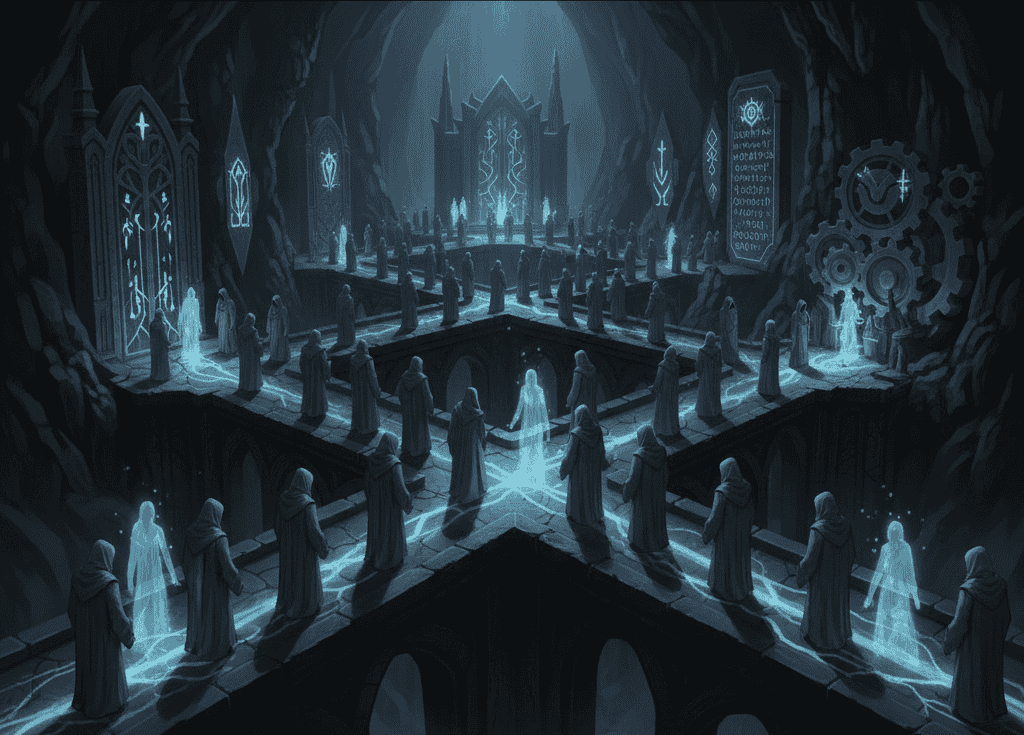
When we look at the hidden hierarchy of hell, we see more than a dark myth. We see how humans tried to understand life beyond the world they knew.
They organized ideas of good and evil in ways that felt familiar. A kingdom in the sky needed leaders just as a realm of punishment needed structure.
The hierarchy of hell also reveals how deeply people believed that order existed everywhere. Even in the darkest places, they imagined rules.
There is also a symbolic meaning behind the hierarchy. The rulers represent the idea of ultimate authority.
The commanders show the need for fairness and judgment. The workers show the value of routine and responsibility.
Together, they form a structure that mirrors real life. People used these stories to explore their own fears and to think about the roles that shape their world.
Today, the hidden hierarchy of hell still appears in books, movies, and art. It continues to fascinate people because it is both mysterious and familiar.
It reflects the same questions humans have always asked. What is justice? What happens after life?
How do good and evil balance each other? The old stories do not give perfect answers, but they give a clear picture of how ancient people tried to understand the unseen.

I always felt a strong connection to the Divine since my birth. As an author and mentor, my mission is to help others find love, happiness, and inner strength in the darkest of times.