
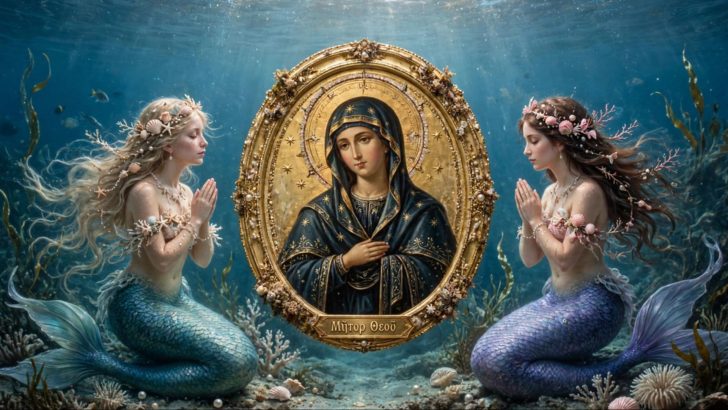
There’s a very compelling narrative in esoteric circles, which connects the Virgin Mary to mermaids!
It makes people curious because it suggests that another thread of the Sacred Feminine has been hidden from us by the patriarchy.
We’re hungry for spirituality that honors the feminine, but we need to see if there’s actually any merit to this theory.
So, could Mary be connected to mermaids in some way?
1. The Sacred Feminine
This argument actually comes from esoteric feminine spirituality, inspired by goddess theology and Gnosticism.
The tradition behind it can be traced back to the Sacred Feminine movement, which became popular through authors like Margaret Starbird, Clive Prince, and even Dan Brown.
Books like The Woman with the Alabaster Jar e The Da Vinci Code were a great source of inspiration for this theory.
Before that, it was mainly connected to the feminist theology and Wicca, and Jungian interpretations of the Great Mother archetype.
The point of it all is very legitimate: promote the divine feminine that patriarchal Christianity had mainly erased.
But, where do mermaids fit in all of this?
2. Mary’s Connection to Water
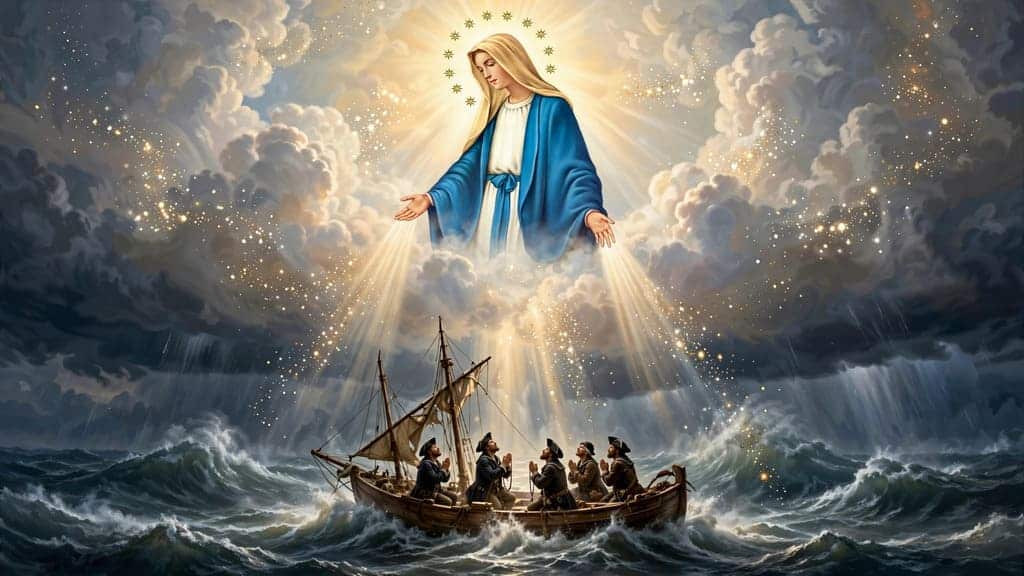
Mary’s association with water is considered the strongest part of this argument.
In Eastern Orthodox Christianity, Mary is called Ζωοδόχος Πηγή, which means Life-Giving Fountain. This liturgical title has its own feast day in her honor.
This connection between the Holy Virgin and water isn’t a modern esoteric idea, but an ancient Byzantine concept. It’s present in theology and iconography.
Also, in the 4th century, St. Jerome interpreted Mary’s name as “drop of the sea” or “star of the sea.”
This led to the creation of one of her most inspired medieval titles, Stella Maris.
Sailors across the Catholic world prayed to her to protect them at sea, and it’s very possible that her connection with mermaids began here.
3. The Mermaid and Mary Queen of Scots
It’s also possible that mermaids became connected to un altro Mary before the Mother of God, and the connection simply stuck.
In 16th century England, the word was actually a slang term used to describe a prostitute. This was well-documented in period sources.
And after the murder of Lord Darnley in 1567 and the queen’s controversial marriage to the Earl of Bothwell, she was publicly shamed all over Edinburgh.
People symbolically presented her as a mermaid to attack her reputation.
Now, the historical record doesn’t support the idea that her connection with mermaids represented her sacred priestess lineage.
It was this lineage that could have led to some people drawing parallels between the mythological creature and the Virgin.
4. The Etymology of Mary
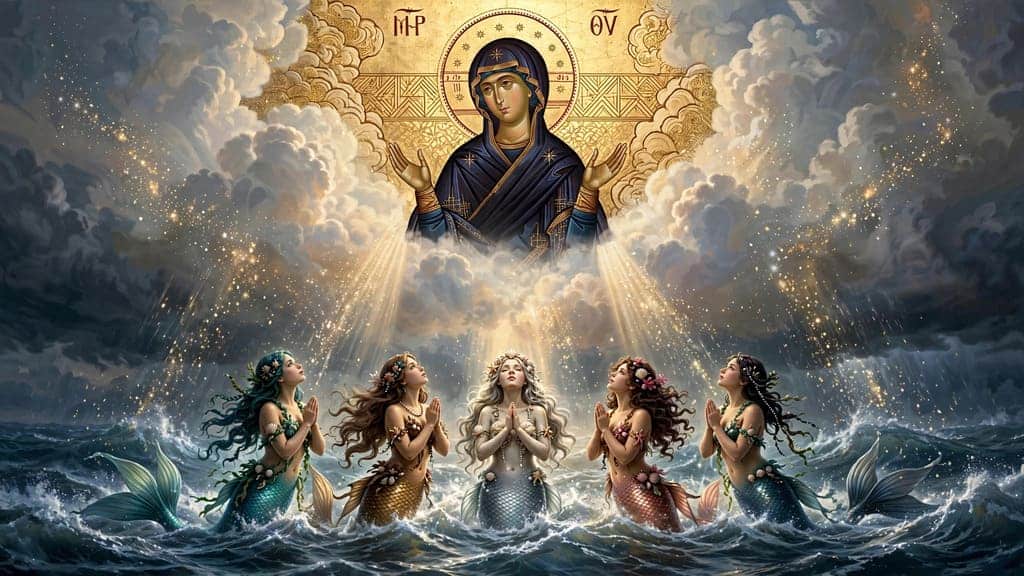
The name Mary, as we know it, comes from the Hebrew name Miriam, which does have unclear roots.
Scholars remain unsure if it means bitter sea, beloved, o rebellious. Either way, there’s no mermaid connection to any of these roots.
However, there’s also the Indo-European word mhara o mora.
In Irish Gaelic, “maighdean mhara” actually means maiden of the sea or mermaid.
The phonetic resemblance to Mary Magdalene is incredible, which also explains the mythological connection.
In the end, all these examples prove just how tricky etymology can be if we don’t consider the context.
The name Magdalene comes from the Hebrew and Aramaic word magdala, which means tower or refers to a town called Magdala.
These are completely different language families, and any similarities between the words are considered pure coincidence.
5. The Mermaid Priestess
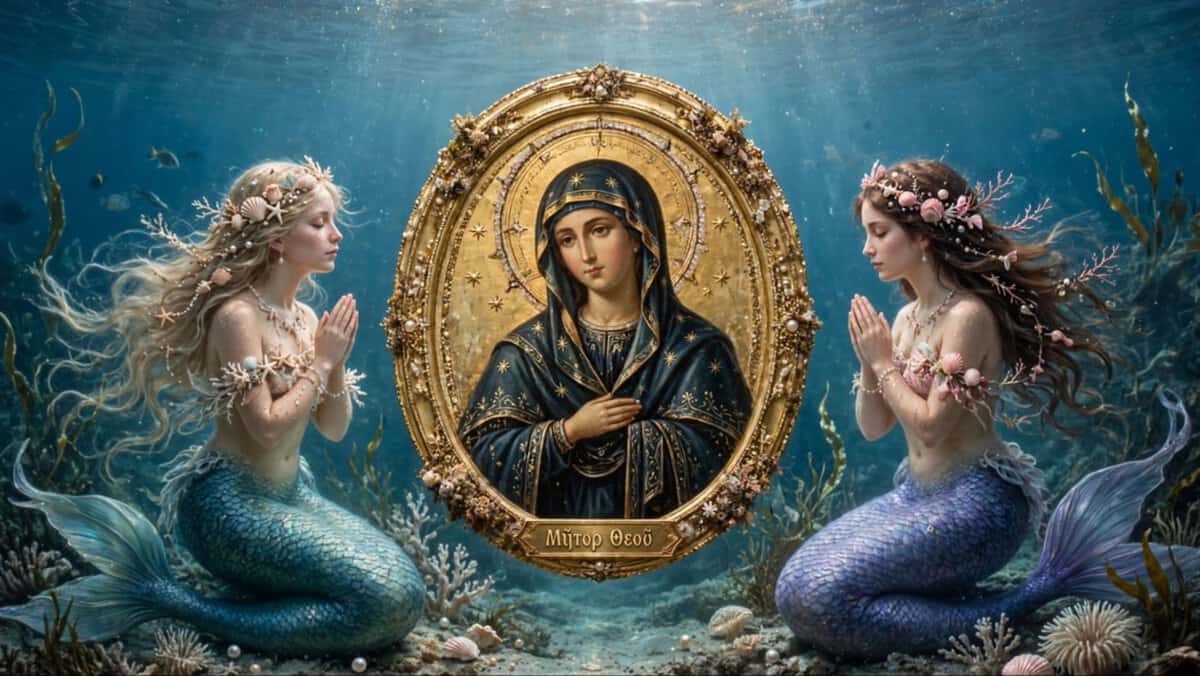
There’s also a broader idea about mermaids that they’re Maidens of Mary and priestesses of a primordial water goddess.
Mermaid-like creatures appear across world mythologies (Mesopotamian, Greek, African), but they all predate the Virgin Mary by centuries.
Connecting these beings directly to Mary requires some leaps through time and language.
Their being priestesses of Mary is definitely a modern esoteric idea rather than an ancient concept.
Water goddess traditions are rich and fascinating; however, they don’t necessarily have any connection to either Mary of the Bible.
6. What Should We Make of This?
This belief was built on some real foundation, but then stretched thin in an attempt to make it all make sense.
It’s definitely a fascinating idea, which is likely why many people want to believe in it.
The Virgin Mary was associated with water, and she was called Stella Maris. And even the etymology makes a little bit of sense if you don’t look too deeply into it.
But if you want facts, then no, mermaids aren’t actually Maidens of Mary.
Il Sacred Feminine can be celebrated with facts, without inventing whole mythologies to make it believable.
Look into legitimate ancient goddesses, instead.

A little Aquarius, devoted to writing and embroidery. Through my writing, I hope to empower readers to align with their true selves and navigate life’s mysteries with confidence.