
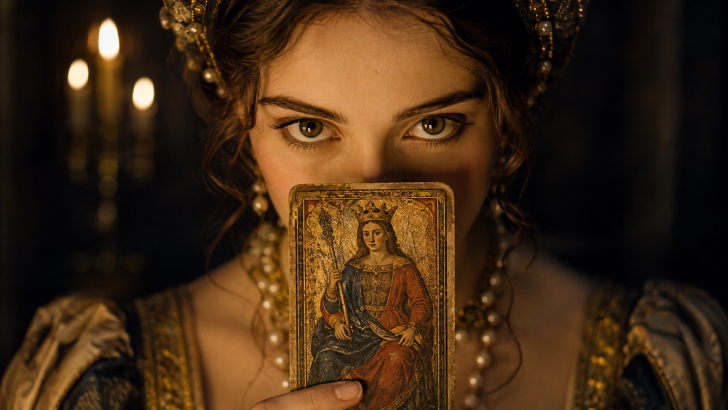
Tarot didn’t begin with fortune-tellers, spiritual readings, or questions about love. It began as a card game for wealthy families in Renaissance Italy.
For centuries, people played tarot to win tricks and beat their opponents, not uncover hidden messages from the universe.
The mystical tarot you know today came much later, built slowly by writers, occultists, and artists who gave the old cards an entirely new life.
1. Tarot Started as a Renaissance Card Game
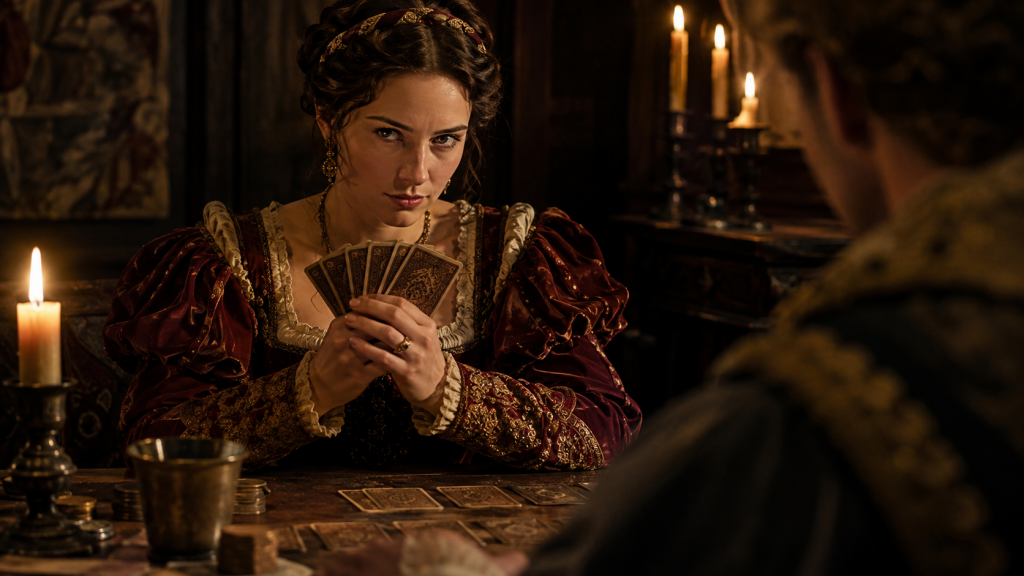
The earliest clear evidence of tarot appears in northern Italy during the 1400s.
Some of the oldest surviving tarot cards are stunning. Artists painted them with rich colors, detailed clothing, and shining gold backgrounds.
Noble families sometimes had decks created especially for them, complete with their own symbols and emblems.
But these beautiful cards weren’t made for predicting the future.
Tarot began as a trick-taking game. The basic idea would feel familiar to anyone who has played traditional card games where one player puts down a card and the others try to beat it. Certain cards had more power than others, and players needed skill, memory, and a little luck.
A standard Italian playing-card deck was expanded with a special group of illustrated trump cards and a card now known as the Fool. These additions made the game more complicated. Over time, this structure developed into the 78-card deck most tarot readers recognize today.
So the earliest tarot table didn’t have crystals, incense, or a reader asking someone to choose a card. People simply played to win.
Tarot was entertainment. A sophisticated kind of entertainment, of course, but still a game.
2. The Images Weren’t Originally Mystical
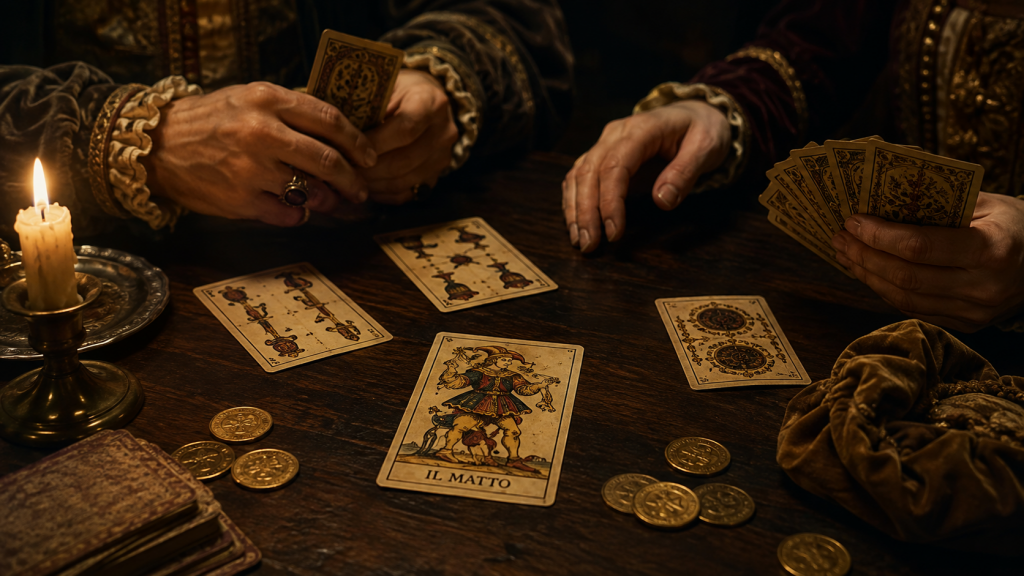
The old tarot images can look mysterious today. Cards showing Death, the Devil, powerful rulers, and a crumbling tower seem filled with hidden messages.
But these figures were familiar to people in Renaissance Italy.
Similar images appeared in churches, paintings, and religious stories. They were part of everyday culture, so players didn’t automatically see them as predictions about their own lives.
The Death card, for example, was a familiar symbol rather than a warning about change.
Death often appeared in European art as a reminder that wealth and status never lasted forever. The Wheel of Fortune showed how quickly luck could rise and fall, while Justice, emperors, and popes represented moral, earthly, and religious power.
Some cards also carried family emblems, so an image that seems mysterious now may simply have honored the noble family that owned the deck.
The trump cards may also have borrowed from public processions filled with symbolic figures, rulers, virtues, and frightening creatures.
Tarot gathered this familiar world into a deck. The pictures were striking, but they weren’t originally meant to reveal your future.
3. The Cards Had Rankings, Not Readings
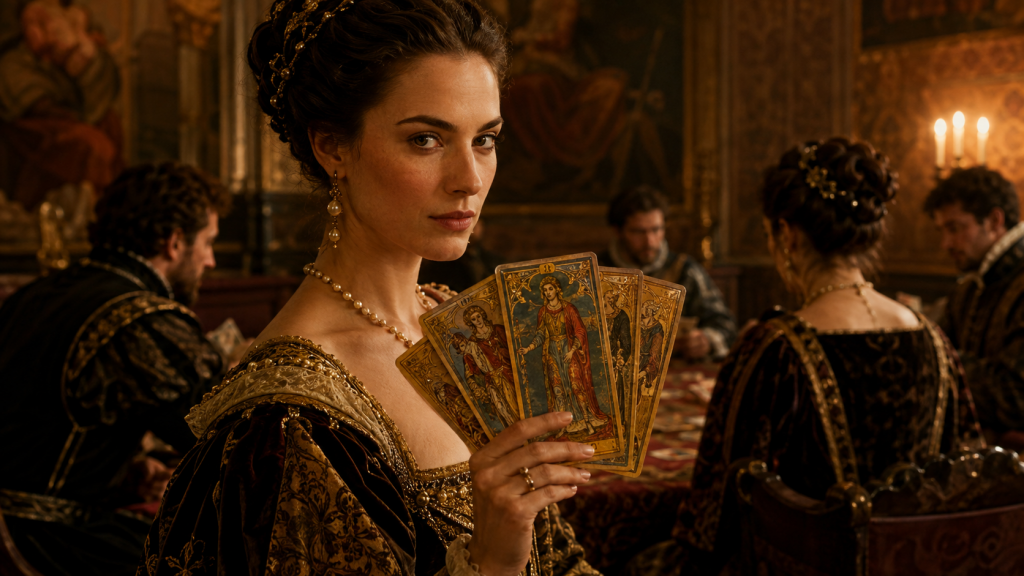
Modern tarot gives every card an individual meaning. In the original game, what mattered most was its rank.
The illustrated trump cards formed a hierarchy. A higher trump could beat a lower one, giving players a better chance of winning the round.
The exact ranking wasn’t always the same across Italy. Different regions followed different rules, and many early cards had no printed numbers. Players simply learned the correct order through experience and local tradition.
The Fool had its own unusual role. It wasn’t treated like a normal trump and could often be played without being lost in the same way as other cards. This made it useful during difficult moments in the game.
So players were deciding when to play a strong trump, when to save one, and how to outsmart the other people at the table.
Card spreads, reversed meanings, keywords, and astrological connections came centuries later.
4. Fortune-Telling Came Much Later
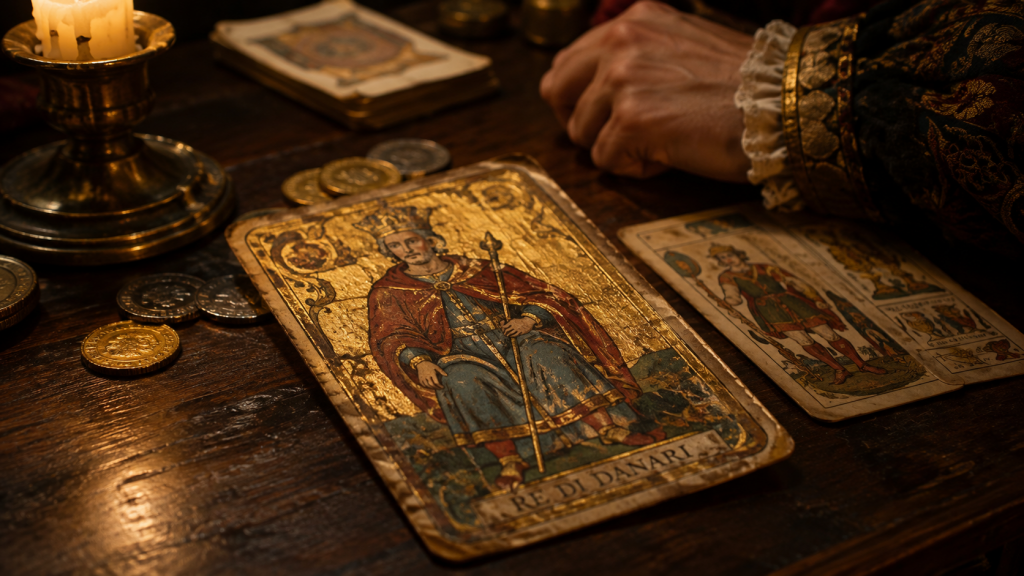
Tarot remained mainly a card game for about three centuries. Its transformation began in France during the late 1700s, when writers started giving the deck a new history and purpose.
Ordinary playing cards were already being used for divination. Readers assigned meanings to them and asked questions about love, money, luck, and the future.
This practice was known as cartomancy.
Then Antoine Court de Gébelin claimed tarot came from ancient Egypt. He believed the cards preserved hidden wisdom connected to the god Thoth.
There was no historical evidence for this story. Tarot had developed in Renaissance Italy, not ancient Egypt. Still, the theory gave the cards a mysterious past, and people were drawn to it.
Soon after, Jean-Baptiste Alliette, better known as Etteilla, turned those ideas into a working divination system.
During the 1780s, he published instructions for reading tarot and created a deck specifically designed for fortune-telling.
Writers and readers were finally giving the old game a new meaning.
5. Modern Tarot Was Built Over Time
Tarot’s new identity kept growing through the 1800s.
Occult writers connected the cards with astrology, ritual magic, Kabbalah, and other spiritual traditions, adding new meanings with every generation.
Éliphas Lévi helped present tarot as part of a much larger magical system. British groups such as the Hermetic Order of the Golden Dawn later carried those ideas further, linking individual cards with planets, zodiac signs, and mystical teachings.
Many meanings readers still use today began taking shape during this period.
But one of tarot’s biggest transformations came through its artwork.
In 1909, Arthur Edward Waite and artist Pamela Colman Smith created the deck now known as the Rider-Waite-Smith tarot.
Older numbered cards often showed only repeated symbols, but Smith transformed them into vivid scenes filled with people, movement, and emotion.
These detailed scenes let readers find meaning through expressions, gestures, and landscapes without relying only on a guidebook.
Her visual language became so influential that countless modern decks still borrow from it.
So, the tarot you recognize today took shape slowly.
What began as a Renaissance card game became a tool for fortune-telling, a language of occult symbolism, and eventually a way to reflect on life.
